Toyota Grand Highlander vs Chevrolet Bolt
Overview | |
Years produced2024-Present | Years produced2027 |
MSRP$43,320 | MSRP$27,600 |
Listings114 | Listings4 |
Ratings & Reviews | |
User Reviews | User Reviews |
Expert reviews8.0 out of 10 | Expert reviews6.3 out of 10 |
Pros
Cons
| Pros
Cons
|
Reviews SummaryIf you have more than a couple of kids, chances are good that a regular Toyota Highlander won’t be big enough for all your needs. For many shoppers like you, the Kia Telluride and its corporate cousin, the Hyundai Palisade, have become the obvious choices. Those three-row crossovers are newer, bigger, and incredibly nice to drive. But now there’s a new Highlander. A bigger Highlander. A Grand Highlander. This all-new model takes a popular nameplate (which, don't worry, isn’t going anywhere) and adds a little extra space. But what separates the Grand Highlander from the field is the availability of not one, but two different hybrid powertrains. This all-new model offers plenty of space, good fuel efficiency, and Toyota’s sterling reputation for reliability. So, is the 2024 Grand Highlander an immediate threat to the hot-selling Kia Telluride? | |
Reviews SummaryWith more range, more power, and improved technology, the Chevrolet Bolt EV returns after a three-year hiatus. It also claims the title of the most affordable EV in the U.S., but is due to remain in production only until mid-2027. Verdict: The 2027 Chevrolet Bolt EV is an excellent choice for shoppers seeking an electric vehicle that won't break the bank. It may not be all that fancy or refined, but it gets the basics right when it comes to range and capabilities. | |
No video found | |
Popular Features & Specs | |
Engine2.4L 265 hp I4 | Engine |
DrivetrainFWD | Drivetrain |
Seating Capacity8 | Seating Capacity5 |
Horsepower265 hp @ 6000 rpm | Horsepower |
EV Battery Capacity | EV Battery Capacity65 kWh |
MPG City21 | MPG City |
MPG Highway28 | MPG Highway |
Battery Charge Time (120V) | Battery Charge Time (120V)64 hours |
Battery Charge Time (240V) | Battery Charge Time (240V)9.8 hours |
Engine | |
Engine Name2.4L 265 hp I4 | Engine Name210 hp Electric |
Torque310 lb-ft @ 1700 rpm | Torque |
Horsepower265 hp @ 6000 rpm | Horsepower |
Battery Charge Time (120V) | Battery Charge Time (120V)64 hours |
Battery Charge Time (240V) | Battery Charge Time (240V)9.8 hours |
DrivetrainFWD | DrivetrainFWD |
Fuel Economy | |
EV Battery Capacity | EV Battery Capacity65 kWh |
MPG City21 | MPG City |
MPG Highway28 | MPG Highway |
Interior | |
Seating Capacity8 | Seating Capacity5 |
Key Features | |
Navigation SystemStandard | Navigation SystemStandard |
Dimensions & Capacity | |
Cargo Space20.6 cu ft | Cargo Space16.2 cu ft |
Curb Weight4300 lbs | Curb Weight3776 lbs |
Height72.1 in | Height63.9 in |
Length201.4 in | Length169.6 in |
Width78.3 in | Width80.1 in |
Wheelbase116.1 in | Wheelbase105.3 in |
Maximum Payload1245 lbs | Maximum Payload873 lbs |
Number of doors4 | Number of doors4 |
Maximum Towing Capacity5000 lbs | Maximum Towing Capacity |
Overview | ||
Years produced | 2024-Present | 2027 |
MSRP | $43,320 | $27,600 |
Listings | ||
Ratings & Reviews | ||
User reviews | ||
Expert reviews | 8.0 out of 10Read full review | 6.3 out of 10Read full review |
Pros & cons | Pros
Cons
| Pros
Cons
|
Summary | If you have more than a couple of kids, chances are good that a regular Toyota Highlander won’t be big enough for all your needs. For many shoppers like you, the Kia Telluride and its corporate cousin, the Hyundai Palisade, have become the obvious choices. Those three-row crossovers are newer, bigger, and incredibly nice to drive. But now there’s a new Highlander. A bigger Highlander. A Grand Highlander. This all-new model takes a popular nameplate (which, don't worry, isn’t going anywhere) and adds a little extra space. But what separates the Grand Highlander from the field is the availability of not one, but two different hybrid powertrains. This all-new model offers plenty of space, good fuel efficiency, and Toyota’s sterling reputation for reliability. So, is the 2024 Grand Highlander an immediate threat to the hot-selling Kia Telluride? | With more range, more power, and improved technology, the Chevrolet Bolt EV returns after a three-year hiatus. It also claims the title of the most affordable EV in the U.S., but is due to remain in production only until mid-2027. Verdict: The 2027 Chevrolet Bolt EV is an excellent choice for shoppers seeking an electric vehicle that won't break the bank. It may not be all that fancy or refined, but it gets the basics right when it comes to range and capabilities. |
Video | No video found | |
Popular Features & Specs | ||
Engine | 2.4L 265 hp I4 | |
Drivetrain | FWD | |
Seating Capacity | 8 | 5 |
Horsepower | 265 hp @ 6000 rpm | |
EV Battery Capacity | 65 kWh | |
MPG City | 21 | |
MPG Highway | 28 | |
Battery Charge Time (120V) | 64 hours | |
Battery Charge Time (240V) | 9.8 hours | |
Engine | ||
Engine Name | 2.4L 265 hp I4 | 210 hp Electric |
Torque | 310 lb-ft @ 1700 rpm | |
Horsepower | 265 hp @ 6000 rpm | |
Battery Charge Time (120V) | 64 hours | |
Battery Charge Time (240V) | 9.8 hours | |
Drivetrain | FWD | FWD |
Fuel Economy | ||
EV Battery Capacity | 65 kWh | |
MPG City | 21 | |
MPG Highway | 28 | |
Interior | ||
Seating Capacity | 8 | 5 |
Key Features | ||
Navigation System | Standard | Standard |
Dimensions & Capacity | ||
Cargo Space | 20.6 cu ft | 16.2 cu ft |
Curb Weight | 4300 lbs | 3776 lbs |
Height | 72.1 in | 63.9 in |
Length | 201.4 in | 169.6 in |
Width | 78.3 in | 80.1 in |
Wheelbase | 116.1 in | 105.3 in |
Maximum Payload | 1245 lbs | 873 lbs |
Number of doors | 4 | 4 |
Maximum Towing Capacity | 5000 lbs | |
The 2024 Toyota Grand Highlander was a standout in Toyota's lineup of crossovers and SUVs, offering a range of options from all-gas to hybrid-powered models. Built on the TNGA-K platform, it shared its underpinnings with the regular Highlander, RAV4, Sienna, and Camry, distinguishing itself from the body-on-frame Sequoia. With a length of 201.4 inches and a 116.1-inch wheelbase, it was larger than competitors like the Kia Telluride, providing a spacious interior. Its design, inspired by rugged vehicles, featured a blockier style with a trapezoidal grille and narrow headlights, reminiscent of the 4Runner. The Grand Highlander was available in three trims: XLE, Limited, and Platinum, with interior options ranging from Softex synthetic leather to real leather in higher trims. It boasted features like a 10-way power-adjustable driver seat, heated front seats, and a large center console, making it a comfortable and well-built road-trip vehicle.
The 2027 Chevrolet Bolt returned with a familiar look, maintaining its position between a large hatchback and a subcompact SUV. The styling changes were minimal, with a thin slot behind the Chevy Bowtie logo and an integrated grille insert. The Bolt EV was tall and narrow, prioritizing utility and interior space. The interior saw a more dramatic makeover, featuring a larger digital instrument panel and infotainment touchscreen. The push-button gear selector was moved to the steering column, freeing up storage space. While the cabin was dominated by hard plastic surfaces, the RS trim offered Evotex synthetic leather with red stitching. Despite its budget feel, the Bolt provided adequate space and comfort, with a focus on practicality and utility.
The 2024 Toyota Grand Highlander offered three engine options, starting with a 2.4-liter turbocharged four-cylinder engine producing 265 horsepower and 310 pound-feet of torque. A 2.5-liter four-cylinder hybrid option delivered 245 combined net horsepower and 177 lb-ft of torque, while the top-tier Hybrid Max powertrain generated 362 combined net horsepower and 400 combined net lb-ft of torque. Both gas and hybrid engines were available with front-wheel drive and all-wheel drive, while the Hybrid Max was AWD only. The Hybrid Max boasted a zero-to-60 time of 6.3 seconds, offering impressive acceleration. The Grand Highlander was known for its solid brakes and adequate acceleration, though its steering feel was somewhat numb. It featured three drive modes—Sport, Eco, and Normal—with additional modes for AWD models.
The 2027 Chevrolet Bolt featured a new 65-kilowatt-hour lithium-iron phosphate battery pack, reducing costs and requiring fewer rare earth minerals. A motor from Chevy's Equinox EV provided 210 horsepower and 169 pound-feet of torque to the front wheels, with a 0-60 mph time in the low seven-second range. The Bolt's acceleration was quick compared to gas-powered subcompact SUVs, with immediate pedal response. One-pedal driving was available, with medium or high levels of brake regeneration. The ride was firm but not overly stiff, and the Bolt was agile on curvy roads due to its low center of gravity. The EPA estimated a range of 262 miles on a full charge, with a Tesla-derived NACS charge port standard on all models. Charging speed increased to 150 kW, allowing a recharge from 10% to 80% in 25 minutes.
The 2024 Toyota Grand Highlander was larger than its primary rivals, measuring 201.4 inches long with a 116.1-inch wheelbase. It offered a total cargo capacity of 97.5 cubic feet, with 57.9 cubic feet behind the second-row seats and 20.6 cubic feet with all three rows up. The Grand Highlander provided ample head, leg, and shoulder room in every row, making it comfortable for adults, even in the third row.
The 2027 Chevrolet Bolt had an upright driving position with plenty of space for larger occupants. The rear seats offered adequate headroom and thigh support, with a flat floor reducing the penalty for center-seat passengers. The Bolt provided 16.2 cubic feet of cargo space behind the rear seats, with a large bin underneath the floor for additional storage. The rear seatbacks folded flat with the cargo floor, and there was ample storage for personal items up front, including a large bin with movable dividers and a deep center armrest bin.
The 2024 Toyota Grand Highlander came with a 12.3-inch touchscreen infotainment system, offering features like dual-device Bluetooth connectivity, wireless Apple CarPlay, and Android Auto. An intelligent assistant was available via a connected-services subscription, along with cloud-based navigation and live agent assistance. The Limited and Platinum trims featured an 11-speaker JBL stereo, and streaming audio integration was available with a subscription.
The 2027 Chevrolet Bolt featured an 11-inch digital instrument panel and an 11.3-inch center touchscreen, running on a Google-based operating system. Apple CarPlay and standalone Android Auto were not supported, but Bluetooth pairing allowed for personal music library access. The optional Technology package added a surround-view camera system, digital rear-view mirror, and wireless charging pad. The infotainment system was user-friendly, with logical menus and quick responses. The Bolt also offered vehicle-to-load charging, serving as a backup power source for a home.
The 2024 Toyota Grand Highlander had not yet been crash-tested by the NHTSA or IIHS, but it came with Toyota Safety Sense 3.0 as standard. This suite included automatic emergency braking, lane-departure alert with steering assist, lane-tracing assist, road-sign recognition, and blind-spot monitoring with rear cross-traffic alert. Adaptive cruise control was also standard, with four following-distance settings.
The 2027 Chevrolet Bolt had not been crash-tested by the NHTSA or IIHS, but it was expected to achieve high scores. Standard safety features included forward collision warning with automatic emergency braking, adaptive cruise control, lane-keep assist, blind-spot monitors with active steering assist, and a safety alert seat. The optional Technology package added a surround-view camera system, digital rear-view mirror, and traffic-sign recognition. GM's Super Cruise hands-free automated highway driving system was available for an additional cost.
CarGurus highlights
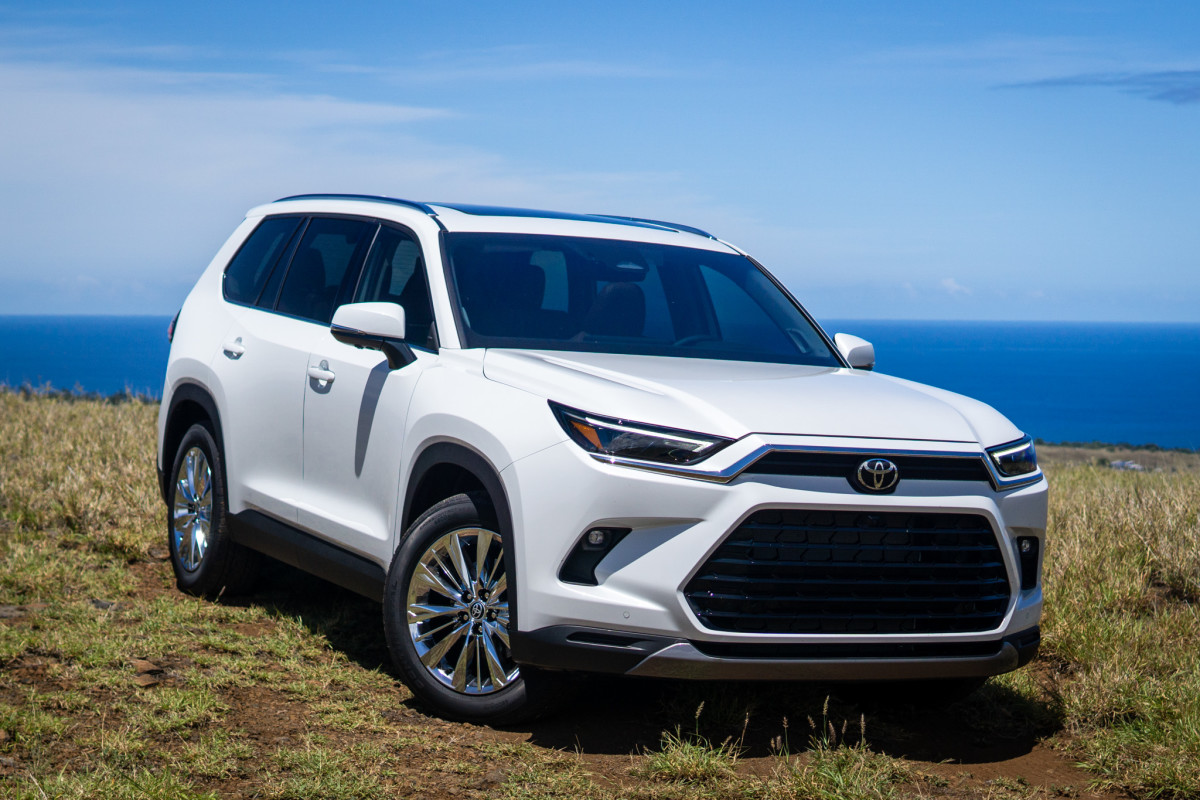
According to CarGurus experts, the overall rating for the 2024 Toyota Grand Highlander was 8.0 out of 10, while the 2027 Chevrolet Bolt scored 6.3 out of 10. Based on these ratings, the 2024 Toyota Grand Highlander is the recommended choice, offering a more well-rounded package with superior comfort, performance, and safety features.
Choose the 2024 Toyota Grand Highlander if:
- You need a spacious and comfortable vehicle with ample cargo capacity for road trips.
- You prefer a vehicle with multiple engine options, including a powerful hybrid powertrain.
- You value advanced safety features and a comprehensive driver assistance suite.


Choose the 2027 Chevrolet Bolt if:
- You want an electric vehicle with a respectable range and quick charging capabilities.
- You prioritize a budget-friendly option with practical interior space and storage solutions.
- You are interested in advanced technology features, including vehicle-to-load charging.


CarGurus highlights
According to CarGurus experts, the overall rating for the 2024 Toyota Grand Highlander was 8.0 out of 10, while the 2027 Chevrolet Bolt scored 6.3 out of 10. Based on these ratings, the 2024 Toyota Grand Highlander is the recommended choice, offering a more well-rounded package with superior comfort, performance, and safety features.
Choose the 2024 Toyota Grand Highlander if:
Shop Now- You need a spacious and comfortable vehicle with ample cargo capacity for road trips.
- You prefer a vehicle with multiple engine options, including a powerful hybrid powertrain.
- You value advanced safety features and a comprehensive driver assistance suite.
Choose the 2027 Chevrolet Bolt if:
Shop Now- You want an electric vehicle with a respectable range and quick charging capabilities.
- You prioritize a budget-friendly option with practical interior space and storage solutions.
- You are interested in advanced technology features, including vehicle-to-load charging.

By: CarGurus + AI
At CarGurus, our team of experienced automotive writers remain at the heart of our content operation, conducting hands-on car tests and writing insightful guides that are backed by years of industry experience. To complement this, we are harnessing AI to make our content offering more diverse and more helpful to shoppers than ever. To achieve this, our AI systems are based exclusively on CarGurus content, ratings and data, so that what we produce is both unique to CarGurus, and uniquely helpful to car shoppers.

