Jeep Cherokee vs Chrysler Pacifica Hybrid
Overview | |
MSRP$27,890 | MSRP$49,000 |
Listings790 | Listings164 |
Ratings & Reviews | |
User Reviews | User Reviews |
Expert reviews7.0 out of 10 | Expert reviews7.5 out of 10 |
Pros
Cons
| Pros
Cons
|
Reviews SummaryThe KL-generation Cherokee launched as a 2014 model and almost immediately began swirling in controversy. Jeep hadn’t offered a Cherokee in the United States since the 2001 model year, when the XJ Cherokee disappeared, replaced by two generations of the Jeep Liberty. There was great excitement for this all-new Jeep. Lots of fans were hoping for a redo of the 1984 to 2001 Jeep Cherokee that really helped to define the midsize SUV class with a unibody and legendary toughness. “The 2014 Cherokee feels planted on the road, more carlike than trucklike…” read an early review in Car and Driver. A separate review from the same publication read: “If you have eyes, you’ve noticed that this Cherokee, code-named KL, makes no design references, other than with the grille, to the iconic, rectilinear XJ Cherokee.” But the automotive industry isn’t necessarily in the business of fueling nostalgia. It’s interested in what it can sell in great numbers in the future, not what people liked 30 years ago. And what we’ve realized over the years is that the Cherokee is really good at what it does, and it’s capable of doing a lot more than you’d expect. Jeep sells these at a rate of 240,000 annually, in a good year. The best the Jeep Liberty it replaced ever managed was 166,883 units before dropping off the face of the Earth entirely. Clearly, Jeep knew something we didn’t when it released the Cherokee. | |
Reviews SummaryThe summer of 2022 has been a doozy. Gas prices went sky high and heat waves roasted Americans. If you’re rethinking the purchase of a three-row SUV and trying to find a fuel-efficient solution that emits greenhouse gas emissions only part of the time, the seven-passenger Chrysler Pacifica Hybrid might be a good solution. It doesn’t offer all-wheel drive (AWD) as other Pacificas do, but it has a plug-in hybrid powertrain supplying an EPA-rated 32 miles of electric range before the gasoline V6 engine fires up to deliver 30 mpg in combined driving. | |
No video found | No video found |
Popular Features & Specs | |
Engine2.4L 180 hp I4 | Engine3.6L 260 hp V6 Hybrid |
DrivetrainFWD | DrivetrainFWD |
Seating Capacity5 | Seating Capacity7 |
Horsepower180 hp @ 6250 rpm | Horsepower |
EV Battery Capacity | EV Battery Capacity16 kWh |
MPG City22 | MPG City29 |
MPG Highway31 | MPG Highway30 |
Battery Charge Time (120V) | Battery Charge Time (120V)14 hours |
Battery Charge Time (240V) | Battery Charge Time (240V)2 hours |
Engine | |
Engine Name2.4L 180 hp I4 | Engine Name3.6L 260 hp V6 Hybrid |
Torque171 lb-ft @ 4800 rpm | Torque |
Horsepower180 hp @ 6250 rpm | Horsepower |
Battery Charge Time (120V) | Battery Charge Time (120V)14 hours |
Battery Charge Time (240V) | Battery Charge Time (240V)2 hours |
DrivetrainFWD | DrivetrainFWD |
Fuel Economy | |
EV Battery Capacity | EV Battery Capacity16 kWh |
MPG City22 | MPG City29 |
MPG Highway31 | MPG Highway30 |
Interior | |
Seating Capacity5 | Seating Capacity7 |
Safety | |
Front Crash Overall4 | Front Crash Overall4 |
Side Crash Overall5 | Side Crash Overall5 |
Dimensions & Capacity | |
Cargo Space25.8 cu ft | Cargo Space32.3 cu ft |
Curb Weight3590 lbs | Curb Weight5010 lbs |
Height65.7 in | Height69.9 in |
Length183.1 in | Length204.3 in |
Width73.2 in | Width90.4 in |
Wheelbase106.5 in | Wheelbase121.6 in |
Maximum Payload1000 lbs | Maximum Payload1313 lbs |
Number of doors4 | Number of doors4 |
Maximum Towing Capacity2000 lbs | Maximum Towing Capacity |
Overview | ||
MSRP | $27,890 | $49,000 |
Listings | ||
Ratings & Reviews | ||
User reviews | ||
Expert reviews | 7.0 out of 10Read full review | 7.5 out of 10Read full review |
Pros & cons | Pros
Cons
| Pros
Cons
|
Summary | The KL-generation Cherokee launched as a 2014 model and almost immediately began swirling in controversy. Jeep hadn’t offered a Cherokee in the United States since the 2001 model year, when the XJ Cherokee disappeared, replaced by two generations of the Jeep Liberty. There was great excitement for this all-new Jeep. Lots of fans were hoping for a redo of the 1984 to 2001 Jeep Cherokee that really helped to define the midsize SUV class with a unibody and legendary toughness. “The 2014 Cherokee feels planted on the road, more carlike than trucklike…” read an early review in Car and Driver. A separate review from the same publication read: “If you have eyes, you’ve noticed that this Cherokee, code-named KL, makes no design references, other than with the grille, to the iconic, rectilinear XJ Cherokee.” But the automotive industry isn’t necessarily in the business of fueling nostalgia. It’s interested in what it can sell in great numbers in the future, not what people liked 30 years ago. And what we’ve realized over the years is that the Cherokee is really good at what it does, and it’s capable of doing a lot more than you’d expect. Jeep sells these at a rate of 240,000 annually, in a good year. The best the Jeep Liberty it replaced ever managed was 166,883 units before dropping off the face of the Earth entirely. Clearly, Jeep knew something we didn’t when it released the Cherokee. | The summer of 2022 has been a doozy. Gas prices went sky high and heat waves roasted Americans. If you’re rethinking the purchase of a three-row SUV and trying to find a fuel-efficient solution that emits greenhouse gas emissions only part of the time, the seven-passenger Chrysler Pacifica Hybrid might be a good solution. It doesn’t offer all-wheel drive (AWD) as other Pacificas do, but it has a plug-in hybrid powertrain supplying an EPA-rated 32 miles of electric range before the gasoline V6 engine fires up to deliver 30 mpg in combined driving. |
Video | No video found | No video found |
Popular Features & Specs | ||
Engine | 2.4L 180 hp I4 | 3.6L 260 hp V6 Hybrid |
Drivetrain | FWD | FWD |
Seating Capacity | 5 | 7 |
Horsepower | 180 hp @ 6250 rpm | |
EV Battery Capacity | 16 kWh | |
MPG City | 22 | 29 |
MPG Highway | 31 | 30 |
Battery Charge Time (120V) | 14 hours | |
Battery Charge Time (240V) | 2 hours | |
Engine | ||
Engine Name | 2.4L 180 hp I4 | 3.6L 260 hp V6 Hybrid |
Torque | 171 lb-ft @ 4800 rpm | |
Horsepower | 180 hp @ 6250 rpm | |
Battery Charge Time (120V) | 14 hours | |
Battery Charge Time (240V) | 2 hours | |
Drivetrain | FWD | FWD |
Fuel Economy | ||
EV Battery Capacity | 16 kWh | |
MPG City | 22 | 29 |
MPG Highway | 31 | 30 |
Interior | ||
Seating Capacity | 5 | 7 |
Safety | ||
Front Crash Overall | 4 | 4 |
Side Crash Overall | 5 | 5 |
Dimensions & Capacity | ||
Cargo Space | 25.8 cu ft | 32.3 cu ft |
Curb Weight | 3590 lbs | 5010 lbs |
Height | 65.7 in | 69.9 in |
Length | 183.1 in | 204.3 in |
Width | 73.2 in | 90.4 in |
Wheelbase | 106.5 in | 121.6 in |
Maximum Payload | 1000 lbs | 1313 lbs |
Number of doors | 4 | 4 |
Maximum Towing Capacity | 2000 lbs | |
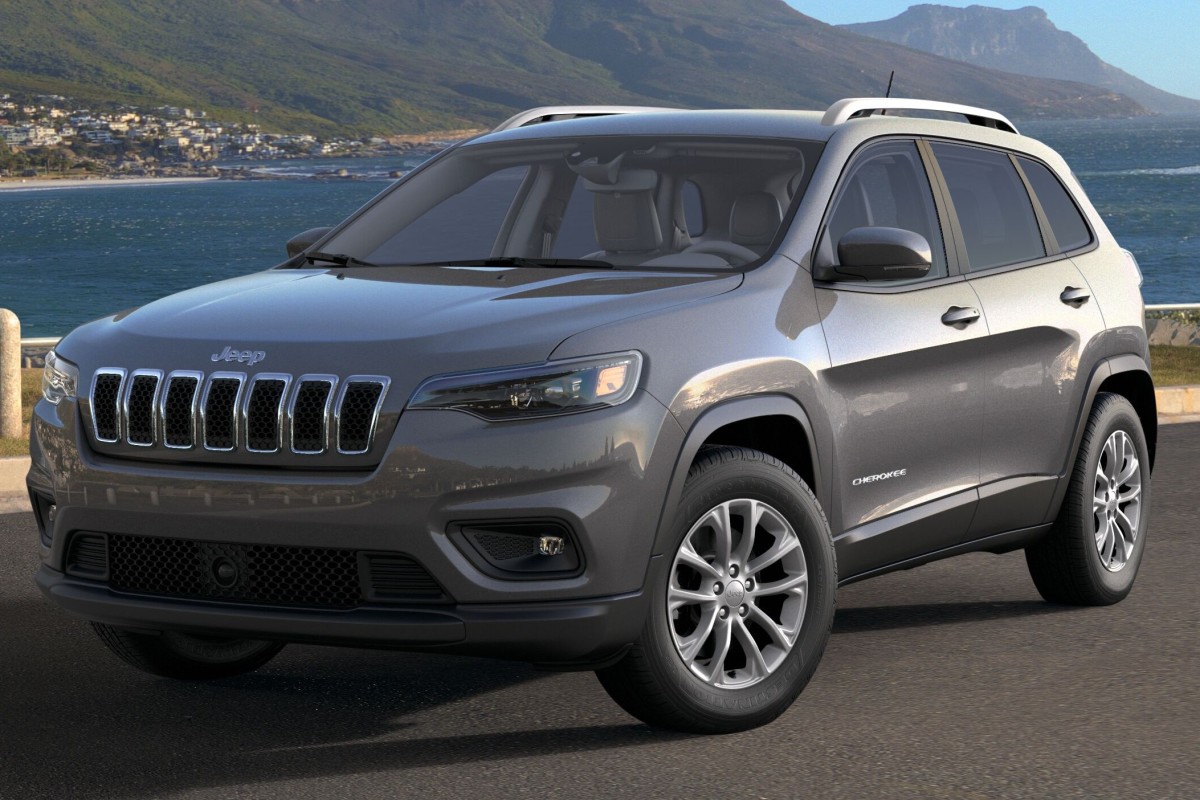
The 2021 Jeep Cherokee's styling had evolved over time, and while initial reactions to its short grille and swept-back headlights were mixed, familiarity had improved its perception. The Cherokee's appearance varied significantly with trim levels, with the entry-level Latitude looking quite ordinary, while the 80th Anniversary Edition boasted a more refined look with its 19-inch Granite Crystal wheels and painted lower body cladding. Jeep's design prowess was evident in the Cherokee's optional panoramic sunroof, which covered the entire roof surface, making it stand out in a crowded SUV market. The Cherokee's resemblance to the larger Grand Cherokee, especially from the front, ensured it was easily recognizable in a sea of crossover SUVs.
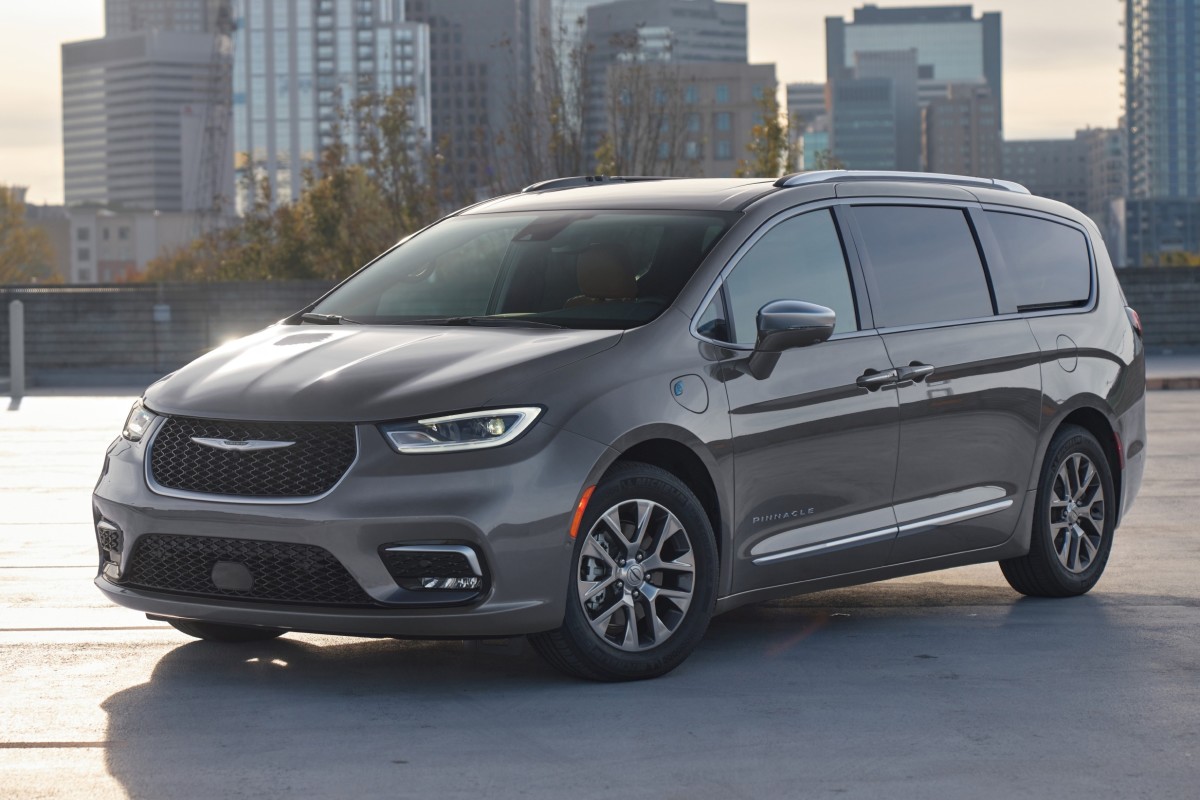
The 2022 Chrysler Pacifica Hybrid, despite being a minivan, offered a unique proposition with its plug-in hybrid drivetrain. It wasn't the most visually appealing vehicle, even with the S Appearance Package, and it came with a hefty price tag. The Pacifica Hybrid Limited test vehicle, with its additional features, pushed the MSRP to $57,680, though a federal tax credit helped offset the cost. Inside, the Pacifica Hybrid featured quality materials like black Nappa leather, but its rounded styling appeared somewhat dated. Unlike competitors like the Kia Carnival, Chrysler didn't attempt to disguise the Pacifica's minivan identity, which might have been a drawback for those seeking a more rugged image. However, for those prioritizing efficiency and practicality, the Pacifica Hybrid was a compelling choice.


The 2021 Jeep Cherokee offered three engine options, catering to different performance needs. The base 2.4-liter four-cylinder engine produced 180 horsepower, while the 3.2-liter V-6 significantly increased output to 271 hp. The top-tier 2.0-liter GMET4 turbocharged four-cylinder engine delivered 270 hp and 295 lb-ft of torque, providing a more robust performance than the V-6's 239 lb-ft. Despite these options, the Cherokee's acceleration was modest, with 0-60 mph times around 7.2 seconds for the V6 and 7.4 seconds for the turbo-four. All models featured a nine-speed automatic transmission, which had improved over time, offering better fuel efficiency and performance than many competitors' CVTs. The Cherokee Trailhawk model excelled off-road, thanks to features like Jeep Active Drive Lock and Selec-Speed Crawl Control. However, the availability of FWD versions aimed at rental fleets might not appeal to off-road enthusiasts.
The 2022 Chrysler Pacifica Hybrid combined a 3.6-liter V6 engine with a dual-motor electric drive system, producing a total of 260 horsepower. The electric drive system's immediate torque ensured the Pacifica never felt underpowered, even when fully loaded. It could travel up to 32 miles on electric power alone, making it ideal for short commutes and errands. The regenerative braking system helped recharge the battery, contributing to an impressive average fuel economy of 37.1 mpg during testing. While the Pacifica Hybrid lacked AWD, it offered a seamless transition between electric and gasoline power, with no need for driver intervention. However, its driving dynamics were unremarkable, with light steering, grabby brakes, and limited cornering grip. Despite these drawbacks, the Pacifica Hybrid's powertrain efficiency and practicality made it a standout choice for those prioritizing eco-friendly transportation.
The 2021 Jeep Cherokee occupied a niche between the smaller Renegade and larger Grand Cherokee, competing with compact crossovers like the Honda CR-V and Toyota RAV4. However, it fell short in terms of utility, offering only 26 cubic feet of cargo space with the rear seats up and 55 cubic feet with them folded, placing it at the bottom of its class. Passenger volume was competitive at 102 cubic feet, but the interior design was straightforward and businesslike, lacking luxury or technological flair. Trim levels influenced interior satisfaction, with the Latitude featuring basic materials, while the Trailhawk and Latitude Lux offered more upscale options like suede and Nappa leather.
The 2022 Chrysler Pacifica Hybrid excelled in comfort and utility, offering three comfortable rows of seats and ample cargo space. It featured triple-zone automatic climate control, quality leather upholstery, and heated and ventilated front seats. Storage options were abundant, with clever solutions like extra shelves, a large floor tray, and a long storage bin behind the center console. The second-row seats were more comfortable than standard Pacifica models, though they required removal to maximize cargo space. The third-row seat was reasonably comfortable, and the Pacifica Hybrid provided 32.3 cubic feet of cargo space behind it, expanding to 87.5 cubic feet with the third row folded. Removing the second-row seats increased capacity to 140.5 cubic feet, surpassing many full-size SUVs.
The 2021 Jeep Cherokee featured the Stellantis Uconnect infotainment system, praised for its user-friendly interface and climate control integration. Available with 7-inch or 8.4-inch touchscreens, the system supported Apple CarPlay and Android Auto, though only via wired connections. A 4G WiFi hotspot and Amazon Alexa integration were also available. Remote start was a convenient feature, especially in extreme climates. The Uconnect system's consistency across Stellantis models was a significant advantage for Cherokee buyers.
The 2022 Chrysler Pacifica Hybrid introduced the Uconnect 5 infotainment system with a 10.1-inch touchscreen. It offered appealing graphics, a simple interface, and fast response times. Features included wireless Apple CarPlay and Android Auto, SiriusXM satellite radio, Amazon Alexa compatibility, and a Wi-Fi hotspot. The FamCam overhead camera system was a valuable addition for parents. However, voice recognition technology was inconsistent, and the Harman Kardon sound system required adjustments for optimal sound quality. The Pacifica also offered Amazon Fire TV for rear-seat entertainment, though personal devices might render this feature unnecessary. A surround-view camera system and parking assist were standard on higher trims, enhancing convenience and safety.
The 2021 Jeep Cherokee received mixed safety ratings. While it earned top "Good" scores in crashworthiness categories from the IIHS, it did not achieve a Top Safety Pick award. The NHTSA awarded it a four-star overall safety rating, with a slight demerit for front driver side crash protection. Standard safety features included lane departure warning, forward collision warning, rear cross-traffic alert, and blind spot monitoring. However, adaptive cruise control was only available on higher trims.
The 2022 Chrysler Pacifica Hybrid boasted an extensive list of standard safety features, including a rear-seat reminder system. It earned a Top Safety Pick+ rating from the IIHS and a five-star overall safety rating from the NHTSA, with a minor concern in frontal-impact protection. While adaptive cruise control with stop-and-go capability was standard, it lacked lane-centering assist. The system required refinement, as it was slow to resume speed and overly cautious in traffic. Despite these issues, the Pacifica Hybrid's comprehensive safety package was a strong selling point.
CarGurus highlights
According to CarGurus experts, the overall rating for the 2021 Jeep Cherokee is 7.0 out of 10, while the 2022 Chrysler Pacifica Hybrid scores 7.5 out of 10. Based on these ratings, the Chrysler Pacifica Hybrid is the recommended choice, offering superior efficiency, practicality, and safety features for families and eco-conscious drivers.
Choose the 2021 Jeep Cherokee if:
- You prioritize off-road capability with the Trailhawk model's advanced features.
- You prefer a straightforward, businesslike interior design without unnecessary frills.
- You value the user-friendly Uconnect infotainment system with consistent functionality across Stellantis models.


Choose the 2022 Chrysler Pacifica Hybrid if:
- You need a spacious and efficient vehicle for transporting up to seven people with ease.
- You appreciate the seamless integration of electric and gasoline power for eco-friendly driving.
- You want a comprehensive suite of standard safety features and advanced technology options.


CarGurus highlights
According to CarGurus experts, the overall rating for the 2021 Jeep Cherokee is 7.0 out of 10, while the 2022 Chrysler Pacifica Hybrid scores 7.5 out of 10. Based on these ratings, the Chrysler Pacifica Hybrid is the recommended choice, offering superior efficiency, practicality, and safety features for families and eco-conscious drivers.
Choose the 2021 Jeep Cherokee if:
Shop Now- You prioritize off-road capability with the Trailhawk model's advanced features.
- You prefer a straightforward, businesslike interior design without unnecessary frills.
- You value the user-friendly Uconnect infotainment system with consistent functionality across Stellantis models.
Choose the 2022 Chrysler Pacifica Hybrid if:
Shop Now- You need a spacious and efficient vehicle for transporting up to seven people with ease.
- You appreciate the seamless integration of electric and gasoline power for eco-friendly driving.
- You want a comprehensive suite of standard safety features and advanced technology options.

By: CarGurus + AI
At CarGurus, our team of experienced automotive writers remain at the heart of our content operation, conducting hands-on car tests and writing insightful guides that are backed by years of industry experience. To complement this, we are harnessing AI to make our content offering more diverse and more helpful to shoppers than ever. To achieve this, our AI systems are based exclusively on CarGurus content, ratings and data, so that what we produce is both unique to CarGurus, and uniquely helpful to car shoppers.

