2022 Chrysler Pacifica Hybrid Reviews, Pricing & Specs


Pros & cons
What we like
Fuel-efficient
Spacious
Impressive technology
What to consider
Uninspired styling
Boring to drive
Unrefined adaptive cruise control
Expert review
Fuel costs are through the roof, but you’ve got a big family to carry. What can you do? Buy a 2022 Chrysler Pacifica Hybrid.
The summer of 2022 has been a doozy. Gas prices went sky high and heat waves roasted Americans. If you’re rethinking the purchase of a three-row SUV and trying to find a fuel-efficient solution that emits greenhouse gas emissions only part of the time, the seven-passenger Chrysler Pacifica Hybrid might be a good solution. It doesn’t offer all-wheel drive (AWD) as other Pacificas do, but it has a plug-in hybrid powertrain supplying an EPA-rated 32 miles of electric range before the gasoline V6 engine fires up to deliver 30 mpg in combined driving.
out of 10 expert review
Look & feel
We get it. The Chrysler Pacifica Hybrid is a minivan, and minivans convey an image that causes discomfort in some people. You want to be seen as a rugged individualist who leads an active lifestyle, right? That’s why you want a three-row midsize crossover SUV instead of a Dustbuster on wheels.
But here’s the thing. A three-row midsize crossover SUV is basically the same thing as a minivan but without the handy sliding side doors that make it oh-so-easy to load children in tight parking spaces, saving a slipped disc in your back and dents in the vehicle parked next to yours.
Oh sure, most crossover SUVs have a taller and longer hood to avoid looking like a minivan, and they offer AWD and some extra ground clearance. A perfect example of the difference between the two is the Honda Pilot and Honda Odyssey. They have the same underlying platform, drivetrain, electrical architecture, and more. But one is a roomy minivan and the other looks like every other vehicle on American roads.
Now, can you name a plug-in hybrid, three-row SUV from a mainstream brand? Nope, the Jeep Grand Cherokee 4xe doesn’t count because it seats only five people. Let’s save some time. There isn’t one. And there isn’t another plug-in hybrid minivan, either. The Toyota Sienna is a hybrid, and that’s not the same thing.
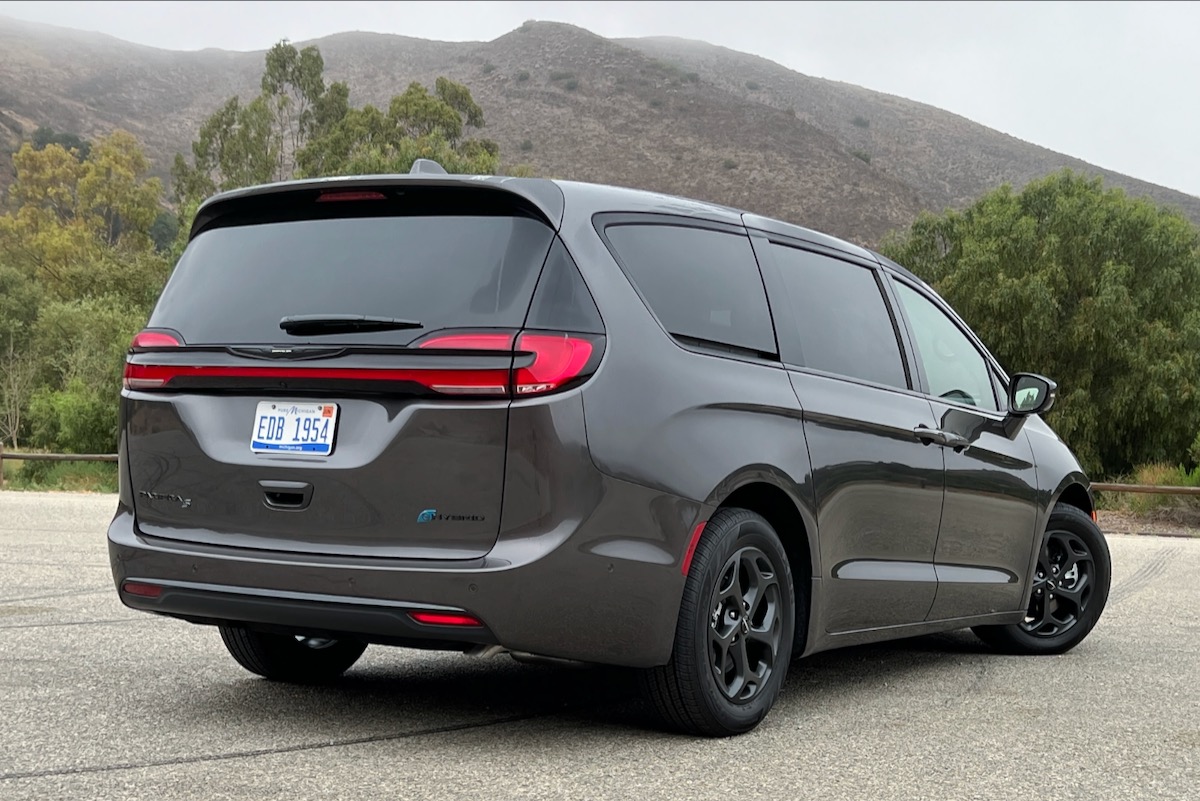
So, that brings us to this unicorn: the 2022 Chrysler Pacifica Hybrid. It’s not a looker, not even with the S Appearance Package that Chrysler added to our Limited-trim test vehicle. And it’s not cheap, either. The base Touring L starts at $49,095, including the destination charge. The Limited trim costs $54,095, and the Pinnacle version extracts $57,645 from your bank account.
Our Pacifica Hybrid Limited test vehicle had extra-cost paint, the S Appearance Package, and a Uconnect Theater rear-seat entertainment system, bringing the Manufacturer’s Suggested Retail Price (MSRP) to $57,680, including the destination charge. Factor in the $7,500 federal income tax credit available for this model, and the van still ran north of 50 grand.
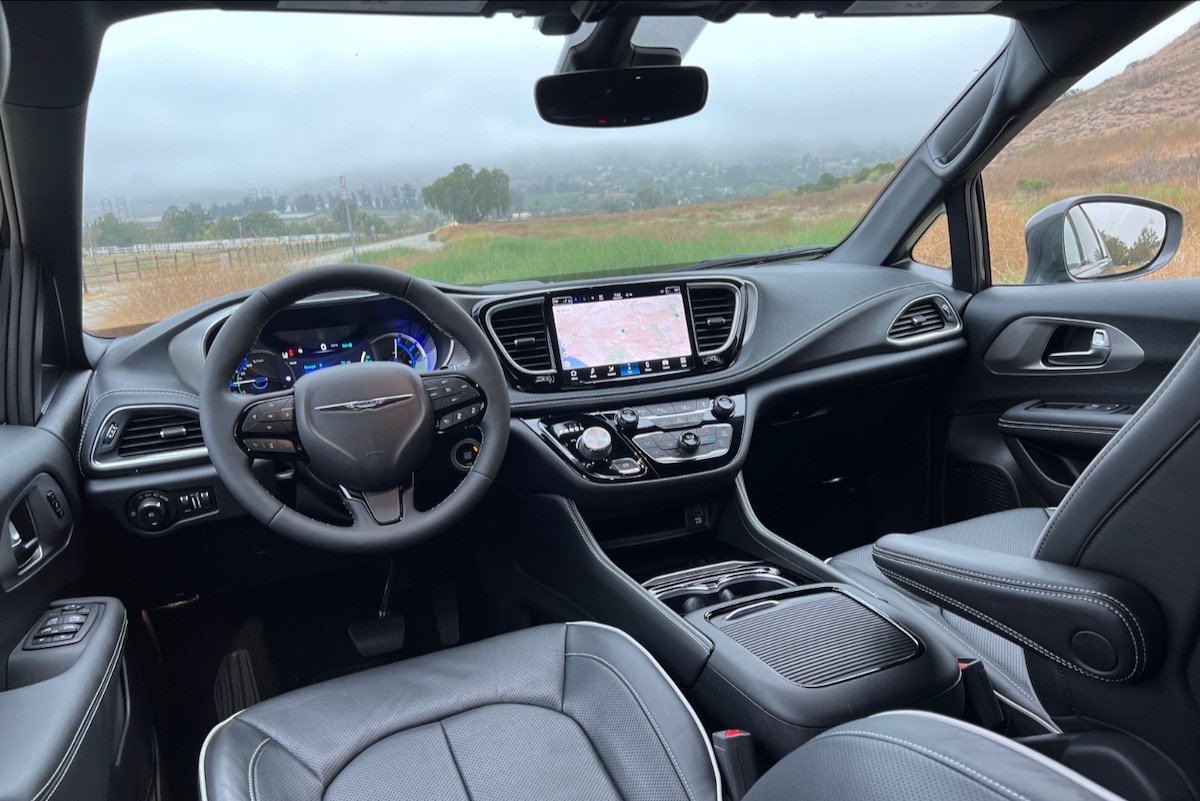
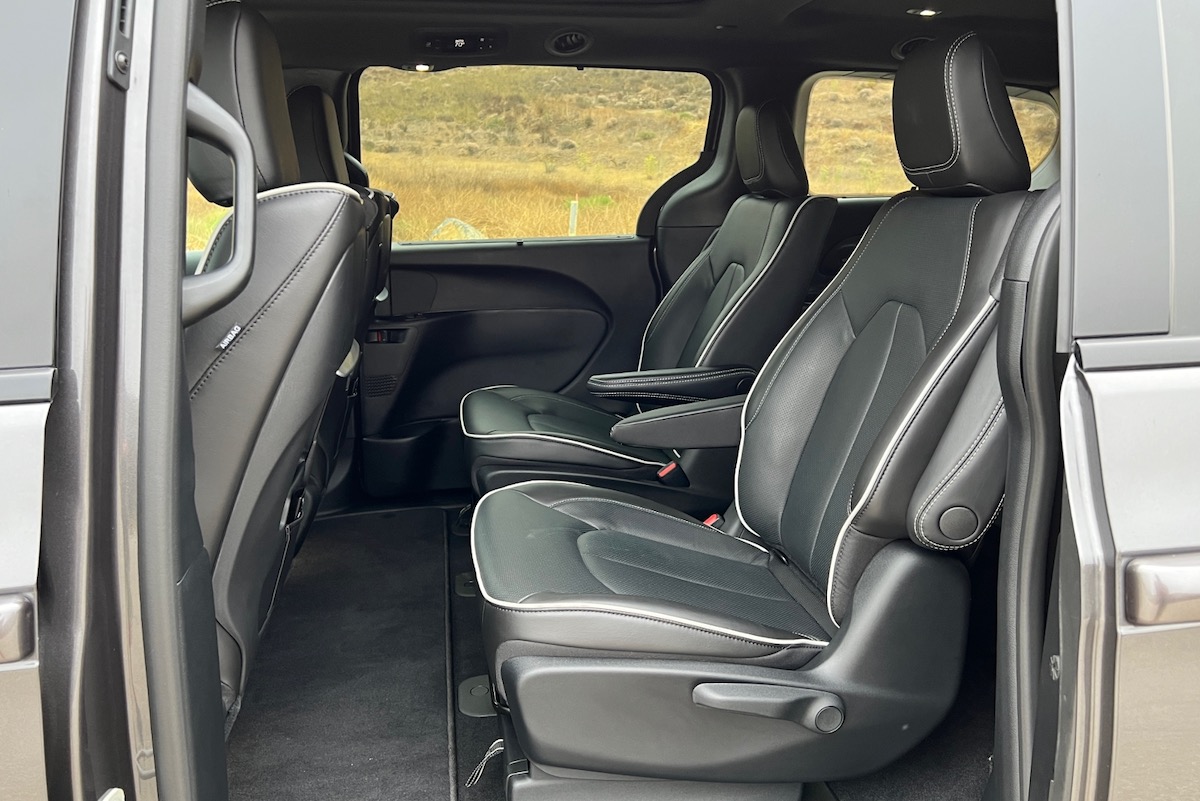
The interior is nice enough, with the black Nappa premium leather feeling and smelling like quality. But the Pacifica’s rounded, flowing exterior and interior styling themes make it appear soft and dated compared to the harder-edged and more architectural motifs that are becoming popular. And, unlike what Kia has done with the comparatively stylish Carnival minivan, Chrysler isn’t trying to hide what the Pacifica is.
Not that there’s anything wrong with that. But if you’re trying to sell people something they don’t naturally want (see: plug-in hybrid minivan), then you need to make it such a deal that they can’t ignore it.
Performance
Putting the Pacifica Hybrid’s exterior wrapper aside, we think this is a perfect package for efficiently transporting up to seven people.
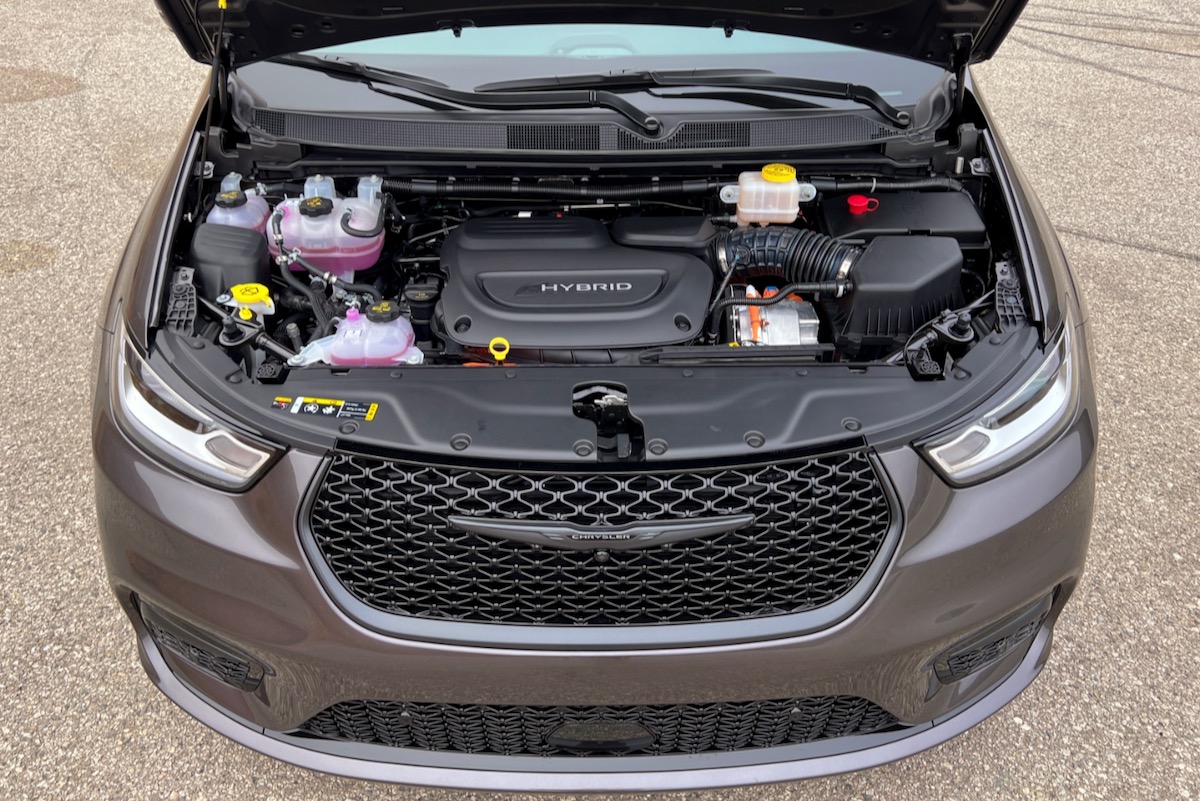
The plug-in hybrid drivetrain is based on Chrysler’s tried-and-true 3.6-liter V6 engine, which pairs with a dual-motor electric drive system. One of the electric motors serves as an electrically variable transmission while the other drives the van’s front wheels. A 16-kWh battery pack lives under the second-row seating area’s floor, which means the Pacifica Hybrid does not have the same Stow n’ Go collapsing seats as a standard Pacifica does. Total system output measures 260 horsepower, and the electric drive system’s torque is available immediately.
From the driver’s seat, the Pacifica never feels underpowered, even with every row of seats filled and the van operating only on electricity. That’s the best thing about the Pacifica Hybrid. It can travel up to 32 miles on the juice stored in the battery pack, which is plenty of range for schlepping kids to school and commuting to work on weekday mornings, or for running errands on weekends. You don’t even need a home charging station. Just plug the Pacifica Hybrid into a standard household outlet, and you can easily recharge the battery overnight. Chrysler also provides charging status lights so that you can quickly check by looking at the van from a window in your house.
Sometimes, the gas engine will turn on to assist the electric-drive system. Push too hard on the accelerator pedal, or load up with teenagers for a trip to a beach located on the other side of a mountain range, and the Pacifica Hybrid won’t run purely on electricity when power requirements are high. However, thanks to the regenerative braking system, it captures energy and feeds it back to the battery, like when you’re coasting down a mountain grade. That’s how, on our Los Angeles driving loop, we traveled 39 miles on the battery and 29.9 miles on the gasoline V6 operating as a hybrid powertrain, resulting in an average fuel economy of 37.1 mpg.
Since the Toyota Sienna is the Pacifica Hybrid’s most direct rival, we’ll point out that it uses a four-cylinder engine to return 36 mpg in combined driving. Unlike with the Pacifica Hybrid, you can get AWD with the Sienna, which drops the fuel economy rating to 35 mpg. But the Sienna feels underpowered and can sound like it’s yowling in pain when you’re accelerating. Plus, you can’t plug it in for sustained all-electric driving.
To its credit, the Pacifica Hybrid’s electric drive system never sounded as though it was in agony. In fact, when the van switches from pure electric driving to using the gasoline V6 engine, the change is nearly imperceptible. Furthermore, there isn’t anything to think about with regard to the powertrain and its settings. We could not find an EV mode, a Save mode, a Charge mode, a Sport mode, or an Eco mode. Just shift into Drive and go. The powertrain automatically takes care of the rest, operating in as efficient a manner as it can depending on the situation.
We’re impressed with the Pacifica Hybrid’s powertrain. But this vehicle is boring to drive. Aside from geeking out on the effortless efficiency, what impressed us most about the driving dynamics was how it could take speed humps at 35 mph without any trouble. That was flat-out amazing.
The rest of the time, though, the Pacifica Hybrid drives like a four-wheeled appliance. The steering is light and uncommunicative, the regenerative brakes are unremarkable except for when they occasionally feel too grabby, the tires don’t offer much cornering grip, and the weight mounted low in the platform sometimes produces an unnatural ride quality.
If there’s a reason to take a pass on a Pacifica Hybrid, aside from its minivan packaging, the dull driving experience is it. Still, we’re giving the Pacifica Hybrid’s performance a relatively high rating for the brilliance of its powertrain.
Form & function
When it comes to comfort and utility, minivans rule. They offer three legitimately comfortable rows of seats and as much cargo space as some full-size SUVs, all in a more affordable and efficient package. Add the Pacifica Hybrid’s electric-only driving range, and there is currently no better way to transport lots of people or cargo over short distances if efficiency is the primary goal. (For longer distances, you can’t beat the Toyota Sienna.)
Equipped with triple-zone automatic climate control with a new clean air filtration system, quality leather upholstery wrapped around comfortable front seats, and heated and ventilated front-seat cushions, the Pacifica Hybrid Limited easily kept its cool during a mid-summer heat wave—especially if we kept the panoramic sunroof’s shade closed. Chrysler also pads the sides of the center console so that the driver and front passenger remain comfortable on long road trips.
Storage impresses, from the extra shelves carved into the front door panels to the large floor tray underneath the center console. Two small covered bins offer access to USB ports and a wireless smartphone charger, and the front cupholders have no trouble handling large drink cups.
Reach behind the center console, or lean forward from the second-row captain’s chairs, and a long storage bin slides out from the back panel. This bin is huge and includes a cupholder insert. Second-row passengers also benefit from their own climate control panel, a large grab handle on each roof pillar to assist with entry and exit, and side window sunshades that, unfortunately, leave a large uncovered gap.
The second-row seats are more comfortable than the narrower Stow n’ Go chairs that you’ll find in a standard Pacifica. They’re wider, with a more comfortable seat cushion angle, and they slide forward and back to adjust for legroom depending on your passenger load. Comparatively, Stow n’ Go seats do none of these things. However, they do collapse into the floor with relative ease, whereas if you want to maximize cargo space in a Pacifica Hybrid, you’re going to need to lift these heavy chairs out of the van and find a place to store them.
The third-row seat is reasonably comfortable, especially if the people in the second row are willing to slide forward a little bit. Third-row passengers get cupholders, USB ports, and side window shades, and this seating area is comfortable for two adults or three kids.
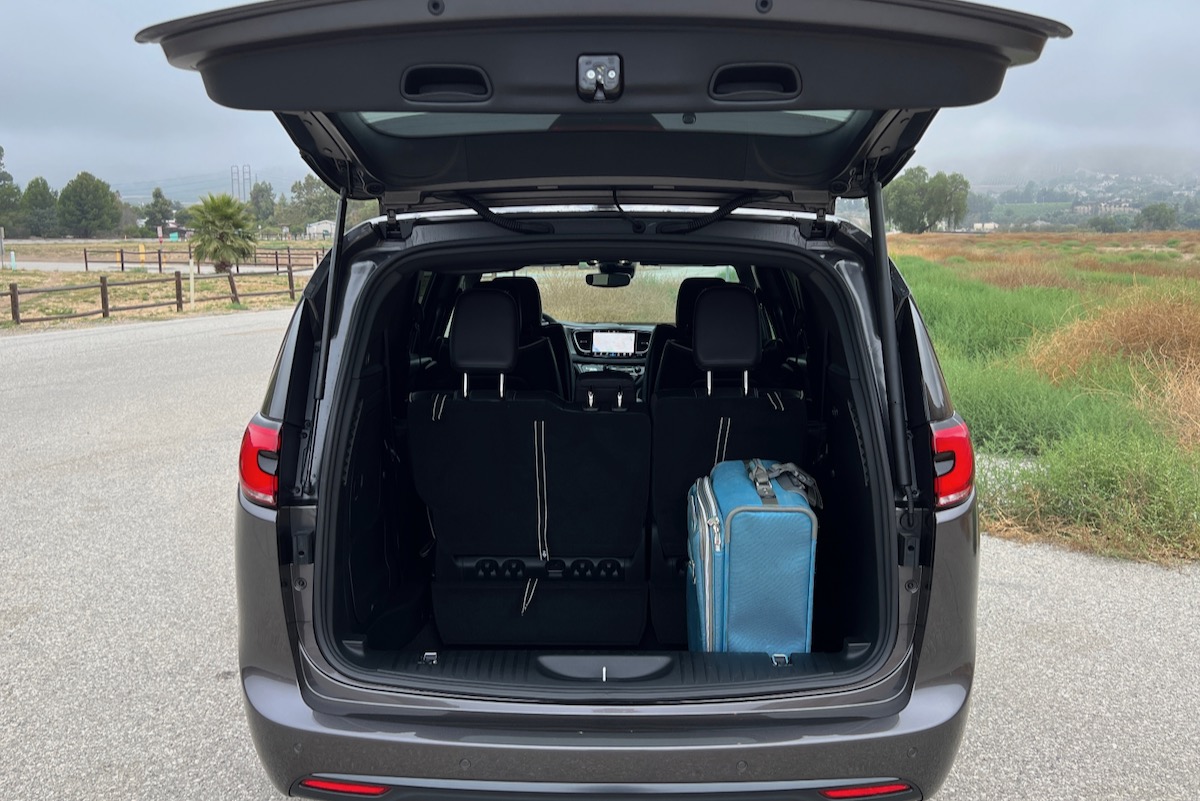
Behind the third-row seat, the Pacifica Hybrid provides 32.3 cubic feet of cargo space. Plastic grocery bag hooks run the width of the cargo well, and Chrysler places the power liftgate close button low so that shorter people can easily reach it. The Pacifica Hybrid does not offer an onboard vacuum cleaner like other Pacifica models; that panel in the cargo area contains the minivan’s charging cord and storage bag.
You can easily tumble the third-row seats into their storage well with one hand, and Chrysler conveniently labels the straps 1, 2, and 3 in the order you need to release them. This action creates a huge 87.5 cubic-foot cargo area. For context, that’s about how much space a typical midsize, three-row SUV offers with all of its seats folded down. With the Pacifica, you get that kind of space, and you can still bring the kids along for the adventure.
Remove the second-row seats, and the Pacifica Hybrid hauls up to 140.5 cubic feet of whatever you can stuff into it. That’s 17.6 cubic feet more than a Chevy Tahoe can hold. But creating that space isn’t as easy as it is in the SUV.
Technology
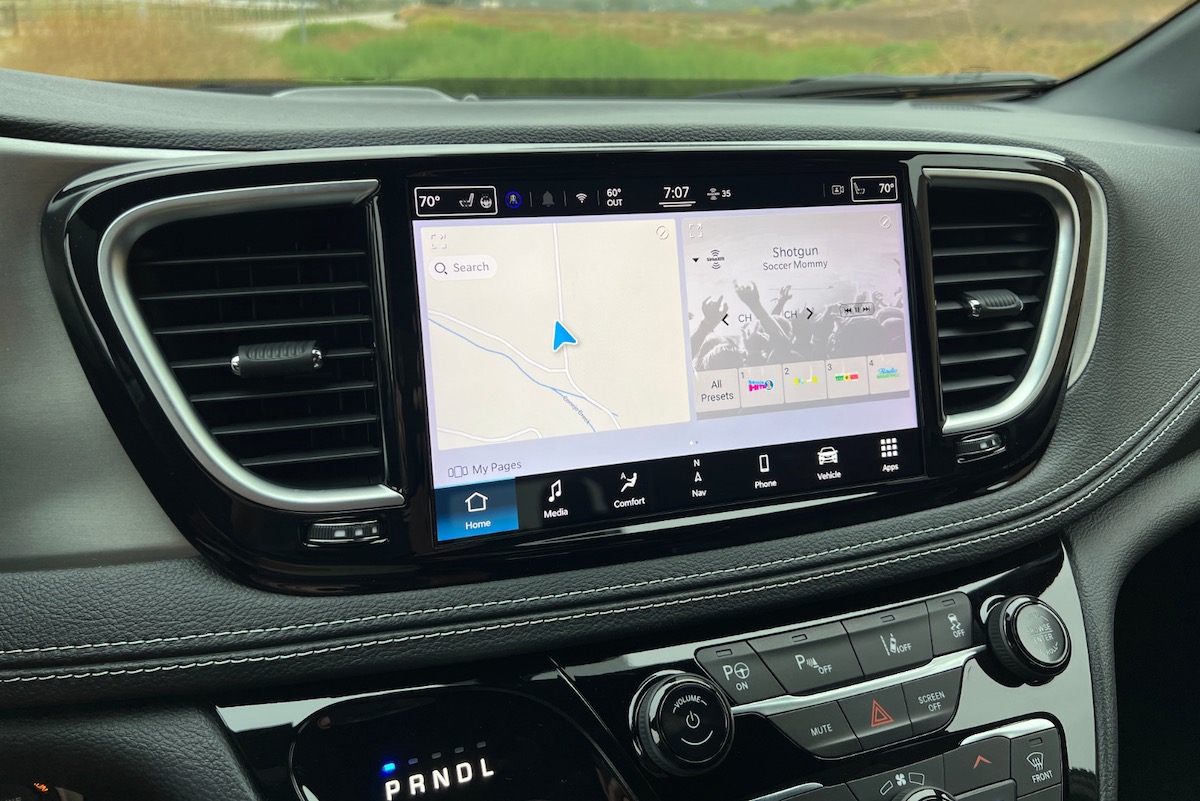
A few years ago, the Chrysler Pacifica was the first Stellantis model to get the company’s latest Uconnect 5 infotainment system. It comes with a 10.1-inch touchscreen display and features appealing graphics, a simple user interface that includes knobs for stereo volume and tuning, and a speedy response to inputs. In addition, you can program five different user profiles with different widgets to create a custom user experience. The screen does accumulate lots of fingerprints in a short span of time, though.
Uconnect 5 includes simultaneous Bluetooth pairing for two devices, wireless Apple CarPlay and Android Auto, SiriusXM satellite radio, Amazon Alexa compatibility, and connected services, including access to a Wi-Fi hotspot. You can even check on the people riding in the second- and third-row seats via the available FamCam overhead camera system. FamCam is a great feature for parents, especially when kids are riding in reverse-facing child safety seats. Navigation and SiriusXM Guardian connected services are also available.
We have no complaints about Uconnect 5’s operation or offerings, except for the voice recognition technology, which is hit-and-miss in its ability to quickly and accurately respond to conversational inputs. For example, when telling the system, “I need to go to a hospital,” it produced a list of all medical-related facilities rather than just hospitals. Of course, if you’re running Apple CarPlay or Android Auto, this isn’t a problem. But if you go through Uconnect 5 in the kind of panicked state that makes you request directions to a hospital, it won’t prove helpful.
Our test vehicle also had a 20-speaker Harman Kardon premium sound system (non-hybrids have 19 speakers), which is now standard starting with Limited trim. The description is promising, but the sound quality in the default settings is thin and reedy up top and too boomy down low. You’ll need to fiddle with the tone settings to find satisfaction.
For 2022, the Pacifica is available with Amazon Fire TV for its dual 10.1-inch touchscreen rear-seat entertainment system. It allows you to download Amazon Prime Video content to the system or stream content via the onboard Wi-Fi or your smartphone’s data plan, and you can sync the screens or view individual programming. Gaming, music, and other entertainment are also available. Alexa-enabled, voice-controlled remotes are available to control the system, or your passengers can tap on the screen.
We carried teenagers in the Pacifica Hybrid. They didn’t use the rear-seat entertainment system. Instead, one used her smartphone, and the other used her iPad. Based on this, it seems like you can skip this pricey option if your children have their own devices. Then again, it’s easier to steal a phone or tablet computer out of a Pacifica than it is an embedded rear-seat entertainment system.
Additionally, our test vehicle had an exceptionally useful surround-view camera system, which is now standard starting with Touring L trim. A parking assist system—also standard on the Touring L trim and higher—is able to steer the minivan into parallel and perpendicular parking spaces while you operate the accelerator, brake pedal, and transmission. However, we find these parking assist systems a poor substitute for knowing how to drive. Besides, the Pacifica has reverse tilt-down side mirror functionality to help with parallel parking.
Safety
Chrysler claims that the 2022 Pacifica “offers more standard safety and security features than any other vehicle in the industry.” This year, that list expands to include a rear-seat reminder system that warns drivers not to lock and leave the vehicle if they opened one of the sliding side doors prior to the most recent trip. The goal here is to prevent you from accidentally leaving a child, a pet, or something else important inside the Pacifica.
We’re not going to list all of the safety features and driving-assistance systems the Pacifica Hybrid has. Instead, we’ll point out that every 2022 Pacifica has a complete package of standard driver-assist and collision-avoidance features, but you cannot get adaptive cruise control paired with a lane-centering assist function to ease long-distance highway travel.
The Pacifica does, however, have adaptive cruise control with stop-and-go capability and lane-keeping assist. While using both on local Los Angeles freeways, we found that the adaptive cruise needs some refinement. For example, when a motorist ahead is slowing and exiting, the Pacifica is far too slow to recognize the vehicle’s departure from the lane and resume travel speed. This delay forces the Pacifica’s driver to take manual action by pressing down on the accelerator, defeating the purpose of the adaptive cruise control.
Furthermore, the adaptive cruise is inept at moderating speed if another motorist cuts into the gap ahead of the minivan. In moderate traffic conditions, the Pacifica braked too hard and too suddenly, which is undesirable when other vehicles are following close behind.
The Chrysler Pacifica earns a Top Safety Pick+ safety rating from the Insurance Institute for Highway Safety (IIHS) and a five-star overall safety rating from the National Highway Traffic Safety Administration (NHTSA). In the NHTSA crash tests, frontal-impact protection rates four stars, which is the only concern across all of the Pacifica’s individual scores from both organizations.
Cost-effectiveness
The 2022 Chrysler Pacifica Hybrid’s price is high, but in many ways, it is justified. This minivan is effortlessly efficient, well equipped in all three of its trim levels, technologically advanced, and safe in a collision. It has comfortable seating for six (seven if you squeeze) and provides as much cargo space as a full-size SUV. Also, for 2022, Chrysler has added more standard equipment to every version of the Pacifica Hybrid, better justifying the value equation.
The Pacifica Hybrid also qualifies for the $7,500 federal income tax credit in its current form, and will likely still qualify under revised rules that go into effect next year. There are state and local rebates available, too, depending on where you live. Still, if you’re cross-shopping this Chrysler with a less-expensive Toyota Highlander Hybrid or a Toyota Sienna, those financial incentives might not be a big enough carrot if you don’t absolutely need the Pacifica’s superior maximum cargo volume of 140.5 cubic feet.
In addition, the Pacifica Hybrid can save you money in the long run if you recharge the battery every night. Keep it charged up, and Chrysler says a Pacifica Hybrid will save you about $2,250 in fuel costs over five years compared to a typical new vehicle.
Unfortunately, the more significant hurdle to clear is the minivan factor—a major turn-off for many American car buyers. It doesn’t help that the Pacifica Hybrid is about as exciting to look at and drive as watching paint dry. Wrap this electrified drivetrain and equipment in Dodge Durango or Jeep Grand Cherokee L bodywork, and it would prove far more compelling. And probably more popular.

What owners say
It has great features a luxurious interior , lots of space , . Price for the features is very reasonable. Comparable would be toyota sienna hybrid. It even has a vaccum.
June 6, 2022Its the only plug-in minivan available, and with a daily charge of about 32 miles, it handles the commute almost entirely on electric!
January 6, 2023Trims & specs
Base MSRP $49,000 | Seating 7 |
Engine 3.6L 260 hp V6 Hybrid | Cargo Capacity 32.3 cu ft |
Combined MPG 29 | Drivetrain FWD |
Base MSRP $54,000 | Seating 7 |
Engine 3.6L 260 hp V6 Hybrid | Cargo Capacity 32.3 cu ft |
Combined MPG 83 | Drivetrain FWD |
Base MSRP $58,050 | Seating 7 |
Engine 3.6L 260 hp V6 Hybrid | Cargo Capacity 32.3 cu ft |
Combined MPG 83 | Drivetrain FWD |


Pricing trends
MSRP range
$49,000 - $58,050
Current avg. market price
$22,280
Trending down by 1.2% this month
May 2026 - October 2026


