Hyundai Tucson vs Land Rover Range Rover Velar
Overview | |
MSRP$27,500 | MSRP$61,500 |
Listings218 | Listings269 |
Ratings & Reviews | |
User Reviews | User Reviews |
Expert reviews8.5 out of 10 | Expert reviews6.3 out of 10 |
Pros
Cons
| Pros
Cons
|
Reviews SummaryWith the growth and evolution of the compact SUV market, shoppers have seemingly endless options. And the growth of this segment has allowed for different models to grow in their own unique ways. The Mazda CX-5 is upscale and athletic, while the Ford Bronco Sport is a surprisingly capable off-roader. So what if you aren’t seeking a well-honed niche vehicle? What if you are looking for a small SUV that’s and overall great vehicle? The 2024 Hyundai Tucson answers that question as a well-rounded compact SUV that doesn’t excel in any one particular area, but instead covers a lot of what modern consumers demand out of their vehicle. This format is one that has been embraced by perennial segment standouts like the Toyota RAV4 and Honda CR-V. Verdict: The Tucson is a well-rounded small SUV and a good value. It does not shine in any particular area, instead blending good performance with a comfortable and spacious cabin, impressive tech and safety features, and an attractive price tag. | |
Reviews SummaryA luxury SUV with seating for five people, the 2024 Velar is one of four SUVs to wear Range Rover lettering across the leading edge of its hood. It slots into the lineup between the smaller Evoque and more capable Sport. This model year, the Velar receives several updates. They include design and comfort enhancements and several improvements to the standard infotainment system. Verdict: The changes to the 2024 Range Rover Velar result in an appealing, if flawed, alternative to the best-sellers in the segment, such as the BMW X5 and Mercedes-Benz GLE-Class. If the Velar had more natural and less frustrating technology, it could raise its profile in the midsize luxury SUV segment considerably. | |
No video found | |
Popular Features & Specs | |
Engine2.5L 187 hp I4 | Engine2.0L 247 hp I4 |
Drive TrainFWD | Drive TrainAWD |
Seating Capacity5 | Seating Capacity5 |
Horsepower187 hp @ 6100 rpm | Horsepower247 hp @ 5000 rpm |
MPG City25 | MPG City22 |
MPG Highway32 | MPG Highway26 |
Engine | |
Engine Name2.5L 187 hp I4 | Engine Name2.0L 247 hp I4 |
Torque178 lb-ft @ 4000 rpm | Torque269 lb-ft @ 1300 rpm |
Horsepower187 hp @ 6100 rpm | Horsepower247 hp @ 5000 rpm |
DrivetrainFWD | DrivetrainAWD |
Fuel Economy | |
MPG City25 | MPG City22 |
MPG Highway32 | MPG Highway26 |
Interior | |
Leather Seats | Leather SeatsStandard |
Seating Capacity5 | Seating Capacity5 |
Key Features | |
Navigation System | Navigation SystemStandard |
Sunroof/Moonroof | Sunroof/MoonroofStandard |
Safety | |
Front Crash Overall5 | Front Crash Overall |
Dimensions & Capacity | |
Cargo Space38.7 cu ft | Cargo Space30.9 cu ft |
Curb Weight3346 lbs | Curb Weight4130 lbs |
Height65.6 in | Height66.3 in |
Length182.3 in | Length188.9 in |
Width73.4 in | Width84.5 in |
Wheelbase108.5 in | Wheelbase113.0 in |
Maximum Payload1283 lbs | Maximum Payload1490 lbs |
Number of doors4 | Number of doors4 |
Maximum Towing Capacity2000 lbs | Maximum Towing Capacity5291 lbs |
Standard Towing Capacity2000 lbs | Standard Towing Capacity |
Overview | ||
MSRP | $27,500 | $61,500 |
Listings | ||
Ratings & Reviews | ||
User reviews | ||
Expert reviews | 8.5 out of 10Read full review | 6.3 out of 10Read full review |
Pros & cons | Pros
Cons
| Pros
Cons
|
Summary | With the growth and evolution of the compact SUV market, shoppers have seemingly endless options. And the growth of this segment has allowed for different models to grow in their own unique ways. The Mazda CX-5 is upscale and athletic, while the Ford Bronco Sport is a surprisingly capable off-roader. So what if you aren’t seeking a well-honed niche vehicle? What if you are looking for a small SUV that’s and overall great vehicle? The 2024 Hyundai Tucson answers that question as a well-rounded compact SUV that doesn’t excel in any one particular area, but instead covers a lot of what modern consumers demand out of their vehicle. This format is one that has been embraced by perennial segment standouts like the Toyota RAV4 and Honda CR-V. Verdict: The Tucson is a well-rounded small SUV and a good value. It does not shine in any particular area, instead blending good performance with a comfortable and spacious cabin, impressive tech and safety features, and an attractive price tag. | A luxury SUV with seating for five people, the 2024 Velar is one of four SUVs to wear Range Rover lettering across the leading edge of its hood. It slots into the lineup between the smaller Evoque and more capable Sport. This model year, the Velar receives several updates. They include design and comfort enhancements and several improvements to the standard infotainment system. Verdict: The changes to the 2024 Range Rover Velar result in an appealing, if flawed, alternative to the best-sellers in the segment, such as the BMW X5 and Mercedes-Benz GLE-Class. If the Velar had more natural and less frustrating technology, it could raise its profile in the midsize luxury SUV segment considerably. |
Video | No video found | |
Popular Features & Specs | ||
Engine | 2.5L 187 hp I4 | 2.0L 247 hp I4 |
Drive Train | FWD | AWD |
Seating Capacity | 5 | 5 |
Horsepower | 187 hp @ 6100 rpm | 247 hp @ 5000 rpm |
MPG City | 25 | 22 |
MPG Highway | 32 | 26 |
Engine | ||
Engine Name | 2.5L 187 hp I4 | 2.0L 247 hp I4 |
Torque | 178 lb-ft @ 4000 rpm | 269 lb-ft @ 1300 rpm |
Horsepower | 187 hp @ 6100 rpm | 247 hp @ 5000 rpm |
Drivetrain | FWD | AWD |
Fuel Economy | ||
MPG City | 25 | 22 |
MPG Highway | 32 | 26 |
Interior | ||
Leather Seats | Standard | |
Seating Capacity | 5 | 5 |
Key Features | ||
Navigation System | Standard | |
Sunroof/Moonroof | Standard | |
Safety | ||
Front Crash Overall | 5 | |
Dimensions & Capacity | ||
Cargo Space | 38.7 cu ft | 30.9 cu ft |
Curb Weight | 3346 lbs | 4130 lbs |
Height | 65.6 in | 66.3 in |
Length | 182.3 in | 188.9 in |
Width | 73.4 in | 84.5 in |
Wheelbase | 108.5 in | 113.0 in |
Maximum Payload | 1283 lbs | 1490 lbs |
Number of doors | 4 | 4 |
Maximum Towing Capacity | 2000 lbs | 5291 lbs |
Standard Towing Capacity | 2000 lbs | |
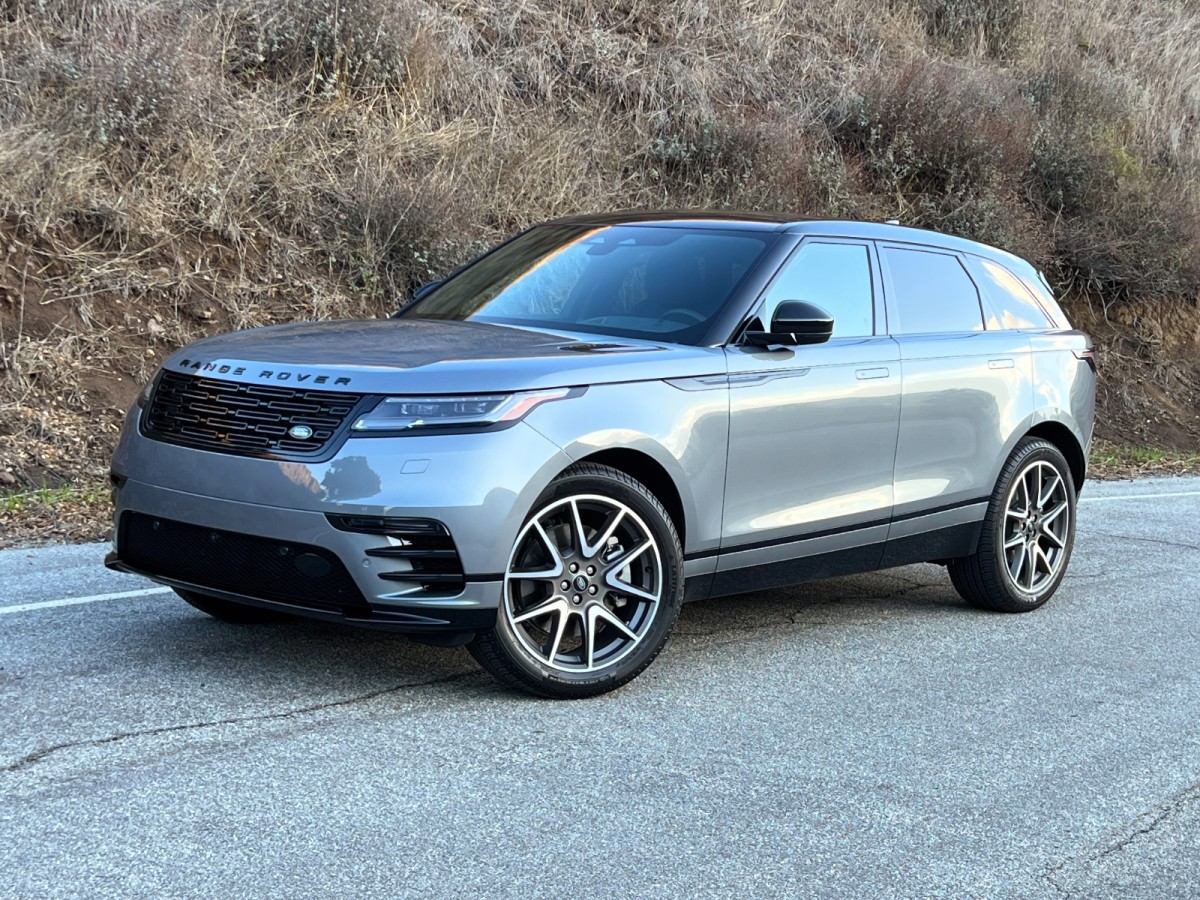
The 2024 Land Rover Range Rover Velar epitomized a “reductive” design philosophy that aimed to simplify and modernize both its exterior and interior. Initially introduced in 2018, the Velar was the first Range Rover to embrace this ethos. By 2024, the vehicle had undergone further refinement with a new grille, updated headlights, taillights, fresh wheel options, and tweaked exterior detailing. The redesign touched every aspect of the vehicle, including a new rear bumper that emphasized width over height, creating a lower and wider stance.
Inside, the Velar boasted a larger 11.4-inch touchscreen infotainment system that appeared to float in front of the dashboard. The center console also saw a significant makeover, eliminating physical controls for the climate system, stereo volume, and other functions, migrating these to the touchscreen. This move aimed at modernity, but often left users wanting for tactile feedback.
Overall, the Velar's cabin had a high-quality feel despite a few substandard elements such as low-grade plastic on the lower door panels and a poorly-secured driver’s floor mat. On the positive side, the new Kvadrat wool blend seat upholstery was a welcome option for those preferring an animal-free interior. The Cabin Air Purification Plus system added another layer of refinement, ensuring clean air inside the SUV. However, certain features like the natural voice recognition system only worked with an active connected services subscription or Amazon Alexa, making the decision to eliminate physical controls a questionable one.
Equipped with the Dynamic SE trim, our test vehicle had a turbocharged six-cylinder engine, a Black Exterior Pack, a Cold Climate Pack, and several other upgrades, bringing its MSRP to $80,533, including a $1,275 destination charge.
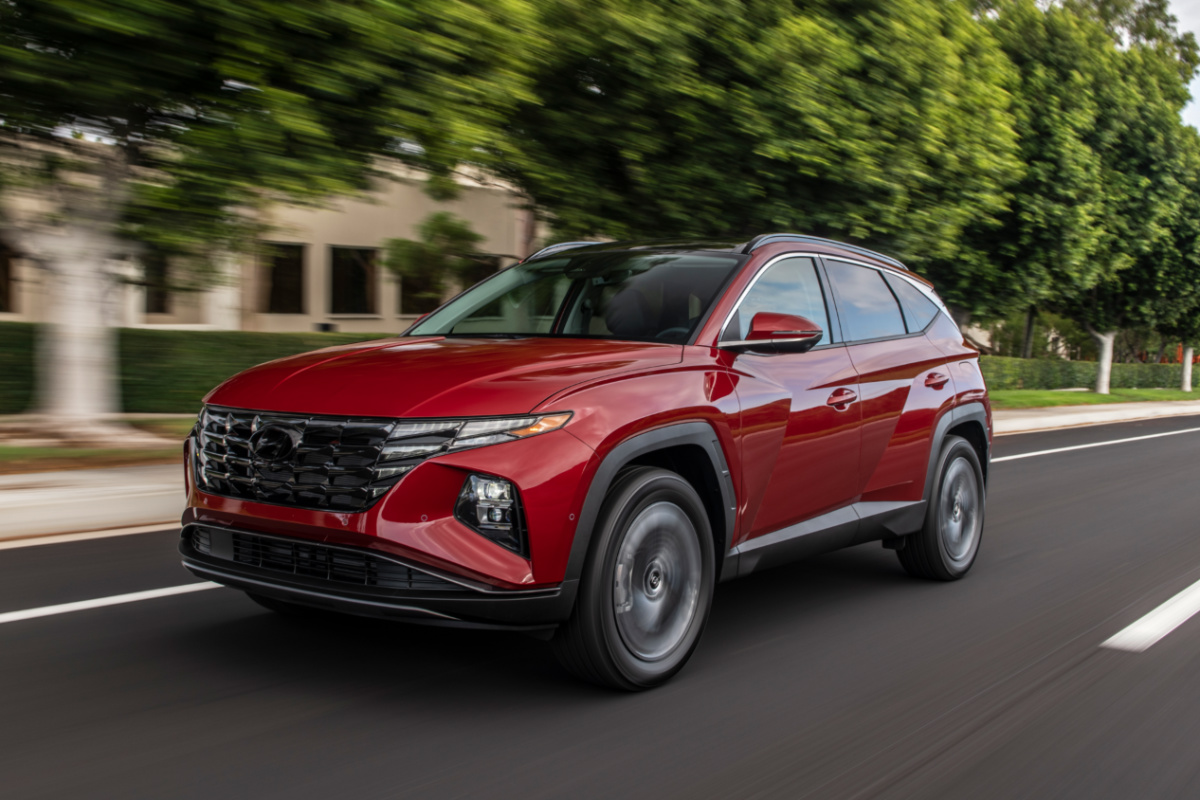
The 2024 Hyundai Tucson carried forward a design that debuted in the 2022 model year, representing the fourth generation of this compact SUV. Hyundai's bold approach was evident in its sharp, aggressive lines and design elements like headlights blending into the grille. This unified yet striking aesthetic made the Tucson stand out even in less flattering colors like white.
The Tucson’s trim levels—SE, SEL, XRT, and Limited—offered varying degrees of sophistication. The SE trim featured 17-inch alloy wheels and roof rails, while the SEL offered an optional Convenience package with 19-inch wheels. The XRT trim included unique black 19-inch wheels, side steps, and functional roof racks. The Limited trim boasted a dark chrome grille and upgraded headlights.
The excellent design continued inside the cabin. The sophisticated interior integrated technology into an approachable layout. However, the absence of a volume dial was one criticized aspect, as touch-capacitive buttons and steering wheel toggles were less convenient. The layout, including controls near the shifter and cupholders, did maintain a practical feel.
The base SE trim incorporated essential features like two USB ports, remote keyless entry, an 8-inch touchscreen infotainment system, and support for wireless Apple CarPlay and Android Auto. Higher trims like the SEL added more luxuries such as dual-zone automatic climate control and wireless device charging. Our test vehicle, the Limited trim, came with high-end features like genuine leather upholstery, a panoramic sunroof, and a premium Bose stereo system.


Our test model of the 2024 Velar, equipped with a turbocharged 3.0-liter inline six-cylinder engine and a 48-volt mild-hybrid system, produced an impressive 394 horsepower between 5,500 rpm and 6,500 rpm and 406 lb-ft of torque between 2,000 rpm and 5,000 rpm. This engine, labeled P400, drastically improved the SUV's performance, accelerating to 60 mph nearly two seconds faster than the P250 variant that offered only 247 horsepower from a 2.0-liter turbo four-cylinder engine.
Though the P400 was less efficient with an EPA rating of 21 mpg in combined driving versus the P250’s 23 mpg, the trade-off felt worth it for the enhanced drive quality. During our test, the vehicle averaged 19.5 mpg.
The Velar’s eight-speed automatic transmission provided smooth power distribution to all four wheels through its all-wheel-drive system, which dynamically adjusted torque between the front and rear axles. Ground clearance could vary from 8.4 inches to a maximum of 9.9 inches with the optional air suspension, enhancing its off-road credentials alongside a water-fording capability ranging from 20.9 inches to 22.8 inches depending on suspension type.
On paved roads, in Dynamic mode, the Velar exhibited nimble handling, performing admirably on the mountain roads near Malibu. The adaptive damping suspension and powertrain alertness in Dynamic mode underscored its sporty characteristics. In Comfort mode, the Velar provided a quiet and smooth ride on highways but felt too soft during urban driving, exhibiting noticeable body movements when accelerating or braking.
The 2024 Hyundai Tucson came powered by a 2.5-liter four-cylinder engine delivering 187 horsepower and 178 lb-ft of torque. This engine was mated to an eight-speed automatic transmission, driving either the front or all four wheels.
This engine option felt adequate for city driving but struggled to deliver the desired oomph for highway acceleration or passing maneuvers. For those seeking better performance, Hyundai offered more powerful alternatives in the form of a 226-hp Tucson Hybrid and a 261-hp Tucson Plug-In Hybrid.
Despite its modest power, the Tucson excelled in ride quality and handling. Its suspension adeptly absorbed road imperfections, making it ideal for long trips or everyday commutes. While it wasn't as athletic as a Mazda CX-5, the Tucson struck a commendable balance between comfort and agility, offering well-weighted and precise steering for a satisfactory driving experience.
The Velar’s design integrated flush-mounted handles that powered out when unlocking the doors. However, an unexpected protrusion could pose a hazard if one leaned in too closely while opening the door.
Though entering the front seats proved challenging for taller individuals due to angled windshield pillars and a small opening, the seats themselves offered considerable comfort with 14-way power adjustability, heating, and leather wrapping. The optional Cold Climate Pack introduced additional comforts like ventilated front seats and a heated windshield.
Despite a mostly high-quality interior with the new Cloud over Ebony theme and genuine wood veneers, a few elements like cheap plastic on lower door panels and a poorly-secured floor mat detracted from the overall experience.
Rear-seat passengers enjoyed ample comfort, with appropriate lumbar and leg support, air conditioning vents, and a panoramic sunroof. However, the absence of rear sunshades was puzzling.
Within the cabin, storage solutions were practical yet flawed, with items in the door bins prone to sliding. A wireless smartphone charger was concealed under a panel, flanked by a tray for small items.
Cargo space in the Velar measured 30.9 cubic feet, expandable to 62.7 cubic feet with the rear seats folded.
The Tucson offered outstanding practicality, providing up to 74.8 cubic feet of cargo space with rear seats folded. With the rear seats in use, the capacity stood at 38.7 cubic feet, surpassed only by the Honda CR-V among compact SUVs.
Except for the base SE, all trims featured a hands-free power liftgate, activated by approaching the vehicle with the key fob. This feature proved incredibly convenient, negating the need for awkward foot-waving motions.
Passenger accommodation in the Tucson was impressive, with excellent headroom and legroom in both rows. The vehicle comfortably seated four adults for longer trips, a feat beyond many small SUVs.
Cabin storage was ample, with deep cup holders and a center tray for smaller items. The wireless charging pad was a thoughtful addition, enhancing everyday usability.
The 2024 Velar featured the next-generation Pivi Pro infotainment system with a larger 11.4-inch touchscreen, over-the-air updates, and Amazon Alexa compatibility. However, this system's complexity increased due to the integration of climate control, stereo volume, and defrost functions into the touchscreen.
Though the Pivi Pro system included sidebars for common shortcuts, their small size and lack of tactile feedback made operation tricky while driving. Driver distraction remained a concern, despite Land Rover’s claim that 80% of functions could be accessed within two taps from the home screen.
Amazon Alexa and cloud-based digital assistance were available via a connected services subscription, though setup issues limited our ability to test these features effectively. Wireless Apple CarPlay and Android Auto were more straightforward alternatives, but physical controls for key functions were sorely missed.
Additionally, the Velar’s technology suite included a 12.3-inch digital instrument panel, Meridian premium audio options, and available features like a head-up display (HUD) and surround-view camera. Unfortunately, our test vehicle lacked the surround-view camera, leaving us to rely on parking sensors and the reversing camera.
The Tucson came standard with an 8-inch touchscreen offering one of the best infotainment experiences in the market. Wireless Apple CarPlay and Android Auto came standard, with straightforward operation enhanced by home buttons for key functions.
Higher trims like the SEL Convenience Package, XRT, and Limited featured a fully digital instrument panel and a larger 10.25-inch touchscreen. While intuitive, these trims lost wireless connectivity for Apple CarPlay and Android Auto. The replacement of thumb rollers with haptic volume toggles was another downside, particularly evident when operating in cold environments.
Hyundai’s evolved remote start system was another highlight, allowing drivers to start the Tucson remotely and drive off without having to press the start button upon entry.
Every 2024 Velar was equipped with a robust suite of advanced driver assistance systems (ADAS), including adaptive cruise control and Steer Assist. The adaptive cruise control worked generally well, particularly with the HUD providing clear status updates.
However, Steer Assist proved largely frustrating, frequently misjudging turns and changes in road conditions, creating unnecessary stress for the driver. Experiences included the system deviating when moving from sunlight into shadows or attempting to steer into turn lanes unpredictably.
The Tucson excelled in safety technology, boasting standard features like automatic emergency braking, forward collision warning, pedestrian and cyclist detection, adaptive cruise control, lane-departure warning, lane-keeping assist, and blind-spot monitoring.
The Limited trim added advanced safety amenities like front and rear parking sensors, a 360-degree parking camera, and Hyundai’s Smart Park feature, facilitating remote vehicle parking via key fob.
The Tucson received top safety scores from the IIHS, including a "Good" rating in crash tests and a "Superior" rating for crash prevention. It earned five stars in frontal crash tests and four stars in a rollover test from the NHTSA.
CarGurus highlights
According to CarGurus experts, the overall rating for the 2024 Land Rover Range Rover Velar is 6.3 out of 10, while the 2024 Hyundai Tucson scores 8.5 out of 10. Given these ratings, the 2024 Hyundai Tucson emerges as the clear winner. It offers superior practicality, better safety ratings, and a more user-friendly experience, making it a smarter choice for most consumers.
Choose the 2024 Hyundai Tucson if:
- You seek a practical, family-friendly SUV with excellent cargo and passenger space.
- You appreciate straightforward, reliable infotainment and safety features without intensive learning curves.
- You prioritize top-tier safety ratings and features for peace of mind on the road.


Choose the 2024 Land Rover Range Rover Velar if:
- You prioritize luxury and a sophisticated design with ample use of high-end materials.
- You desire a powerful engine and dynamic performance suited for both highways and challenging terrains.
- You value advanced technological features and are comfortable navigating a high-tech, albeit complex, infotainment system.


CarGurus highlights
According to CarGurus experts, the overall rating for the 2024 Land Rover Range Rover Velar is 6.3 out of 10, while the 2024 Hyundai Tucson scores 8.5 out of 10. Given these ratings, the 2024 Hyundai Tucson emerges as the clear winner. It offers superior practicality, better safety ratings, and a more user-friendly experience, making it a smarter choice for most consumers.
Choose the 2024 Hyundai Tucson if:
Shop Now- You seek a practical, family-friendly SUV with excellent cargo and passenger space.
- You appreciate straightforward, reliable infotainment and safety features without intensive learning curves.
- You prioritize top-tier safety ratings and features for peace of mind on the road.
Choose the 2024 Land Rover Range Rover Velar if:
Shop Now- You prioritize luxury and a sophisticated design with ample use of high-end materials.
- You desire a powerful engine and dynamic performance suited for both highways and challenging terrains.
- You value advanced technological features and are comfortable navigating a high-tech, albeit complex, infotainment system.

By: CarGurus + AI
At CarGurus, our team of experienced automotive writers remain at the heart of our content operation, conducting hands-on car tests and writing insightful guides that are backed by years of industry experience. To complement this, we are harnessing AI to make our content offering more diverse and more helpful to shoppers than ever. To achieve this, our AI systems are based exclusively on CarGurus content, ratings and data, so that what we produce is both unique to CarGurus, and uniquely helpful to car shoppers.

