Honda HR-V vs Toyota bZ
Overview | |
MSRP$26,500 | MSRP$34,900 |
Listings458 | Listings16 |
Ratings & Reviews | |
User Reviews | User Reviews |
Expert reviews5.3 out of 10 | Expert reviews6.5 out of 10 |
Pros
Cons
| Pros
Cons
|
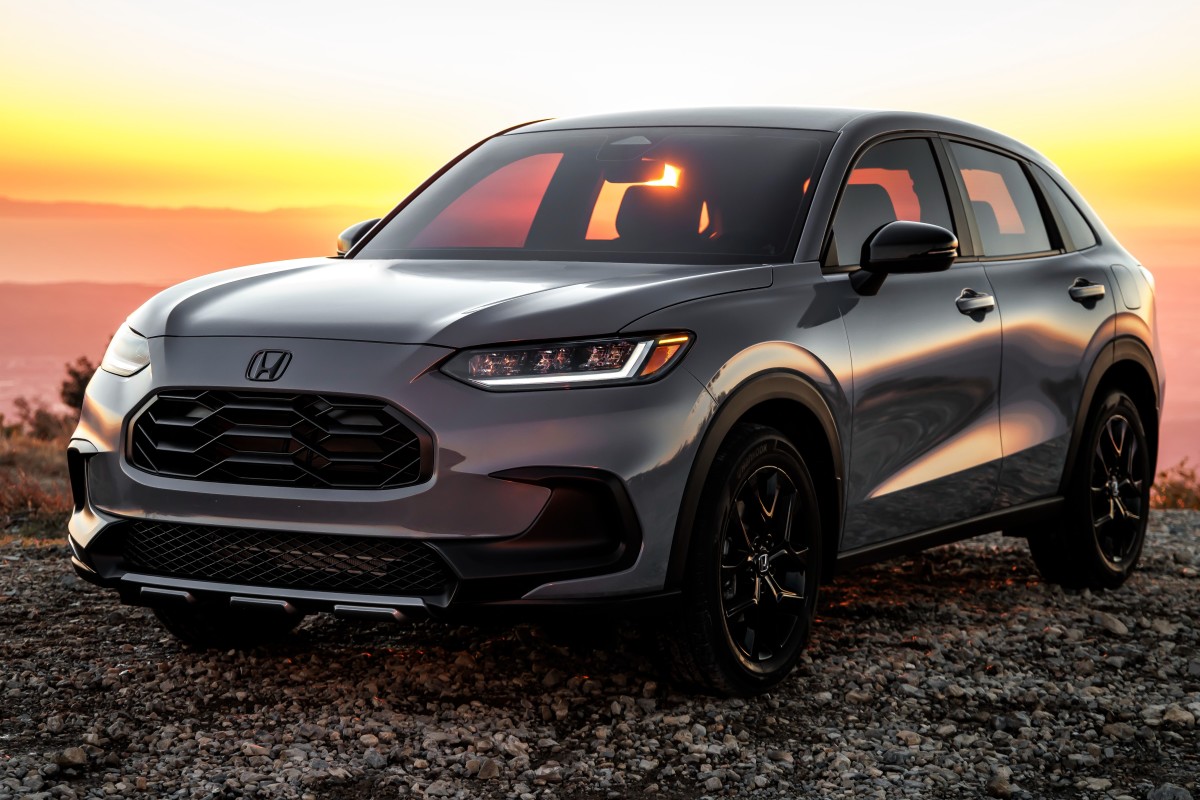
Reviews SummaryAvailable in three trim levels equipped with an underpowered engine and optional all-wheel drive (AWD), the HR-V is an unremarkable subcompact SUV. A refresh for the 2026 model year adds an improved standard infotainment system and minor styling and interior modifications, but nothing that addresses this model’s primary shortcomings. The changes include a larger touchscreen with faster response times, wireless Apple CarPlay and Android Auto, and wireless smartphone charging. Verdict: Simply put, the 2026 HR-V is not one of the best subcompact SUVs. It is dreadfully slow, disappointingly inefficient, and barely meets the minimum technological expectations of the young people who might want to buy it. Plus, it demonstrates none of the innovation seen in the original HR-V and in some competitors in the small SUV segment. | |
Reviews SummaryReaders are looking at the electric vehicle formerly known as the bZ4X. It wears a shorter name for 2026, but that’s not the big news. More power, over 300 miles of range, a standard NACS charging port (with a CCS adapter), and Plug & Charge capability are all major improvements. Toyota has also tidied-up the styling—inside and out—and added a larger infotainment screen. Verdict: With the refreshed 2026 bZ, Toyota has fixed the bZ4X’s most significant flaws, making this a genuinely competitive model at a comparatively affordable price. | |
No video found | No video found |
Popular Features & Specs | |
Engine2.0L 158 hp I4 | Engine168 hp Electric |
DrivetrainFWD | DrivetrainFWD |
Seating Capacity5 | Seating Capacity5 |
Horsepower158 hp @ 6500 rpm | Horsepower |
EV Battery Capacity | EV Battery Capacity57.7 kWh |
MPG City26 | MPG City143 |
MPG Highway32 | MPG Highway119 |
Battery Charge Time (240V) | Battery Charge Time (240V)6 hours |
Engine | |
Engine Name2.0L 158 hp I4 | Engine Name168 hp Electric |
Torque138 lb-ft @ 4200 rpm | Torque |
Horsepower158 hp @ 6500 rpm | Horsepower |
Battery Charge Time (240V) | Battery Charge Time (240V)6 hours |
DrivetrainFWD | DrivetrainFWD |
Fuel Economy | |
EV Battery Capacity | EV Battery Capacity57.7 kWh |
MPG City26 | MPG City143 |
MPG Highway32 | MPG Highway119 |
Interior | |
Seating Capacity5 | Seating Capacity5 |
Key Features | |
Navigation System | Navigation SystemOptional |
Safety | |
Front Crash Overall5 | Front Crash Overall |
Side Crash Overall5 | Side Crash Overall |
Dimensions & Capacity | |
Cargo Space24.4 cu ft | Cargo Space27.7 cu ft |
Curb Weight3159 lbs | Curb Weight4057 lbs |
Height63.4 in | Height65.0 in |
Length179.8 in | Length184.6 in |
Width72.4 in | Width73.2 in |
Wheelbase104.5 in | Wheelbase112.2 in |
Maximum Payload1051 lbs | Maximum Payload1045 lbs |
Number of doors4 | Number of doors4 |
Overview | ||
MSRP | $26,500 | $34,900 |
Listings | ||
Ratings & Reviews | ||
User reviews | ||
Expert reviews | 5.3 out of 10Read full review | 6.5 out of 10Read full review |
Pros & cons | Pros
Cons
| Pros
Cons
|
Summary | Available in three trim levels equipped with an underpowered engine and optional all-wheel drive (AWD), the HR-V is an unremarkable subcompact SUV. A refresh for the 2026 model year adds an improved standard infotainment system and minor styling and interior modifications, but nothing that addresses this model’s primary shortcomings. The changes include a larger touchscreen with faster response times, wireless Apple CarPlay and Android Auto, and wireless smartphone charging. Verdict: Simply put, the 2026 HR-V is not one of the best subcompact SUVs. It is dreadfully slow, disappointingly inefficient, and barely meets the minimum technological expectations of the young people who might want to buy it. Plus, it demonstrates none of the innovation seen in the original HR-V and in some competitors in the small SUV segment. | Readers are looking at the electric vehicle formerly known as the bZ4X. It wears a shorter name for 2026, but that’s not the big news. More power, over 300 miles of range, a standard NACS charging port (with a CCS adapter), and Plug & Charge capability are all major improvements. Toyota has also tidied-up the styling—inside and out—and added a larger infotainment screen. Verdict: With the refreshed 2026 bZ, Toyota has fixed the bZ4X’s most significant flaws, making this a genuinely competitive model at a comparatively affordable price. |
Video | No video found | No video found |
Popular Features & Specs | ||
Engine | 2.0L 158 hp I4 | 168 hp Electric |
Drivetrain | FWD | FWD |
Seating Capacity | 5 | 5 |
Horsepower | 158 hp @ 6500 rpm | |
EV Battery Capacity | 57.7 kWh | |
MPG City | 26 | 143 |
MPG Highway | 32 | 119 |
Battery Charge Time (240V) | 6 hours | |
Engine | ||
Engine Name | 2.0L 158 hp I4 | 168 hp Electric |
Torque | 138 lb-ft @ 4200 rpm | |
Horsepower | 158 hp @ 6500 rpm | |
Battery Charge Time (240V) | 6 hours | |
Drivetrain | FWD | FWD |
Fuel Economy | ||
EV Battery Capacity | 57.7 kWh | |
MPG City | 26 | 143 |
MPG Highway | 32 | 119 |
Interior | ||
Seating Capacity | 5 | 5 |
Key Features | ||
Navigation System | Optional | |
Safety | ||
Front Crash Overall | 5 | |
Side Crash Overall | 5 | |
Dimensions & Capacity | ||
Cargo Space | 24.4 cu ft | 27.7 cu ft |
Curb Weight | 3159 lbs | 4057 lbs |
Height | 63.4 in | 65.0 in |
Length | 179.8 in | 184.6 in |
Width | 72.4 in | 73.2 in |
Wheelbase | 104.5 in | 112.2 in |
Maximum Payload | 1051 lbs | 1045 lbs |
Number of doors | 4 | 4 |
The 2026 Honda HR-V was available in three trim levels: LX, Sport, and EX-L, with prices ranging from $27,650 to $31,500, including a $1,450 destination charge. Adding all-wheel drive (AWD) incurred an additional $1,500. The test vehicle was an EX-L AWD with a Nordic Forest Pearl paint, priced at $33,455. The HR-V's design featured a blobby grille and a forward-leaning profile, which were not universally appealing. However, the green paint and 18-inch alloy wheels under gloss-black wheel arches enhanced its appearance. The HR-V's styling updates included new wheel designs for each trim and standard dark-tinted rear privacy glass. Inside, the HR-V offered an upscale feel with gray upholstery and trim, available only on LX and EX-L trims. The EX-L featured genuine leather seats with Z-pattern stitching and upgraded cabin lighting, adding a touch of sophistication.
The 2026 Toyota bZ was offered in XLE and Limited trims, with options for single-motor front-wheel drive (FWD) or dual-motor AWD, and two battery sizes. Prices ranged from $36,495 to $46,895, including the destination charge. The test vehicle was an XLE FWD with the optional larger battery, priced at $40,468. The bZ's design improved with body-color trim, enhancing its appeal. Inside, the dashboard and center console were redesigned for a cleaner look, and the fabric seats featured an upscale pattern. The bZ's 14-inch center touchscreen integrated climate control, and the digital driver display was criticized for its placement and information overload. Despite these issues, the bZ's interior offered a sense of quality and practicality.

The 2026 Honda HR-V was powered by a 2.0-liter four-cylinder engine producing 158 horsepower at 6,500 rpm and 138 pound-feet of torque at 4,200 rpm. Weighing up to 3,336 pounds, the HR-V's engine and continuously variable transmission (CVT) worked hard, especially during acceleration and overtaking. The HR-V's fuel economy was rated at 28 mpg combined for FWD and 27 mpg for AWD, but real-world testing averaged 24.8 mpg. The HR-V's dynamic tuning was commendable, with a multi-link rear suspension and Agile Handling Assist, providing a lively driving experience. However, the steering was not particularly quick, and the brakes, while effective, required careful handling during descents.
The 2026 Toyota bZ offered a choice of battery sizes and motor configurations. The XLE FWD with a 57.7-kWh battery produced 165 horsepower and 198 pound-feet of torque, with an EPA-estimated range of 236 miles. The optional 74.7-kWh battery increased power to 224 hp and range to 314 miles. Dual-motor models produced 338 hp and offered varying ranges. The bZ's charging capabilities included compatibility with Tesla Superchargers and a CCS adapter. Efficiency tests showed favorable results, with the bZ averaging 4.5 miles per kWh in Eco mode. The bZ's driving experience was agreeable, with good visibility and standard parking sensors. However, the FWD model's handling on winding roads was limited by its tires and steering.
The 2026 Honda HR-V's interior lacked the innovation of its predecessor, with a standard rear seat that folded flat. It missed features like a fold-flat front passenger seat and a 40/20/40 split-folding rear seat. The HR-V's storage was reasonable, with comfortable front seats and heated options in higher trims. The back seat offered adequate space but lacked support and amenities like air-conditioning vents and cupholders. The cargo area provided 24.4 cubic feet of space, expanding to 55.1 cubic feet with the rear seats folded.
The 2026 Toyota bZ's design, with its skateboard-style EV platform, offered easy access and comfortable seating. Both front seats featured height adjustment, with power options in higher trims. The bZ lacked a traditional glove compartment but compensated with ample storage solutions. Rear-seat passengers enjoyed good legroom and standard air conditioning vents and USB ports. The cargo area offered 27.7 cubic feet of space, with an underfloor storage well and a power liftgate. Folding the rear seats expanded the space to 56.9 cubic feet.
The 2026 Honda HR-V featured a 9-inch touchscreen with a faster processor, wireless Apple CarPlay and Android Auto, and a wireless smartphone charger. However, it lacked built-in navigation and SiriusXM satellite radio. The audio system varied by trim, with the EX-L offering an eight-speaker setup. The HR-V's tech was simple and user-friendly, with a smart digital instrumentation panel and a walk-away automatic vehicle locking feature.
The 2026 Toyota bZ came with a 7-inch digital driver display and a 14-inch touchscreen infotainment system. The driver display's placement and information overload were drawbacks. The infotainment system supported wireless Apple CarPlay and Android Auto, with SiriusXM satellite radio and various connected service plans. The Drive Connect system powered navigation and voice assistant features, which performed well in testing.
The 2026 Honda HR-V was equipped with Honda Sensing, offering features like forward collision warning, automatic emergency braking, and adaptive cruise control. Blind-spot monitoring and rear cross-traffic alert were available on higher trims. The HR-V received favorable safety ratings from the NHTSA and a Top Safety Pick+ rating from the IIHS for 2025.
The 2026 Toyota bZ featured Toyota Safety Sense 3.0, including forward-collision warning, lane-keep assist, and adaptive cruise control. Proactive Driving Assist added subtle braking and steering inputs. The bZ's safety features included blind-spot monitors, rear cross-traffic alert, and parking sensors. The Limited trim offered additional safety aids. The bZ received mixed safety ratings from the IIHS, with high marks for front-crash avoidance but lower ratings for headlights and frontal-impact tests.
CarGurus highlights
According to CarGurus experts, the overall rating for the 2026 Honda HR-V is 5.3 out of 10, while the 2026 Toyota bZ scores 6.5 out of 10. Based on these ratings, the Toyota bZ is the recommended choice, offering better performance, technology, and safety features, making it a more compelling option for consumers seeking a modern and efficient vehicle.
Choose the 2026 Toyota bZ if:
- You want an electric vehicle with impressive range and charging capabilities.
- You value advanced safety features and driver-assist technologies.
- You seek a spacious and comfortable interior with modern amenities.


Choose the 2026 Honda HR-V if:
- You prioritize a lower starting price and value for money.
- You appreciate a lively driving experience with good handling.
- You prefer a straightforward and user-friendly infotainment system.


CarGurus highlights
According to CarGurus experts, the overall rating for the 2026 Honda HR-V is 5.3 out of 10, while the 2026 Toyota bZ scores 6.5 out of 10. Based on these ratings, the Toyota bZ is the recommended choice, offering better performance, technology, and safety features, making it a more compelling option for consumers seeking a modern and efficient vehicle.
Choose the 2026 Toyota bZ if:
Shop Now- You want an electric vehicle with impressive range and charging capabilities.
- You value advanced safety features and driver-assist technologies.
- You seek a spacious and comfortable interior with modern amenities.
Choose the 2026 Honda HR-V if:
Shop Now- You prioritize a lower starting price and value for money.
- You appreciate a lively driving experience with good handling.
- You prefer a straightforward and user-friendly infotainment system.

By: CarGurus + AI
At CarGurus, our team of experienced automotive writers remain at the heart of our content operation, conducting hands-on car tests and writing insightful guides that are backed by years of industry experience. To complement this, we are harnessing AI to make our content offering more diverse and more helpful to shoppers than ever. To achieve this, our AI systems are based exclusively on CarGurus content, ratings and data, so that what we produce is both unique to CarGurus, and uniquely helpful to car shoppers.

