Toyota Land Cruiser vs Honda HR-V
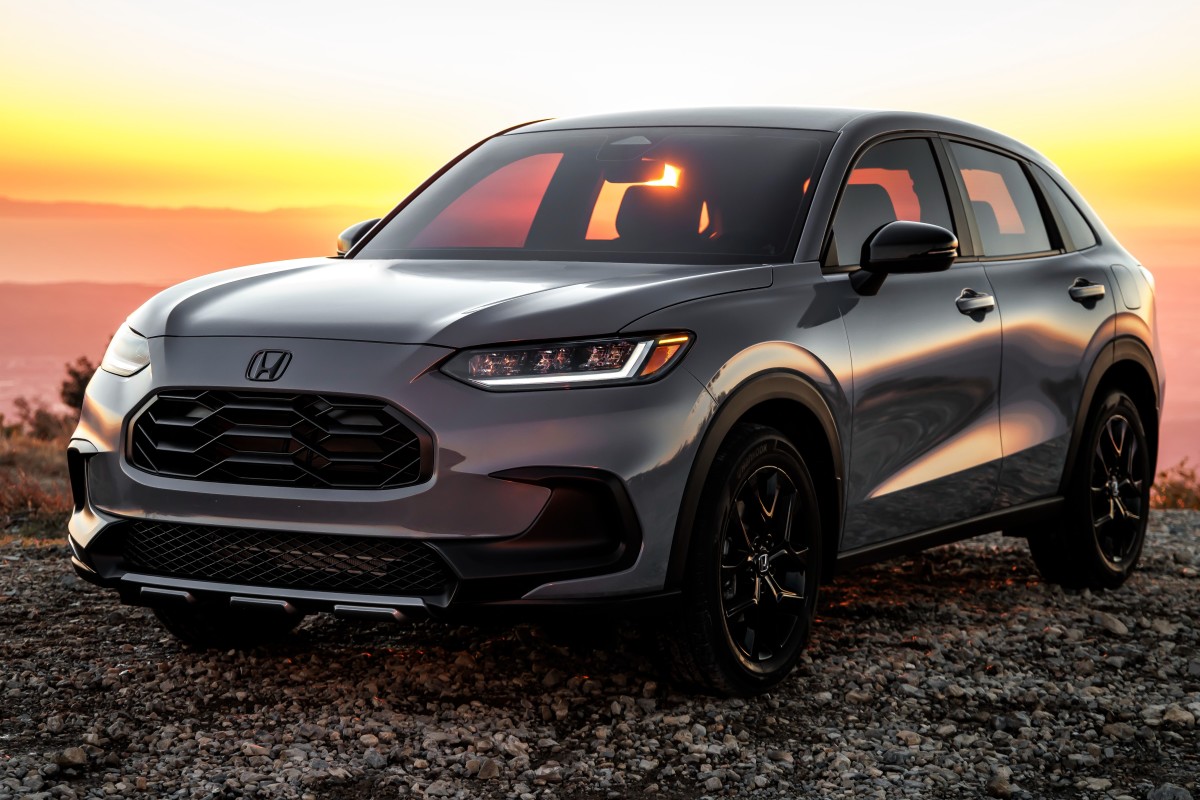
Overview | |
MSRP$56,700 | MSRP$26,500 |
Listings132 | Listings197 |
Ratings & Reviews | |
User Reviews | User Reviews |
Expert reviews6.8 out of 10 | Expert reviews5.3 out of 10 |
Pros
Cons
| Pros
Cons
|
Reviews SummaryThis two-row midsize SUV is designed for traveling almost anywhere at almost any time. It shares its platform with the rugged Toyota 4Runner SUV and Tacoma pickup truck, and is equipped with a turbocharged hybrid powertrain better at supplying power than efficiency. Additionally, it is more affordable than it has been in the past, but still commands a premium over its primary rivals. The 2025 Land Cruiser is almost unchanged following its 2024 redesign, which introduced the current 250-series model (known as the Land Cruiser Prado overseas) to the United States. Verdict: There is a lot to like about the Land Cruiser, especially if you don’t care about fuel economy. Our test vehicle averaged 15.7 mpg, falling well short of expectations. That thirst for fuel easily ranks as the worst thing about this SUV. Also, we recommend upgrading from the base 1958 trim level. | |
Reviews SummaryAvailable in three trim levels equipped with an underpowered engine and optional all-wheel drive (AWD), the HR-V is an unremarkable subcompact SUV. A refresh for the 2026 model year adds an improved standard infotainment system and minor styling and interior modifications, but nothing that addresses this model’s primary shortcomings. The changes include a larger touchscreen with faster response times, wireless Apple CarPlay and Android Auto, and wireless smartphone charging. Verdict: Simply put, the 2026 HR-V is not one of the best subcompact SUVs. It is dreadfully slow, disappointingly inefficient, and barely meets the minimum technological expectations of the young people who might want to buy it. Plus, it demonstrates none of the innovation seen in the original HR-V and in some competitors in the small SUV segment. | |
No video found | No video found |
Popular Features & Specs | |
Engine2.4L 326 hp I4 Hybrid | Engine2.0L 158 hp I4 |
Drive Train4X4 | Drive TrainFWD |
Seating Capacity5 | Seating Capacity5 |
Horsepower | Horsepower158 hp @ 6500 rpm |
EV Battery Capacity1.9 kWh | EV Battery Capacity |
MPG City22 | MPG City26 |
MPG Highway25 | MPG Highway32 |
Engine | |
Engine Name2.4L 326 hp I4 Hybrid | Engine Name2.0L 158 hp I4 |
Torque | Torque138 lb-ft @ 4200 rpm |
Horsepower | Horsepower158 hp @ 6500 rpm |
Drivetrain4X4 | DrivetrainFWD |
Fuel Economy | |
EV Battery Capacity1.9 kWh | EV Battery Capacity |
MPG City22 | MPG City26 |
MPG Highway25 | MPG Highway32 |
Interior | |
Seating Capacity5 | Seating Capacity5 |
Safety | |
Front Crash Overall | Front Crash Overall5 |
Side Crash Overall | Side Crash Overall5 |
Dimensions & Capacity | |
Cargo Space46.2 cu ft | Cargo Space24.4 cu ft |
Curb Weight5360 lbs | Curb Weight3159 lbs |
Height75.7 in | Height63.4 in |
Length196.4 in | Length179.8 in |
Width83.2 in | Width72.4 in |
Wheelbase112.2 in | Wheelbase104.5 in |
Maximum Payload1100 lbs | Maximum Payload1051 lbs |
Number of doors4 | Number of doors4 |
Maximum Towing Capacity6000 lbs | Maximum Towing Capacity |
Standard Towing Capacity6000 lbs | Standard Towing Capacity |
Overview | ||
MSRP | $56,700 | $26,500 |
Listings | ||
Ratings & Reviews | ||
User reviews | ||
Expert reviews | 6.8 out of 10Read full review | 5.3 out of 10Read full review |
Pros & cons | Pros
Cons
| Pros
Cons
|
Summary | This two-row midsize SUV is designed for traveling almost anywhere at almost any time. It shares its platform with the rugged Toyota 4Runner SUV and Tacoma pickup truck, and is equipped with a turbocharged hybrid powertrain better at supplying power than efficiency. Additionally, it is more affordable than it has been in the past, but still commands a premium over its primary rivals. The 2025 Land Cruiser is almost unchanged following its 2024 redesign, which introduced the current 250-series model (known as the Land Cruiser Prado overseas) to the United States. Verdict: There is a lot to like about the Land Cruiser, especially if you don’t care about fuel economy. Our test vehicle averaged 15.7 mpg, falling well short of expectations. That thirst for fuel easily ranks as the worst thing about this SUV. Also, we recommend upgrading from the base 1958 trim level. | Available in three trim levels equipped with an underpowered engine and optional all-wheel drive (AWD), the HR-V is an unremarkable subcompact SUV. A refresh for the 2026 model year adds an improved standard infotainment system and minor styling and interior modifications, but nothing that addresses this model’s primary shortcomings. The changes include a larger touchscreen with faster response times, wireless Apple CarPlay and Android Auto, and wireless smartphone charging. Verdict: Simply put, the 2026 HR-V is not one of the best subcompact SUVs. It is dreadfully slow, disappointingly inefficient, and barely meets the minimum technological expectations of the young people who might want to buy it. Plus, it demonstrates none of the innovation seen in the original HR-V and in some competitors in the small SUV segment. |
Video | No video found | No video found |
Popular Features & Specs | ||
Engine | 2.4L 326 hp I4 Hybrid | 2.0L 158 hp I4 |
Drive Train | 4X4 | FWD |
Seating Capacity | 5 | 5 |
Horsepower | 158 hp @ 6500 rpm | |
EV Battery Capacity | 1.9 kWh | |
MPG City | 22 | 26 |
MPG Highway | 25 | 32 |
Engine | ||
Engine Name | 2.4L 326 hp I4 Hybrid | 2.0L 158 hp I4 |
Torque | 138 lb-ft @ 4200 rpm | |
Horsepower | 158 hp @ 6500 rpm | |
Drivetrain | 4X4 | FWD |
Fuel Economy | ||
EV Battery Capacity | 1.9 kWh | |
MPG City | 22 | 26 |
MPG Highway | 25 | 32 |
Interior | ||
Seating Capacity | 5 | 5 |
Safety | ||
Front Crash Overall | 5 | |
Side Crash Overall | 5 | |
Dimensions & Capacity | ||
Cargo Space | 46.2 cu ft | 24.4 cu ft |
Curb Weight | 5360 lbs | 3159 lbs |
Height | 75.7 in | 63.4 in |
Length | 196.4 in | 179.8 in |
Width | 83.2 in | 72.4 in |
Wheelbase | 112.2 in | 104.5 in |
Maximum Payload | 1100 lbs | 1051 lbs |
Number of doors | 4 | 4 |
Maximum Towing Capacity | 6000 lbs | |
Standard Towing Capacity | 6000 lbs | |
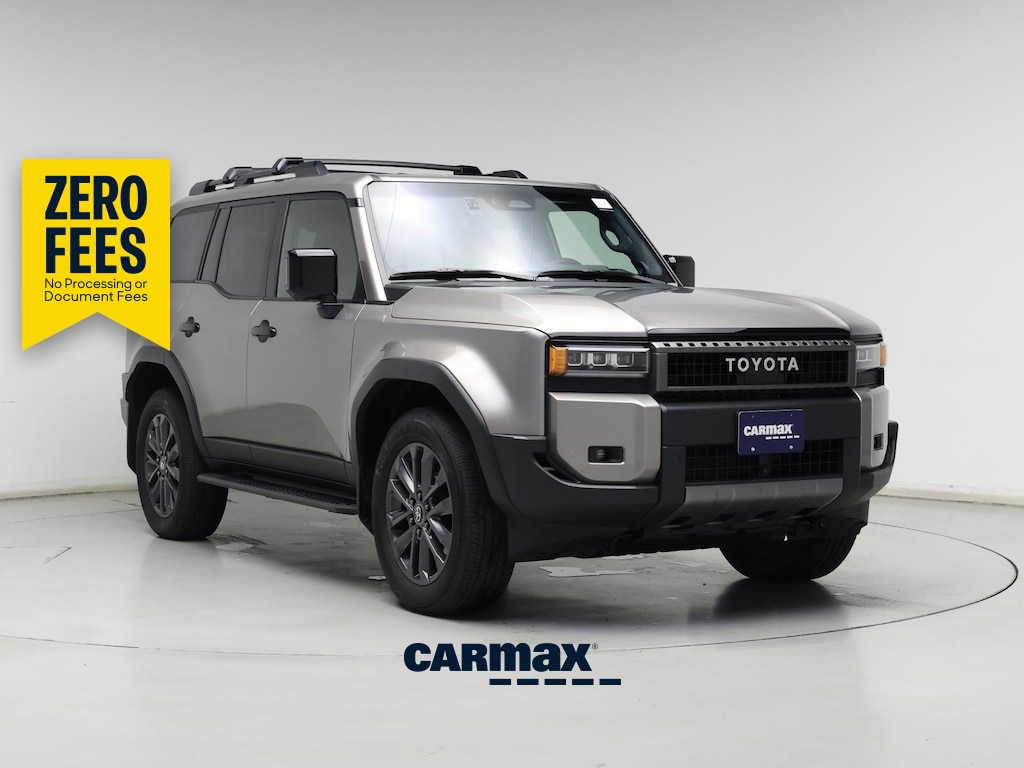
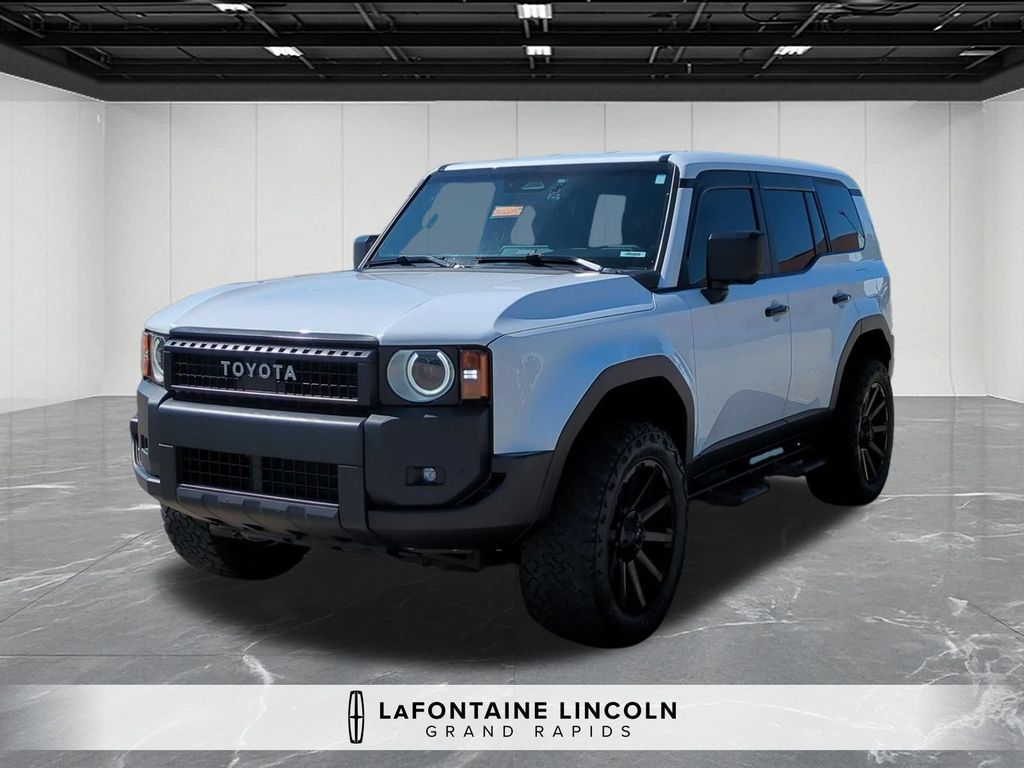
The 2025 Toyota Land Cruiser was available in two trim levels, with the base model named the 1958, a nod to the year it first hit the U.S. market. This version had a retro aesthetic, featuring round headlights, cloth seats, and basic equipment, available in three paint colors. Despite its nostalgic charm, the 1958 model was priced at $58,195, which might have prompted potential buyers to reconsider their choice. The more modern Land Cruiser trim, priced at $62,965, offered a sophisticated look with additional color options, a refined interior, and essential off-roading features. The Premium Package further enhanced this model with leather upholstery, advanced technology, and a more upscale appearance.
The Land Cruiser's design emphasized functionality, with a traditional two-box SUV shape that maximized off-road capabilities and interior space. The interior was utilitarian yet upscale, especially with the Premium Package, which added Java-colored leather and dual 12.3-inch digital screens. The SUV's steering-wheel controls were notably intuitive, especially when compared to those in a Lexus RX. The Land Cruiser's purposeful design and practical features, such as the optional roof rack, made it a versatile choice for both urban and off-road adventures.
The 2026 Honda HR-V was offered in three trim levels: LX, Sport, and EX-L, with prices ranging from $27,650 to $31,500, including a $1,450 destination charge. Adding all-wheel drive (AWD) incurred an additional $1,500. The test vehicle, an EX-L AWD, featured Nordic Forest Pearl paint and a total MSRP of $33,455. Despite its somewhat unconventional design, the HR-V's green paint and 18-inch alloy wheels enhanced its appearance.
The 2026 HR-V saw significant styling updates, including new wheel designs for each trim level and standard dark-tinted rear privacy glass. Inside, the HR-V offered a more appealing interior with available gray upholstery and trim, creating a visual contrast against the predominantly black interior. The EX-L trim featured genuine leather seats with perforated surfaces and Z-pattern stitching, along with upgraded cabin lighting and detailing. The HR-V's interior showcased Honda's attention to detail, with features like metal mesh dashboard trim and tamboured knobs, contributing to a higher-class feel.

The 2025 Toyota Land Cruiser was equipped with Toyota's i-Force Max hybrid system, combining a turbocharged 2.4-liter four-cylinder engine with an eight-speed automatic transmission and an electric motor. This setup delivered 326 horsepower and 465 pound-feet of torque, enabling a maximum towing capacity of 6,000 pounds. The Land Cruiser's full-time four-wheel-drive system included electronic locking rear and center differentials, along with standard features like Downhill Assist Control and Crawl Control. The more expensive Land Cruiser trim added Multi-Terrain Select off-roading modes, Multi-Terrain Monitor camera views, and a front stabilizer bar disconnect feature.
Despite an official EPA rating of 23 mpg combined, real-world testing revealed a less impressive 15.7 mpg. The Land Cruiser excelled as a daily driver and off-road adventurer, though it struggled on twisty mountain roads due to its tires and suspension tuning. The SUV's high seating position provided excellent visibility, making it easy to park and maneuver on trails. Off-road capabilities were enhanced by features like the front stabilizer bar disconnect, Crawl Control, and Multi-Terrain Monitor camera views. While the Land Cruiser felt powerful and responsive, its acceleration and handling were best suited for slow and steady driving.
The 2026 Honda HR-V featured a 2.0-liter four-cylinder engine producing 158 horsepower and 138 pound-feet of torque. Weighing up to 3,336 pounds, the HR-V's engine worked hard, especially when paired with the continuously variable transmission (CVT). While the CVT performed well in urban driving, the HR-V's lack of power was evident during acceleration onto highways or when overtaking slower vehicles. The HR-V's fuel economy was rated at 28 mpg combined for front-wheel drive (FWD) and 27 mpg combined for AWD, but real-world testing yielded an average of 24.8 mpg.
The HR-V's dynamic tuning was commendable, with a multi-link rear suspension and Agile Handling Assist providing a lively feel in twists and turns. The steering was not particularly quick, but the brake pedal felt good, and the brakes performed well during a mountain descent. The EX-L's 18-inch wheels and tires offered impressive grip, and the HR-V's seven inches of ground clearance allowed it to handle minor obstacles with ease.
Upgrading from the Land Cruiser 1958 to the Land Cruiser trim swapped cloth upholstery for Toyota's SofTex artificial leather, with heated and ventilated front seats and a heated steering wheel. The Premium Package added real leather and a standard-size power sunroof. While the front seats were comfortable, the second-row seats lacked thigh support and had an uncomfortable backrest angle. The Land Cruiser's running boards were helpful for roof rack access but could be cumbersome for taller passengers.
The Land Cruiser's rear window design was less practical than the 4Runner's, as it required driving with the window glass flipped up. The center console's cool box, part of the Premium Package, seemed unnecessary and reduced storage space. The Land Cruiser offered 46.2 cubic feet of cargo space behind the rear seats, expanding to 82.1 cubic feet with the back seat folded. However, the high load floor height required effort when loading heavy items.
The 2026 Honda HR-V's interior lacked the innovation of its predecessor, with the rear "Magic Seat" now folding flat like other crossovers. The HR-V missed opportunities to enhance practicality, such as a fold-flat front passenger seat or a 40/20/40 split-folding rear seat. The EX-L trim included a standard moonroof but lacked rear climate control vents, USB charging ports, and cargo area storage solutions.
The HR-V's front storage was reasonable, though the plastic surfaces produced scratching noises. The seats were comfortable, with the EX-L offering an eight-way power-adjustable driver's seat and heated front seats. The back seat provided adequate space for adults but lacked support and amenities like a center armrest, cupholders, and rear air-conditioning vents. The HR-V's cargo area offered 24.4 cubic feet of space behind the rear seats, expanding to 55.1 cubic feet with the seats folded.
The 2025 Toyota Land Cruiser featured upgraded technology with dual 12.3-inch displays, replacing the 7-inch digital driver display and 8-inch touchscreen infotainment system in the Land Cruiser 1958. The Toyota Audio Multimedia (TAM) system included wireless Apple CarPlay and Android Auto, SiriusXM satellite radio, and access to Apple Music and Amazon Music accounts. Five connected service plans were available, including Service Connect, Safety Connect, Remote Connect, Wi-Fi Connect, and Drive Connect.
Drive Connect offered a cloud-based navigation system and a conversational digital assistant, which performed well in voice recognition tests. The Premium Package added a 14-speaker JBL premium sound system, a wireless smartphone charger, a head-up display, a digital camera-based rearview mirror, and digital key technology.
For 2026, the Honda HR-V's standard touchscreen size increased from 7 to 9 inches, with a faster processor for improved responsiveness. The infotainment system included wireless Apple CarPlay and Android Auto, and every HR-V featured a wireless smartphone charger. However, the system lacked built-in navigation and SiriusXM satellite radio. The base LX had four speakers, while the Sport trim had six and the EX-L had eight.
The HR-V's tech was simple and user-friendly, with seamless integration with an iPhone for pairing, using Siri, and streaming music. The EX-L's eight-speaker audio system delivered good sound quality. The 7-inch digital instrumentation panel was smart, and the walk-away automatic vehicle locking feature was a pleasant surprise. However, the HR-V's technology offerings were less comprehensive compared to competitors like the Hyundai Kona.
The 2025 Toyota Land Cruiser came equipped with Toyota Safety Sense 3.0 (TSS 3.0), a comprehensive suite of advanced driving assistance systems (ADAS). TSS 3.0 included forward-collision warning, automatic emergency braking, and pedestrian, cyclist, and motorcyclist detection. It also featured lane-departure warning, lane-keeping assist, and lane-centering assist, which, when combined with adaptive cruise control, provided a semi-autonomous highway driving aid.
Additional safety features included a road sign reader, automatic high-beam headlights, and Predictive Driving Assist (PDA). The Premium Package added front cross-traffic alert, lane-change assist, and Traffic Jam Assist. The Land Cruiser's ADAS performance varied, with some features proving helpful while others were less reliable. The SUV received a four-star overall rating from the National Highway Traffic Safety Administration (NHTSA), with five stars in side-impact testing but a three-star rollover resistance rating.
The 2026 Honda HR-V featured Honda Sensing, a suite of driver-assistive features including forward collision warning, automatic emergency braking, lane departure warning, lane-keeping assist, lane-centering assist, adaptive cruise control, traffic jam assist, and automatic high-beam headlights. Blind-spot monitoring with rear cross-traffic alert was available on the Sport and EX-L trims, while front and rear parking sensors with low-speed automatic braking were exclusive to the EX-L.
Honda Sensing technology was generally unobtrusive, though the adaptive cruise control occasionally failed to perform as expected. The HR-V received favorable crash-test ratings from the NHTSA and earned a Top Safety Pick+ rating from the Insurance Institute for Highway Safety (IIHS) for 2025. However, IIHS ratings for the 2026 model were not yet available.
CarGurus highlights
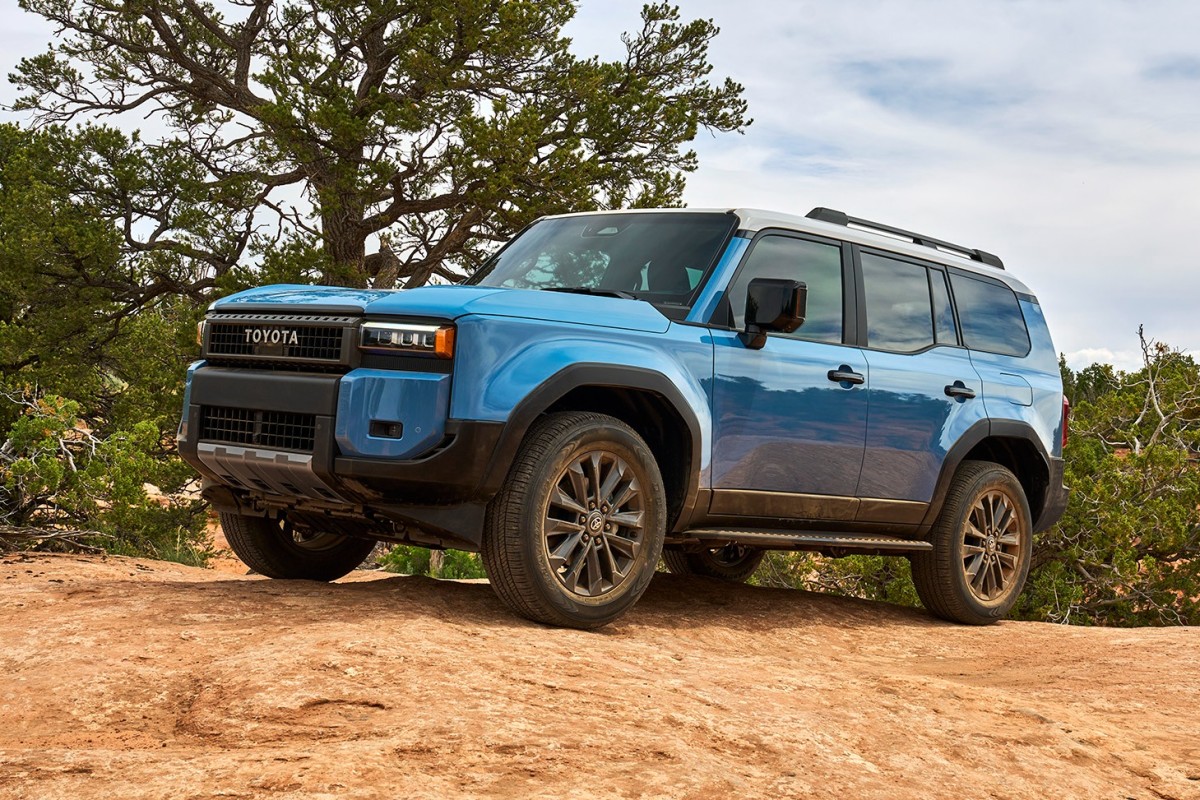
According to CarGurus experts, the overall rating for the 2025 Toyota Land Cruiser is 6.8 out of 10, while the 2026 Honda HR-V scores 5.3 out of 10. Based on these ratings, the 2025 Toyota Land Cruiser is the recommended choice, offering superior off-road capabilities, a more refined interior, and advanced technology features.
Choose the 2025 Toyota Land Cruiser if:
- You prioritize off-road capabilities and need a vehicle with advanced off-roading features.
- You value a more upscale and technologically advanced interior with larger digital displays.
- You require a higher towing capacity and more powerful performance for your adventures.






Choose the 2026 Honda HR-V if:
- You are looking for a more affordable crossover with a lower starting price.
- You prefer a vehicle with a simpler, user-friendly technology interface.
- You need a compact SUV with reasonable interior space and practicality for urban driving.







CarGurus highlights
According to CarGurus experts, the overall rating for the 2025 Toyota Land Cruiser is 6.8 out of 10, while the 2026 Honda HR-V scores 5.3 out of 10. Based on these ratings, the 2025 Toyota Land Cruiser is the recommended choice, offering superior off-road capabilities, a more refined interior, and advanced technology features.
Choose the 2025 Toyota Land Cruiser if:
Shop Now- You prioritize off-road capabilities and need a vehicle with advanced off-roading features.
- You value a more upscale and technologically advanced interior with larger digital displays.
- You require a higher towing capacity and more powerful performance for your adventures.
Choose the 2026 Honda HR-V if:
Shop Now- You are looking for a more affordable crossover with a lower starting price.
- You prefer a vehicle with a simpler, user-friendly technology interface.
- You need a compact SUV with reasonable interior space and practicality for urban driving.

By: CarGurus + AI
At CarGurus, our team of experienced automotive writers remain at the heart of our content operation, conducting hands-on car tests and writing insightful guides that are backed by years of industry experience. To complement this, we are harnessing AI to make our content offering more diverse and more helpful to shoppers than ever. To achieve this, our AI systems are based exclusively on CarGurus content, ratings and data, so that what we produce is both unique to CarGurus, and uniquely helpful to car shoppers.

