2024 Hyundai Tucson vs 2024 Genesis GV80

Overview | |
MSRP$57,700 | MSRP$27,500 |
Listings521 | Listings2800 |
Ratings & Reviews | |
User Reviews | User Reviews |
Expert reviews7.7 out of 10 | Expert reviews8.5 out of 10 |
Pros
Cons
| Pros
Cons
|
2024 Genesis GV80 Reviews SummaryGenesis introduced the GV80 in 2021, and the crossover SUV is getting a minor refresh in 2025. Still, the 2024 GV80 remains a good choice unless you want to wait for the fancier styling, more high-tech interior, or new supercharged GV80 Coupe coming next year. Otherwise, today’s GV80 is pretty much the same as tomorrow’s GV80, and in some respects, it is the more elegant and traditional choice. Verdict: Based on our evaluation of the 2024 Genesis GV80, seat comfort is not what it should be. Also, to use Apple CarPlay or Android Auto, you need a USB cable. This Genesis is thirsty, too. But otherwise, we have few complaints about this stylish, safe, and mostly rewarding midsize luxury SUV. | |
2024 Hyundai Tucson Reviews SummaryWith the growth and evolution of the compact SUV market, shoppers have seemingly endless options. And the growth of this segment has allowed for different models to grow in their own unique ways. The Mazda CX-5 is upscale and athletic, while the Ford Bronco Sport is a surprisingly capable off-roader. So what if you aren’t seeking a well-honed niche vehicle? What if you are looking for a small SUV that’s and overall great vehicle? The 2024 Hyundai Tucson answers that question as a well-rounded compact SUV that doesn’t excel in any one particular area, but instead covers a lot of what modern consumers demand out of their vehicle. This format is one that has been embraced by perennial segment standouts like the Toyota RAV4 and Honda CR-V. Verdict: The Tucson is a well-rounded small SUV and a good value. It does not shine in any particular area, instead blending good performance with a comfortable and spacious cabin, impressive tech and safety features, and an attractive price tag. | |
No video found | |
Popular Features & Specs | |
Engine2.5L 300 hp I4 | Engine2.5L 187 hp I4 |
Drive TrainAWD | Drive TrainFWD |
Seating Capacity5 | Seating Capacity5 |
Horsepower300 hp @ 5800 rpm | Horsepower187 hp @ 6100 rpm |
MPG City20 | MPG City25 |
MPG Highway24 | MPG Highway32 |
Engine | |
Engine Name2.5L 300 hp I4 | Engine Name2.5L 187 hp I4 |
Torque311 lb-ft @ 1650 rpm | Torque178 lb-ft @ 4000 rpm |
Horsepower300 hp @ 5800 rpm | Horsepower187 hp @ 6100 rpm |
DrivetrainAWD | DrivetrainFWD |
Fuel Economy | |
MPG City20 | MPG City25 |
MPG Highway24 | MPG Highway32 |
Interior | |
Seating Capacity5 | Seating Capacity5 |
Key Features | |
Navigation SystemStandard | Navigation System |
Safety | |
Front Crash Overall4 | Front Crash Overall5 |
Side Crash Overall | Side Crash Overall5 |
Dimensions & Capacity | |
Cargo Space34.9 cu ft | Cargo Space38.7 cu ft |
Curb Weight4742 lbs | Curb Weight3346 lbs |
Height67.5 in | Height65.6 in |
Length194.7 in | Length182.3 in |
Width77.8 in | Width73.4 in |
Wheelbase116.3 in | Wheelbase108.5 in |
Maximum Payload1188 lbs | Maximum Payload1283 lbs |
Number of doors4 | Number of doors4 |
Maximum Towing Capacity6000 lbs | Maximum Towing Capacity2000 lbs |
Standard Towing Capacity | Standard Towing Capacity2000 lbs |
Overview | ||
MSRP | $57,700 | $27,500 |
Listings | ||
Ratings & Reviews | ||
User reviews | ||
Expert reviews | 7.7 out of 10Read full review | 8.5 out of 10Read full review |
Pros & cons | Pros
Cons
| Pros
Cons
|
Summary | Genesis introduced the GV80 in 2021, and the crossover SUV is getting a minor refresh in 2025. Still, the 2024 GV80 remains a good choice unless you want to wait for the fancier styling, more high-tech interior, or new supercharged GV80 Coupe coming next year. Otherwise, today’s GV80 is pretty much the same as tomorrow’s GV80, and in some respects, it is the more elegant and traditional choice. Verdict: Based on our evaluation of the 2024 Genesis GV80, seat comfort is not what it should be. Also, to use Apple CarPlay or Android Auto, you need a USB cable. This Genesis is thirsty, too. But otherwise, we have few complaints about this stylish, safe, and mostly rewarding midsize luxury SUV. | With the growth and evolution of the compact SUV market, shoppers have seemingly endless options. And the growth of this segment has allowed for different models to grow in their own unique ways. The Mazda CX-5 is upscale and athletic, while the Ford Bronco Sport is a surprisingly capable off-roader. So what if you aren’t seeking a well-honed niche vehicle? What if you are looking for a small SUV that’s and overall great vehicle? The 2024 Hyundai Tucson answers that question as a well-rounded compact SUV that doesn’t excel in any one particular area, but instead covers a lot of what modern consumers demand out of their vehicle. This format is one that has been embraced by perennial segment standouts like the Toyota RAV4 and Honda CR-V. Verdict: The Tucson is a well-rounded small SUV and a good value. It does not shine in any particular area, instead blending good performance with a comfortable and spacious cabin, impressive tech and safety features, and an attractive price tag. |
Video | No video found | |
Popular Features & Specs | ||
Engine | 2.5L 300 hp I4 | 2.5L 187 hp I4 |
Drive Train | AWD | FWD |
Seating Capacity | 5 | 5 |
Horsepower | 300 hp @ 5800 rpm | 187 hp @ 6100 rpm |
MPG City | 20 | 25 |
MPG Highway | 24 | 32 |
Engine | ||
Engine Name | 2.5L 300 hp I4 | 2.5L 187 hp I4 |
Torque | 311 lb-ft @ 1650 rpm | 178 lb-ft @ 4000 rpm |
Horsepower | 300 hp @ 5800 rpm | 187 hp @ 6100 rpm |
Drivetrain | AWD | FWD |
Fuel Economy | ||
MPG City | 20 | 25 |
MPG Highway | 24 | 32 |
Interior | ||
Seating Capacity | 5 | 5 |
Key Features | ||
Navigation System | Standard | |
Safety | ||
Front Crash Overall | 4 | 5 |
Side Crash Overall | 5 | |
Dimensions & Capacity | ||
Cargo Space | 34.9 cu ft | 38.7 cu ft |
Curb Weight | 4742 lbs | 3346 lbs |
Height | 67.5 in | 65.6 in |
Length | 194.7 in | 182.3 in |
Width | 77.8 in | 73.4 in |
Wheelbase | 116.3 in | 108.5 in |
Maximum Payload | 1188 lbs | 1283 lbs |
Number of doors | 4 | 4 |
Maximum Towing Capacity | 6000 lbs | 2000 lbs |
Standard Towing Capacity | 2000 lbs | |
The 2024 Genesis GV80 offered a choice between two engines: the 2.5T, a turbocharged four-cylinder, and the 3.5T, a twin-turbocharged V6. Buyers could select from Standard, Advanced, Prestige, or Prestige Signature trim levels, with prices ranging from $57,700 to $81,750, plus a $1,350 destination charge. Our test vehicle, the GV80 3.5T, arrived in the top-tier Prestige Signature trim, featuring an optional Matterhorn White Matte paint that pushed the cost to $84,600, including the destination fee.
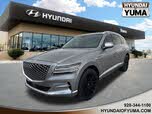
Prestige Signature trims came in Vik Black, Matterhorn White Matte, or exclusive Mauna Red exterior colors, accented by dark chrome trim and 22-inch wheels painted black, effectively hiding their intricate design. While the Prestige Signature boasted an air of sophistication, we did not find it significantly more attractive than the lower Prestige trim, particularly since the wheel design's details were obscured by the black paint.
Inside, the GV80 was a study in luxury. The Ultramarine Blue over Dune interior featured diamond-stitched Nappa leather, a faux leather dashboard, matte-finish wood trim, a suede headliner, and metallic accents. Ambient lighting, a 3D digital instrument cluster, and an expansive touchscreen display for the infotainment system underscored its status as a flagship Genesis SUV.
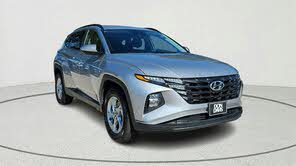
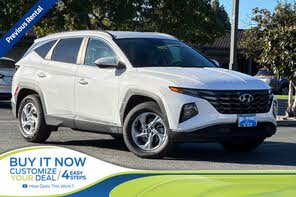
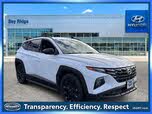
In contrast, the 2024 Hyundai Tucson was known for its exceptional styling, introduced in the fourth generation for the 2022 model year. It maintained its sharp design through 2024, characterized by taut angles and unique elements like headlights integrated into the grille. Even in white, our test vehicle color, the Tucson retained a sharp, contemporary look—no small feat given that white is often challenging for vehicle photography.
The Tucson’s contrasting angles and athletic presence made it stand out. Its trims included SE, SEL, XRT, and Limited. The SE featured 17-inch alloy wheels and roof rails, while the SEL’s convenience package added 19-inch alloy wheels. The XRT trim had unique black 19-inch wheels, side steps, dark exterior trim, and functional roof racks. The Limited offered a dark chrome grille and upgraded headlights.
Inside, the Tucson had a modern, refined cabin packed with technology. Our only gripe was the missing volume dial on our test model, replaced by touch-capacitive buttons and a steering wheel toggle. However, other controls were well-placed, adding to the vehicle's ease of use. Features on the base SE trim included two USB ports, remote keyless entry, a manually adjustable driver’s seat, HD radio, power windows, and an 8-inch touchscreen with wireless Apple CarPlay and Android Auto. Moving up to the SEL added push-button start, a power driver’s seat, dual-zone climate control, wireless device charging, and additional USB ports. The Limited trim, which we drove, included ventilated front seats, heated rear seats, a heated steering wheel, leather upholstery, a panoramic sunroof, an upgraded Bose stereo system, and driver seat memory settings.


The 2024 Genesis GV80 2.5T came with a turbocharged 2.5-liter four-cylinder engine that delivered 300 horsepower and 311 pound-feet of torque. This performance exceeded that of some larger V6 engines in competitors like the Acura MDX and Infiniti QX60. The 3.5T test vehicle we drove was equipped with a twin-turbo 3.5-liter V6 engine producing 375 hp and 391 lb-ft of torque. Though this powertrain delivered satisfying performance, it was thirsty. The EPA estimated 20 mpg in combined driving, but our tests in Southern California yielded just 17.2 mpg.
Both engines paired with an eight-speed automatic transmission and standard all-wheel drive. Drivers could choose from five driving modes: Eco, Comfort, Sport, Custom, and Snow. Every GV80 had 8.1 inches of ground clearance and could tow up to 6,000 pounds when properly equipped. The 3.5T model featured upgraded front brakes and an adaptive damping suspension.
Driving the GV80 3.5T was unexpectedly rewarding. It was quiet, composed, and luxurious but still communicated well with the road. Swift acceleration made freeway merging easy, though surface irregularities were more noticeable than preferred. On mountain roads, the combination of adaptive damping suspension, powerful twin-turbo V6, the responsive transmission, and AWD made for an unexpectedly athletic performance. However, the two-spoke steering wheel, while retro and stylish, did not impress and will be replaced with a three-spoke design in 2025.
The 2024 Hyundai Tucson sported a 2.5-liter four-cylinder engine with 187 horsepower and 178 pound-feet of torque, paired with an eight-speed automatic transmission, and offered either front-wheel or all-wheel drive. This was the only non-hybrid powertrain for the Tucson, which was a limitation. While adequate for city driving, the engine struggled on highways, especially for passing maneuvers. Engine noise increased significantly when pushing the throttle.
For more power, buyers might opt for the 226-hp Tucson Hybrid or the 261-hp Tucson Plug-In Hybrid, though these models included a button-style shifter that required some adjustment. Despite the Tucson’s conventional shifter being more user-friendly, the redesigned shifter was packaged efficiently into the center console.
The Tucson excelled in ride comfort and handling. It smoothly absorbed road bumps, making it suitable for long trips and daily commutes. Through corners, the well-weighted and precise steering offered a pleasant experience, though it lacked the athleticism of a Mazda CX-5 or CX-50. Overall, the Tucson provided a well-rounded driving experience.
In 2024, only the Genesis GV80 3.5T Advanced offered a third-row seat, accommodating up to seven passengers. The Prestige Signature, our test model, only seated four due to power-adjustable, heated, and ventilated second-row captain’s chairs separated by a large console. As a result, the GV80 was unsuitable for trips requiring more passenger capacity, such as our family celebration trip to Santa Monica, necessitating the use of a Jeep Gladiator instead.
Standard interior features varied by trim, ranging from artificial leather in lower trims to premium Nappa leather in higher trims. Our test vehicle featured a panoramic glass roof, triple-zone climate control, and ventilated front seats with massage functions and power-adjustable thigh support and side bolsters. Heated and ventilated rear captain’s chairs included Relax Mode and power-operated side window shades.
Despite these luxurious features, the seats felt like sitting on bubble wrap, leading to discomfort on long drives. The rear seats didn’t recline far enough for significant legroom. While second-row legroom was underwhelming, cargo space was more commendable. The GV80 offered 34.9 cubic feet behind the second row, expanding to 84 cubic feet when the rear seats were folded. However, sliding items into the SUV’s cargo area could be tricky due to the height of the rear center console.
In contrast, the 2024 Hyundai Tucson offered up to 74.8 cubic feet of cargo space with rear seats folded and 38.7 cubic feet with them in use. These figures were impressive for a compact SUV, second only to the Honda CR-V. While the base SE trim came with a manual liftgate, higher trims included a hands-free power liftgate, which functioned by simply standing near the rear bumper with the key fob in possession—no need for awkward foot-waving.
The Tucson comfortably seated five passengers, with ample headroom and legroom in both rows—enough for four adults on longer trips. The interior featured numerous deep cup holders and a center tray with wireless device charging, enhancing its practicality.
The 2024 Genesis GV80 offered a mix of analog and digital displays. While traditional analog gauges were available, the Prestige and Prestige Signature trims boasted a 12.3-inch digital display with a 3D effect. A 14.5-inch touchscreen infotainment system came standard across all trims, though its distance from the driver necessitated frequent use of the central control dial, occasionally confused with the nearby gear selector.
Standard tech features included navigation, SiriusXM satellite radio, wired Apple CarPlay and Android Auto, Genesis Connected Services, a new Wi-Fi hotspot, and wireless smartphone charging. The Prestige Signature added second-row wireless charging. The user-friendly voice-recognition system made task execution easy, and the infotainment display, with its intuitive interface and minimal glare, was visually appealing.
A digital key system allowed unlocking and starting the SUV via smartphone, and most trims included a Lexicon premium sound system (set to be replaced by Bang & Olufsen in 2025). The Prestige trims featured a head-up display (HUD), alerting drivers to blind-spot warnings and other crucial information.
The Hyundai Tucson’s standard infotainment system included an 8-inch touchscreen with seamless wireless Apple CarPlay and Android Auto. It was known for its intuitive operation, supported by home buttons for key functions. However, higher trims with the SEL Convenience Package, XRT, and Limited got a 10.25-inch touchscreen, which disappointingly lacked wireless connectivity for smartphone integration and replaced thumb rollers with a less user-friendly haptic volume toggle—although both touchscreens were glove-friendly.
Hyundai’s evolved remote start system allowed for seamless entry and driving—it automatically detected the key and let drivers start moving with a simple shift to Drive.
The Genesis GV80 was packed with advanced driving-assistance systems (ADAS) and safety features. Key features included a camera-based Blind-Spot View Monitor, Remote Smart Parking Assist (allowing for autonomous parking), and Highway Driving Assist—a combination of adaptive cruise control with lane-centering and lane-change assist.
During our San Diego trip, we extensively used Highway Driving Assist, which worked well in light traffic but was less effective in moderate to heavy traffic at higher speeds. However, in dense or slow-moving traffic, it performed admirably. The Blind-Spot View Monitor, showing video feeds of blind spots in the 12.3-inch digital instrument panel, added a valuable layer of safety during lane changes.
Another notable feature was the Remote Smart Parking Assist, which allowed the GV80 to autonomously park while the driver stood outside, using the key fob. Despite these advanced features, the vehicle’s collision-avoidance system further ensured safety in case of an accident. The GV80 earned a Top Safety Pick+ rating from the Insurance Institute for Highway Safety (IIHS) and a five-star overall rating from the National Highway Traffic Safety Administration (NHTSA), though each front-impact seating position earned four stars.
The Hyundai Tucson also came equipped with numerous driver assistance features, including automatic emergency braking, forward collision warning, pedestrian and cyclist detection, adaptive cruise control, lane-departure warning, lane-keeping assist, automatic high beams, driver attention monitoring, blind-spot monitoring, and rear cross-traffic alert.
The Limited trim added front and rear parking sensors, a 360-degree parking camera system, and Hyundai’s Smart Park remote-parking feature. The blind-spot camera system, activated by turn signals, provided real-time video feeds of the corresponding blind spot, complementing the blind-spot monitor.
The 2024 Tucson earned a "Good" overall rating from the IIHS in most crash tests, with "Acceptable" headlights and a "Superior" crash prevention technology rating. The NHTSA awarded it five stars in a frontal crash test and four stars in a rollover test.
CarGurus highlights
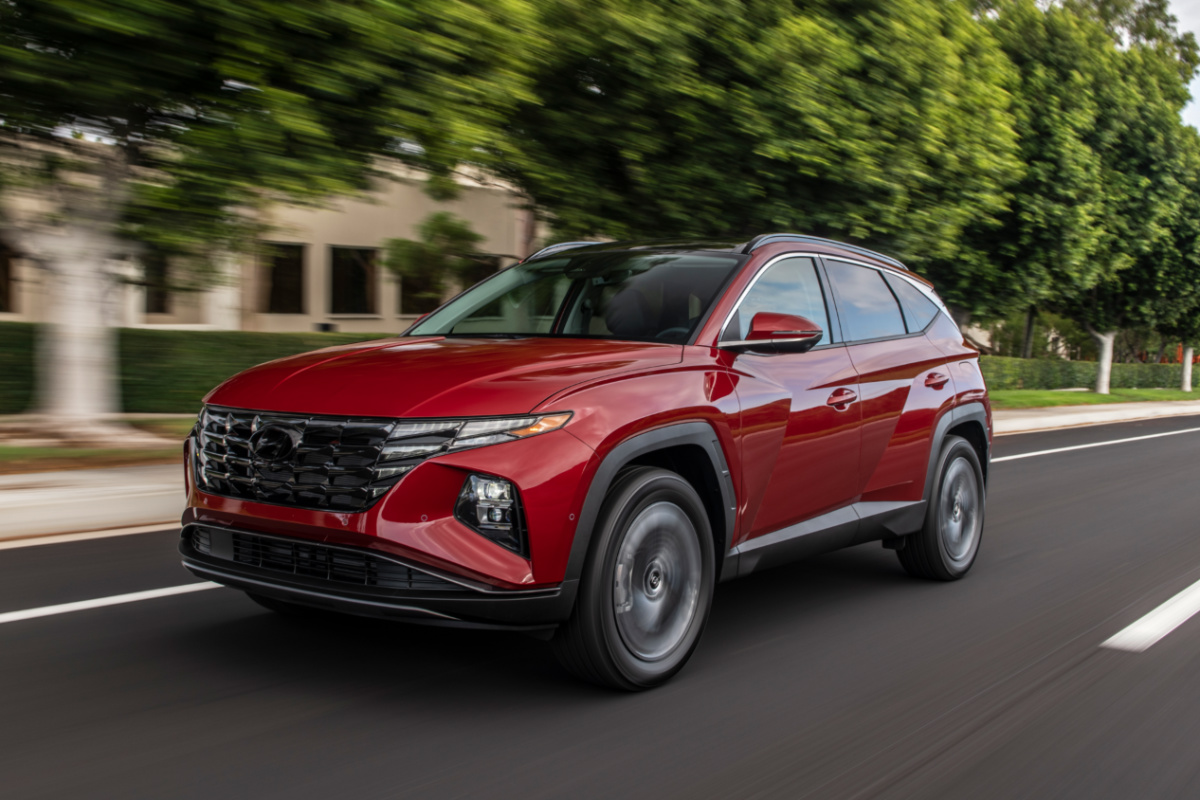
According to CarGurus experts, the overall rating for the 2024 Genesis GV80 was 7.7 out of 10, while the 2024 Hyundai Tucson scored 8.5 out of 10. Based on these ratings, we recommend the 2024 Hyundai Tucson. It offers outstanding value, ample cargo space, modern technology, and a higher safety ranking, making it a well-rounded choice for most consumers.
Choose the 2024 Hyundai Tucson if:
- You appreciate modern design and a sleek, athletic appearance.
- You need ample cargo space and convenient features like a hands-free power liftgate.
- You want advanced safety features and a higher crash-prevention rating from the IIHS.






Choose the 2024 Genesis GV80 if:
- You value a luxurious interior with high-end materials and advanced comfort features.
- You require robust engine performance with powerful turbocharged options.
- You need advanced safety tech, including Highway Driving Assist and Remote Smart Parking Assist.





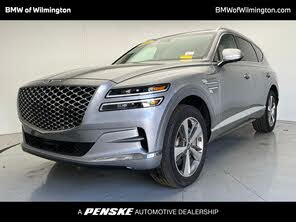

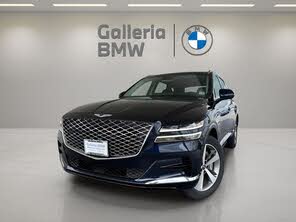
CarGurus highlights
According to CarGurus experts, the overall rating for the 2024 Genesis GV80 was 7.7 out of 10, while the 2024 Hyundai Tucson scored 8.5 out of 10. Based on these ratings, we recommend the 2024 Hyundai Tucson. It offers outstanding value, ample cargo space, modern technology, and a higher safety ranking, making it a well-rounded choice for most consumers.
Choose the 2024 Hyundai Tucson if:
Shop Now- You appreciate modern design and a sleek, athletic appearance.
- You need ample cargo space and convenient features like a hands-free power liftgate.
- You want advanced safety features and a higher crash-prevention rating from the IIHS.






Choose the 2024 Genesis GV80 if:
Shop Now- You value a luxurious interior with high-end materials and advanced comfort features.
- You require robust engine performance with powerful turbocharged options.
- You need advanced safety tech, including Highway Driving Assist and Remote Smart Parking Assist.






By: CarGurus + AI
At CarGurus, our team of experienced automotive writers remain at the heart of our content operation, conducting hands-on car tests and writing insightful guides that are backed by years of industry experience. To complement this, we are harnessing AI to make our content offering more diverse and more helpful to shoppers than ever. To achieve this, our AI systems are based exclusively on CarGurus content, ratings and data, so that what we produce is both unique to CarGurus, and uniquely helpful to car shoppers.