2022 Kia EV6 vs 2022 Hyundai Tucson
Overview | |
MSRP$25,800 | MSRP$40,900 |
Listings1668 | Listings192 |
Ratings & Reviews | |
User Reviews | User Reviews |
Expert reviews8.3 out of 10 | Expert reviews7.7 out of 10 |
Pros
Cons
| Pros
Cons
|
2022 Hyundai Tucson Reviews SummaryThe redesigned 2022 Hyundai Tucson has to offer a high-tech cabin, comfortable ride, competent engine lineup, and spacious cargo area to keep up with the Joneses in the hot-selling and competitive compact SUV class. It does that, and more, with Hyundai giving plenty of compelling reasons to take the 2022 Tucson for a test drive. | |
2022 Kia EV6 Reviews SummaryWe didn't expect them to go there. But the designers and engineers behind the 2022 Kia EV6 did—and deleted the template of their company's affordable, cost-conscious brand. This is a $60,000 electric performance car that can genuinely compete with a Tesla Model 3 on everything from tech to style to acceleration to charging time. It's a masterclass of fresh thinking in a market segment dominated by rehashed ideas. And yet, it's hampered by the same major problems that, for decades, remain unresolved. The EV6 would be amazing with battery technology that hasn't yet been invented. For now, we'll tell you what the present life is like with this most unusual and exciting Kia in years. | |
Popular Features & Specs | |
Engine2.5L 187 hp I4 | Engine167 hp Electric |
Drive TrainFWD | Drive TrainRWD |
Seating Capacity5 | Seating Capacity5 |
Horsepower187 hp @ 6100 rpm | Horsepower |
EV Battery Capacity | EV Battery Capacity58 kWh |
MPG City26 | MPG City136 |
MPG Highway33 | MPG Highway100 |
Battery Charge Time (120V) | Battery Charge Time (120V)51 hours |
Engine | |
Engine Name2.5L 187 hp I4 | Engine Name167 hp Electric |
Torque178 lb-ft @ 4000 rpm | Torque |
Horsepower187 hp @ 6100 rpm | Horsepower |
Battery Charge Time (120V) | Battery Charge Time (120V)51 hours |
DrivetrainFWD | DrivetrainRWD |
Fuel Economy | |
EV Battery Capacity | EV Battery Capacity58 kWh |
MPG City26 | MPG City136 |
MPG Highway33 | MPG Highway100 |
Interior | |
Seating Capacity5 | Seating Capacity5 |
Key Features | |
Navigation System | Navigation SystemStandard |
Safety | |
Front Crash Overall4 | Front Crash Overall5 |
Side Crash Overall5 | Side Crash Overall5 |
Dimensions & Capacity | |
Cargo Space38.7 cu ft | Cargo Space24.4 cu ft |
Curb Weight3329 lbs | Curb Weight4017 lbs |
Height65.6 in | Height60.8 in |
Length182.3 in | Length184.3 in |
Width73.4 in | Width74.0 in |
Wheelbase108.5 in | Wheelbase114.2 in |
Maximum Payload1301 lbs | Maximum Payload987 lbs |
Number of doors4 | Number of doors4 |
Maximum Towing Capacity2000 lbs | Maximum Towing Capacity |
Standard Towing Capacity2000 lbs | Standard Towing Capacity |
Overview | ||
MSRP | $25,800 | $40,900 |
Listings | ||
Ratings & Reviews | ||
User reviews | ||
Expert reviews | 8.3 out of 10Read full review | 7.7 out of 10Read full review |
Pros & cons | Pros
Cons
| Pros
Cons
|
Summary | The redesigned 2022 Hyundai Tucson has to offer a high-tech cabin, comfortable ride, competent engine lineup, and spacious cargo area to keep up with the Joneses in the hot-selling and competitive compact SUV class. It does that, and more, with Hyundai giving plenty of compelling reasons to take the 2022 Tucson for a test drive. | We didn't expect them to go there. But the designers and engineers behind the 2022 Kia EV6 did—and deleted the template of their company's affordable, cost-conscious brand. This is a $60,000 electric performance car that can genuinely compete with a Tesla Model 3 on everything from tech to style to acceleration to charging time. It's a masterclass of fresh thinking in a market segment dominated by rehashed ideas. And yet, it's hampered by the same major problems that, for decades, remain unresolved. The EV6 would be amazing with battery technology that hasn't yet been invented. For now, we'll tell you what the present life is like with this most unusual and exciting Kia in years. |
Video | ||
Popular Features & Specs | ||
Engine | 2.5L 187 hp I4 | 167 hp Electric |
Drive Train | FWD | RWD |
Seating Capacity | 5 | 5 |
Horsepower | 187 hp @ 6100 rpm | |
EV Battery Capacity | 58 kWh | |
MPG City | 26 | 136 |
MPG Highway | 33 | 100 |
Battery Charge Time (120V) | 51 hours | |
Engine | ||
Engine Name | 2.5L 187 hp I4 | 167 hp Electric |
Torque | 178 lb-ft @ 4000 rpm | |
Horsepower | 187 hp @ 6100 rpm | |
Battery Charge Time (120V) | 51 hours | |
Drivetrain | FWD | RWD |
Fuel Economy | ||
EV Battery Capacity | 58 kWh | |
MPG City | 26 | 136 |
MPG Highway | 33 | 100 |
Interior | ||
Seating Capacity | 5 | 5 |
Key Features | ||
Navigation System | Standard | |
Safety | ||
Front Crash Overall | 4 | 5 |
Side Crash Overall | 5 | 5 |
Dimensions & Capacity | ||
Cargo Space | 38.7 cu ft | 24.4 cu ft |
Curb Weight | 3329 lbs | 4017 lbs |
Height | 65.6 in | 60.8 in |
Length | 182.3 in | 184.3 in |
Width | 73.4 in | 74.0 in |
Wheelbase | 108.5 in | 114.2 in |
Maximum Payload | 1301 lbs | 987 lbs |
Number of doors | 4 | 4 |
Maximum Towing Capacity | 2000 lbs | |
Standard Towing Capacity | 2000 lbs | |
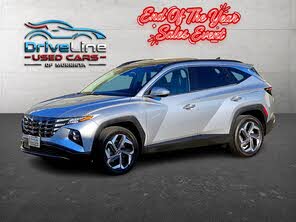
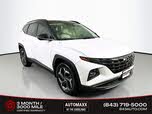
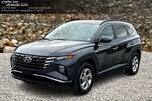
The 2022 Hyundai Tucson rode on a new platform and was offered in the U.S. as a long-wheelbase model with two rows of seating and an expanded cargo area. Its front featured a parametric grille that hid standard LED daytime running lights, Bi-LED headlights, and LED front turn signals. The headlights and daytime running lights formed a unique shape resembling the wings of the Aztec Spirit Bird. The side profile borrowed design elements from the Hyundai Elantra, including a silver D-pillar that created a floating roof effect. The rear showcased toothy taillights illuminated by LEDs, except in the base model, making the Tucson stand out among compact SUVs.
The Tucson rode on either 17- or 19-inch wheels, depending on the trim level, with four different wheel designs available. High-end trims featured premium fascias, front and rear skid plates, gloss black pillars, and a panoramic sunroof. Standard features included roof rails (except on the SE trim), body-color side-mirror housing, solar glass, and acoustic laminated glass. Upgrading beyond the base model added heated outside mirrors with blind-spot monitoring, rear cross-traffic avoidance assist indicators, turn signals, front aero wipers, and the option of a sunroof. The cabin was well-appointed with standard stain- and odor-resistant cloth seats, sport combination, and leather-trimmed seats available on higher trims. Horizontal lines across the dashboard and an uncluttered aesthetic gave the interior a sense of spaciousness.
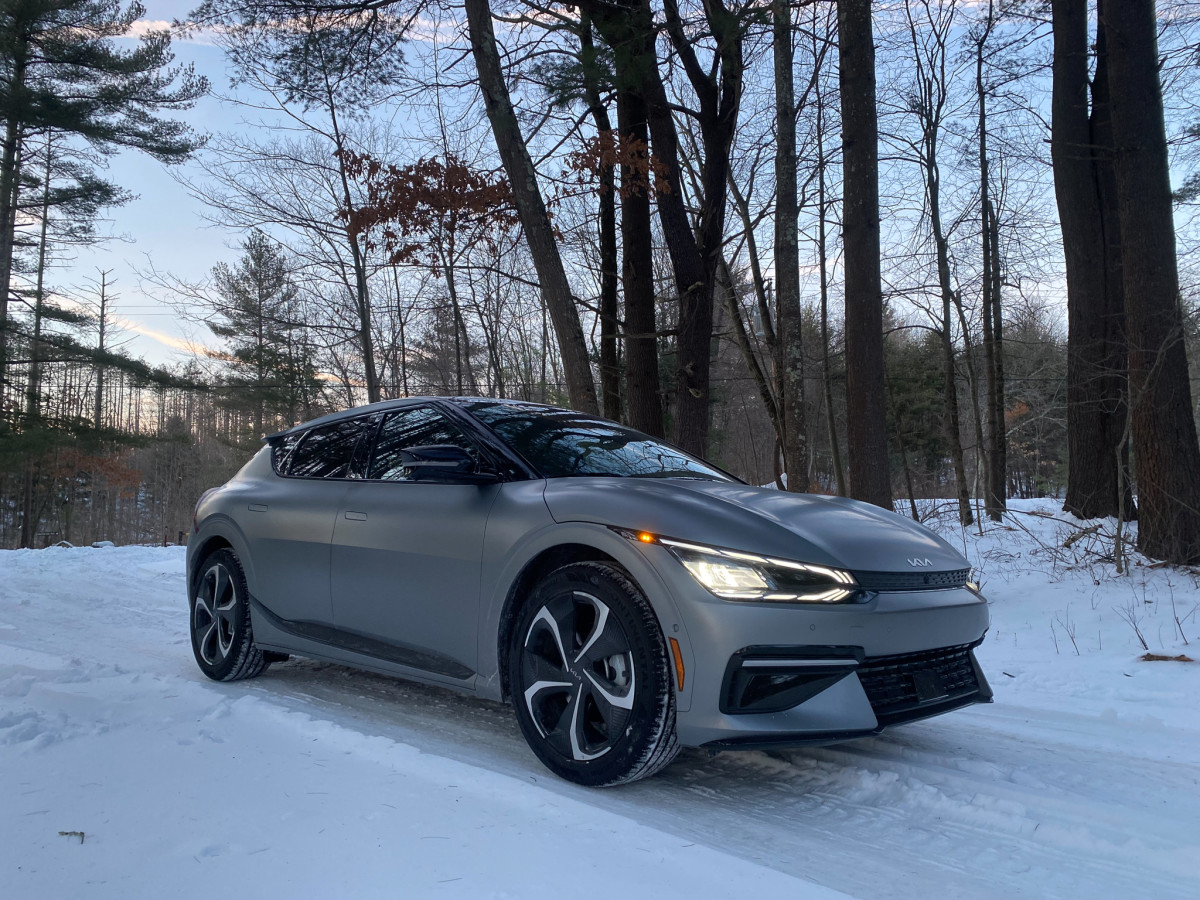
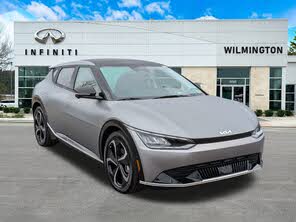
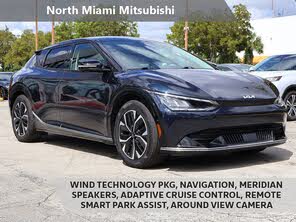
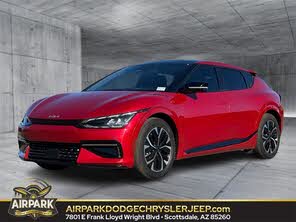
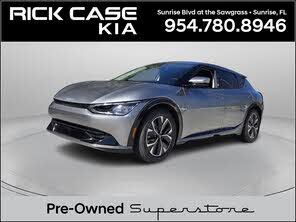
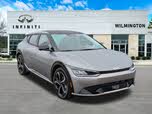
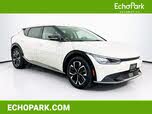
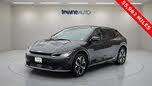
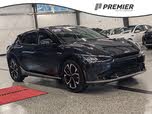
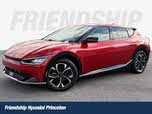
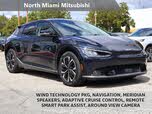
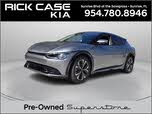
The 2022 Kia EV6, in contrast, was sportier and svelte, resembling a Ford Mustang Mach-E more than a Tesla Model Y. It was lower and wider visually, with a highback tail featuring a lip spoiler that doubled as a lightbar. The wheels were pushed to the furthest corners of the chassis, giving the body a hipped appearance similar to a Porsche 911. The headlights traced a V-shaped pattern, and the wedgy profile featured an angled roofline and twin ducts in the rear spoiler. The EV6's design included recessed lights below the rear spoiler, chrome trim below the taillights, and flush door handles that retracted when unlocking. The rear charge port was hidden beneath the right brake light and powered open with a magnet to keep it closed.
Inside, the EV6 featured dual 12-inch screens on a linear dash, a floating center console, and black and white seats covered in suede and leather. Ambient lighting flowed around the dash and circled the rear passengers. The hockey-puck shifter and digital controls added to the futuristic feel. The EV6's interior was designed to prioritize the car's aesthetic, making it enjoyable to drive.


The 2022 Hyundai Tucson came in two powertrain variants: a 2.5-liter direct-injected four-cylinder engine and a turbocharged 1.6-liter four-cylinder hybrid engine. The ICE engine delivered 187 horsepower and 178 pound-feet of torque, paired with an eight-speed automatic transmission. The hybrid powertrain offered 226 total system horsepower and 258 pound-feet of torque, paired with a six-speed automatic transmission. The hybrid engine made the Tucson more powerful and fun to drive, especially during testing on a 7,000-foot elevation change from Tucson to Mount Lemmon.
The Tucson offered all-wheel drive (AWD) as an option on ICE models and standard on the hybrid. In off-road testing, the AWD system performed well on loose gravel roads. Front-wheel drive Tucsons were the most fuel-efficient, with the ICE engine achieving an EPA-estimated 26 mpg in the city, 33 mpg on the highway, and 29 mpg combined. The hybrid models were more fuel-efficient, achieving 37 mpg in the city, 36 mpg on the highway, and 37 mpg combined. The forthcoming Tucson plug-in hybrid (PHEV) was expected to deliver 261 horsepower and 224 pound-feet of torque, with an estimated 25 miles of all-electric range.
The 2022 Kia EV6 GT-Line e-AWD featured two electric motors producing 320 horsepower and 446 pound-feet of torque. With a 77-kilowatt-hour battery, the EV6 could accelerate to 60 mph in a claimed 4.6 seconds. The top-power GT trim, arriving in fall 2022, was expected to deliver 576 horsepower and a 0-60 time of less than 3.5 seconds. The base EV6 Light had a smaller 58 kWh battery and a single motor producing 167 horsepower and 258 pound-feet of torque. The single-motor Wind and GT-Line models paired the larger battery with a higher-output single motor producing 225 horsepower.
The EV6's dual-motor GT-Line provided a thrilling driving experience with quick torque delivery and effective power routing. The regenerative braking system offered more than eight settings, allowing for one-pedal driving in the maximum I-Pedal setting. The EV6's driving range was disappointing in cold weather, with the car delivering only 65 percent of its 274-mile EPA estimate during testing. The EV6 could accept up to 240 kW of charging power, but real-world charging speeds were lower, with the car taking 35 minutes to go from 15 to 80 percent battery.
The Hyundai Tucson's interior was budget-friendly yet well-appointed, comparable to competitors like the Toyota RAV4, Honda CR-V, Nissan Rogue, and Ford Escape. It featured a six-way power-adjustable driver’s seat as standard, with an eight-way version available on higher trims. The Tucson offered three-stage heated front seats, ventilated front seats, memory for the driver’s seat, and an eight-way power-adjustable passenger seat. The tilt and telescoping steering wheel was standard, with leather-wrapping and heating available on higher trims.
The new Tucson platform provided more space for passengers and cargo, with more passenger volume than the CR-V, RAV4, and Escape. The rear seats offered two inches more legroom than the RAV4, and the 74.8 cubic-foot cargo area was comparable to the Forester, RAV4, and CR-V. The rear featured a 60-40 split-folding bench seat and a dual-level cargo floor on ICE models. A hands-free liftgate was available on mid-grade models and up.
The Kia EV6 reinvented core functions with features like pop-out door handles, paddle shifters, and a twisting rotary shifter. The climate controls and stereo shared a thin touchscreen, which could be frustrating to use while driving. The EV6 offered generous legroom and headroom in all seating positions, with reclining rear seats and optional heated cushions. However, the cargo hold was limited, with just 24 cubic feet behind the seats and 50 cubic feet when folded. The front trunk offered additional space on RWD models, but the AWD models had an electric motor occupying the space.
The EV6 had a towing capacity of 2,300 pounds and an onboard power generator that could run 120-volt equipment or charge another EV.
The Hyundai Tucson came with a strong set of standard tech features, including an 8-inch infotainment touchscreen, a six-speaker audio system, wireless Android Auto and Apple CarPlay, HD Radio, and two USB ports. Higher trims added satellite radio, Blue Link mobile app compatibility, additional USB outlets, rear air conditioning vents, and dual-zone automatic climate control. A 10.25-inch infotainment touchscreen was available, but required a wired connection for Apple CarPlay and Android Auto. The larger screen was embedded within a black plastic head unit that included climate control and radio/media functionality, which could be difficult to use while driving.
The Kia EV6's infotainment system was simple and quick, with connectivity options except for wireless Apple CarPlay and Android Auto. The instrument panel showed vehicles in surrounding lanes and a 3D bar graph of power and speed. The EV6 featured 360-degree surround-view cameras, customizable "engine" sounds, and an augmented reality head-up display (HUD). The HUD displayed directional arrows and tracked the car in front using adaptive cruise control. Higher trims included a 14-speaker Meridian stereo and a remote parking system. However, Kia Connect features were disabled for Massachusetts residents due to compliance issues with state laws.
The 2022 Hyundai Tucson had not been tested by the IIHS or NHTSA. It came with the Hyundai SmartSense Safety Feature suite, including forward collision-avoidance assist, lane-keep assist, automatic high beams, a driver attention monitor, rear occupant alert, speed limit assist, and leading vehicle departure alert. Additional features included blind-spot warning, rear cross-traffic alert, adaptive cruise control, a surround-view camera system, and remote parking assist. Hyundai offered a 10-year/100,000-mile powertrain limited warranty, a 5-year/60,000-mile new vehicle limited warranty, and a 7-year anti-perforation warranty, along with 3 years/36,000 miles of complimentary maintenance.
The 2022 Kia EV6 had no published test results from U.S. agencies but came with impressive safety tech. The HDA system was standard on the base Light trim, including lane-keeping, cyclist and pedestrian detection, front and rear cross-traffic alert, a driver attention monitor, rear parking sensors, safe exit warning, and rear occupant alert. Higher trims added front parking sensors, automatic rear braking, 360 cameras, evasive steering assist, and adaptive cruise control with "machine learning."
CarGurus highlights

According to CarGurus experts, the overall rating for the 2022 Hyundai Tucson is 8.3 out of 10, while the 2022 Kia EV6 scores 7.7 out of 10. Based on these ratings, the 2022 Hyundai Tucson is the recommended choice for its higher overall rating, spacious interior, fuel efficiency, and comprehensive safety features.
Choose the 2022 Kia EV6 if:
- You prefer a sportier, more futuristic design with advanced technology features.
- You seek a thrilling driving experience with quick acceleration and responsive handling.
- You value innovative interior features and generous passenger space.




Choose the 2022 Hyundai Tucson if:
- You want a budget-friendly compact SUV with a spacious and well-appointed interior.
- You prioritize fuel efficiency, especially with the hybrid model.
- You need a comprehensive suite of safety features and a strong warranty.




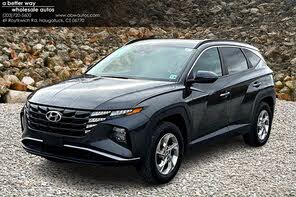


CarGurus highlights
According to CarGurus experts, the overall rating for the 2022 Hyundai Tucson is 8.3 out of 10, while the 2022 Kia EV6 scores 7.7 out of 10. Based on these ratings, the 2022 Hyundai Tucson is the recommended choice for its higher overall rating, spacious interior, fuel efficiency, and comprehensive safety features.
Choose the 2022 Kia EV6 if:
Shop Now- You prefer a sportier, more futuristic design with advanced technology features.
- You seek a thrilling driving experience with quick acceleration and responsive handling.
- You value innovative interior features and generous passenger space.



Choose the 2022 Hyundai Tucson if:
Shop Now- You want a budget-friendly compact SUV with a spacious and well-appointed interior.
- You prioritize fuel efficiency, especially with the hybrid model.
- You need a comprehensive suite of safety features and a strong warranty.





By: CarGurus + AI
At CarGurus, our team of experienced automotive writers remain at the heart of our content operation, conducting hands-on car tests and writing insightful guides that are backed by years of industry experience. To complement this, we are harnessing AI to make our content offering more diverse and more helpful to shoppers than ever. To achieve this, our AI systems are based exclusively on CarGurus content, ratings and data, so that what we produce is both unique to CarGurus, and uniquely helpful to car shoppers.