2024 Genesis GV80 vs 2024 Chevrolet Blazer EV

Overview | |
MSRP$57,700 | MSRP$48,800 |
Listings506 | Listings556 |
Ratings & Reviews | |
User Reviews | User Reviews |
Expert reviews7.7 out of 10 | Expert reviews6.3 out of 10 |
Pros
Cons
| Pros
Cons
|
2024 Genesis GV80 Reviews SummaryGenesis introduced the GV80 in 2021, and the crossover SUV is getting a minor refresh in 2025. Still, the 2024 GV80 remains a good choice unless you want to wait for the fancier styling, more high-tech interior, or new supercharged GV80 Coupe coming next year. Otherwise, today’s GV80 is pretty much the same as tomorrow’s GV80, and in some respects, it is the more elegant and traditional choice. Verdict: Based on our evaluation of the 2024 Genesis GV80, seat comfort is not what it should be. Also, to use Apple CarPlay or Android Auto, you need a USB cable. This Genesis is thirsty, too. But otherwise, we have few complaints about this stylish, safe, and mostly rewarding midsize luxury SUV. | |
2024 Chevrolet Blazer EV Reviews SummaryIt may share a name with the gasoline-powered Blazer crossover SUV, but the Chevy Blazer EV is in fact a new vehicle based on the General Motors Ultium electric vehicle (EV) component set. It’s Chevy’s belated answer to the crosstown rival Ford Mustang Mach-E and other electric SUVs like the Hyundai Ioniq 5, the Kia EV6, and the Tesla Model Y. Verdict: The Blazer EV offers unique style and impressive technology, but it doesn’t really move the needle when it comes to range, fast charging, or interior packaging. It’s also priced at the higher end of the segment in its launch form. | |
No video found | No video found |
Popular Features & Specs | |
Engine2.5L 300 hp I4 | Engine288 hp Electric |
Drive TrainAWD | Drive TrainAWD |
Seating Capacity5 | Seating Capacity5 |
Horsepower300 hp @ 5800 rpm | Horsepower |
EV Battery Capacity | EV Battery Capacity85 kWh |
MPG City20 | MPG City103 |
MPG Highway24 | MPG Highway88 |
Engine | |
Engine Name2.5L 300 hp I4 | Engine Name288 hp Electric |
Torque311 lb-ft @ 1650 rpm | Torque |
Horsepower300 hp @ 5800 rpm | Horsepower |
DrivetrainAWD | DrivetrainAWD |
Fuel Economy | |
EV Battery Capacity | EV Battery Capacity85 kWh |
MPG City20 | MPG City103 |
MPG Highway24 | MPG Highway88 |
Interior | |
Seating Capacity5 | Seating Capacity5 |
Key Features | |
Navigation SystemStandard | Navigation SystemStandard |
Safety | |
Front Crash Overall4 | Front Crash Overall5 |
Side Crash Overall | Side Crash Overall5 |
Dimensions & Capacity | |
Cargo Space34.9 cu ft | Cargo Space25.5 cu ft |
Curb Weight4742 lbs | Curb Weight5337 lbs |
Height67.5 in | Height65.0 in |
Length194.7 in | Length192.2 in |
Width77.8 in | Width86.5 in |
Wheelbase116.3 in | Wheelbase121.8 in |
Maximum Payload1188 lbs | Maximum Payload1167 lbs |
Number of doors4 | Number of doors4 |
Maximum Towing Capacity6000 lbs | Maximum Towing Capacity1500 lbs |
Overview | ||
MSRP | $57,700 | $48,800 |
Listings | ||
Ratings & Reviews | ||
User reviews | ||
Expert reviews | 7.7 out of 10Read full review | 6.3 out of 10Read full review |
Pros & cons | Pros
Cons
| Pros
Cons
|
Summary | Genesis introduced the GV80 in 2021, and the crossover SUV is getting a minor refresh in 2025. Still, the 2024 GV80 remains a good choice unless you want to wait for the fancier styling, more high-tech interior, or new supercharged GV80 Coupe coming next year. Otherwise, today’s GV80 is pretty much the same as tomorrow’s GV80, and in some respects, it is the more elegant and traditional choice. Verdict: Based on our evaluation of the 2024 Genesis GV80, seat comfort is not what it should be. Also, to use Apple CarPlay or Android Auto, you need a USB cable. This Genesis is thirsty, too. But otherwise, we have few complaints about this stylish, safe, and mostly rewarding midsize luxury SUV. | It may share a name with the gasoline-powered Blazer crossover SUV, but the Chevy Blazer EV is in fact a new vehicle based on the General Motors Ultium electric vehicle (EV) component set. It’s Chevy’s belated answer to the crosstown rival Ford Mustang Mach-E and other electric SUVs like the Hyundai Ioniq 5, the Kia EV6, and the Tesla Model Y. Verdict: The Blazer EV offers unique style and impressive technology, but it doesn’t really move the needle when it comes to range, fast charging, or interior packaging. It’s also priced at the higher end of the segment in its launch form. |
Video | No video found | No video found |
Popular Features & Specs | ||
Engine | 2.5L 300 hp I4 | 288 hp Electric |
Drive Train | AWD | AWD |
Seating Capacity | 5 | 5 |
Horsepower | 300 hp @ 5800 rpm | |
EV Battery Capacity | 85 kWh | |
MPG City | 20 | 103 |
MPG Highway | 24 | 88 |
Engine | ||
Engine Name | 2.5L 300 hp I4 | 288 hp Electric |
Torque | 311 lb-ft @ 1650 rpm | |
Horsepower | 300 hp @ 5800 rpm | |
Drivetrain | AWD | AWD |
Fuel Economy | ||
EV Battery Capacity | 85 kWh | |
MPG City | 20 | 103 |
MPG Highway | 24 | 88 |
Interior | ||
Seating Capacity | 5 | 5 |
Key Features | ||
Navigation System | Standard | Standard |
Safety | ||
Front Crash Overall | 4 | 5 |
Side Crash Overall | 5 | |
Dimensions & Capacity | ||
Cargo Space | 34.9 cu ft | 25.5 cu ft |
Curb Weight | 4742 lbs | 5337 lbs |
Height | 67.5 in | 65.0 in |
Length | 194.7 in | 192.2 in |
Width | 77.8 in | 86.5 in |
Wheelbase | 116.3 in | 121.8 in |
Maximum Payload | 1188 lbs | 1167 lbs |
Number of doors | 4 | 4 |
Maximum Towing Capacity | 6000 lbs | 1500 lbs |
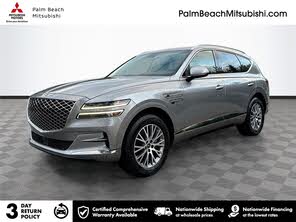
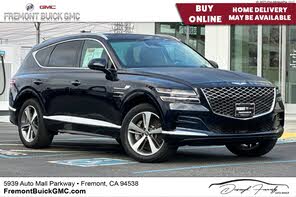
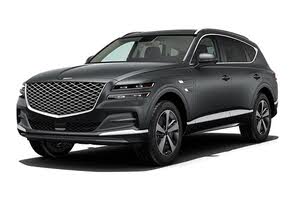
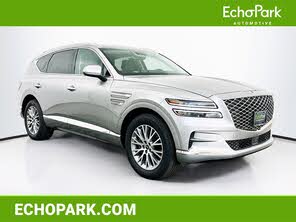
The 2024 Genesis GV80 and the 2024 Chevrolet Blazer EV offered strikingly different aesthetics and build philosophies. The GV80 was available in both 2.5T (turbocharged four-cylinder) and 3.5T (twin-turbocharged V6) models, with trim levels spanning Standard, Advanced, Prestige, and Prestige Signature. Its price tags ranged from $57,700 to $81,750, excluding a $1,350 destination charge. The test vehicle under review boasted the Prestige Signature trim and was dressed in a pricey Matterhorn White Matte paint job, which elevated its MSRP to $84,600.
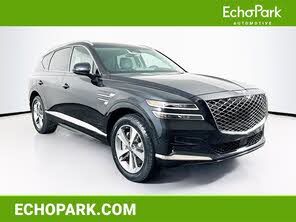
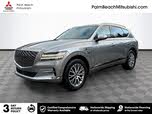
The GV80 delivered a sophisticated luxury aesthetic accentuated by exterior colors such as Vik Black, Matterhorn White Matte, or Mauna Red paired with dark chrome trim and inconspicuous 22-inch wheels. However, while the Prestige Signature trim was richly equipped, its wheel design was critiqued for being too subtle. Inside, the GV80 was sheer opulence, with its Ultramarine Blue over Dune interior adorned with diamond-stitched Nappa leather, a faux-leather dashboard, matte wood trims, and metallic accents. The 3D digital instrument cluster and wide touchscreen further underscored its luxury flagship status.
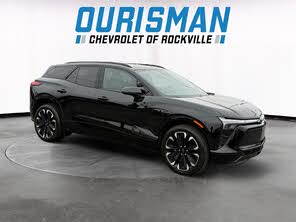
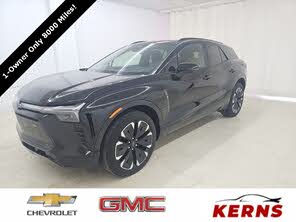
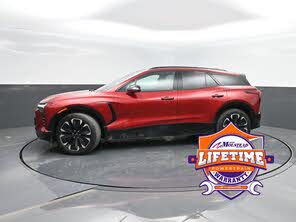
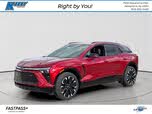
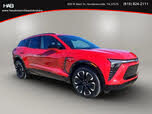
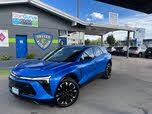
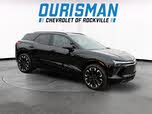
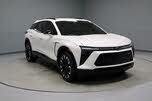
The 2024 Chevrolet Blazer EV, meanwhile, marked a significant evolution of its legacy nameplate, shifting from its truck-based off-roader roots to a modern EV. It utilized GM’s Ultium battery platform, with engineers adjusting the battery modules based on the model’s needs, thereby determining the wheelbase length. The Blazer EV’s long 121.8-inch wheelbase, shared with the Cadillac Lyriq, gave it a somewhat stretched appearance compared to rivals.
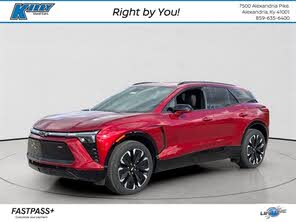
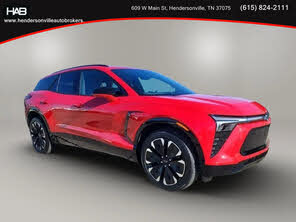
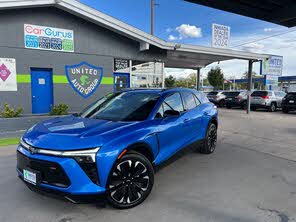
Stylistically, the Blazer EV maintained a commanding presence with its tall hood and aggressive front fascia, carried over from its gasoline counterpart, along with signature boomerang-shaped taillights. It launched in LT and RS trims, each featuring unique styling elements. The LT featured a monochromatic front fascia, while the RS came with a blacked-out front fascia and 21-inch wheels. The anticipated Blazer EV SS promised even more aggressive styling. The Blazer EV attempted to preserve traditional SUV aesthetics but with a modern twist unique among its competitors.


Under the hood, the 2024 Genesis GV80 was no slouch, offering two engine choices. The 2.5T variant featured a 2.5-liter turbocharged four-cylinder engine generating 300 horsepower and 311 pound-feet of torque. Notably, the GV80’s 2.5T outpowered larger V6 engines in some competitors like the Acura MDX and Infiniti QX60. The more potent 3.5T variant came equipped with a twin-turbocharged 3.5-liter V6 engine, delivering 375 hp and 391 lb-ft of torque. This engine's robust performance, however, came with a trade-off in fuel efficiency, observed at 17.2 mpg in combined driving compared to EPA's 20 mpg rating.
Both GV80 models paired with an eight-speed automatic transmission and standard all-wheel-drive (AWD), offering multiple driving modes, including Eco, Comfort, Sport, Custom, and Snow. The 3.5T variant enhanced its performance with bigger brakes and an adaptive suspension, providing a sporty yet comfortable drive. The GV80 was also designed with practicality in mind, offering 8.1 inches of ground clearance and a towing capacity of up to 6,000 pounds.
The 2024 Chevrolet Blazer EV also offered robust powertrain options, with a single-motor rear-wheel-drive (RWD) setup and a dual-motor AWD system in the LT and RS trims. The RWD model produced 340 horsepower and 325 pound-feet of torque, married to a 102-kWh battery pack. Conversely, the AWD variant, though powered by two motors, generated 288 hp and 333 lb-ft of torque and utilized an 85-kWh battery pack. In an uncommon move, Chevy also planned a single-motor front-wheel-drive (FWD) powertrain for the Blazer EV LT from the 2025 model year.
The future Blazer EV SS was poised to cap the lineup with a dual-motor AWD powertrain, producing 557 hp and 648 lb-ft of torque, capable of accelerating from 0-60 mph in under four seconds. Our test drives focused on the RWD and AWD RS models, both offering impressive acceleration. However, the RWD variant appeared somewhat traction-limited, whereas the AWD model demonstrated more robust off-the-line performance.
Comparatively, the Blazer EV felt more agile than the Cadillac Lyriq, but also less comfortable on rougher roads, sacrificing ride comfort for handling precision. The Blazer EV resonated well with enthusiasts, thanks to its precise steering and adjustable regenerative braking, adding a level of driver engagement often absent in EVs.
Inside, the 2024 Genesis GV80 combined luxury with function, though some compromises existed. Only the 3.5T Advanced trim offered a third-row seat in 2024, while the Prestige Signature trim featured four power-adjustable, heated, and ventilated seats accompanied by a large center console, limiting passenger capacity and practicality. Missing out on the GV80 for a family trip in favor of a five-seater Jeep Gladiator underscored this limitation, despite the Genesis's luxurious appointments.
The GV80 offered materials ranging from artificial to premium leather, emphasizing comfort with standard heated front seats, a heated steering wheel, and a hands-free liftgate. More luxurious trims added features like a panoramic glass roof, triple-zone climate control, and ventilated seats with massage functions.
Yet, passenger comfort seemed lacking on long drives, with seats that felt like “bubble wrap” and limited rear legroom. On the flip side, its cargo capacity was generous, offering 34.9 cubic feet behind the second row, expandable to 84 cubic feet with seats folded. However, the Prestige Signature’s rear console could impede larger items.
The 2024 Chevrolet Blazer EV, while stylish, didn’t maximize the spatial benefits of its electric architecture. Headroom and legroom figures were virtually on par with sleeker rivals like the Mustang Mach-E and EV6. Cargo capacity was another area where the Blazer EV fell short, offering 25.5 cubic feet with the rear seats in use and 59.1 cubic feet with seats folded—less than the gasoline Blazer and slightly less than the Mach-E, which also featured a frunk.
Despite its limitations, the Blazer EV did provide ample storage for small items, including secure phone parking and a decent-sized center console. It also featured some ergonomic quirks, such as touchscreen-based climate and headlight controls, that required a bit of adaptation.
In terms of technology, the 2024 Genesis GV80 was in its final year of offering analog gauges, with the Prestige trims showcasing a 12.3-inch digital instrument cluster. All GV80 models sported a 14.5-inch touchscreen infotainment system, though its placement favored the use of the center-console-mounted control dial over touch interaction.
The infotainment system included navigation, SiriusXM, wired Apple CarPlay, and Android Auto, alongside Genesis Connected Services and, for the first time in 2024, Wi-Fi hotspot capability. Wireless charging was standard, with the Prestige Signature adding this feature for the second row. Despite using wired smartphone connectivity, streaming music via Bluetooth was seamless, and the voice recognition system proved user-friendly.
Genesis also introduced a digital key system for using smartphones to unlock and start the GV80. Higher trims came with a Lexicon premium sound system, soon to be replaced by Bang & Olufsen components. A Head-Up Display (HUD) was also standard on top trims, offering critical driving information and blind-spot warnings.
On the other hand, the 2024 Chevrolet Blazer EV debuted Chevy’s new Google-based infotainment system, featuring built-in Google apps such as Maps and Assistant. Unlike many competitors, Chevy eliminated standalone Android Auto and Apple CarPlay but supplemented this loss with a 17.7-inch touchscreen and 11-inch digital instrument cluster, each with sharp graphics.
The infotainment system also offered built-in route planning that automatically identified charging stations and enabled OTA software updates for new features. Despite a generally favorable user experience, the driver-centric touchscreen and lack of physical controls required some adjustment. Additionally, the Blazer EV featured a seamless hands-free start system, enhancing its modern, high-tech feel.
The Genesis GV80 came equipped with numerous advanced driving-assistance systems (ADAS). Key features included a Blind-Spot View Monitor, Remote Smart Parking Assist, and Highway Driving Assist (HDA). Although HDA worked well in lighter traffic, it proved less effective in heavy, fast-moving traffic, where frequent lane-changing prompted unnecessary braking and power surges.
One standout feature was the Blind-Spot View Monitor, offering a live video feed of blind spots when signaling a lane change, displayed within the digital instrument cluster. The GV80 also featured a Remote Smart Parking Assist system, allowing for autonomous parking from outside the vehicle via the key fob.
In terms of crash safety, the GV80 received top marks. The IIHS awarded it a Top Safety Pick+ rating, and the NHTSA gave it a five-star overall rating, albeit with four-star ratings in the frontal-impact tests.
The 2024 Chevrolet Blazer EV's crash-test results were not available at the time of review. However, it came standard with safety features like automatic emergency braking with pedestrian detection, forward-collision warning, and lane-keep assist. Optional aids included reverse automatic braking and park assist, alongside GM’s renowned Super Cruise hands-free driver-assist system, which managed speed, following distance, and lane centering.
CarGurus highlights

According to CarGurus experts, the overall rating for the 2024 Genesis GV80 is 7.7 out of 10, while the 2024 Chevrolet Blazer EV scores 6.3 out of 10. Given these assessments, the Genesis GV80 emerges as the more recommended vehicle. Its higher ratings in luxury, performance, and safety make it the better-rounded choice, especially for those who value a combination of elegance, robust driving dynamics, and cutting-edge safety features.
Choose the 2024 Genesis GV80 if:
- You seek a blend of premium luxury and powerful performance.
- You prioritize advanced safety features and top crash-test ratings.
- Ample cargo space and high-end interior finishes are important to you.




Choose the 2024 Chevrolet Blazer EV if:
- You want a modern, high-tech driving experience with an all-electric powertrain.
- Impressive infotainment systems and tech-forward features appeal to you.
- You need a stylish but practical SUV with notable driver engagement.




CarGurus highlights
According to CarGurus experts, the overall rating for the 2024 Genesis GV80 is 7.7 out of 10, while the 2024 Chevrolet Blazer EV scores 6.3 out of 10. Given these assessments, the Genesis GV80 emerges as the more recommended vehicle. Its higher ratings in luxury, performance, and safety make it the better-rounded choice, especially for those who value a combination of elegance, robust driving dynamics, and cutting-edge safety features.
Choose the 2024 Genesis GV80 if:
Shop Now- You seek a blend of premium luxury and powerful performance.
- You prioritize advanced safety features and top crash-test ratings.
- Ample cargo space and high-end interior finishes are important to you.








Choose the 2024 Chevrolet Blazer EV if:
Shop Now- You want a modern, high-tech driving experience with an all-electric powertrain.
- Impressive infotainment systems and tech-forward features appeal to you.
- You need a stylish but practical SUV with notable driver engagement.






By: CarGurus + AI
At CarGurus, our team of experienced automotive writers remain at the heart of our content operation, conducting hands-on car tests and writing insightful guides that are backed by years of industry experience. To complement this, we are harnessing AI to make our content offering more diverse and more helpful to shoppers than ever. To achieve this, our AI systems are based exclusively on CarGurus content, ratings and data, so that what we produce is both unique to CarGurus, and uniquely helpful to car shoppers.