2024 Chevrolet Blazer EV vs 2024 Hyundai Santa Fe

Overview | |
MSRP$48,800 | MSRP$33,950 |
Listings621 | Listings1063 |
Ratings & Reviews | |
User Reviews | User Reviews |
Expert reviews6.3 out of 10 | Expert reviews8.2 out of 10 |
Pros
Cons
| Pros
Cons
|
2024 Chevrolet Blazer EV Reviews SummaryIt may share a name with the gasoline-powered Blazer crossover SUV, but the Chevy Blazer EV is in fact a new vehicle based on the General Motors Ultium electric vehicle (EV) component set. It’s Chevy’s belated answer to the crosstown rival Ford Mustang Mach-E and other electric SUVs like the Hyundai Ioniq 5, the Kia EV6, and the Tesla Model Y. Verdict: The Blazer EV offers unique style and impressive technology, but it doesn’t really move the needle when it comes to range, fast charging, or interior packaging. It’s also priced at the higher end of the segment in its launch form. | |
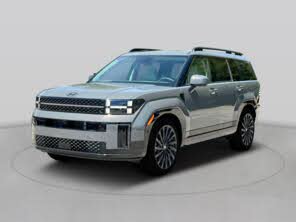
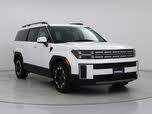
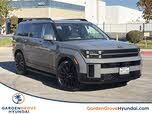
2024 Hyundai Santa Fe Reviews SummaryThe Hyundai Santa Fe is fully redesigned for 2024. It marks a significant departure for the brand in terms of styling, with a bold and blocky profile and stance reminiscent of, dare we say it, a certain British brand known for its off-road prowess. The Santa Fe’s redesign has as much substance as style, with a longer wheelbase, standard third-row seats, and new premium amenities, including a “terrace” approach to designing passenger and cargo space. Verdict: According to Hyundai, compact SUVs make up 15% of the brand’s sales, and the company expects the Santa Fe to grow that number. Overall, based on our exploration and time behind the wheel, the 2024 Santa Fe’s redesign is successful, as long as it doesn’t overshadow the rest of Hyundai’s lineup. | |
No video found | |
Popular Features & Specs | |
Engine288 hp Electric | Engine2.5L 277 hp I4 |
Drive TrainAWD | Drive TrainFWD |
Seating Capacity5 | Seating Capacity7 |
Horsepower | Horsepower277 hp @ 5800 rpm |
EV Battery Capacity85 kWh | EV Battery Capacity |
MPG City103 | MPG City20 |
MPG Highway88 | MPG Highway29 |
Engine | |
Engine Name288 hp Electric | Engine Name2.5L 277 hp I4 |
Torque | Torque311 lb-ft @ 4000 rpm |
Horsepower | Horsepower277 hp @ 5800 rpm |
DrivetrainAWD | DrivetrainFWD |
Fuel Economy | |
EV Battery Capacity85 kWh | EV Battery Capacity |
MPG City103 | MPG City20 |
MPG Highway88 | MPG Highway29 |
Interior | |
Seating Capacity5 | Seating Capacity7 |
Key Features | |
Navigation SystemStandard | Navigation SystemStandard |
Safety | |
Front Crash Overall5 | Front Crash Overall4 |
Side Crash Overall5 | Side Crash Overall5 |
Dimensions & Capacity | |
Cargo Space25.5 cu ft | Cargo Space14.6 cu ft |
Curb Weight5337 lbs | Curb Weight4343 lbs |
Height65.0 in | Height67.7 in |
Length192.2 in | Length190.2 in |
Width86.5 in | Width74.8 in |
Wheelbase121.8 in | Wheelbase110.8 in |
Maximum Payload1167 lbs | Maximum Payload1191 lbs |
Number of doors4 | Number of doors4 |
Maximum Towing Capacity1500 lbs | Maximum Towing Capacity3500 lbs |
Overview | ||
MSRP | $48,800 | $33,950 |
Listings | ||
Ratings & Reviews | ||
User reviews | ||
Expert reviews | 6.3 out of 10Read full review | 8.2 out of 10Read full review |
Pros & cons | Pros
Cons
| Pros
Cons
|
Summary | It may share a name with the gasoline-powered Blazer crossover SUV, but the Chevy Blazer EV is in fact a new vehicle based on the General Motors Ultium electric vehicle (EV) component set. It’s Chevy’s belated answer to the crosstown rival Ford Mustang Mach-E and other electric SUVs like the Hyundai Ioniq 5, the Kia EV6, and the Tesla Model Y. Verdict: The Blazer EV offers unique style and impressive technology, but it doesn’t really move the needle when it comes to range, fast charging, or interior packaging. It’s also priced at the higher end of the segment in its launch form. | The Hyundai Santa Fe is fully redesigned for 2024. It marks a significant departure for the brand in terms of styling, with a bold and blocky profile and stance reminiscent of, dare we say it, a certain British brand known for its off-road prowess. The Santa Fe’s redesign has as much substance as style, with a longer wheelbase, standard third-row seats, and new premium amenities, including a “terrace” approach to designing passenger and cargo space. Verdict: According to Hyundai, compact SUVs make up 15% of the brand’s sales, and the company expects the Santa Fe to grow that number. Overall, based on our exploration and time behind the wheel, the 2024 Santa Fe’s redesign is successful, as long as it doesn’t overshadow the rest of Hyundai’s lineup. |
Video | No video found | |
Popular Features & Specs | ||
Engine | 288 hp Electric | 2.5L 277 hp I4 |
Drive Train | AWD | FWD |
Seating Capacity | 5 | 7 |
Horsepower | 277 hp @ 5800 rpm | |
EV Battery Capacity | 85 kWh | |
MPG City | 103 | 20 |
MPG Highway | 88 | 29 |
Engine | ||
Engine Name | 288 hp Electric | 2.5L 277 hp I4 |
Torque | 311 lb-ft @ 4000 rpm | |
Horsepower | 277 hp @ 5800 rpm | |
Drivetrain | AWD | FWD |
Fuel Economy | ||
EV Battery Capacity | 85 kWh | |
MPG City | 103 | 20 |
MPG Highway | 88 | 29 |
Interior | ||
Seating Capacity | 5 | 7 |
Key Features | ||
Navigation System | Standard | Standard |
Safety | ||
Front Crash Overall | 5 | 4 |
Side Crash Overall | 5 | 5 |
Dimensions & Capacity | ||
Cargo Space | 25.5 cu ft | 14.6 cu ft |
Curb Weight | 5337 lbs | 4343 lbs |
Height | 65.0 in | 67.7 in |
Length | 192.2 in | 190.2 in |
Width | 86.5 in | 74.8 in |
Wheelbase | 121.8 in | 110.8 in |
Maximum Payload | 1167 lbs | 1191 lbs |
Number of doors | 4 | 4 |
Maximum Towing Capacity | 1500 lbs | 3500 lbs |
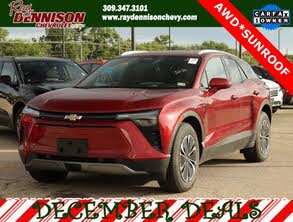
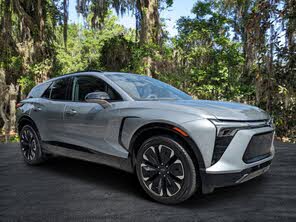
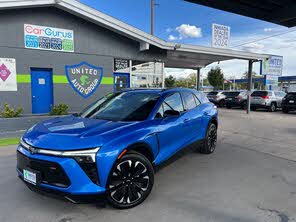
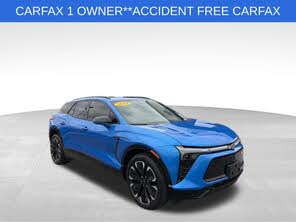
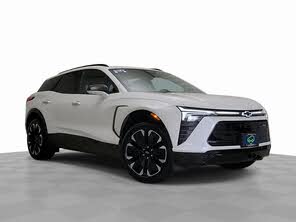
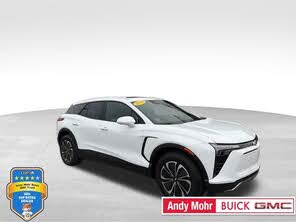
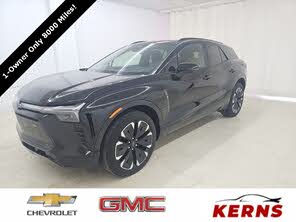
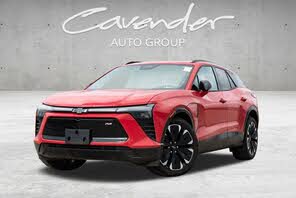
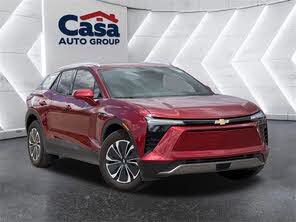
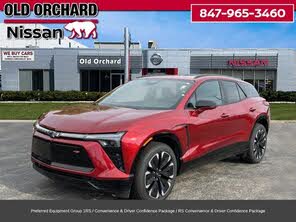
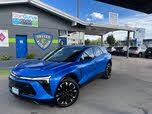
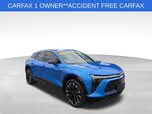
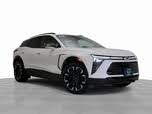
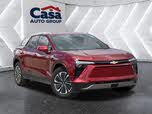
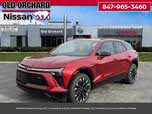
The 2024 Chevrolet Blazer EV marked a dramatic evolution from its SUV predecessors, taking a storied nameplate into the electric age. Initially a truck-based off-roader, the Blazer's transformation into a car-based crossover in 2019 was a significant shift, and the Blazer EV represented another leap. Building on the General Motors Ultium component set, the Blazer EV had a sleek, battery-centered design. Its sizable battery pack, shared with the Cadillac Lyriq, contributed to a substantial 121.8-inch wheelbase. The Chevy boasted a tall hood, bold front fascia, and boomerang-shaped taillights, which lent it more attitude than rival EVs like the Ford Mustang Mach-E and Kia EV6. Despite being more SUV-like in appearance, the Blazer EV was notably longer and wider than the Ford and Kia models.
Launching in LT and RS trims, the Blazer EV offered distinct styling cues for each. The LT trim sported a color-coordinated front fascia, evoking the aesthetic of early Apple products. In contrast, the RS trim featured a blacked-out front fascia and exterior accents, plus larger wheels. The forthcoming SS trim promised unique elements and a high-performance appearance, including a distinctive front fascia and 22-inch wheels. Inside, RS and SS models offered a more vibrant interior with large round air vents, a flat-bottom steering wheel, and optional red leather upholstery. While some interior parts felt inexpensive, the design largely avoided overuse of piano-black plastic.
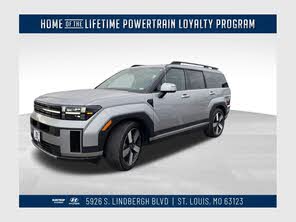
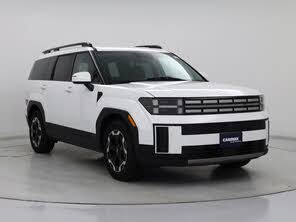
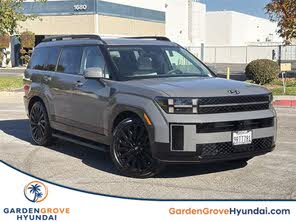
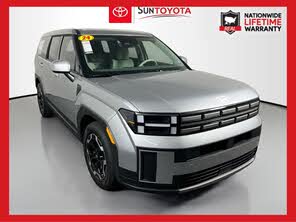
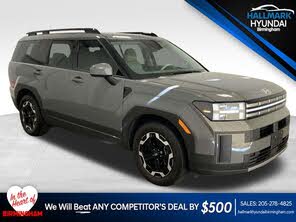
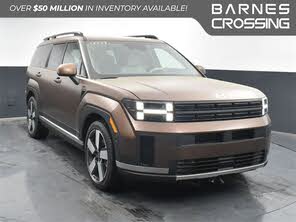
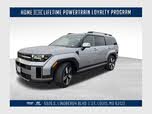
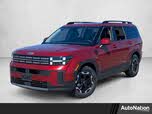
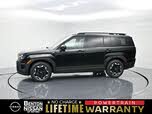
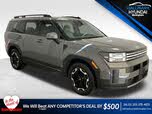
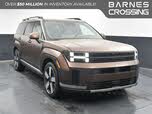
The 2024 Hyundai Santa Fe departed from the sleek and futuristic aesthetic seen in the Ioniq 5 and Ioniq 6, opting instead for a boxier, more utilitarian design. Hyundai's design chief, SangYup Lee, emphasized this choice as an optimal shape for storage, aiming to balance elegance and practicality. The Santa Fe, with its sophisticated color palette and anodized-finish badging, looked upscale and turned heads. Notably, the XRT trim introduced dark chrome and black cladding, with standard 18-inch alloy wheels on most trims and larger wheels on higher trims.
Inside, the Santa Fe's cabin offered premium styling with some hard material surfaces. However, the overall interior felt plush, particularly in the Calligraphy trim. Features like cocooning fabric in the headliner and widely available soft-touch materials added to the luxury feel. The Santa Fe's approach struck a balance between functionality and a premium, inviting atmosphere, capturing attention in both urban and rural settings.


The Blazer EV offered diverse powertrain options, including a single-motor rear-wheel drive (RWD) and a dual-motor all-wheel drive (AWD). The RWD model delivered 340 horsepower and 325 pound-feet of torque from a 102-kilowatt-hour battery pack. In contrast, the AWD model produced 288 horsepower and 333 pound-feet of torque with an 85-kWh battery pack. This unusual setup of dual-motors yielding less power than a single motor positioned AWD as the base offering. Furthermore, a single-motor front-wheel drive (FWD) variant was slated for 2025, expected to be the most affordable and highest-volume version. The performance-oriented Blazer EV SS, boasting 557 horsepower and 648 pound-feet of torque, promised a thrilling 0-60 mph in under four seconds with its WOW mode.
Driving the Blazer EV provided robust acceleration and precise handling, though with a tradeoff in ride comfort. The RWD model, while powerful, felt traction-limited compared to the better-grounded AWD version. Cabin noise was minimal, with regenerative braking adjustable via steering-wheel paddles, enhancing driving engagement.
The 2024 Hyundai Santa Fe came with a standard 2.5-liter turbocharged four-cylinder engine paired with an eight-speed dual-clutch transmission, producing 277 horsepower and 311 pound-feet of torque. Most trims featured FWD, with AWD optional, whereas the XRT trim had standard AWD. Different driving modes, including Normal, Sport, and Snow, adjusted the driving dynamics to suit various conditions.
A hybrid powertrain was expected later, combining a 1.6-liter turbocharged engine with a six-speed automatic transmission for a combined 231 horsepower and 271 pound-feet of torque. The Santa Fe's fuel economy varied by the drive configuration, with FWD versions rated at 20/29/24 mpg city/highway/combined and AWD versions slightly lower. The XRT's towing capacity benefitted from additional cooling, providing extra capacity over the standard models.
On the road, the Santa Fe demonstrated smooth acceleration and generally stable driving dynamics, despite some body roll in turns. The XRT trim showcased off-road prowess with its additional ground clearance and robust tires, making it capable of handling moderately rugged terrains and offering confidence with its hill-descent control feature.
The Blazer EV, with a design closer to traditional SUVs, offered a spacious interior but somewhat cramped headroom and legroom compared to its sleeker rivals like the Mustang Mach-E and EV6. Its high side sills and deep dashboard contributed to a somewhat enclosed feeling. The cargo space was less than ideal, with 25.5 cubic feet behind the second row and 59.1 cubic feet with seats folded, falling short of the gasoline Blazer and slightly below the Mustang Mach-E's range. Practical storage solutions included a presence-activated liftgate and sufficient small-item storage up front, despite some controls being moved to the touchscreen.
In contrast, the Hyundai Santa Fe's design maximized interior space, particularly in the cargo area. With a wheelbase two inches longer and overall dimensions larger than its predecessor, the Santa Fe's cargo-focused design was inspired by Korean "chabak" culture, emphasizing car camping and tailgating. The spacious cargo area provided 14.6 cubic feet behind the third row, expanding to 40.5 and 79.6 cubic feet with the second and third rows folded down. The interior catered to passenger comfort, with options for bench seats or fully reclining captain’s chairs, plus varying upholstery from stain-resistant cloth to luxurious quilted Nappa leather in the Calligraphy trim. Higher trims included features like UV sanitization compartments and high-quality materials, creating a sophisticated and functional space.
The Blazer EV's new Google-based infotainment system featured built-in apps, but at the expense of standalone Android Auto and Apple CarPlay, potentially alienating iOS users. With a 17.7-inch touchscreen and an 11-inch digital instrument cluster, the Blazer EV boasted sharp graphics and practical features like built-in route planning and OTA updates. The touchscreen angle favored drivers but could be inconvenient for passengers, with some essential controls buried in the touchscreen. Notably, the Blazer EV introduced a hands-free start sequence, signaling a high-tech shift for Chevy.
The Hyundai Santa Fe, on the other hand, featured an innovative curved panoramic display in higher trims, providing an elegant and functional interface. Standard features included wireless Apple CarPlay and Android Auto, a 12-speaker Bose stereo, dynamic voice recognition, and a Wi-Fi hotspot. SEL and higher trims benefited from wireless charging and Hyundai's BlueLink system for vehicle access and control via mobile devices. Hyundai Pay facilitated secure payments for services, enhancing convenience and security. The top trims also offered a biometric fingerprint scanner for valet mode control.
At the time of review, neither the Blazer EV nor the Santa Fe had crash-test ratings from IIHS or NHTSA. The Blazer EV, however, came equipped with comprehensive standard safety features, including automatic emergency braking, forward-collision warning, lane-keep assist, and automatic high beams. Optional features included reverse automatic braking, park assist, and GM's advanced Super Cruise hands-free driver assist system.
Similarly, the Hyundai Santa Fe offered an extensive suite of standard safety features, such as adaptive cruise control, forward collision-avoidance assist with intersection detection, pedestrian and cyclist detection, and lane-following assist. Higher trims added additional safety technologies, including a 360-degree camera system, blind-spot view monitor, and a biometric fingerprint scanner. The Calligraphy trim added a HUD and advanced collision-avoidance systems, making it exceptionally well-equipped for safety.
CarGurus highlights

According to CarGurus experts, the overall rating for the 2024 Chevrolet Blazer EV is 6.3 out of 10, while the 2024 Hyundai Santa Fe scores 8.2 out of 10. Based on these ratings, the Hyundai Santa Fe emerges as the clear recommendation. Offering a balance of style, functionality, advanced technology, and comprehensive safety features, the Santa Fe proves to be a superior choice in the competitive SUV market.
Choose the 2024 Chevrolet Blazer EV if:
- You prefer a high-performance EV with strong acceleration and advanced handling capabilities.
- You desire an SUV with a bold, imposing design and distinctive styling elements.
- You appreciate a tech-forward vehicle with a Google-based infotainment system and hands-free start features.
Choose the 2024 Hyundai Santa Fe if:
- You need a versatile SUV with ample cargo space and comfort, ideal for family trips and car camping.
- You value a sophisticated, practical interior with high-quality materials and abundant storage options.
- You want a vehicle equipped with advanced safety features and driver-assistance technologies across various trim levels.



CarGurus highlights
According to CarGurus experts, the overall rating for the 2024 Chevrolet Blazer EV is 6.3 out of 10, while the 2024 Hyundai Santa Fe scores 8.2 out of 10. Based on these ratings, the Hyundai Santa Fe emerges as the clear recommendation. Offering a balance of style, functionality, advanced technology, and comprehensive safety features, the Santa Fe proves to be a superior choice in the competitive SUV market.
Choose the 2024 Chevrolet Blazer EV if:
Shop Now- You prefer a high-performance EV with strong acceleration and advanced handling capabilities.
- You desire an SUV with a bold, imposing design and distinctive styling elements.
- You appreciate a tech-forward vehicle with a Google-based infotainment system and hands-free start features.




Choose the 2024 Hyundai Santa Fe if:
Shop Now- You need a versatile SUV with ample cargo space and comfort, ideal for family trips and car camping.
- You value a sophisticated, practical interior with high-quality materials and abundant storage options.
- You want a vehicle equipped with advanced safety features and driver-assistance technologies across various trim levels.



By: CarGurus + AI
At CarGurus, our team of experienced automotive writers remain at the heart of our content operation, conducting hands-on car tests and writing insightful guides that are backed by years of industry experience. To complement this, we are harnessing AI to make our content offering more diverse and more helpful to shoppers than ever. To achieve this, our AI systems are based exclusively on CarGurus content, ratings and data, so that what we produce is both unique to CarGurus, and uniquely helpful to car shoppers.