2021 Volvo XC40 vs 2021 Subaru Forester
Overview | |
MSRP$33,700 | MSRP$24,795 |
Listings60 | Listings193 |
Ratings & Reviews | |
User Reviews | User Reviews |
Expert reviews8.0 out of 10 | Expert reviews7.5 out of 10 |
Pros
Cons
| Pros
Cons
|
2021 Volvo XC40 Reviews SummaryIntroduced for the 2019 model year, the Volvo XC40 enters 2021 with one major change—the addition of an all-electric powertrain option. The 2021 Volvo XC40 Recharge is the Swedish automaker’s first mass-market electric vehicle, in fact. The Recharge will be sold alongside gasoline versions of the XC40, which carry over largely unchanged, and compete against small luxury crossovers like the Audi Q3, BMW X1, Mercedes-Benz GLA-Class, and Lexus UX. With its electric powertrain, the Recharge is a de facto Tesla Model Y competitor. It’s also priced similar to high-end versions of the Ford Mustang Mach-E, although the two electric crossovers have somewhat different philosophies. In addition to that zero-emission powertrain, the Recharge gets an Android-based operating system, over-the-air (OTA) software update capability for all vehicle systems, and some updates to driver-assist tech. These changes don’t apply to gasoline 2021 XC40 models, but Volvo does plan to add the Android operating system to more vehicles in the future. Since the Recharge is the main new thing for the 2021 XC40, that’s what we focused on for this review. While the gasoline XC40 is available in three trim levels—Momentum, R-Design, and Inscription—with front-wheel drive (FWD) or all-wheel drive (AWD), the Recharge is only offered in a single trim level, with standard AWD. | |
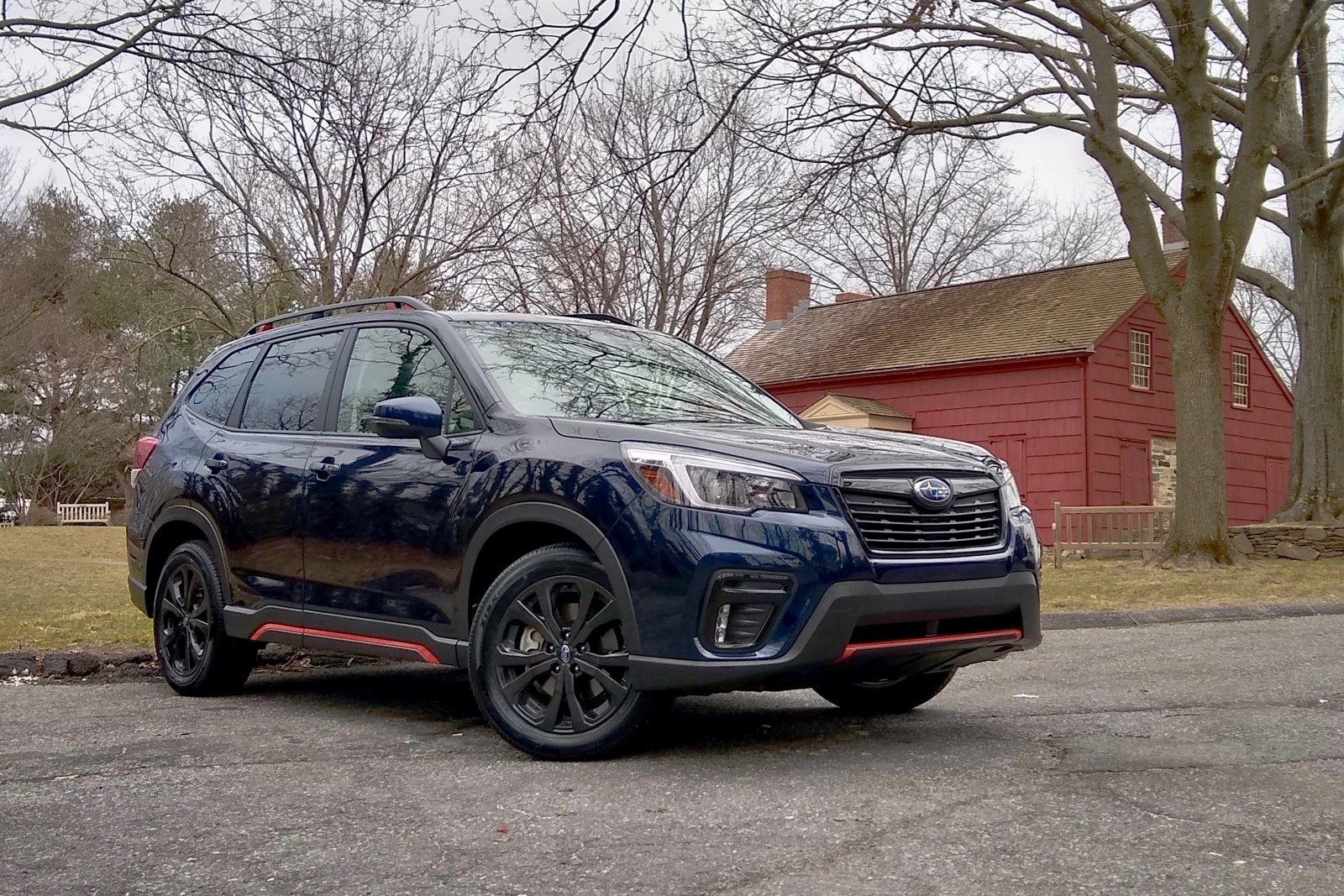
2021 Subaru Forester Reviews SummaryThe Subaru Forester was one of the original compact crossover SUVs. Along with the Ford Escape, Honda CR-V, and Toyota RAV4, it helped introduce a vehicular genre that is now displacing traditional sedans from American driveways. That means the Forester has more competition than ever. What was once a small market segment has swelled with the addition of compact SUVs like the Hyundai Tucson, Kia Sportage, Mazda CX-5, Nissan Rogue, Volkswagen Tiguan, and the modern version of the Jeep Cherokee. To keep pace with the competition, the Forester has packed on technology—and pounds. While the first-generation Forester (affectionately nicknamed “toaster” by fans because of its boxy shape) was genuinely compact, the current version has the footprint of a midsize SUV from two decades ago. This version was introduced for the 2019 model year, so it doesn’t change much for 2021. The only news is the addition of three standard safety features—steering-responsive LED headlights, automatic high beams, and a rear seatbelt reminder—standard fog lights and keyless access with push-button start for the Premium trim level, and additional equipment reshuffling on other trim levels. The 2021 Subaru Forester is available in five trim levels—Base, Premium, Sport, Limited, and Touring—all with standard all-wheel drive (AWD). Our test car was the mid-range Sport model. | |
No video found | |
Popular Features & Specs | |
Engine2.0L 187 hp I4 | Engine2.5L 182 hp H4 |
Drive TrainFWD | Drive TrainAWD |
Seating Capacity5 | Seating Capacity5 |
Horsepower187 hp @ 4700 rpm | Horsepower182 hp @ 5800 rpm |
MPG City23 | MPG City26 |
MPG Highway32 | MPG Highway33 |
Engine | |
Engine Name2.0L 187 hp I4 | Engine Name2.5L 182 hp H4 |
Torque221 lb-ft @ 1400 rpm | Torque178 lb-ft @ 4400 rpm |
Horsepower187 hp @ 4700 rpm | Horsepower182 hp @ 5800 rpm |
DrivetrainFWD | DrivetrainAWD |
Fuel Economy | |
MPG City23 | MPG City26 |
MPG Highway32 | MPG Highway33 |
Interior | |
Leather SeatsStandard | Leather Seats |
Seating Capacity5 | Seating Capacity5 |
Safety | |
Front Crash Overall5 | Front Crash Overall5 |
Side Crash Overall5 | Side Crash Overall5 |
Dimensions & Capacity | |
Cargo Space20.7 cu ft | Cargo Space31.1 cu ft |
Curb Weight3627 lbs | Curb Weight3453 lbs |
Height65.3 in | Height67.5 in |
Length174.2 in | Length182.1 in |
Width80.1 in | Width80.9 in |
Wheelbase106.4 in | Wheelbase105.1 in |
Maximum Payload1133 lbs | Maximum Payload1438 lbs |
Number of doors4 | Number of doors4 |
Maximum Towing Capacity3500 lbs | Maximum Towing Capacity1500 lbs |
Overview | ||
MSRP | $33,700 | $24,795 |
Listings | ||
Ratings & Reviews | ||
User reviews | ||
Expert reviews | 8.0 out of 10Read full review | 7.5 out of 10Read full review |
Pros & cons | Pros
Cons
| Pros
Cons
|
Summary | Introduced for the 2019 model year, the Volvo XC40 enters 2021 with one major change—the addition of an all-electric powertrain option. The 2021 Volvo XC40 Recharge is the Swedish automaker’s first mass-market electric vehicle, in fact. The Recharge will be sold alongside gasoline versions of the XC40, which carry over largely unchanged, and compete against small luxury crossovers like the Audi Q3, BMW X1, Mercedes-Benz GLA-Class, and Lexus UX. With its electric powertrain, the Recharge is a de facto Tesla Model Y competitor. It’s also priced similar to high-end versions of the Ford Mustang Mach-E, although the two electric crossovers have somewhat different philosophies. In addition to that zero-emission powertrain, the Recharge gets an Android-based operating system, over-the-air (OTA) software update capability for all vehicle systems, and some updates to driver-assist tech. These changes don’t apply to gasoline 2021 XC40 models, but Volvo does plan to add the Android operating system to more vehicles in the future. Since the Recharge is the main new thing for the 2021 XC40, that’s what we focused on for this review. While the gasoline XC40 is available in three trim levels—Momentum, R-Design, and Inscription—with front-wheel drive (FWD) or all-wheel drive (AWD), the Recharge is only offered in a single trim level, with standard AWD. | The Subaru Forester was one of the original compact crossover SUVs. Along with the Ford Escape, Honda CR-V, and Toyota RAV4, it helped introduce a vehicular genre that is now displacing traditional sedans from American driveways. That means the Forester has more competition than ever. What was once a small market segment has swelled with the addition of compact SUVs like the Hyundai Tucson, Kia Sportage, Mazda CX-5, Nissan Rogue, Volkswagen Tiguan, and the modern version of the Jeep Cherokee. To keep pace with the competition, the Forester has packed on technology—and pounds. While the first-generation Forester (affectionately nicknamed “toaster” by fans because of its boxy shape) was genuinely compact, the current version has the footprint of a midsize SUV from two decades ago. This version was introduced for the 2019 model year, so it doesn’t change much for 2021. The only news is the addition of three standard safety features—steering-responsive LED headlights, automatic high beams, and a rear seatbelt reminder—standard fog lights and keyless access with push-button start for the Premium trim level, and additional equipment reshuffling on other trim levels. The 2021 Subaru Forester is available in five trim levels—Base, Premium, Sport, Limited, and Touring—all with standard all-wheel drive (AWD). Our test car was the mid-range Sport model. |
Video | No video found | |
Popular Features & Specs | ||
Engine | 2.0L 187 hp I4 | 2.5L 182 hp H4 |
Drive Train | FWD | AWD |
Seating Capacity | 5 | 5 |
Horsepower | 187 hp @ 4700 rpm | 182 hp @ 5800 rpm |
MPG City | 23 | 26 |
MPG Highway | 32 | 33 |
Engine | ||
Engine Name | 2.0L 187 hp I4 | 2.5L 182 hp H4 |
Torque | 221 lb-ft @ 1400 rpm | 178 lb-ft @ 4400 rpm |
Horsepower | 187 hp @ 4700 rpm | 182 hp @ 5800 rpm |
Drivetrain | FWD | AWD |
Fuel Economy | ||
MPG City | 23 | 26 |
MPG Highway | 32 | 33 |
Interior | ||
Leather Seats | Standard | |
Seating Capacity | 5 | 5 |
Safety | ||
Front Crash Overall | 5 | 5 |
Side Crash Overall | 5 | 5 |
Dimensions & Capacity | ||
Cargo Space | 20.7 cu ft | 31.1 cu ft |
Curb Weight | 3627 lbs | 3453 lbs |
Height | 65.3 in | 67.5 in |
Length | 174.2 in | 182.1 in |
Width | 80.1 in | 80.9 in |
Wheelbase | 106.4 in | 105.1 in |
Maximum Payload | 1133 lbs | 1438 lbs |
Number of doors | 4 | 4 |
Maximum Towing Capacity | 3500 lbs | 1500 lbs |
The 2021 Volvo XC40 boasted a more traditional SUV styling, which distinguished it from other small luxury crossovers. It presented a tall, flat roof and an upright rear hatch, blending seamlessly with the rest of the Volvo lineup. The “Thor’s Hammer” LED headlights and simple oval grille were familial styling cues that added to its aesthetic appeal. Gasoline models were available with a white contrasting roof, evoking a slightly retro look.
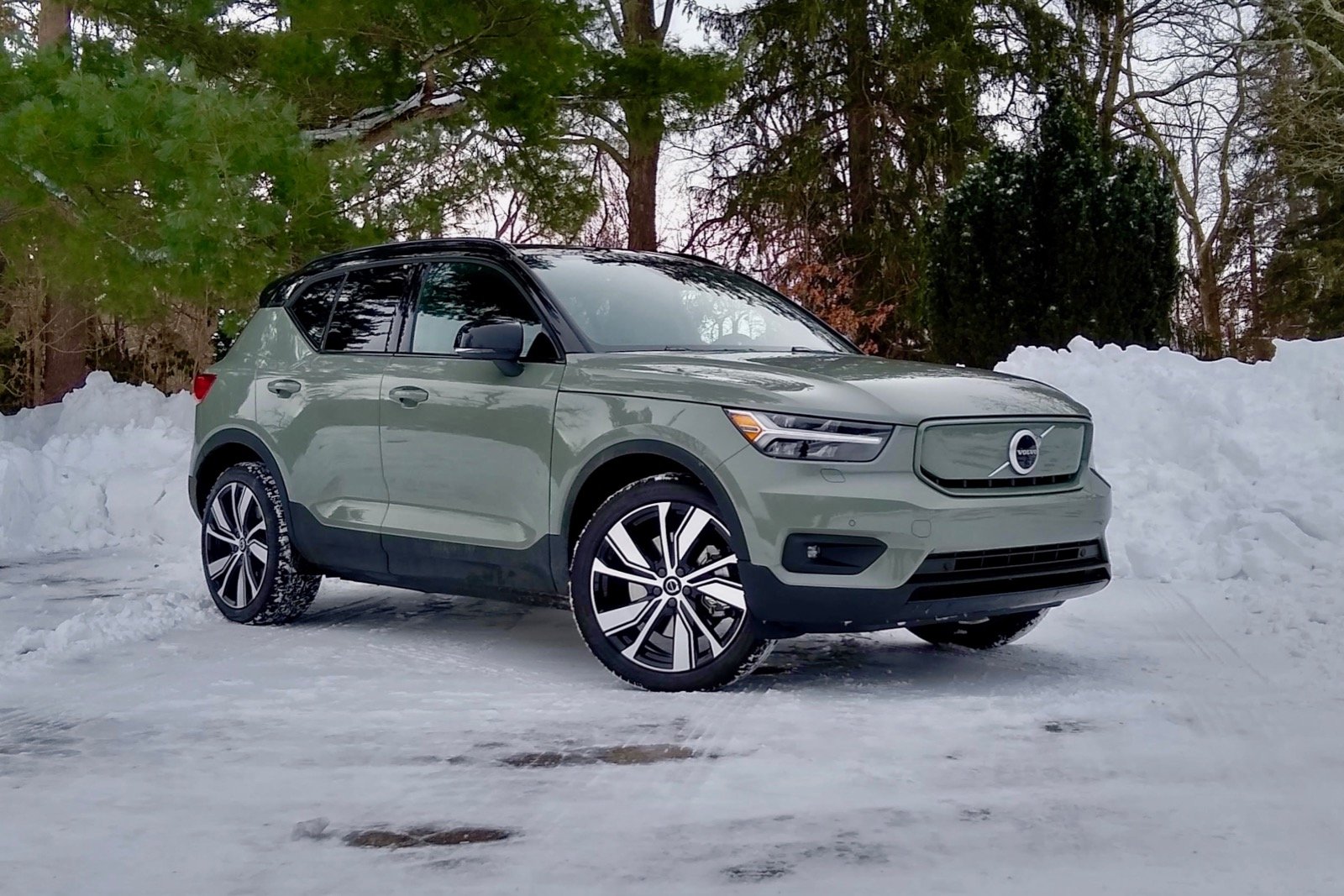
The XC40 Recharge version included differentiated styling elements. A blanked-off grille, subtle “Recharge” badging, and model-specific alloy wheels (19-inch standard, 20-inch optional) set it apart from the gasoline models. It featured a gloss black roof and mirror caps, a redesigned rear bumper due to the lack of exhaust tips, and was available in an exclusive Sage Green Metallic color. The charging port was located where the fuel filler would typically be, subtly distinguishing it from gasoline models without being overt.
Volvo’s Compact Modular Architecture (CMA) underpinned the XC40, designed to accommodate both gasoline and electric powertrains. This platform was shared with the Polestar 2 electric car, ensuring a cohesive design approach whether the powertrain was gasoline or electric.
The interior exuded minimalist elegance with high-quality materials, including real metal trim on the dashboard and a combination of Nappa leather and Nubuck textile upholstery. The design was coherent and premium, with every element—from the portrait-oriented touchscreen to the air vents—melding seamlessly. In contrast to many competitors, Volvo’s interior design was not compromised to meet a specific price point.
The 2021 Subaru Forester had an aesthetically conservative approach due to its largely carried-over design from previous generations. Redesigned for the 2019 model year, it featured an upright shape with distinctive cross-shaped taillights, appealing to SUV shoppers who favored functional design over flamboyance.
Opting not to fix what wasn't broken, Subaru preserved the Forester's boxy, upright shape, meeting the expectations of many SUV enthusiasts. The Base trim with 17-inch steel wheels looked plain but clean. The Forester Sport model, however, introduced orange striping around the body and roof rails, a rear spoiler, and black 18-inch alloy wheels, creating a sportier and more dynamic appearance.
The Forester rode on Subaru’s Global Platform, shared with models like the Impreza, Crosstrek, Legacy, Outback, and Ascent. Despite marketing it as a rugged SUV, this shared foundation with sedans and hatchbacks didn’t deviate from the brand’s established recipe.
Inside, the Forester’s no-nonsense material mix, especially in the Sport trim, included orange accents like trim and cross-stitching. The cabin was designed for durability over aesthetics, ideal for enduring the wear and tear of daily usage. Cloth upholstery was standard on Base, Premium, and Sport models, while Limited and Touring trims offered leather upholstery. Standard features like the All-Weather Package on Premium trims and higher added conveniences like heated front seats, heated mirrors, and a windshield de-icer.




Volvo’s 2021 XC40 presented a versatile three-tier powertrain lineup. The two gasoline options featured a 2.0-liter turbo four-cylinder engine paired with an eight-speed automatic transmission. The base FWD T4 generated 187 horsepower and 221 pound-feet of torque, while the AWD T5 delivered a robust 248 hp and 258 lb-ft.
The XC40 Recharge, sharing its powertrain with the Polestar 2, boasted dual electric motors for each axle, achieving AWD with a combined 402 hp and 486 lb-ft. It had a 78-kilowatt-hour battery pack with 75 kWh usable capacity divided into modules beneath the floor and in the transmission tunnel space.
Performance figures varied: the Recharge sprinted from zero to 60 mph in 4.7 seconds, the T5 in 6.1 seconds, and the T4 in 8.1 seconds. All models had a top speed electronically limited to 112 mph, a measure Volvo introduced to address speed-related crashes.
The XC40 Recharge emphasized a traditional luxury feel, focusing on quiet comfort rather than outright speed, even on challenging Winter-ravaged New Jersey roads. The ride quality remained excellent with the optional 20-inch wheels. Additionally, the Recharge featured one-pedal driving using regenerative braking but included a “normal” braking mode for traditionalists.
A standout in its segment, the Recharge model managed a towing capacity of 2,000 pounds when properly equipped, a notable feature for an electric vehicle.
The 2021 Forester was powered by a single 2.5-liter four-cylinder engine producing 182 horsepower and 176 pound-feet of torque, paired with a CVT. Certain trims offered a manual mode and paddle shifters. Subaru’s characteristic boxer engine configuration provided a lower center of gravity compared to inline-four engines.
With this powertrain, the Forester’s max towing capacity was 1,500 pounds, supported by standard Trailer Stability Assist. Although it no longer offered a turbocharged option, power delivery was deemed adequate for most situations. However, it lacked the desired thrust for confident highway merging or overtaking, accompanied by noticeable wind noise at higher speeds.
The Forester was not engineered for sporty handling but rather for comfort. Its suspension felt softly sprung, absorbing bumps effectively but compromising body control, resulting in significant body roll in corners and noticeable bounce on uneven road surfaces. Despite this, the vehicle didn't compromise on ride comfort due to minimal impact felt from the bumps.
AWD was standard, reinforcing Subaru’s rugged identity. The drivetrain included an advanced X-Mode, tweaking vehicle settings for various surfaces. Sport models added Dual X-Mode with “Snow/Dirt” and “Snow/Mud” modes. Premium and higher trims featured standard hill-descent control, and the Forester offered 8.7 inches of ground clearance, enhancing its capability on unpaved terrains, albeit falling short of more off-road-focused models like the Jeep Cherokee Trailhawk or Ford Bronco Sport.
Volvo asserted no difference in passenger or cargo space between the gasoline and electric XC40 models, though neither variant was particularly spacious. The XC40 Recharge lagged behind competitors like the Tesla Model Y and Ford Mustang Mach-E in both front and rear legroom, and headroom compared to the Tesla.
Cargo space was a particular shortfall for the XC40 Recharge, boasting a smaller cargo area and a very small frunk, with significant space taken up by powertrain components. The gasoline model fared better against rivals like Audi Q3 and BMW X1, highlighting a generally low benchmark for utility in this class.
Volvo compensated for limited space with innovative storage solutions, including a removable trash bin in the center console, a bag hook in the glovebox door, and extra-large door bins by relocating the audio system’s speakers to the dashboard. The pre-shaped storage cubby ahead of the shifter was practical for a phone, though rear-seat occupants lacked dedicated charging ports.
The Forester stood out with above-average headroom and legroom in both front and rear seats, attributed to its tall and flat roofline. This design improved outward visibility and created a spacious feeling, though excessive sunlight could raise cabin temperatures quickly.
Cargo capacity was a strong suit for the Forester, offering 35.4 cubic feet with rear seats up and expanding to 76.1 cubic feet with the 60/40 split-folding rear bench down. It surpassed the Honda CR-V and 2022 Hyundai Tucson in maximum cargo space but offered less when rear seats were up. It missed out on the sliding second-row bench feature found in competitors like the Ford Escape and Nissan Rogue. However, conveniences such as an optional power liftgate on the Sport trim and standard on Limited and Touring trims added usability.
Interior storage was practical with adequately sized cupholders and reasonable center console space but was marred by a phone storage cubby too small for an average phone and lack of wireless charging options. Additionally, a power-adjustable driver’s seat was not offered on the Base trim, requiring an upgrade to Premium.
The XC40 Recharge debuted the Android Automotive OS infotainment system, featuring built-in Google apps like Google Assistant and Google Maps. Android users could sync their personal Google accounts for enhanced customization, while the system maintained support for Apple CarPlay, Android Auto, and Bluetooth hands-free phone connectivity. The gasoline models retained the previous system, distinguishing electric versions further.
The standard hardware setup included a 9-inch touchscreen and a 12.3-inch digital instrument cluster, with high-quality graphics and user-friendly menu layouts. However, Google’s interface might not appeal to all users.
The Recharge offered OTA update capability, covering not just the infotainment system but any software-controlled vehicle function, a feature popularized by Tesla. Future functionality likely included the potential for feature enhancements and bug fixes without dealer visits.
Recharge models also simplified operations by eliminating the start button, allowing drivers to get in the car and shift out of park with the key fob in their possession.
The Forester’s Starlink infotainment system included a 6.5-inch touchscreen, Apple CarPlay, Android Auto compatibility, Bluetooth, SiriusXM satellite radio, front-row USB ports, and a CD player. Higher trims like the Sport added an 8-inch touchscreen and Harman Kardon audio system, while the Limited and Touring models added navigation and rear-seat USB ports.
The system was user-friendly, with intuitive graphics and backup analog controls, including physical buttons for essential functions like home, phone, and radio. However, the screen was notably slow to boot up.
Additionally, Subaru equipped the Forester with supplementary screens: a small secondary display on the dashboard and another in the instrument cluster, offering redundant information like fuel economy and tire pressure. This layout appeared overly complex given the redundancy.
The gasoline 2021 XC40 achieved top safety accolades, including the IIHS’s highest “Top Safety Pick+” rating and a five-star overall rating from the NHTSA, with five stars in frontal and side crash tests and four stars in rollover tests. The XC40 Recharge was not rated, though Volvo anticipated strong performance due to the safety cage around the battery and redesigned front crash structure.
Standard safety features were comprehensive, encompassing lane-keep assist, blind-spot monitoring with rear cross-traffic alert, automatic emergency braking, rear parking sensors, hill-start assist, and hill-descent control. Optional features included traffic-sign recognition, reverse automatic emergency braking, driver-alertness monitor, run-off road mitigation, and Volvo’s Pilot Assist, which combined adaptive cruise control with automated lane centering.
The Recharge enhanced safety features with Volvo’s latest sensor suite, including a radar unit hidden in the grille’s logo. This scalable system promised future advancements in driver aids based on cloud data.
The 2021 Forester earned the highest IIHS “Top Safety Pick+” award with top “Good” ratings in all crash tests, “Superior” ratings for front-crash prevention, and a “Good” rating for headlights. The NHTSA awarded it a five-star overall rating, with the same star ratings for frontal and side crash tests, and four stars for rollovers.
Subaru’s eyeSight system, utilizing cameras mounted near the rearview mirror, allowed for cost-efficient and quick deployment across the lineup. This setup included adaptive cruise control, automatic emergency braking, lane-departure warning, and lead-vehicle start alert. DriverFocus, a unique driver-monitoring system that used a camera to detect signs of distraction, ensured attentive driving.
Despite adequate highway performance, EyeSight’s lane-centering steering input was jerky. Other standard features, like steering-responsive headlights, automatic high beams, and a rear seatbelt reminder, were included but not part of EyeSight. Optional safety features included blind-spot monitoring, rear-cross traffic alert, lane-keep assist, and reverse automatic braking.
CarGurus highlights
According to CarGurus experts, the overall rating for the 2021 Volvo XC40 was 8.0 out of 10, while the 2021 Subaru Forester scored 7.5 out of 10. Despite the Subaru’s commendable cargo space, user-friendly safety technology, and rugged AWD system, the Volvo edged out with its luxurious design, cutting-edge technology, and sophisticated ride quality. For those seeking a higher level of refinement and advanced features within the compact SUV category, the 2021 Volvo XC40 stands as the recommended choice.
Choose the 2021 Volvo XC40 if:
- You prioritize luxurious interior materials and minimalist design.
- You desire an electric vehicle with practical, albeit restrained, styling.
- Advanced technology, including Android Automotive OS and OTA updates, are important to you.


Choose the 2021 Subaru Forester if:
- You need ample cargo space and excellent headroom and legroom for all passengers.
- You value Subaru’s comprehensive and user-friendly safety features.
- An AWD system capable of handling various terrains is a priority.


CarGurus highlights
According to CarGurus experts, the overall rating for the 2021 Volvo XC40 was 8.0 out of 10, while the 2021 Subaru Forester scored 7.5 out of 10. Despite the Subaru’s commendable cargo space, user-friendly safety technology, and rugged AWD system, the Volvo edged out with its luxurious design, cutting-edge technology, and sophisticated ride quality. For those seeking a higher level of refinement and advanced features within the compact SUV category, the 2021 Volvo XC40 stands as the recommended choice.
Choose the 2021 Volvo XC40 if:
Shop Now- You prioritize luxurious interior materials and minimalist design.
- You desire an electric vehicle with practical, albeit restrained, styling.
- Advanced technology, including Android Automotive OS and OTA updates, are important to you.
Choose the 2021 Subaru Forester if:
Shop Now- You need ample cargo space and excellent headroom and legroom for all passengers.
- You value Subaru’s comprehensive and user-friendly safety features.
- An AWD system capable of handling various terrains is a priority.

By: CarGurus + AI
At CarGurus, our team of experienced automotive writers remain at the heart of our content operation, conducting hands-on car tests and writing insightful guides that are backed by years of industry experience. To complement this, we are harnessing AI to make our content offering more diverse and more helpful to shoppers than ever. To achieve this, our AI systems are based exclusively on CarGurus content, ratings and data, so that what we produce is both unique to CarGurus, and uniquely helpful to car shoppers.

