2021 Toyota Sequoia vs 2021 Subaru Forester

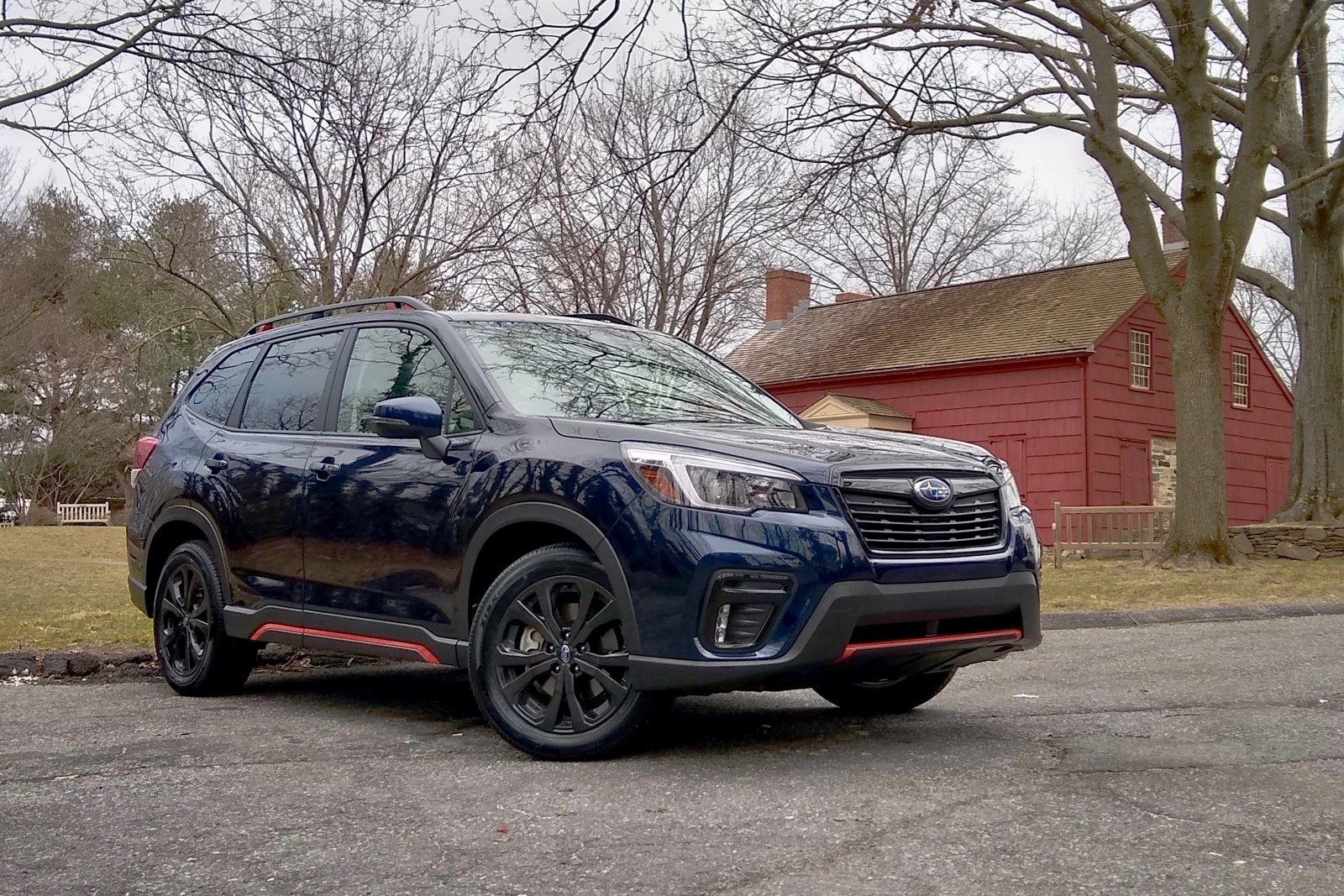
Overview | |
MSRP$50,400 | MSRP$24,795 |
Listings49 | Listings1020 |
Ratings & Reviews | |
User Reviews | User Reviews |
Expert reviews7.0 out of 10 | Expert reviews7.5 out of 10 |
Pros
Cons
| Pros
Cons
|
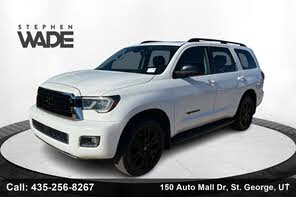
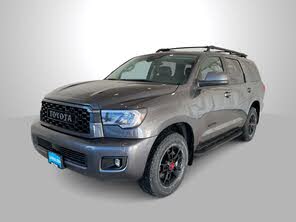
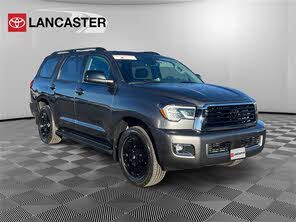
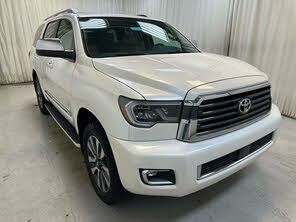
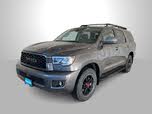
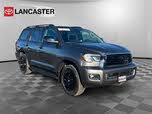
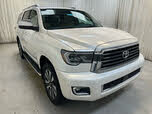
2021 Toyota Sequoia Reviews SummaryLook around on the road today, and you are bound to see SUVs of all shapes and sizes. From three-row family haulers to subcompact runabouts. There is an SUV for nearly every need and every budget. The 2021 Toyota Sequoia might feel like it's from an earlier wave of the SUV craze, and that’s because it is. Born out of the 1990s SUV-excess-fest, the Sequoia has evolved into a niche vehicle for those who need serious space and truck-like capability. The current generation of the Sequoia has been around for almost 15 years, and while Toyota has updated it in several ways, there’s no avoiding its age. Even with modern tech and safety features, this is still an aging beast. Can such a dated vehicle still be relevant in the modern car market? And is age really that important to buyers who are looking for tons of space and standard V8 power? Read on to find out. | |
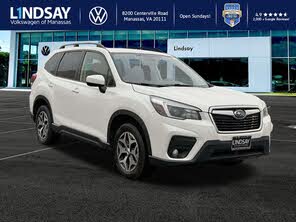
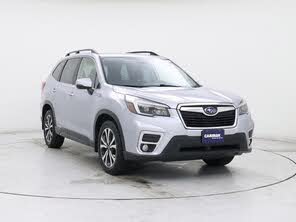
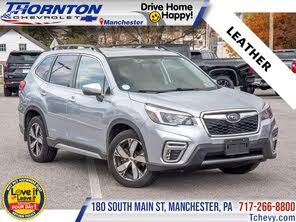
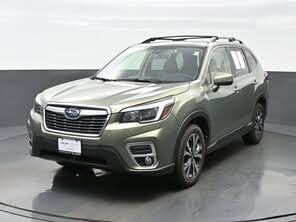
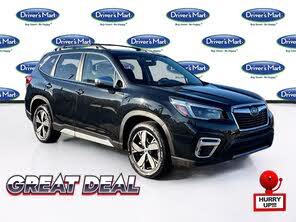
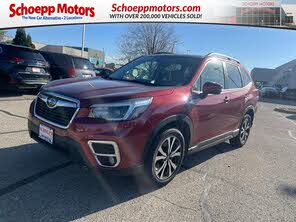
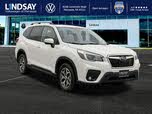
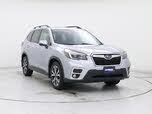
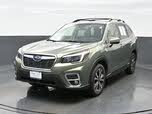
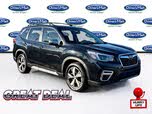
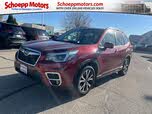
2021 Subaru Forester Reviews SummaryThe Subaru Forester was one of the original compact crossover SUVs. Along with the Ford Escape, Honda CR-V, and Toyota RAV4, it helped introduce a vehicular genre that is now displacing traditional sedans from American driveways. That means the Forester has more competition than ever. What was once a small market segment has swelled with the addition of compact SUVs like the Hyundai Tucson, Kia Sportage, Mazda CX-5, Nissan Rogue, Volkswagen Tiguan, and the modern version of the Jeep Cherokee. To keep pace with the competition, the Forester has packed on technology—and pounds. While the first-generation Forester (affectionately nicknamed “toaster” by fans because of its boxy shape) was genuinely compact, the current version has the footprint of a midsize SUV from two decades ago. This version was introduced for the 2019 model year, so it doesn’t change much for 2021. The only news is the addition of three standard safety features—steering-responsive LED headlights, automatic high beams, and a rear seatbelt reminder—standard fog lights and keyless access with push-button start for the Premium trim level, and additional equipment reshuffling on other trim levels. The 2021 Subaru Forester is available in five trim levels—Base, Premium, Sport, Limited, and Touring—all with standard all-wheel drive (AWD). Our test car was the mid-range Sport model. | |
No video found | |
Popular Features & Specs | |
Engine5.7L 381 hp V8 | Engine2.5L 182 hp H4 |
Drive Train4X2 | Drive TrainAWD |
Seating Capacity8 | Seating Capacity5 |
Horsepower381 hp @ 5600 rpm | Horsepower182 hp @ 5800 rpm |
MPG City13 | MPG City26 |
MPG Highway17 | MPG Highway33 |
Engine | |
Engine Name5.7L 381 hp V8 | Engine Name2.5L 182 hp H4 |
Torque401 lb-ft @ 3600 rpm | Torque178 lb-ft @ 4400 rpm |
Horsepower381 hp @ 5600 rpm | Horsepower182 hp @ 5800 rpm |
Drivetrain4X2 | DrivetrainAWD |
Fuel Economy | |
MPG City13 | MPG City26 |
MPG Highway17 | MPG Highway33 |
Interior | |
Seating Capacity8 | Seating Capacity5 |
Key Features | |
Sunroof/MoonroofStandard | Sunroof/Moonroof |
Safety | |
Front Crash Overall | Front Crash Overall5 |
Side Crash Overall | Side Crash Overall5 |
Dimensions & Capacity | |
Cargo Space18.9 cu ft | Cargo Space31.1 cu ft |
Curb Weight5730 lbs | Curb Weight3453 lbs |
Height77.0 in | Height67.5 in |
Length205.1 in | Length182.1 in |
Width79.9 in | Width80.9 in |
Wheelbase122.0 in | Wheelbase105.1 in |
Maximum Payload1405 lbs | Maximum Payload1438 lbs |
Number of doors4 | Number of doors4 |
Maximum Towing Capacity7400 lbs | Maximum Towing Capacity1500 lbs |
Standard Towing Capacity7400 lbs | Standard Towing Capacity |
Overview | ||
MSRP | $50,400 | $24,795 |
Listings | ||
Ratings & Reviews | ||
User reviews | ||
Expert reviews | 7.0 out of 10Read full review | 7.5 out of 10Read full review |
Pros & cons | Pros
Cons
| Pros
Cons
|
Summary | Look around on the road today, and you are bound to see SUVs of all shapes and sizes. From three-row family haulers to subcompact runabouts. There is an SUV for nearly every need and every budget. The 2021 Toyota Sequoia might feel like it's from an earlier wave of the SUV craze, and that’s because it is. Born out of the 1990s SUV-excess-fest, the Sequoia has evolved into a niche vehicle for those who need serious space and truck-like capability. The current generation of the Sequoia has been around for almost 15 years, and while Toyota has updated it in several ways, there’s no avoiding its age. Even with modern tech and safety features, this is still an aging beast. Can such a dated vehicle still be relevant in the modern car market? And is age really that important to buyers who are looking for tons of space and standard V8 power? Read on to find out. | The Subaru Forester was one of the original compact crossover SUVs. Along with the Ford Escape, Honda CR-V, and Toyota RAV4, it helped introduce a vehicular genre that is now displacing traditional sedans from American driveways. That means the Forester has more competition than ever. What was once a small market segment has swelled with the addition of compact SUVs like the Hyundai Tucson, Kia Sportage, Mazda CX-5, Nissan Rogue, Volkswagen Tiguan, and the modern version of the Jeep Cherokee. To keep pace with the competition, the Forester has packed on technology—and pounds. While the first-generation Forester (affectionately nicknamed “toaster” by fans because of its boxy shape) was genuinely compact, the current version has the footprint of a midsize SUV from two decades ago. This version was introduced for the 2019 model year, so it doesn’t change much for 2021. The only news is the addition of three standard safety features—steering-responsive LED headlights, automatic high beams, and a rear seatbelt reminder—standard fog lights and keyless access with push-button start for the Premium trim level, and additional equipment reshuffling on other trim levels. The 2021 Subaru Forester is available in five trim levels—Base, Premium, Sport, Limited, and Touring—all with standard all-wheel drive (AWD). Our test car was the mid-range Sport model. |
Video | No video found | |
Popular Features & Specs | ||
Engine | 5.7L 381 hp V8 | 2.5L 182 hp H4 |
Drive Train | 4X2 | AWD |
Seating Capacity | 8 | 5 |
Horsepower | 381 hp @ 5600 rpm | 182 hp @ 5800 rpm |
MPG City | 13 | 26 |
MPG Highway | 17 | 33 |
Engine | ||
Engine Name | 5.7L 381 hp V8 | 2.5L 182 hp H4 |
Torque | 401 lb-ft @ 3600 rpm | 178 lb-ft @ 4400 rpm |
Horsepower | 381 hp @ 5600 rpm | 182 hp @ 5800 rpm |
Drivetrain | 4X2 | AWD |
Fuel Economy | ||
MPG City | 13 | 26 |
MPG Highway | 17 | 33 |
Interior | ||
Seating Capacity | 8 | 5 |
Key Features | ||
Sunroof/Moonroof | Standard | |
Safety | ||
Front Crash Overall | 5 | |
Side Crash Overall | 5 | |
Dimensions & Capacity | ||
Cargo Space | 18.9 cu ft | 31.1 cu ft |
Curb Weight | 5730 lbs | 3453 lbs |
Height | 77.0 in | 67.5 in |
Length | 205.1 in | 182.1 in |
Width | 79.9 in | 80.9 in |
Wheelbase | 122.0 in | 105.1 in |
Maximum Payload | 1405 lbs | 1438 lbs |
Number of doors | 4 | 4 |
Maximum Towing Capacity | 7400 lbs | 1500 lbs |
Standard Towing Capacity | 7400 lbs | |











By: CarGurus + AI
At CarGurus, our team of experienced automotive writers remain at the heart of our content operation, conducting hands-on car tests and writing insightful guides that are backed by years of industry experience. To complement this, we are harnessing AI to make our content offering more diverse and more helpful to shoppers than ever. To achieve this, our AI systems are based exclusively on CarGurus content, ratings and data, so that what we produce is both unique to CarGurus, and uniquely helpful to car shoppers.