2022 Hyundai Ioniq 5 vs 2021 Toyota RAV4

Overview | |
MSRP$26,350 | MSRP$39,700 |
Listings1840 | Listings132 |
Ratings & Reviews | |
User Reviews | User Reviews |
Expert reviews7.3 out of 10 | Expert reviews9.0 out of 10 |
Pros
Cons
| Pros
Cons
|
2021 Toyota RAV4 Reviews SummarySince its launch in 1997, the Toyota RAV4 has ridden a wave of crossover SUV popularity to become one of Toyota’s bestselling models. Introduced for the 2019 model year, the current-generation RAV4 tries to offer the rugged style of a traditional SUV, but underneath it’s still a car-based crossover pitched against the likes of the Ford Escape, Honda CR-V, Hyundai Tucson, Kia Sportage, Nissan Rogue, Subaru Forester, and Volkswagen Tiguan. Because it’s only in its third model year, this fifth-generation RAV4 doesn’t get many updates for 2021. The biggest news is the addition of the RAV4 Prime plug-in hybrid to the lineup, but that model actually went on sale last year. The only other changes are a new XLE Premium trim level for the RAV4 Hybrid, and a new front stainless steel front skid plate for the gasoline RAV4 TRD Off-Road model. Toyota offers compact SUV buyers more choices than most competitors. The RAV4 LE, XLE, XLE Premium, and Limited trim levels are available with hybrid and non-hybrid powertrains. Toyota also offers the gasoline-only RAV4 Adventure and TRD Off-Road trim levels, plus the RAV4 Hybrid XSE. The RAV4 Prime is also available in two trim levels—SE and XSE. We’ve covered the RAV4 Hybrid and RAV4 Prime in separate reviews, so this review will focus on the gasoline RAV4. Our test car was a RAV4 TRD Off-Road, which joined the lineup for the 2020 model year and is the first RAV4 model tuned by Toyota Racing Development, the automaker’s North American performance division. | |
2022 Hyundai Ioniq 5 Reviews SummaryThe Hyundai Ioniq 5 is the automaker’s debut electric vehicle from its new sub-brand that focuses solely on battery electric-powered mobility. The all-new Ioniq 5 is chock full of battery technology, smart car connectivity, advanced safety, and unique design all at a price point that appeals to the masses. | |
No video found | |
Popular Features & Specs | |
Engine2.5L 203 hp I4 | Engine168 hp Electric |
Drive TrainFWD | Drive TrainRWD |
Seating Capacity5 | Seating Capacity5 |
EV Battery Capacity | EV Battery Capacity58 kWh |
MPG City28 | MPG City127 |
MPG Highway35 | MPG Highway94 |
Engine | |
Engine Name2.5L 203 hp I4 | Engine Name168 hp Electric |
DrivetrainFWD | DrivetrainRWD |
Fuel Economy | |
EV Battery Capacity | EV Battery Capacity58 kWh |
MPG City28 | MPG City127 |
MPG Highway35 | MPG Highway94 |
Interior | |
Seating Capacity5 | Seating Capacity5 |
Key Features | |
Navigation System | Navigation SystemStandard |
Safety | |
Front Crash Overall4 | Front Crash Overall4 |
Side Crash Overall5 | Side Crash Overall5 |
Dimensions & Capacity | |
Cargo Space37.6 cu ft | Cargo Space27.2 cu ft |
Curb Weight3370 lbs | Curb Weight4200 lbs |
Height67.0 in | Height63.0 in |
Length180.9 in | Length182.5 in |
Width73.0 in | Width74.4 in |
Wheelbase105.9 in | Wheelbase118.1 in |
Maximum Payload1240 lbs | Maximum Payload1157 lbs |
Number of doors4 | Number of doors4 |
Maximum Towing Capacity1500 lbs | Maximum Towing Capacity |
Overview | ||
MSRP | $26,350 | $39,700 |
Listings | ||
Ratings & Reviews | ||
User reviews | ||
Expert reviews | 7.3 out of 10Read full review | 9.0 out of 10Read full review |
Pros & cons | Pros
Cons
| Pros
Cons
|
Summary | Since its launch in 1997, the Toyota RAV4 has ridden a wave of crossover SUV popularity to become one of Toyota’s bestselling models. Introduced for the 2019 model year, the current-generation RAV4 tries to offer the rugged style of a traditional SUV, but underneath it’s still a car-based crossover pitched against the likes of the Ford Escape, Honda CR-V, Hyundai Tucson, Kia Sportage, Nissan Rogue, Subaru Forester, and Volkswagen Tiguan. Because it’s only in its third model year, this fifth-generation RAV4 doesn’t get many updates for 2021. The biggest news is the addition of the RAV4 Prime plug-in hybrid to the lineup, but that model actually went on sale last year. The only other changes are a new XLE Premium trim level for the RAV4 Hybrid, and a new front stainless steel front skid plate for the gasoline RAV4 TRD Off-Road model. Toyota offers compact SUV buyers more choices than most competitors. The RAV4 LE, XLE, XLE Premium, and Limited trim levels are available with hybrid and non-hybrid powertrains. Toyota also offers the gasoline-only RAV4 Adventure and TRD Off-Road trim levels, plus the RAV4 Hybrid XSE. The RAV4 Prime is also available in two trim levels—SE and XSE. We’ve covered the RAV4 Hybrid and RAV4 Prime in separate reviews, so this review will focus on the gasoline RAV4. Our test car was a RAV4 TRD Off-Road, which joined the lineup for the 2020 model year and is the first RAV4 model tuned by Toyota Racing Development, the automaker’s North American performance division. | The Hyundai Ioniq 5 is the automaker’s debut electric vehicle from its new sub-brand that focuses solely on battery electric-powered mobility. The all-new Ioniq 5 is chock full of battery technology, smart car connectivity, advanced safety, and unique design all at a price point that appeals to the masses. |
Video | No video found | |
Popular Features & Specs | ||
Engine | 2.5L 203 hp I4 | 168 hp Electric |
Drive Train | FWD | RWD |
Seating Capacity | 5 | 5 |
EV Battery Capacity | 58 kWh | |
MPG City | 28 | 127 |
MPG Highway | 35 | 94 |
Engine | ||
Engine Name | 2.5L 203 hp I4 | 168 hp Electric |
Drivetrain | FWD | RWD |
Fuel Economy | ||
EV Battery Capacity | 58 kWh | |
MPG City | 28 | 127 |
MPG Highway | 35 | 94 |
Interior | ||
Seating Capacity | 5 | 5 |
Key Features | ||
Navigation System | Standard | |
Safety | ||
Front Crash Overall | 4 | 4 |
Side Crash Overall | 5 | 5 |
Dimensions & Capacity | ||
Cargo Space | 37.6 cu ft | 27.2 cu ft |
Curb Weight | 3370 lbs | 4200 lbs |
Height | 67.0 in | 63.0 in |
Length | 180.9 in | 182.5 in |
Width | 73.0 in | 74.4 in |
Wheelbase | 105.9 in | 118.1 in |
Maximum Payload | 1240 lbs | 1157 lbs |
Number of doors | 4 | 4 |
Maximum Towing Capacity | 1500 lbs | |
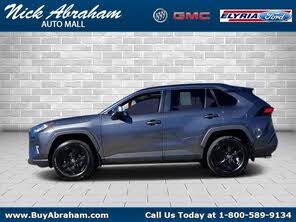
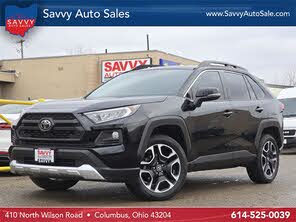
Toyota designed the 2021 RAV4 with a rugged-looking exterior that gave the appearance of an SUV. The boxy fender flares, chiseled taillights, and aggressive front end marked a stark contrast from previous generations. The RAV4’s exterior stood out against most other compact crossovers on the market, establishing it as more than just an ordinary vehicle. Under the metal, though, the RAV4 was based on the Toyota New Global Architecture (TNGA) platform, the same foundation used for models like the Camry and Sienna.
The RAV4 Adventure model featured a distinctive look with an Ice Edge roof and orange interior accents, while the TRD Off-Road version came with matte black 18-inch wheels, fog lights, gray exterior trim, red interior accents, and a front skid plate. Inside, the design included rugged touches like large rubberized knobs and door handles. Although the material quality was fairly good on lower trims, it didn’t elevate in higher trims, with no real leather option even on the highest trims.
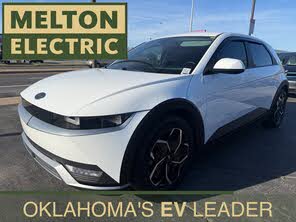
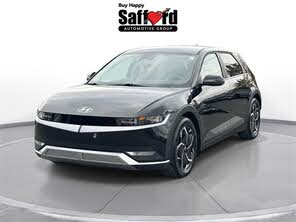
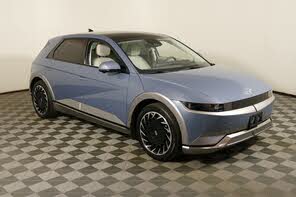
The first-ever 2022 Hyundai Ioniq 5 offered a futuristic yet refined exterior. With its Parametric Pixel design, this EV boasted a polished exterior without over-the-top styling. The use of 8-bit pixel design elements was prevalent, especially in the lighting, making the Ioniq 5 appear more like a concept car than a production vehicle.
The Ioniq 5’s cabin was a stark contrast to its exterior, featuring a calming and comfortable "Living Space" theme. Interior colors included black, gray, and dark green, with a "Relaxation mode" available for the driver’s seat when parked. Sustainable materials were prominent throughout the cabin, with seats made of stain-resistant cloth or leatherette on higher trims, and door inserts and armrests made of recycled fibers.


The 2021 Toyota RAV4 came with a single engine option: the 2.5-liter four-cylinder "Dynamic Force" engine, producing 203 horsepower and 184 pound-feet of torque. Paired with an eight-speed automatic transmission, it offered standard front-wheel drive and optional all-wheel drive. The engine achieved 40% thermal efficiency, a level usually seen in racing engines. However, the transmission's responsiveness was lacking, and the steering felt artificial despite quick inputs.
Off-road, the RAV4 Adventure and TRD Off-Road models provided enhanced capability with torque-vectoring rear axles and 8.6 inches of ground clearance. The TRD Off-Road also featured specific suspension tuning and all-terrain tires, but lacked traditional off-road components like locking differentials. Towing capacity for these models was 3,500 pounds, compared to 1,500 pounds for other versions.
In comparison, the 2022 Hyundai Ioniq 5 offered more configurations. Available in SE, SEL, and Limited trims, it featured rear-wheel drive standard with all-wheel drive as an option. The base SE Standard Range had a 128-kW motor producing 168 horsepower with a range of 220 miles. The extended-range variants offered a 225-hp rear motor with 258 pound-feet of torque and a 303-mile range. The dual-motor AWD setup powered the Ioniq 5 with 320 horsepower and 446 pound-feet of torque, but range dropped to 256 miles.
The Ioniq 5, though not a performance EV like the Polestar 2 or Porsche Taycan, handled well through both canyon roads and highways. Its Sport mode re-tuned the torque split for added excitement but reduced range. The vehicle also incorporated paddle shifters for regenerative braking control. Hyundai focused on reducing noise and vibration, resulting in a quiet cabin experience thanks to acoustic tires and sound-deadening materials.
The 2021 Toyota RAV4’s high roof provided good headroom and outward visibility. While the front seats were comfortable, the rear seats had flat and hard cushions. The rear seat was a 60/40 split-folding bench, but it couldn’t slide fore and aft. Cargo capacity was 37.6 cubic feet with the rear seats in place, above average but still behind competitors like the Honda CR-V. The cargo area had a wide aperture for easy loading but a higher lip compared to competitors.
The 2022 Hyundai Ioniq 5, built on the Electric Global Modular Platform (E-GMP), offered an expansive interior due to its longer wheelbase of 118.1 inches, even surpassing the seven-passenger Hyundai Palisade. With an interior volume of 133.7 cubic feet, it was more spacious than competitors like the Ford Mustang Mach-E and Volkswagen ID.4. However, the Ioniq 5 prioritized passenger volume over cargo space, offering 106.5 cubic feet of passenger volume and 27.2 cubic feet of cargo space.
The interior was designed for comfort and usability, with soft touchpoints and a moveable center console armrest. Unlike traditional setups, the lack of an extended center console allowed for ease of movement within the cabin. The seats were noted for their comfort, providing a balanced cushion and snug support.
In the 2021 Toyota RAV4, standard features included Apple CarPlay and Android Auto connectivity, Amazon Alexa compatibility, and SiriusXM satellite radio with a three-month trial. Most trims came with a 7-inch touchscreen, while the Limited trim featured an 8-inch screen. The RAV4 Prime offered a 9-inch screen. Up to five USB ports were available, and a JBL premium audio system could be added. The infotainment system, although easy to use, wasn’t particularly flashy and lacked features like a head-up display (HUD), which was available on the RAV4 Prime.
For the 2022 Hyundai Ioniq 5, technology was a standout. The EV supported ultra-fast charging, reaching 80% battery capacity within 18 minutes and gaining 68 miles of range in just 5 minutes using a 350-kW charger. Owners received unlimited 30-minute fast-charging sessions for two years via a partnership with Electrify America.
The Ioniq 5 featured a redesigned Blue Link app for EV management, digital key, advanced smartphone pairing, and over-the-air updates. The 12.3-inch instrument cluster and infotainment screens were user-friendly and anti-glare coated for clear visibility even with polarized sunglasses.
The 2021 Toyota RAV4 earned a “Top Safety Pick” rating from IIHS with top scores in crash tests and superior front-crash prevention. It missed the “Top Safety Pick+” rating due to mixed headlight scores. NHTSA awarded the RAV4 a five-star overall rating. Standard safety features included Toyota Safety Sense 2.0 with adaptive cruise control, lane-departure warning, pedestrian detection, and more. Higher trims added blind-spot monitoring, rear cross-traffic alert, reverse automatic emergency braking, and park assist.
The 2022 Hyundai Ioniq 5 came with Hyundai SmartSense, including blind-spot monitoring, lane-departure warning, automatic high beams, and collision avoidance. Hyundai Highway Drive Assist I provided semi-autonomous driving with adaptive cruise control. The vehicle featured a head-up display (HUD) with augmented reality overlays for navigation and driver information. Although crash ratings weren’t yet available, Hyundai’s track record suggested high ratings were likely.
CarGurus highlights
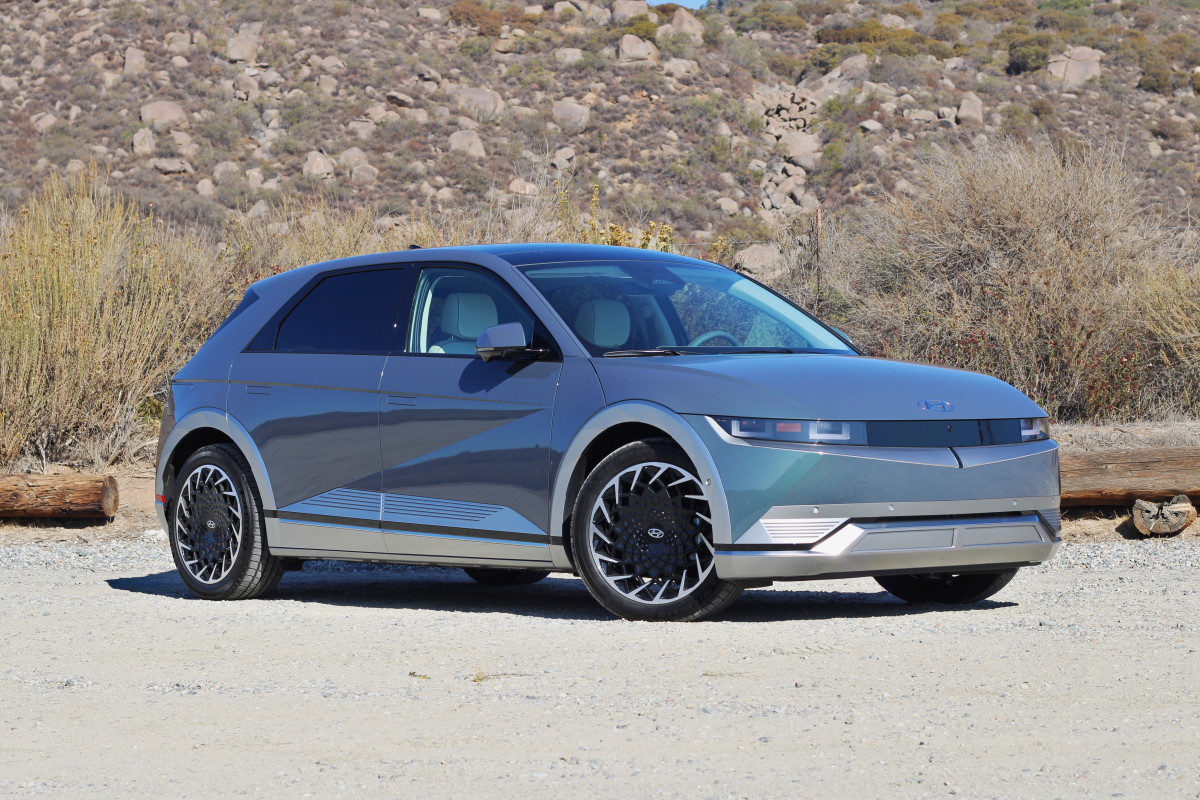
According to CarGurus experts, the overall rating for the 2021 Toyota RAV4 was 7.3 out of 10, while the 2022 Hyundai Ioniq 5 scored 9.0 out of 10. Based on these ratings, the Hyundai Ioniq 5 emerges as the clear winner, offering superior performance, advanced technology, and a more spacious, comfortable interior. For those in search of an advanced EV with innovative features, the Ioniq 5 is the recommended choice.
Choose the 2022 Hyundai Ioniq 5 if:
- Ultra-fast charging and extended EV range are key considerations.
- Advanced technology and a spacious, modern interior are important.
- You want a vehicle with a high level of comfort and innovative features.






Choose the 2021 Toyota RAV4 if:
- You prefer a rugged, SUV-like exterior.
- Off-road capability and higher towing capacity are priorities.
- A straightforward and user-friendly infotainment system appeals to you.




CarGurus highlights
According to CarGurus experts, the overall rating for the 2021 Toyota RAV4 was 7.3 out of 10, while the 2022 Hyundai Ioniq 5 scored 9.0 out of 10. Based on these ratings, the Hyundai Ioniq 5 emerges as the clear winner, offering superior performance, advanced technology, and a more spacious, comfortable interior. For those in search of an advanced EV with innovative features, the Ioniq 5 is the recommended choice.
Choose the 2022 Hyundai Ioniq 5 if:
Shop Now- Ultra-fast charging and extended EV range are key considerations.
- Advanced technology and a spacious, modern interior are important.
- You want a vehicle with a high level of comfort and innovative features.









Choose the 2021 Toyota RAV4 if:
Shop Now- You prefer a rugged, SUV-like exterior.
- Off-road capability and higher towing capacity are priorities.
- A straightforward and user-friendly infotainment system appeals to you.



By: CarGurus + AI
At CarGurus, our team of experienced automotive writers remain at the heart of our content operation, conducting hands-on car tests and writing insightful guides that are backed by years of industry experience. To complement this, we are harnessing AI to make our content offering more diverse and more helpful to shoppers than ever. To achieve this, our AI systems are based exclusively on CarGurus content, ratings and data, so that what we produce is both unique to CarGurus, and uniquely helpful to car shoppers.