2021 Subaru WRX vs 2021 Toyota Prius

Overview | |
MSRP$24,525 | MSRP$27,495 |
Listings153 | Listings175 |
Ratings & Reviews | |
User Reviews | User Reviews |
Expert reviews6.2 out of 10 | Expert reviews7.2 out of 10 |
Pros
Cons
| Pros
Cons
|
2021 Toyota Prius Reviews SummaryTo many people, cars are appliances made to serve a function. These consumers own a car because they need to get from where they are to where they’re going, and with a minimum of hassle, expense, or discomfort. Reliability, efficiency, safety, and economy are the critical deciding factors, and the 2021 Toyota Prius delivers on all fronts. Confusingly, for 2021, the Prius lineup offered a 2020 Edition. Toyota built just 2,020 examples to commemorate the 20th anniversary of the first Prius sold in the U.S. market. It has blacked-out trim, black 17-inch wheels, a body-color rear spoiler, and comes in Supersonic Red or new Wind Chill paint colors. Additionally, Toyota improved the 2021 Prius’s driving-assistance systems by making Toyota Safety Sense 2.0 standard across the board. Android Auto is also standard (joining Apple CarPlay), except for the unique infotainment system in the Prius Limited. | |
2021 Subaru WRX Reviews SummaryWith few exceptions, it’s become harder and harder to find an affordable sports car. Sure, you could get a base-model Mustang or Camaro, but they are cosplaying at being muscle cars. True low-cost, nimble sports cars like the Mazda Miata, Toyota 86, and Subaru BRZ just don’t make as much sense for as many shoppers. That’s the appeal of hot hatches and sports sedans. Cars like the Volkswagen GTI, Volkswagen Golf R, Honda Civic Si, Honda Civic Type R, Hyundai Veloster N, and the vehicle you see here: the 2021 Subaru WRX. It provides sharp cornering and brisk acceleration, but in a sedan package that makes it more sensible than a true, dedicated sports car. The WRX is no longer just a hotted-up version of the Subaru Impreza, as it's based on an older version of that compact car. This means many of the same positives, like standard all-wheel drive (AWD), and negatives, such as a low-grade cabin, apply. So is it worth paying the price of a very well-equipped economy car or even a midsize sedan for daily driving enjoyment? Read on to find out. | |
No video found | No video found |
Popular Features & Specs | |
Engine1.8L 121 hp I4 Hybrid | Engine2.0L 268 hp H4 |
Drive TrainFWD | Drive TrainAWD |
Seating Capacity5 | Seating Capacity5 |
Horsepower | Horsepower268 hp @ 5600 rpm |
EV Battery Capacity0.7 kWh | EV Battery Capacity |
MPG City58 | MPG City20 |
MPG Highway53 | MPG Highway27 |
Engine | |
Engine Name1.8L 121 hp I4 Hybrid | Engine Name2.0L 268 hp H4 |
Torque | Torque258 lb-ft @ 2000 rpm |
Horsepower | Horsepower268 hp @ 5600 rpm |
DrivetrainFWD | DrivetrainAWD |
Fuel Economy | |
EV Battery Capacity0.7 kWh | EV Battery Capacity |
MPG City58 | MPG City20 |
MPG Highway53 | MPG Highway27 |
Interior | |
Seating Capacity5 | Seating Capacity5 |
Safety | |
Front Crash Overall4 | Front Crash Overall5 |
Side Crash Overall5 | Side Crash Overall5 |
Dimensions & Capacity | |
Cargo Space27.4 cu ft | Cargo Space12.0 cu ft |
Curb Weight3010 lbs | Curb Weight3294 lbs |
Height57.9 in | Height58.1 in |
Length180.0 in | Length180.9 in |
Width69.3 in | Width78.9 in |
Wheelbase106.3 in | Wheelbase104.3 in |
Maximum Payload825 lbs | Maximum Payload1115 lbs |
Number of doors4 | Number of doors4 |
Overview | ||
MSRP | $24,525 | $27,495 |
Listings | ||
Ratings & Reviews | ||
User reviews | ||
Expert reviews | 6.2 out of 10Read full review | 7.2 out of 10Read full review |
Pros & cons | Pros
Cons
| Pros
Cons
|
Summary | To many people, cars are appliances made to serve a function. These consumers own a car because they need to get from where they are to where they’re going, and with a minimum of hassle, expense, or discomfort. Reliability, efficiency, safety, and economy are the critical deciding factors, and the 2021 Toyota Prius delivers on all fronts. Confusingly, for 2021, the Prius lineup offered a 2020 Edition. Toyota built just 2,020 examples to commemorate the 20th anniversary of the first Prius sold in the U.S. market. It has blacked-out trim, black 17-inch wheels, a body-color rear spoiler, and comes in Supersonic Red or new Wind Chill paint colors. Additionally, Toyota improved the 2021 Prius’s driving-assistance systems by making Toyota Safety Sense 2.0 standard across the board. Android Auto is also standard (joining Apple CarPlay), except for the unique infotainment system in the Prius Limited. | With few exceptions, it’s become harder and harder to find an affordable sports car. Sure, you could get a base-model Mustang or Camaro, but they are cosplaying at being muscle cars. True low-cost, nimble sports cars like the Mazda Miata, Toyota 86, and Subaru BRZ just don’t make as much sense for as many shoppers. That’s the appeal of hot hatches and sports sedans. Cars like the Volkswagen GTI, Volkswagen Golf R, Honda Civic Si, Honda Civic Type R, Hyundai Veloster N, and the vehicle you see here: the 2021 Subaru WRX. It provides sharp cornering and brisk acceleration, but in a sedan package that makes it more sensible than a true, dedicated sports car. The WRX is no longer just a hotted-up version of the Subaru Impreza, as it's based on an older version of that compact car. This means many of the same positives, like standard all-wheel drive (AWD), and negatives, such as a low-grade cabin, apply. So is it worth paying the price of a very well-equipped economy car or even a midsize sedan for daily driving enjoyment? Read on to find out. |
Video | No video found | No video found |
Popular Features & Specs | ||
Engine | 1.8L 121 hp I4 Hybrid | 2.0L 268 hp H4 |
Drive Train | FWD | AWD |
Seating Capacity | 5 | 5 |
Horsepower | 268 hp @ 5600 rpm | |
EV Battery Capacity | 0.7 kWh | |
MPG City | 58 | 20 |
MPG Highway | 53 | 27 |
Engine | ||
Engine Name | 1.8L 121 hp I4 Hybrid | 2.0L 268 hp H4 |
Torque | 258 lb-ft @ 2000 rpm | |
Horsepower | 268 hp @ 5600 rpm | |
Drivetrain | FWD | AWD |
Fuel Economy | ||
EV Battery Capacity | 0.7 kWh | |
MPG City | 58 | 20 |
MPG Highway | 53 | 27 |
Interior | ||
Seating Capacity | 5 | 5 |
Safety | ||
Front Crash Overall | 4 | 5 |
Side Crash Overall | 5 | 5 |
Dimensions & Capacity | ||
Cargo Space | 27.4 cu ft | 12.0 cu ft |
Curb Weight | 3010 lbs | 3294 lbs |
Height | 57.9 in | 58.1 in |
Length | 180.0 in | 180.9 in |
Width | 69.3 in | 78.9 in |
Wheelbase | 106.3 in | 104.3 in |
Maximum Payload | 825 lbs | 1115 lbs |
Number of doors | 4 | 4 |
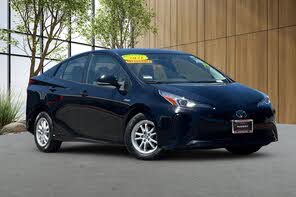
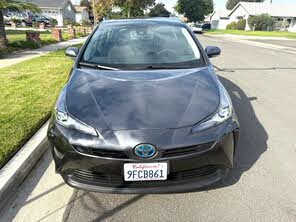
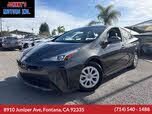
The 2021 Toyota Prius retained its iconic boomerang-shaped hood and roofline, a design choice that had been part of its identity for over 15 years. Despite advancements in aerodynamic vehicle design, the Prius continued to sport this look, which was no longer necessary for efficiency but had become synonymous with the model. The 2021 version, even in the trendy blacked-out 2020 Edition specification, did not win any beauty contests. The interior was equally unconventional, featuring a strip of displays mounted in the center of the dashboard, a toggle lever for transmission controls, and a button for engaging Park. The dashboard wrapped dramatically into the door panels, and the infotainment pod was thrust toward the front seat occupants. Gloss-black trim, a magnet for dust and fingerprints, added to the peculiar aesthetic.
Toyota offered the 2021 Prius in several trims: L Eco, LE, XLE, 2020 Edition, and Limited. An electronic all-wheel-drive system (AWD-e) was available for the LE and XLE trims, while the rest were front-wheel drive. The Prius Prime plug-in hybrid, with different styling, was available in LE, XLE, and Limited trims. Every Prius was a five-door hatchback, providing utility similar to a crossover SUV but without the added ground clearance or rugged looks. Prices ranged from $24,525 to $32,650, excluding the $995 destination charge. The test vehicle, a Prius 2020 Edition dipped in extra-cost Supersonic Red, totaled $31,295, including destination charges.
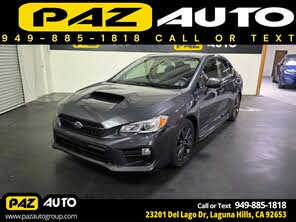
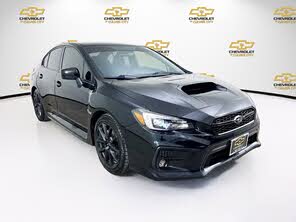
The 2021 Subaru WRX was often criticized for its adolescent aesthetic, akin to a rebellious teenager within the Subaru family. Compared to the racier WRX STI, the standard WRX looked relatively tame, lacking the race-ready rear wing of its sibling. The WRX, though a sedan, had a wedge-like front end and a very short trunk lid, giving it an appearance of speed even when stationary. Aerodynamic bodywork and a functional hood scoop added to this impression.
Inside, the WRX resembled other Subaru compact cars from the past decade. Introduced as a 2015 model, its interior looked dated compared to competitors like the VW GTI. The WRX cockpit was function-first, sacrificing fit and finish for practicality. Hard plastics were abundant, contributing to its immature reputation, especially when compared to the refined cabins of the GTI and Honda Civic Si. Trims included Base, Premium, and Limited, with the base model featuring 17-inch aluminum alloy wheels, cloth upholstery, manual seats, and a 6.5-inch touchscreen infotainment system with Apple CarPlay and Android Auto. The Premium trim added 18-inch wheels, fog lights, heated seats, and a larger 7-inch infotainment screen. The range-topping Limited trim included leather upholstery, a 10-way power-adjustable driver’s seat, and adaptive steering-responsive LED headlights.


The 2021 Toyota Prius prioritized fuel efficiency over performance. The L Eco version achieved an impressive 56 mpg in combined driving, according to the EPA. Other front-drive models earned a 52 mpg combined rating, while AWD-e versions managed 49 mpg. The Prius 2020 Edition averaged 47.5 mpg on the testing loop, falling short of EPA estimates. The Prius paired a 1.8-liter four-cylinder gasoline engine with a 53-kilowatt electric motor, an electronic continuously variable transmission (e-CVT), and either a lithium-ion (FWD) or nickel-metal hydride (AWD-e) battery pack. Total system output was 121 horsepower, which was modest for the 3,020-pound vehicle. However, the near-instantaneous 120 pound-feet of torque from the electric motor provided a lively feel off the line and allowed for electric-only driving at speeds under 25 mph.
The Prius featured Eco, Normal, and Power driving modes to maximize efficiency or improve responsiveness. The Toyota New Global Architecture (TNGA) platform contributed to a lower center of gravity and a more athletic feel. While the Prius could handle curvy roads with some enthusiasm, hard acceleration produced a powertrain drone, and the 17-inch tires prioritized fuel economy over grip. Despite these limitations, the Prius offered predictable handling, commendable regenerative braking, and a flat cornering attitude. The challenge of maximizing fuel efficiency provided its own kind of driving enjoyment.
The 2021 Subaru WRX came equipped with a turbocharged 2.0-liter four-cylinder boxer engine, producing 268 horsepower and 258 pound-feet of torque. Buyers could choose between a six-speed manual transmission or a continuously variable transmission (CVT). The WRX outperformed rivals like the Civic Si (205 hp) and VW GTI (228 hp) but required precise rev management to extract its full potential. The CVT, though not ideal for driving enthusiasts, kept the revs in the powerband effectively.
The manual transmission, however, was a letdown due to its vague clutch feel. The WRX STI offered a more precise manual experience, but the 2019 WRX STI S209, with its high-performance clutch and mechanical six-speed manual, was the pinnacle of the lineup. The WRX featured Vehicle Dynamics Control with Active Torque Vectoring, modulating torque distribution and applying slight braking on the inside wheels in a corner. This system, combined with well-weighted steering, made the WRX a joy to drive on winding roads. However, its stiff ride was less comfortable compared to the Civic Si and GTI.
The 2021 Toyota Prius, often perceived as a small car, offered more interior space than expected. It could accommodate up to five people, with comfortable seats, though the SofTex synthetic leather upholstery tended to trap sweat. The test vehicle featured an eight-way power driver’s seat, heated front seats, and a heated steering wheel. Finding a good driving position was easy, but the low seating position made entry and exit more challenging. The rear seats provided adequate foot room, legroom, and headroom for adults, but lacked air-conditioning vents.
Cargo space varied by trim level, with the rear hatch offering between 24.6 and 27.4 cubic feet of space behind the back seat. Folding the seat down increased the volume to between 47.9 and 50.7 cubic feet.
The 2021 Subaru WRX had a conventional sedan layout with a trunk offering up to 12 cubic feet of cargo space. This was more than the Civic Si coupe (11.9 cubic feet) but less than the sedan (14.7 cubic feet) and far behind the VW GTI’s 53.7 cubic feet with the rear seats folded. Even with the rear seats in use, the GTI provided 17.4 cubic feet of cargo space.
The WRX’s traditional sedan layout was somewhat hindered by its age. Modern automakers had become more adept at interior packaging, but the WRX’s door bottle-holders could not accommodate mid-to-large water bottles. The center console cupholders could hold a bottle but might obstruct shifting with the manual transmission. The WRX provided a commanding but comfortable driving position, with good visibility and a decently sized center console tray. The rear seats were spacious enough to accommodate four adults comfortably.
The 2021 Toyota Prius featured a 7-inch touchscreen infotainment system with stereo-volume and tuning knobs, and shortcut buttons to main-function menus. Standard equipment included Bluetooth, SiriusXM satellite radio, Apple CarPlay, Android Auto, Amazon Alexa compatibility, Toyota’s Safety Connect, and WiFi Connect. However, the stereo speaker sound quality was poor, and significant road noise overwhelmed it on the highway. The Limited trim offered a 10-speaker JBL premium sound system, navigation, and a natural voice recognition system, paired with an 11.6-inch portrait-style touchscreen infotainment system. Unfortunately, this system did not benefit from the Android Auto upgrade.
The digital instrumentation, housed in a strip at the top of the dashboard, featured dated displays with cheesy graphics, lacking technological sophistication.
The 2021 Subaru WRX came standard with a 6.5-inch touchscreen running Subaru's Starlink infotainment system, with a 7-inch touchscreen available on higher trims. Both screens supported Apple CarPlay and Android Auto, with a sensible layout and easy-to-use controls despite somewhat dated graphics. The Limited trim, with the available option package, featured navigation and a Harman Kardon premium stereo, providing solid sound quality. Despite updates, the WRX’s in-car tech was far from cutting-edge.
For 2021, the Toyota Prius was upgraded to the Toyota Safety Sense 2.0 (TSS 2.0) collection of safety systems, standard on all trims. Highlights included adaptive cruise control with stop-and-go capability, forward-collision warning with pedestrian detection, lane-departure warning, lane-keep assist, lane-centering assist, automatic high-beam headlights, and a road-sign recognition system. The LE trim and higher included blind-spot monitoring with rear cross-traffic alert. Safety Connect services were also standard, free for the first three years of ownership. The NHTSA had not rated the 2021 Prius for crashworthiness, but the IIHS gave it favorable marks, though it did not earn a Top Safety Pick.
The 2021 Subaru WRX did not come standard with the latest safety features. Subaru's EyeSight system, with adaptive cruise control, emergency automatic braking, and lane-departure warning, was available on the Premium and Limited trims, but only with the CVT. Adaptive high beams, blind-spot monitoring, rear cross-traffic alert, and reverse automatic braking were options on the Limited trim. All trims included a tire-pressure monitoring system and traction control.
CarGurus highlights

According to CarGurus experts, the overall rating for the 2021 Toyota Prius is 6.2 out of 10, while the 2021 Subaru WRX scores 7.2 out of 10. Based on these ratings, the Subaru WRX is the better choice, offering a more engaging driving experience and higher overall satisfaction.
Choose the 2021 Subaru WRX if:
- You seek a sporty driving experience with a powerful turbocharged engine.
- You prefer a traditional sedan layout with a comfortable driving position.
- You want a vehicle with well-weighted steering and precise handling on winding roads.






Choose the 2021 Toyota Prius if:
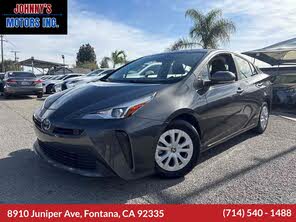
- You prioritize fuel efficiency and want to maximize miles per gallon.
- You need a practical hatchback with ample cargo space.
- You value a comprehensive suite of standard safety features.





CarGurus highlights
According to CarGurus experts, the overall rating for the 2021 Toyota Prius is 6.2 out of 10, while the 2021 Subaru WRX scores 7.2 out of 10. Based on these ratings, the Subaru WRX is the better choice, offering a more engaging driving experience and higher overall satisfaction.
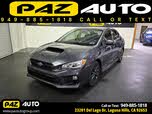
Choose the 2021 Subaru WRX if:
Shop Now- You seek a sporty driving experience with a powerful turbocharged engine.
- You prefer a traditional sedan layout with a comfortable driving position.
- You want a vehicle with well-weighted steering and precise handling on winding roads.








Choose the 2021 Toyota Prius if:
Shop Now- You prioritize fuel efficiency and want to maximize miles per gallon.
- You need a practical hatchback with ample cargo space.
- You value a comprehensive suite of standard safety features.






By: CarGurus + AI
At CarGurus, our team of experienced automotive writers remain at the heart of our content operation, conducting hands-on car tests and writing insightful guides that are backed by years of industry experience. To complement this, we are harnessing AI to make our content offering more diverse and more helpful to shoppers than ever. To achieve this, our AI systems are based exclusively on CarGurus content, ratings and data, so that what we produce is both unique to CarGurus, and uniquely helpful to car shoppers.