2021 BMW X3 vs 2020 Volkswagen Tiguan
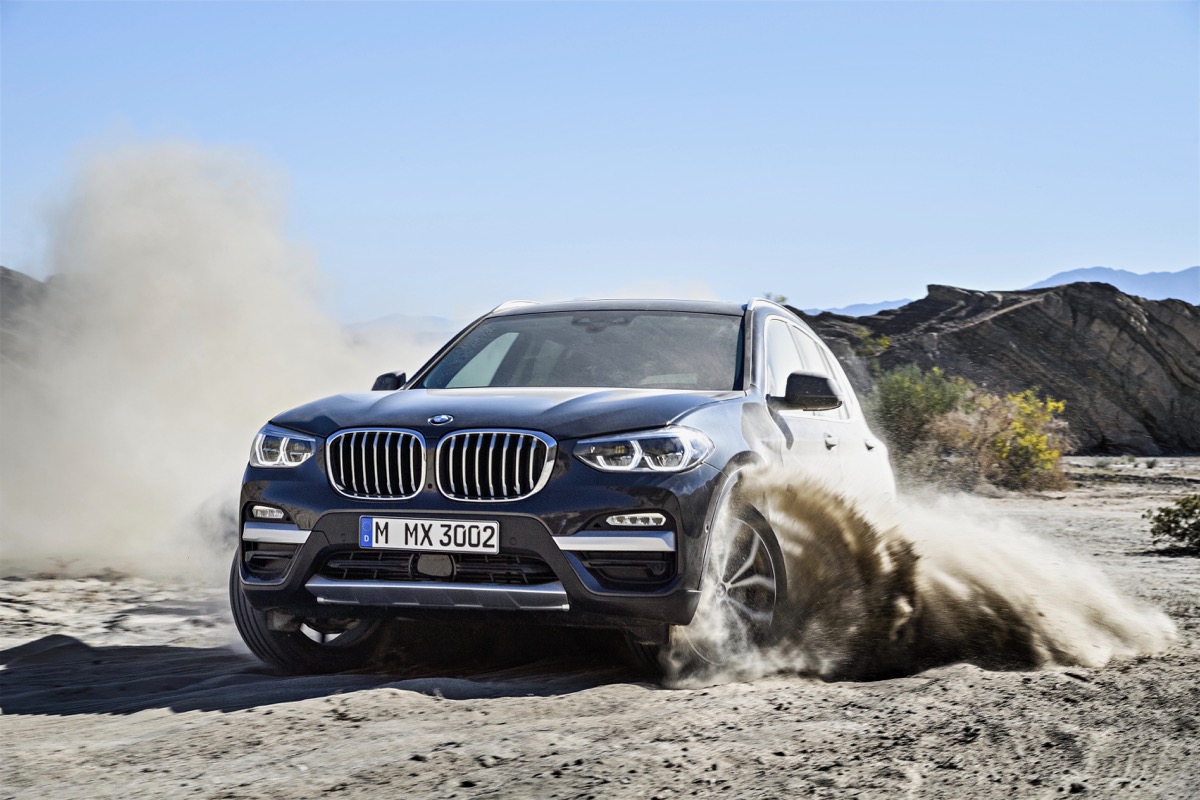
Overview | |
MSRP$24,945 | MSRP$43,000 |
Listings907 | Listings749 |
Ratings & Reviews | |
User Reviews | User Reviews |
Expert reviews7.7 out of 10 | Expert reviews7.5 out of 10 |
Pros
Cons
| Pros
Cons
|
2020 Volkswagen Tiguan Reviews SummaryThe Volkswagen Tiguan is one of only two compact crossover SUV’s that currently offer third-row seating. (And the other is the hopelessly outdated Mitsubishi Outlander.) To fit the extra pair of surprisingly spacious seats, VW made the Tiguan much larger than average for its competitive set—which suits a vehicle that fills big shoes in VW dealerships. With five trim levels and prices that stretch from just under $26,000 to a bit over $40,000, the Tiguan is the German brand’s best-selling vehicle in the U.S. | |
2021 BMW X3 Reviews SummaryThe BMW X3 is one of the cornerstones of the luxury compact SUV market. Thanks to its combination of a spacious interior, solid driving dynamics, and wealth of technology, it’s one of BMW’s most popular offerings as well. For the 2021 model year, BMW enhances the X3 with more standard safety features and newly available in-car tech features. If you want an upscale, versatile crossover that’s just a bit more exciting to drive than most of its competition, then read on to learn more about the 2021 BMW X3. | |
No video found | No video found |
Popular Features & Specs | |
Engine2.0L 184 hp I4 | Engine2.0L 248 hp I4 |
Drive TrainFWD | Drive TrainRWD |
Seating Capacity7 | Seating Capacity5 |
Horsepower184 hp @ 4400 rpm | Horsepower248 hp @ 5200 rpm |
MPG City22 | MPG City25 |
MPG Highway29 | MPG Highway29 |
Engine | |
Engine Name2.0L 184 hp I4 | Engine Name2.0L 248 hp I4 |
Torque221 lb-ft @ 1600 rpm | Torque258 lb-ft @ 1450 rpm |
Horsepower184 hp @ 4400 rpm | Horsepower248 hp @ 5200 rpm |
DrivetrainFWD | DrivetrainRWD |
Fuel Economy | |
MPG City22 | MPG City25 |
MPG Highway29 | MPG Highway29 |
Interior | |
Seating Capacity7 | Seating Capacity5 |
Key Features | |
Navigation System | Navigation SystemStandard |
Safety | |
Front Crash Overall4 | Front Crash Overall5 |
Side Crash Overall5 | Side Crash Overall5 |
Dimensions & Capacity | |
Cargo Space12.0 cu ft | Cargo Space28.7 cu ft |
Curb Weight3757 lbs | Curb Weight3931 lbs |
Height66.3 in | Height66.0 in |
Length185.1 in | Length185.9 in |
Width72.4 in | Width84.2 in |
Wheelbase109.8 in | Wheelbase112.8 in |
Maximum Payload1124 lbs | Maximum Payload888 lbs |
Number of doors4 | Number of doors4 |
Maximum Towing Capacity1500 lbs | Maximum Towing Capacity |
Overview | ||
MSRP | $24,945 | $43,000 |
Listings | ||
Ratings & Reviews | ||
User reviews | ||
Expert reviews | 7.7 out of 10Read full review | 7.5 out of 10Read full review |
Pros & cons | Pros
Cons
| Pros
Cons
|
Summary | The Volkswagen Tiguan is one of only two compact crossover SUV’s that currently offer third-row seating. (And the other is the hopelessly outdated Mitsubishi Outlander.) To fit the extra pair of surprisingly spacious seats, VW made the Tiguan much larger than average for its competitive set—which suits a vehicle that fills big shoes in VW dealerships. With five trim levels and prices that stretch from just under $26,000 to a bit over $40,000, the Tiguan is the German brand’s best-selling vehicle in the U.S. | The BMW X3 is one of the cornerstones of the luxury compact SUV market. Thanks to its combination of a spacious interior, solid driving dynamics, and wealth of technology, it’s one of BMW’s most popular offerings as well. For the 2021 model year, BMW enhances the X3 with more standard safety features and newly available in-car tech features. If you want an upscale, versatile crossover that’s just a bit more exciting to drive than most of its competition, then read on to learn more about the 2021 BMW X3. |
Video | No video found | No video found |
Popular Features & Specs | ||
Engine | 2.0L 184 hp I4 | 2.0L 248 hp I4 |
Drive Train | FWD | RWD |
Seating Capacity | 7 | 5 |
Horsepower | 184 hp @ 4400 rpm | 248 hp @ 5200 rpm |
MPG City | 22 | 25 |
MPG Highway | 29 | 29 |
Engine | ||
Engine Name | 2.0L 184 hp I4 | 2.0L 248 hp I4 |
Torque | 221 lb-ft @ 1600 rpm | 258 lb-ft @ 1450 rpm |
Horsepower | 184 hp @ 4400 rpm | 248 hp @ 5200 rpm |
Drivetrain | FWD | RWD |
Fuel Economy | ||
MPG City | 22 | 25 |
MPG Highway | 29 | 29 |
Interior | ||
Seating Capacity | 7 | 5 |
Key Features | ||
Navigation System | Standard | |
Safety | ||
Front Crash Overall | 4 | 5 |
Side Crash Overall | 5 | 5 |
Dimensions & Capacity | ||
Cargo Space | 12.0 cu ft | 28.7 cu ft |
Curb Weight | 3757 lbs | 3931 lbs |
Height | 66.3 in | 66.0 in |
Length | 185.1 in | 185.9 in |
Width | 72.4 in | 84.2 in |
Wheelbase | 109.8 in | 112.8 in |
Maximum Payload | 1124 lbs | 888 lbs |
Number of doors | 4 | 4 |
Maximum Towing Capacity | 1500 lbs | |
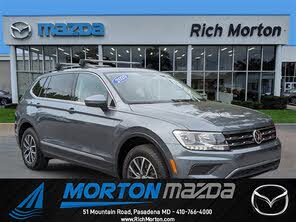
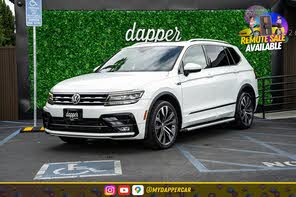
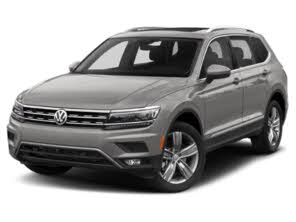
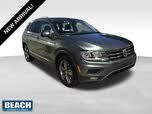
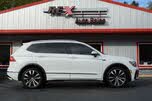
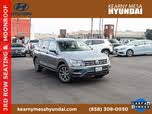
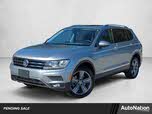
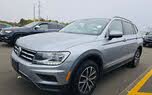
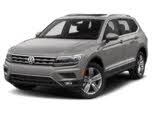
The 2020 Volkswagen Tiguan received a major overhaul as part of the introduction of its second generation in 2018. This redesign addressed the Tiguan's previous shortcomings, particularly its size, which had been smaller than competitors like the Honda CR-V and Toyota RAV4. Volkswagen aimed to balance style with affordability, presenting a vehicle that embraced a typically conservative German aesthetic.
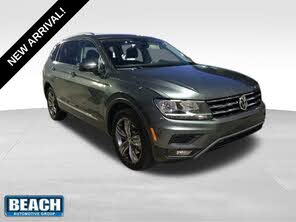
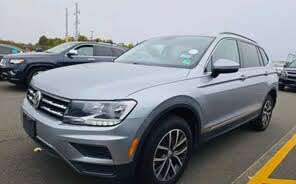
Volkswagen's designers equipped the Tiguan with clean, uncomplicated lines, and a new flat logo that adorned the grille extending across the front fascia. The Tiguan's headlights connected seamlessly with this grille, resulting in a straightforward, timeless design without any overly aggressive or animated features. This approach aligned with Volkswagen's strategy of producing vehicles that simply looked like cars, a design philosophy that generally appealed to a broad audience.
However, the interior of the Tiguan didn't quite live up to the exterior's promise. While Volkswagen used to excel at crafting impressive interiors, the Tiguan featured numerous dull surfaces and hard black plastic, which somewhat undermined its previous reputation. The cockpit might have been described as "simple" at best, but more accurately, it was "boring." It seemed as though Volkswagen had redirected the budget towards enhancing the vehicle's electronics. Notably, the digital dashboard and glass-covered touchscreen infotainment system stood out with their smartphone-like appeal, even if the overall interior design did not.
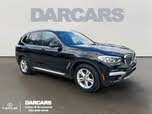
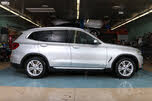
In contrast, the 2021 BMW X3, which also debuted its third generation in 2018, received updates that included a new plug-in hybrid model and M performance variants by 2020. BMW's redesign aimed to refine the X3 into a truly luxurious small SUV, mirroring the presence of larger, more expensive models in the BMW lineup. The exterior of the X3 conveyed the image of a downsized BMW X5, while the interior maintained BMW's characteristic cold, mechanical styling. Although it might not have been as visually pleasing as rivals like the Mercedes-Benz GLC-Class, the X3's dashboard was designed with functionality in mind.
The X3 offered various trims, including the sDrive30i, xDrive30i, M40i, and the xDrive30e plug-in hybrid. These trims came with standard features like 18-inch alloy wheels, synthetic leather upholstery, a 10.2-inch infotainment system, and 10-way power-adjustable front seats. Higher trims and optional packages added genuine leather upholstery, a panoramic sunroof, and a hands-free power liftgate, among other features.


The 2020 Volkswagen Tiguan was equipped with Volkswagen’s hallmark engine, a turbocharged 2.0-liter four-cylinder. This engine was tuned for torque over horsepower, producing 184 horsepower and 221 pound-feet of torque. Both front-wheel drive (FWD) and an all-wheel-drive (AWD) option were available, with the latter costing an additional $1,300.
The Tiguan's significant torque of 221 pound-feet was necessary due to its considerable size and weight, tipping the scales at 3,757 pounds for the FWD model and 3,847 pounds for the AWD version. This made the Tiguan noticeably heavier than competitors like the Honda CR-V, which affected its nimbleness and handling. Nonetheless, the powertrain provided a responsive throttle and minimal turbo lag, though highway passing required some patience. The eight-speed automatic transmission offered smooth downshifting, enhancing the vehicle's drive quality.
The Tiguan maintained a relatively quiet cabin, even during high-rev turbo-four engine sounds, which were crafted to be deep and refined. The vehicle's suspension and handling, although comfortable, did not match the nimbleness of smaller competitors due to its extended wheelbase. Drivers seeking a fun-to-drive compact crossover might have considered alternatives like the Mazda CX-5.
In comparison, the 2021 BMW X3 offered multiple dynamic powertrains. The sDrive30i and xDrive30i featured a turbocharged four-cylinder engine delivering 248 horsepower through an eight-speed automatic transmission, with the sDrive30i being rear-wheel drive (RWD) and the xDrive30i all-wheel drive (AWD). The plug-in hybrid version, the xDrive30e, boasted 288 horsepower and brisk acceleration, with an electric-only range of 17 miles.
For those seeking more performance, the X3 M40i provided a robust 382-horsepower twin-turbo inline-six engine, which offered impressive acceleration and improved cornering abilities. Additionally, the high-performance X3 M featured a 473-horsepower engine, catering to drivers looking for both speed and spaciousness for family travel.
The practicality of the 2020 Volkswagen Tiguan outshined its moderately paced performance. Central to this practicality was the second row of seats, which could slide up to seven inches, enhancing the usefulness of the third row. Although the third-row seating was not overly spacious, it did provide adequate legroom for shorter adults and could be cozy for children.
Front-drive Tiguans came standard with the third row of seats, while AWD models were primarily five-seaters, with the third row available as a $595 option. Despite the limited headroom and the low cushion position relative to the floor, the Tiguan's third row was roomier than those in many larger vehicles, and accessing it was user-friendly.
The second row could be folded flat, maximizing cargo space to 65.7 cubic feet when the third row was collapsed. For two-row Tiguans, the cargo space expanded to a notable 73.5 cubic feet. This capacity surpassed that of compact SUVs like the Ford Escape and Toyota RAV4, although it fell slightly short of the Honda CR-V's 75.8 cubic feet.
The driver's seat in the Tiguan offered substantial hip and shoulder room, comparable to midsize SUVs such as the Toyota Highlander or Honda Pilot. The abundance of glass and seating position contributed to a feeling of spaciousness, making it appealing for both those downsizing from larger SUVs like the Volkswagen Atlas and those upgrading from smaller vehicles like the VW Golf.
On the other hand, the 2021 BMW X3 provided up to 62.7 cubic feet of cargo space with the rear seats folded, ranking competitively within the small luxury SUV segment. With the rear seats in use, the X3 still offered a generous 28.7 cubic feet of cargo space. The standard power liftgate and the optional hands-free power liftgate added to the X3's convenience.
Passengers in the X3 enjoyed ample headroom and legroom, enhancing comfort on longer trips. The front row offered a commanding driving position, and the rear seats were designed to be adult-friendly. The driver and front passenger benefited from a combination of real buttons and dials complementing the main touchscreen, simplifying the user experience.
In terms of technology, the 2020 Volkswagen Tiguan featured the "MIB II" infotainment software, expected to be updated to "MIB3" the following year. The base S trim utilized a 6.5-inch touchscreen display, comparable to competitors, while the SE and higher trims boasted an impressive 8-inch capacitive touchscreen. This system offered a glass surface, bright colors, sharp graphics, and a responsive touch interface, making it a standout in the non-luxury segment.
The Tiguan S included a single USB-C port, while higher trims had standard USB-A ports, with one situated in the front and another in the second row. Additionally, a wireless charging pad was available on trims above the S. The VW Digital Cockpit, available on top SEL trims, allowed for a customizable instrument panel display, offering benefits beyond standard Apple CarPlay and Android Auto interfaces, which were also standard here.
In comparison, the 2021 BMW X3 came standard with a sophisticated 10.2-inch touchscreen running the iDrive infotainment system. This system combined touch operation with an iDrive dial in the center console, catering to different user preferences. Standard features included Apple CarPlay, although Android Auto was optional, an area where competitors often provided both systems as standard.
Optional technological upgrades for the X3 included wireless device charging, a fully digital instrument panel, and a 16-speaker Harman Kardon premium stereo system. Buyers could also opt for gesture control, allowing basic functions to be controlled by waving hands, though this feature could be inadvertently triggered by users gesturing while talking.
The 2020 Volkswagen Tiguan saw an improvement in its standard safety features, incorporating forward-collision warning with automatic emergency braking, blind spot monitoring, and rear cross-traffic alert. However, higher-end safety features such as adaptive cruise control with lane-keeping assistance and LED headlights with automatic high beams were reserved for the top SEL trim. This placed Volkswagen at a disadvantage compared to base models of the Honda CR-V and Toyota RAV4, which included more comprehensive safety packages at lower prices.
Despite this, all Tiguan models featured Car-Net, a telematics package that linked the vehicle to the owner's smartphone for remote operations like locking, unlocking, and vehicle status checks. Enhanced functionalities, such as real-time parking information and geofencing for teen drivers, were available with an upgraded infotainment system.
The National Highway Traffic Safety Administration (NHTSA) did not crash-test the Tiguan, but the Insurance Institute for Highway Safety (IIHS) awarded it a Top Safety Pick, solely for top-of-the-line SEL Premium models with LED headlights. Most Tiguan models, equipped with halogen headlights, received poor ratings from the IIHS for their lighting.
The 2021 BMW X3 came with a robust array of standard driver-assistance features. These included automatic emergency braking, forward collision warning, pedestrian detection, lane departure warning, blind-spot monitoring, rear cross-traffic alert, and front-and-rear parking sensors. Optional safety features comprised adaptive cruise control, automatic high beams, adaptive headlights, and a head-up display.
CarGurus highlights

According to CarGurus experts, the overall rating for the 2020 Volkswagen Tiguan is 7.7 out of 10, while the 2021 BMW X3 scores 7.5 out of 10. Given these evaluations, the Volkswagen Tiguan emerges as a slightly better choice overall. It offers commendable practicality, advanced technology, and substantial interior space. If you value a combination of affordability, spaciousness, and a responsive infotainment system, the 2020 Volkswagen Tiguan should be your go-to vehicle.
Choose the 2021 BMW X3 if:
- You are looking for a luxury compact SUV with robust performance, offering multiple powertrains including a high-performance model and a plug-in hybrid.
- You prefer an upscale interior with ample cargo space and advanced technological features, such as a standard 10.2-inch touchscreen with optional gesture control.
- You prioritize safety features, as the X3 comes with a comprehensive suite of standard driver-assistance technologies and additional optional safety enhancements.




Choose the 2020 Volkswagen Tiguan if:
- You want a versatile SUV with the option for a third row, providing higher passenger capacity than most competitors.
- You value a spacious interior that feels larger than its measurements suggest, offering comfortable seating for all passengers.
- You seek a vehicle with an easily navigable and responsive infotainment system that includes standard Apple CarPlay and Android Auto.




CarGurus highlights
According to CarGurus experts, the overall rating for the 2020 Volkswagen Tiguan is 7.7 out of 10, while the 2021 BMW X3 scores 7.5 out of 10. Given these evaluations, the Volkswagen Tiguan emerges as a slightly better choice overall. It offers commendable practicality, advanced technology, and substantial interior space. If you value a combination of affordability, spaciousness, and a responsive infotainment system, the 2020 Volkswagen Tiguan should be your go-to vehicle.
Choose the 2021 BMW X3 if:
Shop Now- You are looking for a luxury compact SUV with robust performance, offering multiple powertrains including a high-performance model and a plug-in hybrid.
- You prefer an upscale interior with ample cargo space and advanced technological features, such as a standard 10.2-inch touchscreen with optional gesture control.
- You prioritize safety features, as the X3 comes with a comprehensive suite of standard driver-assistance technologies and additional optional safety enhancements.





Choose the 2020 Volkswagen Tiguan if:
Shop Now- You want a versatile SUV with the option for a third row, providing higher passenger capacity than most competitors.
- You value a spacious interior that feels larger than its measurements suggest, offering comfortable seating for all passengers.
- You seek a vehicle with an easily navigable and responsive infotainment system that includes standard Apple CarPlay and Android Auto.





By: CarGurus + AI
At CarGurus, our team of experienced automotive writers remain at the heart of our content operation, conducting hands-on car tests and writing insightful guides that are backed by years of industry experience. To complement this, we are harnessing AI to make our content offering more diverse and more helpful to shoppers than ever. To achieve this, our AI systems are based exclusively on CarGurus content, ratings and data, so that what we produce is both unique to CarGurus, and uniquely helpful to car shoppers.