2020 Mazda CX-30 vs 2020 Volkswagen Tiguan

Overview | |
MSRP$21,900 | MSRP$24,945 |
Listings182 | Listings882 |
Ratings & Reviews | |
User Reviews | User Reviews |
Expert reviews7.7 out of 10 | Expert reviews7.7 out of 10 |
Pros
Cons
| Pros
Cons
|
2020 Mazda CX-30 Reviews SummaryBased on the Mazda3 platform, the 2020 Mazda CX-30 compact crossover offers two distinct advantages over the car on which it is based. The first is extra ground clearance for navigating snowstorms and light-difficulty trails. The second is easier entry and exit because the CX-30 sits higher off the ground. In exchange for these benefits, the CX-30 dilutes the brilliant design and driving dynamics for which the Mazda3 is revered. But it still looks and drives better than most of its competition. | |
2020 Volkswagen Tiguan Reviews SummaryThe Volkswagen Tiguan is one of only two compact crossover SUV’s that currently offer third-row seating. (And the other is the hopelessly outdated Mitsubishi Outlander.) To fit the extra pair of surprisingly spacious seats, VW made the Tiguan much larger than average for its competitive set—which suits a vehicle that fills big shoes in VW dealerships. With five trim levels and prices that stretch from just under $26,000 to a bit over $40,000, the Tiguan is the German brand’s best-selling vehicle in the U.S. | |
No video found | |
Popular Features & Specs | |
Engine2.5L 186 hp I4 | Engine2.0L 184 hp I4 |
Drive TrainFWD | Drive TrainFWD |
Seating Capacity5 | Seating Capacity7 |
Horsepower186 hp @ 6000 rpm | Horsepower184 hp @ 4400 rpm |
MPG City25 | MPG City22 |
MPG Highway33 | MPG Highway29 |
Engine | |
Engine Name2.5L 186 hp I4 | Engine Name2.0L 184 hp I4 |
Torque186 lb-ft @ 4000 rpm | Torque221 lb-ft @ 1600 rpm |
Horsepower186 hp @ 6000 rpm | Horsepower184 hp @ 4400 rpm |
DrivetrainFWD | DrivetrainFWD |
Fuel Economy | |
MPG City25 | MPG City22 |
MPG Highway33 | MPG Highway29 |
Interior | |
Seating Capacity5 | Seating Capacity7 |
Safety | |
Front Crash Overall5 | Front Crash Overall4 |
Side Crash Overall5 | Side Crash Overall5 |
Dimensions & Capacity | |
Cargo Space20.2 cu ft | Cargo Space12.0 cu ft |
Curb Weight3232 lbs | Curb Weight3757 lbs |
Height61.7 in | Height66.3 in |
Length173.0 in | Length185.1 in |
Width70.7 in | Width72.4 in |
Wheelbase104.5 in | Wheelbase109.8 in |
Maximum Payload957 lbs | Maximum Payload1124 lbs |
Number of doors4 | Number of doors4 |
Maximum Towing Capacity | Maximum Towing Capacity1500 lbs |
Overview | ||
MSRP | $21,900 | $24,945 |
Listings | ||
Ratings & Reviews | ||
User reviews | ||
Expert reviews | 7.7 out of 10Read full review | 7.7 out of 10Read full review |
Pros & cons | Pros
Cons
| Pros
Cons
|
Summary | Based on the Mazda3 platform, the 2020 Mazda CX-30 compact crossover offers two distinct advantages over the car on which it is based. The first is extra ground clearance for navigating snowstorms and light-difficulty trails. The second is easier entry and exit because the CX-30 sits higher off the ground. In exchange for these benefits, the CX-30 dilutes the brilliant design and driving dynamics for which the Mazda3 is revered. But it still looks and drives better than most of its competition. | The Volkswagen Tiguan is one of only two compact crossover SUV’s that currently offer third-row seating. (And the other is the hopelessly outdated Mitsubishi Outlander.) To fit the extra pair of surprisingly spacious seats, VW made the Tiguan much larger than average for its competitive set—which suits a vehicle that fills big shoes in VW dealerships. With five trim levels and prices that stretch from just under $26,000 to a bit over $40,000, the Tiguan is the German brand’s best-selling vehicle in the U.S. |
Video | No video found | |
Popular Features & Specs | ||
Engine | 2.5L 186 hp I4 | 2.0L 184 hp I4 |
Drive Train | FWD | FWD |
Seating Capacity | 5 | 7 |
Horsepower | 186 hp @ 6000 rpm | 184 hp @ 4400 rpm |
MPG City | 25 | 22 |
MPG Highway | 33 | 29 |
Engine | ||
Engine Name | 2.5L 186 hp I4 | 2.0L 184 hp I4 |
Torque | 186 lb-ft @ 4000 rpm | 221 lb-ft @ 1600 rpm |
Horsepower | 186 hp @ 6000 rpm | 184 hp @ 4400 rpm |
Drivetrain | FWD | FWD |
Fuel Economy | ||
MPG City | 25 | 22 |
MPG Highway | 33 | 29 |
Interior | ||
Seating Capacity | 5 | 7 |
Safety | ||
Front Crash Overall | 5 | 4 |
Side Crash Overall | 5 | 5 |
Dimensions & Capacity | ||
Cargo Space | 20.2 cu ft | 12.0 cu ft |
Curb Weight | 3232 lbs | 3757 lbs |
Height | 61.7 in | 66.3 in |
Length | 173.0 in | 185.1 in |
Width | 70.7 in | 72.4 in |
Wheelbase | 104.5 in | 109.8 in |
Maximum Payload | 957 lbs | 1124 lbs |
Number of doors | 4 | 4 |
Maximum Towing Capacity | 1500 lbs | |
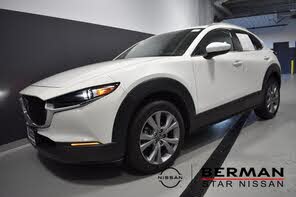
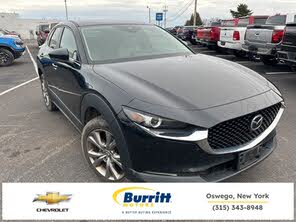
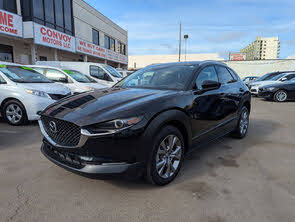
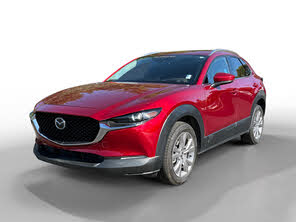
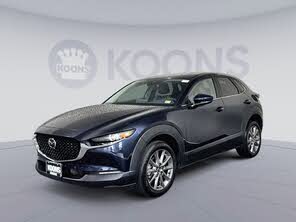
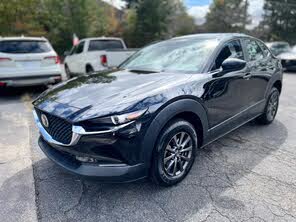
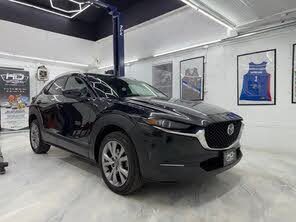
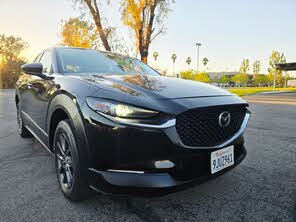
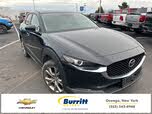
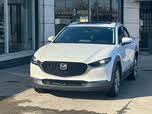
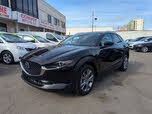
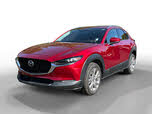
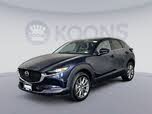
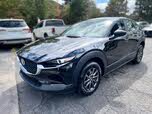
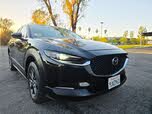
When evaluating the 2020 Mazda CX-30's look and feel, it was evident that at some point during its development, Mazda decided to overdo the application of thick gray plastic cladding around the lower perimeter of the car. This was a decision many felt was misjudged. If the cladding had been reduced by half, it would have been difficult to find fault with the CX-30’s otherwise sophisticated exterior design. However, the excessive use of plastic tended to make the 18-inch wheels appear small, giving the entire vehicle a seemingly perpetually raised appearance, as though it were waiting on a hydraulic lift in a service center.
Despite this, the CX-30 boasted a terrific design overall, especially noteworthy in its interior. The inside looked and felt luxurious, as long as one kept attention above the midpoint of the cabin’s height. Below that, the use of hard plastic was prevalent, which was acceptable given the vehicle's price point. The starting price was $21,900, with trims going up to $28,200 for Premium. Features like dark tinted rear privacy glass and 18-inch wheels, which were part of the Select trim upgrade for $2,000, significantly enhanced the car’s aesthetics. Our test model, a Premium AWD version in Soul Red Crystal paint, with additional extras, came to $32,120.
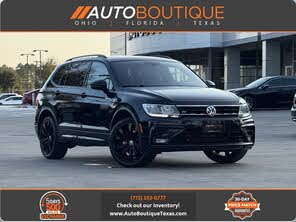
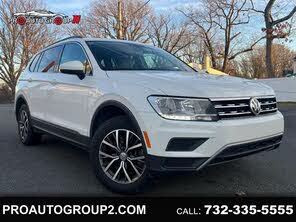
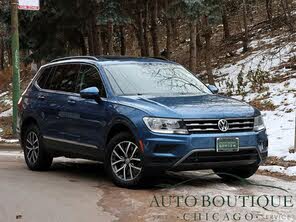
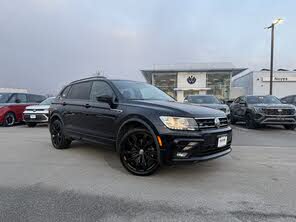
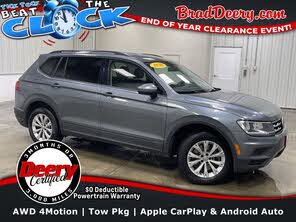
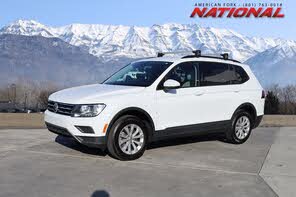
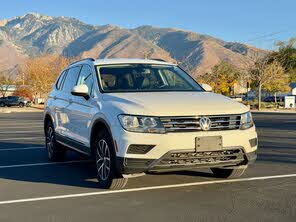
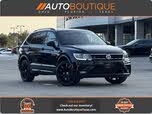
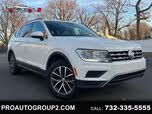
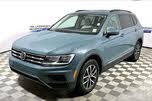
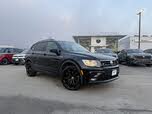
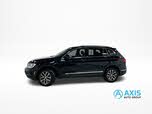
In stark contrast, the 2020 Volkswagen Tiguan’s exterior was the epitome of conservative German styling, reflecting a complete overhaul from the 2018 model year. Sporting clean lines and a new flat logo on a horizontal grille that extended across the headlights, the Tiguan's design avoided overly adventurous elements in favor of an understated yet appealing look.
Internally, the Tiguan felt less impressive. Despite Volkswagen's historical excellence in crafting amazing interiors, the Tiguan’s interior had a significant amount of dull surfaces and hard black plastic. Such design choices likely wouldn’t have met Volkswagen’s earlier high standards. The cockpit, described more accurately as "boring," suggested that VW aimed for competitive parity rather than their previous heights of interior quality. However, the highlight here was the digital dashboard and touch-screen infotainment system, which maintained a sleek, modern feel with minimalistic, easy-to-use interfaces.


The 2020 Mazda CX-30's performance was driven by a smooth and refined 2.5-liter four-cylinder engine, capable of producing 186 horsepower at 6,000 rpm and 186 lb-ft of torque at 4,000 rpm. Despite the vehicle's relatively heavy weight of 3,408 pounds, these figures were competitively robust, although the lack of a turbocharger option was noted, especially for altitude performance.
The CX-30's six-speed sport automatic transmission was praised for effectively maximizing available power. Equipped with paddle shifters in the Premium trim, the transmission drove the front wheels, unless the optional AWD system was selected. With 8 inches of ground clearance, the CX-30 provided competent off-roading capabilities for light adventures. However, its handling felt slower and less agile compared to the sporty Mazda3, attributed to a higher center of gravity and a torsion beam axle rear suspension.
On the fuel efficiency front, the AWD CX-30 managed to achieve an average of 23.9 mpg on a testing loop, slightly below the EPA’s estimated 27 mpg combined. The AWD model's smaller 12.7-gallon gas tank limited its driving range to just over 300 miles.
In comparison, the 2020 Volkswagen Tiguan's 2.0-liter turbocharged four-cylinder engine produced 184 horsepower and 221 lb-ft of torque. The eight-speed automatic transmission smoothly handled gear changes, but the Tiguan’s heavier curb weight—3,757 pounds for the FWD version and 3,847 pounds for the AWD—impacted its overall agility.
The Tiguan offered a comfortable driving experience, despite its size imparting a less nimble handling characteristic. The well-insulated cabin ensured minimal road and wind noise, making for a quiet highway cruiser. However, its steering, even in sport mode, lacked the precision found in more performance-oriented competitors like the Mazda CX-5. The Tiguan’s larger size did compromise its athleticism, but it remained competent for daily driving, benefiting from a softer suspension setup for a more comfortable ride across varied terrains.
The 2020 Mazda CX-30 delivered a higher ground clearance than a standard Mazda3, facilitating easier entry and exit, which many found to be a practical advantage. Inside, the design was both upscale and intimate, with padded armrests and a well-positioned driving setup. However, rear-seat space was limited, making it suitable mainly for children or shorter adults. The CX-30 also fell short in cargo capacity, offering 20.2 cubic feet behind the back seat and 45.2 cubic feet with it folded. This storage space was on par with a Mazda3 Hatchback but less than what several competitors offered, positioning the CX-30 closer to a subcompact SUV segment.
On the flip side, the 2020 Volkswagen Tiguan excelled in practicality, starting with its flexible seating configurations. The second row could slide up to seven inches to adjust legroom, making the third row suitable for shorter adults and children. The third-row seats, available on FWD and optional on AWD models, offered more spaciousness than larger vehicle counterparts.
Cargo capacity was a strong point for the Tiguan, providing 73.5 cubic feet in the two-row models and 65.7 cubic feet in three-row versions. This expansive cargo space outperformed competitors like the Ford Escape and Toyota RAV4, although slightly lagged behind the Honda CR-V’s 75.8 cubic feet. The front cabin was roomy with ample hip and shoulder room, exuding a sense of space thanks to its abundant glass areas and seating position, which added to the overall voluminous feel. The Tiguan managed to feel larger than its competitors, a feature appealing to those transitioning from bulkier vehicles.
In terms of technology, the Mazda CX-30 provided essential technological features but with a steeper learning curve. Its 8.8-inch non-touchscreen display promoted driver focus but came with a usability trade-off. The interface, controlled through the center console and steering wheel buttons, wasn't the most intuitive, encouraging minimal interaction while driving.
Standard tech features included Bluetooth, text messaging support, HD Radio, and Mazda Connected Services with a three-year free trial for functions like remote engine start. However, for Apple CarPlay and Android Auto, one needed to opt for the Select trim. Higher trims included amenities like satellite radio and a 12-speaker Bose audio system, enhancing the auditory experience. The Premium trim added a head-up display for further convenience.
The 2020 Volkswagen Tiguan featured its MIB II infotainment system, which, despite being on the verge of an upgrade, was highly regarded for its user-friendly interface. The base S trim came with a 6.5-inch touchscreen, while the SE and higher trims offered a superior 8-inch capacitive touchscreen. This system presented sharp graphics and a responsive nature, making it one of the top infotainment units available.
The Tiguan S had one USB-C port upfront, while higher trims had standard USB-A ports and a wireless charging pad. Notably, VW’s Digital Cockpit, a customizable instrument panel, was available in higher trims, enhancing digital interfacing with panoramic map views and flexible display options. Standard tech features included Apple CarPlay, Android Auto, Bluetooth, and a WiFi hotspot, ensuring comprehensive connectivity for all needs.
Safety was a strong suit for the Mazda CX-30. The vehicle came equipped with numerous advanced driving assistance systems (ADAS), such as adaptive cruise control, forward collision warning, automatic emergency braking, and lane-keeping assistance. Features like a reversing camera, driver monitoring system, and 911 automatic emergency notification were standard.
The Mazda CX-30 earned top marks for safety. The National Highway Traffic Safety Administration (NHTSA) awarded it a 5-star overall crash test rating, while the Insurance Institute for Highway Safety (IIHS) named it a Top Safety Pick, particularly praising the top-trim’s headlights.
The Volkswagen Tiguan improved its safety features for the 2020 model year by adding forward-collision warning with automatic emergency braking, blind-spot monitoring, and rear cross-traffic alert as standard across all models. However, adaptive cruise control and some other advanced functions were limited to higher trims.
VW’s Car-Net telematics package was included, offering features like remote locking, status checks, real-time parking information, and geofencing for teen driver monitoring, made possible through an owner’s smartphone. However, the NHTSA had not crash-tested the Tiguan, and the IIHS rated it a Top Safety Pick only for the SEL Premium trim with LED headlights, as standard halogen headlights received a poor rating.
CarGurus highlights

According to CarGurus experts, the overall rating for the 2020 Mazda CX-30 is 7.7 out of 10, while the 2020 Volkswagen Tiguan scores 7.7 out of 10. Both vehicles offer solid choices within their class, balancing style, performance, and practical features effectively. However, based on the criteria of interior quality, technology, and driving dynamics, the Mazda CX-30 edges out slightly ahead, particularly in terms of its upscale design and superior driving pleasure. For those who value a blend of luxury and engaging driving experience, the Mazda CX-30 becomes the recommended choice.
Choose the 2020 Mazda CX-30 if:
- You prioritize a refined, luxurious interior without breaking the bank.
- Safety is a top concern and you seek a vehicle with excellent crash-test ratings and advanced driver assistance features.
- You prefer a nimble and sprightly driving experience with sharp steering and braking.


Choose the 2020 Volkswagen Tiguan if:
- You need versatile seating with an optional third row and significant cargo capacity.
- An intuitive, responsive infotainment system with modern connectivity options is a key requirement.
- You value a spacious, comfortable interior that offers a feel of a larger vehicle, great for family use.



CarGurus highlights
According to CarGurus experts, the overall rating for the 2020 Mazda CX-30 is 7.7 out of 10, while the 2020 Volkswagen Tiguan scores 7.7 out of 10. Both vehicles offer solid choices within their class, balancing style, performance, and practical features effectively. However, based on the criteria of interior quality, technology, and driving dynamics, the Mazda CX-30 edges out slightly ahead, particularly in terms of its upscale design and superior driving pleasure. For those who value a blend of luxury and engaging driving experience, the Mazda CX-30 becomes the recommended choice.
Choose the 2020 Mazda CX-30 if:
Shop Now- You prioritize a refined, luxurious interior without breaking the bank.
- Safety is a top concern and you seek a vehicle with excellent crash-test ratings and advanced driver assistance features.
- You prefer a nimble and sprightly driving experience with sharp steering and braking.


Choose the 2020 Volkswagen Tiguan if:
Shop Now- You need versatile seating with an optional third row and significant cargo capacity.
- An intuitive, responsive infotainment system with modern connectivity options is a key requirement.
- You value a spacious, comfortable interior that offers a feel of a larger vehicle, great for family use.






By: CarGurus + AI
At CarGurus, our team of experienced automotive writers remain at the heart of our content operation, conducting hands-on car tests and writing insightful guides that are backed by years of industry experience. To complement this, we are harnessing AI to make our content offering more diverse and more helpful to shoppers than ever. To achieve this, our AI systems are based exclusively on CarGurus content, ratings and data, so that what we produce is both unique to CarGurus, and uniquely helpful to car shoppers.