2021 Ford Mustang Mach-E vs 2020 Hyundai Venue

Overview | |
MSRP$17,350 | MSRP$42,895 |
Listings107 | Listings482 |
Ratings & Reviews | |
User Reviews | User Reviews |
Expert reviews7.3 out of 10 | Expert reviews7.8 out of 10 |
Pros
Cons
| Pros
Cons
|
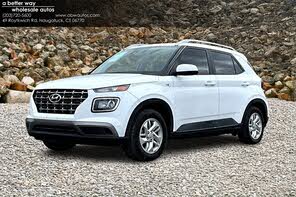
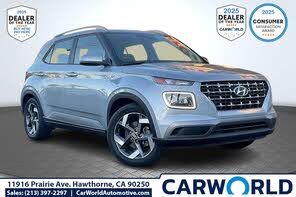
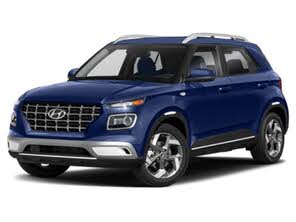
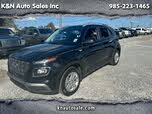
2020 Hyundai Venue Reviews SummaryThe 2020 Hyundai Venue you see here is classified as a subcompact crossover. But without the roof rails and extra plastic fender cladding, you might just as well call it a hatchback. If you were to describe a front-wheel-drive (FWD) car with a bit more space than a small sedan and with an emphasis on economy and efficiency, I would figure you are talking about a compact hatchback. But here we are, calling the Venue a crossover. Small crossovers and SUVs have been among the most popular and fastest-growing group of vehicles sold in the past decade. This is partly because of their utilitarian image, but it’s also because automakers are choosing to offer would-be hatchbacks as crossovers, thanks to the popularity of the segment. All we know is automakers have an easier time marketing a vehicle as a small sport utility vehicle, even if it doesn’t offer much sport or utility. But forget the labels. Let’s look at the 2020 Venue for what it is: an affordable, economical hatchback with a decent amount of cabin space (for a vehicle its size) and the latest infotainment and safety technology. | |
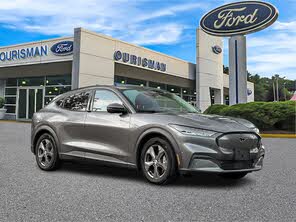
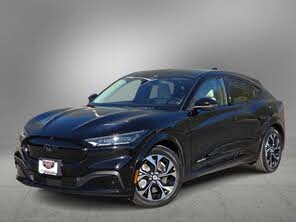
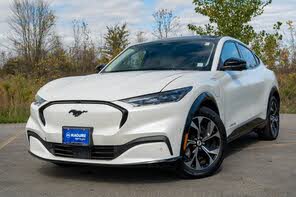
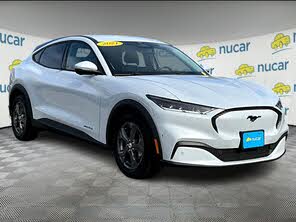
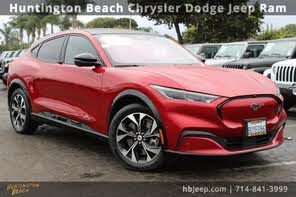
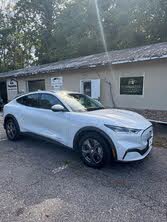
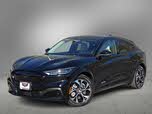
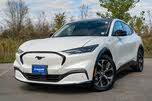
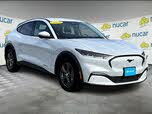
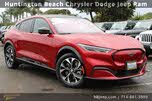
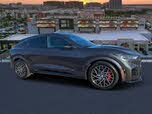
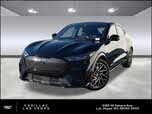
2021 Ford Mustang Mach-E Reviews SummaryEager to prove that it’s serious about electric cars, Ford applied the iconic Mustang name to its new electric SUV. The 2021 Ford Mustang Mach-E is not only the first electric vehicle to wear the Mustang name, it’s also the first production Mustang model with more than two doors. Ford has made electric cars before (the Focus Electric ended production just a few years ago), but the Mach-E is much more ambitious. It’s the first Ford electric car based on a dedicated platform, and aimed at a mass audience. Ford believes style and sportiness will help it sell more EVs, but the emphasis on performance also puts the Mach-E in direct competition with the similarly-sized Tesla Model Y. As a small electric crossover, the Mach-E could also get cross-shopped against the upcoming Volkswagen ID.4 and Nissan Ariya crossovers. Mach-E buyers must choose between rear-wheel drive (RWD) and all-wheel drive (AWD), Standard Range and Extended Range battery packs, and four trim levels— Select, California Route 1, Premium, and GT. Our test car was a sold out First Edition model, which is identical to the Premium trim level aside from cosmetic differences like red brake calipers. It featured the Extended Range battery pack and all-wheel drive. | |
Popular Features & Specs | |
Engine1.6L 121 hp I4 | Engine266 hp Electric |
Drive TrainFWD | Drive TrainRWD |
Seating Capacity5 | Seating Capacity5 |
Horsepower121 hp @ 6300 rpm | Horsepower |
EV Battery Capacity | EV Battery Capacity68 kWh |
MPG City27 | MPG City105 |
MPG Highway35 | MPG Highway93 |
Battery Charge Time (240V) | Battery Charge Time (240V)14.1 hours |
Engine | |
Engine Name1.6L 121 hp I4 | Engine Name266 hp Electric |
Torque113 lb-ft @ 4500 rpm | Torque |
Horsepower121 hp @ 6300 rpm | Horsepower |
Battery Charge Time (240V) | Battery Charge Time (240V)14.1 hours |
DrivetrainFWD | DrivetrainRWD |
Fuel Economy | |
EV Battery Capacity | EV Battery Capacity68 kWh |
MPG City27 | MPG City105 |
MPG Highway35 | MPG Highway93 |
Interior | |
Seating Capacity5 | Seating Capacity5 |
Key Features | |
Navigation System | Navigation SystemStandard |
Safety | |
Front Crash Overall4 | Front Crash Overall |
Side Crash Overall5 | Side Crash Overall5 |
Dimensions & Capacity | |
Cargo Space18.7 cu ft | Cargo Space34.4 cu ft |
Curb Weight2557 lbs | Curb Weight4318 lbs |
Height61.6 in | Height64.0 in |
Length159.0 in | Length185.6 in |
Width69.7 in | Width74.1 in |
Wheelbase99.2 in | Wheelbase117.5 in |
Maximum Payload1081 lbs | Maximum Payload |
Number of doors4 | Number of doors4 |
Overview | ||
MSRP | $17,350 | $42,895 |
Listings | ||
Ratings & Reviews | ||
User reviews | ||
Expert reviews | 7.3 out of 10Read full review | 7.8 out of 10Read full review |
Pros & cons | Pros
Cons
| Pros
Cons
|
Summary | The 2020 Hyundai Venue you see here is classified as a subcompact crossover. But without the roof rails and extra plastic fender cladding, you might just as well call it a hatchback. If you were to describe a front-wheel-drive (FWD) car with a bit more space than a small sedan and with an emphasis on economy and efficiency, I would figure you are talking about a compact hatchback. But here we are, calling the Venue a crossover. Small crossovers and SUVs have been among the most popular and fastest-growing group of vehicles sold in the past decade. This is partly because of their utilitarian image, but it’s also because automakers are choosing to offer would-be hatchbacks as crossovers, thanks to the popularity of the segment. All we know is automakers have an easier time marketing a vehicle as a small sport utility vehicle, even if it doesn’t offer much sport or utility. But forget the labels. Let’s look at the 2020 Venue for what it is: an affordable, economical hatchback with a decent amount of cabin space (for a vehicle its size) and the latest infotainment and safety technology. | Eager to prove that it’s serious about electric cars, Ford applied the iconic Mustang name to its new electric SUV. The 2021 Ford Mustang Mach-E is not only the first electric vehicle to wear the Mustang name, it’s also the first production Mustang model with more than two doors. Ford has made electric cars before (the Focus Electric ended production just a few years ago), but the Mach-E is much more ambitious. It’s the first Ford electric car based on a dedicated platform, and aimed at a mass audience. Ford believes style and sportiness will help it sell more EVs, but the emphasis on performance also puts the Mach-E in direct competition with the similarly-sized Tesla Model Y. As a small electric crossover, the Mach-E could also get cross-shopped against the upcoming Volkswagen ID.4 and Nissan Ariya crossovers. Mach-E buyers must choose between rear-wheel drive (RWD) and all-wheel drive (AWD), Standard Range and Extended Range battery packs, and four trim levels— Select, California Route 1, Premium, and GT. Our test car was a sold out First Edition model, which is identical to the Premium trim level aside from cosmetic differences like red brake calipers. It featured the Extended Range battery pack and all-wheel drive. |
Video | ||
Popular Features & Specs | ||
Engine | 1.6L 121 hp I4 | 266 hp Electric |
Drive Train | FWD | RWD |
Seating Capacity | 5 | 5 |
Horsepower | 121 hp @ 6300 rpm | |
EV Battery Capacity | 68 kWh | |
MPG City | 27 | 105 |
MPG Highway | 35 | 93 |
Battery Charge Time (240V) | 14.1 hours | |
Engine | ||
Engine Name | 1.6L 121 hp I4 | 266 hp Electric |
Torque | 113 lb-ft @ 4500 rpm | |
Horsepower | 121 hp @ 6300 rpm | |
Battery Charge Time (240V) | 14.1 hours | |
Drivetrain | FWD | RWD |
Fuel Economy | ||
EV Battery Capacity | 68 kWh | |
MPG City | 27 | 105 |
MPG Highway | 35 | 93 |
Interior | ||
Seating Capacity | 5 | 5 |
Key Features | ||
Navigation System | Standard | |
Safety | ||
Front Crash Overall | 4 | |
Side Crash Overall | 5 | 5 |
Dimensions & Capacity | ||
Cargo Space | 18.7 cu ft | 34.4 cu ft |
Curb Weight | 2557 lbs | 4318 lbs |
Height | 61.6 in | 64.0 in |
Length | 159.0 in | 185.6 in |
Width | 69.7 in | 74.1 in |
Wheelbase | 99.2 in | 117.5 in |
Maximum Payload | 1081 lbs | |
Number of doors | 4 | 4 |
The 2020 Hyundai Venue filled a gap in Hyundai's lineup by offering a more affordable subcompact SUV option compared to the Kona. While the Kona was more premium and powerful, the Venue focused on being a practical people-mover with a distinctive upright design. It featured unique touches like a contrasting white roof on the Denim trim and a large chrome grille reminiscent of Hyundai's larger SUVs. Inside, the Venue boasted a modern and clean cabin with ample space for both front and rear passengers, providing excellent visibility due to its upright layout and large windows. The Venue was available in SE, SEL, and Denim trims, with the SEL being the recommended choice when paired with the Premium package for added features.
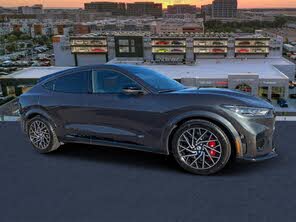
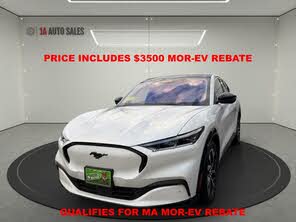
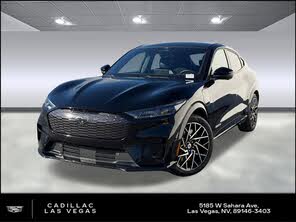
The 2021 Ford Mustang Mach-E aimed to capture the essence of the traditional Mustang with its sporty exterior styling, despite being an electric SUV. It featured Mustang-like elements such as thin headlights, a long hood, and a vibrant color palette. Inside, the Mach-E was dominated by a massive infotainment touchscreen, giving it a minimalist feel similar to Tesla vehicles. The interior materials were of decent quality, though some buyers might have missed the option for leather upholstery. The First Edition models offered unique trim elements, but the main appeal was being among the first produced. Overall, the Mach-E's design and features aimed to blend Mustang heritage with modern electric vehicle technology.


The 2020 Hyundai Venue was powered by a single 1.6-liter 4-cylinder engine producing 121 horsepower and 113 pound-feet of torque. It was available with a manual transmission on the base trim, but most trims came with a continuously variable automatic transmission (IVT). The Venue was front-wheel drive only, lacking an all-wheel-drive option. Despite its SUV aspirations, the Venue's performance was more akin to a compact hatchback, with underwhelming acceleration and a noisy engine. It offered drive modes like Normal, Snow, and Sport, but none significantly improved its performance. Fuel economy was decent, with the CVT achieving 30 mpg city, 34 highway, and 32 combined.
The 2021 Ford Mustang Mach-E offered a range of powertrain configurations, with the base RWD Select model producing 266 horsepower and 317 pound-feet of torque, achieving 0 to 60 mph in 6.1 seconds. The most powerful option was the AWD GT Performance Edition, boasting 480 hp and 634 lb-ft, with a 0 to 60 mph time of 3.5 seconds. Our test car had a lower-level AWD powertrain with 346 hp and 428 lb-ft, reaching 0 to 60 mph in 4.8 seconds. The Mach-E handled corners well, with responsive steering and a planted feel due to its low-mounted battery pack. It featured three drive modes—Engage, Whisper, and Unbridled—and offered one-pedal driving for regenerative braking.
The 2020 Hyundai Venue, while not particularly fast or sporty, offered a practical interior with ample head- and legroom in the front seats. Even with the driver's seat adjusted for a tall driver, the rear seats provided decent legroom. However, the Venue's cargo space was limited, with only 31.9 cubic feet available with the rear seats folded, compared to the Kona's 45.8 cubic feet. The Venue's control layout was user-friendly, with traditional buttons and dials for radio and climate controls, though the automatic climate control on higher trims had a slightly confusing display.
The 2021 Ford Mustang Mach-E, marketed as an SUV, had a packaging more akin to a station wagon or hatchback. Its low driving position and roofline didn't create a spacious feel, even with a panoramic glass roof. Compared to the Tesla Model Y, the Mach-E offered less interior space, with 59.7 cubic feet of cargo space with the second row folded and 29.7 cubic feet with the seats in place. It did have a 4.7-cubic-foot front trunk. The Mach-E's interior featured a decent-sized storage bin and a large area for smartphones, complete with a wireless charging pad and USB ports for both rows.
The 2020 Hyundai Venue came equipped with an 8-inch touchscreen infotainment system across all trims, featuring Bluetooth, USB ports, Apple CarPlay, and Android Auto. Hyundai's logical touchscreen layout minimized distracted driving, with large icons and fonts and redundant hard buttons for major functions. The screen placement was well thought out, allowing users to brace their hands while using the touchscreen.
The 2021 Ford Mustang Mach-E featured Ford's new Sync 4 infotainment system, with wireless Apple CarPlay/Android Auto and OTA software updates. The main touchscreen measured 15.5 inches, while the instrument cluster was 10.2 inches. The Mach-E's touchscreen displayed almost everything at once, resulting in a text-heavy design that could be overwhelming. The bottom of the screen replaced analog controls, with a large volume knob and touchscreen icons for climate controls.
The 2020 Hyundai Venue included standard safety features like a reversing camera, traction control, a tire-pressure monitoring system, and a full array of airbags. It also offered driver-assistance technology such as forward-collision avoidance with pedestrian detection, lane-keeping assist, and a driver-attention warning. The SEL trim with the Convenience Package added blind-spot monitoring and rear cross-traffic alert, standard on the Denim trim.
The 2021 Ford Mustang Mach-E's crash-test ratings were not available at launch. It came with standard driver-assist features like automatic high beams, blind-spot monitoring, lane-keep assist, and automatic emergency braking. Higher trims included a 360-degree camera system. The Mach-E was set to receive Active Drive Assist, allowing for hands-free driving on designated highways, with a driver-facing camera for monitoring distraction. This feature was standard on higher trims and available as an option on the Select trim.
CarGurus highlights

According to CarGurus experts, the overall rating for the 2020 Hyundai Venue is 7.3 out of 10, while the 2021 Ford Mustang Mach-E scores 7.8 out of 10. Based on these ratings, the 2021 Ford Mustang Mach-E is the recommended choice for those seeking a more advanced and performance-oriented vehicle.
Choose the 2021 Ford Mustang Mach-E if:
- You desire a sporty electric vehicle with Mustang-inspired styling.
- You value advanced technology features like a large touchscreen and Sync 4 system.
- You seek a vehicle with multiple powertrain options and impressive performance.

Choose the 2020 Hyundai Venue if:
- You prioritize affordability and practicality in a subcompact SUV.
- You appreciate a user-friendly control layout with traditional buttons and dials.
- You want a vehicle with decent fuel economy for city and highway driving.




CarGurus highlights
According to CarGurus experts, the overall rating for the 2020 Hyundai Venue is 7.3 out of 10, while the 2021 Ford Mustang Mach-E scores 7.8 out of 10. Based on these ratings, the 2021 Ford Mustang Mach-E is the recommended choice for those seeking a more advanced and performance-oriented vehicle.
Choose the 2021 Ford Mustang Mach-E if:
Shop Now- You desire a sporty electric vehicle with Mustang-inspired styling.
- You value advanced technology features like a large touchscreen and Sync 4 system.
- You seek a vehicle with multiple powertrain options and impressive performance.




Choose the 2020 Hyundai Venue if:
Shop Now- You prioritize affordability and practicality in a subcompact SUV.
- You appreciate a user-friendly control layout with traditional buttons and dials.
- You want a vehicle with decent fuel economy for city and highway driving.










By: CarGurus + AI
At CarGurus, our team of experienced automotive writers remain at the heart of our content operation, conducting hands-on car tests and writing insightful guides that are backed by years of industry experience. To complement this, we are harnessing AI to make our content offering more diverse and more helpful to shoppers than ever. To achieve this, our AI systems are based exclusively on CarGurus content, ratings and data, so that what we produce is both unique to CarGurus, and uniquely helpful to car shoppers.