2021 Lincoln Aviator vs 2020 Hyundai Santa Fe
Overview | |
MSRP$26,275 | MSRP$50,660 |
Listings1158 | Listings302 |
Ratings & Reviews | |
User Reviews | User Reviews |
Expert reviews8.8 out of 10 | Expert reviews7.8 out of 10 |
Pros
Cons
| Pros
Cons
|
2020 Hyundai Santa Fe Reviews SummaryLast year, Hyundai changed its approach to the Santa Fe. The smaller five-passenger Santa Fe Sport got drop-kicked from the automaker’s lineup, replaced by this completely redesigned version of the SUV. The larger seven-passenger Santa Fe got a new name for one year (Santa Fe XL), and then the all-new 2020 Hyundai Palisade replaced that vehicle. With the Palisade’s arrival, there is just one Santa Fe for 2020, a five-passenger crossover that resides in a sweet spot between traditional compact and midsize models. It gets several updates, too, including a standard rear-seat reminder system, an available camera-based Blind-Spot View Monitor system, and new design accents to better distinguish the top trim level. | |
2021 Lincoln Aviator Reviews SummaryOnly a few years ago, Lincoln was in a confusing space. Confusing because many of its cars overlapped with the nicest trims of vehicles from parent company Ford. It was also confusing because of the alphanumeric vehicle names. But Lincoln has ended both of those trends. First, Lincoln has returned to real names for its vehicles, such as the Corsair and Nautilus (Cadillac, are you listening?!). But what’s in a name? This rebranding would be moot without a compelling product. In this respect, the American luxury brand has delivered, highlighted by the 2021 Lincoln Aviator. This three-row midsize SUV boasts modern technology, potent drivetrain options, and creature comforts that you might sooner find in a high-end German luxury sedan. But this newfound quality comes with a steeper price tag. So is it worth consideration against the likes of the Audi Q7 and RX 350L? Read on to find out. | |
No video found | |
Popular Features & Specs | |
Engine2.4L 185 hp I4 | Engine3.0L 400 hp V6 |
Drive TrainFWD | Drive TrainRWD |
Seating Capacity5 | Seating Capacity7 |
Horsepower185 hp @ 6000 rpm | Horsepower |
MPG City22 | MPG City18 |
MPG Highway29 | MPG Highway26 |
Engine | |
Engine Name2.4L 185 hp I4 | Engine Name3.0L 400 hp V6 |
Torque178 lb-ft @ 4000 rpm | Torque |
Horsepower185 hp @ 6000 rpm | Horsepower |
DrivetrainFWD | DrivetrainRWD |
Fuel Economy | |
MPG City22 | MPG City18 |
MPG Highway29 | MPG Highway26 |
Interior | |
Seating Capacity5 | Seating Capacity7 |
Safety | |
Front Crash Overall4 | Front Crash Overall5 |
Side Crash Overall5 | Side Crash Overall5 |
Dimensions & Capacity | |
Cargo Space35.9 cu ft | Cargo Space18.3 cu ft |
Curb Weight3591 lbs | Curb Weight4745 lbs |
Height66.1 in | Height69.6 in |
Length187.8 in | Length199.3 in |
Width74.4 in | Width89.9 in |
Wheelbase108.9 in | Wheelbase119.1 in |
Maximum Payload1138 lbs | Maximum Payload1615 lbs |
Number of doors4 | Number of doors4 |
Maximum Towing Capacity2000 lbs | Maximum Towing Capacity |
Overview | ||
MSRP | $26,275 | $50,660 |
Listings | ||
Ratings & Reviews | ||
User reviews | ||
Expert reviews | 8.8 out of 10Read full review | 7.8 out of 10Read full review |
Pros & cons | Pros
Cons
| Pros
Cons
|
Summary | Last year, Hyundai changed its approach to the Santa Fe. The smaller five-passenger Santa Fe Sport got drop-kicked from the automaker’s lineup, replaced by this completely redesigned version of the SUV. The larger seven-passenger Santa Fe got a new name for one year (Santa Fe XL), and then the all-new 2020 Hyundai Palisade replaced that vehicle. With the Palisade’s arrival, there is just one Santa Fe for 2020, a five-passenger crossover that resides in a sweet spot between traditional compact and midsize models. It gets several updates, too, including a standard rear-seat reminder system, an available camera-based Blind-Spot View Monitor system, and new design accents to better distinguish the top trim level. | Only a few years ago, Lincoln was in a confusing space. Confusing because many of its cars overlapped with the nicest trims of vehicles from parent company Ford. It was also confusing because of the alphanumeric vehicle names. But Lincoln has ended both of those trends. First, Lincoln has returned to real names for its vehicles, such as the Corsair and Nautilus (Cadillac, are you listening?!). But what’s in a name? This rebranding would be moot without a compelling product. In this respect, the American luxury brand has delivered, highlighted by the 2021 Lincoln Aviator. This three-row midsize SUV boasts modern technology, potent drivetrain options, and creature comforts that you might sooner find in a high-end German luxury sedan. But this newfound quality comes with a steeper price tag. So is it worth consideration against the likes of the Audi Q7 and RX 350L? Read on to find out. |
Video | No video found | |
Popular Features & Specs | ||
Engine | 2.4L 185 hp I4 | 3.0L 400 hp V6 |
Drive Train | FWD | RWD |
Seating Capacity | 5 | 7 |
Horsepower | 185 hp @ 6000 rpm | |
MPG City | 22 | 18 |
MPG Highway | 29 | 26 |
Engine | ||
Engine Name | 2.4L 185 hp I4 | 3.0L 400 hp V6 |
Torque | 178 lb-ft @ 4000 rpm | |
Horsepower | 185 hp @ 6000 rpm | |
Drivetrain | FWD | RWD |
Fuel Economy | ||
MPG City | 22 | 18 |
MPG Highway | 29 | 26 |
Interior | ||
Seating Capacity | 5 | 7 |
Safety | ||
Front Crash Overall | 4 | 5 |
Side Crash Overall | 5 | 5 |
Dimensions & Capacity | ||
Cargo Space | 35.9 cu ft | 18.3 cu ft |
Curb Weight | 3591 lbs | 4745 lbs |
Height | 66.1 in | 69.6 in |
Length | 187.8 in | 199.3 in |
Width | 74.4 in | 89.9 in |
Wheelbase | 108.9 in | 119.1 in |
Maximum Payload | 1138 lbs | 1615 lbs |
Number of doors | 4 | 4 |
Maximum Towing Capacity | 2000 lbs | |
When shopping for a new 2020 Hyundai Santa Fe, buyers chose between SE, SEL, and Limited trim levels. Versions with a “2.0T” in the trim name received a power and performance upgrade courtesy of a turbocharged engine. All-wheel drive (AWD) was an option, allowing the automatic transmission to transfer power from the front wheels to the rear wheels when necessary. Aside from deciding about AWD, a turbocharged engine, and—if you were getting the SEL—an optional Convenience Package, buyers picked a paint color, interior color, and upgrades from a shortlist of dealer-installed accessories. The test vehicle had Limited 2.0T trim and a set of dealer-installed floor mats, bringing the price to $39,170.
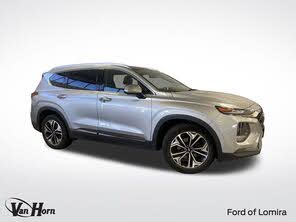
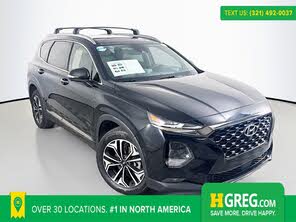
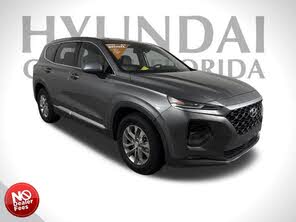
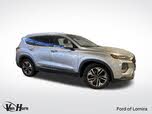
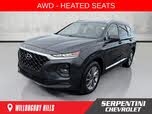
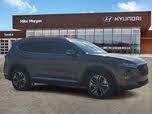
The Santa Fe's design was bold and experimental, which might not have appealed to everyone. Controversial points included the grille shape, stacked front lighting elements, asymmetrical fender stampings, wheel well shapes, and the oversized rear “skid plate” trim. Inside, the dual-cowl dashboard design swept into door panels containing diamond-textured speaker grilles. Versions with gray or beige interior colors presented a high-contrast visual feast. However, materials quality didn’t quite match Hyundai’s high-style design, with glossy plastic covering the lower half of the interior and fairly stiff leather seat upholstery. Build quality was exceptionally good, and the controls operated with refinement.
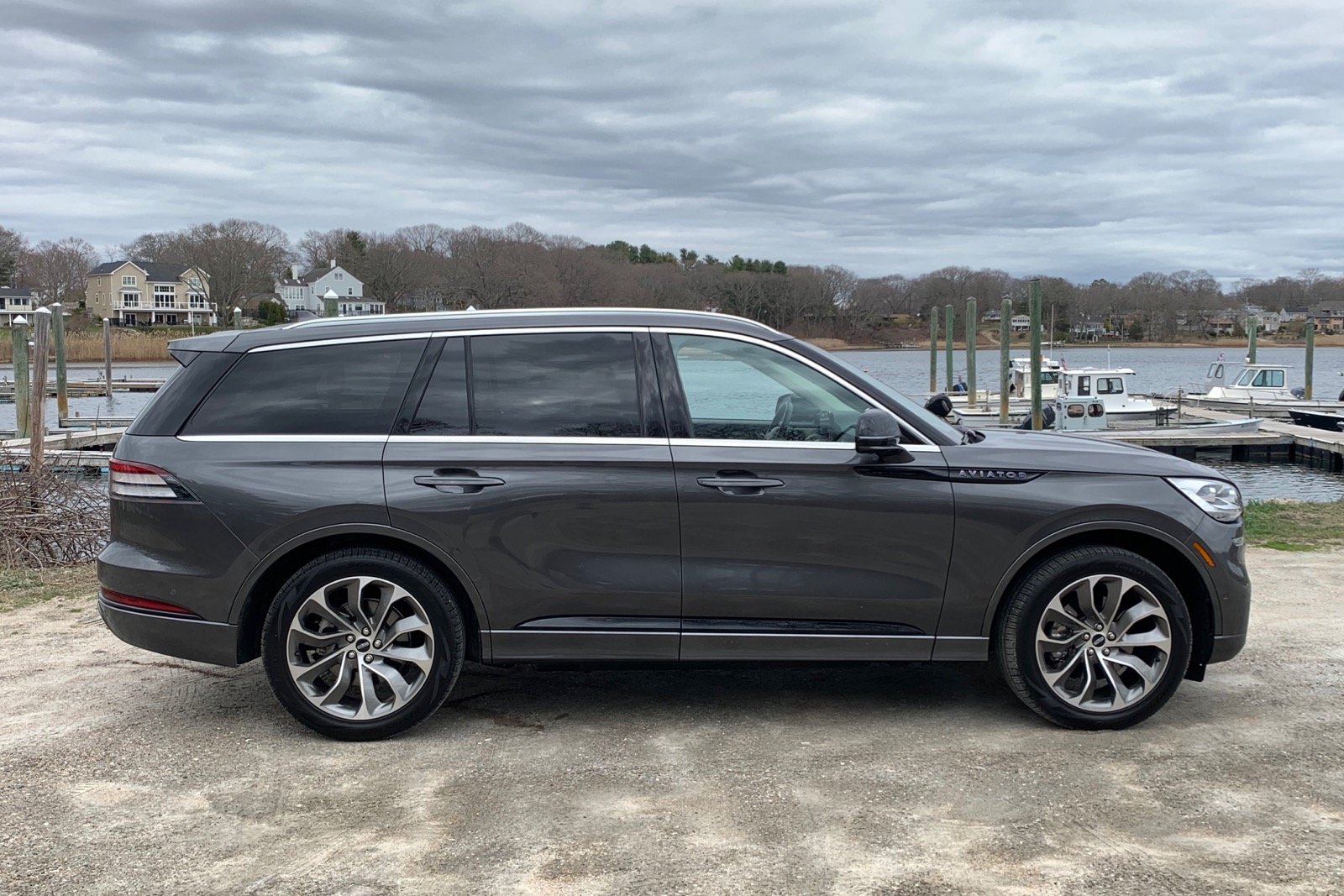
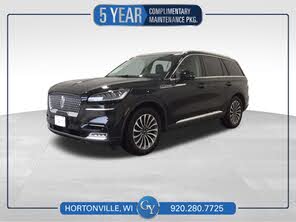
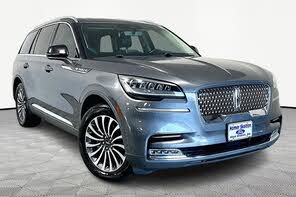
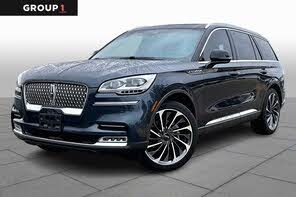
Lincoln made a smart move by avoiding the temptation to emulate rivals' styles. The Aviator, which arrived as a 2020 model and carried over to 2021 mostly unchanged, adopted the design language of the big-dog Navigator in all the right places. It was an incredibly sharp-looking car, defined by crisp lines and heavy use of chrome. Inside, Lincoln differentiated itself from its Ford counterpart with a cabin defined by comfort and warmth, featuring plenty of soft-touch materials and a center console that rose elegantly to the standard 10.1-inch touchscreen dominating the dash.
The Aviator's cabin was further distinguished by a piano button shifter in the middle of the dash, laid out in a sensible manner. The SUV featured various soothing chimes instead of typical alerts, contributing to an air of class and luxury. Trims included Standard, Reserve, Grand Touring, Black Label, and Black Label Grand Touring, each adding more luxurious features. The Grand Touring trim, for instance, upgraded to a plug-in hybrid powertrain and included adaptive headlights, a heated steering wheel, and Lincoln’s impressive Multi-Contour Seats with a massaging function. The rear seat area included multiple USB ports, wall-style power outlets, and a digital panel to control rear settings.


The 2020 Hyundai Santa Fe had a minimum curb weight of 3,591 pounds and a maximum of 3,946 pounds. The standard 185-horsepower 2.4-liter four-cylinder engine was not the preferred choice. Instead, the 2.0T trim installed a turbocharged 2.0-liter four-cylinder engine, making 235 hp and 260 lb-ft of torque between 1,450 rpm and 3,500 rpm. This engine provided significant increases over the standard power plant and performed better at altitude. An eight-speed automatic transmission funneled power to the front wheels unless the optional AWD system was chosen. Properly equipped, the Santa Fe had a towing capacity of 3,500 pounds. The EPA estimated a Santa Fe 2.0T front-driver would get 23 mpg in combined driving, and the test model returned 22.1 mpg.
The Santa Fe offered a smooth ride, decent handling, light-effort steering, and brakes that withstood some abuse. The Limited trim had laminated windshield and front window glass, making the highway ride quiet. While it handled moderate off-roading with ease, the Santa Fe’s driving dynamics did not inspire taking the road less traveled. It was more a tool than a toy, competent but lacking in driver engagement.
The 2021 Lincoln Aviator came equipped with a 3.0-liter twin-turbocharged V6 in Standard, Reserve, and Black Label trims, making 400 horsepower and 415 pound-feet of torque. Power was routed through a 10-speed automatic transmission, with rear-wheel drive (RWD) or available all-wheel drive (AWD). The Grand Touring and Grand Touring Black Label trims featured the same twin-turbo V6 in a plug-in hybrid configuration, increasing output to 494 hp and 630 lb-ft of torque. The plug-in could travel up to 21 miles on pure electric power when fully charged.
The hybrid powertrain provided brisk acceleration, though the Aviator's heft resulted in noticeable body roll in corners. The long wheelbase made it awkward to maneuver in tight spaces. The Aviator had a drive mode selector with modes like “Excite” and “Conserve,” appropriate for its non-performance SUV nature. It was perfectly suited for highways and cul-de-sacs but struggled in city driving.
The 2020 Hyundai Santa Fe offered thoughtful attention to detail, with creative storage spaces and stain-resistant fabric in versions with cloth seats. The test vehicle had eight-way power-adjustable, heated, and ventilated front seats, with the driver’s seat including four-way power-adjustable lumbar support and an extending thigh support. The dual-zone automatic climate control system included a Clean Air ionizer, and the air conditioning was effective even with the massive panoramic glass sunroof.
The back seat was comfortable for adults, with air conditioning vents, rear side-window sunshades, and heated bottom cushions in the Limited trim. However, the Santa Fe stumbled with cargo space, offering 35.9 cubic feet behind the rear seat and a maximum of 71.3 cubic feet. Large storage compartments under the cargo floor were a positive note. The hands-free “smart” liftgate sensed the key fob in proximity and opened automatically.
The 2021 Lincoln Aviator provided 18.3 cubic feet of cargo space behind the third-row seats. The test model featured power-lift-and-lower third-row seats, increasing cargo capacity to 41.8 cubic feet. With all rear seats folded, the Aviator provided a total of 77.7 cubic feet of cargo space. A power liftgate was standard, and a hands-free power liftgate was available.
The Aviator's second row was the place to be, especially in the Grand Touring test model, which featured second-row captain's chairs, a center console, and a digital control panel for seat, climate, and audio controls. The second-row console had toggles for the panoramic sunroof visor. One potential issue was the use of power-button door releases, which could be problematic if the battery ever died.
The 2020 Hyundai Santa Fe’s touchscreen infotainment system was a shining example of this technology done right. It had stereo control knobs, main menu shortcut buttons, and a programmable button. Every Santa Fe had Bluetooth connectivity and Apple CarPlay and Android Auto smartphone integration. The SEL trim added SiriusXM satellite radio and Blue Link connected services with three free years of service. The Limited trim added a larger 8-inch display, a navigation system, a surround-view camera, wireless smartphone charging, and a 12-speaker Infinity surround sound system. A head-up display provided a wealth of data on the windshield within the driver’s line of sight.
The 2021 Lincoln Aviator came standard with a 10.1-inch touchscreen running the intuitive Sync 3 infotainment system. The screen extended from the dash in a landscape format, making for a natural layout. The Sync 3 system was easy to use, with a sensible menu layout and redundant controls in the center stack. The Aviator came standard with Apple CarPlay and Android Auto, presented well on the screen with large icons. The Aviator also had an easy-to-toggle fully digital instrument panel, and the test model came with an optional head-up display featuring large, crisp graphics.
The 2020 Hyundai Santa Fe earned a five-star overall crash-test rating from the National Highway Traffic Safety Administration (NHTSA) and a Top Safety Pick rating from the Insurance Institute for Highway Safety (IIHS). Every Santa Fe was equipped with adaptive cruise control, forward collision warning, automatic emergency braking, lane-departure warning, lane-keeping assistance, a driver monitoring system, and a rear-seat reminder system. The SEL trim added blind-spot warning, rear cross-traffic warning, and a safe exit assist system. The SEL Convenience Package included an ultrasonic occupant alert system tied to the Blue Link smartphone app. The Limited trim included a Blind-Spot View Monitor.
The 2021 Lincoln Aviator came well-equipped with standard driver assistance features as part of the Lincoln Co-Pilot 360 package, including automatic emergency braking, lane departure warning, automatic high beams, blind-spot monitoring, and front-and-rear parking sensors. The Grand Touring test model came with the Co-Pilot 360 Plus package, adding reverse automatic braking, self-parking functionality, and adaptive cruise control. The Aviator earned top marks from the NHTSA and IIHS, including a Top Safety Pick accolade from the IIHS.
CarGurus highlights
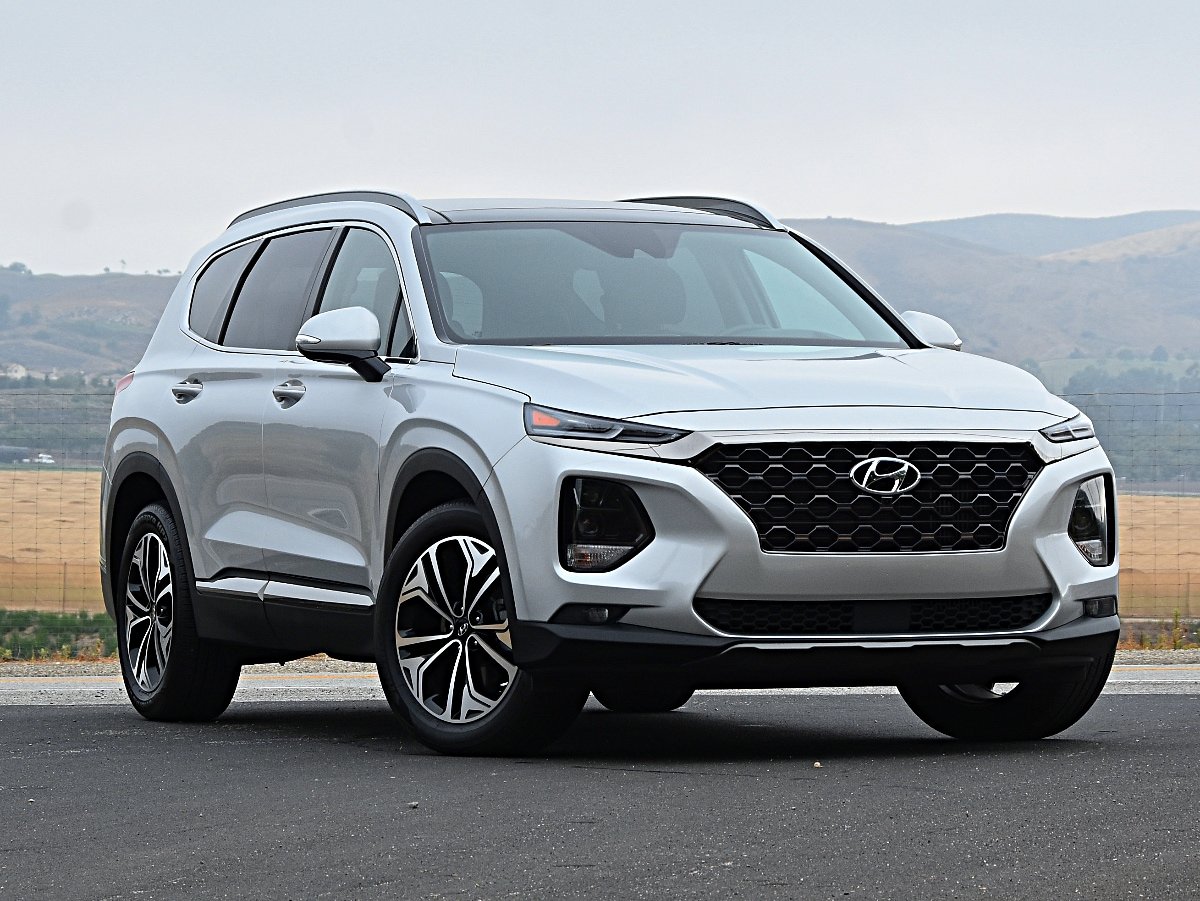
According to CarGurus experts, the overall rating for the 2020 Hyundai Santa Fe is 8.8 out of 10, while the 2021 Lincoln Aviator scores 7.8 out of 10. Based on these ratings, the 2020 Hyundai Santa Fe is the recommended choice, offering a better overall package in terms of safety, technology, and value.
Choose the 2021 Lincoln Aviator if:
- You seek a luxurious and comfortable interior with advanced features.
- You need a powerful engine and the option for a plug-in hybrid powertrain.
- You value a spacious second row and ample cargo capacity.





Choose the 2020 Hyundai Santa Fe if:
- You prioritize a high safety rating and comprehensive safety features.
- You appreciate bold, experimental design and a comfortable interior.
- You want a user-friendly infotainment system with extensive connectivity options.







CarGurus highlights
According to CarGurus experts, the overall rating for the 2020 Hyundai Santa Fe is 8.8 out of 10, while the 2021 Lincoln Aviator scores 7.8 out of 10. Based on these ratings, the 2020 Hyundai Santa Fe is the recommended choice, offering a better overall package in terms of safety, technology, and value.
Choose the 2021 Lincoln Aviator if:
Shop Now- You seek a luxurious and comfortable interior with advanced features.
- You need a powerful engine and the option for a plug-in hybrid powertrain.
- You value a spacious second row and ample cargo capacity.





Choose the 2020 Hyundai Santa Fe if:
Shop Now- You prioritize a high safety rating and comprehensive safety features.
- You appreciate bold, experimental design and a comfortable interior.
- You want a user-friendly infotainment system with extensive connectivity options.








By: CarGurus + AI
At CarGurus, our team of experienced automotive writers remain at the heart of our content operation, conducting hands-on car tests and writing insightful guides that are backed by years of industry experience. To complement this, we are harnessing AI to make our content offering more diverse and more helpful to shoppers than ever. To achieve this, our AI systems are based exclusively on CarGurus content, ratings and data, so that what we produce is both unique to CarGurus, and uniquely helpful to car shoppers.