2020 Ford Explorer vs 2021 INFINITI QX50
Overview | |
MSRP$32,765 | MSRP$38,050 |
Listings3081 | Listings309 |
Ratings & Reviews | |
User Reviews | User Reviews |
Expert reviews7.2 out of 10 | Expert reviews7.2 out of 10 |
Pros
Cons
| Pros
Cons
|
2020 Ford Explorer Reviews SummaryFor nearly 30 years, the Ford Explorer has settled into the American lexicon like Cheerios. We've gobbled up millions of them, from the rock-crawling Eddie Bauers of the 1990s to the brand-new ST that can take down sports cars. The 2020 Explorer brings an all-new chassis, cranks up the technology, and introduces hybrid and high-performance powertrains in a space the size of a small living room. The Explorer's also getting very expensive while other automakers catch on to Ford's winning formula—for a lot less money. | |
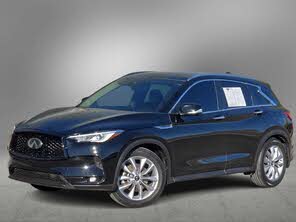
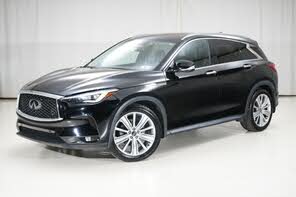
2021 INFINITI QX50 Reviews SummaryThe Infiniti QX50 was redesigned for the 2019 model year, introducing a fresh new look and a cutting-edge variable-compression turbocharged (VC-Turbo) engine. Safety improvements followed in 2020, and the 2021 model year sees even more changes. Among the highlights are more safety equipment throughout the trim level lineup, a standard WiFi hotspot, and increased availability of the automaker's ProPilot Assist suite of driver-assistance features. | |
No video found | |
Popular Features & Specs | |
Engine2.3L 300 hp I4 | Engine2.0L 268 hp I4 |
Drive TrainRWD | Drive TrainFWD |
Seating Capacity7 | Seating Capacity5 |
Horsepower | Horsepower268 hp @ 5600 rpm |
MPG City21 | MPG City23 |
MPG Highway28 | MPG Highway29 |
Engine | |
Engine Name2.3L 300 hp I4 | Engine Name2.0L 268 hp I4 |
Torque | Torque280 lb-ft @ 1600 rpm |
Horsepower | Horsepower268 hp @ 5600 rpm |
DrivetrainRWD | DrivetrainFWD |
Fuel Economy | |
MPG City21 | MPG City23 |
MPG Highway28 | MPG Highway29 |
Interior | |
Seating Capacity7 | Seating Capacity5 |
Safety | |
Front Crash Overall5 | Front Crash Overall4 |
Side Crash Overall5 | Side Crash Overall5 |
Dimensions & Capacity | |
Cargo Space18.2 cu ft | Cargo Space31.4 cu ft |
Curb Weight4345 lbs | Curb Weight3807 lbs |
Height69.9 in | Height66.0 in |
Length198.8 in | Length184.7 in |
Width89.3 in | Width85.1 in |
Wheelbase119.1 in | Wheelbase110.2 in |
Maximum Payload1425 lbs | Maximum Payload1109 lbs |
Number of doors4 | Number of doors4 |
Maximum Towing Capacity5300 lbs | Maximum Towing Capacity |
Overview | ||
MSRP | $32,765 | $38,050 |
Listings | ||
Ratings & Reviews | ||
User reviews | ||
Expert reviews | 7.2 out of 10Read full review | 7.2 out of 10Read full review |
Pros & cons | Pros
Cons
| Pros
Cons
|
Summary | For nearly 30 years, the Ford Explorer has settled into the American lexicon like Cheerios. We've gobbled up millions of them, from the rock-crawling Eddie Bauers of the 1990s to the brand-new ST that can take down sports cars. The 2020 Explorer brings an all-new chassis, cranks up the technology, and introduces hybrid and high-performance powertrains in a space the size of a small living room. The Explorer's also getting very expensive while other automakers catch on to Ford's winning formula—for a lot less money. | The Infiniti QX50 was redesigned for the 2019 model year, introducing a fresh new look and a cutting-edge variable-compression turbocharged (VC-Turbo) engine. Safety improvements followed in 2020, and the 2021 model year sees even more changes. Among the highlights are more safety equipment throughout the trim level lineup, a standard WiFi hotspot, and increased availability of the automaker's ProPilot Assist suite of driver-assistance features. |
Video | No video found | |
Popular Features & Specs | ||
Engine | 2.3L 300 hp I4 | 2.0L 268 hp I4 |
Drive Train | RWD | FWD |
Seating Capacity | 7 | 5 |
Horsepower | 268 hp @ 5600 rpm | |
MPG City | 21 | 23 |
MPG Highway | 28 | 29 |
Engine | ||
Engine Name | 2.3L 300 hp I4 | 2.0L 268 hp I4 |
Torque | 280 lb-ft @ 1600 rpm | |
Horsepower | 268 hp @ 5600 rpm | |
Drivetrain | RWD | FWD |
Fuel Economy | ||
MPG City | 21 | 23 |
MPG Highway | 28 | 29 |
Interior | ||
Seating Capacity | 7 | 5 |
Safety | ||
Front Crash Overall | 5 | 4 |
Side Crash Overall | 5 | 5 |
Dimensions & Capacity | ||
Cargo Space | 18.2 cu ft | 31.4 cu ft |
Curb Weight | 4345 lbs | 3807 lbs |
Height | 69.9 in | 66.0 in |
Length | 198.8 in | 184.7 in |
Width | 89.3 in | 85.1 in |
Wheelbase | 119.1 in | 110.2 in |
Maximum Payload | 1425 lbs | 1109 lbs |
Number of doors | 4 | 4 |
Maximum Towing Capacity | 5300 lbs | |
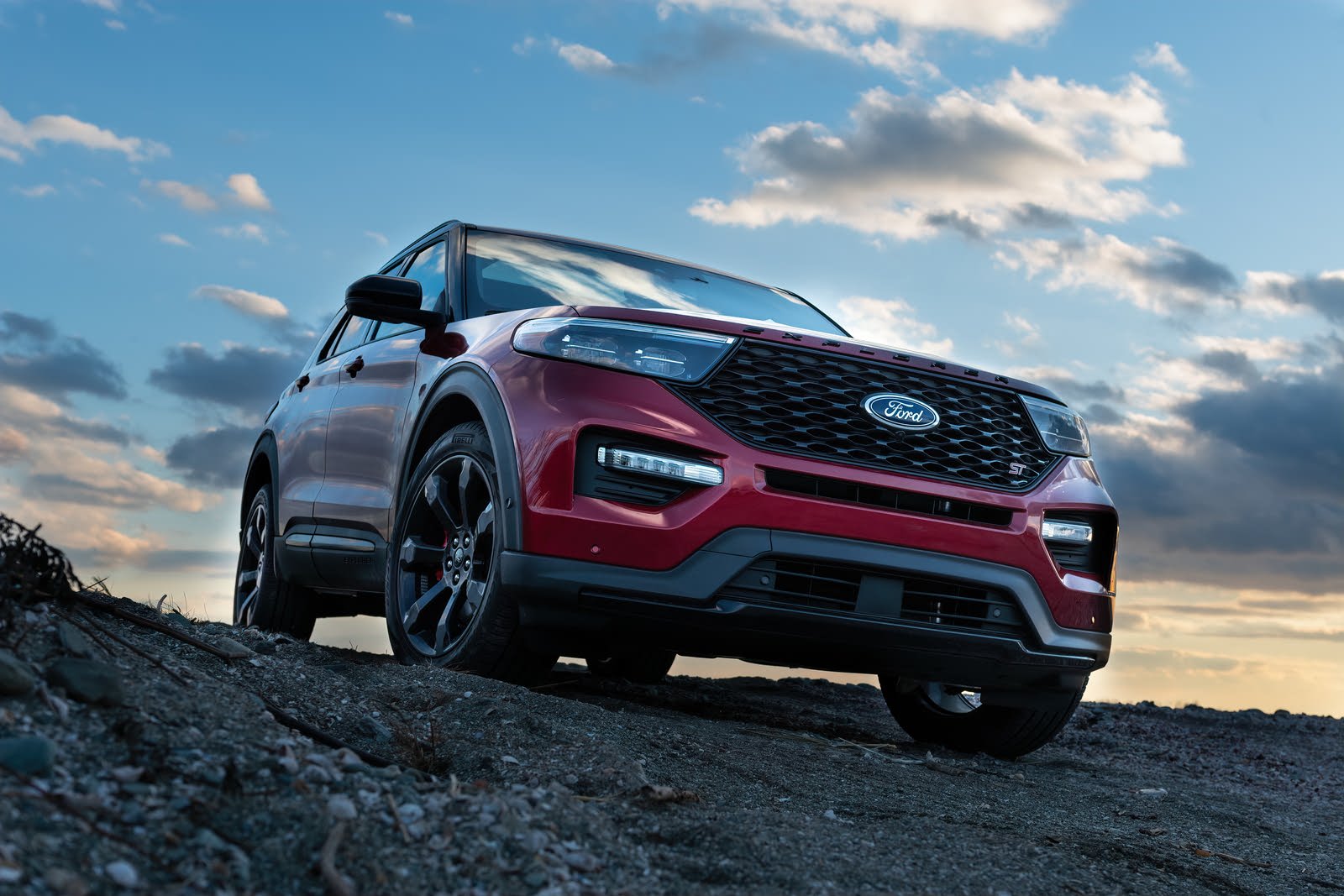
The 2020 Ford Explorer was a striking vehicle, more handsome than the Land Rover Discovery, which had mimicked Ford's style years after the previous-generation Explorer debuted in 2011. The 2020 model refined its upscale, utilitarian design by slimming down the body panels, especially at the rear, and giving the vehicle a lower, more athletic appearance. The widened headlights, extra-large grille, and italic "Explorer" lettering on the hood's edge created a prominent and recognizable face. The ST version, with its black 21-inch rims, blacked-out trim, red brake calipers, rich Rapid Red paint, and quad exhaust pipes, was particularly eye-catching. However, the interior was a letdown. Despite the high price tag, the materials felt cheap, with low-grade vinyl and rough-grained plastic dominating the cabin. The switchgear felt solid, and the aluminum speaker covers and white stitching helped break up the monotony, but overall, the interior did not match the exterior's premium feel.
The 2021 INFINITI QX50 stood out in the luxury compact crossover segment with its distinctive design and engineering. The large honeycomb grille, curved hood with athletic bulges, and the unique chrome strip at the rear gave the QX50 a sporty and characterful appearance. The panoramic moonroof added to the airy feel of the cabin, offering magnificent views of the sky. However, the thick B-pillars and short rear window opening slightly hindered outward visibility. Inside, the QX50 featured attractive soft-touch materials, aluminum trim accents, and a leather-wrapped, heated steering wheel. The front seats offered heating and cooling, enhancing comfort in various weather conditions. The interior controls were user-friendly, with actual knobs and buttons for radio and climate settings, although the transition to a push-button gear shift lever was still a bit jarring.


The 2020 Ford Explorer offered a range of powerful engines and a rear-wheel-drive (RWD) chassis, providing a more balanced weight distribution compared to its predecessor's front-wheel-drive (FWD) platform. The ST trim featured a 3.0-liter twin-turbo V6 engine with 400 horsepower and 415 pound-feet of torque, paired with a 10-speed automatic transmission. The ST's suspension and steering, tuned by Ford Performance, delivered a nimble and precise driving experience, with flat cornering and superb brake feel. The Explorer also offered a 2.3-liter turbo inline-four engine with 300 horsepower and 310 pound-feet of torque, and a gas-electric hybrid option with a net 318 horsepower. The hybrid, however, did not offer significant fuel economy benefits. Towing capacity varied from 5,000 pounds with the hybrid to 5,600 pounds with the V6 and AWD. The Explorer also featured seven drive modes for various conditions, enhancing its versatility.
The 2021 INFINITI QX50 came with a single powertrain option: a turbocharged 2.0-liter four-cylinder engine with 268 horsepower and 280 pound-feet of torque, mated to a continuously variable transmission (CVT). The QX50's VC-Turbo engine adjusted the compression ratio for a balance of power and efficiency. While the engine operated smoothly and quietly, the CVT's simulated shift points provided a more familiar driving experience. Front-wheel drive (FWD) was standard, with all-wheel drive (AWD) available as an option. The QX50's drive mode selector offered four modes: Standard, Sport, Eco, and Personal, with Sport mode providing the most responsive driving experience. The QX50 handled well on various surfaces, maintaining composure and stability during long drives.
The 2020 Ford Explorer offered ample space for passengers and cargo. On a road trip to Maine, the Explorer comfortably accommodated three adults and their gear. The second row featured air vents, USB ports, a center console, and a panoramic moonroof, enhancing comfort. The third row was spacious enough for six-foot-tall adults on short journeys, although the bench was too flat for long-distance comfort. The Explorer's cargo space measured 18 cubic feet behind the third row, 48 cubic feet behind the second row, and 88 cubic feet with all seats folded, making it one of the largest in its class. The interior featured physical knobs and switches for climate and stereo controls, although the thick D-pillars and fuzzy 360-degree cameras created some visibility issues.
The 2021 INFINITI QX50, despite being a compact vehicle, felt spacious inside. The front and rear seats offered plenty of hip, shoulder, and headroom, even with the panoramic moonroof. Rear-seat passengers enjoyed 38.7 inches of legroom, and the sliding second-row seats allowed for flexible cargo space. The cargo area provided 31.1 cubic feet of space behind the second row and 64.4 cubic feet with the seats folded. The optional Cargo package added practical features like a reversible cargo area protector and cargo nets. The QX50 also offered ample cupholders, storage bins, and charging options, including USB ports and a 12-volt charging port.
The 2020 Ford Explorer came standard with an 8-inch touchscreen featuring Sync 3 infotainment, Apple CarPlay, Android Auto, and 4G WiFi. Factory navigation was standard on all models except the base XLT. Keyless entry, remote start, 3-zone climate control, and SiriusXM satellite radio were also standard. The Premium Technology Package for ST and Platinum models included a 10-inch vertical touchscreen and a 12-inch digital instrument cluster. The touchscreen was high-resolution and user-friendly, although system updates required an external WiFi connection. The digital instrument panel featured fun animations and multiple layouts but lacked customization options. The Co-Pilot360 Assist+ semi-automated driving system was available but did not perform as well as competitors' systems.
The 2021 INFINITI QX50 featured the InTouch infotainment system with dual display screens—an 8-inch upper LCD/VGA and a 7-inch lower color unit. Standard on Essential and higher trims, the system included voice recognition and Infiniti InTouch Services. Pairing a smartphone via Bluetooth was easy, and Apple CarPlay integration worked seamlessly. The 16-speaker Bose Performance Series audio system delivered excellent sound quality. The QX50 also came with Infiniti's Around View Monitor with front and rear sonar and moving-object detection. ProPilot Assist, available on all but the base Pure trim, combined adaptive cruise control with lane-centering assistance, providing a glimpse of autonomous driving.
The 2020 Ford Explorer came standard with Ford Co-Pilot 360, which included forward emergency braking, blind-spot monitoring, auto high beams, and lane-keep assist. The Assist+ option added adaptive cruise control with steering assist and reverse braking. A passenger front knee airbag was also standard. The Insurance Institute for Highway Safety (IIHS) rated the Explorer Acceptable in the small overlap test on the driver's side.
The 2021 INFINITI QX50 offered a comprehensive suite of standard safety features, including blind-spot warning, predictive forward-collision warning, forward emergency braking with pedestrian detection, lane-departure warning, rear cross-traffic alert, rear automatic braking, and high-beam assist. Lane-departure prevention and blind-spot intervention were standard on all but the base Pure trim. Traffic sign recognition was standard on Essential and higher trims. The QX50 received four out of five stars for rollover resistance from the National Highway Traffic Safety Administration (NHTSA) and Good ratings from the IIHS for moderate overlap front and side crash protection. The QX50 also earned a Superior rating for vehicle-to-vehicle front crash prevention.
CarGurus highlights

According to CarGurus experts, the overall rating for the 2020 Ford Explorer is 7.2 out of 10, while the 2021 INFINITI QX50 scores 7.2 out of 10. Given these equal ratings, the final recommendation depends on your specific needs. If you prioritize power, towing capacity, and interior space, the 2020 Ford Explorer is the better choice. However, if you value a luxurious interior, advanced safety features, and distinctive design, the 2021 INFINITI QX50 is the way to go.
Choose the 2020 Ford Explorer if:
- You need a powerful engine and excellent towing capacity.
- You prioritize a spacious interior and large cargo area.
- You value a nimble and precise driving experience.







Choose the 2021 INFINITI QX50 if:
- You want a distinctive design and advanced engine technology.
- You prioritize a luxurious and comfortable interior.
- You value comprehensive standard safety features and advanced driver assistance systems.








CarGurus highlights
According to CarGurus experts, the overall rating for the 2020 Ford Explorer is 7.2 out of 10, while the 2021 INFINITI QX50 scores 7.2 out of 10. Given these equal ratings, the final recommendation depends on your specific needs. If you prioritize power, towing capacity, and interior space, the 2020 Ford Explorer is the better choice. However, if you value a luxurious interior, advanced safety features, and distinctive design, the 2021 INFINITI QX50 is the way to go.
Choose the 2020 Ford Explorer if:
Shop Now- You need a powerful engine and excellent towing capacity.
- You prioritize a spacious interior and large cargo area.
- You value a nimble and precise driving experience.










Choose the 2021 INFINITI QX50 if:
Shop Now- You want a distinctive design and advanced engine technology.
- You prioritize a luxurious and comfortable interior.
- You value comprehensive standard safety features and advanced driver assistance systems.











By: CarGurus + AI
At CarGurus, our team of experienced automotive writers remain at the heart of our content operation, conducting hands-on car tests and writing insightful guides that are backed by years of industry experience. To complement this, we are harnessing AI to make our content offering more diverse and more helpful to shoppers than ever. To achieve this, our AI systems are based exclusively on CarGurus content, ratings and data, so that what we produce is both unique to CarGurus, and uniquely helpful to car shoppers.