2020 Dodge Durango vs 2021 Toyota Highlander

Overview | |
MSRP$30,795 | MSRP$35,085 |
Listings256 | Listings244 |
Ratings & Reviews | |
User Reviews | User Reviews |
Expert reviews7.5 out of 10 | Expert reviews7.5 out of 10 |
Pros
Cons
| Pros
Cons
|
2020 Dodge Durango Reviews SummaryDodge says it has three muscle cars in its lineup, but if you check out the website, you’ll see the Challenger and Charger. Where is the third? According to Dodge, it’s the Durango three-row SUV. Even though it is a seven-passenger family hauler, it has eye-catching muscle car styling cues. It is also available in a number of high-horsepower trims that deliver on the styling. For that performance and style, you give up a bit of usability compared to leaders in the segment like the Toyota Highlander, Honda Pilot, and Kia Telluride. The Durango also feels a bit dated compared to those vehicles. So, is this tradeoff worth it? | |
2021 Toyota Highlander Reviews SummaryToyota hardly needs any help selling three-row Highlanders. It already sits close to the top of the sales charts for its segment, and few vehicles carry the name recognition as the Highlander, which enters into its 20th year of production. But the three-row marketplace is a competitive one, and even after a 2020 redesign, Toyota would be foolish to rest on its laurels. As such, the Highlander enters this year with additional safety-feature technology listed as standard equipment. | |
No video found | |
Popular Features & Specs | |
Engine3.6L 293 hp V6 | Engine3.5L 295 hp V6 |
Drive TrainRWD | Drive TrainFWD |
Seating Capacity7 | Seating Capacity8 |
Horsepower293 hp @ 6400 rpm | Horsepower295 hp @ 6600 rpm |
MPG City19 | MPG City20 |
MPG Highway26 | MPG Highway28 |
Engine | |
Engine Name3.6L 293 hp V6 | Engine Name3.5L 295 hp V6 |
Torque260 lb-ft @ 4000 rpm | Torque263 lb-ft @ 4700 rpm |
Horsepower293 hp @ 6400 rpm | Horsepower295 hp @ 6600 rpm |
DrivetrainRWD | DrivetrainFWD |
Fuel Economy | |
MPG City19 | MPG City20 |
MPG Highway26 | MPG Highway28 |
Interior | |
Seating Capacity7 | Seating Capacity8 |
Safety | |
Front Crash Overall4 | Front Crash Overall4 |
Side Crash Overall5 | Side Crash Overall5 |
Dimensions & Capacity | |
Cargo Space43.3 cu ft | Cargo Space16.0 cu ft |
Curb Weight4680 lbs | Curb Weight4145 lbs |
Height70.9 in | Height68.1 in |
Length201.2 in | Length194.9 in |
Width85.5 in | Width76.0 in |
Wheelbase119.8 in | Wheelbase112.2 in |
Maximum Payload1380 lbs | Maximum Payload1685 lbs |
Number of doors4 | Number of doors4 |
Maximum Towing Capacity6200 lbs | Maximum Towing Capacity5000 lbs |
Overview | ||
MSRP | $30,795 | $35,085 |
Listings | ||
Ratings & Reviews | ||
User reviews | ||
Expert reviews | 7.5 out of 10Read full review | 7.5 out of 10Read full review |
Pros & cons | Pros
Cons
| Pros
Cons
|
Summary | Dodge says it has three muscle cars in its lineup, but if you check out the website, you’ll see the Challenger and Charger. Where is the third? According to Dodge, it’s the Durango three-row SUV. Even though it is a seven-passenger family hauler, it has eye-catching muscle car styling cues. It is also available in a number of high-horsepower trims that deliver on the styling. For that performance and style, you give up a bit of usability compared to leaders in the segment like the Toyota Highlander, Honda Pilot, and Kia Telluride. The Durango also feels a bit dated compared to those vehicles. So, is this tradeoff worth it? | Toyota hardly needs any help selling three-row Highlanders. It already sits close to the top of the sales charts for its segment, and few vehicles carry the name recognition as the Highlander, which enters into its 20th year of production. But the three-row marketplace is a competitive one, and even after a 2020 redesign, Toyota would be foolish to rest on its laurels. As such, the Highlander enters this year with additional safety-feature technology listed as standard equipment. |
Video | No video found | |
Popular Features & Specs | ||
Engine | 3.6L 293 hp V6 | 3.5L 295 hp V6 |
Drive Train | RWD | FWD |
Seating Capacity | 7 | 8 |
Horsepower | 293 hp @ 6400 rpm | 295 hp @ 6600 rpm |
MPG City | 19 | 20 |
MPG Highway | 26 | 28 |
Engine | ||
Engine Name | 3.6L 293 hp V6 | 3.5L 295 hp V6 |
Torque | 260 lb-ft @ 4000 rpm | 263 lb-ft @ 4700 rpm |
Horsepower | 293 hp @ 6400 rpm | 295 hp @ 6600 rpm |
Drivetrain | RWD | FWD |
Fuel Economy | ||
MPG City | 19 | 20 |
MPG Highway | 26 | 28 |
Interior | ||
Seating Capacity | 7 | 8 |
Safety | ||
Front Crash Overall | 4 | 4 |
Side Crash Overall | 5 | 5 |
Dimensions & Capacity | ||
Cargo Space | 43.3 cu ft | 16.0 cu ft |
Curb Weight | 4680 lbs | 4145 lbs |
Height | 70.9 in | 68.1 in |
Length | 201.2 in | 194.9 in |
Width | 85.5 in | 76.0 in |
Wheelbase | 119.8 in | 112.2 in |
Maximum Payload | 1380 lbs | 1685 lbs |
Number of doors | 4 | 4 |
Maximum Towing Capacity | 6200 lbs | 5000 lbs |
The 2020 Dodge Durango carried its styling over from a 2014 update, with its third generation dating back to a complete redesign in 2011. The connections to the Charger muscle sedan were evident, but the Durango was based on a decade-old platform. Its cabin design was straightforward yet simple, sharing a platform with the Jeep Grand Cherokee but with a longer wheelbase and overall length. While the Jeep received significant cabin updates, the Durango felt somewhat dated and in need of a refresh, which was expected for the 2021 model year.
The 2021 Toyota Highlander stood out in a crowd with its distinctive styling. Its front end was less dramatic than the 2021 Sienna minivan but still made a statement with wide headlights, a long hood, and an assertive grille. The side profile featured a character line similar to the Supra sports car, and the taillights resembled those of a Lexus model. The Highlander managed to look longer and lower than its predecessor without sacrificing size. The new XSE trim level added a more aggressive front end and suspension tuning, while the Limited trim offered an upscale appearance with chrome accents and a luxurious interior.


The 2020 Dodge Durango offered a range of engines across its trims. The SXT, GT, and Citadel came standard with a 3.6-liter V6 engine producing 293 horsepower and 260 pound-feet of torque. The R/T trim featured a 5.7-liter Hemi V8 with 360 horsepower and 390 pound-feet of torque, also available on the Citadel. The range-topping SRT boasted a 6.4-liter Hemi V8, branded the "392," delivering 475 horsepower and 470 pound-feet of torque. All engines were paired with an 8-speed automatic transmission, with rear-wheel drive or available all-wheel drive depending on the trim. The SRT trim also included performance-tuned suspension and Brembo brakes, with Dodge SRT performance pages for detailed engine status updates and drive mode customization.
The 2021 Toyota Highlander featured a 3.5-liter V6 engine producing 295 horsepower and 263 pound-feet of torque, paired with an eight-speed automatic transmission. It offered front-wheel drive or all-wheel drive options. The Highlander Hybrid was available as a separate model. The powertrain provided smooth and predictable operation, suitable for merging onto highways and everyday driving. The XSE trim added higher-rated springs, retuned shock absorbers, power steering, and a rear stabilizer bar for a slightly sportier driving experience. However, the Highlander was not designed for high-performance driving but excelled in comfort and reliability.
The 2020 Dodge Durango provided 17.2 cubic feet of cargo space behind the third row, expanding to 47.7 cubic feet with the third row folded and 84.5 cubic feet with both the second and third rows folded. The Durango's towing capacity ranged from 6,200 to 8,700 pounds, depending on the configuration. The cabin offered plenty of space for occupants, with comfortable front seats and a choice of a three-passenger bench or second-row captain's chairs. The third row was more suitable for children. The driver and front passenger had access to multiple cargo bins, bottle holders, and trays for gear.
The 2021 Toyota Highlander featured shelves ahead of the front seats for storage, with a wireless charging pad available on trims above the LE. Second-row passengers enjoyed ample legroom, with seats that moved forward and backward to optimize space. The third row could accommodate adults if the second row was adjusted. The rear-seat climate control vents were positioned on the ceiling, which was less ideal. Cargo space measured 16 cubic feet behind the third row, 48.4 cubic feet with the third row folded, and 84.3 cubic feet with both rows folded, providing ample storage for most needs.
The 2020 Dodge Durango's SXT and GT trims came with a 7-inch touchscreen, while an 8.4-inch touchscreen was optional on the GT and standard on higher trims. The Uconnect infotainment system was user-friendly, with a tablet-inspired layout and dock icons for easy navigation. Apple CarPlay and Android Auto were standard, and higher trims included navigation, SiriusXM Travel Link, and premium audio systems. The semi-digital instrument panel was helpful, with easy navigation via the steering wheel's directional pad.
The 2021 Toyota Highlander offered an 8-inch touchscreen on lower trims, with a 12.3-inch touchscreen available on the Limited trim and standard on the Platinum trim. Both systems were easy to use, with standard Android Auto and Apple CarPlay. The 12.3-inch screen was bright and responsive, though navigation struggled with points of interest. The JBL audio system provided good sound quality, and the interface included volume and tuning knobs.
The 2020 Dodge Durango came with front- and side-impact airbags, electronic stability control, hill-start assist, and trailer sway control. Rear parking sensors were available on the SXT and standard on higher trims. The Technology Group package added adaptive cruise control, forward-collision avoidance, and lane-departure warning. Blind-spot monitoring and rear cross-path detection were also available. The Durango earned a four-star rating from the NHTSA and a Moderate score in driver’s side small-front overlap testing from the IIHS.
The 2021 Toyota Highlander featured Toyota Safety Sense 2.5+ (TSS 2.5+), including automatic emergency braking with pedestrian detection and intersection support, road-sign assist, adaptive cruise control, lane-departure warning, lane-keeping assist, lane-tracing assist, and automatic high beams. The Highlander received a five-star rating from the NHTSA and was named a Top Safety Pick+ by the IIHS.
CarGurus highlights
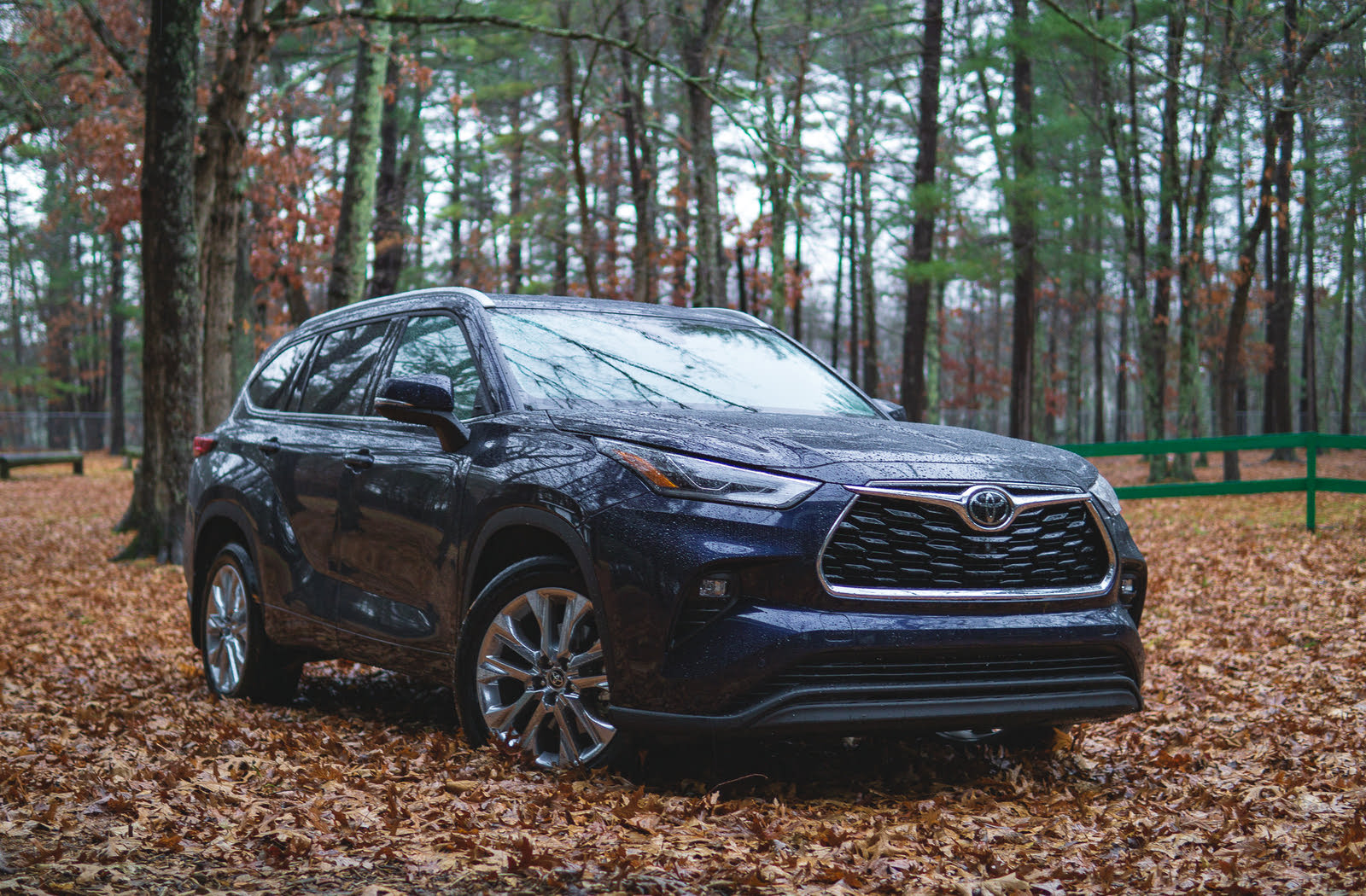
According to CarGurus experts, the overall rating for the 2020 Dodge Durango is 7.5 out of 10, while the 2021 Toyota Highlander scores 7.5 out of 10. Both vehicles offer unique strengths, but the Highlander's advanced safety features, comfortable interior, and reliability make it the better choice for most families.
Choose the 2020 Dodge Durango if:
- You need a powerful engine lineup, including a high-performance SRT trim.
- Towing capacity is a priority, with up to 8,700 pounds available.
- You prefer a straightforward and user-friendly infotainment system.


Choose the 2021 Toyota Highlander if:
- Advanced safety features and high safety ratings are important to you.
- You value a comfortable and upscale interior with plenty of storage options.
- You want a reliable and smooth-driving family crossover.


CarGurus highlights
According to CarGurus experts, the overall rating for the 2020 Dodge Durango is 7.5 out of 10, while the 2021 Toyota Highlander scores 7.5 out of 10. Both vehicles offer unique strengths, but the Highlander's advanced safety features, comfortable interior, and reliability make it the better choice for most families.
Choose the 2020 Dodge Durango if:
Shop Now- You need a powerful engine lineup, including a high-performance SRT trim.
- Towing capacity is a priority, with up to 8,700 pounds available.
- You prefer a straightforward and user-friendly infotainment system.
Choose the 2021 Toyota Highlander if:
Shop Now- Advanced safety features and high safety ratings are important to you.
- You value a comfortable and upscale interior with plenty of storage options.
- You want a reliable and smooth-driving family crossover.

By: CarGurus + AI
At CarGurus, our team of experienced automotive writers remain at the heart of our content operation, conducting hands-on car tests and writing insightful guides that are backed by years of industry experience. To complement this, we are harnessing AI to make our content offering more diverse and more helpful to shoppers than ever. To achieve this, our AI systems are based exclusively on CarGurus content, ratings and data, so that what we produce is both unique to CarGurus, and uniquely helpful to car shoppers.

