2019 Volvo XC40 vs 2019 Toyota RAV4

Overview | |
MSRP$33,700 | MSRP$25,650 |
Listings48 | Listings260 |
Ratings & Reviews | |
User Reviews | User Reviews |
Expert reviews7.8 out of 10 | Expert reviews8.0 out of 10 |
Pros
Cons
| Pros
Cons
|
2019 Volvo XC40 Reviews SummaryIf any brand is experiencing a revival in terms of both form and function, it's Volvo. The Swedish automaker is experiencing a renaissance, delivering new cars that are not only breathtaking to look at inside and out, but that also provide fantastic technology, safety, and performance. Volvo was once the Safety Brand, but with the advent of advanced safety technology, many other brands have caught up. Volvo has found its niche in high fashion, backed by continually improving safety technology that rivals the best in the world. This recent trend started with the XC90 SUV and was followed by the V90 wagon. These are world-class vehicles, but they also fetch high prices. Enter the 2019 Volvo XC40. It scales down much of what makes those high-end models so great, offering it in a (comparatively) more affordable subcompact SUV package. The XC40 offers ingenious cargo solutions, incredibly advanced technology, and even a new way to go about car ownership. Is that enough to make it stand out compared to other subcompact SUVs? Read on to find out. | |
2019 Toyota RAV4 Reviews SummaryThere’s a reason small SUVs like the 2019 Toyota RAV4 are among the most popular vehicles on the new car market. Consider the RAV4 and its rivals, the Honda CR-V, Mazda CX-5, and Ford Escape—what do they have in common? To put it simply, these vehicles are asked to do it all. Daily commuter car? Check. Family-hauler to school, practice, and the mall? Check, check, and check. Road-trip vehicle? Yeah, that too. On top of it all, these vehicles have to be affordable, efficient, and reliable. Sales of traditional sedans have been dwindling, but if sedans could do as much as crossovers can, they would still be popular vehicles. The RAV4 is one of the oldest vehicles in the segment, and its story tells us how these small SUVs became so popular. The previous RAV4 was an extremely competent vehicle for Toyota, covering all the things we ask of compact SUVs. But the new 2020 RAV4 goes a few steps further. It has standout Tonka-truck styling, a surprisingly upscale interior, and something that it had lost since debuting more than two decades ago: a bit of off-road ability. We’ll see whether this makes it better than the RAV4 it replaces, and if it allows the 2020 RAV4 to stand out in a crowded small SUV market. | |
Popular Features & Specs | |
Engine2.0L 187 hp I4 | Engine2.5L 203 hp I4 |
Drive TrainFWD | Drive TrainFWD |
Seating Capacity5 | Seating Capacity5 |
Horsepower187 hp @ 4700 rpm | Horsepower203 hp @ 6000 rpm |
MPG City23 | MPG City26 |
MPG Highway33 | MPG Highway35 |
Engine | |
Engine Name2.0L 187 hp I4 | Engine Name2.5L 203 hp I4 |
Torque221 lb-ft @ 1400 rpm | Torque184 lb-ft @ 5000 rpm |
Horsepower187 hp @ 4700 rpm | Horsepower203 hp @ 6000 rpm |
DrivetrainFWD | DrivetrainFWD |
Fuel Economy | |
MPG City23 | MPG City26 |
MPG Highway33 | MPG Highway35 |
Interior | |
Leather SeatsStandard | Leather Seats |
Seating Capacity5 | Seating Capacity5 |
Safety | |
Front Crash Overall | Front Crash Overall4 |
Side Crash Overall | Side Crash Overall5 |
Dimensions & Capacity | |
Cargo Space20.7 cu ft | Cargo Space37.5 cu ft |
Curb Weight3564 lbs | Curb Weight3370 lbs |
Height65.3 in | Height67.0 in |
Length174.2 in | Length180.9 in |
Width80.1 in | Width73.0 in |
Wheelbase106.4 in | Wheelbase105.9 in |
Maximum Payload1195 lbs | Maximum Payload1240 lbs |
Number of doors4 | Number of doors4 |
Maximum Towing Capacity3500 lbs | Maximum Towing Capacity1500 lbs |
Overview | ||
MSRP | $33,700 | $25,650 |
Listings | ||
Ratings & Reviews | ||
User reviews | ||
Expert reviews | 7.8 out of 10Read full review | 8.0 out of 10Read full review |
Pros & cons | Pros
Cons
| Pros
Cons
|
Summary | If any brand is experiencing a revival in terms of both form and function, it's Volvo. The Swedish automaker is experiencing a renaissance, delivering new cars that are not only breathtaking to look at inside and out, but that also provide fantastic technology, safety, and performance. Volvo was once the Safety Brand, but with the advent of advanced safety technology, many other brands have caught up. Volvo has found its niche in high fashion, backed by continually improving safety technology that rivals the best in the world. This recent trend started with the XC90 SUV and was followed by the V90 wagon. These are world-class vehicles, but they also fetch high prices. Enter the 2019 Volvo XC40. It scales down much of what makes those high-end models so great, offering it in a (comparatively) more affordable subcompact SUV package. The XC40 offers ingenious cargo solutions, incredibly advanced technology, and even a new way to go about car ownership. Is that enough to make it stand out compared to other subcompact SUVs? Read on to find out. | There’s a reason small SUVs like the 2019 Toyota RAV4 are among the most popular vehicles on the new car market. Consider the RAV4 and its rivals, the Honda CR-V, Mazda CX-5, and Ford Escape—what do they have in common? To put it simply, these vehicles are asked to do it all. Daily commuter car? Check. Family-hauler to school, practice, and the mall? Check, check, and check. Road-trip vehicle? Yeah, that too. On top of it all, these vehicles have to be affordable, efficient, and reliable. Sales of traditional sedans have been dwindling, but if sedans could do as much as crossovers can, they would still be popular vehicles. The RAV4 is one of the oldest vehicles in the segment, and its story tells us how these small SUVs became so popular. The previous RAV4 was an extremely competent vehicle for Toyota, covering all the things we ask of compact SUVs. But the new 2020 RAV4 goes a few steps further. It has standout Tonka-truck styling, a surprisingly upscale interior, and something that it had lost since debuting more than two decades ago: a bit of off-road ability. We’ll see whether this makes it better than the RAV4 it replaces, and if it allows the 2020 RAV4 to stand out in a crowded small SUV market. |
Video | ||
Popular Features & Specs | ||
Engine | 2.0L 187 hp I4 | 2.5L 203 hp I4 |
Drive Train | FWD | FWD |
Seating Capacity | 5 | 5 |
Horsepower | 187 hp @ 4700 rpm | 203 hp @ 6000 rpm |
MPG City | 23 | 26 |
MPG Highway | 33 | 35 |
Engine | ||
Engine Name | 2.0L 187 hp I4 | 2.5L 203 hp I4 |
Torque | 221 lb-ft @ 1400 rpm | 184 lb-ft @ 5000 rpm |
Horsepower | 187 hp @ 4700 rpm | 203 hp @ 6000 rpm |
Drivetrain | FWD | FWD |
Fuel Economy | ||
MPG City | 23 | 26 |
MPG Highway | 33 | 35 |
Interior | ||
Leather Seats | Standard | |
Seating Capacity | 5 | 5 |
Safety | ||
Front Crash Overall | 4 | |
Side Crash Overall | 5 | |
Dimensions & Capacity | ||
Cargo Space | 20.7 cu ft | 37.5 cu ft |
Curb Weight | 3564 lbs | 3370 lbs |
Height | 65.3 in | 67.0 in |
Length | 174.2 in | 180.9 in |
Width | 80.1 in | 73.0 in |
Wheelbase | 106.4 in | 105.9 in |
Maximum Payload | 1195 lbs | 1240 lbs |
Number of doors | 4 | 4 |
Maximum Towing Capacity | 3500 lbs | 1500 lbs |
In comparing the 2019 Volvo XC40 and the 2019 Toyota RAV4, it’s clear that both vehicles were designed to make distinct statements, though they achieved this in very different ways. The Volvo XC40 boasted standout styling that borrowed heavily from its larger sibling, the XC90. Its upright design set it apart from competing subcompact SUVs like the Mercedes-Benz GLA-Class and BMW X2, which favored a more low-slung, hatchback-like appearance. This gave the XC40 a more traditional SUV profile, providing an upright driving position that offered generous head- and legroom.
The XC40 came in three trims: Momentum, R-Design, and Inscription. Our experience centered on the Momentum trim, which, although the base model, was impressively well-equipped. Standard features included 18-inch wheels, integrated bright aluminum roof rails, and LED signature headlights with the distinctive “Thor’s Hammer” design. The interior offered a leather steering wheel and shift knob, power windows and doors, and a 9-inch Sensus touchscreen infotainment display. The mid-level R-Design trim added a unique front grille, a contrasting black roof, and dual tailpipes, while the range-topping Inscription trim featured an expansive panoramic sunroof and luxurious driftwood interior inlays.
The 2019 Toyota RAV4, in contrast, presented a bold look inspired by the Toyota Tacoma pickup. Its chunky design with sharp edges exuded an air of aggressiveness and futurism. The side profile maintained this aggressive stance, with taillights inspired by Toyota’s luxury brand, Lexus. The RAV4 featured a character line breaking up the rear C-pillar, a design element appearing on many new vehicles, though not necessarily enhancing the overall appeal. It offered a mix of monotone and seven contrasting two-tone color schemes, with the latter creating a cohesive look through the rear pillar strip.
Inside, the RAV4’s cabin was surprisingly simple and elegant compared to its exterior. Trims ranged from the base LE to the upscale Limited, with the XLE trim recommended for its blend of value and features. Standard items on the LE trim included 17-inch steel wheels, LED headlights, and privacy-tinted windows. The XLE added 17-inch alloy wheels, fog lights, a power moonroof, and sport seats, while the higher trims such as the Adventure and Limited added rugged or upscale touches, like unique wheels, leatherette upholstery, and advanced off-road capabilities.


The performance of the 2019 Volvo XC40 was notably robust, thanks to its 2.0-liter turbocharged inline 4-cylinder engine producing 248 horsepower and 258 pound-feet of torque. This power was delivered to a standard all-wheel-drive (AWD) system via an 8-speed automatic transmission featuring Volvo’s unique, though somewhat cumbersome, shifter design. Volvo’s shifter required double movements to engage Drive or Reverse, a quirk that could lead to unintentional shifting into Neutral.
Once on the road, the XC40 impressed with brisk acceleration and well-weighted steering. It offered a balanced suspension that adeptly absorbed bumps while maintaining responsive handling. The Drive Mode button allowed drivers to switch between Comfort, Eco, Dynamic, Off-Road, and Individual modes. Dynamic mode heightened performance with longer transmission holds and a more engaging exhaust note, while Comfort mode provided a smooth, everyday driving experience. Fuel economy for the XC40 was rated at 23 mpg city, 31 highway, and 26 combined, though real-world driving yielded about 21 mpg.
The 2019 Toyota RAV4 came with a 2.5-liter 4-cylinder engine delivering 203 horsepower and 184 pound-feet of torque, paired with an 8-speed automatic transmission. It offered a choice between front-wheel drive (FWD) and two all-wheel-drive (AWD) systems. The base AWD present on most trims provided modes for different terrains, while the Adventure and Limited trims offered a more advanced torque-vectoring AWD capable of distributing power dynamically to improve off-road capability.
The RAV4’s engine provided adequate acceleration for highway merging, although it lacked low-end torque, making city driving feel sluggish. The ride quality was comfortable, though it exhibited significant body roll and twitchy steering through fast corners. Fuel economy was impressive, with the FWD model achieving 26 mpg city, 35 highway, and 30 combined, while the base AWD managed 27 city, 34 highway for a combined 29.3 mpg.
The 2019 Volvo XC40 was designed with practical, everyday use in mind. Its upright layout granted ample front-seat head- and legroom, though the seating adjustment could outpace the steering wheel’s reach. Ingenious features like a removable trash bin and a large center console tray with a wireless charging pad highlighted its practical interior design. The rear seats offered surprising legroom and storage trays for added convenience. The hands-free power liftgate functioned flawlessly, revealing a cargo space of 57.5 cubic feet with rear seats folded, surpassed only by the BMW X1 in its class.
The interior of the 2019 Toyota RAV4, meanwhile, balanced style with functionality. The center stack featured a simplified design with a floating touchscreen, climate controls, and trays for small items. The cargo area offered 37.6 cubic feet with the rear seats up, expanding to 69.8 cubic feet when folded. While slightly reduced from the previous model year, it still outperformed rivals like the Mazda CX-5 and Jeep Cherokee, though it fell short of the Honda CR-V and Subaru Forester. The RAV4 also provided multiple storage solutions, including deep trays and bins, and a fold-out rear armrest with cupholders.
The technology featured in the 2019 Volvo XC40 was both advanced and user-friendly. The centerpiece was a large portrait-oriented touchscreen, similar to Tesla’s design, consolidating most vehicle controls. The Sensus system, though sometimes cumbersome when accessing heated seats or saving radio presets, offered a clean interface resembling a tablet, complete with swipe functions. Standard Apple CarPlay and Android Auto integrations were available, keeping the Volvo’s tech accessible. The available Multimedia Package added a sophisticated navigation system and a high-quality 15-speaker Harman Kardon sound system.
In contrast, the 2019 Toyota RAV4 with its Entune 3.0 system offered a more conventional approach. The LE trim came with a 7-inch touchscreen, and higher trims featured an 8-inch screen. Apple CarPlay was readily available, and the interface included dial controls for volume and tuning—features that streamlined usability. The XLE trim provided multiple USB ports and a WiFi hotspot, while the Adventure and Limited trims added features like a larger instrument panel display and an optional premium JBL stereo. Despite lacking Android Auto, the overall user experience was intuitive and functional.
The 2019 Volvo XC40 was built with safety as a cornerstone. Standard safety features included a suite of airbags, a whiplash protection system, and road-sign information updates. The City Safe automatic braking system could detect pedestrians, vehicles, and large animals. Optional safety features on the test model included blind-spot detection, cross-traffic alert, and the Pilot Assist semi-autonomous driving system, which worked in tandem with adaptive cruise control. However, the XC40’s design had inherent safety issues, including large C-pillars that created significant blind spots, compounded by the confusing shifter design that might lead to accidental shifting.
The 2019 Toyota RAV4 also prioritized safety, with foundational features like front- and side-impact airbags, a reversing camera, and a tire-pressure monitoring system. Toyota Safety Sense 2.0 included advanced technologies such as forward-collision warning, lane-departure warning, automatic high-beams, and dynamic radar cruise control. Unique to the second generation were traffic-sign detection and Lane-Tracing Assist, enhancing lane-keeping capabilities. Toyota’s commitment to comprehensive safety features made the RAV4 a highly protective vehicle for its occupants.
CarGurus highlights
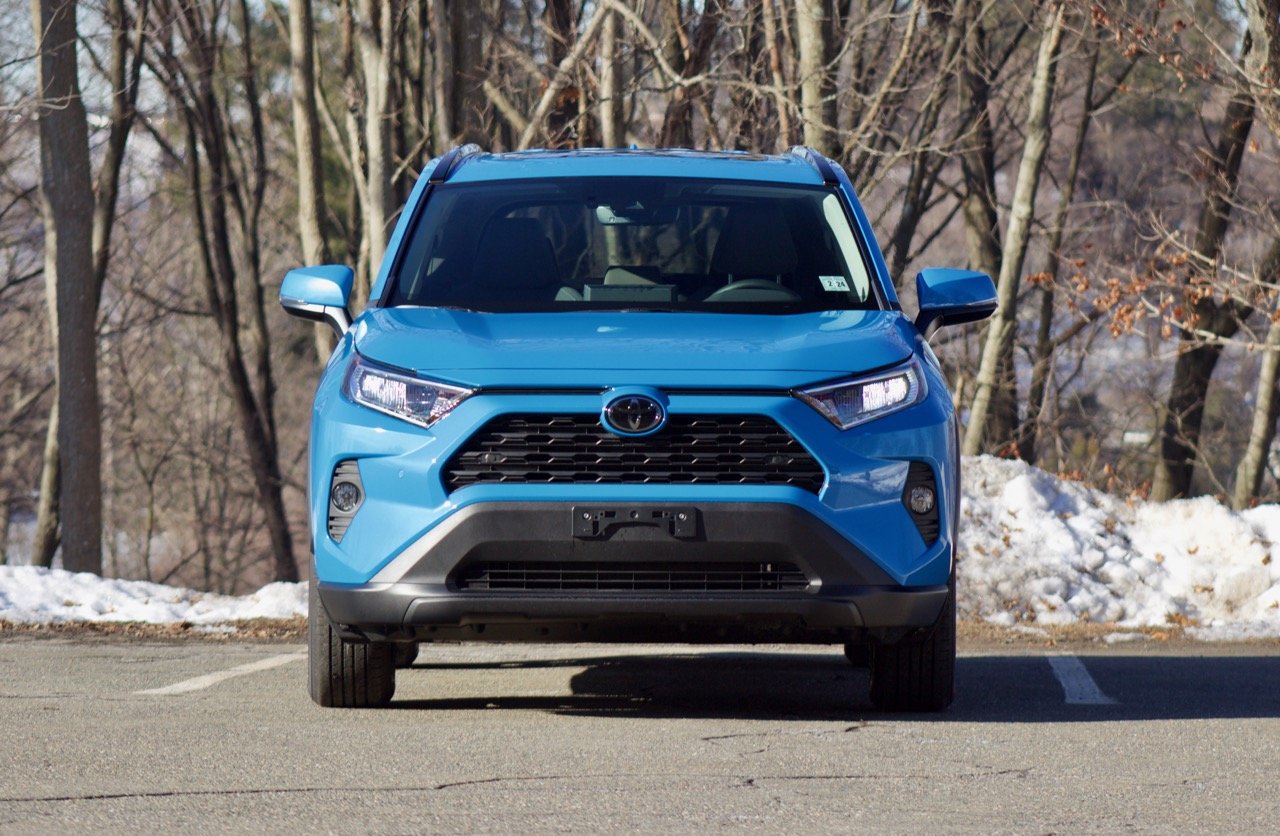
According to CarGurus experts, the overall rating for the 2019 Volvo XC40 is 7.8 out of 10, while the 2019 Toyota RAV4 scores 8.0 out of 10. Based on these ratings, the Toyota RAV4 holds a slight edge in overall satisfaction. With its blend of aggressive styling, practical interior, and robust safety features, it presents a compelling package for a wider range of buyers. If off-road capability and a rugged appeal are high on your list, or you prioritize advanced safety technologies, the RAV4 might be the better choice. However, if luxury, cutting-edge tech, and a premium feel are what you seek, the Volvo XC40 remains a formidable contender.
Choose the 2019 Volvo XC40 if:
- You prefer a premium SUV experience with standout styling and luxurious interior options.
- Advanced technology and seamless smartphone integration are high priorities.
- Comprehensive safety features are paramount, and you appreciate semi-autonomous driving aids like Pilot Assist.


Choose the 2019 Toyota RAV4 if:
- You want a rugged, aggressive exterior design inspired by off-road vehicles.
- Practicality and ample cargo space are important, with a focus on user-friendly technology.
- Advanced safety features are non-negotiable, and you value Toyota’s comprehensive Safety Sense suite.


CarGurus highlights
According to CarGurus experts, the overall rating for the 2019 Volvo XC40 is 7.8 out of 10, while the 2019 Toyota RAV4 scores 8.0 out of 10. Based on these ratings, the Toyota RAV4 holds a slight edge in overall satisfaction. With its blend of aggressive styling, practical interior, and robust safety features, it presents a compelling package for a wider range of buyers. If off-road capability and a rugged appeal are high on your list, or you prioritize advanced safety technologies, the RAV4 might be the better choice. However, if luxury, cutting-edge tech, and a premium feel are what you seek, the Volvo XC40 remains a formidable contender.
Choose the 2019 Volvo XC40 if:
Shop Now- You prefer a premium SUV experience with standout styling and luxurious interior options.
- Advanced technology and seamless smartphone integration are high priorities.
- Comprehensive safety features are paramount, and you appreciate semi-autonomous driving aids like Pilot Assist.
Choose the 2019 Toyota RAV4 if:
Shop Now- You want a rugged, aggressive exterior design inspired by off-road vehicles.
- Practicality and ample cargo space are important, with a focus on user-friendly technology.
- Advanced safety features are non-negotiable, and you value Toyota’s comprehensive Safety Sense suite.

By: CarGurus + AI
At CarGurus, our team of experienced automotive writers remain at the heart of our content operation, conducting hands-on car tests and writing insightful guides that are backed by years of industry experience. To complement this, we are harnessing AI to make our content offering more diverse and more helpful to shoppers than ever. To achieve this, our AI systems are based exclusively on CarGurus content, ratings and data, so that what we produce is both unique to CarGurus, and uniquely helpful to car shoppers.

