2019 Nissan Altima vs 2020 Toyota Prius

Overview | |
MSRP$24,000 | MSRP$24,325 |
Listings1047 | Listings116 |
Ratings & Reviews | |
User Reviews | User Reviews |
Expert reviews7.8 out of 10 | Expert reviews7.5 out of 10 |
Pros
Cons
| Pros
Cons
|
2019 Nissan Altima Reviews SummaryShopping for a modern midsize sedan is tougher than you may think. Whether we're talking about the Honda Accord, Toyota Camry, Mazda6, or Hyundai Sonata, it seems like each year we conclude it can’t possibly get any better. Deciding among sedans is tough because nearly every player in the segment brings its absolute A game every year. The Nissan Altima is all-new for 2019 and delivers a ton of improvements. But considering the competition, are those improvements enough to launch it from a middling entrant to a serious contender? The previous Altima had some things going for it, like spacious seating and a powerful V6 (if you were willing to pay extra for it). And by the final year of its fifth generation, some driver-assistance features arrived as standard, but it never stood out in any particular area. For decades, buyers didn’t expect sedans to be anything more than reliable, economical daily commuters. But the pendulum has swung in the opposite direction. Check out the competition: The Honda Accord, Toyota Camry, Hyundai Sonata, and Mazda6 are all near-premium cars, with the latest infotainment and safety technology, and they handle well, too. The new Altima has some of those things—let's see how it delivers on the rest. | |
2020 Toyota Prius Reviews SummaryEver heard of an eponym? It’s a brand or product that is so popular that it’s come to define its respective market. Think of Kleenex for tissues or Band-Aid for medical bandages. For hybrids, the Toyota Prius has ascended to near-eponym status. It was one of the first—and remains one of the most popular—hybrids ever made. As automakers across the industry are rolling out more hybrid models, the Prius continues to be the standard-bearer of this genre. This is largely due to the fact that the Prius is a dedicated hybrid, rather than a hybrid variant of an existing model. Throughout the industry, different companies are taking different approaches to alt-fuel vehicles, including full-electric and hydrogen fuel cell powertrains. The Prius endures as the leader in hybrid power due to a focus on fuel efficiency that doesn’t compromise on style, drivability, and versatility. So how does the Prius hold its ground as more players enter the fray? Read on to find out. | |
No video found | |
Popular Features & Specs | |
Engine2.5L 188 hp I4 | Engine1.8L 121 hp I4 Hybrid |
Drive TrainFWD | Drive TrainFWD |
Seating Capacity5 | Seating Capacity5 |
Horsepower188 hp @ 6000 rpm | Horsepower |
EV Battery Capacity | EV Battery Capacity0.7 kWh |
MPG City28 | MPG City58 |
MPG Highway39 | MPG Highway53 |
Engine | |
Engine Name2.5L 188 hp I4 | Engine Name1.8L 121 hp I4 Hybrid |
Torque180 lb-ft @ 3600 rpm | Torque |
Horsepower188 hp @ 6000 rpm | Horsepower |
DrivetrainFWD | DrivetrainFWD |
Fuel Economy | |
EV Battery Capacity | EV Battery Capacity0.7 kWh |
MPG City28 | MPG City58 |
MPG Highway39 | MPG Highway53 |
Interior | |
Seating Capacity5 | Seating Capacity5 |
Safety | |
Front Crash Overall4 | Front Crash Overall4 |
Side Crash Overall5 | Side Crash Overall5 |
Dimensions & Capacity | |
Cargo Space15.4 cu ft | Cargo Space27.4 cu ft |
Curb Weight3212 lbs | Curb Weight3010 lbs |
Height56.7 in | Height57.9 in |
Length192.9 in | Length180.0 in |
Width72.9 in | Width69.3 in |
Wheelbase111.2 in | Wheelbase106.3 in |
Maximum Payload1116 lbs | Maximum Payload825 lbs |
Number of doors4 | Number of doors4 |
Overview | ||
MSRP | $24,000 | $24,325 |
Listings | ||
Ratings & Reviews | ||
User reviews | ||
Expert reviews | 7.8 out of 10Read full review | 7.5 out of 10Read full review |
Pros & cons | Pros
Cons
| Pros
Cons
|
Summary | Shopping for a modern midsize sedan is tougher than you may think. Whether we're talking about the Honda Accord, Toyota Camry, Mazda6, or Hyundai Sonata, it seems like each year we conclude it can’t possibly get any better. Deciding among sedans is tough because nearly every player in the segment brings its absolute A game every year. The Nissan Altima is all-new for 2019 and delivers a ton of improvements. But considering the competition, are those improvements enough to launch it from a middling entrant to a serious contender? The previous Altima had some things going for it, like spacious seating and a powerful V6 (if you were willing to pay extra for it). And by the final year of its fifth generation, some driver-assistance features arrived as standard, but it never stood out in any particular area. For decades, buyers didn’t expect sedans to be anything more than reliable, economical daily commuters. But the pendulum has swung in the opposite direction. Check out the competition: The Honda Accord, Toyota Camry, Hyundai Sonata, and Mazda6 are all near-premium cars, with the latest infotainment and safety technology, and they handle well, too. The new Altima has some of those things—let's see how it delivers on the rest. | Ever heard of an eponym? It’s a brand or product that is so popular that it’s come to define its respective market. Think of Kleenex for tissues or Band-Aid for medical bandages. For hybrids, the Toyota Prius has ascended to near-eponym status. It was one of the first—and remains one of the most popular—hybrids ever made. As automakers across the industry are rolling out more hybrid models, the Prius continues to be the standard-bearer of this genre. This is largely due to the fact that the Prius is a dedicated hybrid, rather than a hybrid variant of an existing model. Throughout the industry, different companies are taking different approaches to alt-fuel vehicles, including full-electric and hydrogen fuel cell powertrains. The Prius endures as the leader in hybrid power due to a focus on fuel efficiency that doesn’t compromise on style, drivability, and versatility. So how does the Prius hold its ground as more players enter the fray? Read on to find out. |
Video | No video found | |
Popular Features & Specs | ||
Engine | 2.5L 188 hp I4 | 1.8L 121 hp I4 Hybrid |
Drive Train | FWD | FWD |
Seating Capacity | 5 | 5 |
Horsepower | 188 hp @ 6000 rpm | |
EV Battery Capacity | 0.7 kWh | |
MPG City | 28 | 58 |
MPG Highway | 39 | 53 |
Engine | ||
Engine Name | 2.5L 188 hp I4 | 1.8L 121 hp I4 Hybrid |
Torque | 180 lb-ft @ 3600 rpm | |
Horsepower | 188 hp @ 6000 rpm | |
Drivetrain | FWD | FWD |
Fuel Economy | ||
EV Battery Capacity | 0.7 kWh | |
MPG City | 28 | 58 |
MPG Highway | 39 | 53 |
Interior | ||
Seating Capacity | 5 | 5 |
Safety | ||
Front Crash Overall | 4 | 4 |
Side Crash Overall | 5 | 5 |
Dimensions & Capacity | ||
Cargo Space | 15.4 cu ft | 27.4 cu ft |
Curb Weight | 3212 lbs | 3010 lbs |
Height | 56.7 in | 57.9 in |
Length | 192.9 in | 180.0 in |
Width | 72.9 in | 69.3 in |
Wheelbase | 111.2 in | 106.3 in |
Maximum Payload | 1116 lbs | 825 lbs |
Number of doors | 4 | 4 |
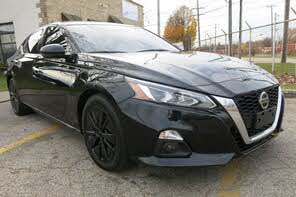
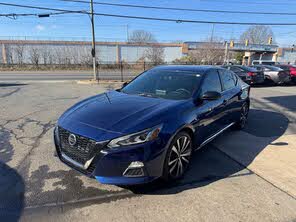
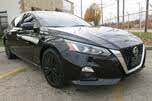
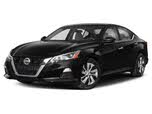
The 2019 Nissan Altima borrowed design cues from its larger sibling, the Maxima, featuring a big trapezoidal grille, sharply raked headlights, and a black stripe in the C-pillar. These elements aimed to inject visual excitement into the Altima. Inside, the Altima's layout was similar to other new cars, with a floating center stack and familiar vents and dials. This design trend was prevalent across the industry, making the interior user-friendly and straightforward. The Altima's infotainment system included volume, tuning, and climate-control knobs, ensuring ease of use.
The Altima came in various trims: S, SR, SV, SL, and Platinum. The base S trim offered comfortable Zero Gravity seats, push-button start, an 8-way power driver’s seat, four USB ports, satellite radio, and an 8-inch touchscreen with Apple CarPlay and Android Auto. The SR trim added 19-inch alloy wheels, LED headlights, a rear spoiler, and a dark chrome grille. Inside, it featured a leather-wrapped steering wheel, cloth seats with leather inserts, and carbon grain door trim. The SV trim focused on maximizing features for the money, adding 17-inch alloy wheels, fog lights, heated side mirrors, and more. The SL trim added leather seating, a Bose premium sound system, and navigation. The Platinum trim included all previous features, plus 19-inch wheels, memory settings for the driver’s seat, and a 360-degree surround-view monitor.
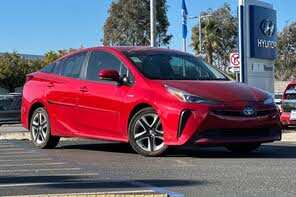
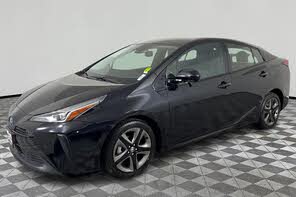
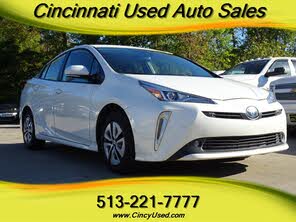
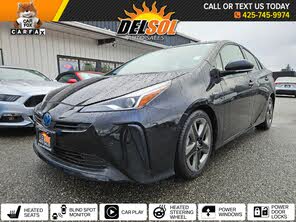
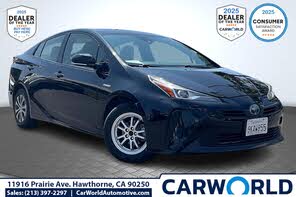
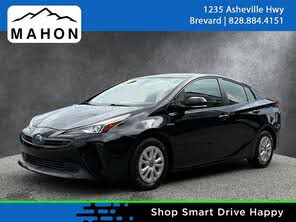
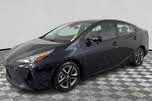
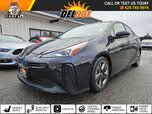
The 2020 Toyota Prius maintained its iconic jellybean-like shape, optimized for aerodynamics. The current generation featured visual tricks to resemble a sedan while retaining its hatchback functionality. The Prius had a futuristic style, with a cabin defined by centrally located instrumentation and gauges. Trim levels included L Eco, LE, XLE, and Limited. The L Eco trim offered 15-inch alloy wheels, automatic climate control, cloth upholstery, push-button start, three USB ports, Bluetooth connectivity, and a 7-inch touchscreen with Apple CarPlay, Android Auto, and Amazon Alexa compatibility. The LE trim added a rear windshield wiper, parking sensors, seat-back pockets, and additional driver-assistance features.
The XLE trim brought 17-inch alloy wheels, rain-sensing wipers, synthetic leather upholstery, an eight-way power-adjustable driver’s seat, heated front seats, a heated steering wheel, and wireless device charging. The Limited trim added adaptive, self-leveling headlights, a head-up display (HUD), satellite radio, HD Radio, and an 11.6-inch touchscreen. The 2020 Edition celebrated 20 years of the Prius with unique dark exterior accents and a limited production run of 2,020 units.


The 2019 Nissan Altima offered two engine options. The base 2.5-liter 4-cylinder engine produced 188 horsepower and 180 pound-feet of torque, a slight improvement over the previous model. The SR and Platinum trims had an available turbocharged 2.0-liter 4-cylinder engine with variable compression technology, delivering V6-like power with 4-cylinder fuel economy. Both engines paired with a continuously variable transmission (CVT) and offered front-wheel drive or all-wheel drive (AWD). The AWD system was a first for Nissan sedans, providing confidence in snowy conditions. The 2.5-liter engine returned fuel economy of 28 city, 39 highway, 32 combined, while the AWD variant achieved 25 city, 35 highway, 29 combined. The turbocharged engine was expected to return 25 city, 34 highway, 29 combined. The Altima's handling was decent, though not as athletic as some competitors, and the wide turning radius was a drawback.
The 2020 Toyota Prius featured a 1.8-liter four-cylinder engine paired with an electric motor, producing a combined 121 horsepower and 105 pound-feet of torque. The Prius offered front-wheel drive (FWD) and an all-wheel-drive (AWD) variant called the Prius AWD-e, which used a second electric motor for the rear wheels, operating at speeds up to 43 mph. The Prius had smooth acceleration, with a seamless transition between electric and conventional power. It offered three drive modes: EV, Eco, and Power. The unique shifter design required some adjustment, with Reverse, Drive, Neutral, and Park in unconventional positions. The "B" mode provided engine braking, useful in mountainous regions. The Prius handled well for a hybrid, with a low center of gravity and a smooth ride, making it ideal for commuting.
The 2019 Nissan Altima's interior featured extremely comfortable Zero Gravity seats, designed to reduce fatigue on long trips. The car had plenty of cubbies and cupholders, though the center console was not very deep due to the AWD and transmission tunnel. The back seat offered ample space for tall adults, and the trunk provided 15.4 cubic feet of cargo space, competitive but not class-leading.
The 2020 Toyota Prius made excellent use of its space, with deep door pockets, a large tray area between the front seats, and helpful sub-trays around the center console. The front seats were spacious and comfortable, with good driver visibility. The rear seats also offered plenty of space, though taller drivers needed to watch their heads. The Prius had 50.7 cubic feet of cargo space with the rear seats folded, and 24.6 to 27.4 cubic feet with the seats up, depending on the model. This made the Prius one of the most spacious and versatile hybrid options, with its hatchback design facilitating easy loading of large items.
The 2019 Nissan Altima came standard with NissanConnect, featuring a straightforward infotainment system with large, colorful icons and easy-to-read fonts. It included Apple CarPlay and Android Auto integration, and a 7-inch color Drive Assist display between the tachometer and speedometer, navigable via a steering-wheel-mounted directional pad.
The 2020 Toyota Prius featured a 7-inch touchscreen with a sensible menu layout, standard Apple CarPlay, Android Auto, Bluetooth connectivity, a WiFi hotspot, and three USB ports. The Limited trim upgraded to an 11.6-inch screen with a customizable, tablet-like layout, though it lacked Android Auto. The Prius also offered satellite radio, HD Radio, a head-up display (HUD), and a 10-speaker JBL premium audio system. The top-center instrument panel, a defining feature of the Prius, displayed hybrid drivetrain status and other critical readouts, navigable via a steering-wheel-mounted directional pad.
The 2019 Nissan Altima included standard safety features such as front- and side-impact airbags, traction control, vehicle dynamics control, and a reversing camera. The Platinum trim featured ProPilot Assist, offering partially autonomous driving functions like speed matching and lane-keeping assistance. Forward-collision warning and driver-alertness monitoring were standard across all trims.
The 2020 Toyota Prius came with Toyota Safety Sense 2.0, including automatic emergency braking, forward-collision warning, lane-departure warning, adaptive cruise control, and automatic high beams. Optional features included blind-spot monitoring, rear cross-traffic alert, parking sensors, and active park assist. The Prius earned a five-star rating from the National Highway Traffic Safety Administration (NHTSA) and a "Top Safety Pick" accolade from the Insurance Institute for Highway Safety (IIHS), though it fell short of the highest "Top Safety Pick+" rating.
CarGurus highlights

According to CarGurus experts, the overall rating for the 2019 Nissan Altima is 7.8 out of 10, while the 2020 Toyota Prius scores 7.5 out of 10. Based on these ratings, the 2019 Nissan Altima is the recommended choice, offering a more comfortable ride, better infotainment system, and the added benefit of all-wheel drive.
Choose the 2019 Nissan Altima if:
- You prioritize comfortable seating for long trips.
- You want a sedan with available all-wheel drive.
- You prefer a straightforward infotainment system with physical knobs and buttons.







Choose the 2020 Toyota Prius if:
- You need a spacious and versatile hybrid with excellent cargo capacity.
- You value advanced safety features and high safety ratings.
- You want a car with a seamless transition between electric and conventional power.



CarGurus highlights
According to CarGurus experts, the overall rating for the 2019 Nissan Altima is 7.8 out of 10, while the 2020 Toyota Prius scores 7.5 out of 10. Based on these ratings, the 2019 Nissan Altima is the recommended choice, offering a more comfortable ride, better infotainment system, and the added benefit of all-wheel drive.
Choose the 2019 Nissan Altima if:
Shop Now- You prioritize comfortable seating for long trips.
- You want a sedan with available all-wheel drive.
- You prefer a straightforward infotainment system with physical knobs and buttons.







Choose the 2020 Toyota Prius if:
Shop Now- You need a spacious and versatile hybrid with excellent cargo capacity.
- You value advanced safety features and high safety ratings.
- You want a car with a seamless transition between electric and conventional power.





By: CarGurus + AI
At CarGurus, our team of experienced automotive writers remain at the heart of our content operation, conducting hands-on car tests and writing insightful guides that are backed by years of industry experience. To complement this, we are harnessing AI to make our content offering more diverse and more helpful to shoppers than ever. To achieve this, our AI systems are based exclusively on CarGurus content, ratings and data, so that what we produce is both unique to CarGurus, and uniquely helpful to car shoppers.