2019 Honda Civic vs 2020 Nissan Versa

Overview | |
MSRP$19,550 | MSRP$14,830 |
Listings1373 | Listings303 |
Ratings & Reviews | |
User Reviews | User Reviews |
Expert reviews7.8 out of 10 | Expert reviews7.2 out of 10 |
Pros
Cons
| |
2019 Honda Civic Reviews SummaryThe tenth-generation Civic has been out since 2016, and for 2019, Honda makes only minor tweaks to this compact car's winning formula of style, value, and performance. Lots of cars are good these days, but the Civic has been consistently good for more than 45 years. This is a car that drives and feels like a more expensive car, and whether you choose a sedan, coupe, or hatchback among four engines and two transmissions—hooray for variety—the Civic rewards you. The 2019 model reminds us why. | |
2020 Nissan Versa Reviews SummaryWhen you're on a tight budget and need to replace a car, you often face a tough choice: Do you buy a new small car or something that’s pre-owned but has more space? For many years, if you were in the market for a new car, few came as cheaply as the Nissan Versa. Not only was it marketed as the least-expensive car in the United States, but it also had a plucky, underdog appeal to it. However, the charm of the Versa started to wear off as its shortcomings became more apparent. If you look at the “cheap” end of the market, you'll find some pretty unlovable cars, like the Mitsubishi Mirage and Chevrolet Spark. But there are also some bright spots. The Kia Rio and Hyundai Accent are both competent cars in their own ways, and the Honda Fit has always been a serious player. With the Fit, you never felt like you were seriously compromising to meet your budget. It seems as though Nissan has caught on to the realization that racing to the bottom works for only so long. Buyers have certainly caught on to the notion that you can have a small car that’s actually kind of good (See: Fit). In response, Nissan has rolled out the all-new 2020 Versa. It’s no longer the cheapest car in America, and in fact, it costs a couple of thousand dollars more than last year's version. But does that mean it’s more car, too? Read on to find out. | |
Popular Features & Specs | |
Engine2.0L 158 hp I4 | Engine1.6L 122 hp I4 |
Drive TrainFWD | Drive TrainFWD |
Seating Capacity5 | Seating Capacity5 |
Horsepower158 hp @ 6500 rpm | Horsepower122 hp @ 6300 rpm |
MPG City25 | MPG City27 |
MPG Highway36 | MPG Highway35 |
Engine | |
Engine Name2.0L 158 hp I4 | Engine Name1.6L 122 hp I4 |
Torque138 lb-ft @ 4200 rpm | Torque114 lb-ft @ 4000 rpm |
Horsepower158 hp @ 6500 rpm | Horsepower122 hp @ 6300 rpm |
DrivetrainFWD | DrivetrainFWD |
Fuel Economy | |
MPG City25 | MPG City27 |
MPG Highway36 | MPG Highway35 |
Interior | |
Seating Capacity5 | Seating Capacity5 |
Safety | |
Front Crash Overall5 | Front Crash Overall5 |
Side Crash Overall5 | Side Crash Overall5 |
Dimensions & Capacity | |
Cargo Space15.1 cu ft | Cargo Space14.7 cu ft |
Curb Weight2742 lbs | Curb Weight2650 lbs |
Height55.7 in | Height57.3 in |
Length182.3 in | Length177.0 in |
Width70.8 in | Width68.5 in |
Wheelbase106.3 in | Wheelbase103.1 in |
Maximum Payload | Maximum Payload955 lbs |
Number of doors4 | Number of doors4 |
Overview | ||
MSRP | $19,550 | $14,830 |
Listings | ||
Ratings & Reviews | ||
User reviews | ||
Expert reviews | 7.8 out of 10Read full review | 7.2 out of 10Read full review |
Pros & cons | Pros
Cons
| |
Summary | The tenth-generation Civic has been out since 2016, and for 2019, Honda makes only minor tweaks to this compact car's winning formula of style, value, and performance. Lots of cars are good these days, but the Civic has been consistently good for more than 45 years. This is a car that drives and feels like a more expensive car, and whether you choose a sedan, coupe, or hatchback among four engines and two transmissions—hooray for variety—the Civic rewards you. The 2019 model reminds us why. | When you're on a tight budget and need to replace a car, you often face a tough choice: Do you buy a new small car or something that’s pre-owned but has more space? For many years, if you were in the market for a new car, few came as cheaply as the Nissan Versa. Not only was it marketed as the least-expensive car in the United States, but it also had a plucky, underdog appeal to it. However, the charm of the Versa started to wear off as its shortcomings became more apparent. If you look at the “cheap” end of the market, you'll find some pretty unlovable cars, like the Mitsubishi Mirage and Chevrolet Spark. But there are also some bright spots. The Kia Rio and Hyundai Accent are both competent cars in their own ways, and the Honda Fit has always been a serious player. With the Fit, you never felt like you were seriously compromising to meet your budget. It seems as though Nissan has caught on to the realization that racing to the bottom works for only so long. Buyers have certainly caught on to the notion that you can have a small car that’s actually kind of good (See: Fit). In response, Nissan has rolled out the all-new 2020 Versa. It’s no longer the cheapest car in America, and in fact, it costs a couple of thousand dollars more than last year's version. But does that mean it’s more car, too? Read on to find out. |
Video | ||
Popular Features & Specs | ||
Engine | 2.0L 158 hp I4 | 1.6L 122 hp I4 |
Drive Train | FWD | FWD |
Seating Capacity | 5 | 5 |
Horsepower | 158 hp @ 6500 rpm | 122 hp @ 6300 rpm |
MPG City | 25 | 27 |
MPG Highway | 36 | 35 |
Engine | ||
Engine Name | 2.0L 158 hp I4 | 1.6L 122 hp I4 |
Torque | 138 lb-ft @ 4200 rpm | 114 lb-ft @ 4000 rpm |
Horsepower | 158 hp @ 6500 rpm | 122 hp @ 6300 rpm |
Drivetrain | FWD | FWD |
Fuel Economy | ||
MPG City | 25 | 27 |
MPG Highway | 36 | 35 |
Interior | ||
Seating Capacity | 5 | 5 |
Safety | ||
Front Crash Overall | 5 | 5 |
Side Crash Overall | 5 | 5 |
Dimensions & Capacity | ||
Cargo Space | 15.1 cu ft | 14.7 cu ft |
Curb Weight | 2742 lbs | 2650 lbs |
Height | 55.7 in | 57.3 in |
Length | 182.3 in | 177.0 in |
Width | 70.8 in | 68.5 in |
Wheelbase | 106.3 in | 103.1 in |
Maximum Payload | 955 lbs | |
Number of doors | 4 | 4 |
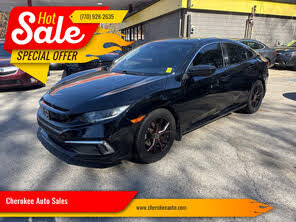
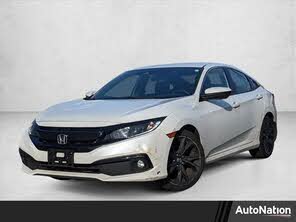
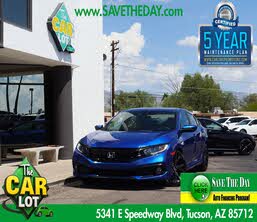
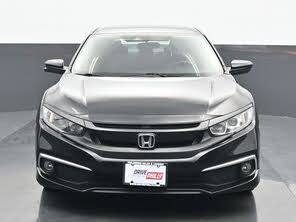
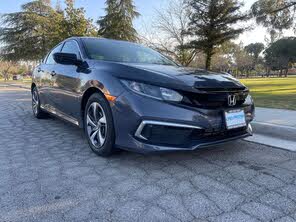
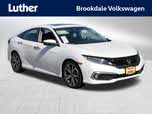
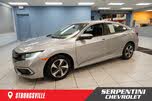
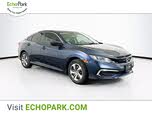
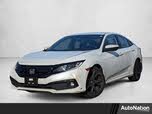
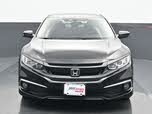
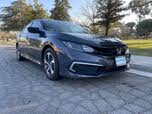
The 2019 Honda Civic brought its own brand of upscale style, featuring a new gloss-black upper grille, a revised lower bumper, and larger 18-inch wheels. The sedan's silhouette was graceful, with a long hood balancing a sizable cabin and short tail, which featured unique wraparound LED lights. The Touring-trim test car came with chrome door handles and LED headlights that looked like hundreds of tiny crystals. For 2019, Honda added a new Sport trim with a center-mounted exhaust and some exterior flash of the performance-oriented Si trim for thousands of dollars less.
The Civic Hatchback, listed as a separate model, had a tall and aggressive rear end, while the Coupe model offered a more balanced alternative. The max-attack Civic Type R, available only in hatchback form, was essentially a race car. The interior maintained a high-tech yet simplified theme, with a central LCD screen for the tachometer and speedometer, a thin center stack with minimal buttons, and clean, linear lines. Despite a starting price under $20,000, the Civic's switchgear, buttons, and fabrics felt built to last.
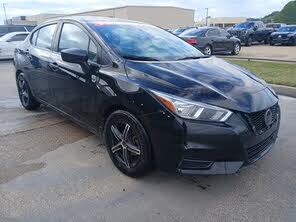
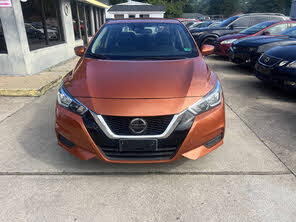
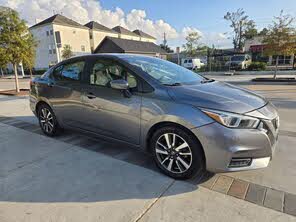
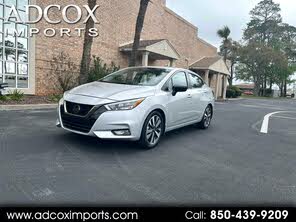
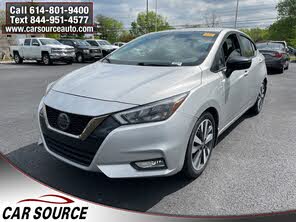
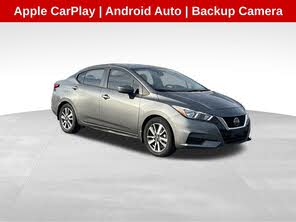
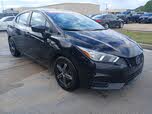
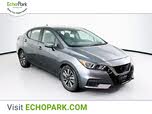
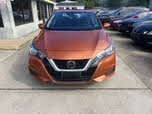
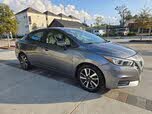
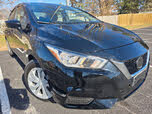
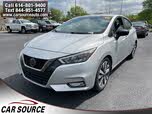
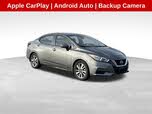
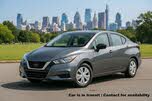
The 2020 Nissan Versa, in contrast, moved away from the "big car" styling details of its predecessor. It adopted a more handsome design, taking cues from its larger siblings, the Maxima and Altima. The cabin looked similar to that of the Nissan Kicks, offering plenty of interior space for a subcompact sedan. The test model featured a two-tone theme with dark charcoal and grayish cream colors in the seats and dash, adding a bit of stylistic flair.
The Versa came in three trims: S, SV, and SR. The S trim included 15-inch steel wheels, black plastic door handles, and cloth seating for five. The SV trim upgraded to 16-inch alloy wheels, heated side mirrors, and body-color door handles. The range-topping SR featured 17-inch alloy wheels, fog lights, and a unique dark-chrome grille design. However, the new Versa's cabin included some harsh plastics, and there was no option for power-adjustable seats.


The 2019 Honda Civic offered a range of engines. The LX and Sport sedans and coupes came with a 2.0-liter inline 4-cylinder engine producing 158 horsepower and 138 pound-feet of torque. The sedans had a standard 6-speed manual transmission, while the coupe's manual was standard only on the Sport. The EX and above trims, like the Touring, received a turbocharged 1.5-liter inline-4 with 174 hp and 162 lb-ft, paired with a continuously variable transmission (CVT). The hatchback exclusively featured the turbo engine, making 180 hp in the Hatchback Sport with a standard manual transmission. The Si and Type R models offered even more power, with the Si boosting the 1.5-liter engine to 205 hp and 192 lb-ft, and the Type R producing 306 hp and 295 lb-ft from a re-engineered 2.0-liter engine.
The Civic's engines delivered smoothness and refinement, with the turbo engine offering better mid-range acceleration than the base 2.0-liter. The CVT was impressive, simulating gear ratios without straining the engine. The Civic's handling was superb, with excellent steering feel, a well-balanced suspension, and strong brakes. It was set up for sportier drivers but remained comfortable and reliable for everyday use.
The 2020 Nissan Versa retained the same 1.6-liter 4-cylinder engine as its predecessor but with a bit more power, now making 122 horsepower and 114 pound-feet of torque. The engine sent power to the front wheels through either a 5-speed manual or CVT. The S trim came standard with the manual transmission, while the CVT was standard on the SV and SR trims. The Versa's acceleration improved, making it more capable of getting up to highway speeds. The CVT managed power well, with a Sport mode for livelier performance.
The Versa's driving experience was decent, with responsive steering and quick turn-in. The body leaned at higher speeds, but it settled into an equilibrium position for precise turns. The manual transmission returned fuel economy of 27 mpg city, 35 highway, and 30 combined, while the CVT offered 32/40/35. In a week of mixed driving, the Versa achieved 34.7 mpg.
The 2019 Honda Civic's interior featured a touchscreen with a volume knob and five shortcut buttons, making it easier to use than previous models. The three-spoke steering wheel controlled the central display in the instrument panel, providing quick access to various functions. The rear seat offered optional two-stage heated outboard seats, with passable head- and legroom for long trips. The sedan's trunk provided 15.1 cubic feet of cargo space, while the coupe's trunk was smaller at 11.9 to 12.1 cubic feet. The hatchback offered the most cargo space, with up to 25.7 cubic feet and 46.2 cubic feet with the rear seats folded. The center console had storage trays, a deep center storage bin, and removable cupholders. Visibility was good in all directions, especially in the sedan.
The 2020 Nissan Versa retained the previous generation's trunk size, offering 15 cubic feet of cargo space. However, it lost 6 inches of rear legroom, making the backseat less spacious. The front seats had plenty of legroom, even for taller drivers. The Versa's interior was straightforward but featured a two-tone theme and unique seat designs. The SV trim added an armrest to the driver's seat and an upgraded infotainment system with satellite radio and smartphone connectivity.
The 2019 Honda Civic's Android-based infotainment system felt dated compared to newer Honda models. However, it redeemed itself with standard Apple CarPlay and Android Auto. The 450-watt, 10-speaker stereo on the Touring trim no longer rattled the back window, and Honda's LaneWatch provided a live feed of the right-side blind spot. The Garmin-based navigation system offered better graphics and quick, accurate voice-based input for addresses.
The 2020 Nissan Versa stepped up its game with a 7-inch touchscreen, Bluetooth connectivity, Siri Eyes Free, and a hands-free text-messaging assistant. The SV trim featured the upgraded NissanConnect system with Apple CarPlay and Android Auto. The SV also had an upgraded instrument panel with a digital screen, offering various functions like safety alerts, Bluetooth streaming audio, and fuel-economy stats. This system provided much of the functionality of more advanced systems without requiring a full instrument panel replacement.
The 2019 Honda Civic came standard with Honda Sensing on all trims except the Si and Type R. This suite included forward-collision alert with emergency braking, lane-keep assist, and adaptive cruise control. The IIHS rated various 2016–2018 Civic models with its top Good rating in all six crash tests and Superior for crash-prevention features. The NHTSA awarded the 2019 Civic five stars in all categories, except for four stars in the coupe's passenger-side frontal crash rating.
The 2020 Nissan Versa added standard driver-assistance features like automatic emergency braking, pedestrian detection, lane-departure warning, and automatic high beams. Other standard safety features included a reversing camera, front- and side-impact airbags, and Nissan's Easy Fill Tire Alert. However, the inclusion of these features could potentially raise insurance rates due to the higher cost of repairs.
CarGurus highlights
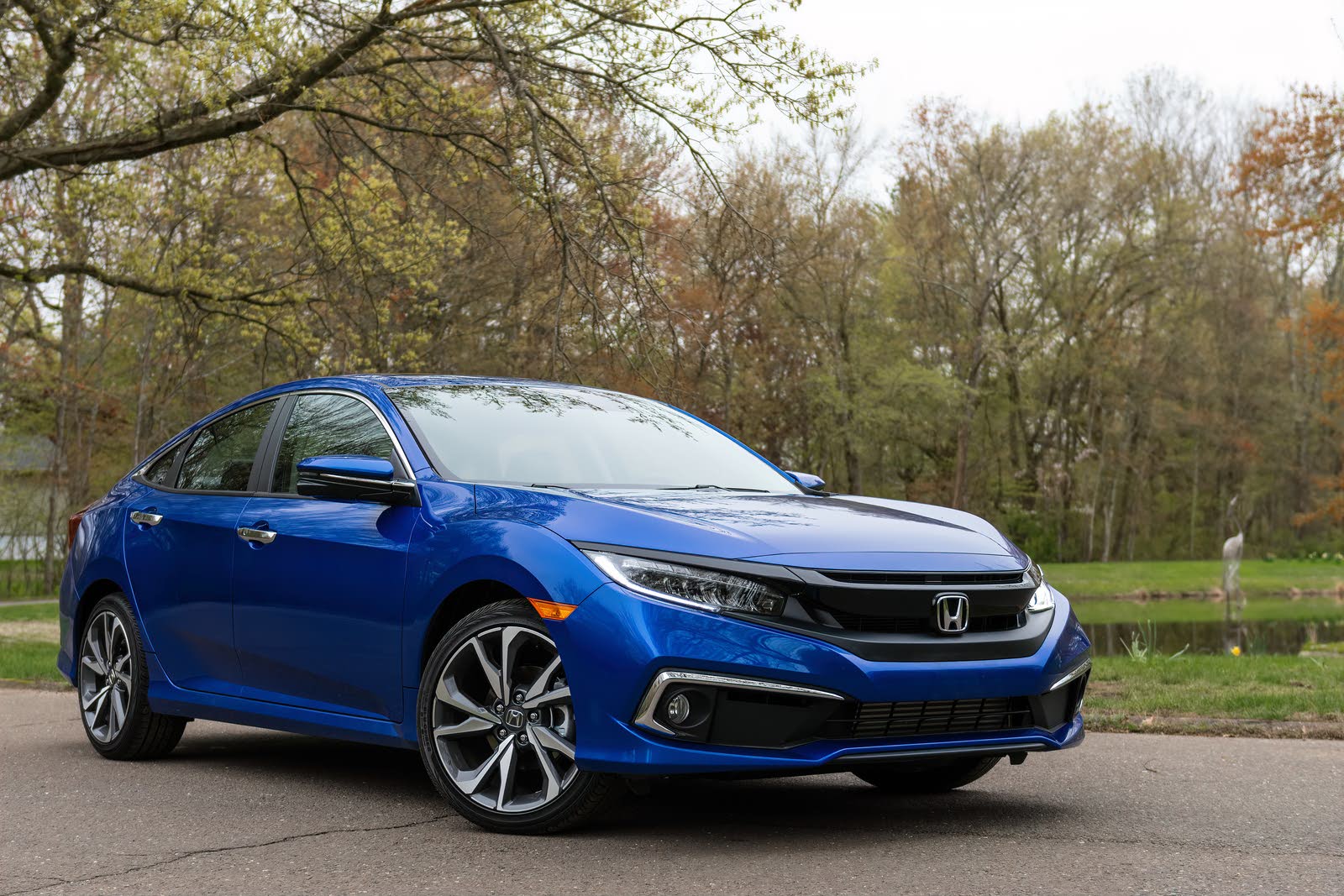
According to CarGurus experts, the overall rating for the 2019 Honda Civic is 7.8 out of 10, while the 2020 Nissan Versa scores 7.2 out of 10. Based on these ratings, the 2019 Honda Civic is the better choice, offering a more powerful and refined driving experience, a spacious and well-designed interior, and advanced safety features as standard.
Choose the 2019 Honda Civic if:
- You want a car with a range of powerful engine options, including a turbocharged engine.
- You prioritize a spacious and well-designed interior with ample cargo space.
- You value advanced safety features like Honda Sensing as standard equipment.


Choose the 2020 Nissan Versa if:
- You are looking for a budget-friendly car with a decent amount of standard technology features.
- You prefer a straightforward and functional interior with a large trunk.
- You want a car with improved fuel economy and a more responsive driving experience.




CarGurus highlights
According to CarGurus experts, the overall rating for the 2019 Honda Civic is 7.8 out of 10, while the 2020 Nissan Versa scores 7.2 out of 10. Based on these ratings, the 2019 Honda Civic is the better choice, offering a more powerful and refined driving experience, a spacious and well-designed interior, and advanced safety features as standard.
Choose the 2019 Honda Civic if:
Shop Now- You want a car with a range of powerful engine options, including a turbocharged engine.
- You prioritize a spacious and well-designed interior with ample cargo space.
- You value advanced safety features like Honda Sensing as standard equipment.




Choose the 2020 Nissan Versa if:
Shop Now- You are looking for a budget-friendly car with a decent amount of standard technology features.
- You prefer a straightforward and functional interior with a large trunk.
- You want a car with improved fuel economy and a more responsive driving experience.


By: CarGurus + AI
At CarGurus, our team of experienced automotive writers remain at the heart of our content operation, conducting hands-on car tests and writing insightful guides that are backed by years of industry experience. To complement this, we are harnessing AI to make our content offering more diverse and more helpful to shoppers than ever. To achieve this, our AI systems are based exclusively on CarGurus content, ratings and data, so that what we produce is both unique to CarGurus, and uniquely helpful to car shoppers.