2020 Ford Explorer vs 2019 BMW X5
Overview | |
MSRP$60,700 | MSRP$32,765 |
Listings295 | Listings549 |
Ratings & Reviews | |
User Reviews | User Reviews |
Expert reviews7.8 out of 10 | Expert reviews7.2 out of 10 |
Pros
Cons
| |
2019 BMW X5 Reviews SummaryThe BMW X5 redefined SUVs 20 years ago, leaning into the idea that you could have truck form and car function all in one package. In fact, BMW branded the original X5 as an SAV—a Sport Activity Vehicle—to help emphasize the fact that it drove as well as the company's famous sport sedans. And while that claim was a bit of an overreach, the original X5 did outperform its SUV competitors on the road. Now in its fourth generation, BMW’s midsize crossover continues to deliver on that two-decade-old promise: The X5 delivers car-like handling in an SUV form. And while the 2019 X5 stretches 1 inch longer, 3 inches wider, and 1 inch taller than last year's model, you’d have to look closely to notice the differences. Most obvious is a new and bigger kidney grille with active shutters. It has already received flak for being “comically large,” though in my opinion, it seems proportional to the rest of the vehicle—enough to make me wonder if the grilles on previous iterations of the X5 were too small. Inside, you’ll find a redesigned interior with an updated version of the iDrive system, and a suite of Level 2 autonomous technology that unfortunately leaves a lot to be desired. But that shouldn’t dissuade you from BMW’s revolutionary recreational vehicle, because there’s still a lot to love. | |
2020 Ford Explorer Reviews SummaryFor nearly 30 years, the Ford Explorer has settled into the American lexicon like Cheerios. We've gobbled up millions of them, from the rock-crawling Eddie Bauers of the 1990s to the brand-new ST that can take down sports cars. The 2020 Explorer brings an all-new chassis, cranks up the technology, and introduces hybrid and high-performance powertrains in a space the size of a small living room. The Explorer's also getting very expensive while other automakers catch on to Ford's winning formula—for a lot less money. | |
Popular Features & Specs | |
Engine3.0L 335 hp I6 | Engine2.3L 300 hp I4 |
DrivetrainAWD | DrivetrainRWD |
Seating Capacity7 | Seating Capacity7 |
Horsepower335 hp @ 5500 rpm | Horsepower |
MPG City20 | MPG City21 |
MPG Highway26 | MPG Highway28 |
Engine | |
Engine Name3.0L 335 hp I6 | Engine Name2.3L 300 hp I4 |
Torque330 lb-ft @ 1500 rpm | Torque |
Horsepower335 hp @ 5500 rpm | Horsepower |
DrivetrainAWD | DrivetrainRWD |
Fuel Economy | |
MPG City20 | MPG City21 |
MPG Highway26 | MPG Highway28 |
Interior | |
Seating Capacity7 | Seating Capacity7 |
Key Features | |
Navigation SystemStandard | Navigation System |
Sunroof/MoonroofStandard | Sunroof/Moonroof |
Safety | |
Front Crash Overall4 | Front Crash Overall5 |
Side Crash Overall5 | Side Crash Overall5 |
Dimensions & Capacity | |
Cargo Space33.9 cu ft | Cargo Space18.2 cu ft |
Curb Weight4813 lbs | Curb Weight4345 lbs |
Height69.0 in | Height69.9 in |
Length194.3 in | Length198.8 in |
Width87.3 in | Width89.3 in |
Wheelbase117.1 in | Wheelbase119.1 in |
Maximum Payload849 lbs | Maximum Payload1425 lbs |
Number of doors4 | Number of doors4 |
Maximum Towing Capacity7209 lbs | Maximum Towing Capacity5300 lbs |
Standard Towing Capacity6603 lbs | Standard Towing Capacity |
Overview | ||
MSRP | $60,700 | $32,765 |
Listings | ||
Ratings & Reviews | ||
User reviews | ||
Expert reviews | 7.8 out of 10Read full review | 7.2 out of 10Read full review |
Pros & cons | Pros
Cons
| |
Summary | The BMW X5 redefined SUVs 20 years ago, leaning into the idea that you could have truck form and car function all in one package. In fact, BMW branded the original X5 as an SAV—a Sport Activity Vehicle—to help emphasize the fact that it drove as well as the company's famous sport sedans. And while that claim was a bit of an overreach, the original X5 did outperform its SUV competitors on the road. Now in its fourth generation, BMW’s midsize crossover continues to deliver on that two-decade-old promise: The X5 delivers car-like handling in an SUV form. And while the 2019 X5 stretches 1 inch longer, 3 inches wider, and 1 inch taller than last year's model, you’d have to look closely to notice the differences. Most obvious is a new and bigger kidney grille with active shutters. It has already received flak for being “comically large,” though in my opinion, it seems proportional to the rest of the vehicle—enough to make me wonder if the grilles on previous iterations of the X5 were too small. Inside, you’ll find a redesigned interior with an updated version of the iDrive system, and a suite of Level 2 autonomous technology that unfortunately leaves a lot to be desired. But that shouldn’t dissuade you from BMW’s revolutionary recreational vehicle, because there’s still a lot to love. | For nearly 30 years, the Ford Explorer has settled into the American lexicon like Cheerios. We've gobbled up millions of them, from the rock-crawling Eddie Bauers of the 1990s to the brand-new ST that can take down sports cars. The 2020 Explorer brings an all-new chassis, cranks up the technology, and introduces hybrid and high-performance powertrains in a space the size of a small living room. The Explorer's also getting very expensive while other automakers catch on to Ford's winning formula—for a lot less money. |
Video | ||
Popular Features & Specs | ||
Engine | 3.0L 335 hp I6 | 2.3L 300 hp I4 |
Drivetrain | AWD | RWD |
Seating Capacity | 7 | 7 |
Horsepower | 335 hp @ 5500 rpm | |
MPG City | 20 | 21 |
MPG Highway | 26 | 28 |
Engine | ||
Engine Name | 3.0L 335 hp I6 | 2.3L 300 hp I4 |
Torque | 330 lb-ft @ 1500 rpm | |
Horsepower | 335 hp @ 5500 rpm | |
Drivetrain | AWD | RWD |
Fuel Economy | ||
MPG City | 20 | 21 |
MPG Highway | 26 | 28 |
Interior | ||
Seating Capacity | 7 | 7 |
Key Features | ||
Navigation System | Standard | |
Sunroof/Moonroof | Standard | |
Safety | ||
Front Crash Overall | 4 | 5 |
Side Crash Overall | 5 | 5 |
Dimensions & Capacity | ||
Cargo Space | 33.9 cu ft | 18.2 cu ft |
Curb Weight | 4813 lbs | 4345 lbs |
Height | 69.0 in | 69.9 in |
Length | 194.3 in | 198.8 in |
Width | 87.3 in | 89.3 in |
Wheelbase | 117.1 in | 119.1 in |
Maximum Payload | 849 lbs | 1425 lbs |
Number of doors | 4 | 4 |
Maximum Towing Capacity | 7209 lbs | 5300 lbs |
Standard Towing Capacity | 6603 lbs | |
Regarding aesthetics and design philosophy, the 2019 BMW X5 concentrated on offering a sedan-like driving experience despite being a large crossover. Though its off-road prowess was limited, it catered effectively to consumers prioritizing smooth on-road performance. The X5 offered a five-passenger configuration, expandable to seven, though the third row was notably cramped.
The base xDrive40i came equipped with a 3.0-liter inline 6-cylinder engine, while the xDrive50i featured a 4.4-liter V8, both paired with a refined ZF 8-speed automatic transmission. The starting price for the xDrive40i was $60,700, offering a range of premium features such as all-wheel drive, adaptive LED headlights, and a panoramic sunroof. Numerous packages allowed for customization, with the top-tier xDrive50i model priced at $75,750, including higher-grade features like real leather upholstery and a 16-speaker Harman Kardon stereo.
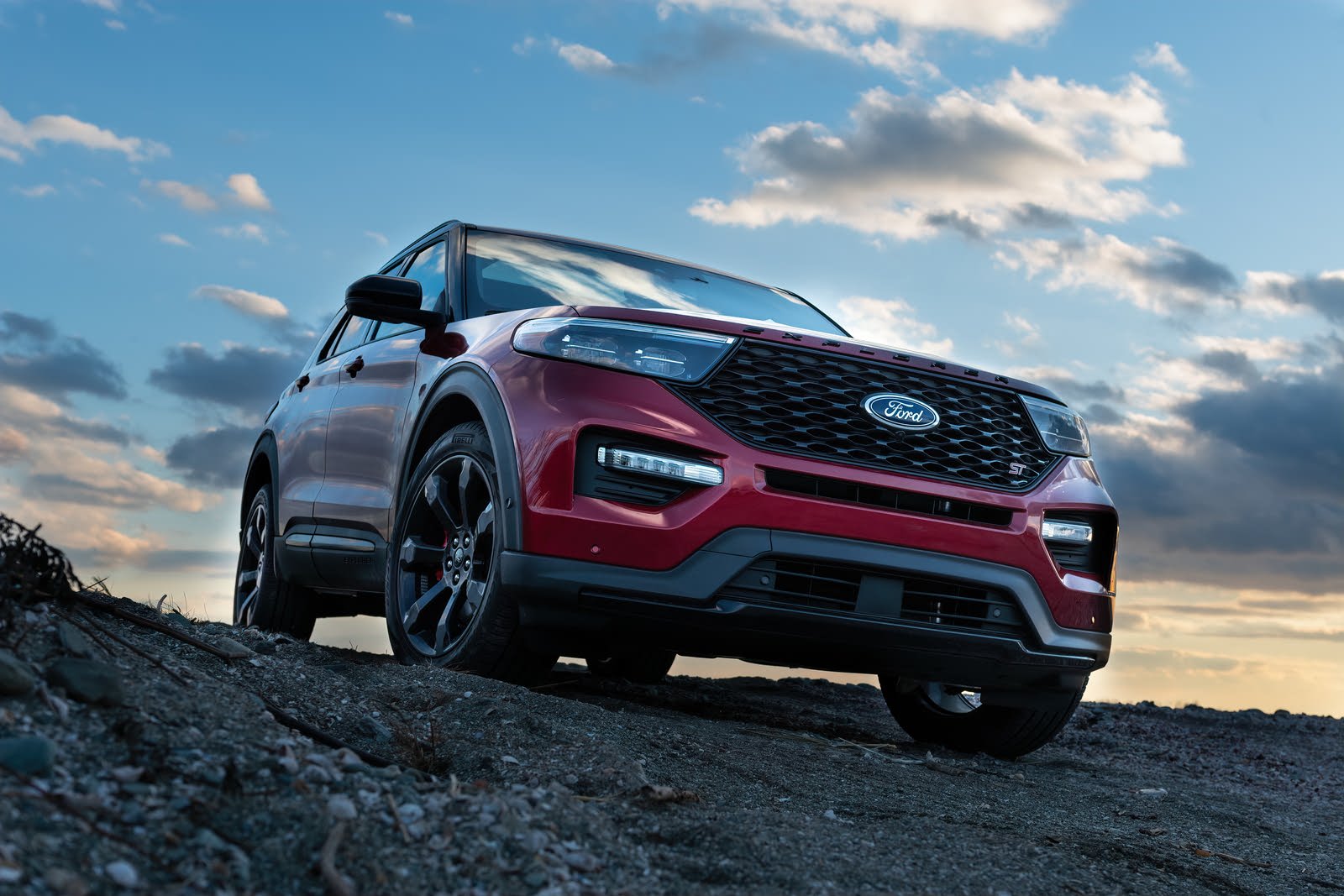
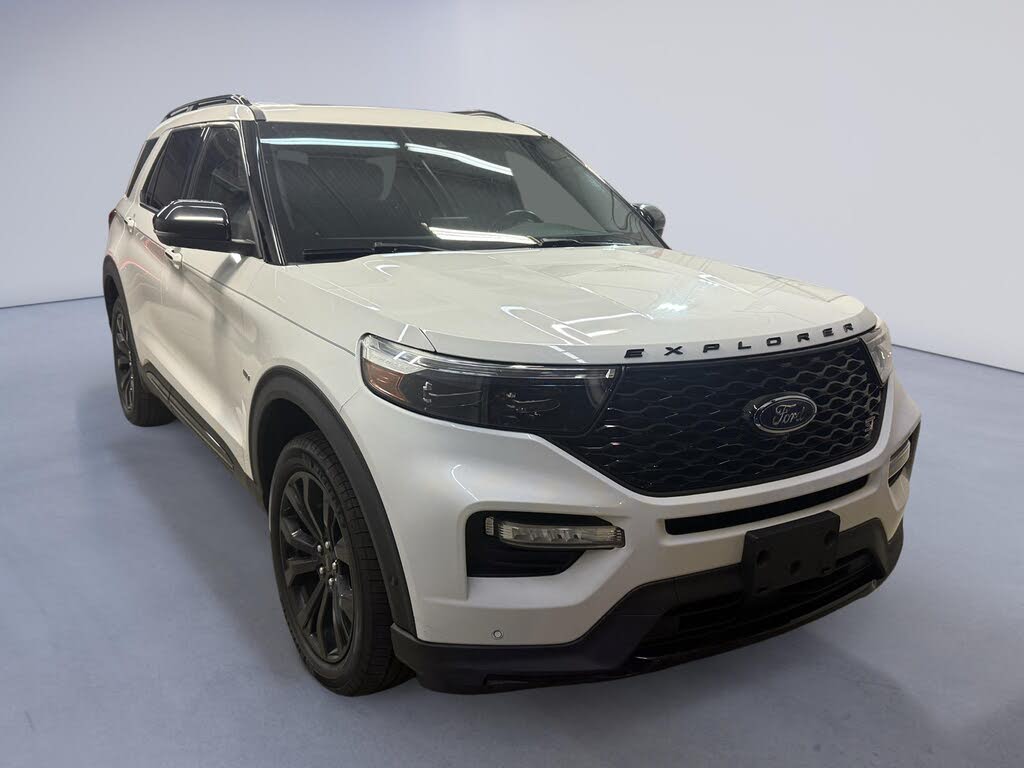
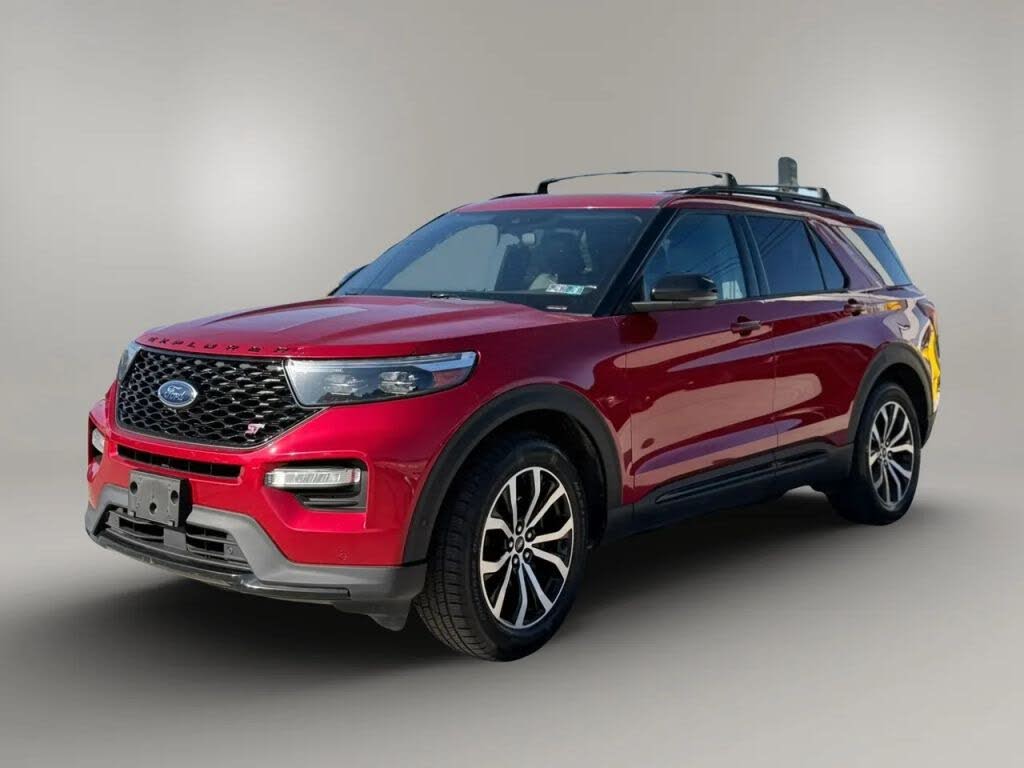
In contrast, the 2020 Ford Explorer embodied an upscale yet utilitarian design, with a lower, more athletic stance compared to its predecessors. The ST version particularly stood out with its aggressive aesthetics, featuring black 21-inch rims, blacked-out trim, and quad exhaust pipes. While the exterior design was commendable, the interior fell short in quality, especially given its price point. Loaded models reached $60,000, venturing into luxury territory, but the material quality—particularly the faux leather and hard plastics—felt subpar compared to competitors.


The 2019 BMW X5's strength lay in its performance. The xDrive40i, with its turbocharged inline 6-cylinder engine, delivered 335 horsepower and 330 lb-ft of torque, achieving 0-60 mph in around 5.3 seconds. The xDrive50i pushed these figures further with its V8 engine, offering 456 hp and 479 lb-ft of torque, capable of hitting 60 mph in approximately 4 seconds.
BMW's 8-speed ZF automatic transmission provided smooth and efficient shifts, contributing to a sporty yet comfortable ride. The vehicle's double-A-arm front and multi-link rear suspension with adaptive dampers could be upgraded with a $1,000 optional air suspension, offering a versatile ride height and excellent bump absorption.
Conversely, the 2020 Ford Explorer focused on rear-wheel-drive (RWD) for better weight distribution, significantly enhancing its handling and driving dynamics. The ST model featured a 3.0-liter twin-turbo V6 engine producing 400 horsepower and 415 lb-ft of torque, mated to a 10-speed automatic transmission. While it lacked adaptive dampers, the Explorer ST exhibited commendable ride quality and flat cornering capabilities.
Ford also offered a 2.3-liter turbo inline-four engine for most trims, delivering 300 hp and 310 lb-ft of torque. Additionally, a 3.3-liter hybrid powertrain provided 318 hp but didn't significantly improve fuel economy. Towing capacities ranged from 5,000 pounds for the hybrid to 5,600 pounds for the V6 with AWD.
Inside, the 2019 BMW X5 transitioned to a more aggressive design, featuring dual 12.3-inch screens for the updated iDrive infotainment interface. However, the interior felt slightly less premium unless upgraded with higher-cost options. While the front seats offered decent support, they could be uncomfortable for long drives without additional options like the $1,600 Luxury Seating package. The rear cargo area boasted 33.9 cubic feet of space, expandable to 72.3 cubic feet with seats folded, and included a helpful split rear tailgate for easier loading.
The 2020 Ford Explorer excelled in providing spaciousness for passengers. On a road trip, it accommodated three adults comfortably with ample room for luggage and gear. The third row, while not luxurious, could fit six-foot adults for short trips. Cargo space behind the third row was 18 cubic feet, expanding to 88 cubic feet with seats folded—one of the largest in its class. The Explorer also corrected previous ergonomic flaws, incorporating physical knobs and switches but retaining some inconvenient touch controls.
Technological features in the X5 were a mixed bag. The iDrive interface was functional but less user-friendly than rivals. Features like gesture control and voice recognition were inconsistent, and the Driving Assistance Plus package for semi-autonomous driving was unreliable at high speeds. However, the Extended Traffic Jam Assistant worked smoothly in stop-and-go traffic. Options like Parking Assistant Plus, night-vision system, and a 12-speaker Harman Kardon stereo provided added conveniences.
The 2020 Ford Explorer included standard tech like an 8-inch touchscreen, Sync 3 infotainment, Apple CarPlay, Android Auto, and keyless entry. The Premium Technology Package for ST and Platinum models introduced a 10-inch vertical touchscreen and a 12-inch digital instrument cluster. While the interface was user-friendly, it lacked innovation and customization. The Co-Pilot360 Assist+ system for semi-automated driving also lagged behind competitors in functionality.
The 2019 BMW X5's new brake-by-wire setup facilitated its semi-autonomous driving features but felt slightly unnatural during final braking moments. The X5 received a 4-star rating from the NHTSA and was named a Top Safety Pick+ by the IIHS, scoring well in all tests.
The Ford Co-Pilot 360 system in the 2020 Explorer included standard features like forward emergency braking and blind-spot monitoring. The Assist+ package added adaptive cruise control with steering assist and reverse braking, which occasionally malfunctioned. The Explorer scored "Acceptable" in the IIHS's small overlap test on the driver's side, yet to be fully tested by the NHTSA.
CarGurus highlights

According to CarGurus experts, the overall rating for the 2019 BMW X5 was 7.8 out of 10, while the 2020 Ford Explorer scored 7.2 out of 10. Based on these ratings, the 2019 BMW X5 edges out the 2020 Ford Explorer. While the Explorer offers impressive space and a strong engine lineup, the X5 excels in delivering a balanced mix of performance, technology, and safety features, making it the better choice overall.
Choose the 2020 Ford Explorer if:
- You need a spacious three-row SUV with one of the largest cargo capacities in its class.
- You're looking for a vehicle with a sporty design and RWD for better driving dynamics.
- You want standard advanced tech features and a versatile engine lineup, including a potent twin-turbo V6 in the ST model.





Choose the 2019 BMW X5 if:
- You prioritize a sporty driving experience with powerful engine options.
- Advanced suspension systems and adaptive ride height are important to you.
- A premium safety rating and comprehensive semi-autonomous technology are crucial.


CarGurus highlights
According to CarGurus experts, the overall rating for the 2019 BMW X5 was 7.8 out of 10, while the 2020 Ford Explorer scored 7.2 out of 10. Based on these ratings, the 2019 BMW X5 edges out the 2020 Ford Explorer. While the Explorer offers impressive space and a strong engine lineup, the X5 excels in delivering a balanced mix of performance, technology, and safety features, making it the better choice overall.
Choose the 2020 Ford Explorer if:
Shop Now- You need a spacious three-row SUV with one of the largest cargo capacities in its class.
- You're looking for a vehicle with a sporty design and RWD for better driving dynamics.
- You want standard advanced tech features and a versatile engine lineup, including a potent twin-turbo V6 in the ST model.
Choose the 2019 BMW X5 if:
Shop Now- You prioritize a sporty driving experience with powerful engine options.
- Advanced suspension systems and adaptive ride height are important to you.
- A premium safety rating and comprehensive semi-autonomous technology are crucial.

By: CarGurus + AI
At CarGurus, our team of experienced automotive writers remain at the heart of our content operation, conducting hands-on car tests and writing insightful guides that are backed by years of industry experience. To complement this, we are harnessing AI to make our content offering more diverse and more helpful to shoppers than ever. To achieve this, our AI systems are based exclusively on CarGurus content, ratings and data, so that what we produce is both unique to CarGurus, and uniquely helpful to car shoppers.

