2007 Hyundai Sonata Reviews, Pricing & Specs
Write a review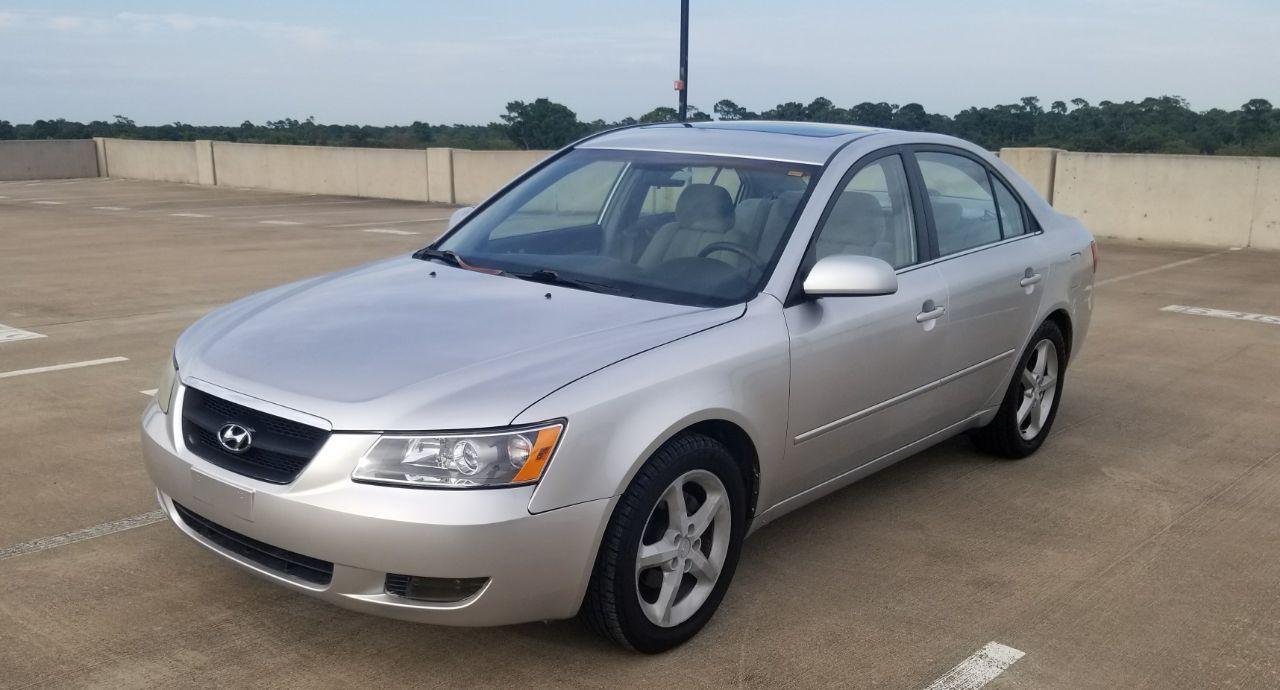
The Sonata was relaunched last year as an all-new model, and Hyundai has added even more features that give the car great bang for the buck.

The first-generation Sonata left Hyundai’s factories with a rounded, almost bulbous look that was as awkward as it was boring. The 2006 redesign netted a completely new car with smooth lines and a grown-up feel. In higher trims, the Sonata benefits from larger 17-inch wheels that give it an almost muscular and sporty look. Around back, the simple but attractive design continues with large taillights and a tasteful absence of huge logos and text.
The same theme that defines the Sonata’s exterior continues inside. The dash and center stack are uncluttered, and the layout of buttons and controls puts everything within reach of the driver. Passengers in the spartan back seat are treated to a flat but comfortable bench and not much else. Rear headroom is generous, thanks to a gently sloping roofline and legroom is more than acceptable for all but the tallest adults.

Hyundai's cars haven’t traditionally offered the most exciting driving experience, and while the Sonata isn’t a thrill ride, it’s got more than enough power to leave an impression. The 2.4-liter inline-4 delivers 162 horsepower to the front wheels through either a 5-speed manual or a 4-speed automatic. That doesn’t sound like a lot of power, and it isn’t, but it’s enough to get the Sonata moving quickly when necessary. The manual gearbox’s shifts are crisp and solid, but the throw is a bit too long to give the car a truly sporty feel.
The larger and more powerful 3.3-liter V6 produces 234 hp and 226 pound-feet of torque through a 5-speed automatic gearbox. Hyundai says the Sonata will do 0-60 mph in 7.5 seconds with the V6 on board, which is more than quick enough for a family sedan. The 5-speed automatic is responsive and works well around town, where stop-and-go traffic can sometimes cause stutters.
The Sonata handles competently but is less refined and controlled than the Honda Accord and Toyota Camry. There’s more body roll and movement than in the other two cars, but steering and braking are both direct and inspire confidence. Rough pavement gives the Sonata a hard time, especially with the larger wheels and tires that come with higher trim levels. Even small bumps and knocks make their way into the cabin, which can make for a busy and annoying ride on some road surfaces.

The new Sonata looks and feels more expensive than it is, and it represents a big leap forward for the model in terms of construction and materials quality. Hyundai has been hard at work, trying to shed its budget brand image and the Sonata’s interior is a great showcase of those efforts. There are still more cheap-feeling plastics than what can be found in an Accord or a Camry, but the majority of surfaces in the Sonata’s cabin feel premium and are attractively finished.
The center stack features a stereo system that has been integrated into the dash, which gives a cohesive and tidy look to the cabin. Outward visibility is good in nearly every direction, but wide C-pillars obstruct blind spot views in some situations.


The Sonata is quite well equipped in its base trim level, and its price sweetens the deal even more. The GLS starts at $17,195, and though many people will opt for the optional automatic transmission, that drives the price up by only $1,100. The SE trim steps up to the powerful V6 engine and opens up a long list of available features for just $20,995. Buyers willing to shell out an extra $2,000 on top of the SE’s price tag can nab the Sonata Limited, which brings nearly all of the goodies Hyundai could stuff into the car.
Fuel economy won’t generate many complaints, either. Sonatas equipped with the 4-cylinder engine and manual transmission are good for 21 mpg city, 31 highway, and 25 combined. With an automatic gearbox, those numbers change to 21 mpg city, 30 highway, and 24 combined. The V6 engine performs decently, scoring 18 mpg city, 27 highway, and 21 combined.

User reviews for 2007 Hyundai Sonata
Write a review2007 Hyundai Sonata Pricing
Trims & specs
Air Conditioning
Single front air conditioning zones
Airbags
Dual front airbags · Passenger airbag deactivation: occupant sensing deactivation · Front side airbags · Front side curtain airbags
Audio System
Antenna Type: element · Single disc in-Dash CD · MP3 player: CD MP3 Playback · AM/FM radio · Total Number of Speakers: 6
Brakes
ABS: 4-wheel · Front brake diameter: 11.0 · Front brakes: ventilated disc · Rear brake diameter: 10.3 · Rear brakes: disc
Comfort Features
Armrests: rear center folding with storage · Floor Mat Material: carpet · Steering wheel trim: leather
Convenience Features
Cargo area power outlet: 12V · Center console: front console with storage · Cupholders: front · Multi-function remote: keyless entry · One-touch windows: 1 · Power outlet(s): 12V front · Power steering: hydraulic variable assist · Reading lights: front · Steering wheel: tilt-adjustable · Steering wheel mounted controls: cruise controls · Storage: storage organizer · Vanity mirrors: dual illuminating
Driver Seat
Manual adjustments: 4
Drivetrain
Axle ratio: 3.44
Exterior Features
Door handle color: body-color · Front bumper color: body-color · Grille color: body-color · Mirror color: body-color · Paint: pearl · Rear bumper color: body-color · Window trim: chrome
Headrests
Front headrests: adjustable · Number of front headrests: 2 · Number of rear headrests: 3
Instrumentation
Warnings and reminders: low fuel level
Lights
Headlights: Auto on/off
Mirrors
Exterior mirrors: power
Passenger Seat
Manual Adjustments: 4
Rear Seats
Type: bench
Roof
Sunroof: power glass
Safety
Active head restraints: driver · Child seat anchors: LATCH system · Crumple zones: rear
Seatbelts
Front seatbelts: 3-point · Seatbelt force limiters: front · Seatbelt pretensioners: front · Second row seatbelts: 3-point
Seats
Front seat type: bucket · Rear headrests: adjustable · Rear seat folding: split · Upholstery: cloth
Spare Tire
Mount Location: inside · Size: temporary
Spare Wheel
Rim Type: steel
Suspension
Front Shock Type: gas shock absorbers · Front Spring Type: coil springs · Front Suspension Classification: independent · Front Suspension Type: double wishbones · Rear Shock Type: gas shock absorbers · Rear Spring Type: coil springs · Rear Suspension Classification: independent · Rear Suspension Type: multi-link · Stabilizer bar(s): rear
Tires
Type: all season
Tires and Rims
Wheels: steel
Wheels
Wheel covers: full
Windows
Front wipers: intermittent
Air Conditioning
Single front air conditioning zones
Airbags
Dual front airbags · Passenger airbag deactivation: occupant sensing deactivation · Front side airbags · Rear side curtain airbags
Audio System
Antenna Type: element · Single disc in-Dash CD · MP3 player: CD MP3 Playback · AM/FM radio · 1 subwoofer · Total Number of Speakers: 6
Brakes
ABS: 4-wheel · Front brake diameter: 11.8 · Front brakes: ventilated disc · Rear brake diameter: 11.2 · Rear brakes: disc
Comfort Features
Armrests: rear center folding with storage · Dash trim: simulated wood · Floor Mat Material: carpet · Shift knob trim: leather · Steering wheel trim: leather
Convenience Features
Cargo area power outlet: 12V · Center console: front console with storage · Cupholders: front · Dimming rearview mirror: auto-dimming · Multi-function remote: keyless entry · One-touch windows: 1 · Power outlet(s): 12V front · Power steering: hydraulic variable assist · Reading lights: front · Steering wheel: tilt-adjustable · Steering wheel mounted controls: audio · Storage: front seatback · Vanity mirrors: dual illuminating
Driver Seat
Adjustable lumbar support: manual
Drivetrain
Axle ratio: 3.33
Exterior Features
Paint: pearl
Headrests
Front headrests: adjustable · Number of front headrests: 2 · Number of rear headrests: 3
Instrumentation
Warnings and reminders: low fuel level
Lights
Headlights: Auto on
Mirrors
Exterior mirrors: heated driver mirror
Passenger Seat
Manual Adjustments: 4
Rear Seats
Type: bench
Roof
Sunroof: power glass
Safety
Active head restraints: driver
Seatbelts
Rear center seatbelt: 3-point · Seatbelt force limiters: front · Seatbelt pretensioners: front
Seats
Front seat type: bucket · Rear headrests: adjustable · Rear seat folding: split · Upholstery: premium cloth
Spare Tire
Mount Location: inside · Size: temporary
Spare Wheel
Rim Type: steel
Suspension
Front Shock Type: gas shock absorbers · Front Spring Type: coil springs · Front Suspension Classification: independent · Front Suspension Type: strut · Rear Shock Type: gas shock absorbers · Rear Spring Type: coil springs · Rear Suspension Classification: independent · Rear Suspension Type: multi-link · Stabilizer bar(s): front
Tires
Type: all season
Windows
Front wipers: intermittent
Air Conditioning
Automatic climate control front air conditioning · Single front air conditioning zones
Airbags
Dual front airbags · Passenger airbag deactivation: occupant sensing deactivation · Front side airbags · Rear side curtain airbags
Audio System
Antenna Type: element · Single disc in-Dash CD · MP3 player: CD MP3 Playback · Premium Brand: Infinity · Infinity premium brand speakers · AM/FM radio · 1 subwoofer · Total Number of Speakers: 6
Brakes
ABS: 4-wheel · Front brake diameter: 11.8 · Front brakes: ventilated disc · Rear brake diameter: 11.2 · Rear brakes: disc
Comfort Features
Armrests: rear center folding with storage · Dash trim: simulated wood · Floor Mat Material: carpet · Shift knob trim: leather · Steering wheel trim: leather
Convenience Features
Cargo area power outlet: 12V · Center console: front console with storage · Cupholders: front · Dimming rearview mirror: auto-dimming · Multi-function remote: keyless entry · One-touch windows: 1 · Power outlet(s): 12V front · Power steering: hydraulic variable assist · Reading lights: front · Steering wheel: tilt and telescopic · Steering wheel mounted controls: audio · Storage: front seatback · Vanity mirrors: dual illuminating
Driver Seat
Adjustable lumbar support: manual · Power adjustments: 8
Drivetrain
Axle ratio: 3.33
Exterior Features
Body side moldings: aluminum · Paint: pearl · Rear spoiler color: body-color
Headrests
Front headrests: adjustable · Number of front headrests: 2 · Number of rear headrests: 3
Instrumentation
Warnings and reminders: low fuel level
Lights
Headlights: Auto on
Mirrors
Exterior mirrors: heated driver mirror
Passenger Seat
Manual Adjustments: 4
Rear Seats
Type: bench
Roof
Sunroof: power glass
Safety
Active head restraints: driver
Seatbelts
Rear center seatbelt: 3-point · Seatbelt force limiters: front · Seatbelt pretensioners: front
Seats
Driver seat power adjustments: height · Front seat type: bucket · Rear headrests: adjustable · Rear seat folding: split · Upholstery: leather
Spare Tire
Mount Location: inside · Size: temporary
Spare Wheel
Rim Type: steel
Suspension
Front Shock Type: gas shock absorbers · Front Spring Type: coil springs · Front Suspension Classification: independent · Front Suspension Type: double wishbones · Rear Shock Type: gas shock absorbers · Rear Spring Type: coil springs · Rear Suspension Classification: independent · Rear Suspension Type: multi-link · Stabilizer bar(s): front
Tires
Type: all season
Windows
Front wipers: speed sensitive

