Honda Insight vs Nissan LEAF
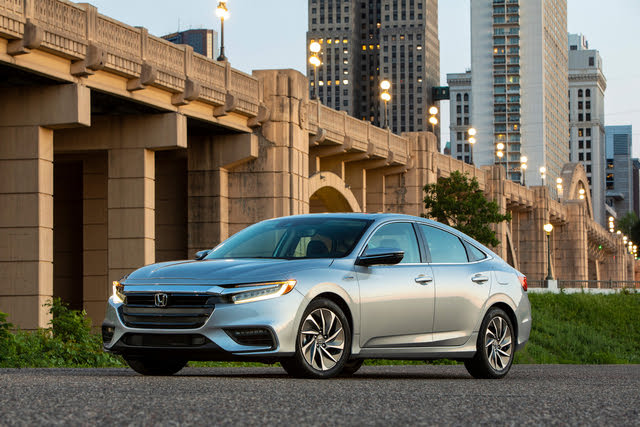
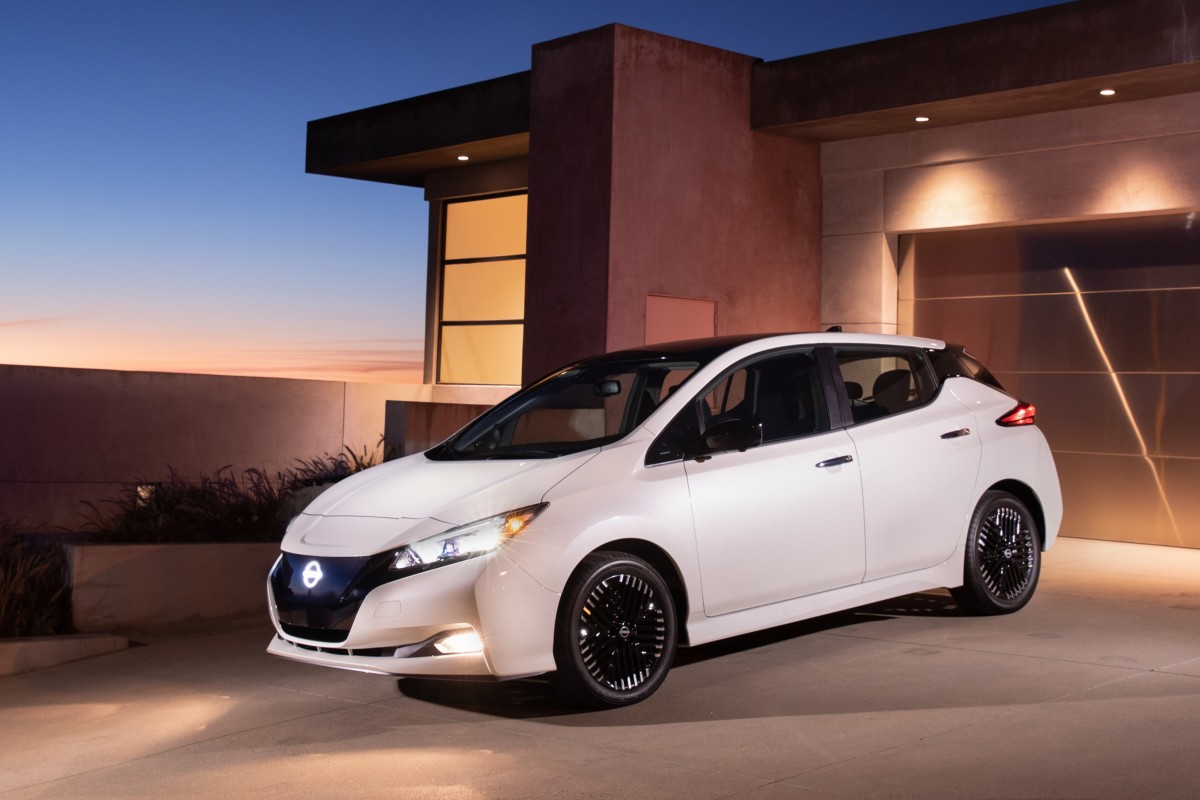
Overview | |
MSRP$22,930 | MSRP$31,600 |
Listings41 | Listings146 |
Ratings & Reviews | |
User Reviews | User Reviews |
Expert reviews7.8 out of 10 | Expert reviews6.8 out of 10 |
Pros
Cons
| |
Reviews SummaryTwenty years ago, the original Honda Insight was the first hybrid to go on sale in America. It had two seats and a funky teardrop shape, but amazing fuel economy. Honda’s next Insight was a Prius copycat, but smaller, cheaper, and less satisfying than the Toyota. Now, this third-generation 2019 Honda Insight adopts traditional 4-door sedan design and offers plenty of interior and trunk space. Plus, it is undeniably more attractive than the Civic on which it is based. Should consumers looking for a practical, affordable, and efficient car consider the new Insight? | |
Reviews SummaryThis is the car I wish Nissan made 10 years ago, when the first-generation Leaf almost stranded me on my way to work. Batteries have improved so much since 2010, they've made those early cars practically worthless on the used market. Case in point: with the second-generation Leaf, Nissan has added a new Plus model that claims up to 226 miles per charge, offers quicker acceleration, and includes more technology for every Leaf trim. It's enough to make the Leaf feel like a real car. | |
Popular Features & Specs | |
Engine1.5L 151 hp I4 Hybrid | Engine147 hp Electric |
Drive TrainFWD | Drive TrainFWD |
Seating Capacity5 | Seating Capacity5 |
EV Battery Capacity1.1 kWh | EV Battery Capacity40 kWh |
MPG City55 | MPG City123 |
MPG Highway49 | MPG Highway99 |
Battery Charge Time (240V) | Battery Charge Time (240V)8 hours |
Engine | |
Engine Name1.5L 151 hp I4 Hybrid | Engine Name147 hp Electric |
Battery Charge Time (240V) | Battery Charge Time (240V)8 hours |
DrivetrainFWD | DrivetrainFWD |
Fuel Economy | |
EV Battery Capacity1.1 kWh | EV Battery Capacity40 kWh |
MPG City55 | MPG City123 |
MPG Highway49 | MPG Highway99 |
Interior | |
Seating Capacity5 | Seating Capacity5 |
Safety | |
Front Crash Overall5 | Front Crash Overall4 |
Side Crash Overall5 | Side Crash Overall5 |
Dimensions & Capacity | |
Cargo Space15.1 cu ft | Cargo Space23.6 cu ft |
Curb Weight2987 lbs | Curb Weight3538 lbs |
Height55.6 in | Height61.4 in |
Length183.6 in | Length176.4 in |
Width71.6 in | Width70.5 in |
Wheelbase106.3 in | Wheelbase106.3 in |
Maximum Payload850 lbs | Maximum Payload1220 lbs |
Number of doors4 | Number of doors4 |
Overview | ||
MSRP | $22,930 | $31,600 |
Listings | ||
Ratings & Reviews | ||
User reviews | ||
Expert reviews | 7.8 out of 10Read full review | 6.8 out of 10Read full review |
Pros & cons | Pros
Cons
| |
Summary | Twenty years ago, the original Honda Insight was the first hybrid to go on sale in America. It had two seats and a funky teardrop shape, but amazing fuel economy. Honda’s next Insight was a Prius copycat, but smaller, cheaper, and less satisfying than the Toyota. Now, this third-generation 2019 Honda Insight adopts traditional 4-door sedan design and offers plenty of interior and trunk space. Plus, it is undeniably more attractive than the Civic on which it is based. Should consumers looking for a practical, affordable, and efficient car consider the new Insight? | This is the car I wish Nissan made 10 years ago, when the first-generation Leaf almost stranded me on my way to work. Batteries have improved so much since 2010, they've made those early cars practically worthless on the used market. Case in point: with the second-generation Leaf, Nissan has added a new Plus model that claims up to 226 miles per charge, offers quicker acceleration, and includes more technology for every Leaf trim. It's enough to make the Leaf feel like a real car. |
Video | ||
Popular Features & Specs | ||
Engine | 1.5L 151 hp I4 Hybrid | 147 hp Electric |
Drive Train | FWD | FWD |
Seating Capacity | 5 | 5 |
EV Battery Capacity | 1.1 kWh | 40 kWh |
MPG City | 55 | 123 |
MPG Highway | 49 | 99 |
Battery Charge Time (240V) | 8 hours | |
Engine | ||
Engine Name | 1.5L 151 hp I4 Hybrid | 147 hp Electric |
Battery Charge Time (240V) | 8 hours | |
Drivetrain | FWD | FWD |
Fuel Economy | ||
EV Battery Capacity | 1.1 kWh | 40 kWh |
MPG City | 55 | 123 |
MPG Highway | 49 | 99 |
Interior | ||
Seating Capacity | 5 | 5 |
Safety | ||
Front Crash Overall | 5 | 4 |
Side Crash Overall | 5 | 5 |
Dimensions & Capacity | ||
Cargo Space | 15.1 cu ft | 23.6 cu ft |
Curb Weight | 2987 lbs | 3538 lbs |
Height | 55.6 in | 61.4 in |
Length | 183.6 in | 176.4 in |
Width | 71.6 in | 70.5 in |
Wheelbase | 106.3 in | 106.3 in |
Maximum Payload | 850 lbs | 1220 lbs |
Number of doors | 4 | 4 |


By: CarGurus + AI
At CarGurus, our team of experienced automotive writers remain at the heart of our content operation, conducting hands-on car tests and writing insightful guides that are backed by years of industry experience. To complement this, we are harnessing AI to make our content offering more diverse and more helpful to shoppers than ever. To achieve this, our AI systems are based exclusively on CarGurus content, ratings and data, so that what we produce is both unique to CarGurus, and uniquely helpful to car shoppers.

