As the name suggests, a “hybrid” is a combination of more than one form of propulsion. Trains have been diesel-electric hybrids for decades, but it’s still something of a buzzword in the automotive marketplace. In the world of cars, trucks, and SUVs, a hybrid combines a traditional internal combustion engine (ICE) with some form of electric power source.
There are multiple types of hybrids, such as series hybrids, parallel hybrids, and mild hybrids. What do all these terms mean? And more importantly, how do they impact your driving experience (and your wallet)? Is hybrid technology the most efficient form of propulsion? And why are hybrids becoming so commonplace? Read on, as we break down everything you need to know about the many types of hybrid cars.
What Is a Hybrid Car?
- Full Hybrids
- Mild Hybrids
- Plug-in Hybrids
- EVs and Range Extenders
- Why a Hybrid?
- The First Modern Hybrid Cars
- Our Electrified Future
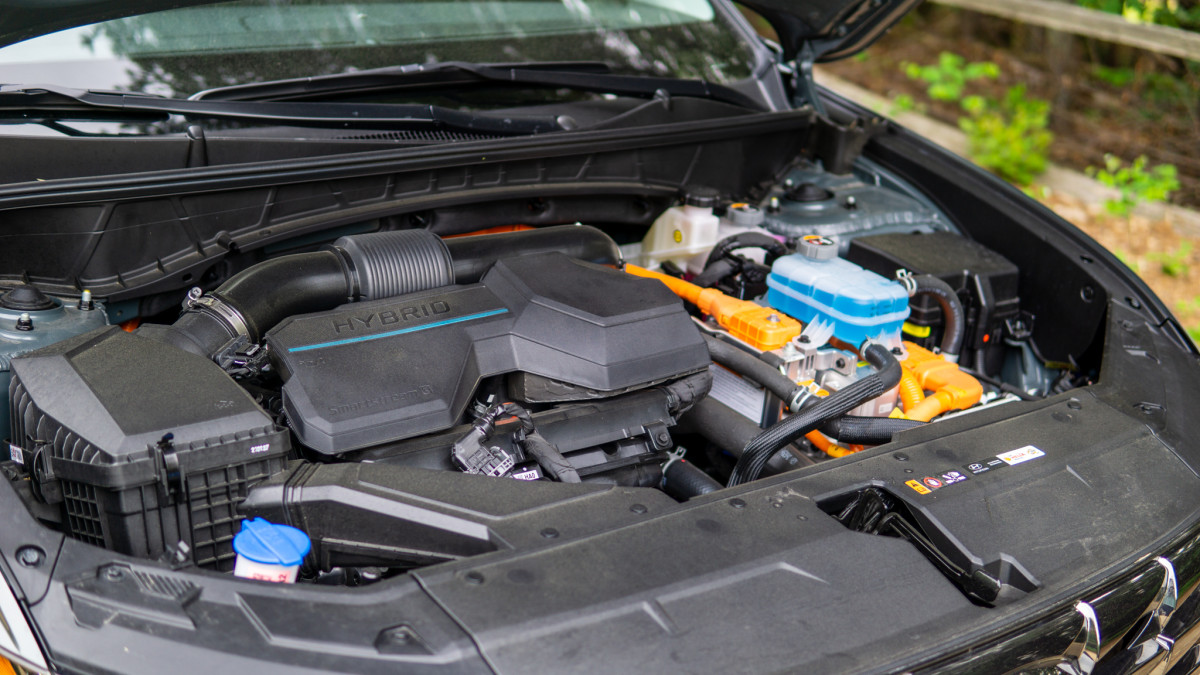
Full Hybrids
A full hybrid can use a combination of an internal combustion engine and electric propulsion. It can run solely on the ICE or on full electric for short bursts. The gasoline engine can propel the car and also acts as a generator to charge up the battery or directly power the electric motor. This type of hybrid also uses a regenerative braking system to recapture some limited energy from decelerating the vehicle. This is especially effective in stop-and-go driving. As a result, full hybrids often have terrific fuel economy ratings for city driving. One of the most popular examples of a full hybrid model is the Toyota Prius. (There is also a plug-in version of the Prius, called the Prius Prime.)
There are many potential setups for a full hybrid. There are integrated traction motors in the transmission or assist motors on the engine. There can also be electric motors at either of the axles. Cars like the Toyota Prius AWD run a full hybrid powertrain at the front wheels and an electric motor at the rear wheels, giving it a new take on AWD.
The battery in a full hybrid is charged by the ICE and in most driving scenarios, the engine and the electric motor(s) work in unison. In many low-speed scenarios, the electric motors will turn the wheels and the gas engine will operate as a generator. If you lay into the throttle a little more heavily, the gas engine will link back up to the transmission and directly power the wheels, with an assist from the electric motor. Once again, the Toyota Prius is the best example of this sort of system.

Mild hybrids
In a mild hybrid, the electric power acts as an assist to the powertrain setup of a conventional car. Mild hybrid vehicles often have a motor generator instead of an alternator. Combined with auto stop-start and the electricity powers vehicle systems such as the climate control and accessories, allowing the engine to cut off and save power while idling. Mercedes-Benz’s EQ Boost and Ram’s eTorque systems are examples of mild hybrid powertrains.
These offer fewer points of control compared to a Prius, where you can select full EV mode or engage B braking mode. The mild-hybrid system provides a modest bump in fuel economy. But the upside is these are far less involved systems, and they really only require that specific components be added to an existing powertrain. This keeps costs down for both the automaker and the consumer.
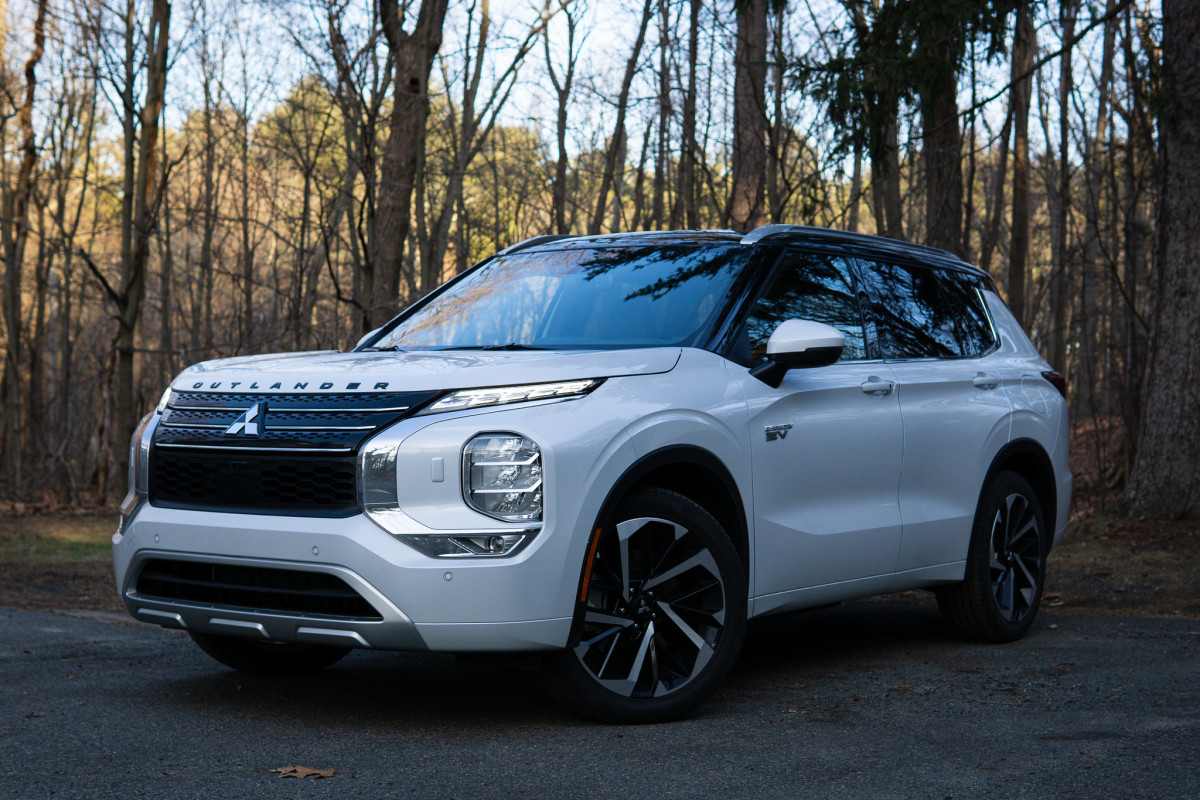
Plug-in hybrids
Plug-in hybrids still seem to confuse many people. The fact you can plug it in does not mean that it is a completely electric vehicle (EV). A plug-in hybrid electric vehicle (PHEV) such as the Mitsubishi Outlander PHEV has an ICE and a slightly larger battery (though nowhere near the size of an EV’s), giving it a limited electric range. It can run as a gas-electric hybrid or in pure EV mode for short distances. The Chrysler Pacifica Hybrid is a notable plug-in hybrid. It has a standout 32-mile electric range and still has gas power. Together, they give the fuel-efficient minivan a range of 520 miles.
The larger batteries found in plug-in hybrid cars sometimes cut into the trunk space, but they offer a lot of advantages. PHEVs have the benefit of some limited EV driving, yet they are not completely tied to the charging network. When you are out of charge, you can rely on the gas engine. A PHEV is also a great way to dip your toes into EVs. You can get used to using various charging stations and can determine if there’s enough accessibility to electrical energy in your region to make a full EV a viable option in your future. A plug-in hybrid is also more likely to qualify for incentives, and you can take advantage of the EV charging spots at malls and parking garages.

EVs and Range Extenders
Electric vehicles exist separately from all of these types of hybrid vehicles. It does not have an internal combustion engine of any kind. It relies solely on the power from a charging station or from regenerative braking.
A less common type of hybrid vehicle is that of an electric vehicle with an optional range extender. The vehicle can be purchased as a pure EV, or it can be fitted with a small internal combustion engine. When the hybrid battery gets low, the electric motor kicks in and generates a charge to the battery, which powers the electric motor. The most common version of this the BMW i3 with the optional range extender.

Why A Hybrid?
Simply put, hybrids are popular for their fuel savings. At the outset of the automobile, there were many forms of propulsion, including gas, diesel, electric, and even steam power. Electric cars date back to the 1890s, along with these other modes of transportation. But gas and diesel won out because of their range, quick refueling times, and the ability to transport large amounts of fuel to predictable refueling locations… aka gas stations.
The gas automobile quickly took over our roads, but the resulting emissions were starting to choke us as well. Smog became a huge problem in big cities in the 1970s, which coincided with a massive oil crisis. In 1975, the US Government laid out the Energy Policy and Conservation Act. It established petroleum reserves and established Corporate Average Fuel Economy standards. This resulted in the standardized fuel economy ratings that we know today. Throughout the years, the bar has been raised on those corporate averages.
At one point, the target fuel consumption was 54.5 mpg by 2025, but that was later rolled back to 49 mpg by 2026. That is the expected average for the entire lineup of a given automaker’s vehicles, including big SUVs, thirsty pickup trucks (heavy-duty trucks are still laughably omitted), sports cars, sedans, wagons, etc. Some automakers have their work cut out for them, and hybridization is a great way to nudge things in the right direction.
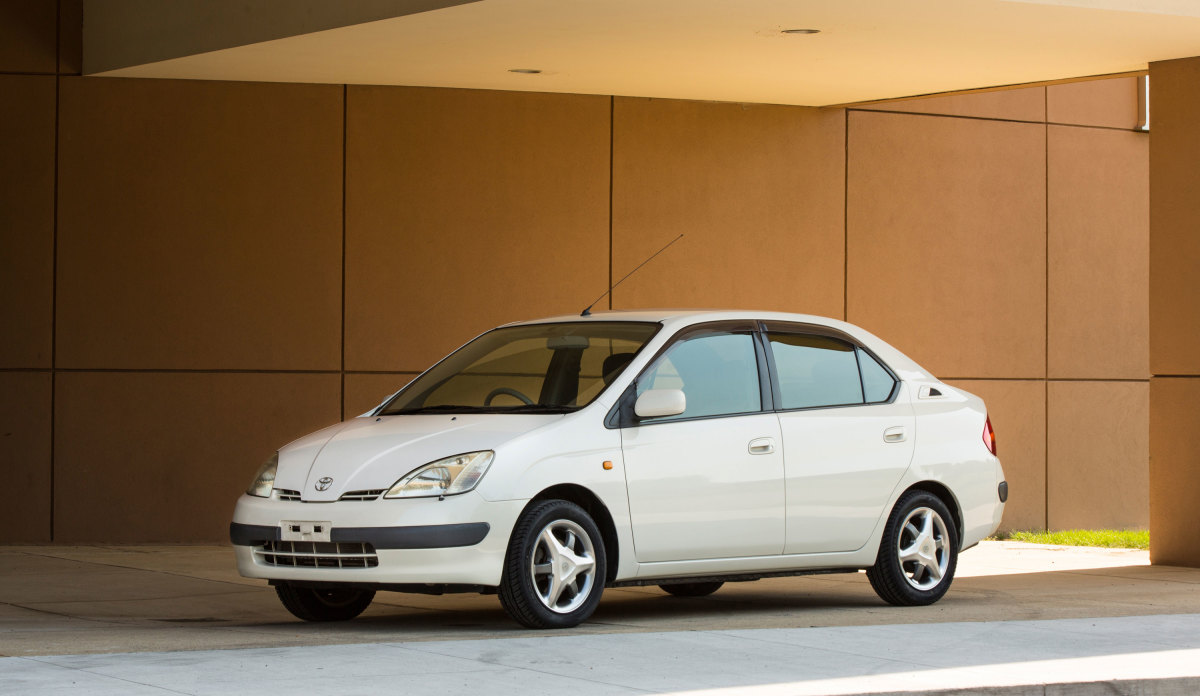
The First Modern Hybrid Cars
Hybrid propulsion has been around since the 1890s, in prototype cars, but the first modern hybrid production car was the Toyota Prius. Toyota used its Echo subcompact car as the platform, and the Prius was introduced in Japan in 1997 and the United States in 2001. It was soon followed by the Honda Insight. At the time, they were fringe vehicles that represented a very small portion of the market (much like the past decade for EVs).
Their popularity was bolstered by the increase in fuel prices during the Iraq War. Honda would offer a hybrid variant of the Civic in 2003 that looked nearly identical to the conventionally powered Civic. Even the American automakers got in on hybrids, with the Ford Escape Hybrid and the co-developed mild-hybrid powertrain that found its way into Dodge, Ram, and General Motors trucks and SUVs. By the end of the 2000s, the hybrid was well on its way and throughout the following decade, it solidified its place in the automotive marketplace.
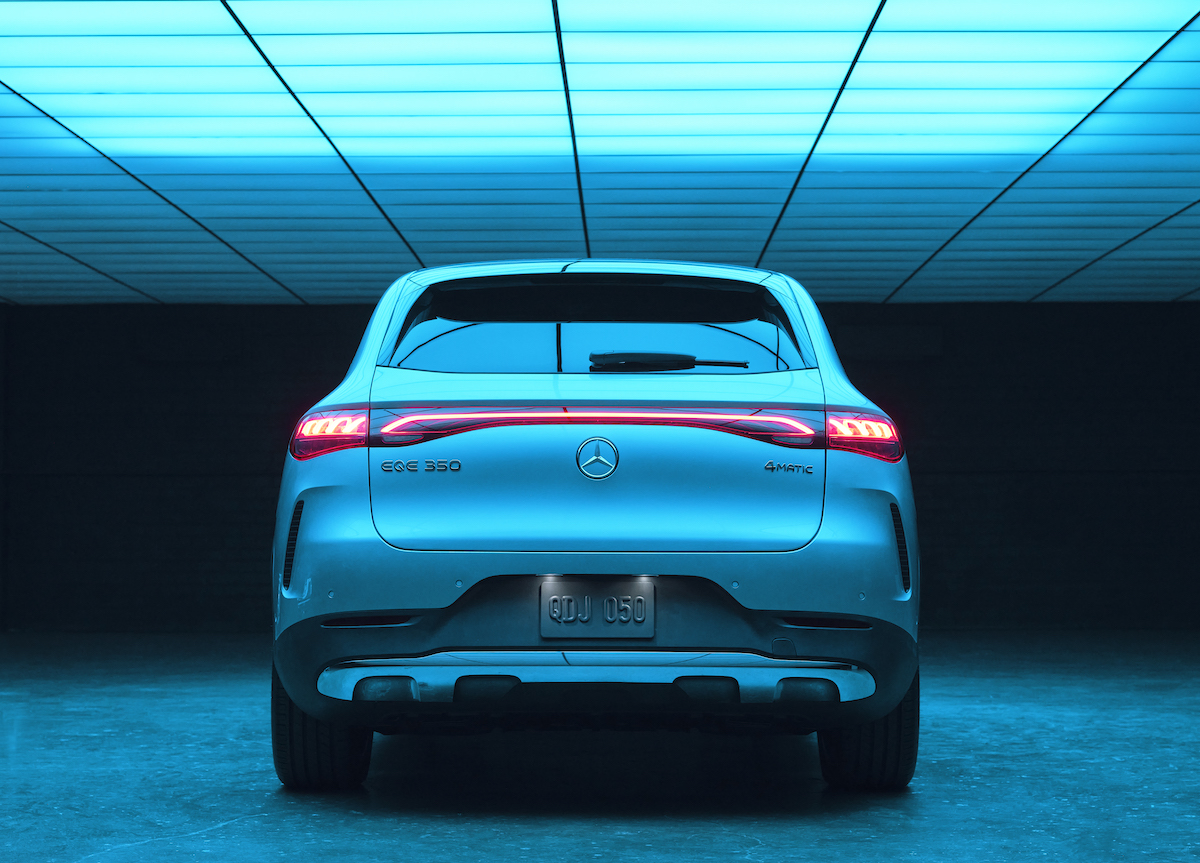
Our Electrified Future
So what does the future hold for hybrids in the automotive marketplace? As much as automakers and regulators place a priority on EVs, hybrids will be just as critical in the new-car market. Where hybrids are broken out as separate trims or even separate models of cars right now, some form of hybrid or mild-hybrid powertrain will likely become the standard powertrain. It’s already happening with brands like Land Rover, Volvo, and others. The cost of the battery pack might make a plug-in hybrid a standard affair, but it’s not outrageous to think that in a decade, you can walk into a dealer and every car in the showroom is a hybrid or EV of some kind. The hybrid drivetrains are becoming so seamless that if it didn’t say, “Hybrid” somewhere on the car, you might not even notice.
Related Topics
The Best Used Electric Cars
The Best Hybrid Cars
The Best Gas Mileage SUVs


