Hybrid cars have officially merged into the automotive mainstream, with nearly 2 million hybrid vehicles sold in the U.S. in 2024. But despite their vast and growing popularity, few people know how hybrid cars actually work.
In this article, we’ll cover exactly what a hybrid vehicle is, how they work, and what their key pros and cons are.
How Do Hybrid Cars Work?
- What Is a Hybrid Car?
- How Do Hybrid Cars Work?
- How Do Mild Hybrid and Plug-in Hybrid Cars Work?
- Are All Hybrids Automatic?
- What Are Hybrid Electric Vehicles (HEVs) and How Do They Work?
- What are Plug-In Hybrid Vehicles (PHEVs) and How Do They Work?
- What are Mild Hybrid Vehicles (MHEVs) and How Do They Work?
- What are Extended-Range Electric Vehicles and How Do They Work?
- Pros and Cons of Hybrid Cars

What Is a Hybrid Car?
A hybrid car is a vehicle that uses two power sources to operate. Those systems can work in tandem or independently. Hybrid drivetrains are mainly designed to improve fuel economy and reduce harmful emissions, although some hybrid systems are tuned for performance rather than all-out efficiency.

How Do Hybrid Cars Work?
In simple terms, hybrid cars work by combining two distinct power sources: a gasoline engine and one or more electric motors powered by an onboard battery. Most modern hybrids use a parallel hybrid system, meaning both power sources typically work together to propel the vehicle, though the car can switch to using just one power source depending on driving conditions. For example, at low speeds, a hybrid may operate on electric power alone, while during heavy acceleration like highway merging, it may primarily use the gas engine.
When you hit the brake pedal in a hybrid vehicle, the electric motor reverses its function and acts as a generator, converting the kinetic energy that would normally be lost as brake heat into electrical energy to recharge the battery. It's a process known as regenerative braking. When this isn't sufficient to maintain battery charge, such as during highway cruising, the gas engine can directly charge the battery.

How Do Mild Hybrid and Plug-in Hybrid Cars Work?
Different types of hybrids work in slightly different ways. Plug-in hybrid electric vehicles (PHEVs) operate similarly to standard hybrids but feature larger batteries and charging ports that allow them to be plugged into external electrical sources. This enables PHEVs to drive much further on electric power alone—exceeding 40 miles in some vehicles compared to just a mile or two for standard hybrids.
Mild hybrids provide the least degree of electrification and can't run on electric power alone, instead using a belt-alternator starter system that combines starter motor, alternator, and small electric motor functions to provide seamless start/stop functionality and extra torque during acceleration.

Are All Hybrids Automatic?
A handful of HEVs have been produced with a manual transmission, but just about every HEV and PHEV on sale today has an automatic transmission. That’s because the car’s control unit decides how to combine the two power sources and an automatic transmission makes that process easier and more efficient.
Many hybrid electric vehicles have a continuously variable transmission (CVT) that allows for a near-infinite range of gear ratios, for maximum fuel-efficiency. Automakers like Toyota and Honda use CVTs in their hybrid vehicles. However, some automakers equip their hybrid models with a conventional torque converter transmission or dual-clutch automatic transmission.
Here is some more information on the various types of hybrid cars:
What Are Hybrid Electric Vehicles (HEVs) and How Do They Work?
The most common type of hybrid car is a hybrid electric vehicle, or HEV for short. These are often simply called hybrids, or full hybrids, and they work by combining two power sources: a gasoline-powered internal combustion engine and one or more electric motors powered by an onboard battery. Despite the 'electric vehicle' part of the name, HEVs are not electric cars.
Most modern HEVs are parallel hybrids. That means that their power sources work together (most of the time) to propel the vehicle. However, HEVs can run on one power source or the other, depending on conditions and their tuning. For example, at low speeds, it’s possible for an HEV to operate on electric-only power alone. Under heavy acceleration, such as merging onto a highway, an HEV might rely almost exclusively on its gas engine to power the vehicle.
This type of hybrid is sometimes referred to as a ‘self-charging hybrid’, since there’s no need, and no way, to plug them in to recharge their battery pack. Instead it’s done mainly through a regenerative braking system, but if there isn’t sufficient deceleration to keep the battery topped off, an HEV can use its gas engine to directly charge its battery.
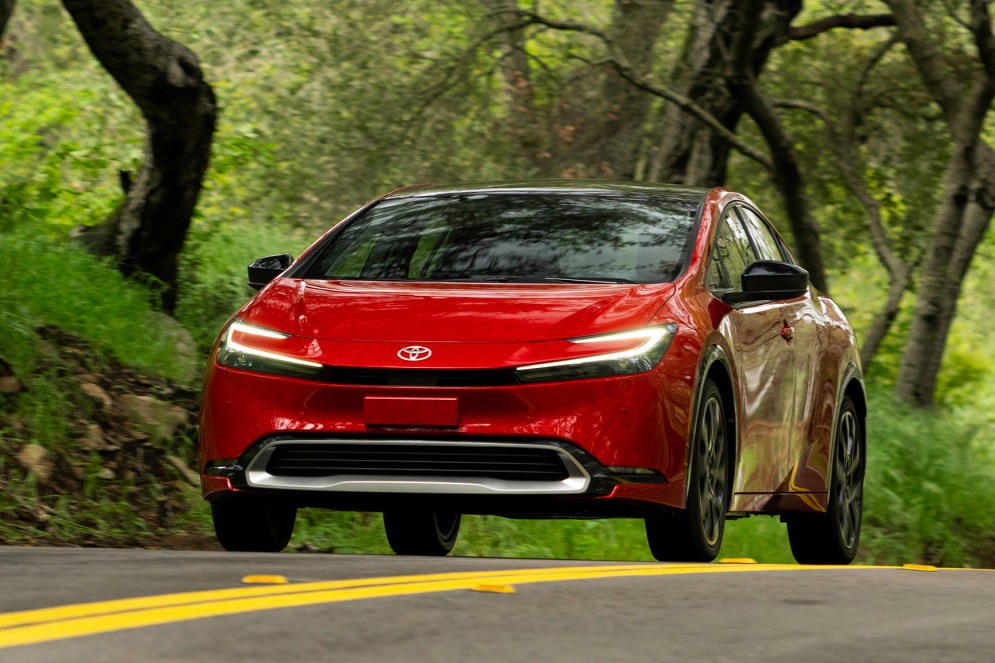
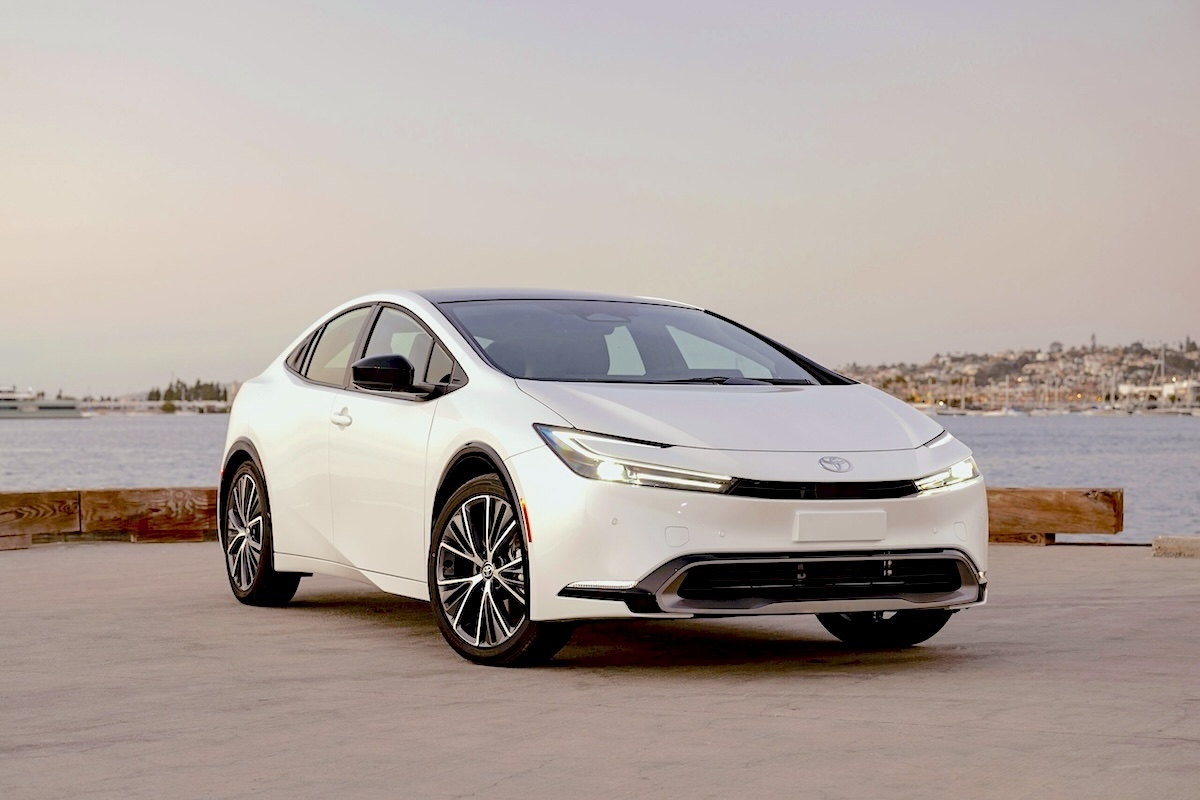
The Toyota Prius is an example of an HEV, and it strategically uses its gas-electric powertrain to return an impressive 57 mpg in combined city/highway driving.
A handful of HEVs have been produced with a manual transmission, but just about every HEV (and PHEV) on sale today has an automatic transmission. That’s because the car’s control unit decides how to combine the two power sources and an automatic transmission makes that process easier and more efficient. Many hybrid electric vehicles have a continuously variable transmission (CVT) that allows for a near-infinite range of gear ratios, for maximum fuel-efficiency. Automakers like Toyota and Honda use CVTs in their hybrid vehicles. However, some automakers equip their hybrid models with a conventional torque converter transmission or dual-clutch automatic transmission.

What are Plug-In Hybrid Vehicles (PHEVs) and How Do They Work?
Plug-in hybrid electric vehicles, known as PHEVs, are another type of hybrid vehicle. Most use the same kind of parallel hybrid setup as an HEV. However, there are a couple of key differences between how a PHEV works and how an HEV works.
First, PHEVs have a charging port, which allows them to be plugged into an external electrical source to charge their onboard battery. HEVs do not ever need to be plugged in. A PHEV battery is also bigger than what you’ll find in an HEV, so a PHEV can go much further using purely electric driving.
Although PHEVs can be plugged in to charge, they don’t have to be. In normal driving, they work like an HEV, with regenerative brakes working to recharge the battery. However, because of the added weight of a larger battery pack, a PHEV is usually less efficient than an HEV when driven strictly like a regular hybrid. Therefore, PHEVs are ideally suited for people with access to a plug, those who do a lot of city driving, or those who drive short distances that can be completed on electric power. Like HEVs, just about every PHEV has an automatic transmission.
The Mitsubishi Outlander Plug-in Hybrid and Toyota Prius Plug-in Hybrid are examples of a PHEV. The plug-in Prius can travel up to 40 miles on battery power alone, compared to just a mile or two for the standard hybrid model. However, ther PHEV model can’t match the fuel efficiency of the standard Prius when operating as a regular hybrid, returning 48 mpg in combined driving.

What are Mild Hybrid Vehicles (MHEVs) and How Do They Work?
The final type of hybrid is a mild hybrid (also known as a mild hybrid electric vehicle, or MHEV). As the name suggests, a mild hybrid provides only a small degree of electrification compared with other hybrid systems and can’t propel a vehicle on electric power alone. Instead, many mild hybrids use a belt alternator starter (BAS)—also known as in Integrated Starter Generator (ISG)—that combines the functions of a starter motor, alternator, and small electric motor into one unit.
A BAS allows for seamless start/stop functionality and can provide a small amount of extra torque to the engine when accelerating, which helps to reduce fuel consumption. Because mild hybrids are less complex than an HEV or PHEV, they are available with both manual and automatic transmissions.
It makes most sense to view mild hybrid vehicles as simply the latest generation of gas models, since many new gas-powered models now have this technology as standard. Every new Volvo gas car on sale, for instance, is a mild hybrid.

What are Extended-Range Electric Vehicles and How Do They Work?
Some electric cars have a gas engine that is used exclusively an electric generator for charging the motor’s battery. Technically, this is known as a series hybrid system, but this type of vehicle is more commonly referred to as a range-extended electric vehicle (REEV), range extender (REX) or extended-range electric vehicle (EREV). An example of a range extender is the RAM 1500 Ramcharger.
Since the gas engine isn’t directly connected to the vehicle’s wheels at all with a range extender, most people consider vehicles with this setup an EV rather than a hybrid.

Pros and Cons of Hybrid Cars
The main benefit of hybrid cars over purely gas-powered cars is fuel economy. And tangential to that, hybrid cars usually have more driving range than those that are only gasoline-powered. For example, the Toyota Corolla Hybrid has an EPA estimated range of 531 miles, whereas the non-hybrid Corolla is rated for 449 miles, despite having a fuel tank that can hold nearly two more gallons.
Another pro of an HEV is that it has the functionality of a normal car. Unlike an electric car or PHEV, there’s no need to plug it in, and you can stop at any filling station to top off its fuel tank.
However, there are some downsides to hybrid vehicle ownership. Browse a dealership lot and you’ll quickly learn that hybrids, with their added high-voltage electrical systems, are more expensive than their non-hybrid counterparts.
Hybrids sometimes offer less trunk space than a pure-gasoline equivalent because of where their battery is located. And hybrids equipped with a CVT might not appeal to all drivers. That’s because CVTs can feel rubberband-like in their acceleration characteristics and tend to cause engine drone. Needless to say, it's recommended to test drive a hybrid vehicle before purchasing it to ensure it fits your driving needs.
Though rare, hybrid batteries can fail. A hybrid won’t work without a functioning battery, and replacement packs are costly.