Types of Electric Cars Explained: EVs vs PHEVs vs HEVs
Types of Electric Cars
There are three main types of electric cars on the market, with more consistencies than differences among each type. The three main types are hybrid electric vehicles (HEVs), plug-in hybrid electric vehicles (PHEVs), and battery electric vehicles (BEVs or EVs).
Let’s get familiar with the different types of electrified cars on the market, as well as the benefits and drawbacks of each. If you’re shopping for a new car in the near future, this guide can help you figure out which type of electric car is best for you.
If you’re considering buying an electric car, you have more options than you might think, and not even in terms of brand, model, or even whether you prefer a car, SUV, or truck.
Within the realm of electric cars, there are several different types distinguished by powertrain differences that may seem subtle from the outside but make huge differences in these vehicles’ capabilities as well as their suitability for different consumers.
Thus, even if you can’t change to a fully EV lifestyle at this point, you can still reap some of the benefits of electrification with a hybrid or even a plug-in hybrid that still uses an internal combustion engine (or ICE, another way to refer to a gasoline engine).
That said, just like with gasoline vehicles, every auto manufacturer uses different components, which makes various levels of performance and efficiency available across the industry.
Many automakers sell certain models with multiple choices for electrification. For example, Kia sells the Niro, a small crossover. The Niro’s base form is a hybrid, though it’s also available as a plug-in hybrid and as a fully electric vehicle. Though the hybrid is simple, pairing a gas engine with a motor, the plug-in hybrid and EV build on that powertrain with battery packs and some upgraded components, such as bigger motors.
We’ll explore each of the different types of electric cars in more depth below, from the most to the least electrification.

Battery Electric Vehicles (BEVs)
Battery electric vehicles, often simply referred to as EVs, are, generally speaking, the most efficient vehicles you can buy in terms of mileage traveled for the amount of energy used. These vehicles use an electric power drivetrain with a rechargeable battery pack, yielding zero-emission vehicles. However, there are some exceptions to that rule, such as electric sports cars (like the Porsche Taycan) and some electric SUVs (like the GMC Hummer EV).
In such cases, automakers use electrification not for efficiency but for performance and novelty, though they share many of the other benefits of all-electric vehicles. Generally, though, EVs are designed to squeeze every possible mile out of a full charge, with the goal of competitive driving range (how many miles an EV can travel before charging) and efficiency (measured both in MGPe or miles per gallon-equivalent and kWh/100 mi or how much energy is needed to travel 100 miles).
These metrics allow consumers to compare EVs and battery-powered cars the way they’d use mpg ratings to compare cars with gas engines. Other factors to consider include charging type and charging speed. You can learn more about these EV-specific types of measurements at the US Department of Energy and EPA’s fuel ratings site, along with how to compare energy ratings for different types of electric vehicles.
Pros
- Efficient
- No need for gas
- Many new models have great range
- No tailpipe emissions
- Can be charged from renewable energy sources, such as solar or wind
- Can be charged inexpensively at home with a wall charger
- Can be charged on the road at a growing network of public charging stations
- There’s a growing variety of makes and models
- Quick, thanks to the electric motor
- Fun to drive
- Easier and cheaper to maintain
- Federal rebates and incentives available for some models
Cons
- Generally more expensive to buy than comparable gas or hybrid vehicles
- Fewer options of makes, models, and body styles than gas or hybrid vehicles
- Installing an at-home charger can be expensive
- Finding chargers on the go can be challenging in rural areas
- Public charging infrastructure is inconsistent and can be unreliable
- It takes longer to charge at a public charger than it takes to buy gas
- Driving experience can take some getting used to
- Can be complicated to compare efficiency ratings
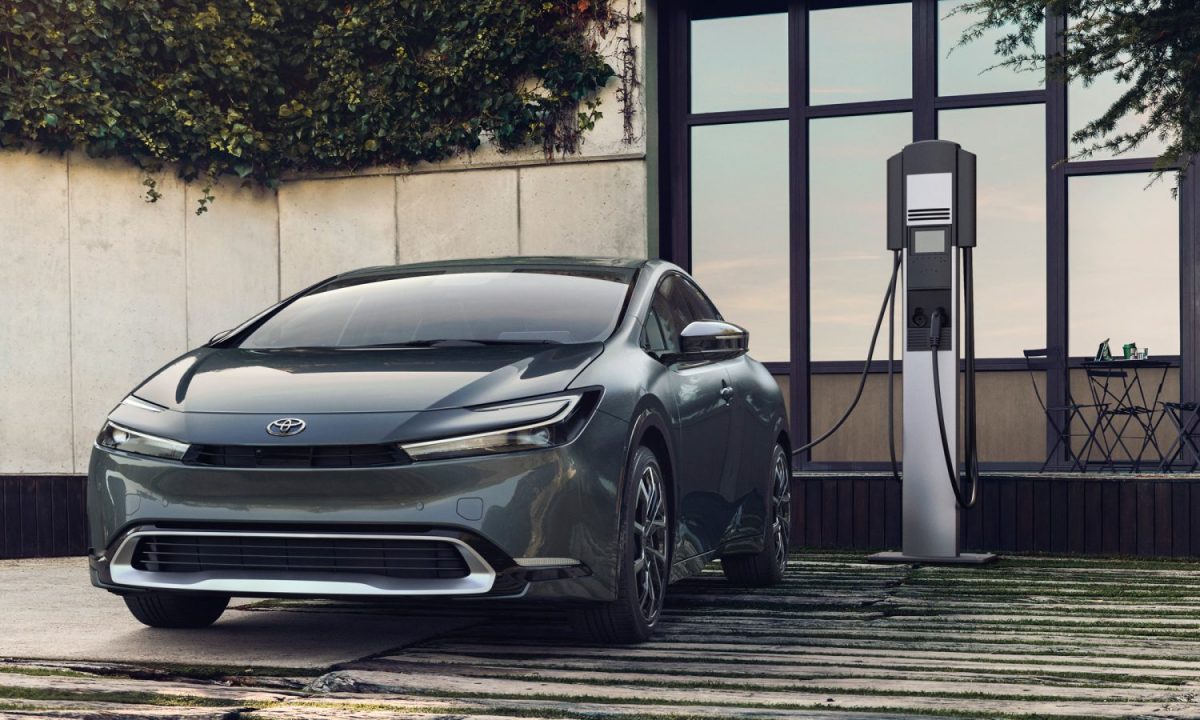
Some best-known examples:
Plug-in Hybrid Electric Vehicles (PHEVs)
Plug-in hybrids build on hybrid vehicles by adding a small battery pack that enables a modest electric range. A typical range for a PHEV is about 25 to 35 miles. When the battery is empty, and the range is depleted, the vehicle automatically operates like a regular hybrid, defaulting to the gas engine and using the electric motor to boost power and efficiency.
Many PHEVs offer settings to save the electric range for when it’s most efficient, as well as adjustable regenerative braking settings to preserve the most energy from braking. Plug-in hybrid vehicles are particularly good for consumers who can charge at home and have a short commute within the car’s range. They also make a good transition point between fully gas-powered and fully electric vehicles for shoppers who aren’t ready to commit.
Pros
- Wide variety of makes, models, and body styles
- Less expensive than EVs
- Possible to make short drives on electric-only power
- Gas engine backup alleviates range anxiety
- Can charge with Level 1 or Level 2 chargers
- Short charging time
- The battery can be partially recharged through regenerative braking
- May qualify for federal rebates or incentives
Cons
- More expensive than regular hybrids
- No point, compared to a regular hybrid, if it isn’t kept charged
- Many are not capable of DC fast-charging
Some best-known examples:
- Audi A3 e-tron
- Bentley Bentayga
- BMW 330e
- Chrysler Pacifica Hybrid
Hybrid Electric Vehicles (HEVs)
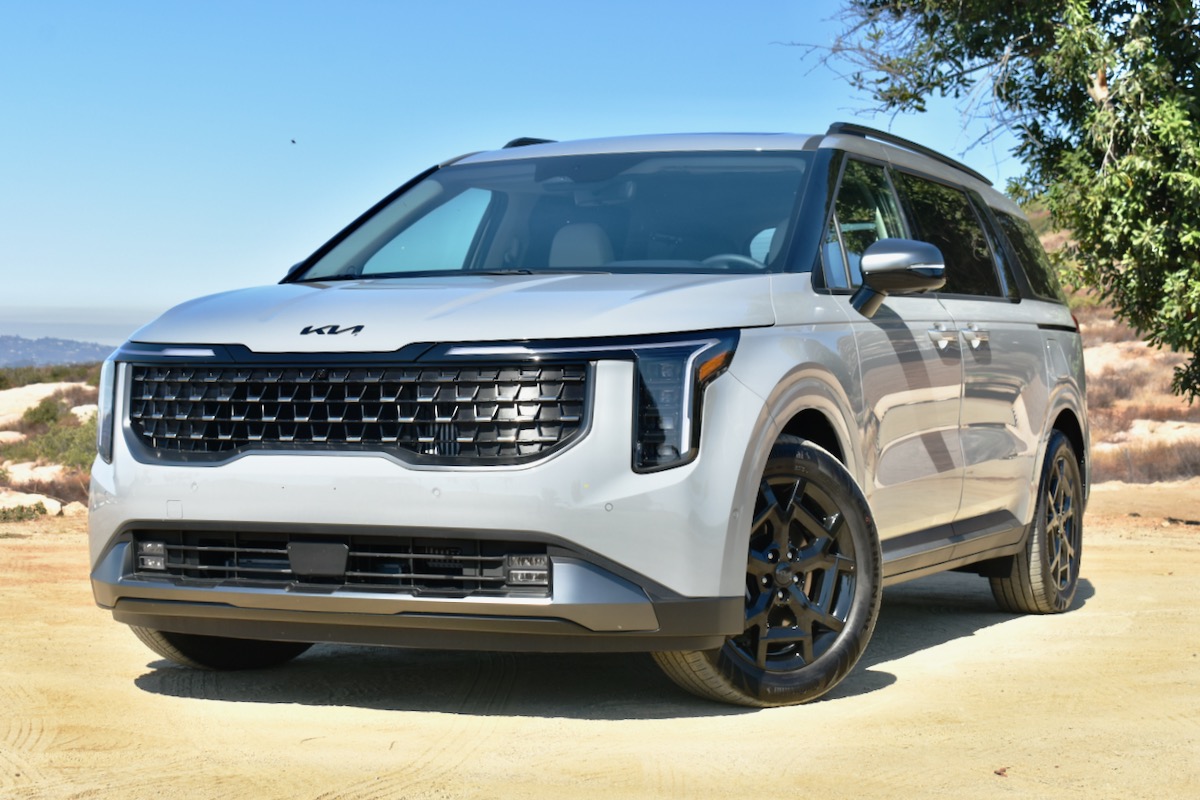
Hybrid electric vehicles, often simply called hybrids, combine a gas engine with an electric motor for better efficiency. Hybrids cannot be plugged in; rather, the motor is charged through a system called regenerative braking, in which the energy normally lost through braking is recaptured and sent back into the powertrain. Regenerative braking is also used in PHEVs and EVs for additional efficiency, but the technology is key to hybrid vehicles.
Within hybrid vehicles, there are a few different categories: mild hybrid, series hybrid, and parallel hybrid. A mild hybrid uses a motor and a small battery to assist with certain tasks, usually starting and stopping. A mild hybrid adds power and efficiency but can’t come close to the power or efficiency of an EV.
The other two main types of hybrids are series and parallel hybrids, and most hybrid vehicles fall into one of those categories. Both combine a gas engine and electric motor, but a series hybrid runs first on electricity, then the engine kicks on to act as a generator and replenish the battery and motor.
The key distinctive factor of a series hybrid is that the gas engine never directly powers the wheels. A parallel hybrid sends both electricity and gas power to the wheels, though not always at the same time or in equal amounts. A transmission works to manage the power delivery based on factors like the vehicle’s specs and the vehicle’s current driving conditions.
In some cases, it’s worth noting that automakers use hybrid technology to improve a vehicle’s performance rather than fuel economy, such as the Chevrolet Corvette E-Ray.
Pros
- Much more efficient than regular gas cars
- Similar driving experience to regular gas cars
- Similar ownership experience to regular gas cars
- Wide variety of models on the market
- Many affordable options
- Good choice for shoppers who don’t have access to home or public charging
Cons
- Not as efficient as PHEVs or EVs
- Do not qualify for federal rebates or incentives
- Generally somewhat more expensive than regular gas vehicles
Some best-known examples:
- Chevrolet Corvette E-Ray
- Ford Escape Hybrid


