2008 Hyundai Elantra Reviews, Pricing & Specs
Write a review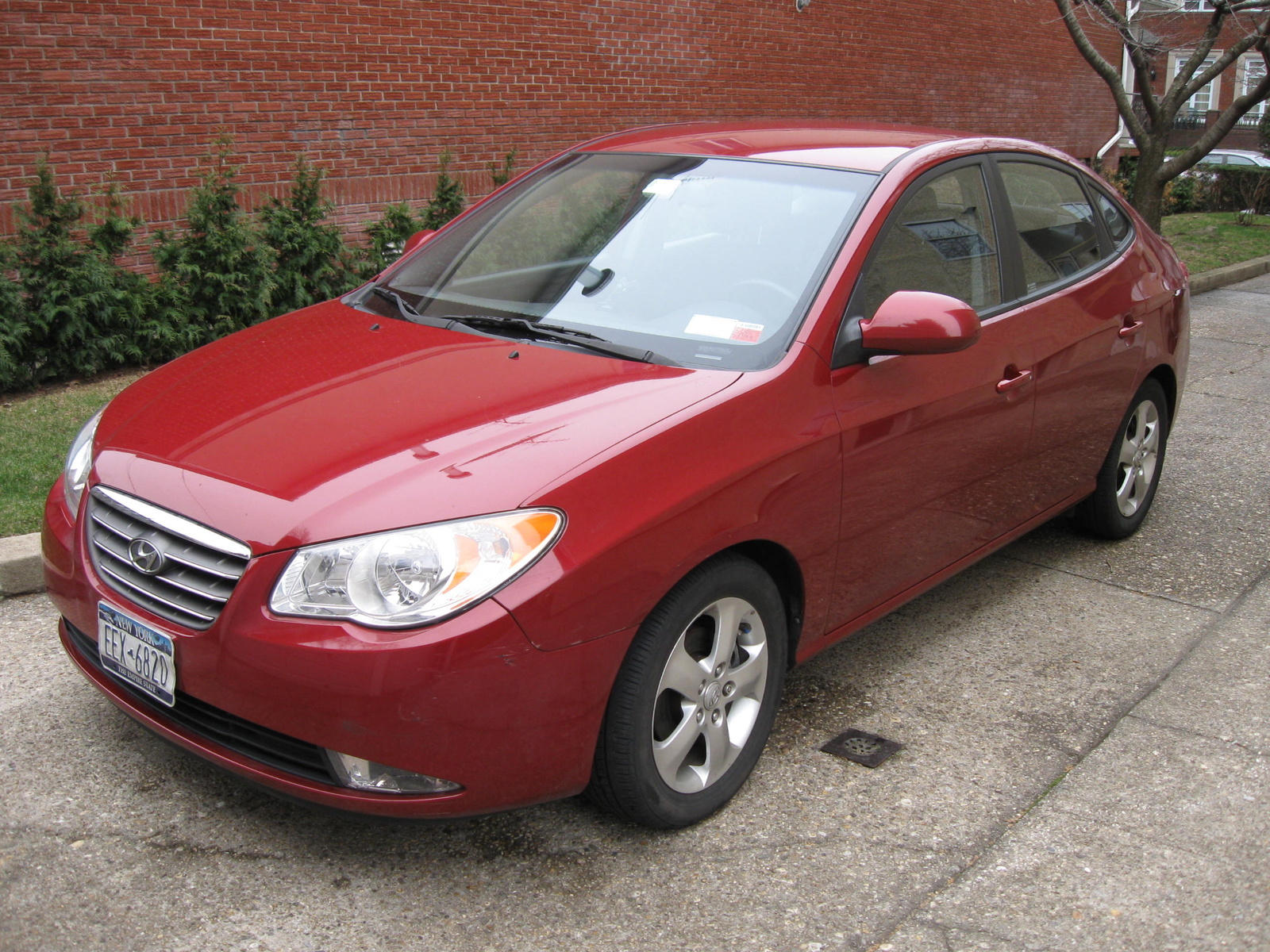
Hyundai's best-selling car at a great price.

Compared to the bargain-basement Accent, the Elantra is large enough to look like a finished car, and it won't embarrass its driver. It's still not the futuristic aero showpiece that is the Honda Civic. It's bland like the inside of a CVS. From the front or rear, there are more than a few hints of Toyota Corolla. On the side, you couldn't pick the Elantra from a lineup of suspects. At least give it a neat tattoo on its grille or something.
The interior retains the good design from the Accent, only there are now more quality materials lining the doors and dash, some of which are softly padded. Silver accents on the steering wheel, climate control knobs, and center console brighten up the place. It's far more comparable to a Corolla in presentation and construction, which is a good thing.


Power windows, locks, mirrors, and keyless entry come standard on the Elantra, but not cruise control, air conditioning, or a stereo. Those are optional, along with fog lights and satellite radio, on the base GLS with the Preferred package.
The Limited was dropped for 2008, so the SE moves from the mid-level to the top trim. It includes 16-inch alloy wheels instead of 15-inch steel wheels, plus a leather-wrapped steering wheel with audio controls. Leather upholstery, heated front seats, and a sunroof are optional.

New for 2008 is a tire-pressure monitoring system. The SE comes with stability control and brake assist, the latter of which delivers 100-percent braking force if the driver quickly jabs the pedal in an emergency. These features are not on the GLS. Anti-lock brakes with electronic brake-force distribution, dual front airbags, dual front side airbags, anti-whiplash front headrests, and front and rear curtain airbags are standard.
In crash tests, the Elantra scored the best Good for the moderate overlap front by the Insurance Institute for Highway Safety (IIHS), but only a Marginal for the side test and a higher Acceptable for the head restraints and seats. The Elantra scored four out of five stars in side-crash tests by the National Highway Traffic Safety Administration (NHTSA) for driver and rear passenger, and five stars for both passengers in the frontal tests.


User reviews for 2008 Hyundai Elantra
Write a review2008 Hyundai Elantra Pricing
Trims & specs
Airbags
Dual front airbags · Passenger airbag deactivation: occupant sensing deactivation · Front side airbags · Rear side curtain airbags
Audio System
Antenna Type: element · Auxiliary audio input: jack · Single disc in-Dash CD · MP3 player: CD MP3 Playback · AM/FM radio · XM-ready satellite radio · 172 watts
Brakes
ABS: 4-wheel · Front brake diameter: 10.8 · Front brakes: ventilated disc · Rear brake diameter: 10.3 · Rear brakes: disc
Comfort Features
Floor Mat Material: carpet
Convenience Features
Center console: front console with storage · Multi-function remote: keyless entry with panic alarm · Power outlet(s): two 12V · Power steering: hydraulic · Power windows: lockout button · Reading lights: front · Steering wheel: tilt-adjustable · Storage: storage organizer · Vanity mirrors: dual illuminating
Drivetrain
Axle ratio: 4.19
Exterior Features
Door handle color: body-color · Front bumper color: body-color · Grille color: chrome · Mirror color: body-color · Rear bumper color: body-color
Headrests
Front headrests: adjustable · Number of front headrests: 2
Instrumentation
Warnings and reminders: low fuel level
Mirrors
Exterior mirrors: manual folding
Rear Seats
Type: 60-40 split bench
Roof
Sunroof: power glass
Safety
Active head restraints: driver · Crumple zones: front
Seatbelts
Rear center seatbelt: 3-point · Seatbelt pretensioners: front
Seats
Driver seat manual adjustments: reclining · Front seat type: bucket · Passenger seat manual adjustments: reclining · Rear headrests: adjustable · Upholstery: cloth
Suspension
Front Arm Type: lower control arms · Front Shock Type: gas shock absorbers · Front Spring Type: coil springs · Front Stabilizer Bar: diameter 23 mm · Front Suspension Classification: independent · Front Suspension Type: MacPherson struts · Rear Shock Type: twin-tube gas shock absorbers · Rear Stabilizer Bar: diameter 17 mm · Rear Suspension Classification: independent · Rear Suspension Type: multi-link
Tires
Type: all season
Tires and Rims
Wheels: steel
Wheels
Wheel covers: full
Windows
Front wipers: variable intermittent
Airbags
Dual front airbags · Passenger airbag deactivation: occupant sensing deactivation · Front side airbags · Front side curtain airbags
Audio System
Antenna Type: element · Auxiliary audio input: jack · Single disc in-Dash CD · MP3 player: CD MP3 Playback · AM/FM radio · Satellite Radio: SiriusXM · Total Number of Speakers: 6 · 172 watts
Brakes
ABS: 4-wheel · Front brake diameter: 10.8 · Front brakes: ventilated disc · Rear brake diameter: 10.3 · Rear brakes: disc
Comfort Features
Floor Mat Material: carpet · Shift knob trim: leather · Steering wheel trim: leather
Convenience Features
Center console: front console with storage · Multi-function remote: trunk release · Power outlet(s): two 12V · Power steering: hydraulic · Power windows: lockout button · Reading lights: front · Steering wheel: tilt and telescopic · Steering wheel mounted controls: audio · Storage: storage organizer · Sunshade: windshield · Vanity mirrors: dual illuminating
Drivetrain
Axle ratio: 4.19
Exterior Features
Door handle color: body-color · Front bumper color: body-color · Grille color: chrome · Mirror color: body-color · Rear bumper color: body-color
Headrests
Front headrests: adjustable · Number of front headrests: 2
Instrumentation
Warnings and reminders: low fuel level
Mirrors
Exterior mirrors: heated driver mirror
Rear Seats
Type: 60-40 split bench
Roof
Sunroof: power glass
Safety
Active head restraints: driver · Crumple zones: front
Seatbelts
Rear center seatbelt: 3-point · Seatbelt pretensioners: front
Seats
Driver seat manual adjustments: reclining · Front seat type: bucket · Heated: front seats · Passenger seat manual adjustments: reclining · Rear headrests: adjustable · Upholstery: leather
Suspension
Front Arm Type: lower control arms · Front Shock Type: gas shock absorbers · Front Spring Type: coil springs · Front Stabilizer Bar: diameter 23 mm · Front Suspension Classification: independent · Front Suspension Type: MacPherson struts · Rear Shock Type: twin-tube gas shock absorbers · Rear Stabilizer Bar: diameter 17 mm · Rear Suspension Classification: independent · Rear Suspension Type: multi-link
Tires
Type: all season
Windows
Front wipers: variable intermittent

