2022 Hyundai Elantra Reviews, Pricing & Specs


Pros & cons
What we like
Stylish design
Fuel-efficient
Excellent value for money
What to consider
Underwhelming base engine
Uncomfortable seats
Noisy
The CarGurus verdict
The 2022 Hyundai Elantra is a value rockstar among compact sedans.
Fresh off a transcendent 2021 redesign, the 2022 Hyundai Elantra continues to offer stylish exterior design, a roomy cabin, excellent fuel economy, impressive standard safety features and driver-assistance tech, top-notch product quality, and an industry-leading warranty—all at a bargain price.
out of 10 expert review
Look & feel
In the past, the Elantra's rental-car looks, while certainly not offensive, did nothing to truly grab buyers' attention. For years, the Elantra soldiered onward, inconspicuously blending in with the crowd, not bringing any unwanted attention to itself. An automotive wallflower, if you will.
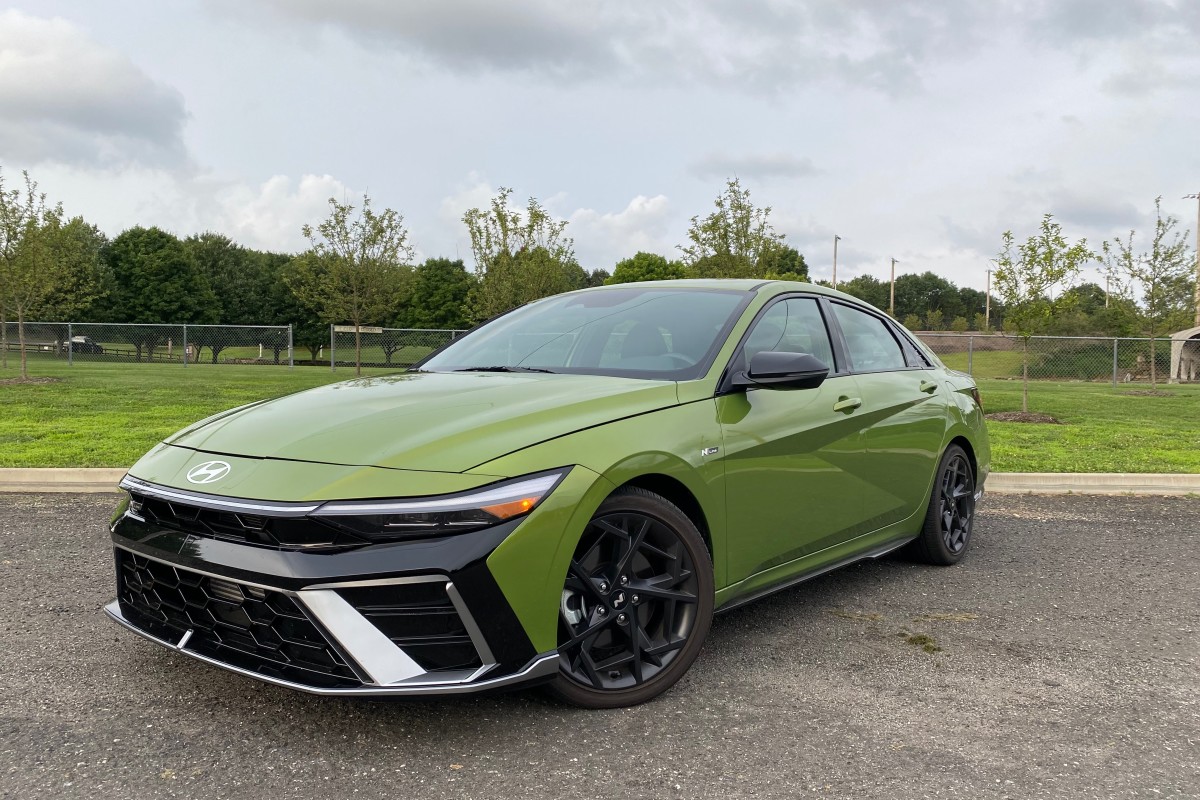
That changed with the 2021 model year redesign. Hyundai gave the seventh-generation Elantra a striking new look and, in the process, completely transformed the car inside and out. The seventh-generation Elantra features a longer wheelbase, wider stance, and lower roofline than the previous model, resulting in a dramatic four-door-coupe silhouette.
While reminiscent of the midsize Sonata sedan, the Elantra's exterior styling has its own unique personality. To our eyes, the Elantra pulls off the low-slung four-door-coupe look better than the Sonata. Also, if you look closely at the sides of the Elantra, the various creases and folds on the doors combine to create a "Z" shape, giving it extra character and helping to differentiate it from the Sonata, as well as rival compact sedans.
Like the exterior, the Elantra's interior is much improved over the previous generation. Generally speaking, material quality, look, and feel are slightly above the norm for the compact car class. Some observers have noted an abundance of hard plastic in the Elantra's cabin, but in our opinion, the good far outweighs the bad. After all, this is a car with a starting price of around $20,000 that’s loaded with advanced tech—a fair tradeoff, in our opinion.
For 2022, the Hyundai Elantra is available in four trim levels: SE, SEL, N Line, and Limited (the range-topping, high-performance Elantra N is reviewed separately). Additionally, the Elantra Hybrid comes in Blue and Limited trims.
Our test car was a Scarlet Red Pearl 2022 Elantra N Line with a black interior. The N Line gets some sporty styling elements, but without the comprehensive performance upgrades as the Elantra N. It includes N Line design front and rear fascias, chrome twin-tip exhaust, and 18-inch alloy wheels. Inside, N Line brand sport seats, leather-wrapped steering wheel and shift knob give the car a sporty look and feel. A black headliner and aluminum pedals are also part of the N Line package.

Performance
Unlike most compact sedans, the 2022 Elantra is available with multiple powertrain options. Standard on SE, SEL, and Limited trims is a 2.0-liter four-cylinder engine producing 147 horsepower and 132 pound-feet of torque, with a continuously variable transmission (CVT) and front-wheel drive (FWD). The CVT employs what Hyundai calls Shift Control Strategy, which the automaker says makes for smoother operation and closely replicates automatic transmission step shifts. For most buyers, this powertrain combination is perfectly adequate. Still, you can expect some buzzing from the engine compartment and a general lack of power on hard acceleration, such as when merging onto an Interstate or passing on a two-lane road.
If fuel economy is your jam, the new Elantra Hybrid delivers in a big way. It features a 1.6-liter Atkinson-cycle four-cylinder engine that works with a 32-kilowatt electric motor and a 1.32-kilowatt-hour lithium-ion battery pack located under the rear seats. Total system output is 139 hp and up to 195 lb-ft of torque. Somewhat surprisingly, the Elantra Hybrid has a six-speed dual-clutch automatic transmission (DCT), which Hyundai says provides a more dynamic and engaging driving experience. We're not sure the average Elantra Hybrid buyer will know—or care—that the car has a DCT, but we'll never fault any automaker for making their vehicles more engaging to drive.
The N Line provides a bit more for driving enthusiasts. It has a turbocharged 1.6-liter four-cylinder engine with 201 hp and 195 lb-ft of torque channeled through either a six-speed manual transmission or a seven-speed DCT with manual shift mode and steering-wheel-mounted paddle shifters. Cars equipped with the DCT also get Drive Mode Select, which offers Normal, Sport, and Smart drive modes.
Our test car had the DCT, which is likely the transmission most buyers will opt for, so it's appropriate for us to evaluate it rather than the stick shift. Like so many others we've tested, the DCT in the N Line is a bit clunky at low rpm, but once you gather some steam, it's a delightful transmission that delivers crisp shifts at just the right time. That said, we'd still prefer to row our own gears for the most engaging drive experience.
While we didn't use the paddle shifters other than to see if they actually worked (they did), we did cycle through the drive modes to see if there was a discernible difference between them—and there was. Normal mode was, well, normal, and suitable for everyday driving. You'll get more steering feedback in Sport mode, along with enhanced engine responsiveness and higher-rpm shift points. Lastly, Smart mode adapts to how you're driving to either deliver better fuel economy or sportier driving. Although Sport mode is more fun, we left the car in Smart mode most of the time, which enabled us to get excellent fuel economy on a 700-mile Interstate run yet still delivered some fun on twisty two-lane highways.
Further enhancing the N Line's ride and handling dynamics are sport-tuned suspension, steering, and revised powertrain mounts. Unlike the SE/SEL/Limited versions of the Elantra, which have an unsophisticated torsion-beam rear axle, the N Line has a multi-link independent rear suspension that provides smoother, more confident handling. The N Line's front brake rotors are also an inch larger than those on lower trims, providing more stopping power. Thanks to its peppy powertrain, sport-tuned suspension, and grippy 235/40R18 tires, the N Line has moves like Jagger, enhancing the driving dynamics of this small sedan considerably.
Overall, the Elantra N Line is a very compelling package. However, the sport seats are a bit of a mixed blessing. The race-inspired seats certainly look the part, complete with the N brand logo and exclusive materials that do an admirable job of keeping your backside planted when the road gets windy. Unfortunately, those same traits make long-distance runs a bit unpleasant, as the low seating position, lack of seat-bottom cushion padding, and very little lumbar support take their toll as the miles add up.

Form & function
The Hyundai Elantra isn't just about stylish design. It's also extremely easy to live with. Its compact size aids in navigating tight spaces, such as a narrow road or a cramped parking garage. Instrumentation and controls are clearly marked and easy to use. And it offers plenty of storage options. The seats are comfortable enough, though in the N Line, it takes a little extra effort to get in (and out) of the car due to its low seating position. But once you're in, the Elantra offers excellent outward visibility to the front, sides, and rear. And, despite the car's compact size, you don't feel cramped.
We took three kids—twelve, eleven, and eight years of age—on our 700-mile trek from Nashville to St. Louis and back, and surprisingly little griping came from the back seat. Of course, three iPads and an unlimited supply of snacks may have positively contributed to the peaceful vibe, but that's beside the point. Whether the journey is long or short, three-across back-seat harmony is achievable in the Elantra. That said, taller adults will be much happier in the front than in the back due to the sloped roof that pinches headroom in the back seat (legroom isn't an issue). But, compared to the competition, the Elantra's rear seat isn't a bad place to be. Bottom line: The Elantra is first and foremost a car for small families, and in that role, it excels.
While less than the Elantra's main competitors, cargo space is still adequate at 14.2 cubic feet. The trunk also easily swallowed a long weekend's worth of suitcases, roller bags, sports equipment, and three backpacks, among other items. Due to the car's sloping roofline, the back glass extends far rearward, covering much of the trunk area. This, in turn, creates a narrow trunk opening, making it a little more challenging to reach the area closest to the seatbacks. But those who enjoy a good game of Tetris will find that you can fit a shockingly large amount of gear in the Elantra's trunk with a little trial and error. The trunk lid support arms can crush items in their travel path, however.
One of the few gripes we had with the Elantra involved the power tilt-and-slide moonroof. When in the fully open position and all windows closed, there was a very noticeable droning noise emanating from the roof while driving, even at low speeds. It wasn't a buffeting sound like you get in some cars with one window partially open and the rest closed. Rather, it was more of a deep hum. Closing the roof just a bit seemed to alleviate the problem, but it's disappointing that you can't fully open the moonroof without the irritating noise.
Also, the lack of USB ports and air conditioning vents in the rear were two sources of irritation among back-seat riders, resulting in A) arguments over whose device we should prioritize for charging based on battery level and B) constant pleading for the folks in front to readjust their air vents to cool those in back.

Technology
As we've mentioned, Hyundai equips the Elantra with a surprising level of technology considering its sticker price. Among the base SE's standard infotainment features are an 8-inch display audio touchscreen with a rearview camera, HD Radio, wireless Apple CarPlay and Android Auto, Bluetooth hands-free phone system with voice recognition, four speakers, and dual USB ports. Elantra SEL, Hybrid Blue, and N Line trims add two additional speakers, satellite radio, and Blue Link connected services.
Upgrade to the Limited and Hybrid Limited trim levels and you get a 10.25-inch touchscreen with navigation. It comes with a three-month trial to SiriusXM NavTraffic and NavWeather and also includes sports and stock information. Limited trims also get an eight-speaker Bose premium audio system as well as a 10.25-inch fully digital instrument cluster, dynamic voice recognition, and wireless device charging. However only wired versions of Apple CarPlay and Android Auto are available with the 10.25-inch touchscreen.
Standard on the N Line and Limited trims and available on the SEL is Hyundai Digital Key, which allows you to unlock, start, and drive the car without a physical key, but only via an Android-compatible smartphone. iPhone users need not apply.
It was quick and easy to wirelessly pair an iPhone with the Elantra N Line's infotainment system, and the Apple CarPlay integration was perfect. Our test car did not have factory navigation, so we can't comment on its user interface or accuracy. However, if you're like most car owners, you'll probably just use the native mapping app on your Apple or Android smartphone.
While we enjoyed the diversity of programming that satellite radio affords, the six-speaker audio system's performance was merely adequate, somewhat harshing our mellow. Still, the system was powerful enough to fill the Elantra's small cabin with enough volume for all to enjoy. Perhaps we've been spoiled by the Bose systems in other Hyundai models.

Safety
Hyundai takes a similar value-focused approach to its cars, trucks, and SUVs regarding safety. Simply put, it offers more for less.
The Elantra’s standard SmartSense suite of driver-assist tech includes forward-collision warning with pedestrian detection, automatic emergency braking, blind-spot warning with rear cross-traffic warning, lane-keeping assistance, lane-departure warning, and lane-centering assistance.
Additional standard safety equipment includes driver-attention warning, automatic high-beam headlights, a rear-seat reminder system, and Safe Exit Warning, which can sound an alert if it's unsafe to exit the car due to another vehicle approaching from behind.
Climbing the trim level ladder makes available such features as intersection turn assistance, adaptive cruise control with stop-and-go capability, rear automatic braking, and Highway Drive Assist, which helps drivers stay centered in their lane, at the right speed, while keeping a safe distance from the car in front. All of these features performed well during our week-long test, without any false alarms.
According to the National Highway Traffic Safety Administration (NHTSA), the 2022 Hyundai Elantra (including the Hybrid model) gets five stars (out of a possible five) for overall crash protection. Additionally, the Elantra gets four stars for front crash protection and five stars for both side crash protection and rollover resistance in the individual tests.
Meanwhile, the Insurance Institute for Highway Safety (IIHS) gave the 2022 Hyundai Elantra top "Good" ratings in all six of its individual crash tests, including driver and front-passenger small overlap, moderate overlap front, side, roof strength, and head restraints and seats. The IIHS gave the lower-level 2022 Elantra SE, SEL, and N Line trims with halogen headlights a "Marginal" rating, whereas the Elantra Limited with its LED headlights received a "Good" rating.

Cost-effectiveness
If you've read this far, you already know the Hyundai Elantra is a veritable bargain. With a base price of just $21,245 (including a $1,045 destination charge) for the entry-level SE trim, it's a lot of car for the money. For that price, you get a five-year/60,000-mile, bumper-to-bumper warranty, a 10-year/100,000-mile, powertrain warranty, and three years of complimentary maintenance (regular oil changes and tire rotations). Couple that with five-year/unlimited mileage roadside assistance and three years of Blue Link connected services on SEL and higher trims and the deal is even sweeter.
Climbing the trim-level ladder, the SEL retails for $22,495, the N Line goes for $26,745, and the Limited has an MSRP of $26,995. Pricing for the Hyundai Elantra Hybrid is $25,145 for the Blue and $29,645 for the Limited. The Convenience package—available on SEL trim—adds $900 to the bottom line, while the Premium package costs $2,100 (requires the Convenience package).
According to the EPA, combined city/highway fuel economy for the 2022 Elantra ranges from a high of 37 mpg for the SE to a low of 28 mpg for the N Line with manual transmission (31 mpg with DCT). Meanwhile, the Elantra Hybrid Blue gets 54 mpg, with the Hybrid Limited returning a still-excellent 50 mpg. During our test of the Elantra N Line, we observed an impressive 34.9 mpg, boosted by our 700-mile Interstate trip. Using the EPA's combined mpg figures, the Elantra can travel anywhere from 347-594 miles on a single 12.4-gallon tank of gas, depending on the trim. That’s a pretty wide range, so keep that in mind when deciding which Elantra to buy.
The SE will serve you well if you're just looking for a fuel-efficient compact sedan with many of the latest safety and tech features. If maximizing fuel economy is your primary objective, the Elantra Hybrid Blue is the clear choice. If you like a little sport while you schlep the kids around, the Elantra N Line is the one to buy. You really can’t go wrong with any of them. Speaking of the N Line, our test car had an MSRP of $26,940, including the destination charge and $195 floor mats.
The Elantra faces some formidable competition in the Honda Civic (redesigned for 2022) and Toyota Corolla (redesigned for 2020), not to mention its corporate cousin, the Kia Forte. Other buyers will cross-shop the Nissan Sentra (also new for 2020) and Mazda3. With that level of competition, the Elantra has to be good. And it is.

What owners say
"Overall, drivers are very pleased with the 2022 Hyundai Elantra, highlighting its excellent value, impressive warranty, and array of features. They particularly liked its fuel efficiency, safety features, and stylish design. However, some reviewers mentioned a design element they disliked in the cockpit, indicating that not everyone is a fan of the interior layout."
This car is stunning. I test drove the N line model (6 speed manual transmission) and it is more powerful than expected. Sleek exterior and interior. Very smooth.
July 15, 2022Best value great warranty I didnt used to like Hyundai until 2016 when I bought an Elantra best car and great price drives like a expensive car great torque and speed. Love it
May 24, 2022Great value of a car for a great price. Very pleased. I plan on staying with the Hyundai vehicles for sure.
March 24, 2022What owners say
This car is stunning. I test drove the N line model (6 speed manual transmission) and it is more powerful than expected. Sleek exterior and interior. Very smooth.
July 15, 2022Best value great warranty I didnt used to like Hyundai until 2016 when I bought an Elantra best car and great price drives like a expensive car great torque and speed. Love it
May 24, 2022Great value of a car for a great price. Very pleased. I plan on staying with the Hyundai vehicles for sure.
March 24, 2022This is a great car, with an excellent warranty and packed with features. It is also great on gas and we couldnt be happier with this car. It is used as a commuter car and so far we have no complaints. It gives a great ride and the lane assist feature is something!! Buy it!!
November 11, 2023Nice so far. Do not like the bar that runs from the center console to the dash on drivers side. I think the designers tried to make a cockpit feel to the driver. Didnt work for me.
February 7, 2024The Elantra in the SEL trim with convenience package is all that you would ever need in a modern, gas efficient car that doesn’t break the bank. From the wireless Apple car play and charging to the safety features, this is an amazing car
April 7, 2022Its just a very cool car! The cut is so elegant, the leather interior is lovely, as are all the extra features. As someone who has only ever had base models of cars bought within the family, this is an amazing treat.
December 31, 2023Trims & specs
Base MSRP N/A | Seating N/A |
Engine N/A | Cargo Capacity N/A |
Combined MPG N/A | Drivetrain N/A |
Base MSRP $24,350 | Seating 5 |
Engine 1.6L 201 hp I4 | Cargo Capacity 14.2 cu ft |
Combined MPG 32 | Drivetrain FWD |
Base MSRP $20,200 | Seating 5 |
Engine 2.0L 147 hp I4 | Cargo Capacity 14.2 cu ft |
Combined MPG 36 | Drivetrain FWD |
Base MSRP $25,950 | Seating 5 |
Engine 2.0L 147 hp I4 | Cargo Capacity 14.2 cu ft |
Combined MPG 36 | Drivetrain FWD |
Base MSRP N/A | Seating N/A |
Engine N/A | Cargo Capacity N/A |
Combined MPG N/A | Drivetrain N/A |
Base MSRP $21,450 | Seating 5 |
Engine 2.0L 147 hp I4 | Cargo Capacity 14.2 cu ft |
Combined MPG 36 | Drivetrain FWD |
Base MSRP N/A | Seating N/A |
Engine N/A | Cargo Capacity N/A |
Combined MPG N/A | Drivetrain N/A |
Base MSRP N/A | Seating N/A |
Engine N/A | Cargo Capacity N/A |
Combined MPG N/A | Drivetrain N/A |
Base MSRP N/A | Seating N/A |
Engine N/A | Cargo Capacity N/A |
Combined MPG N/A | Drivetrain N/A |
Base MSRP N/A | Seating N/A |
Engine N/A | Cargo Capacity N/A |
Combined MPG N/A | Drivetrain N/A |
Base MSRP N/A | Seating N/A |
Engine N/A | Cargo Capacity N/A |
Combined MPG N/A | Drivetrain N/A |


Pricing trends
MSRP range
$20,200 - $25,950
Current avg. market price
$16,860
Trending down by 0.3% this month
May 2026 - November 2026