Toyota RAV4 vs Hyundai Venue

Overview | |
MSRP$31,900 | MSRP$20,550 |
Listings231 | Listings139 |
Ratings & Reviews | |
User Reviews | User Reviews |
Expert reviews6.8 out of 10 | Expert reviews5.2 out of 10 |
Pros
Cons
| Pros
Cons
|
Reviews SummaryThe sixth-generation Toyota RAV4 now comes with more choice, including three distinct design themes, three powertrain and drivetrain options, and seven trim levels. It has a hybrid drivetrain as standard, offering a claimed 44 mpg combined, along with more standard features, a quicker operating system, and improvements across the board to bolster its bestselling position. Verdict: The good gets better, but the RAV4's lineup is confusing enough to need a Venn diagram. | |
Reviews SummaryAutomakers have traditionally had a hard time making money on entry-level subcompact cars, because they have low profit margins, but America has largely moved away from cars to crossover SUVs—and higher prices. That allows car companies to offer an entry-level subcompact SUV for thousands more than a similar sedan or hatchback. Such is the case with the Hyundai Venue, which costs more than its predecessor, the subcompact Accent that was dropped after the 2022 model year. While the price is higher, the advantage for buyers is a vehicle that generally has more cargo space and is more practical. We recently drove the 2026 Hyundai Venue SEL w/2-Tone Roof (yes, that’s the trim level name) to find out if a subcompact crossover is a better buy than a cheaper subcompact car. Verdict: The Hyundai Venue sacrifices refinement for a price point that isn’t as low as a comparable subcompact car. We’d be tempted to spend a little more for a slightly larger compact car with more power, features, and refinement. | |
No video found | |
Popular Features & Specs | |
Engine2.5L 226 hp I4 Hybrid | Engine1.6L 121 hp I4 |
DrivetrainFWD | DrivetrainFWD |
Seating Capacity5 | Seating Capacity5 |
Horsepower | Horsepower121 hp @ 6300 rpm |
EV Battery Capacity1.01 kWh | EV Battery Capacity |
MPG City47 | MPG City29 |
MPG Highway40 | MPG Highway33 |
Engine | |
Engine Name2.5L 226 hp I4 Hybrid | Engine Name1.6L 121 hp I4 |
Torque | Torque113 lb-ft @ 4500 rpm |
Horsepower | Horsepower121 hp @ 6300 rpm |
DrivetrainFWD | DrivetrainFWD |
Fuel Economy | |
EV Battery Capacity1.01 kWh | EV Battery Capacity |
MPG City47 | MPG City29 |
MPG Highway40 | MPG Highway33 |
Interior | |
Seating Capacity5 | Seating Capacity5 |
Safety | |
Front Crash Overall | Front Crash Overall4 |
Side Crash Overall | Side Crash Overall5 |
Dimensions & Capacity | |
Cargo Space37.8 cu ft | Cargo Space18.7 cu ft |
Curb Weight3594 lbs | Curb Weight2612 lbs |
Height66.7 in | Height61.6 in |
Length181.0 in | Length159.1 in |
Width73.0 in | Width69.7 in |
Wheelbase105.9 in | Wheelbase99.2 in |
Maximum Payload900 lbs | Maximum Payload1158 lbs |
Number of doors4 | Number of doors4 |
Maximum Towing Capacity1750 lbs | Maximum Towing Capacity |
Overview | ||
MSRP | $31,900 | $20,550 |
Listings | ||
Ratings & Reviews | ||
User reviews | ||
Expert reviews | 6.8 out of 10Read full review | 5.2 out of 10Read full review |
Pros & cons | Pros
Cons
| Pros
Cons
|
Summary | The sixth-generation Toyota RAV4 now comes with more choice, including three distinct design themes, three powertrain and drivetrain options, and seven trim levels. It has a hybrid drivetrain as standard, offering a claimed 44 mpg combined, along with more standard features, a quicker operating system, and improvements across the board to bolster its bestselling position. Verdict: The good gets better, but the RAV4's lineup is confusing enough to need a Venn diagram. | Automakers have traditionally had a hard time making money on entry-level subcompact cars, because they have low profit margins, but America has largely moved away from cars to crossover SUVs—and higher prices. That allows car companies to offer an entry-level subcompact SUV for thousands more than a similar sedan or hatchback. Such is the case with the Hyundai Venue, which costs more than its predecessor, the subcompact Accent that was dropped after the 2022 model year. While the price is higher, the advantage for buyers is a vehicle that generally has more cargo space and is more practical. We recently drove the 2026 Hyundai Venue SEL w/2-Tone Roof (yes, that’s the trim level name) to find out if a subcompact crossover is a better buy than a cheaper subcompact car. Verdict: The Hyundai Venue sacrifices refinement for a price point that isn’t as low as a comparable subcompact car. We’d be tempted to spend a little more for a slightly larger compact car with more power, features, and refinement. |
Video | No video found | |
Popular Features & Specs | ||
Engine | 2.5L 226 hp I4 Hybrid | 1.6L 121 hp I4 |
Drivetrain | FWD | FWD |
Seating Capacity | 5 | 5 |
Horsepower | 121 hp @ 6300 rpm | |
EV Battery Capacity | 1.01 kWh | |
MPG City | 47 | 29 |
MPG Highway | 40 | 33 |
Engine | ||
Engine Name | 2.5L 226 hp I4 Hybrid | 1.6L 121 hp I4 |
Torque | 113 lb-ft @ 4500 rpm | |
Horsepower | 121 hp @ 6300 rpm | |
Drivetrain | FWD | FWD |
Fuel Economy | ||
EV Battery Capacity | 1.01 kWh | |
MPG City | 47 | 29 |
MPG Highway | 40 | 33 |
Interior | ||
Seating Capacity | 5 | 5 |
Safety | ||
Front Crash Overall | 4 | |
Side Crash Overall | 5 | |
Dimensions & Capacity | ||
Cargo Space | 37.8 cu ft | 18.7 cu ft |
Curb Weight | 3594 lbs | 2612 lbs |
Height | 66.7 in | 61.6 in |
Length | 181.0 in | 159.1 in |
Width | 73.0 in | 69.7 in |
Wheelbase | 105.9 in | 99.2 in |
Maximum Payload | 900 lbs | 1158 lbs |
Number of doors | 4 | 4 |
Maximum Towing Capacity | 1750 lbs | |
The 2026 Toyota RAV4 presented a more robust and squared-off design compared to its predecessor, aligning with Toyota's SUV and truck lineup. It featured three distinct styles—Core, Rugged, and Sport—across seven trim levels. The RAV4's exterior was characterized by boxy wheel arches and a bulging rear fender reminiscent of the Highlander and 4Runner models. The front fascia varied among the styles, with the Core models maintaining a more traditional RAV4 look, the Rugged grade offering a boxy, all-terrain-ready appearance, and the Sport style showcasing a large rear spoiler and a single mesh grille. Inside, the RAV4 boasted a streamlined cockpit with a standard 12.3-inch digital instrument cluster and a choice between a 10.5-inch or 12.9-inch touchscreen. The interior was designed for functionality, with clever storage solutions and a wide center console.
The 2026 Hyundai Venue, classified as a crossover SUV, had a design that leaned more towards a tall hatchback. It featured a compact and narrow appearance, with SUV-like elements such as a bluff nose and standard roof rails. The Venue's high nose was complemented by lower headlights and high-set daytime running lights, while black wheel flares and rocker panels added to its SUV aesthetic. Inside, the Venue offered a simple and functional layout, with a digital instrument cluster and a small touchscreen that resembled an iPad. The interior was characterized by hard black plastic surfaces, with only a few soft-touch areas. Despite its compact size, the Venue provided adequate headroom but limited legroom, especially for taller passengers.


The 2026 Toyota RAV4 featured an upgraded hybrid system, offering a more powerful and efficient performance than its predecessor. The hybrid model came with a 2.5-liter four-cylinder engine and two electric motors, producing 226 horsepower with front-wheel drive. All-wheel-drive models added a third motor, increasing output to 236 horsepower. The RAV4's electric motor provided quick power off the line, while the four-cylinder engine contributed to overall performance. The SUV's electronic continuously variable transmission ensured smooth transitions between motor and engine. The RAV4's suspension was tuned for comfort, with MacPherson front struts and a multi-link rear suspension. The Woodland trim, part of the Rugged style, offered all-terrain tires and increased ground clearance, making it suitable for light off-road adventures. The RAV4's fuel efficiency was impressive, with an expected EPA rating of 44 mpg combined for FWD models and 39 mpg for the Woodland trim.
In contrast, the 2026 Hyundai Venue was powered by a 1.6-liter four-cylinder engine, delivering 121 horsepower and 113 lb-ft of torque. The Venue's performance was modest, with a 0-60 mph time of 8.5–8.8 seconds. The power was channeled through a continuously variable transmission to the front wheels, as all-wheel drive was not available. The Venue's lightweight design contributed to its peppy feel in city traffic, but highway acceleration required planning due to the limited torque. The Venue's handling benefited from its small size and low weight, making it easy to maneuver in tight spaces. However, the ride could be jiggly on rough surfaces due to the solid rear axle. The Venue's fuel efficiency was not specified, but its performance was more suited for urban environments.
The 2026 Toyota RAV4 maintained the same dimensions as its predecessor, with a 105.9-inch wheelbase and similar interior passenger space. The cargo volume increased slightly, offering 37.8 cubic feet with the rear seats up and 70.4 cubic feet with them folded down. The RAV4's interior was optimized for storage, with multiple shelves and deep door pockets. The SUV could comfortably seat four passengers, although five would be a tight fit. The available panoramic sunroof reduced headroom slightly, and the rear legroom was ample but not class-leading.
The 2026 Hyundai Venue offered a more compact interior, with cloth and synthetic leather seats providing decent comfort. The front seats had six-way manual adjustments, while the rear seats could accommodate average-sized adults. However, taller passengers would find legroom lacking. The rear seats folded flat in a 60/40 split, expanding the cargo space to 31.9 cubic feet. With the seats up, the cargo space was limited to 18.7 cubic feet. The Venue's interior featured hard black plastic surfaces, with minimal soft-touch areas, reflecting its budget-friendly nature.
The 2026 Toyota RAV4 was equipped with advanced technology, including a 12.3-inch digital instrument cluster and a 10.5-inch touchscreen, with a larger 12.9-inch option for higher trims. The new Arene operating system offered improved responsiveness and customizable displays. The RAV4 also featured wireless Apple CarPlay and Android Auto, along with a built-in dash cam that recorded clips from exterior cameras. The Voice Assistant responded to a wide range of prompts, enhancing the overall user experience.
The 2026 Hyundai Venue came with a basic 8-inch touchscreen for infotainment, offering limited functionality. It included phone, radio, media, and phone-projection connections, as well as wireless Apple CarPlay and Android Auto. The Venue lacked features like navigation and a Wi-Fi hotspot, but its infotainment system was sufficient for basic needs. The audio system consisted of six speakers, with no premium option available.
The 2026 Toyota RAV4 featured Toyota Safety Sense 4.0, a comprehensive suite of driver-assistance features. It included automatic emergency braking, lane-keep assist, adaptive cruise control, and blind-spot monitors. The RAV4 also offered a limited hands-free driving system for certain highways. The safety enhancements aimed to improve the RAV4's already strong safety record, with crash-testing results pending from the IIHS and NHTSA.
The 2026 Hyundai Venue offered a good set of standard safety features, including forward-collision warning, automatic emergency braking, and lane-keep assist. However, it lacked adaptive cruise control. The Venue received a four-star safety rating from the NHTSA, with some IIHS ratings pending. Its headlights received mixed ratings, depending on the trim level.
CarGurus highlights
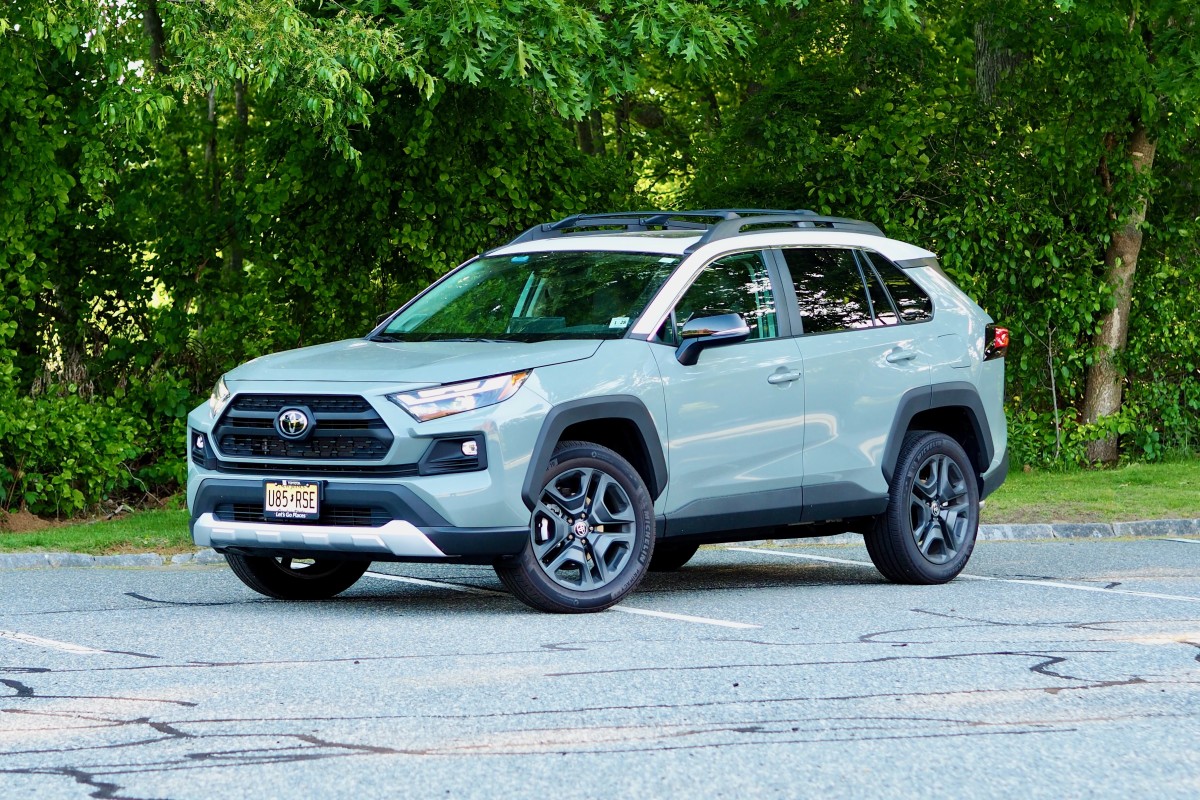
According to CarGurus experts, the overall rating for the 2026 Toyota RAV4 is 6.8 out of 10, while the 2026 Hyundai Venue scores 5.2 out of 10. Based on these ratings, the Toyota RAV4 is the recommended choice, offering a more advanced and versatile package with better technology, safety features, and performance options.
Choose the 2026 Toyota RAV4 if:
- You prioritize advanced technology and a comprehensive suite of safety features.
- You need a versatile SUV with hybrid and all-wheel-drive options.
- You value a spacious interior with clever storage solutions.


Choose the 2026 Hyundai Venue if:
- You are looking for a budget-friendly vehicle with basic safety features.
- You need a compact crossover for urban driving and tight parking spaces.
- You prefer a simple and functional interior layout.


CarGurus highlights
According to CarGurus experts, the overall rating for the 2026 Toyota RAV4 is 6.8 out of 10, while the 2026 Hyundai Venue scores 5.2 out of 10. Based on these ratings, the Toyota RAV4 is the recommended choice, offering a more advanced and versatile package with better technology, safety features, and performance options.
Choose the 2026 Toyota RAV4 if:
Shop Now- You prioritize advanced technology and a comprehensive suite of safety features.
- You need a versatile SUV with hybrid and all-wheel-drive options.
- You value a spacious interior with clever storage solutions.
Choose the 2026 Hyundai Venue if:
Shop Now- You are looking for a budget-friendly vehicle with basic safety features.
- You need a compact crossover for urban driving and tight parking spaces.
- You prefer a simple and functional interior layout.

By: CarGurus + AI
At CarGurus, our team of experienced automotive writers remain at the heart of our content operation, conducting hands-on car tests and writing insightful guides that are backed by years of industry experience. To complement this, we are harnessing AI to make our content offering more diverse and more helpful to shoppers than ever. To achieve this, our AI systems are based exclusively on CarGurus content, ratings and data, so that what we produce is both unique to CarGurus, and uniquely helpful to car shoppers.

