Hyundai Santa Fe vs Chevrolet Bolt
Overview | |
MSRP$35,050 | MSRP$27,600 |
Listings680 | Listings3 |
Ratings & Reviews | |
User Reviews | User Reviews |
Expert reviews7.3 out of 10 | Expert reviews6.3 out of 10 |
Pros
Cons
| Pros
Cons
|
Reviews SummaryThe Hyundai Santa Fe is a midsize, three-row SUV that sits at the smaller end of the segment, while the Hyundai Palisade lives among the larger players in the class. Nevertheless, thanks to its boxy shape and thoughtfully crafted interior, shoppers might decide bigger isn’t necessarily better. The 2026 Santa Fe gets a new transmission, added safety features, and minor equipment and packaging updates. The Santa Fe Hybrid returns, too, but we’ll cover that in a separate review. Verdict: Polarizing design aside, the 2026 Hyundai Santa Fe is a brilliant, family-friendly crossover SUV. We tested the XRT version, which trades fuel economy for off-road capability, so buyers who don’t need that should pick a different trim level. | |
Reviews SummaryWith more range, more power, and improved technology, the Chevrolet Bolt EV returns after a three-year hiatus. It also claims the title of the most affordable EV in the U.S., but is due to remain in production only until mid-2027. Verdict: The 2027 Chevrolet Bolt EV is an excellent choice for shoppers seeking an electric vehicle that won't break the bank. It may not be all that fancy or refined, but it gets the basics right when it comes to range and capabilities. | |
No video found | No video found |
Popular Features & Specs | |
Engine2.5L 277 hp I4 | Engine |
DrivetrainFWD | Drivetrain |
Seating Capacity7 | Seating Capacity5 |
Horsepower277 hp @ 5800 rpm | Horsepower |
EV Battery Capacity | EV Battery Capacity65 kWh |
MPG City20 | MPG City |
MPG Highway29 | MPG Highway |
Battery Charge Time (120V) | Battery Charge Time (120V)64 hours |
Battery Charge Time (240V) | Battery Charge Time (240V)9.8 hours |
Engine | |
Engine Name2.5L 277 hp I4 | Engine Name210 hp Electric |
Torque311 lb-ft @ 4000 rpm | Torque |
Horsepower277 hp @ 5800 rpm | Horsepower |
Battery Charge Time (120V) | Battery Charge Time (120V)64 hours |
Battery Charge Time (240V) | Battery Charge Time (240V)9.8 hours |
DrivetrainFWD | DrivetrainFWD |
Fuel Economy | |
EV Battery Capacity | EV Battery Capacity65 kWh |
MPG City20 | MPG City |
MPG Highway29 | MPG Highway |
Interior | |
Seating Capacity7 | Seating Capacity5 |
Key Features | |
Navigation SystemStandard | Navigation SystemStandard |
Safety | |
Front Crash Overall5 | Front Crash Overall |
Side Crash Overall5 | Side Crash Overall |
Dimensions & Capacity | |
Cargo Space14.6 cu ft | Cargo Space16.2 cu ft |
Curb Weight4343 lbs | Curb Weight3776 lbs |
Height67.7 in | Height63.9 in |
Length190.2 in | Length169.6 in |
Width74.8 in | Width80.1 in |
Wheelbase110.8 in | Wheelbase105.3 in |
Maximum Payload1191 lbs | Maximum Payload873 lbs |
Number of doors4 | Number of doors4 |
Maximum Towing Capacity3500 lbs | Maximum Towing Capacity |
Overview | ||
MSRP | $35,050 | $27,600 |
Listings | ||
Ratings & Reviews | ||
User reviews | ||
Expert reviews | 7.3 out of 10Read full review | 6.3 out of 10Read full review |
Pros & cons | Pros
Cons
| Pros
Cons
|
Summary | The Hyundai Santa Fe is a midsize, three-row SUV that sits at the smaller end of the segment, while the Hyundai Palisade lives among the larger players in the class. Nevertheless, thanks to its boxy shape and thoughtfully crafted interior, shoppers might decide bigger isn’t necessarily better. The 2026 Santa Fe gets a new transmission, added safety features, and minor equipment and packaging updates. The Santa Fe Hybrid returns, too, but we’ll cover that in a separate review. Verdict: Polarizing design aside, the 2026 Hyundai Santa Fe is a brilliant, family-friendly crossover SUV. We tested the XRT version, which trades fuel economy for off-road capability, so buyers who don’t need that should pick a different trim level. | With more range, more power, and improved technology, the Chevrolet Bolt EV returns after a three-year hiatus. It also claims the title of the most affordable EV in the U.S., but is due to remain in production only until mid-2027. Verdict: The 2027 Chevrolet Bolt EV is an excellent choice for shoppers seeking an electric vehicle that won't break the bank. It may not be all that fancy or refined, but it gets the basics right when it comes to range and capabilities. |
Video | No video found | No video found |
Popular Features & Specs | ||
Engine | 2.5L 277 hp I4 | |
Drivetrain | FWD | |
Seating Capacity | 7 | 5 |
Horsepower | 277 hp @ 5800 rpm | |
EV Battery Capacity | 65 kWh | |
MPG City | 20 | |
MPG Highway | 29 | |
Battery Charge Time (120V) | 64 hours | |
Battery Charge Time (240V) | 9.8 hours | |
Engine | ||
Engine Name | 2.5L 277 hp I4 | 210 hp Electric |
Torque | 311 lb-ft @ 4000 rpm | |
Horsepower | 277 hp @ 5800 rpm | |
Battery Charge Time (120V) | 64 hours | |
Battery Charge Time (240V) | 9.8 hours | |
Drivetrain | FWD | FWD |
Fuel Economy | ||
EV Battery Capacity | 65 kWh | |
MPG City | 20 | |
MPG Highway | 29 | |
Interior | ||
Seating Capacity | 7 | 5 |
Key Features | ||
Navigation System | Standard | Standard |
Safety | ||
Front Crash Overall | 5 | |
Side Crash Overall | 5 | |
Dimensions & Capacity | ||
Cargo Space | 14.6 cu ft | 16.2 cu ft |
Curb Weight | 4343 lbs | 3776 lbs |
Height | 67.7 in | 63.9 in |
Length | 190.2 in | 169.6 in |
Width | 74.8 in | 80.1 in |
Wheelbase | 110.8 in | 105.3 in |
Maximum Payload | 1191 lbs | 873 lbs |
Number of doors | 4 | 4 |
Maximum Towing Capacity | 3500 lbs | |
The 2026 Hyundai Santa Fe was available in five trim levels: SE, SEL, XRT, Limited, and Calligraphy, with prices ranging from $36,650 to $49,400, including a $1,600 destination charge. The XRT trim, which we tested, came with optional carpeted floor mats, bringing the MSRP to $44,380. When Hyundai redesigned the Santa Fe for the 2024 model year, it aimed to enhance practicality by adding a third-row seat, resulting in a boxy rear design that polarized opinions. The XRT trim featured a rugged, blacked-out appearance that looked striking in white but less so in darker colors due to the lack of contrast. Its taller stance gave it a larger appearance, and the interior boasted a high-tech display, quality materials, and ample storage space. The controls were user-friendly, though the gloss-black control panel attracted dust.
The 2027 Chevrolet Bolt retained a familiar look with slight styling changes, resembling a conventional gas-powered car more than an EV. The front end featured a thin slot behind the Chevy Bowtie logo, and the previous grille insert was integrated into the bumper. The 2027 model continued the legacy of the 2023 version, offering a single body style that combined elements of a large hatchback and a subcompact SUV. The Bolt's tall and narrow design prioritized utility and interior space over a sporty stance. The RS model added gloss black exterior trim for a touch of flair. Inside, the Bolt underwent a more dramatic makeover, featuring a larger digital instrument panel and infotainment touchscreen. The push-button gear selector was relocated to the steering column, freeing up center console space. While the cabin had hard plastic surfaces, the elbow touch points were padded, and the RS trim offered Evotex synthetic leather with red stitching.

The 2026 Hyundai Santa Fe featured a standard 2.5-liter turbocharged four-cylinder engine producing 277 horsepower at 5,800 rpm and 311 pound-feet of torque at 4,000 rpm. Hyundai replaced the previous eight-speed dual-clutch automatic transmission with a traditional eight-speed automatic, resulting in a smoother driving experience. Front-wheel drive was standard, with all-wheel drive optional on most trims and standard on the XRT. The XRT trim included all-terrain tires, a raised suspension with 1.3 inches of extra ground clearance, and enhanced off-road capabilities. However, its aerodynamics were compromised, leading to a lower EPA fuel economy rating of 21 mpg combined. The Santa Fe Hybrid offered better fuel efficiency at 34 mpg combined but wasn't available in XRT trim. The XRT excelled in off-road conditions but lacked a front-view and surround-view camera system for tighter trails. On-road, the engine provided effortless acceleration, and the new automatic transmission was smooth and unobtrusive. The XRT's towing capacity increased to 4,500 pounds with trailer brakes.
The 2027 Chevrolet Bolt featured a new 65-kilowatt-hour lithium-iron phosphate battery pack, reducing costs and reliance on rare earth minerals. A motor from Chevy's Equinox EV delivered 210 horsepower and 169 pound-feet of torque to the front wheels, achieving 0-60 mph in the low seven-second range. While not the fastest EV, the Bolt offered quick acceleration compared to gas-powered subcompact SUVs. One-pedal driving was available, with medium or high brake regeneration settings. The ride was firm but not overly stiff, and road noise was more noticeable due to the absence of an internal combustion engine. The Bolt's low center of gravity contributed to its agility on curvy roads. The EPA estimated a range of up to 262 miles on a full charge, with a Tesla-derived NACS charge port standard on all models. Charging speed increased to 150 kW, allowing a 10% to 80% recharge in 25 minutes.
The 2026 Hyundai Santa Fe prioritized practicality and utility, though the XRT trim lacked some features available in other trims. It didn't include a panoramic sunroof or ventilated front seats, and the interior was only available in black. Entry and exit were effortless, and the front and second-row seats offered comfortable seating with a good view. The third-row seat was best for occasional use, as adults found it challenging to access. Thoughtful touches included dual wireless charging pads, a manually height-adjustable front passenger seat, and bi-directional access to under-armrest storage. The Santa Fe offered 14.6 cubic feet of cargo space behind the third-row seat, expanding to 40.5 cubic feet with the third row folded and 79.6 cubic feet with the second row folded.
The 2027 Chevrolet Bolt featured an upright driving position with ample space for larger occupants. Taller drivers desired more telescoping extension from the steering wheel. The rear seats provided plenty of headroom and thigh support, with a flat floor reducing the penalty for center-seat passengers. The Bolt offered 16.2 cubic feet of cargo space behind the rear seats, with a large bin underneath the floor for additional storage. The rear seatbacks folded flat with the cargo floor, and release latches were easily accessible. While there was no frunk, the Bolt provided ample storage for personal items, including a large bin with movable dividers, a big floor tray, and a deep center armrest bin.
The 2026 Hyundai Santa Fe featured a dual-screen panel with digital gauges and a 12.3-inch touchscreen infotainment system. The infotainment system was graphically pleasing with a simple layout, though driver-assistance settings were buried too deep. Standard tech highlights included wireless Apple CarPlay and Android Auto, SiriusXM satellite radio, and Bluelink+ connected services. Optional features included a native navigation system, dynamic voice recognition, and Hyundai Pay technology. Bluelink+ offered safety-related features and conveniences such as remote engine starting and door lock/unlock.
The 2027 Chevrolet Bolt came with an 11-inch digital instrument panel and an 11.3-inch center touchscreen, running on a Google-based operating system. Apple CarPlay and standalone Android Auto were not supported, requiring Bluetooth pairing for personal music libraries. The optional Technology package added a surround-view camera system, a digital rear-view mirror, and a wireless charging pad. The infotainment system was user-friendly, with logical menus and quick responses. The Bolt's navigation system helped drivers find charging stations and preconditioned the battery for optimal charging rates. The Bolt also offered vehicle-to-load charging for backup power.
The 2026 Hyundai Santa Fe came equipped with a comprehensive list of standard safety features, including a junction turning detection system, front and rear parking sensors, and a safe-exit assist system. Higher trims, including the XRT, featured adaptive cruise control and lane-keep assist as part of the Highway Driving Assist system. The Santa Fe received a five-star overall rating from the NHTSA and was named a 2026 Top Safety Pick+ by the IIHS.
The 2027 Chevrolet Bolt's crash test results were not yet available, but it was expected to achieve high scores based on its platform. Standard safety features included forward collision warning, adaptive cruise control, lane-keep assist, and blind-spot monitors. The optional Technology package added a surround-view camera system, a digital rear-view mirror, and rear-pedestrian alert. GM's Super Cruise hands-free automated highway driving system was available for an additional cost.
CarGurus highlights
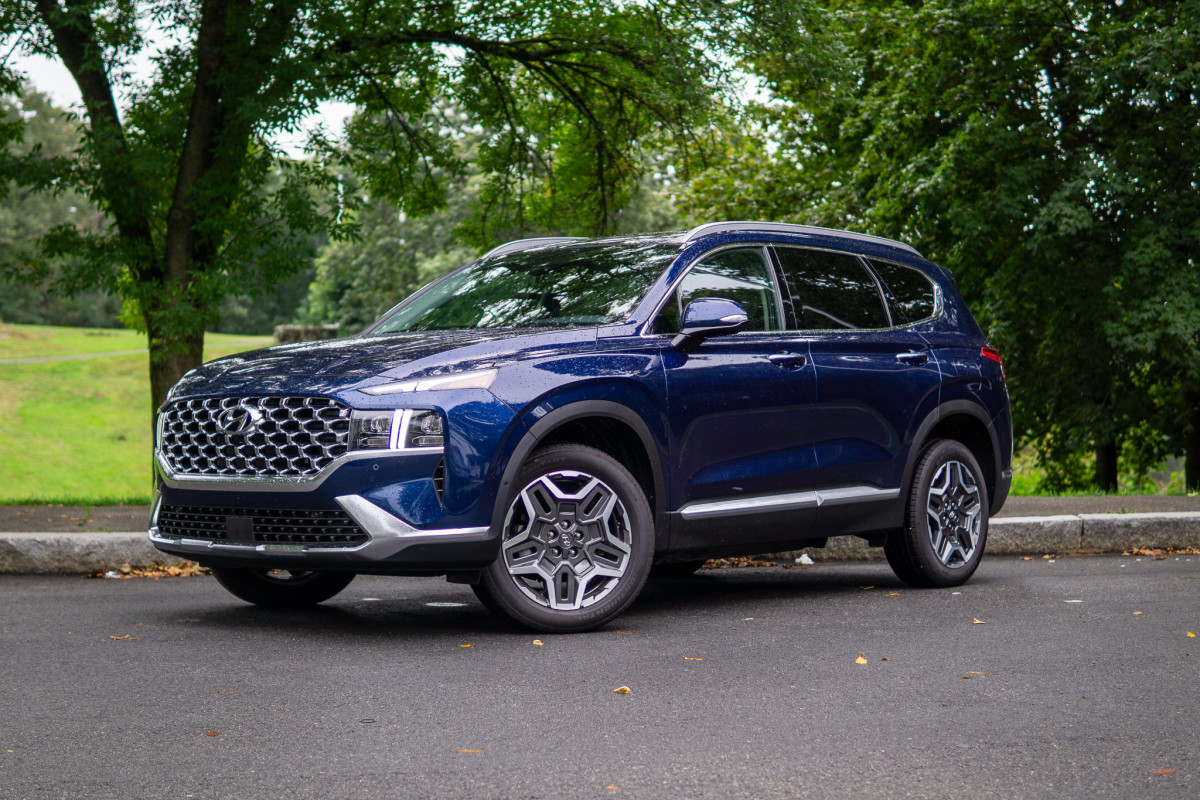
According to CarGurus experts, the overall rating for the 2026 Hyundai Santa Fe is 7.3 out of 10, while the 2027 Chevrolet Bolt scores 6.3 out of 10. Based on these ratings, the Hyundai Santa Fe is the recommended choice, offering a more well-rounded package with its practicality, safety features, and off-road capabilities.
Choose the 2026 Hyundai Santa Fe if:
- You prioritize a spacious and practical interior with ample cargo capacity.
- You value a comprehensive suite of safety features and high safety ratings.
- You need a vehicle with off-road capabilities and a higher towing capacity.


Choose the 2027 Chevrolet Bolt if:
- You prefer an electric vehicle with a long range and quick charging capabilities.
- You appreciate a user-friendly infotainment system with advanced navigation features.
- You want a budget-friendly EV with the option for advanced driver-assistance technology.


CarGurus highlights
According to CarGurus experts, the overall rating for the 2026 Hyundai Santa Fe is 7.3 out of 10, while the 2027 Chevrolet Bolt scores 6.3 out of 10. Based on these ratings, the Hyundai Santa Fe is the recommended choice, offering a more well-rounded package with its practicality, safety features, and off-road capabilities.
Choose the 2026 Hyundai Santa Fe if:
Shop Now- You prioritize a spacious and practical interior with ample cargo capacity.
- You value a comprehensive suite of safety features and high safety ratings.
- You need a vehicle with off-road capabilities and a higher towing capacity.
Choose the 2027 Chevrolet Bolt if:
Shop Now- You prefer an electric vehicle with a long range and quick charging capabilities.
- You appreciate a user-friendly infotainment system with advanced navigation features.
- You want a budget-friendly EV with the option for advanced driver-assistance technology.

By: CarGurus + AI
At CarGurus, our team of experienced automotive writers remain at the heart of our content operation, conducting hands-on car tests and writing insightful guides that are backed by years of industry experience. To complement this, we are harnessing AI to make our content offering more diverse and more helpful to shoppers than ever. To achieve this, our AI systems are based exclusively on CarGurus content, ratings and data, so that what we produce is both unique to CarGurus, and uniquely helpful to car shoppers.

