Ford Escape vs Subaru Ascent
Overview | |
MSRP$28,000 | MSRP$34,395 |
Listings1191 | Listings217 |
Ratings & Reviews | |
User Reviews | User Reviews |
Expert reviews6.2 out of 10 | Expert reviews6.8 out of 10 |
Pros
Cons
| Pros
Cons
|
Reviews SummaryReportedly, Ford will discontinue the Escape at the end of the current fourth-generation run. Once among the most popular vehicles in its class, Ford recently zigged with the Escape’s design and positioning when the market zagged. Boxy, rugged-looking crossovers are what people want, not soft and sophisticated pseudo-cars like the current Escape. Fortunately, Ford has the Bronco Sport in its lineup, which is getting all of the automaker’s attention. Meanwhile, the 2024 Ford Escape receives no major changes following a substantial makeover in 2023, though it appears the Base trim is canceled. | |
Reviews SummaryThe Subaru faithful wanted a replacement for the discontinued three-row Tribeca midsize SUV, and the Ascent answered the call when it went on sale in 2019. In 2023, for its fifth model year, the Ascent got a light refresh with revised styling, updated technology, and a new trim level with plenty of equipment and a trendy blacked-out look. Now, the 2024 Subaru Ascent continues with almost no changes, while several competitors in the segment receive significant updates. Verdict: Can the 2024 Subaru Ascent fend off refreshed rivals in the midsize three-row SUV segment? The Ascent has plenty going for it, from standard all-wheel drive and substantial ground clearance to affordable prices and impressive safety ratings. But it comes across as a little quirky among mainstream choices, which could work in or against its favor. | |
No video found | |
Popular Features & Specs | |
Engine1.5L 180 hp I3 | Engine2.4L 260 hp H4 |
Drive TrainFWD | Drive TrainAWD |
Seating Capacity5 | Seating Capacity8 |
Horsepower180 hp @ 6000 rpm | Horsepower260 hp @ 5600 rpm |
MPG City27 | MPG City20 |
MPG Highway34 | MPG Highway26 |
Engine | |
Engine Name1.5L 180 hp I3 | Engine Name2.4L 260 hp H4 |
Torque199 lb-ft @ 3000 rpm | Torque277 lb-ft @ 2000 rpm |
Horsepower180 hp @ 6000 rpm | Horsepower260 hp @ 5600 rpm |
DrivetrainFWD | DrivetrainAWD |
Fuel Economy | |
MPG City27 | MPG City20 |
MPG Highway34 | MPG Highway26 |
Interior | |
Seating Capacity5 | Seating Capacity8 |
Safety | |
Front Crash Overall5 | Front Crash Overall5 |
Side Crash Overall5 | Side Crash Overall5 |
Dimensions & Capacity | |
Cargo Space37.5 cu ft | Cargo Space17.8 cu ft |
Curb Weight3291 lbs | Curb Weight4421 lbs |
Height66.0 in | Height71.6 in |
Length180.1 in | Length196.8 in |
Width85.6 in | Width85.7 in |
Wheelbase106.7 in | Wheelbase113.8 in |
Maximum Payload | Maximum Payload1579 lbs |
Number of doors4 | Number of doors4 |
Maximum Towing Capacity2000 lbs | Maximum Towing Capacity5000 lbs |
Overview | ||
MSRP | $28,000 | $34,395 |
Listings | ||
Ratings & Reviews | ||
User reviews | ||
Expert reviews | 6.2 out of 10Read full review | 6.8 out of 10Read full review |
Pros & cons | Pros
Cons
| Pros
Cons
|
Summary | Reportedly, Ford will discontinue the Escape at the end of the current fourth-generation run. Once among the most popular vehicles in its class, Ford recently zigged with the Escape’s design and positioning when the market zagged. Boxy, rugged-looking crossovers are what people want, not soft and sophisticated pseudo-cars like the current Escape. Fortunately, Ford has the Bronco Sport in its lineup, which is getting all of the automaker’s attention. Meanwhile, the 2024 Ford Escape receives no major changes following a substantial makeover in 2023, though it appears the Base trim is canceled. | The Subaru faithful wanted a replacement for the discontinued three-row Tribeca midsize SUV, and the Ascent answered the call when it went on sale in 2019. In 2023, for its fifth model year, the Ascent got a light refresh with revised styling, updated technology, and a new trim level with plenty of equipment and a trendy blacked-out look. Now, the 2024 Subaru Ascent continues with almost no changes, while several competitors in the segment receive significant updates. Verdict: Can the 2024 Subaru Ascent fend off refreshed rivals in the midsize three-row SUV segment? The Ascent has plenty going for it, from standard all-wheel drive and substantial ground clearance to affordable prices and impressive safety ratings. But it comes across as a little quirky among mainstream choices, which could work in or against its favor. |
Video | No video found | |
Popular Features & Specs | ||
Engine | 1.5L 180 hp I3 | 2.4L 260 hp H4 |
Drive Train | FWD | AWD |
Seating Capacity | 5 | 8 |
Horsepower | 180 hp @ 6000 rpm | 260 hp @ 5600 rpm |
MPG City | 27 | 20 |
MPG Highway | 34 | 26 |
Engine | ||
Engine Name | 1.5L 180 hp I3 | 2.4L 260 hp H4 |
Torque | 199 lb-ft @ 3000 rpm | 277 lb-ft @ 2000 rpm |
Horsepower | 180 hp @ 6000 rpm | 260 hp @ 5600 rpm |
Drivetrain | FWD | AWD |
Fuel Economy | ||
MPG City | 27 | 20 |
MPG Highway | 34 | 26 |
Interior | ||
Seating Capacity | 5 | 8 |
Safety | ||
Front Crash Overall | 5 | 5 |
Side Crash Overall | 5 | 5 |
Dimensions & Capacity | ||
Cargo Space | 37.5 cu ft | 17.8 cu ft |
Curb Weight | 3291 lbs | 4421 lbs |
Height | 66.0 in | 71.6 in |
Length | 180.1 in | 196.8 in |
Width | 85.6 in | 85.7 in |
Wheelbase | 106.7 in | 113.8 in |
Maximum Payload | 1579 lbs | |
Number of doors | 4 | 4 |
Maximum Towing Capacity | 2000 lbs | 5000 lbs |
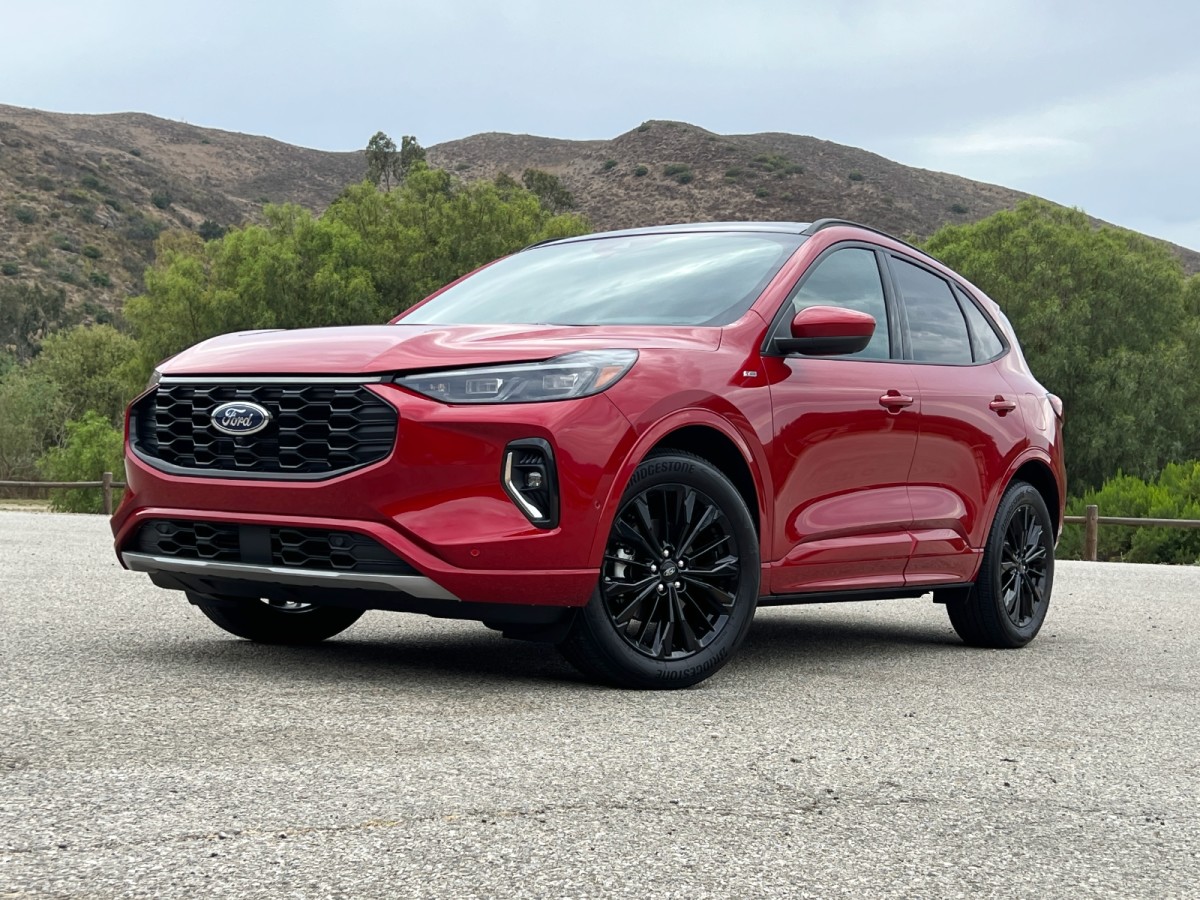
In 2023, Ford revamped the Escape's front end, making several enhancements such as new wheel designs, upgraded trims, and next-gen infotainment and safety features. These changes rolled over into the 2024 model, giving the compact crossover a more aggressive appearance. The former wide-eyed smile was replaced with a bolder look, though the rest of the vehicle maintained its soft, generic appeal. Available trims included Active, ST-Line, ST-Line Select, ST-Line Elite, Platinum, and Plug-In Hybrid, with prices ranging from $29,345 to $40,500, excluding a $1,495 destination charge. Our test vehicle, an ST-Line Elite trim finished in Rapid Red paint and equipped with black 19-inch wheels, a Premium Technology Package, and a Panoramic Vista Roof, came in at $43,650.
The interior featured diamond-stitched, perforated leather and the full suite of tech upgrades, initially giving an upscale impression. However, excessively glossy surfaces and stiff upholstery detracted from the overall experience, raising questions about the vehicle's value for its price. Given the likelihood that the Escape's days might be numbered, it seemed Ford might not address these issues.
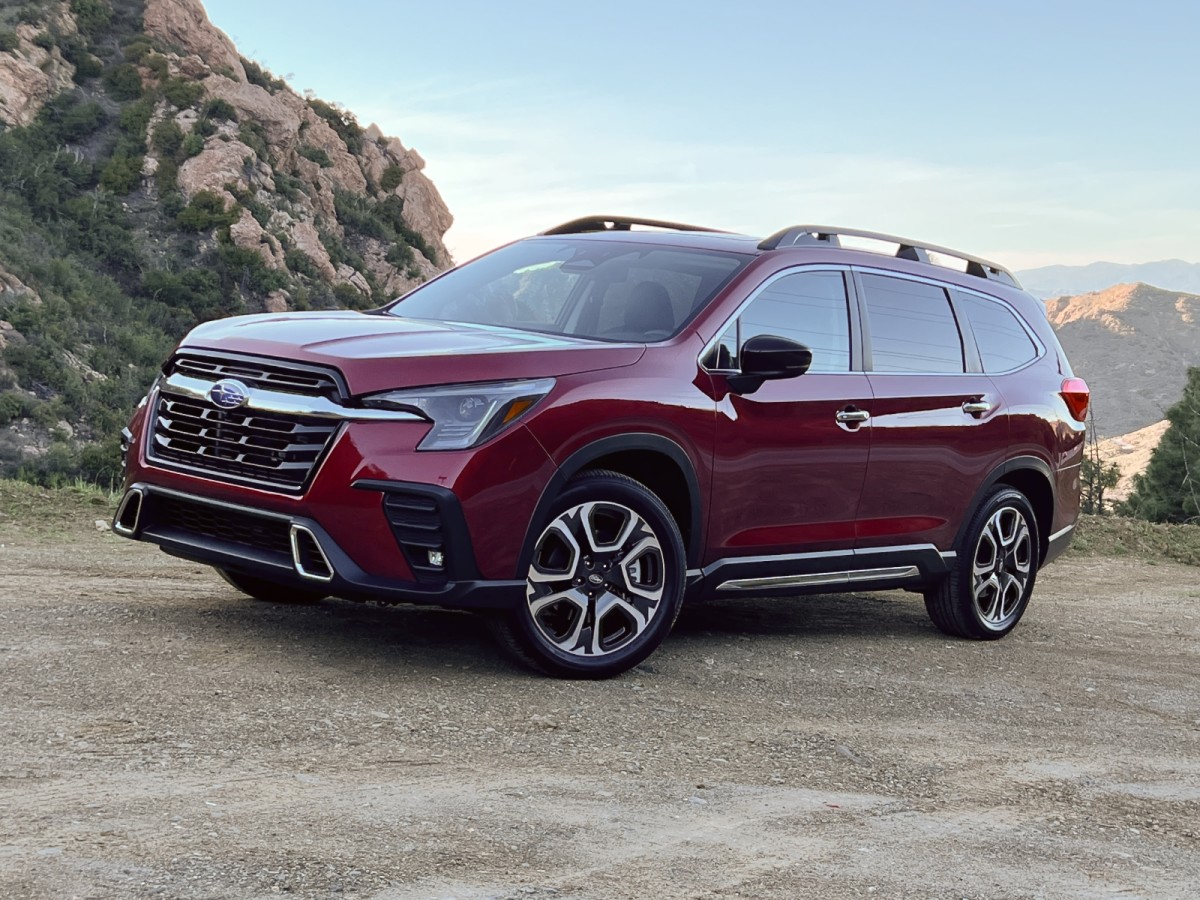
Subaru, meanwhile, often struggled with styling consistency. The 2024 Ascent, for instance, retained the same lineup from the previous year, with trims ranging from Base to Touring and a price spectrum from $34,395 to $48,695, excluding the $1,345 destination charge. Our Touring trim test model, complete with all-weather floor liners, was priced at $50,181.
The Ascent Touring came loaded with a panoramic sunroof, premium Nappa leather upholstery, ventilated front seats, a 14-speaker Harman Kardon sound system, navigation, and a driver-focused camera-based rearview mirror. Although the interior material quality was commendable, the design felt like a hodgepodge of modular components slapped together. It emphasized practicality and functionality over aesthetic sophistication.
In 2023, Ford revamped the Escape's front end, making several enhancements such as new wheel designs, upgraded trims, and next-gen infotainment and safety features. These changes rolled over into the 2024 model, giving the compact crossover a more aggressive appearance. The former wide-eyed smile was replaced with a bolder look, though the rest of the vehicle maintained its soft, generic appeal. Available trims included Active, ST-Line, ST-Line Select, ST-Line Elite, Platinum, and Plug-In Hybrid, with prices ranging from $29,345 to $40,500, excluding a $1,495 destination charge. Our test vehicle, an ST-Line Elite trim finished in Rapid Red paint and equipped with black 19-inch wheels, a Premium Technology Package, and a Panoramic Vista Roof, came in at $43,650.
The interior featured diamond-stitched, perforated leather and the full suite of tech upgrades, initially giving an upscale impression. However, excessively glossy surfaces and stiff upholstery detracted from the overall experience, raising questions about the vehicle's value for its price. Given the likelihood that the Escape's days might be numbered, it seemed Ford might not address these issues.
Subaru, meanwhile, often struggled with styling consistency. The 2024 Ascent, for instance, retained the same lineup from the previous year, with trims ranging from Base to Touring and a price spectrum from $34,395 to $48,695, excluding the $1,345 destination charge. Our Touring trim test model, complete with all-weather floor liners, was priced at $50,181.
The Ascent Touring came loaded with a panoramic sunroof, premium Nappa leather upholstery, ventilated front seats, a 14-speaker Harman Kardon sound system, navigation, and a driver-focused camera-based rearview mirror. Although the interior material quality was commendable, the design felt like a hodgepodge of modular components slapped together. It emphasized practicality and functionality over aesthetic sophistication.
In 2023, Ford revamped the Escape's front end, making several enhancements such as new wheel designs, upgraded trims, and next-gen infotainment and safety features. These changes rolled over into the 2024 model, giving the compact crossover a more aggressive appearance. The former wide-eyed smile was replaced with a bolder look, though the rest of the vehicle maintained its soft, generic appeal. Available trims included Active, ST-Line, ST-Line Select, ST-Line Elite, Platinum, and Plug-In Hybrid, with prices ranging from $29,345 to $40,500, excluding a $1,495 destination charge. Our test vehicle, an ST-Line Elite trim finished in Rapid Red paint and equipped with black 19-inch wheels, a Premium Technology Package, and a Panoramic Vista Roof, came in at $43,650.
The interior featured diamond-stitched, perforated leather and the full suite of tech upgrades, initially giving an upscale impression. However, excessively glossy surfaces and stiff upholstery detracted from the overall experience, raising questions about the vehicle's value for its price. Given the likelihood that the Escape's days might be numbered, it seemed Ford might not address these issues.
Subaru, meanwhile, often struggled with styling consistency. The 2024 Ascent, for instance, retained the same lineup from the previous year, with trims ranging from Base to Touring and a price spectrum from $34,395 to $48,695, excluding the $1,345 destination charge. Our Touring trim test model, complete with all-weather floor liners, was priced at $50,181.
The Ascent Touring came loaded with a panoramic sunroof, premium Nappa leather upholstery, ventilated front seats, a 14-speaker Harman Kardon sound system, navigation, and a driver-focused camera-based rearview mirror. Although the interior material quality was commendable, the design felt like a hodgepodge of modular components slapped together. It emphasized practicality and functionality over aesthetic sophistication.

The 2024 Ford Escape ST-Line Elite offered two engine choices: a 192-horsepower hybrid powertrain expected to deliver 39 mpg in combined driving, and a turbocharged 2.0-liter four-cylinder engine producing 250 horsepower and 280 pound-feet of torque, achieving 26 mpg in combined driving. Our test unit came equipped with the turbo engine, paired with an eight-speed automatic transmission and standard AWD. The AWD system featured a driveline disconnect to boost fuel economy and came with selectable driving modes—Eco, Normal, Sport, and Slippery. However, the absence of an Off-Road mode was noticeable. With the turbo engine, the Escape could tow up to 3,500 pounds.
Despite the "ST-Line" branding, the sporty demeanor of the Escape was more skin-deep. The turbocharged engine provided quick acceleration, but the driving dynamics did not live up to the "ST" promise. The ride was soft, and handling felt nimble only in routine driving situations, often disrupted by too much body motion. The brake pedal was responsive, but the steering lacked feedback.
In comparison, the 2024 Subaru Ascent featured a turbocharged 2.4-liter four-cylinder engine, delivering 260 horsepower at 5,600 rpm and 277 pound-feet of torque between 2,000 and 4,800 rpm. This engine was paired with a CVT and standard AWD with active torque vectoring. The Ascent boasted a towing capacity of 5,000 pounds, or 2,000 pounds for the Base trim.
The Ascent excelled in various driving environments—city, suburb, gravel roads, dirt trails, and highways. It easily tackled speed humps and rutted off-road terrains, performing well in the school drop-off lane and market parking lots. The classic Subaru boxer engine and CVT worked harmoniously, barring the occasional mimicry issues of a traditional automatic transmission.
Two areas where the Ascent struggled included twisty mountain roads and fuel economy. The heavy, soft suspension and all-season tires limited its agility on winding roads. Moreover, the Ascent with 20-inch wheels had an EPA rating of 19 mpg city, 25 mpg highway, and 21 mpg combined, but during testing, it achieved only 16.7 mpg city and 18.6 mpg overall—a disappointment compared to its official stats.
The 2024 Ford Escape ST-Line Elite offered two engine choices: a 192-horsepower hybrid powertrain expected to deliver 39 mpg in combined driving, and a turbocharged 2.0-liter four-cylinder engine producing 250 horsepower and 280 pound-feet of torque, achieving 26 mpg in combined driving. Our test unit came equipped with the turbo engine, paired with an eight-speed automatic transmission and standard AWD. The AWD system featured a driveline disconnect to boost fuel economy and came with selectable driving modes—Eco, Normal, Sport, and Slippery. However, the absence of an Off-Road mode was noticeable. With the turbo engine, the Escape could tow up to 3,500 pounds.
Despite the "ST-Line" branding, the sporty demeanor of the Escape was more skin-deep. The turbocharged engine provided quick acceleration, but the driving dynamics did not live up to the "ST" promise. The ride was soft, and handling felt nimble only in routine driving situations, often disrupted by too much body motion. The brake pedal was responsive, but the steering lacked feedback.
In comparison, the 2024 Subaru Ascent featured a turbocharged 2.4-liter four-cylinder engine, delivering 260 horsepower at 5,600 rpm and 277 pound-feet of torque between 2,000 and 4,800 rpm. This engine was paired with a CVT and standard AWD with active torque vectoring. The Ascent boasted a towing capacity of 5,000 pounds, or 2,000 pounds for the Base trim.
The Ascent excelled in various driving environments—city, suburb, gravel roads, dirt trails, and highways. It easily tackled speed humps and rutted off-road terrains, performing well in the school drop-off lane and market parking lots. The classic Subaru boxer engine and CVT worked harmoniously, barring the occasional mimicry issues of a traditional automatic transmission.
Two areas where the Ascent struggled included twisty mountain roads and fuel economy. The heavy, soft suspension and all-season tires limited its agility on winding roads. Moreover, the Ascent with 20-inch wheels had an EPA rating of 19 mpg city, 25 mpg highway, and 21 mpg combined, but during testing, it achieved only 16.7 mpg city and 18.6 mpg overall—a disappointment compared to its official stats.
The 2024 Ford Escape ST-Line Elite offered two engine choices: a 192-horsepower hybrid powertrain expected to deliver 39 mpg in combined driving, and a turbocharged 2.0-liter four-cylinder engine producing 250 horsepower and 280 pound-feet of torque, achieving 26 mpg in combined driving. Our test unit came equipped with the turbo engine, paired with an eight-speed automatic transmission and standard AWD. The AWD system featured a driveline disconnect to boost fuel economy and came with selectable driving modes—Eco, Normal, Sport, and Slippery. However, the absence of an Off-Road mode was noticeable. With the turbo engine, the Escape could tow up to 3,500 pounds.
Despite the "ST-Line" branding, the sporty demeanor of the Escape was more skin-deep. The turbocharged engine provided quick acceleration, but the driving dynamics did not live up to the "ST" promise. The ride was soft, and handling felt nimble only in routine driving situations, often disrupted by too much body motion. The brake pedal was responsive, but the steering lacked feedback.
In comparison, the 2024 Subaru Ascent featured a turbocharged 2.4-liter four-cylinder engine, delivering 260 horsepower at 5,600 rpm and 277 pound-feet of torque between 2,000 and 4,800 rpm. This engine was paired with a CVT and standard AWD with active torque vectoring. The Ascent boasted a towing capacity of 5,000 pounds, or 2,000 pounds for the Base trim.
The Ascent excelled in various driving environments—city, suburb, gravel roads, dirt trails, and highways. It easily tackled speed humps and rutted off-road terrains, performing well in the school drop-off lane and market parking lots. The classic Subaru boxer engine and CVT worked harmoniously, barring the occasional mimicry issues of a traditional automatic transmission.
Two areas where the Ascent struggled included twisty mountain roads and fuel economy. The heavy, soft suspension and all-season tires limited its agility on winding roads. Moreover, the Ascent with 20-inch wheels had an EPA rating of 19 mpg city, 25 mpg highway, and 21 mpg combined, but during testing, it achieved only 16.7 mpg city and 18.6 mpg overall—a disappointment compared to its official stats.
The 2024 Ford Escape ST-Line came exclusively with a black interior. Standard upholstery included cloth inserts with faux leather bolsters accentuated with red stitching for a sporty effect. Leather was optional on the ST-Line Elite trim, but it felt uncomfortably stiff and dry, diminishing the premium feel.
For comfort, our test vehicle featured ambient interior lighting, dual-zone automatic climate control, power-adjustable front seats (10-way for the driver, six-way for the passenger), heated front seats, and a heated steering wheel. However, the absence of ventilated seats was notable, especially given the heatwave during our test drive in Southern California. The front seats were spacious and supportive, and the back seat, when slid into its rearmost position, offered comfort.
The Escape provided generous interior storage up front, though rear passengers were less well-accommodated. Cargo volume stood at 37.5 cubic feet behind the rear seat (34.4 cubic feet for the hybrid) and expanded to 65.4 cubic feet (60.8 cubic feet in the hybrid) when the rear seats were folded down. Our test vehicle also included deep storage areas on either side of the cargo load floor and a handy grocery bag hook.
For the 2024 Subaru Ascent, functionality was clearly a priority. The interior was designed with practical touches like a dashboard shelf, large cupholders in the rear door panels, backpack pegs on the second-row seatbacks, and cargo hooks in the luggage compartment—making day-to-day life easier.
The Touring trim came with soft, premium Nappa leather seats that were heated and ventilated. Unlike the Escape, the front passenger seat lacked a height adjuster, but it still provided good leg support. The rear doors opened to nearly a 90-degree angle, improving accessibility for loading children and cargo onto the roof rails, which could support up to 700 pounds.
Rear doors opened wide, facilitating easy child seating arrangements. The second-row captain's chairs, which were heated, were comfortable but offered slightly less legroom compared to competitors. The third-row seats were reasonably comfortable for short trips, especially for kids, featuring air conditioning vents and ample storage.
Behind the third-row seats, the Ascent offered up to 17.8 cubic feet of cargo space, including a plastic-lined underfloor compartment. Folding the third row increased the cargo space to 43.5 cubic feet, while a maximum of 75.6 cubic feet was available with the second row folded down, slightly reduced when opting for the panoramic sunroof.
The 2024 Ford Escape ST-Line came exclusively with a black interior. Standard upholstery included cloth inserts with faux leather bolsters accentuated with red stitching for a sporty effect. Leather was optional on the ST-Line Elite trim, but it felt uncomfortably stiff and dry, diminishing the premium feel.
For comfort, our test vehicle featured ambient interior lighting, dual-zone automatic climate control, power-adjustable front seats (10-way for the driver, six-way for the passenger), heated front seats, and a heated steering wheel. However, the absence of ventilated seats was notable, especially given the heatwave during our test drive in Southern California. The front seats were spacious and supportive, and the back seat, when slid into its rearmost position, offered comfort.
The Escape provided generous interior storage up front, though rear passengers were less well-accommodated. Cargo volume stood at 37.5 cubic feet behind the rear seat (34.4 cubic feet for the hybrid) and expanded to 65.4 cubic feet (60.8 cubic feet in the hybrid) when the rear seats were folded down. Our test vehicle also included deep storage areas on either side of the cargo load floor and a handy grocery bag hook.
For the 2024 Subaru Ascent, functionality was clearly a priority. The interior was designed with practical touches like a dashboard shelf, large cupholders in the rear door panels, backpack pegs on the second-row seatbacks, and cargo hooks in the luggage compartment—making day-to-day life easier.
The Touring trim came with soft, premium Nappa leather seats that were heated and ventilated. Unlike the Escape, the front passenger seat lacked a height adjuster, but it still provided good leg support. The rear doors opened to nearly a 90-degree angle, improving accessibility for loading children and cargo onto the roof rails, which could support up to 700 pounds.
Rear doors opened wide, facilitating easy child seating arrangements. The second-row captain's chairs, which were heated, were comfortable but offered slightly less legroom compared to competitors. The third-row seats were reasonably comfortable for short trips, especially for kids, featuring air conditioning vents and ample storage.
Behind the third-row seats, the Ascent offered up to 17.8 cubic feet of cargo space, including a plastic-lined underfloor compartment. Folding the third row increased the cargo space to 43.5 cubic feet, while a maximum of 75.6 cubic feet was available with the second row folded down, slightly reduced when opting for the panoramic sunroof.
The 2024 Ford Escape ST-Line came exclusively with a black interior. Standard upholstery included cloth inserts with faux leather bolsters accentuated with red stitching for a sporty effect. Leather was optional on the ST-Line Elite trim, but it felt uncomfortably stiff and dry, diminishing the premium feel.
For comfort, our test vehicle featured ambient interior lighting, dual-zone automatic climate control, power-adjustable front seats (10-way for the driver, six-way for the passenger), heated front seats, and a heated steering wheel. However, the absence of ventilated seats was notable, especially given the heatwave during our test drive in Southern California. The front seats were spacious and supportive, and the back seat, when slid into its rearmost position, offered comfort.
The Escape provided generous interior storage up front, though rear passengers were less well-accommodated. Cargo volume stood at 37.5 cubic feet behind the rear seat (34.4 cubic feet for the hybrid) and expanded to 65.4 cubic feet (60.8 cubic feet in the hybrid) when the rear seats were folded down. Our test vehicle also included deep storage areas on either side of the cargo load floor and a handy grocery bag hook.
For the 2024 Subaru Ascent, functionality was clearly a priority. The interior was designed with practical touches like a dashboard shelf, large cupholders in the rear door panels, backpack pegs on the second-row seatbacks, and cargo hooks in the luggage compartment—making day-to-day life easier.
The Touring trim came with soft, premium Nappa leather seats that were heated and ventilated. Unlike the Escape, the front passenger seat lacked a height adjuster, but it still provided good leg support. The rear doors opened to nearly a 90-degree angle, improving accessibility for loading children and cargo onto the roof rails, which could support up to 700 pounds.
Rear doors opened wide, facilitating easy child seating arrangements. The second-row captain's chairs, which were heated, were comfortable but offered slightly less legroom compared to competitors. The third-row seats were reasonably comfortable for short trips, especially for kids, featuring air conditioning vents and ample storage.
Behind the third-row seats, the Ascent offered up to 17.8 cubic feet of cargo space, including a plastic-lined underfloor compartment. Folding the third row increased the cargo space to 43.5 cubic feet, while a maximum of 75.6 cubic feet was available with the second row folded down, slightly reduced when opting for the panoramic sunroof.
The 2024 Ford Escape was equipped with digital instrumentation as standard. Lower trims featured an 8-inch display, while upper trims like our ST-Line Elite test vehicle came with a 12.3-inch display. The infotainment system was the standout feature, with a 13.2-inch Sync 4 touchscreen in landscape format. However, the screen's color theme made it appear washed out, and the thin fonts were hard to read at a glance. Dual-zone climate controls integrated into the screen were not user-friendly.
Sync 4 also included wireless Apple CarPlay and Android Auto, SiriusXM 360L satellite radio, FordPass Connect services, Amazon Alexa, and a three-year subscription to connected navigation. Despite some lag issues and the wireless charger overheating the iPhone, the voice recognition system was excellent. The test vehicle included a head-up display (HUD) and Active Park Assist 2.0 for semi-autonomous parking.
Comparatively, the 2024 Subaru Ascent came with the latest Starlink infotainment system featuring an 11.6-inch portrait-oriented touchscreen. It included Bluetooth, wireless Apple CarPlay and Android Auto, SiriusXM satellite radio, text messaging capability, and an optional wireless charging pad. Higher trims could access a Wi-Fi hotspot, a navigation system, and a 14-speaker Harman Kardon surround-sound system.
Physical buttons and knobs in Starlink controlled stereo volume, radio tuning, climate temperature, and window defrosters. Features like Cabin Connect allowed the driver to project their voice through the stereo speakers, making communication easier. Upper trims had a surround-view camera and a camera-based rearview mirror for enhanced rear visibility. Although the display faded in direct sunlight and the native voice-recognition was poor, CarPlay and Android Auto mitigated these issues.
The 2024 Ford Escape was equipped with digital instrumentation as standard. Lower trims featured an 8-inch display, while upper trims like our ST-Line Elite test vehicle came with a 12.3-inch display. The infotainment system was the standout feature, with a 13.2-inch Sync 4 touchscreen in landscape format. However, the screen's color theme made it appear washed out, and the thin fonts were hard to read at a glance. Dual-zone climate controls integrated into the screen were not user-friendly.
Sync 4 also included wireless Apple CarPlay and Android Auto, SiriusXM 360L satellite radio, FordPass Connect services, Amazon Alexa, and a three-year subscription to connected navigation. Despite some lag issues and the wireless charger overheating the iPhone, the voice recognition system was excellent. The test vehicle included a head-up display (HUD) and Active Park Assist 2.0 for semi-autonomous parking.
Comparatively, the 2024 Subaru Ascent came with the latest Starlink infotainment system featuring an 11.6-inch portrait-oriented touchscreen. It included Bluetooth, wireless Apple CarPlay and Android Auto, SiriusXM satellite radio, text messaging capability, and an optional wireless charging pad. Higher trims could access a Wi-Fi hotspot, a navigation system, and a 14-speaker Harman Kardon surround-sound system.
Physical buttons and knobs in Starlink controlled stereo volume, radio tuning, climate temperature, and window defrosters. Features like Cabin Connect allowed the driver to project their voice through the stereo speakers, making communication easier. Upper trims had a surround-view camera and a camera-based rearview mirror for enhanced rear visibility. Although the display faded in direct sunlight and the native voice-recognition was poor, CarPlay and Android Auto mitigated these issues.
The 2024 Ford Escape was equipped with digital instrumentation as standard. Lower trims featured an 8-inch display, while upper trims like our ST-Line Elite test vehicle came with a 12.3-inch display. The infotainment system was the standout feature, with a 13.2-inch Sync 4 touchscreen in landscape format. However, the screen's color theme made it appear washed out, and the thin fonts were hard to read at a glance. Dual-zone climate controls integrated into the screen were not user-friendly.
Sync 4 also included wireless Apple CarPlay and Android Auto, SiriusXM 360L satellite radio, FordPass Connect services, Amazon Alexa, and a three-year subscription to connected navigation. Despite some lag issues and the wireless charger overheating the iPhone, the voice recognition system was excellent. The test vehicle included a head-up display (HUD) and Active Park Assist 2.0 for semi-autonomous parking.
Comparatively, the 2024 Subaru Ascent came with the latest Starlink infotainment system featuring an 11.6-inch portrait-oriented touchscreen. It included Bluetooth, wireless Apple CarPlay and Android Auto, SiriusXM satellite radio, text messaging capability, and an optional wireless charging pad. Higher trims could access a Wi-Fi hotspot, a navigation system, and a 14-speaker Harman Kardon surround-sound system.
Physical buttons and knobs in Starlink controlled stereo volume, radio tuning, climate temperature, and window defrosters. Features like Cabin Connect allowed the driver to project their voice through the stereo speakers, making communication easier. Upper trims had a surround-view camera and a camera-based rearview mirror for enhanced rear visibility. Although the display faded in direct sunlight and the native voice-recognition was poor, CarPlay and Android Auto mitigated these issues.
The 2024 Ford Escape included a post-collision automatic braking system and the standard Ford Co-Pilot360 suite of driving assistance features. These included forward-collision warning with pedestrian detection, automatic emergency braking, lane-departure warning, lane-keeping assist, blind-spot monitoring, rear cross-traffic alert, and automatic high-beam headlights. The ST-Line Elite also had adaptive cruise control with stop-and-go capability and predictive speed assist, evasive steering assist, lane-centering assist, and a 360-degree surround-view camera system.
During testing, the Escape's lane-keeping systems displayed inconsistent behavior, and predictive speed assist slowed the SUV too much for upcoming curves, causing irritation among other drivers. Both adaptive cruise control and lane-centering systems shut down at one point, requiring manual control. On freeways, the Co-Pilot360 technology performed better, with more effective lane-keeping and smooth adaptive cruise control.
The National Highway Traffic Safety Administration (NHTSA) awarded the 2024 Escape five-star ratings across the board, except for a four-star rollover resistance rating. The Insurance Institute for Highway Safety (IIHS) had not rated the 2024 Escape at the time of writing, but the 2023 model earned Good ratings except for a Marginal score in a new side-impact test.
The 2024 Subaru Ascent was synonymous with safety, featuring a high-strength steel platform and the standard EyeSight package of safety and driver assistance systems. The Ascent received five-star ratings from the NHTSA in all assessments except rollover resistance, where it earned four stars. The IIHS awarded the Ascent a Top Safety Pick+ rating for 2023.
EyeSight included forward-collision warning, automatic emergency braking, lane-departure warning, lane-keeping assist, lane-centering assist, adaptive cruise control, evasive steering assist, and automatic high-beam headlights. Blind-spot monitoring with rear cross-traffic alert was available starting from the Premium trim, along with the Starlink Safety & Security plan. Higher trims offered automatic reverse braking and a Driver Focus driver monitoring system with facial recognition.
However, the latest EyeSight technology demonstrated issues, particularly with lane-centering assist. During testing, it struggled with freeway exits and entrances and lane changes, even attempting to steer into a left-turn lane instead of continuing straight. On winding roads, the lane-centering assist resisted driver inputs, creating instability and requiring sudden corrections.
CarGurus highlights
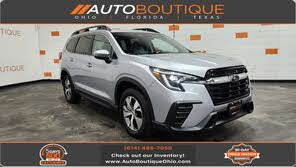
According to CarGurus experts, the overall rating for the 2024 Ford Escape is 6.2 out of 10, while the 2024 Subaru Ascent scores 6.8 out of 10. Based on these ratings, we recommend the 2024 Subaru Ascent. It offers better safety features, more practical interior functionality, and greater versatility across different driving conditions, making it a superior choice for families and adventure seekers alike.
Choose the 2024 Ford Escape if:
- You prioritize modern infotainment technology with an intuitive layout.
- You prefer a compact SUV with comfortable, supportive seats and generous front storage.
- You are looking for a vehicle with a sporty appearance and isolated driving dynamics.




Choose the 2024 Subaru Ascent if:
- You need a functional, family-friendly SUV with practical interior features.
- You value comprehensive safety systems and top safety ratings.
- You want a vehicle capable of handling various driving environments, from city streets to off-road trails.




CarGurus highlights
According to CarGurus experts, the overall rating for the 2024 Ford Escape is 6.2 out of 10, while the 2024 Subaru Ascent scores 6.8 out of 10. Based on these ratings, we recommend the 2024 Subaru Ascent. It offers better safety features, more practical interior functionality, and greater versatility across different driving conditions, making it a superior choice for families and adventure seekers alike.
Choose the 2024 Ford Escape if:
Shop Now- You prioritize modern infotainment technology with an intuitive layout.
- You prefer a compact SUV with comfortable, supportive seats and generous front storage.
- You are looking for a vehicle with a sporty appearance and isolated driving dynamics.


Choose the 2024 Subaru Ascent if:
Shop Now- You need a functional, family-friendly SUV with practical interior features.
- You value comprehensive safety systems and top safety ratings.
- You want a vehicle capable of handling various driving environments, from city streets to off-road trails.


By: CarGurus + AI
At CarGurus, our team of experienced automotive writers remain at the heart of our content operation, conducting hands-on car tests and writing insightful guides that are backed by years of industry experience. To complement this, we are harnessing AI to make our content offering more diverse and more helpful to shoppers than ever. To achieve this, our AI systems are based exclusively on CarGurus content, ratings and data, so that what we produce is both unique to CarGurus, and uniquely helpful to car shoppers.

