2025 Toyota 4Runner vs 2026 BMW X5
Overview | |
MSRP$41,270 | MSRP$68,300 |
Listings1648 | Listings5354 |
Ratings & Reviews | |
User Reviews | User Reviews |
Expert reviews7.7 out of 10 | Expert reviews7.5 out of 10 |
Pros
Cons
| Pros
Cons
|
2025 Toyota 4Runner Reviews SummaryAfter a very long 15 years, we finally got a new Toyota 4Runner with more capabilities, power, comfort, and technology. It's also more efficient thanks to a new hybrid option and more composed on pavement, but it remains a solid all-terrain vehicle to extend your adventures further. Verdict: Toyota doesn't throw out the fomula with its newly redesigned 4Runner. Instead, the 2025 model keeps many of the features shoppers have loved for over a decade, while also adding a more contemporary selection of four-cylinder powertrains. | |
2026 BMW X5 Reviews SummaryFive versions of this midsize luxury SUV are available for 2026, all satisfying in one way or another. The 40i models cost the least but can be optioned with almost everything buyers could want. The 50e is a plug-in hybrid with 38 miles of electric-only range. The M60i and X5 M are the performance models, and offer a handful of desirable exclusive options, especially for audiophiles with deep pockets. Verdict: Prices rise quickly with upgrades, but few luxury SUVs blend style, quality, comfort, tech, and performance like the 2026 X5. | |
No video found | |
Popular Features & Specs | |
Engine2.4L 278 hp I4 | Engine3.0L 375 hp I6 |
Drivetrain4X2 | DrivetrainRWD |
Seating Capacity7 | Seating Capacity5 |
Horsepower278 hp @ 6000 rpm | Horsepower375 hp @ 5200 rpm |
MPG City20 | MPG City23 |
MPG Highway26 | MPG Highway27 |
Engine | |
Engine Name2.4L 278 hp I4 | Engine Name3.0L 375 hp I6 |
Torque317 lb-ft @ 1700 rpm | Torque398 lb-ft @ 1850 rpm |
Horsepower278 hp @ 6000 rpm | Horsepower375 hp @ 5200 rpm |
Drivetrain4X2 | DrivetrainRWD |
Fuel Economy | |
MPG City20 | MPG City23 |
MPG Highway26 | MPG Highway27 |
Interior | |
Seating Capacity7 | Seating Capacity5 |
Key Features | |
Navigation System | Navigation SystemStandard |
Sunroof/Moonroof | Sunroof/MoonroofStandard |
Safety | |
Front Crash Overall4 | Front Crash Overall4 |
Side Crash Overall5 | Side Crash Overall5 |
Dimensions & Capacity | |
Cargo Space48.4 cu ft | Cargo Space33.9 cu ft |
Curb Weight4455 lbs | Curb Weight4919 lbs |
Height72.6 in | Height69.1 in |
Length194.9 in | Length194.2 in |
Width78.0 in | Width87.3 in |
Wheelbase112.2 in | Wheelbase117.1 in |
Maximum Payload895 lbs | Maximum Payload1054 lbs |
Number of doors4 | Number of doors4 |
Maximum Towing Capacity6000 lbs | Maximum Towing Capacity7200 lbs |
Standard Towing Capacity6000 lbs | Standard Towing Capacity |
Overview | ||
MSRP | $41,270 | $68,300 |
Listings | ||
Ratings & Reviews | ||
User reviews | ||
Expert reviews | 7.7 out of 10Read full review | 7.5 out of 10Read full review |
Pros & cons | Pros
Cons
| Pros
Cons
|
Summary | After a very long 15 years, we finally got a new Toyota 4Runner with more capabilities, power, comfort, and technology. It's also more efficient thanks to a new hybrid option and more composed on pavement, but it remains a solid all-terrain vehicle to extend your adventures further. Verdict: Toyota doesn't throw out the fomula with its newly redesigned 4Runner. Instead, the 2025 model keeps many of the features shoppers have loved for over a decade, while also adding a more contemporary selection of four-cylinder powertrains. | Five versions of this midsize luxury SUV are available for 2026, all satisfying in one way or another. The 40i models cost the least but can be optioned with almost everything buyers could want. The 50e is a plug-in hybrid with 38 miles of electric-only range. The M60i and X5 M are the performance models, and offer a handful of desirable exclusive options, especially for audiophiles with deep pockets. Verdict: Prices rise quickly with upgrades, but few luxury SUVs blend style, quality, comfort, tech, and performance like the 2026 X5. |
Video | No video found | |
Popular Features & Specs | ||
Engine | 2.4L 278 hp I4 | 3.0L 375 hp I6 |
Drivetrain | 4X2 | RWD |
Seating Capacity | 7 | 5 |
Horsepower | 278 hp @ 6000 rpm | 375 hp @ 5200 rpm |
MPG City | 20 | 23 |
MPG Highway | 26 | 27 |
Engine | ||
Engine Name | 2.4L 278 hp I4 | 3.0L 375 hp I6 |
Torque | 317 lb-ft @ 1700 rpm | 398 lb-ft @ 1850 rpm |
Horsepower | 278 hp @ 6000 rpm | 375 hp @ 5200 rpm |
Drivetrain | 4X2 | RWD |
Fuel Economy | ||
MPG City | 20 | 23 |
MPG Highway | 26 | 27 |
Interior | ||
Seating Capacity | 7 | 5 |
Key Features | ||
Navigation System | Standard | |
Sunroof/Moonroof | Standard | |
Safety | ||
Front Crash Overall | 4 | 4 |
Side Crash Overall | 5 | 5 |
Dimensions & Capacity | ||
Cargo Space | 48.4 cu ft | 33.9 cu ft |
Curb Weight | 4455 lbs | 4919 lbs |
Height | 72.6 in | 69.1 in |
Length | 194.9 in | 194.2 in |
Width | 78.0 in | 87.3 in |
Wheelbase | 112.2 in | 117.1 in |
Maximum Payload | 895 lbs | 1054 lbs |
Number of doors | 4 | 4 |
Maximum Towing Capacity | 6000 lbs | 7200 lbs |
Standard Towing Capacity | 6000 lbs | |
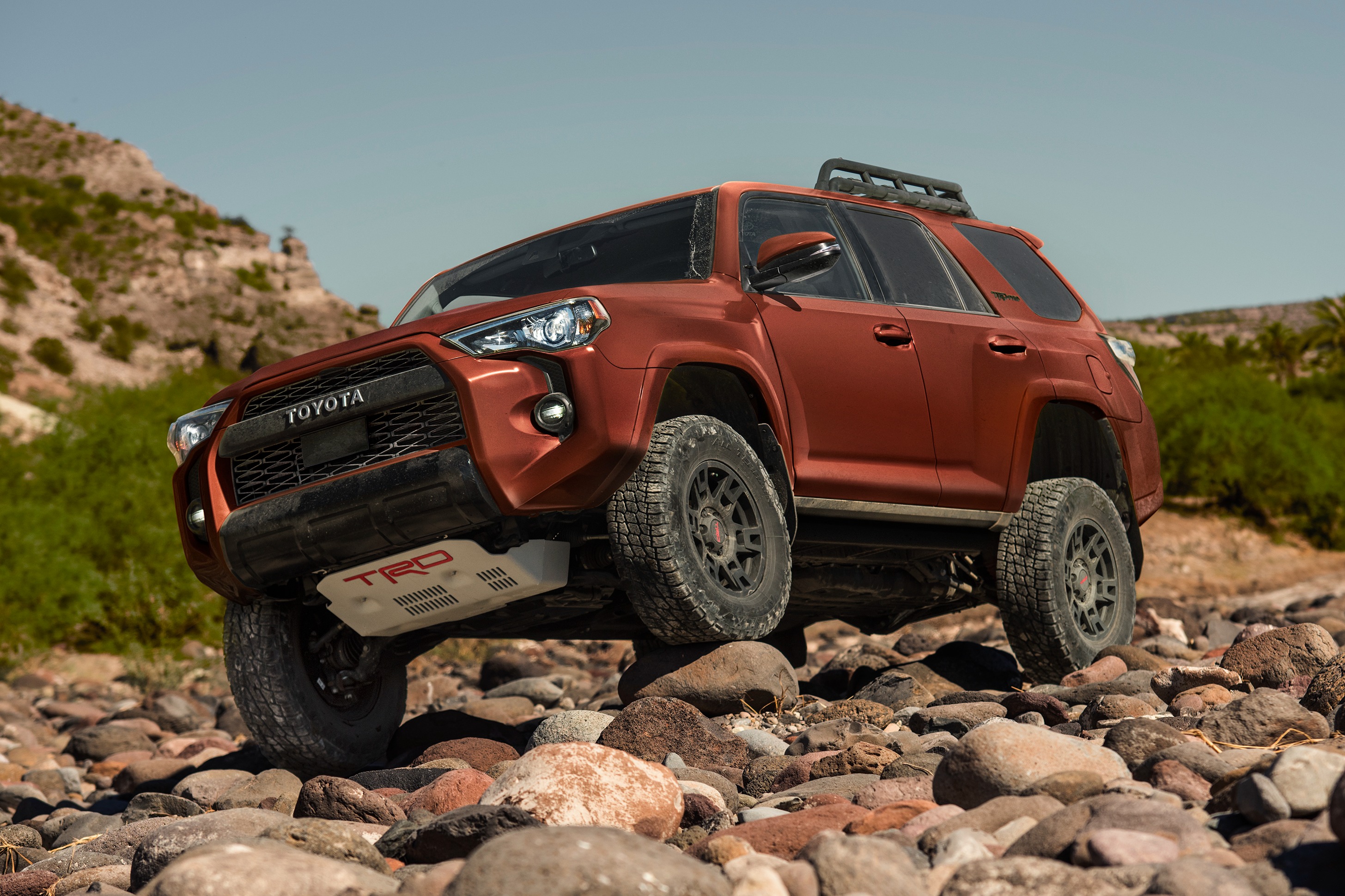
The 2025 Toyota 4Runner represented a significant evolution in design rather than a complete overhaul. It retained the horseshoe-shaped grilles from the previous generation but with a more robust and industrial exterior. The side body panels featured deep beveled creases that seamlessly blended with the flared wheel arches, giving the 4Runner a broad-shouldered stance suitable for an off-road SUV. Paying homage to its predecessors, the new model included design elements like the slanted rearmost window from the first-gen 4Runner. Inside, the cabin mirrored the Toyota Tacoma's design, with beveled styling throughout. The interior was functional, comfortable, and refined for its class, with hard plastics for durability and light cushioning for comfort. The materials were of higher quality than those in a Jeep Wrangler or Ford Bronco, though not as luxurious as a Land Rover Defender.
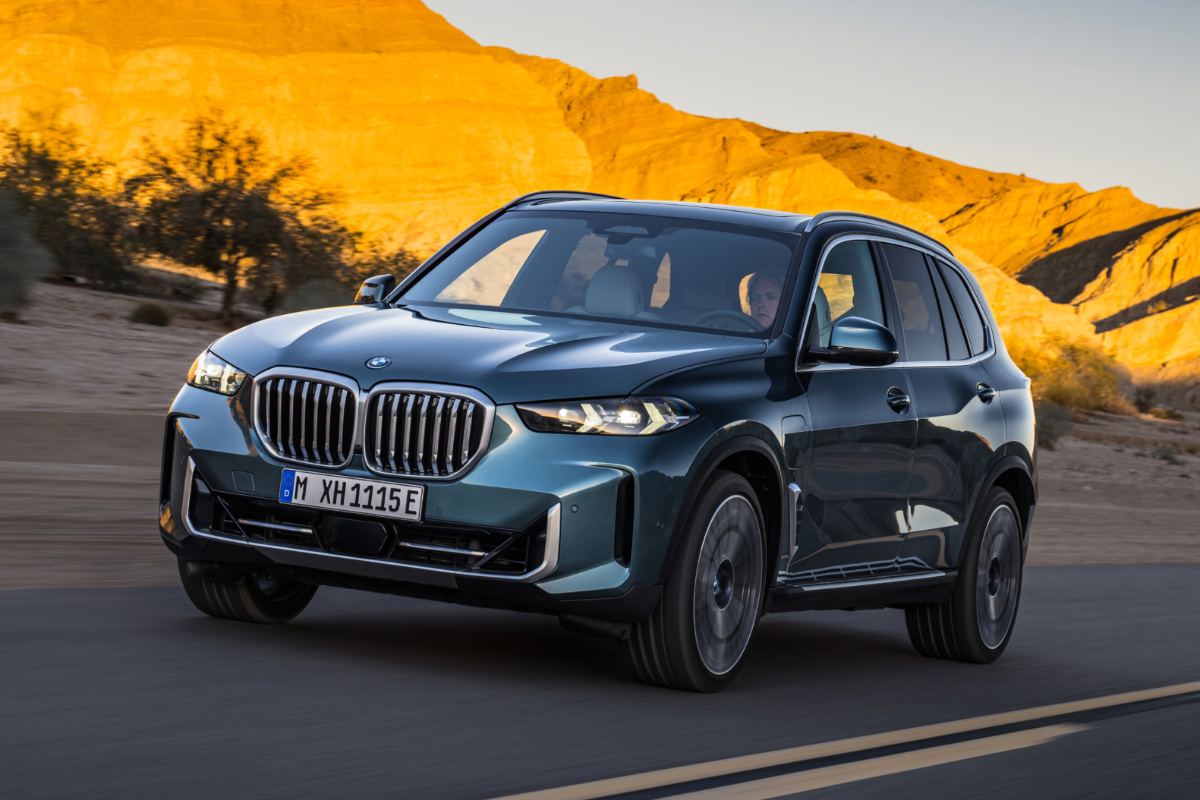
The 2026 BMW X5 M60i test vehicle showcased a blend of classic and modern design elements. It featured wide kidney grilles, a four-element headlight array, and taillights that horizontally bled into the rear liftgate, reminiscent of the first-generation X5. The interior aimed for simplicity with a panoramic curved display and minimized controls, enhanced by metallic accents, carbon fiber inlays, and artful metal speaker grilles. Despite the predominantly black interior, the X5 felt anything but monotonous. Quality was evident in the glass controls, sophisticated display graphics, and tight construction. At night, ambient lighting and the panoramic Sky Lounge LED sunroof added a special touch to the cabin.
The 2025 Toyota 4Runner offered two engine choices. The base model came with a 2.4-liter turbocharged four-cylinder engine producing 317 horsepower and 278 pound-feet of torque, paired with an eight-speed automatic transmission. This setup improved acceleration and fuel economy compared to the previous generation. Rear-wheel drive was standard on some trims, with four-wheel drive available. The i-Force Max Hybrid powertrain, based on the same four-cylinder engine, delivered 326 horsepower and 465 pound-feet of torque. This hybrid variant provided stronger power at lower speeds, beneficial for off-roading. The 4Runner was quieter inside, reducing driver fatigue on long journeys. It handled better on pavement, with improved steering and reduced body roll. Off-road, the 4Runner excelled, with nine trims offering varying levels of capability. The TRD Pro and Trailhunter models were the most impressive, though the Trailhunter's snorkel added wind noise. Off-road specs varied by trim, with approach angles between 18 and 33 degrees, departure angles between 22 and 24 degrees, and ground clearance between 8.1 and 10.1 inches.
The 2026 BMW X5 M60i featured a twin-turbocharged 4.4-liter V8 engine with a 48-volt mild-hybrid system, producing 532 horsepower and 553 pound-feet of torque. It accelerated to 60 mph in 4.2 seconds, aided by xDrive AWD and Pirelli P Zero performance tires. The M60i consumed more fuel when driven aggressively, with an EPA rating of 19 mpg and observed figures between 16.4 mpg and 21.1 mpg. More fuel-efficient options included the sDrive40i and xDrive40i, rated at 25 mpg combined, and the xDrive50e plug-in hybrid with 38 miles of electric range. The X5 M60i, weighing 5,355 pounds, had a high center of gravity, affecting its ride on uneven surfaces. The M Sport brakes and performance tires helped maintain confidence. Around town, the M60i was quiet and docile, with a firm ride over bumps. It wasn't equipped for off-roading, but other trims offered all-terrain tires and an off-road package. The X5 had a towing capacity of 7,200 pounds.
The 2025 Toyota 4Runner was five inches longer than its predecessor, with a 2.4-inch longer wheelbase. Despite this, passenger space gains were minimal. The front seats accommodated taller passengers, but the middle row offered only adequate legroom. Third-row seating was available on non-hybrid models but was cramped, suitable only for short trips. The cockpit was well-organized, with oversized climate control knobs and tactile off-road controls. Additional controls allowed for auxiliary equipment and headlight adjustments. Off-road features included terrain programs, camera views, a locking rear differential, and a disconnectable stabilizer bar. Towing capacity ranged from 5,800 to 6,000 pounds. Storage included door pockets, a dashboard tray, cupholders, and a center armrest bin. Cargo capacity was 44.8 cubic feet, reduced to 42.6 cubic feet in hybrids due to battery placement. A sturdy roof rack compensated for cargo deficits, supporting up to 800 pounds.
The 2026 BMW X5 accommodated five passengers in two rows. The M60i's front seats offered extensive adjustments, including thigh and upper back support, with standard heated and ventilated seats. A heated steering wheel and massage function were optional. The four-zone climate control system struggled at traffic lights due to the engine start/stop system. Rear passengers had individual temperature controls and heated seats. Storage was ample, with hidden compartments and secure liners. The split-opening power liftgate prevented items from rolling out and provided a seating spot. Cargo space was 33.9 cubic feet, expanding to 72.3 cubic feet with the rear seats folded. The cargo cover limited the ability to slide large items to the rear seatbacks.
The 2025 Toyota 4Runner featured an 8-inch infotainment touchscreen, with a 14-inch option available. Both were user-friendly, with wireless Apple CarPlay and Android Auto, and a wireless charging pad. Hybrid models included a digital instrument panel. Off-road models had external camera views and automatic activation for challenging terrain. A 14-speaker JBL audio system was available, along with a portable Bluetooth speaker. Remote monitoring and control were possible via a smartphone app, with a digital key function.
The 2026 BMW X5's Curved Display combined a 12.3-inch digital instrument panel and a 14.9-inch touchscreen. The iDrive 8.5 infotainment system included wireless Apple CarPlay, Android Auto, SiriusXM 360L, and connected services. A digital assistant was available but had issues with Apple CarPlay. The Bowers & Wilkins audio system offered exceptional sound quality. The infotainment screen had numerous menus, best explored when stationary.
The 2025 Toyota 4Runner's crash test results were unavailable, but the Tacoma, on which it was based, was an IIHS Top Safety Pick. Standard safety features included Toyota Safety Sense 3.0, with collision warning, lane-keep assist, adaptive cruise control, traffic sign reader, and automatic high beams. Proactive Driving Assist was included but could be intrusive. A blind-spot monitor with rear cross-traffic alerts was optional.
The 2026 BMW X5 offered standard safety features like high-beam assist, collision warning, automatic emergency braking, lane-departure warning, and more. The optional Driving Assistance Professional Package included adaptive cruise control, lane-centering assist, and hands-free driving. The X5 received a four-star overall rating from NHTSA and a Top Safety Pick+ from IIHS.
CarGurus highlights
According to CarGurus experts, the overall rating for the 2025 Toyota 4Runner is 7.7 out of 10, while the 2026 BMW X5 scores 7.5 out of 10. Based on these ratings, the Toyota 4Runner is the recommended choice for those seeking a capable off-road SUV with practical features and a slightly higher overall rating.
Choose the 2025 Toyota 4Runner if:
- You prioritize off-road capability and rugged design.
- You need a vehicle with a strong towing capacity and versatile cargo options.
- You value a well-organized cockpit with user-friendly controls for outdoor adventures.


Choose the 2026 BMW X5 if:
- You desire a luxury SUV with powerful performance and advanced technology.
- You appreciate a high-quality interior with extensive comfort features.
- You want a vehicle with a strong safety rating and optional advanced driver assistance systems.


CarGurus highlights
According to CarGurus experts, the overall rating for the 2025 Toyota 4Runner is 7.7 out of 10, while the 2026 BMW X5 scores 7.5 out of 10. Based on these ratings, the Toyota 4Runner is the recommended choice for those seeking a capable off-road SUV with practical features and a slightly higher overall rating.
Choose the 2025 Toyota 4Runner if:
Shop Now- You prioritize off-road capability and rugged design.
- You need a vehicle with a strong towing capacity and versatile cargo options.
- You value a well-organized cockpit with user-friendly controls for outdoor adventures.
Choose the 2026 BMW X5 if:
Shop Now- You desire a luxury SUV with powerful performance and advanced technology.
- You appreciate a high-quality interior with extensive comfort features.
- You want a vehicle with a strong safety rating and optional advanced driver assistance systems.

By: CarGurus + AI
At CarGurus, our team of experienced automotive writers remain at the heart of our content operation, conducting hands-on car tests and writing insightful guides that are backed by years of industry experience. To complement this, we are harnessing AI to make our content offering more diverse and more helpful to shoppers than ever. To achieve this, our AI systems are based exclusively on CarGurus content, ratings and data, so that what we produce is both unique to CarGurus, and uniquely helpful to car shoppers.

