2024 Toyota RAV4 vs 2024 Mazda CX-5

Overview | |
MSRP$29,300 | MSRP$28,675 |
Listings357 | Listings374 |
Ratings & Reviews | |
User Reviews | User Reviews |
Expert reviews7.7 out of 10 | Expert reviews7.0 out of 10 |
Pros
Cons
| Pros
Cons
|
2024 Mazda CX-5 Reviews SummaryThough Mazda hasn’t redesigned its popular compact crossover SUV since 2017, a program of continuous refinement makes the 2024 CX-5 better than ever. It might even be too good. It has shared showroom space with the similarly sized Mazda CX-50 model since last year but continues to outsell its newer and slightly more expensive sibling. As it turns out, there are numerous reasons for that. Verdict: Mazda positions the CX-5 as an SUV for active urbanites, and it serves perfectly in its role. Stylish design, taut dimensions, excellent outward visibility, a comfortable cabin, commendable quality, and impressive safety ratings make it a great choice. Plus, the 2024 Mazda CX-5 is genuinely enjoyable to drive. | |
2024 Toyota RAV4 Reviews SummaryThat’s not surprising, considering how people have adopted SUVs of every size as their favorite kind of vehicle. Back in the mid-1990s, the original RAV4 (Recreational Activity Vehicle with 4WD) ushered in the era of the crossover. Almost 30 years later, the 2024 Toyota RAV4 helps to set standards in its segment, available with gas, hybrid, and plug-in hybrid drivetrains in trim levels ranging from basic or sporty to rugged or upscale. Verdict: Last redesigned in 2019, the current-generation RAV4 is nearing the end of its run. But if you’re looking for a dependable, roomy, and practical compact SUV, a 2024 RAV4 will serve you well for a long time to come. | |
No video found | |
Popular Features & Specs | |
Engine2.5L 187 hp I4 | Engine2.5L 203 hp I4 |
Drive TrainAWD | Drive TrainFWD |
Seating Capacity5 | Seating Capacity5 |
Horsepower187 hp @ 6000 rpm | Horsepower |
MPG City26 | MPG City27 |
MPG Highway31 | MPG Highway35 |
Engine | |
Engine Name2.5L 187 hp I4 | Engine Name2.5L 203 hp I4 |
Torque185 lb-ft @ 4000 rpm | Torque |
Horsepower187 hp @ 6000 rpm | Horsepower |
DrivetrainAWD | DrivetrainFWD |
Fuel Economy | |
MPG City26 | MPG City27 |
MPG Highway31 | MPG Highway35 |
Interior | |
Seating Capacity5 | Seating Capacity5 |
Safety | |
Front Crash Overall5 | Front Crash Overall4 |
Side Crash Overall5 | Side Crash Overall5 |
Dimensions & Capacity | |
Cargo Space30.8 cu ft | Cargo Space37.5 cu ft |
Curb Weight3783 lbs | Curb Weight3370 lbs |
Height66.1 in | Height67.0 in |
Length180.1 in | Length180.9 in |
Width83.3 in | Width73.0 in |
Wheelbase106.2 in | Wheelbase105.9 in |
Maximum Payload941 lbs | Maximum Payload1230 lbs |
Number of doors4 | Number of doors4 |
Maximum Towing Capacity2000 lbs | Maximum Towing Capacity1500 lbs |
Overview | ||
MSRP | $29,300 | $28,675 |
Listings | ||
Ratings & Reviews | ||
User reviews | ||
Expert reviews | 7.7 out of 10Read full review | 7.0 out of 10Read full review |
Pros & cons | Pros
Cons
| Pros
Cons
|
Summary | Though Mazda hasn’t redesigned its popular compact crossover SUV since 2017, a program of continuous refinement makes the 2024 CX-5 better than ever. It might even be too good. It has shared showroom space with the similarly sized Mazda CX-50 model since last year but continues to outsell its newer and slightly more expensive sibling. As it turns out, there are numerous reasons for that. Verdict: Mazda positions the CX-5 as an SUV for active urbanites, and it serves perfectly in its role. Stylish design, taut dimensions, excellent outward visibility, a comfortable cabin, commendable quality, and impressive safety ratings make it a great choice. Plus, the 2024 Mazda CX-5 is genuinely enjoyable to drive. | That’s not surprising, considering how people have adopted SUVs of every size as their favorite kind of vehicle. Back in the mid-1990s, the original RAV4 (Recreational Activity Vehicle with 4WD) ushered in the era of the crossover. Almost 30 years later, the 2024 Toyota RAV4 helps to set standards in its segment, available with gas, hybrid, and plug-in hybrid drivetrains in trim levels ranging from basic or sporty to rugged or upscale. Verdict: Last redesigned in 2019, the current-generation RAV4 is nearing the end of its run. But if you’re looking for a dependable, roomy, and practical compact SUV, a 2024 RAV4 will serve you well for a long time to come. |
Video | No video found | |
Popular Features & Specs | ||
Engine | 2.5L 187 hp I4 | 2.5L 203 hp I4 |
Drive Train | AWD | FWD |
Seating Capacity | 5 | 5 |
Horsepower | 187 hp @ 6000 rpm | |
MPG City | 26 | 27 |
MPG Highway | 31 | 35 |
Engine | ||
Engine Name | 2.5L 187 hp I4 | 2.5L 203 hp I4 |
Torque | 185 lb-ft @ 4000 rpm | |
Horsepower | 187 hp @ 6000 rpm | |
Drivetrain | AWD | FWD |
Fuel Economy | ||
MPG City | 26 | 27 |
MPG Highway | 31 | 35 |
Interior | ||
Seating Capacity | 5 | 5 |
Safety | ||
Front Crash Overall | 5 | 4 |
Side Crash Overall | 5 | 5 |
Dimensions & Capacity | ||
Cargo Space | 30.8 cu ft | 37.5 cu ft |
Curb Weight | 3783 lbs | 3370 lbs |
Height | 66.1 in | 67.0 in |
Length | 180.1 in | 180.9 in |
Width | 83.3 in | 73.0 in |
Wheelbase | 106.2 in | 105.9 in |
Maximum Payload | 941 lbs | 1230 lbs |
Number of doors | 4 | 4 |
Maximum Towing Capacity | 2000 lbs | 1500 lbs |
In 2024, the Mazda CX-5 continued to captivate with its timeless design, maintaining much of the aesthetics from its second-generation debut in 2017. Even with minimal changes, the traditional Mazda styling still struck a chord, appearing both modern and appealing. Our test model epitomized this with the new Carbon Turbo trim, adorned in a unique Zircon Sand paint. The SUV also offered an alternative of Platinum Quartz, further emphasizing its chic persona. Inside, the CX-5 didn’t skimp on style, featuring Terracotta leather seats with black artificial suede inserts, juxtaposed against a black headliner. Zircon Sand was utilized effectively, complemented by gloss-black exterior details, also available in the premium Rhodium White paint color.
Mazda’s tweaks for 2024 included improved fuel economy for the base engine models, the elimination of a previously available machined-finish 19-inch wheel design, and the addition of wireless charging and wireless Apple CarPlay and Android Auto in various trims. The CX-5 lineup presented 2.5 S and 2.5 Turbo models, starting from $29,300 to $36,500 for the S models and from $37,000 to $40,600 for the Turbo models.
Inside and out, the compact crossover exuded a sense of worth, combining upgraded interior materials, seating, technology, drivetrain, and suspension to deliver an upscale experience at a mainstream price.
The 2024 Toyota RAV4 sported a rugged, aggressive appearance. Often appearing perpetually angry, its lower gray body cladding showcased angular aggressiveness, and dual exhaust outlets hinted at non-existent performance prowess. Higher trims donned faux skid plates and off-road style roof racks. We tested the TRD Off-Road variant, the top of the lineup with a base price of $38,295. Army Green wasn’t visually striking but was a no-cost option. The test vehicle, equipped with a digital rearview mirror and the Advanced Technology and Weather option packages, reached an MSRP of $41,925.
Pricing across gas models varied from $28,675 to $38,295, with hybrids adding a premium. The RAV4's cabin focused on robustness and practicality, featuring a full-width shelf across the dashboard, robust door handles, easy-clean surfaces, and rubber-lined storage areas, making the SUV practical but not luxurious.


The Mazda CX-5 Carbon Turbo's powertrain impressively performed with premium gas delivering 256 horsepower at 5,000 rpm and 320 lb-ft of torque at 2,500 rpm. Using regular gas, it still managed 227 hp and 310 lb-ft, with torque arriving 500 rpm sooner. Though not immediately responsive, the engine shined when revs were allowed to build gradually.
Fuel economy was the downside, recording an EPA rating of 24 mpg in combined driving, with our test achieving 22.9 mpg. Choosing the base engine could improve fuel economy.
Despite being on the compact end, the CX-5 handled calmly and confidently, whether maneuvering through traffic or parking lots, thanks to excellent outward visibility. Improvements in recent years included retuned suspension, a stiffened frame, and standard all-wheel drive (AWD), enhancing ride smoothness and handling. Mazda’s G-Vectoring Control Plus technology further refined cornering stability.
Offering 7.9 inches of ground clearance and different driving modes, including Off-Road, the CX-5 felt versatile, while its towing capacity capped at 2,000 pounds.
The Toyota RAV4 came equipped with a 2.5-liter four-cylinder engine producing 203 hp at 6,300 rpm and 184 lb-ft of torque at 5,000 rpm. The engine required high revs to unleash its full capability. The eight-speed automatic transmission powered front wheels unless equipped with the torque-vectoring AWD system, as in our TRD Off-Road model, which also featured exclusive off-road suspension, underbody skid plate, and all-terrain tires.
Multi-Terrain Select modes (Normal, Snow, Mud & Sand, Rock & Dirt) were standard, though its ground clearance mirrored other RAV4 models at 8.6 inches.
Off-road performance proved minorly enhanced, as evidenced by a scrape on the lower front fascia during testing. The off-road suspension smoothed out city rides, and despite its noise at high speeds, did not deduct from its general performance. Fuel economy was commendable, with TRD Off-Road averaging 26.6 mpg in our tests, while the Toyota RAV4 Hybrid Woodland Edition, rated at 37 mpg, offered a more economical alternative.
The CX-5 offered comfort with standard heated front seats, redesigned for support and comfort, with six-way power adjustment for the driver’s seat and manual height adjustment for passengers. Padded center console sides ensured leg comfort. Leather upholstery was standard across all but the base trim, which sported artificial leather, with the top-tier Turbo Signature boasting Nappa leather.
Rear seating provided good support and comfort, though space was snug for four adults, bolstered by rear air vents, a center armrest with cupholders, and storage. Storage capacity included 30 cubic feet behind the back seats, expandable to 59.3 cubic feet with the seats folded down, one of the smaller capacities in the segment.
In the RAV4, functionality reigned supreme. The TRD Off-Road trim featured SofTex artificial leather seats with eight-way power adjustment for the driver, with additional amenities such as heated and ventilated seats, a heated steering wheel, and rain-sensing wipers available via an optional package.
Comfort extended to four adults, with adequate room, but the rear seats were slightly lower with limited leg support. Practicality was evident with features like rear USB ports, air vents, and a fold-down center armrest. The cargo area impressed with a 37.6 cubic feet space, expandable to 69.8 cubic feet with the rear seats down.
Mazda's rejection of touchscreen-dominated interfaces reflected in its traditional switchgear setup for various controls, though the 10.25-inch display allowed touchscreen operations for Apple CarPlay and Android Auto. Wireless connectivity for these platforms was available on multiple trims.
Infotainment was navigated via a central knob with surrounding quick-access buttons, an approach borrowed from luxury brands. While straightforward and functional, the voice command system was less intuitive compared to Siri or Google Assistant. Mazda Connected Services offered features like remote engine start and find-my-car functions, complemented by safety services.
A 10-speaker Bose premium sound system was available, contributing to the high-end feel of the SUV’s interior.
Despite its age, the RAV4 featured Toyota Audio Multimedia with standard 8-inch and available 10.5-inch touchscreens, offering wireless Apple CarPlay, Android Auto, SiriusXM radio, and various connected services. Service Connect and Safety Connect were complimentary for 10 years, providing collision notification and SOS emergency services. Remote Connect and Drive Connect offered additional functionalities for one year, including cloud-based navigation and digital voice assistance.
The infotainment interface was sophisticated, albeit with minor issues like lack of a multi-panel home screen and challenging readability of certain fonts.
A JBL premium audio system was an option, though our test vehicle didn’t include it. However, the optional digital rear-view mirror proved useful for visibility when the SUV was fully packed.
Mazda equipped every CX-5 model with ADAS, including adaptive cruise control, forward collision warning, automatic emergency braking, blind-spot monitoring, rear cross-traffic alert, lane departure warning, and lane-keeping assist. Higher trims added features like adaptive headlights, traffic sign recognition, and Traffic Jam Assist.
Mazda’s adaptive headlights provided superior nighttime visibility. Previously, the CX-5 ranked as a Top Safety Pick by IIHS, and it held five-star ratings from NHTSA, except for a four-star rollover rating.
Toyota prioritized safety with the standard TSS 2.5 suite, though blind-spot monitoring and rear cross-traffic alert were not standard on the base LE trim. The adaptive cruise control and lane-centering assist were more effective on straight highways than curvy roads, and the adaptive cruise control performed smoothly in moderate traffic.
Due to evolving IIHS criteria, the 2024 RAV4 lost its Top Safety Pick status, with lower ratings in specific crash tests compared to previous years.
CarGurus highlights
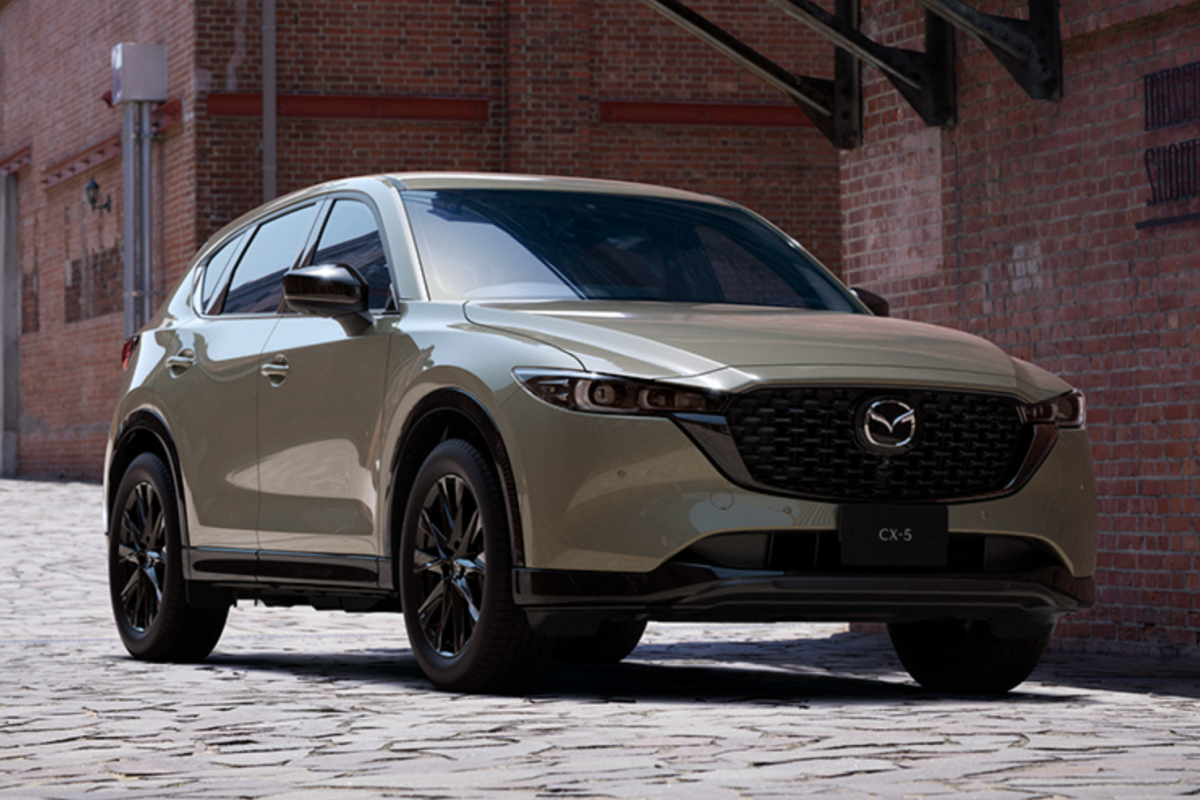
According to CarGurus experts, the overall rating for the 2024 Mazda CX-5 is 7.7 out of 10, while the 2024 Toyota RAV4 scores 7.0 out of 10. While both vehicles offer unique strengths, the Mazda CX-5 stands out with its impressive blend of luxury, comfort, and engaging performance. Therefore, based on the higher rating, if you are looking for an upscale compact crossover that delivers a premium driving experience, the 2024 Mazda CX-5 is the better choice.
Choose the 2024 Toyota RAV4 if:
- You need a vehicle focused on practicality and utility, featuring ample storage and rugged design elements.
- Fuel efficiency is a priority, especially with the hybrid variant offering superior mpg ratings.
- You desire a comprehensive infotainment system with multiple connected services and practical technological features.


Choose the 2024 Mazda CX-5 if:
- You value a refined and comfortable interior with luxurious materials and a sophisticated design.
- You seek a compact crossover that offers engaging and responsive handling with a touch of premium quality.
- You prefer having a wide range of advanced safety features standard in your vehicle.


CarGurus highlights
According to CarGurus experts, the overall rating for the 2024 Mazda CX-5 is 7.7 out of 10, while the 2024 Toyota RAV4 scores 7.0 out of 10. While both vehicles offer unique strengths, the Mazda CX-5 stands out with its impressive blend of luxury, comfort, and engaging performance. Therefore, based on the higher rating, if you are looking for an upscale compact crossover that delivers a premium driving experience, the 2024 Mazda CX-5 is the better choice.
Choose the 2024 Toyota RAV4 if:
Shop Now- You need a vehicle focused on practicality and utility, featuring ample storage and rugged design elements.
- Fuel efficiency is a priority, especially with the hybrid variant offering superior mpg ratings.
- You desire a comprehensive infotainment system with multiple connected services and practical technological features.
Choose the 2024 Mazda CX-5 if:
Shop Now- You value a refined and comfortable interior with luxurious materials and a sophisticated design.
- You seek a compact crossover that offers engaging and responsive handling with a touch of premium quality.
- You prefer having a wide range of advanced safety features standard in your vehicle.

By: CarGurus + AI
At CarGurus, our team of experienced automotive writers remain at the heart of our content operation, conducting hands-on car tests and writing insightful guides that are backed by years of industry experience. To complement this, we are harnessing AI to make our content offering more diverse and more helpful to shoppers than ever. To achieve this, our AI systems are based exclusively on CarGurus content, ratings and data, so that what we produce is both unique to CarGurus, and uniquely helpful to car shoppers.

