2024 Toyota Sequoia vs 2024 Genesis GV80

Overview | |
MSRP$57,700 | MSRP$61,275 |
Listings131 | Listings93 |
Ratings & Reviews | |
User Reviews | User Reviews |
Expert reviews7.7 out of 10 | Expert reviews7.7 out of 10 |
Pros
Cons
| Pros
Cons
|
2024 Genesis GV80 Reviews SummaryGenesis introduced the GV80 in 2021, and the crossover SUV is getting a minor refresh in 2025. Still, the 2024 GV80 remains a good choice unless you want to wait for the fancier styling, more high-tech interior, or new supercharged GV80 Coupe coming next year. Otherwise, today’s GV80 is pretty much the same as tomorrow’s GV80, and in some respects, it is the more elegant and traditional choice. Verdict: Based on our evaluation of the 2024 Genesis GV80, seat comfort is not what it should be. Also, to use Apple CarPlay or Android Auto, you need a USB cable. This Genesis is thirsty, too. But otherwise, we have few complaints about this stylish, safe, and mostly rewarding midsize luxury SUV. | |
2024 Toyota Sequoia Reviews SummaryThe Toyota Sequoia gained a standard hybrid powertrain when it entered its third generation, just last year. While the tech updates were widely celebrated and the facelift considered unobjectionable even by its harshest critics, the move to hybrid power proved to be something of a mixed bag. Increased towing and hauling power bolstered the obvious advantage of improved fuel economy, but impact was somewhat dampened by the reduction in cargo and third-row space to accommodate the new battery. Verdict: The Sequoia may not be the most capable full-size SUV in the segment, and it’s certainly not the most spacious. It is, however, the only hybrid in its class, and it offers a blend of seating capacity, towing power, and fuel efficiency you won’t find elsewhere-at least, not if you don’t want to go diesel. | |
No video found | |
Popular Features & Specs | |
Engine2.5L 300 hp I4 | Engine3.4L 437 hp V6 Hybrid |
Drive TrainAWD | Drive Train4X2 |
Seating Capacity5 | Seating Capacity8 |
Horsepower300 hp @ 5800 rpm | Horsepower437 hp @ 5200 rpm |
EV Battery Capacity | EV Battery Capacity1.9 kWh |
MPG City20 | MPG City21 |
MPG Highway24 | MPG Highway24 |
Engine | |
Engine Name2.5L 300 hp I4 | Engine Name3.4L 437 hp V6 Hybrid |
Torque311 lb-ft @ 1650 rpm | Torque583 lb-ft @ 2400 rpm |
Horsepower300 hp @ 5800 rpm | Horsepower437 hp @ 5200 rpm |
DrivetrainAWD | Drivetrain4X2 |
Fuel Economy | |
EV Battery Capacity | EV Battery Capacity1.9 kWh |
MPG City20 | MPG City21 |
MPG Highway24 | MPG Highway24 |
Interior | |
Seating Capacity5 | Seating Capacity8 |
Key Features | |
Navigation SystemStandard | Navigation System |
Sunroof/Moonroof | Sunroof/MoonroofStandard |
Safety | |
Front Crash Overall4 | Front Crash Overall |
Dimensions & Capacity | |
Cargo Space34.9 cu ft | Cargo Space22.3 cu ft |
Curb Weight4742 lbs | Curb Weight5620 lbs |
Height67.5 in | Height74.5 in |
Length194.7 in | Length208.1 in |
Width77.8 in | Width79.8 in |
Wheelbase116.3 in | Wheelbase122.0 in |
Maximum Payload1188 lbs | Maximum Payload1730 lbs |
Number of doors4 | Number of doors4 |
Maximum Towing Capacity6000 lbs | Maximum Towing Capacity9520 lbs |
Standard Towing Capacity | Standard Towing Capacity9520 lbs |
Overview | ||
MSRP | $57,700 | $61,275 |
Listings | ||
Ratings & Reviews | ||
User reviews | ||
Expert reviews | 7.7 out of 10Read full review | 7.7 out of 10Read full review |
Pros & cons | Pros
Cons
| Pros
Cons
|
Summary | Genesis introduced the GV80 in 2021, and the crossover SUV is getting a minor refresh in 2025. Still, the 2024 GV80 remains a good choice unless you want to wait for the fancier styling, more high-tech interior, or new supercharged GV80 Coupe coming next year. Otherwise, today’s GV80 is pretty much the same as tomorrow’s GV80, and in some respects, it is the more elegant and traditional choice. Verdict: Based on our evaluation of the 2024 Genesis GV80, seat comfort is not what it should be. Also, to use Apple CarPlay or Android Auto, you need a USB cable. This Genesis is thirsty, too. But otherwise, we have few complaints about this stylish, safe, and mostly rewarding midsize luxury SUV. | The Toyota Sequoia gained a standard hybrid powertrain when it entered its third generation, just last year. While the tech updates were widely celebrated and the facelift considered unobjectionable even by its harshest critics, the move to hybrid power proved to be something of a mixed bag. Increased towing and hauling power bolstered the obvious advantage of improved fuel economy, but impact was somewhat dampened by the reduction in cargo and third-row space to accommodate the new battery. Verdict: The Sequoia may not be the most capable full-size SUV in the segment, and it’s certainly not the most spacious. It is, however, the only hybrid in its class, and it offers a blend of seating capacity, towing power, and fuel efficiency you won’t find elsewhere-at least, not if you don’t want to go diesel. |
Video | No video found | |
Popular Features & Specs | ||
Engine | 2.5L 300 hp I4 | 3.4L 437 hp V6 Hybrid |
Drive Train | AWD | 4X2 |
Seating Capacity | 5 | 8 |
Horsepower | 300 hp @ 5800 rpm | 437 hp @ 5200 rpm |
EV Battery Capacity | 1.9 kWh | |
MPG City | 20 | 21 |
MPG Highway | 24 | 24 |
Engine | ||
Engine Name | 2.5L 300 hp I4 | 3.4L 437 hp V6 Hybrid |
Torque | 311 lb-ft @ 1650 rpm | 583 lb-ft @ 2400 rpm |
Horsepower | 300 hp @ 5800 rpm | 437 hp @ 5200 rpm |
Drivetrain | AWD | 4X2 |
Fuel Economy | ||
EV Battery Capacity | 1.9 kWh | |
MPG City | 20 | 21 |
MPG Highway | 24 | 24 |
Interior | ||
Seating Capacity | 5 | 8 |
Key Features | ||
Navigation System | Standard | |
Sunroof/Moonroof | Standard | |
Safety | ||
Front Crash Overall | 4 | |
Dimensions & Capacity | ||
Cargo Space | 34.9 cu ft | 22.3 cu ft |
Curb Weight | 4742 lbs | 5620 lbs |
Height | 67.5 in | 74.5 in |
Length | 194.7 in | 208.1 in |
Width | 77.8 in | 79.8 in |
Wheelbase | 116.3 in | 122.0 in |
Maximum Payload | 1188 lbs | 1730 lbs |
Number of doors | 4 | 4 |
Maximum Towing Capacity | 6000 lbs | 9520 lbs |
Standard Towing Capacity | 9520 lbs | |
The 2024 Genesis GV80 showcased a striking option list that spanned from the 2.5T turbocharged four-cylinder to the 3.5T twin-turbo V6 models. Consumers picked from trim levels such as Standard, Advanced, Prestige, or Prestige Signature. Prices ranged from $57,700 to $81,750, including a $1,350 destination charge. Our review unit, the GV80 3.5T, arrived in the top-tier Prestige Signature trim featuring an optional Matterhorn White Matte paint job, increasing the MSRP to $84,600.
The Prestige Signature trim flaunted exterior colors like Vik Black, Matterhorn White Matte, and Mauna Red, all complemented by dark chrome trim and nearly invisible 22-inch wheel designs. However, the Prestige trim was just as appealing, as it offered a better visible wheel design. Inside, the Ultramarine Blue over Dune interior oozed luxury with diamond-stitched Nappa leather, a leather-wrapped dashboard, matte wood trim, a suede headliner, and metallic accents. The GV80's cabin was further enhanced with ambient lighting, a 3D digital instrument cluster, and a wide touchscreen display, affirming its status as a premier luxury SUV. Overall, the GV80 was unmistakably luxurious, though many might find the regular Prestige trim more attractive than the Prestige Signature variation.
The 2024 Toyota Sequoia, sharing design cues with the Tundra pickup, exhibited hexagonal grilles, strong fender creases, and a muscular stance. The Capstone trim test model was adorned in Celestial Silver, which, with its chrome accents, appeared somewhat outdated. The paint palette also included more dynamic options like Solar Octane orange and Lunar Rock gray. Interior-wise, the Sequoia mirrored the Tundra with a blocky, geometric dashboard, physical controls for volume and climate, and familiar shifter and steering wheel designs. Our Capstone test vehicle featured semi-aniline leather upholstery unique to that trim. The entry-level SR5 trim offered fabric seating, with SofTex and leather available on higher trims. The interior was designed for customization, with power-adjustable front seats standard across the line, and every Sequoia came standard with a moonroof or an upgraded panoramic version in higher trims.


The 2024 Genesis GV80 offered two engine choices: the turbocharged 2.5-liter four-cylinder in the 2.5T producing 300 horsepower and 311 pound-feet of torque, and the twin-turbocharged 3.5-liter V6 in the 3.5T generating 375 horsepower and 391 pound-feet of torque. This performance was complemented by a standard all-wheel-drive system and an eight-speed automatic transmission, accompanied by selectable driving modes including Eco, Comfort, Sport, Custom, and Snow. The GV80 offered 8.1 inches of ground clearance and could tow up to 6,000 pounds when properly equipped. Our 3.5T test vehicle produced swift acceleration and a sporty feel, with responsive handling facilitated by adaptive dampers and upgraded front brakes, even though the steering lacked remarkable feedback. Fuel efficiency rated by the EPA at 20 mpg combined fell to 17.2 mpg in real-world driving.
The 2024 Toyota Sequoia exclusively employed the iForce MAX hybrid powertrain, blending a twin-turbo V6 with an electric motor to achieve 437 horsepower and 583 pound-feet of torque. The system improved fuel economy significantly to a combined 20 mpg and delivered an enhanced driving experience. The standard 10-speed automatic transmission provided smooth operation, and the Sequoia's towing capacity peaked at 9,520 pounds in its RWD form. For off-road enthusiasts, the TRD Off-Road package included specialized features like Bilstein shocks, a skid plate, and additional driver-assist technologies, all contributing to its adventure-ready appeal. On-road handling was adequate, typical for its class, and the Sequoia TRD Pro model offered exclusive 4WD features to enhance off-road capability.
The 2024 Genesis GV80, particularly in the 3.5T Advanced trim, included a third-row seat, unlike the Prestige Signature variant which only seated four due to its luxurious second-row captain’s chairs. This limitation in passenger capacity required leaving the GV80 parked for a family trip. Interior materials ranged from artificial leather to premium leather depending on the trim, with features like heated front seats, a heated steering wheel, and a power hands-free liftgate being standard. Despite its luxury offerings, the GV80's seats proved uncomfortable on long drives, and second-row legroom was limited. Cargo space measured 34.9 cubic feet behind the second row, expanding to 84 cubic feet with the seats folded down. However, the Prestige Signature's rear center console could obstruct the loading of large items.
The 2024 Toyota Sequoia offered up to 86.9 cubic feet of cargo space with both the second and third rows folded. Behind the second row, it provided 49 cubic feet, and between 11.5 to 22.3 cubic feet behind the third row, depending on seat position. Seating access was easy, although the lack of a flat load floor due to the hybrid battery was a drawback. The interior headroom was affected by the raised third-row floor, and legroom, especially in the third row (28.1 to 33.7 inches), was less impressive compared to competitors. Despite spacious and functional second-row captain's chairs in higher trims, the seat design lacked bolstering.
In 2024, the Genesis GV80 featured a 14.5-inch touchscreen infotainment display and a digital key system. The Prestige and Prestige Signature trims included a 12.3-inch digital instrument display with a 3D effect. Standard infotainment packages comprised a navigation system, SiriusXM satellite radio, and wired Apple CarPlay and Android Auto, while wireless smartphone charging was standard. Additionally, the GV80 offered a head-up display (HUD) and most trims had a Lexicon premium sound system. The display interface was user-friendly, visually appealing, and technologically advanced.
The 2024 Toyota Sequoia came with standard wireless Apple CarPlay and Android Auto accessible through an 8-inch touchscreen in the SR5 trim, or a 14-inch touchscreen in all other trims. The Sequoia's Toyota Audio Multimedia infotainment system was functional, although visually underwhelming. Every Sequoia included a 12.3-inch driver-information display, and higher trims featured or had available a 10-inch head-up display. The Panoramic View monitor was standard, ensuring ease of maneuvering in tight spaces. The Platinum, TRD Pro, and Capstone trims came with a 14-speaker JBL Premium Audio system.
Safety was a priority for the Genesis GV80, which included advanced driving assistance systems (ADAS) and safety features such as a camera-based Blind-Spot View Monitor, Remote Smart Parking Assist, and Highway Driving Assist. The Blind-Spot View Monitor used cameras to show video feeds within the digital instrument panel during lane changes, enhancing safety. The Remote Smart Parking Assist allowed the vehicle to park itself autonomously. The GV80 received high safety ratings, with the IIHS awarding it a Top Safety Pick+ and the NHTSA giving it a five-star overall rating.
Toyota equipped the 2024 Sequoia with the Toyota Safety Sense (TSS) 2.5 suite, standard across trims, which included pre-collision systems, lane-departure alerts, adaptive cruise control, and road-sign recognition. Additional standard features included front and rear parking sensors and blind-spot monitoring with rear cross-traffic alert and Trailer Merge Warning. The Tow Technology Package added further assists for towing tasks. While the 2024 Sequoia had yet to receive IIHS or NHTSA ratings, the similar Toyota Tundra earned a Top Safety Pick+ from the IIHS, suggesting strong safety credentials.
CarGurus highlights
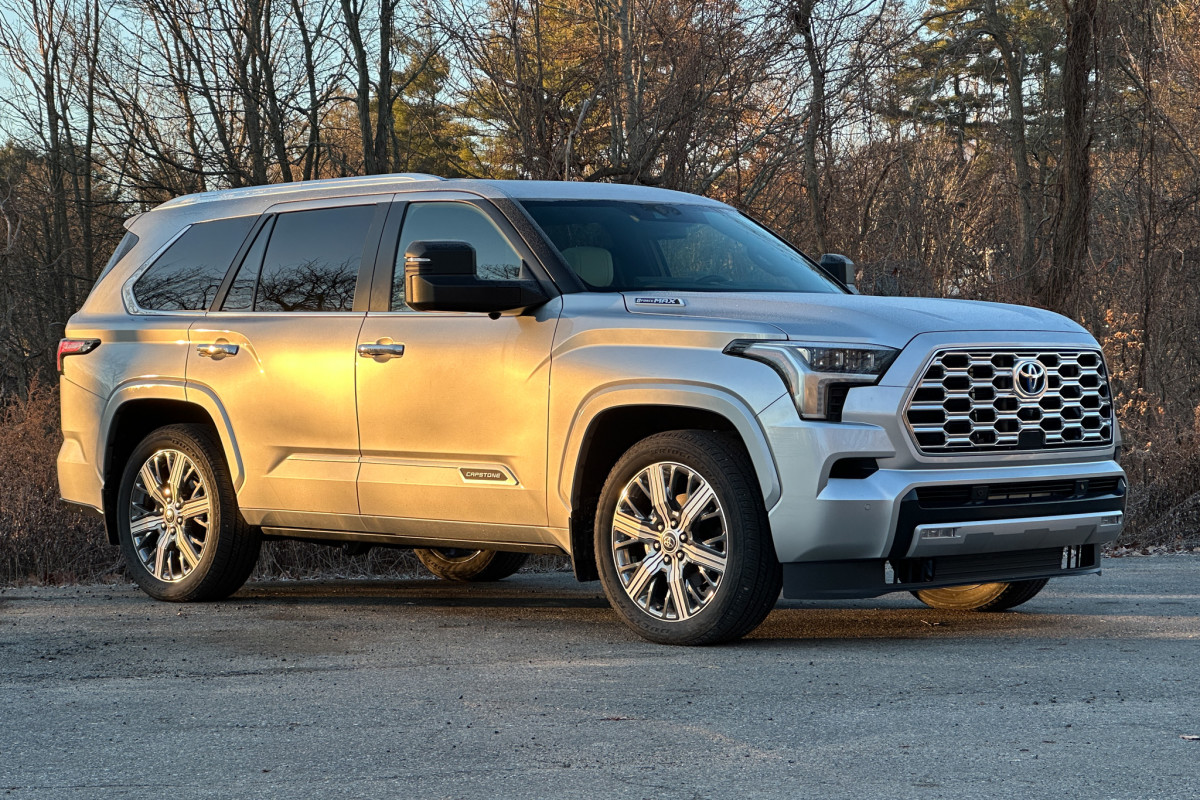
According to CarGurus experts, the overall rating for the 2024 Genesis GV80 is 7.7 out of 10, while the 2024 Toyota Sequoia scores 7.7 out of 10. Given these ratings, both vehicles offer compelling features and performance. However, if luxury, advanced technology, and a refined driving experience are your priorities, the 2024 Genesis GV80 is the recommended choice. For those who prioritize towing capacity, off-road capability, and practical interior features, the 2024 Toyota Sequoia stands out. Both models shine in their own right, offering strong options for different consumer needs.
Choose the 2024 Toyota Sequoia if:
- You need a vehicle with a high towing capacity and extensive off-road capabilities.
- Room for more passengers and flexibility in cargo space are essential for your needs.
- Standard advanced safety features and a user-friendly infotainment system are important to you.


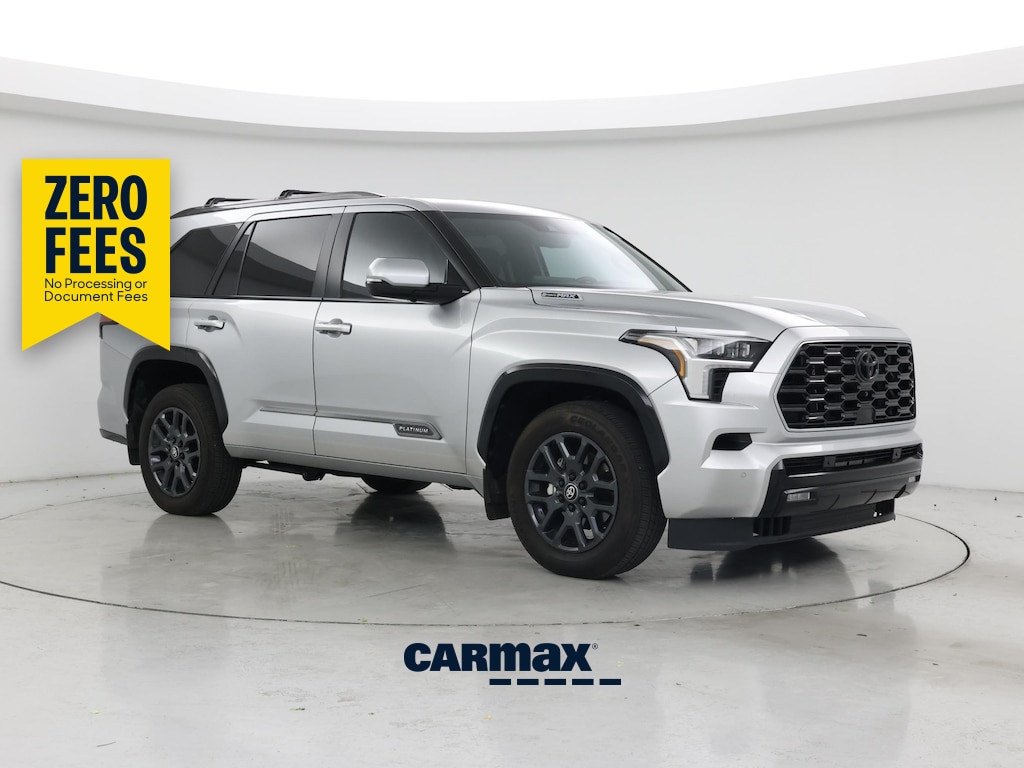


Choose the 2024 Genesis GV80 if:
- You desire a luxury SUV with a highly sophisticated and elegantly designed interior.
- Advanced safety and technology features are a priority for your driving experience.
- You value athletic performance and a quiet, composed ride.


CarGurus highlights
According to CarGurus experts, the overall rating for the 2024 Genesis GV80 is 7.7 out of 10, while the 2024 Toyota Sequoia scores 7.7 out of 10. Given these ratings, both vehicles offer compelling features and performance. However, if luxury, advanced technology, and a refined driving experience are your priorities, the 2024 Genesis GV80 is the recommended choice. For those who prioritize towing capacity, off-road capability, and practical interior features, the 2024 Toyota Sequoia stands out. Both models shine in their own right, offering strong options for different consumer needs.
Choose the 2024 Toyota Sequoia if:
Shop Now- You need a vehicle with a high towing capacity and extensive off-road capabilities.
- Room for more passengers and flexibility in cargo space are essential for your needs.
- Standard advanced safety features and a user-friendly infotainment system are important to you.
Choose the 2024 Genesis GV80 if:
Shop Now- You desire a luxury SUV with a highly sophisticated and elegantly designed interior.
- Advanced safety and technology features are a priority for your driving experience.
- You value athletic performance and a quiet, composed ride.

By: CarGurus + AI
At CarGurus, our team of experienced automotive writers remain at the heart of our content operation, conducting hands-on car tests and writing insightful guides that are backed by years of industry experience. To complement this, we are harnessing AI to make our content offering more diverse and more helpful to shoppers than ever. To achieve this, our AI systems are based exclusively on CarGurus content, ratings and data, so that what we produce is both unique to CarGurus, and uniquely helpful to car shoppers.

