2022 Volkswagen Tiguan vs 2021 Audi Q5
Overview | |
MSRP$26,490 | MSRP$43,300 |
Listings2836 | Listings477 |
Ratings & Reviews | |
User Reviews | User Reviews |
Expert reviews7.7 out of 10 | Expert reviews8.0 out of 10 |
Pros
Cons
| Pros
Cons
|
2022 Volkswagen Tiguan Reviews SummaryVolkswagen’s most popular model is the Tiguan compact SUV, representing quite a turn of events compared to 2017, when the original version languished at or near the bottom of consumer consideration lists. What happened? Compact crossover SUV sales exploded like a California wildfire during a Santa Ana wind event, and the second-generation Tiguan grew in size to become one of the biggest of the traditional small SUVs. Unsurprisingly, with the updated 2022 Volkswagen Tiguan, the automaker elects to hone instead of change this recipe for success. | |
2021 Audi Q5 Reviews SummaryAudi has made a commitment to electrification across its lineup. That takes the form of all-electric (BEV), hybrid (HEV), and plug-in hybrid vehicles (PHEV). The Q5, which entered its second generation in the 2018 model year, has offered a PHEV powertrain since 2020 in the Audi Q5 55 TFSI e quattro. | |
No video found | No video found |
Popular Features & Specs | |
Engine2.0L 184 hp I4 | Engine |
Drive TrainFWD | Drive Train |
Seating Capacity7 | Seating Capacity5 |
Horsepower184 hp @ 6000 rpm | Horsepower |
MPG City23 | MPG City |
MPG Highway30 | MPG Highway |
Engine | |
Engine Name2.0L 184 hp I4 | Engine Name2.0L 261 hp I4 |
Torque221 lb-ft @ 1900 rpm | Torque273 lb-ft @ 1600 rpm |
Horsepower184 hp @ 6000 rpm | Horsepower261 hp @ 5250 rpm |
DrivetrainFWD | DrivetrainAWD |
Fuel Economy | |
MPG City23 | MPG City |
MPG Highway30 | MPG Highway |
Interior | |
Leather Seats | Leather SeatsStandard |
Seating Capacity7 | Seating Capacity5 |
Safety | |
Front Crash Overall | Front Crash Overall5 |
Side Crash Overall5 | Side Crash Overall5 |
Dimensions & Capacity | |
Cargo Space12.0 cu ft | Cargo Space25.9 cu ft |
Curb Weight3765 lbs | Curb Weight4079 lbs |
Height66.4 in | Height65.5 in |
Length186.1 in | Length184.3 in |
Width72.4 in | Width84.2 in |
Wheelbase109.9 in | Wheelbase111.0 in |
Maximum Payload1157 lbs | Maximum Payload1036 lbs |
Number of doors4 | Number of doors4 |
Maximum Towing Capacity1500 lbs | Maximum Towing Capacity4400 lbs |
Overview | ||
MSRP | $26,490 | $43,300 |
Listings | ||
Ratings & Reviews | ||
User reviews | ||
Expert reviews | 7.7 out of 10Read full review | 8.0 out of 10Read full review |
Pros & cons | Pros
Cons
| Pros
Cons
|
Summary | Volkswagen’s most popular model is the Tiguan compact SUV, representing quite a turn of events compared to 2017, when the original version languished at or near the bottom of consumer consideration lists. What happened? Compact crossover SUV sales exploded like a California wildfire during a Santa Ana wind event, and the second-generation Tiguan grew in size to become one of the biggest of the traditional small SUVs. Unsurprisingly, with the updated 2022 Volkswagen Tiguan, the automaker elects to hone instead of change this recipe for success. | Audi has made a commitment to electrification across its lineup. That takes the form of all-electric (BEV), hybrid (HEV), and plug-in hybrid vehicles (PHEV). The Q5, which entered its second generation in the 2018 model year, has offered a PHEV powertrain since 2020 in the Audi Q5 55 TFSI e quattro. |
Video | No video found | No video found |
Popular Features & Specs | ||
Engine | 2.0L 184 hp I4 | |
Drive Train | FWD | |
Seating Capacity | 7 | 5 |
Horsepower | 184 hp @ 6000 rpm | |
MPG City | 23 | |
MPG Highway | 30 | |
Engine | ||
Engine Name | 2.0L 184 hp I4 | 2.0L 261 hp I4 |
Torque | 221 lb-ft @ 1900 rpm | 273 lb-ft @ 1600 rpm |
Horsepower | 184 hp @ 6000 rpm | 261 hp @ 5250 rpm |
Drivetrain | FWD | AWD |
Fuel Economy | ||
MPG City | 23 | |
MPG Highway | 30 | |
Interior | ||
Leather Seats | Standard | |
Seating Capacity | 7 | 5 |
Safety | ||
Front Crash Overall | 5 | |
Side Crash Overall | 5 | 5 |
Dimensions & Capacity | ||
Cargo Space | 12.0 cu ft | 25.9 cu ft |
Curb Weight | 3765 lbs | 4079 lbs |
Height | 66.4 in | 65.5 in |
Length | 186.1 in | 184.3 in |
Width | 72.4 in | 84.2 in |
Wheelbase | 109.9 in | 111.0 in |
Maximum Payload | 1157 lbs | 1036 lbs |
Number of doors | 4 | 4 |
Maximum Towing Capacity | 1500 lbs | 4400 lbs |
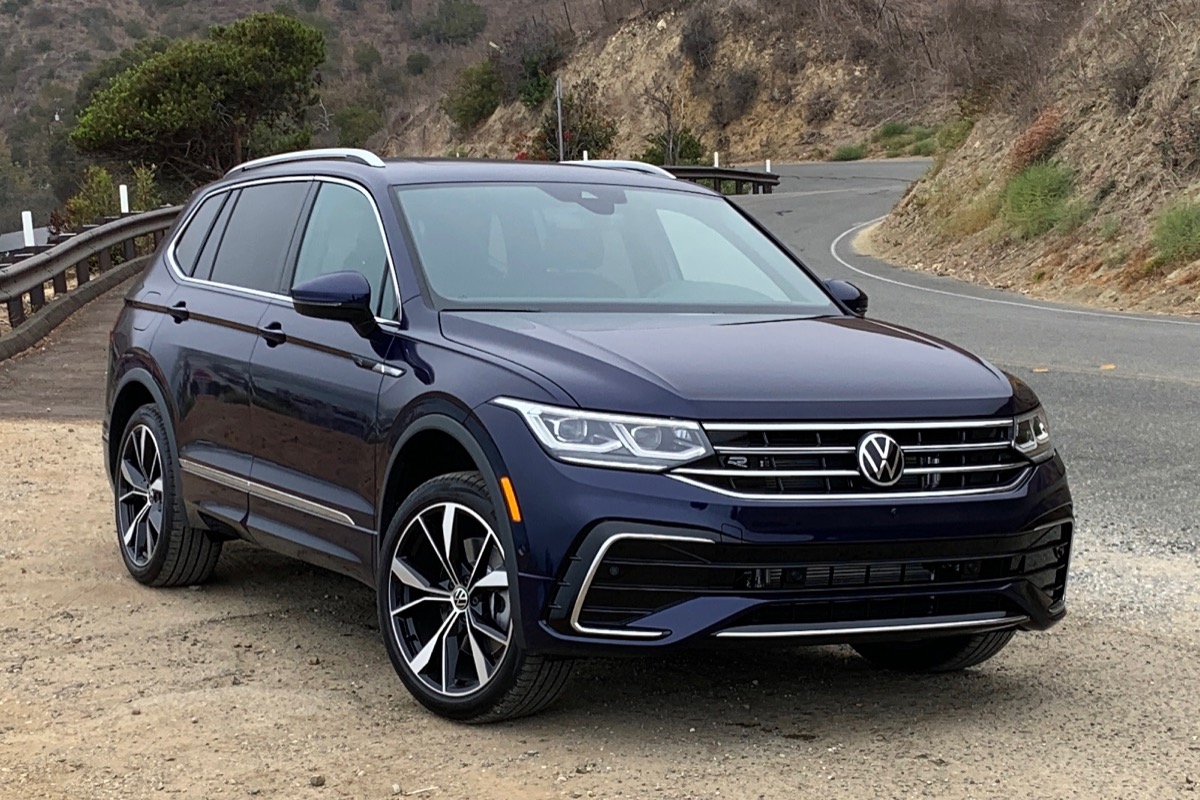
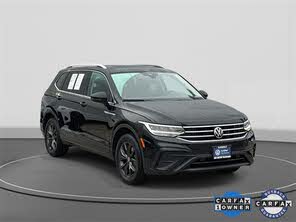
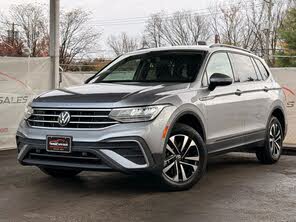
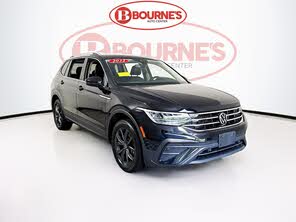
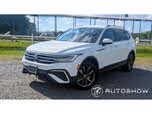
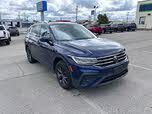
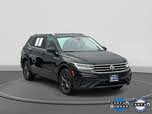
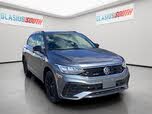
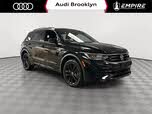
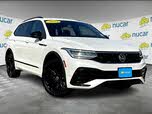
The 2022 Volkswagen Tiguan stood out in a market where many of its rivals could be described as visually unappealing. Unlike its competitors, the Tiguan showcased a design that was creased, folded, and symmetrical, leaning towards a conservative aesthetic. This design might not have stirred strong emotional responses unless one appreciated simplicity and minimalism, but it did possess a timeless quality that guaranteed it would age gracefully.
For 2022, Volkswagen refreshed the Tiguan’s front end, aligning it more closely with the larger Atlas and Atlas Cross Sport models. The restyled grille featured the new VW logo and an available illuminated grille bar. Standard LED headlights, new nameplate lettering on the rear liftgate, and redesigned aluminum wheels completed the exterior tweaks.
Volkswagen simplified the Tiguan lineup for 2022, offering it in S, SE, SE R-Line Black, and SEL R-Line trims with either front-wheel drive (FWD) or all-wheel drive (AWD). Prices ranged from $25,995 to $36,995, plus a $1,195 destination charge from VW’s Puebla, Mexico, factory. The SEL R-Line, with standard 4Motion AWD and an accessory cargo cover, brought the total to $37,970 MSRP.
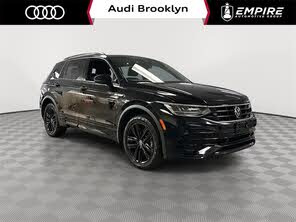
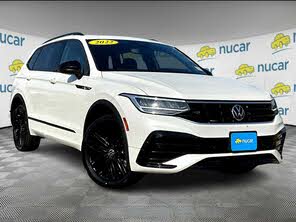
The R-Line models had a sportier appearance, with the SE R-Line Black featuring a trendy blacked-out look. The SEL R-Line offered four paint colors, including Atlantic Blue Metallic, and came with machined-surface 18-inch alloy wheels that complemented the SUV’s shiny exterior details.
Inside the Tiguan SEL R-Line, the cabin exuded a richer feel with perforated and piped leather upholstery, new technology, touch-sensing steering wheel and climate controls, and ambient lighting offering 15 different color options. Tastefully rendered metallic accents contributed to the upscale look, though the hard plastic covering the lower half gave away its mass-market status.
All 2022 Tiguans came with standard keyless entry, push-button engine starting, and heated front seats. Starting with the SE trim, remote engine starting was included. Depending on the model, new interior colors like Cinnamon and Noisette Brown, and a panoramic glass sunroof were available.
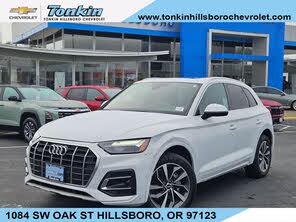
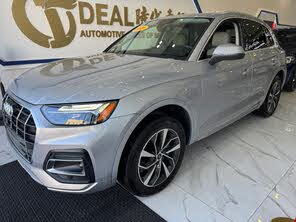
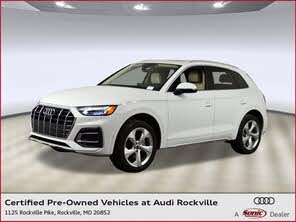
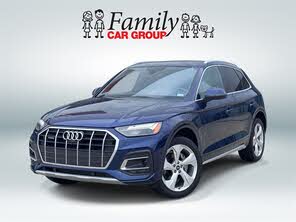
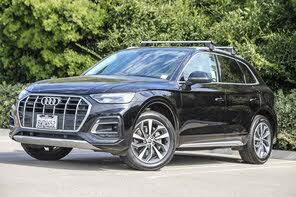
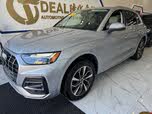
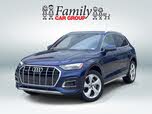
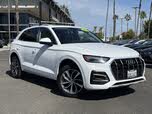
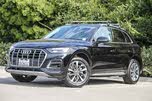
The 2021 Audi Q5 embodied a sharp-looking crossover SUV that carried Audi’s design language well while maintaining its individual character. The Q5 had an expressive face with LED headlights flanking the large Singleframe grille, horizontal elements emphasizing its width. Crisp character lines traced the body, and the greenhouse resembled a protective shell, with bold, large taillights completing the rear end.
Inside, the Q5 exuded class and modernity. It was packed with technology but maintained an uncluttered appearance. Buttons, switches, and knobs were logically grouped and separated by function, creating a unified design that was very pleasing. The material selection was high-quality, with real wood, real metal, and honed surfaces, ensuring authenticity and a premium feel. The 10.1-inch touchscreen floated at the top of the center stack, perfectly positioned for the driver’s line of sight. The second row was nicely appointed with standard leather seating throughout.


The 2022 Volkswagen Tiguan retained its previous powertrain setup for the model year. It featured a turbocharged 2.0-liter four-cylinder engine generating 184 horsepower at 6,000 rpm and 221 pound-feet of torque starting from 1,900 rpm.
An eight-speed automatic transmission delivered power to the front wheels unless you opted for Volkswagen’s 4Motion AWD. This system could send up to half of the power to the rear wheels but decoupled the rear axle when not needed to save fuel.
Drivers had the option to choose between Eco, Normal, Sport, and programmable Individual driving modes. With 4Motion, the Active Control system provided Onroad, Snow, Offroad, and Custom Offroad settings.
In Offroad mode, the Tiguan’s Hill Descent Control system engaged at speeds up to 19 mph. However, with only 7.6 inches of ground clearance and shallow approach, breakover, and departure angles, it wasn’t best suited for serious off-roading.
The Tiguan employed MacPherson struts in the front and a multi-link independent rear suspension. It utilized 13.4-inch vented front discs and 11.8-inch solid rear discs. The variable assist steering lightened up at low speed and firmed up at highway speeds.
The Tiguan’s engine torque arrived slightly later compared to other turbocharged four-cylinder engines, leading to momentary turbo lag when accelerating from a stop. Thus, drivers needed to account for a delayed response when turning across traffic or merging onto busy roads.
Despite these quirks, the Tiguan was enjoyable to drive once the torque kicked in. However, Volkswagen might have been able to extract more power and performance from the engine, especially considering the combined fuel economy rating of just 24 mpg for the R-Line with 4Motion, although a short drive in Malibu yielded a mileage of 24.7 mpg.
In terms of ride and handling, the Tiguan felt nimble and responsive in normal driving situations, exhibiting the clear communication between driver and vehicle typical of German engineering. However, pushing the Tiguan for a more spirited drive revealed limitations in the tires and suspension.
The Q5 PHEV took the already fun-to-drive standard gasoline model and made it even better. The 2021 Audi Q5’s plug-in hybrid version combined a 2.0-liter turbocharged inline four-cylinder gasoline engine with an electric motor, adding an additional 114 horsepower and 96 pound-feet of torque via a 14.1-kWh battery. The result was a total combined output of 362 hp and 373 lb-ft of torque, perfectly matched to the crossover’s 4,665-lb curb weight. The innovative setup allowed for convincing acceleration when needed, with a 0-60 mph time of 5.0 seconds. Additionally, it achieved impressive fuel economy, with a rating of 65 MPGe combined and 27 mpg in gasoline-only mode.
The Q5 PHEV's battery pack could recharge overnight using household current (Level 1, 120-volts) or in 2.4 hours with Level 2 (240-volts) service. The vehicle used a seven-speed S Tronic automatic transmission with full-time Quattro AWD. Drivers could switch between different modes to drive on battery power alone, reserve battery power for later, or automatically operate in hybrid mode.
The Q5 employed speed-sensitive electromechanical power steering with a wider-than-expected turning radius of 38.4 feet. The four-wheel independent suspension with five-link setups at both the front and rear provided good handling, minimal body roll, and a comfortable yet sporty ride.
Among compact crossover SUVs, the 2022 Volkswagen Tiguan was a giant. Its interior was spacious enough to be compared with smaller midsize SUVs like the Chevrolet Blazer, Hyundai Santa Fe, Jeep Cherokee, and Kia Sorento. Moreover, Volkswagen equipped standard third-row seating on FWD models, though this feature wasn’t available on 4Motion models.
The SEL R-Line model we tested offered exceptional comfort, with both front seats featuring leather upholstery with eight-way power adjustment, heating, and ventilation. Drivers could create a tall driving position for excellent outward visibility, and the panoramic glass sunroof flooded the cabin with light.
The second row was roomy as well, comfortably accommodating adults and providing enough space for children in reverse-facing child safety seats. The SEL R-Line version included rear air conditioning vents, a USB charging port, and ample storage space.
One major update for 2022 was the switch to touch controls on the steering wheel and dashboard. While they looked sophisticated, they were harder to use, often leading to missed touch zones and confusion, which could be distracting to drivers.
Cargo space was one of the Tiguan’s strong suits. FWD models with a third-row seat had 12 cubic feet of cargo space behind the third-row, which increased to 33 cubic feet with the third row folded, and up to 65.5 cubic feet when the second row was also down. Our 4Motion-equipped test vehicle was even more accommodating, offering 37.6 cubic feet behind the rear seats and a maximum capacity of 73.4 cubic feet—figures that rivaled midsize SUVs.
The 2021 Audi Q5 leveraged smart packaging to carry its battery pack under the luggage compartment floor without sacrificing cargo space. It offered 25.1 cubic feet of space behind the second row and 53.1 cubic feet with the second row folded down.
The second row of the Q5 provided reasonable legroom (37.8 inches), plenty of headroom (37.7 inches), and shoulder room (56.5 inches). Two adults could comfortably sit in the back, and a third adult could squeeze in for shorter trips. The front row featured Audi’s super-comfortable and supportive seats with a range of adjustments, heating, and, on the Prestige trim, ventilation.
The front row also boasted multiple storage options, including a pair of cupholders, cubbies, nooks for phones, change, chargers, and a lift-up center-console armrest with a small storage bin. The uncluttered design ensured that everything functioned well and was logically placed.
For 2022, every Volkswagen Tiguan came with digital instrumentation, known as Digital Cockpit. Most versions had an 8-inch display, while the SEL R-Line featured the more sophisticated Digital Cockpit Pro with a 10.25-inch display.
Volkswagen’s MIB3 infotainment system, introduced the previous year, continued in all but the base Tiguan S, which used the MIB2 system with a 6.5-inch touchscreen. The MIB3 system included an 8-inch touchscreen display, standard Car-Net connected services, App-Connect smartphone mirroring, and SiriusXM 360L satellite radio. The SEL R-Line added a redesigned navigation system and a nine-speaker Fender premium audio system.
Natural voice recognition was touted as an improvement with MIB3, but during testing, it proved disappointing. Even a VW product expert struggled with commands. It turned out that the feature required a Plus Speech upgrade and an active Car-Net Hotspot subscription, costing nine dollars annually.
Car-Net’s Remote Access plan was complimentary for five years, allowing remote engine start, door lock operation, and location tracking. The Safe & Secure plan offered automatic crash notification and emergency assistance, and the Hotspot plan provided a 4G LTE WiFi hotspot. Subscription to all Car-Net plans totaled an additional $250 yearly.
The Tiguan also offered an available Park Assist system that could autonomously steer the SUV into parking spaces, standard on the SEL R-Line trim.
The 2021 Audi Q5 excelled with Audi’s latest MMI 10.1-inch touchscreen infotainment system and an easy-to-use center-console touchpad. The Audi Virtual Cockpit Plus 12.3-inch HD instrument cluster offered three views—classic, sport, and dynamic. This clear and customizable instrument panel added a futuristic touch to the cabin. Color/mood-adjustable LED ambient interior cabin lights enhanced the level of customization.
The Prestige Package included the Navigation Package, also available on the Premium Plus trim, optimizing fuel consumption and battery usage in hybrid mode with route guidance.
All Q5 models featured the Integrated Toll Module, a built-in transponder compatible with most toll road services in the U.S. The Bang & Olufsen 3D audio system with 19 speakers and a 16-channel/755-watt amplifier was available on Premium Plus models and standard on the Prestige trim. Wireless Apple CarPlay was included and functioned seamlessly.
In 2022, the Volkswagen Tiguan offered standard Front Assist (forward collision warning and automatic emergency braking with pedestrian detection) and Side Assist (blind-spot monitoring with rear cross-traffic alert) on the Tiguan S. Important safety-related improvements were added to the IQ Drive collection of advanced driver assistance systems.
Travel Assist combined adaptive cruise control with lane centering assistance, operating at speeds over 40 mph. Engagement was challenging with the touch-sensing controls but offered a useful feature once activated. Emergency Assist operated with Travel Assist active, slowing and safely stopping the SUV if the driver became unresponsive.
The 2021 Tiguan earned the IIHS “Top Safety Pick” rating, and the 2022 updates, including standard LED headlights and more sophisticated driver aids, were expected to improve its score.
The 2021 Audi Q5 PHEV hadn't been rated by the IIHS yet, though the 2020 gasoline-only model received top “good” ratings in every category except headlights, which were rated “marginal”. The NHTSA awarded the 2021 gasoline model five stars, but the PHEV wasn’t yet rated, though it was expected to match the gasoline ratings.
Safety features included six airbags, ABS with brake assist, Audi Pre Sense basic, low-speed collision assist, power child safety locks, electronic stability control with off-road mode, vehicle immobilizer, anti-theft alarm, interior motion sensor, LED daytime running and taillights, LATCH connectors, rearview camera, and tire pressure monitoring.
Available driver-assistance features were Audi Advanced Key, Audi Pre Sense rear, Audi Side Assist with rear cross-traffic alert, Parking System Plus sensors, adaptive cruise control with traffic-jam assist, park steering assist, traffic-sign recognition, and a top-view camera system.
CarGurus highlights

According to CarGurus experts, the overall rating for 2022 Volkswagen Tiguan is 7.7 out of 10, while the 2021 Audi Q5 scores 8 out of 10. Given the higher rating and additional features, the 2021 Audi Q5 emerges as the better choice. With superior performance, higher quality interior materials, and advanced technology and safety features, the Q5 offers a well-rounded and premium experience that justifies its higher score. While the Tiguan remains a strong contender in the compact crossover market with its spacious interior and advanced safety options, the Q5’s overall excellence makes it the recommended pick.
Choose the 2022 Volkswagen Tiguan if:
- You need a compact crossover with an exceptionally spacious interior, comparable to smaller midsize SUVs.
- You want advanced safety features like Travel Assist and Emergency Assist incorporated in your vehicle.
- You prefer a more conservative, timeless design that continues to look fresh over the years.---


Choose the 2021 Audi Q5 if:
- You seek a higher-performing PHEV model with impressive horsepower and fuel economy.
- You value a luxurious and uncluttered interior with authentic materials and high-quality finishes.
- You want advanced technology and infotainment features, including the Audi Virtual Cockpit Plus and Bang & Olufsen audio system.---



CarGurus highlights
According to CarGurus experts, the overall rating for 2022 Volkswagen Tiguan is 7.7 out of 10, while the 2021 Audi Q5 scores 8 out of 10. Given the higher rating and additional features, the 2021 Audi Q5 emerges as the better choice. With superior performance, higher quality interior materials, and advanced technology and safety features, the Q5 offers a well-rounded and premium experience that justifies its higher score. While the Tiguan remains a strong contender in the compact crossover market with its spacious interior and advanced safety options, the Q5’s overall excellence makes it the recommended pick.
Choose the 2022 Volkswagen Tiguan if:
Shop Now- You need a compact crossover with an exceptionally spacious interior, comparable to smaller midsize SUVs.
- You want advanced safety features like Travel Assist and Emergency Assist incorporated in your vehicle.
- You prefer a more conservative, timeless design that continues to look fresh over the years.---


Choose the 2021 Audi Q5 if:
Shop Now- You seek a higher-performing PHEV model with impressive horsepower and fuel economy.
- You value a luxurious and uncluttered interior with authentic materials and high-quality finishes.
- You want advanced technology and infotainment features, including the Audi Virtual Cockpit Plus and Bang & Olufsen audio system.---






By: CarGurus + AI
At CarGurus, our team of experienced automotive writers remain at the heart of our content operation, conducting hands-on car tests and writing insightful guides that are backed by years of industry experience. To complement this, we are harnessing AI to make our content offering more diverse and more helpful to shoppers than ever. To achieve this, our AI systems are based exclusively on CarGurus content, ratings and data, so that what we produce is both unique to CarGurus, and uniquely helpful to car shoppers.