2022 Volkswagen Atlas vs 2021 Volkswagen ID.4

Overview | |
MSRP$39,995 | MSRP$34,335 |
Listings396 | Listings1428 |
Ratings & Reviews | |
User Reviews | User Reviews |
Expert reviews7.3 out of 10 | Expert reviews7.0 out of 10 |
Pros
Cons
| Pros
Cons
|
2021 Volkswagen ID.4 Reviews SummaryThe “Dieselgate” emissions scandal forced Volkswagen to double down on electric cars, and now we’re finally seeing the first result of that: the 2021 Volkswagen ID.4 electric crossover. VW has made an electric car before, but its last attempt, the e-Golf, was built to satisfy emissions standards, not rack up sales. It was barely advertised, and it was sold only in certain states. That’s not the case with the ID.4, which will be available nationwide and will even be built in Tennessee starting in 2022. Volkswagen views the ID.4 as a rival not to other EVs, but to mainstream gasoline vehicles like the Honda CR-V and Toyota RAV4. Being late to the party means there are already several other EVs trying to coax new-car buyers away from internal combustion, however. If you want a reasonably-priced EV, the Nissan Leaf, Hyundai Kona Electric, and Kia Niro EV already exist, and General Motors just announced the 2022 Chevrolet Bolt EUV—a new variant of the Chevy Bolt EV with a crossover body style similar to the Volkswagen. We tested an ID.4 1st Edition, which commemorates the car’s launch, and an ID.4 PRO S with all-wheel drive (AWD). The 1st Edition is a limited-edition model that has already sold out, but it’s mechanically identical to the ID.4 Pro S AWD, albeit with power sent only to the rear wheels. | |
2022 Volkswagen Atlas Reviews SummaryUntil 2018, Volkswagen seemingly ignored the fact that Americans wanted roomy, functional SUVs. But that year, a right-sized Tiguan arrived ready to challenge the leaders in the compact SUV class and the family-sized Atlas went on sale to wage war in the three-row SUV segment. Both addressed criticism that Volkswagen was out of touch by going above and beyond with regard to passenger comfort, cargo space, and utility. Now, five years later, the 2022 Volkswagen Atlas is essentially unchanged following a substantial refresh for the 2021 model year. And though the 2022 Atlas remains a study in contrast, it is easy to understand why people buy it. Sometimes, size does matter. | |
No video found | |
Popular Features & Specs | |
Engine201 hp Electric | Engine2.0L 235 hp I4 |
Drive TrainRWD | Drive TrainFWD |
Seating Capacity5 | Seating Capacity7 |
Horsepower | Horsepower235 hp @ 5400 rpm |
EV Battery Capacity82 kWh | EV Battery Capacity |
MPG City104 | MPG City21 |
MPG Highway89 | MPG Highway25 |
Battery Charge Time (240V)8 hours | Battery Charge Time (240V) |
Engine | |
Engine Name201 hp Electric | Engine Name2.0L 235 hp I4 |
Torque | Torque258 lb-ft @ 1600 rpm |
Horsepower | Horsepower235 hp @ 5400 rpm |
Battery Charge Time (240V)8 hours | Battery Charge Time (240V) |
DrivetrainRWD | DrivetrainFWD |
Fuel Economy | |
EV Battery Capacity82 kWh | EV Battery Capacity |
MPG City104 | MPG City21 |
MPG Highway89 | MPG Highway25 |
Interior | |
Seating Capacity5 | Seating Capacity7 |
Safety | |
Front Crash Overall5 | Front Crash Overall4 |
Side Crash Overall5 | Side Crash Overall5 |
Dimensions & Capacity | |
Cargo Space30.3 cu ft | Cargo Space20.6 cu ft |
Curb Weight4517 lbs | Curb Weight4262 lbs |
Height64.4 in | Height70.1 in |
Length180.5 in | Length200.7 in |
Width72.9 in | Width78.4 in |
Wheelbase108.9 in | Wheelbase117.3 in |
Maximum Payload1347 lbs | Maximum Payload1102 lbs |
Number of doors4 | Number of doors4 |
Maximum Towing Capacity | Maximum Towing Capacity2000 lbs |
Overview | ||
MSRP | $39,995 | $34,335 |
Listings | ||
Ratings & Reviews | ||
User reviews | ||
Expert reviews | 7.3 out of 10Read full review | 7.0 out of 10Read full review |
Pros & cons | Pros
Cons
| Pros
Cons
|
Summary | The “Dieselgate” emissions scandal forced Volkswagen to double down on electric cars, and now we’re finally seeing the first result of that: the 2021 Volkswagen ID.4 electric crossover. VW has made an electric car before, but its last attempt, the e-Golf, was built to satisfy emissions standards, not rack up sales. It was barely advertised, and it was sold only in certain states. That’s not the case with the ID.4, which will be available nationwide and will even be built in Tennessee starting in 2022. Volkswagen views the ID.4 as a rival not to other EVs, but to mainstream gasoline vehicles like the Honda CR-V and Toyota RAV4. Being late to the party means there are already several other EVs trying to coax new-car buyers away from internal combustion, however. If you want a reasonably-priced EV, the Nissan Leaf, Hyundai Kona Electric, and Kia Niro EV already exist, and General Motors just announced the 2022 Chevrolet Bolt EUV—a new variant of the Chevy Bolt EV with a crossover body style similar to the Volkswagen. We tested an ID.4 1st Edition, which commemorates the car’s launch, and an ID.4 PRO S with all-wheel drive (AWD). The 1st Edition is a limited-edition model that has already sold out, but it’s mechanically identical to the ID.4 Pro S AWD, albeit with power sent only to the rear wheels. | Until 2018, Volkswagen seemingly ignored the fact that Americans wanted roomy, functional SUVs. But that year, a right-sized Tiguan arrived ready to challenge the leaders in the compact SUV class and the family-sized Atlas went on sale to wage war in the three-row SUV segment. Both addressed criticism that Volkswagen was out of touch by going above and beyond with regard to passenger comfort, cargo space, and utility. Now, five years later, the 2022 Volkswagen Atlas is essentially unchanged following a substantial refresh for the 2021 model year. And though the 2022 Atlas remains a study in contrast, it is easy to understand why people buy it. Sometimes, size does matter. |
Video | No video found | |
Popular Features & Specs | ||
Engine | 201 hp Electric | 2.0L 235 hp I4 |
Drive Train | RWD | FWD |
Seating Capacity | 5 | 7 |
Horsepower | 235 hp @ 5400 rpm | |
EV Battery Capacity | 82 kWh | |
MPG City | 104 | 21 |
MPG Highway | 89 | 25 |
Battery Charge Time (240V) | 8 hours | |
Engine | ||
Engine Name | 201 hp Electric | 2.0L 235 hp I4 |
Torque | 258 lb-ft @ 1600 rpm | |
Horsepower | 235 hp @ 5400 rpm | |
Battery Charge Time (240V) | 8 hours | |
Drivetrain | RWD | FWD |
Fuel Economy | ||
EV Battery Capacity | 82 kWh | |
MPG City | 104 | 21 |
MPG Highway | 89 | 25 |
Interior | ||
Seating Capacity | 5 | 7 |
Safety | ||
Front Crash Overall | 5 | 4 |
Side Crash Overall | 5 | 5 |
Dimensions & Capacity | ||
Cargo Space | 30.3 cu ft | 20.6 cu ft |
Curb Weight | 4517 lbs | 4262 lbs |
Height | 64.4 in | 70.1 in |
Length | 180.5 in | 200.7 in |
Width | 72.9 in | 78.4 in |
Wheelbase | 108.9 in | 117.3 in |
Maximum Payload | 1347 lbs | 1102 lbs |
Number of doors | 4 | 4 |
Maximum Towing Capacity | 2000 lbs | |
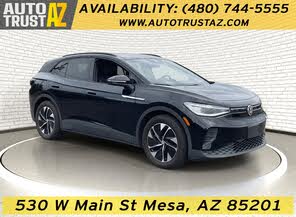
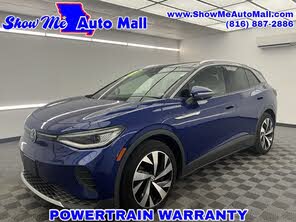
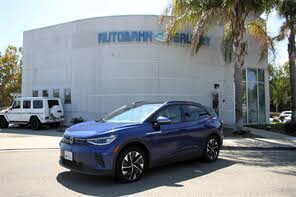
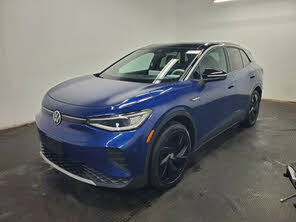
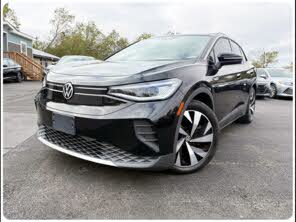
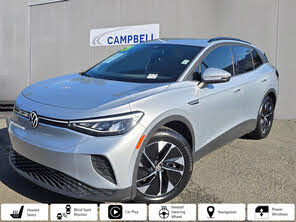
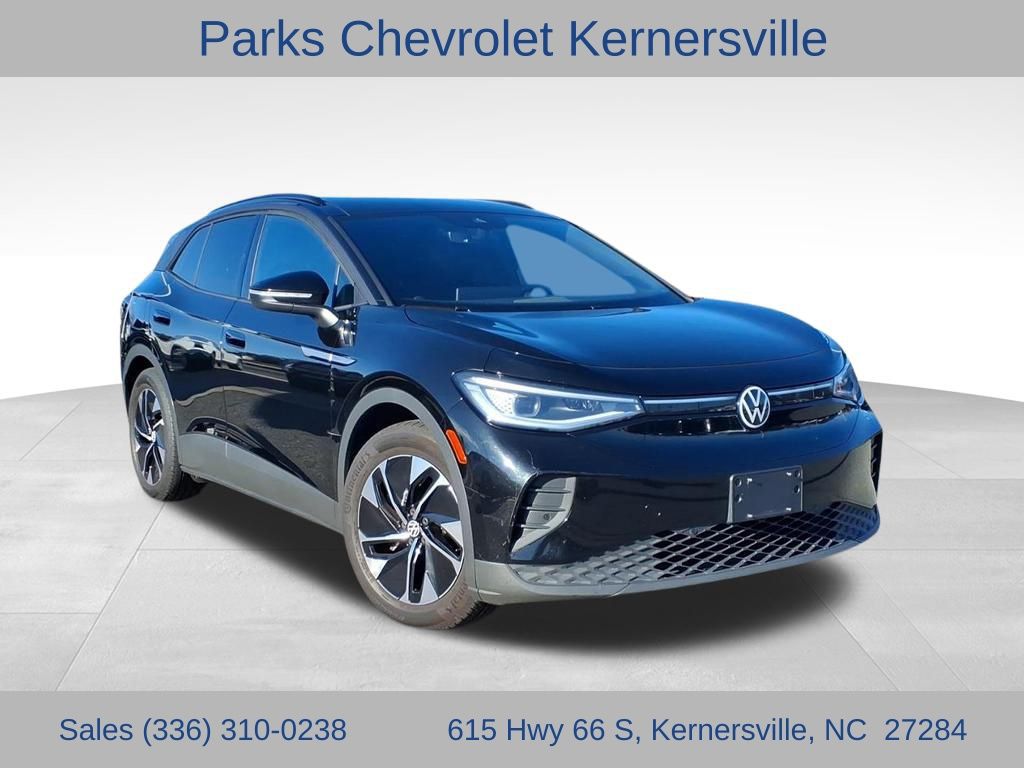
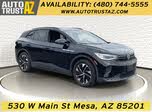
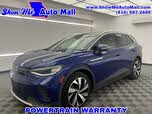
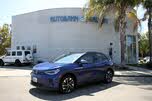
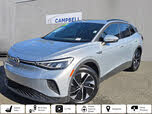
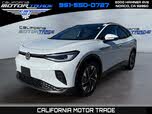
The 2021 Volkswagen ID.4 was designed from the ground up as an electric vehicle (EV), showcasing a distinctive look that set it apart from Volkswagen’s gasoline models. Unlike the Tiguan and Atlas crossovers, the ID.4 featured a streamlined profile with wheels pushed out to the corners of the body, eschewing the fake toughness of its gasoline counterparts. Built on VW’s EV-specific MEB platform, the ID.4 followed the European-market ID.3 hatchback, but was brought to the U.S. market due to the higher demand for crossovers.
Despite its SUV-like styling, the ID.4 didn’t quite look like an SUV, a common trait among many EV crossovers. The interior design blended Volkswagen’s trademark minimalism with a smartphone aesthetic, featuring piano black and matte plastic finishes. The base ID.4 Pro came with a leather-wrapped steering wheel and cloth seats, while the Pro S and 1St Edition models offered leatherette upholstery.
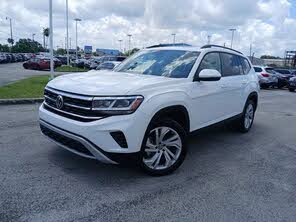
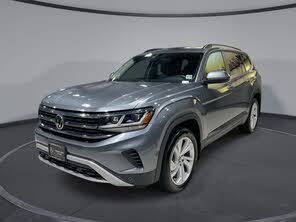
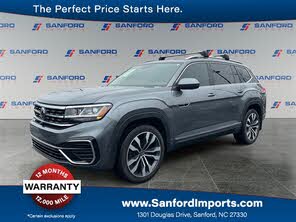
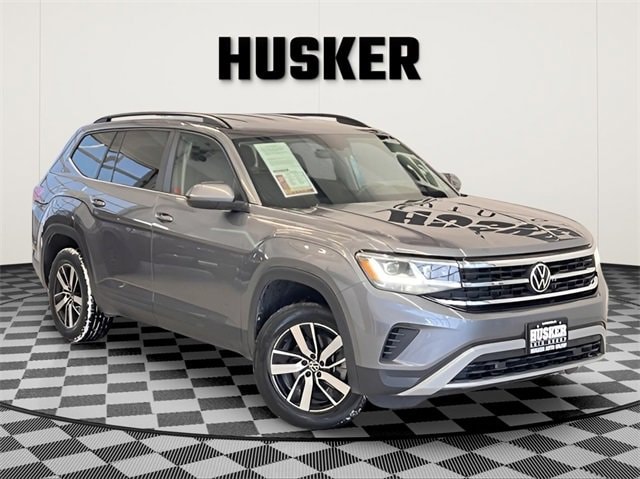
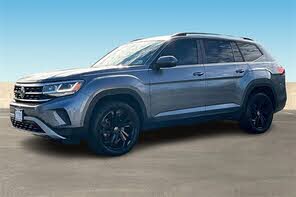
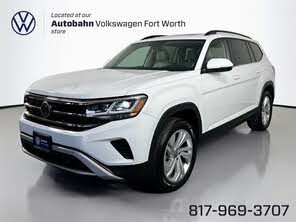
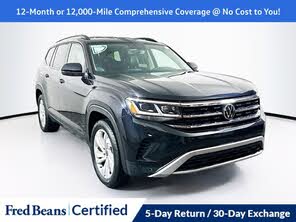
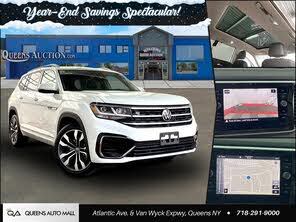
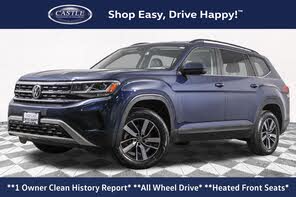
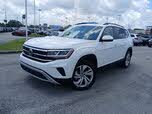
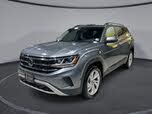
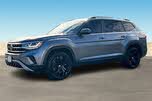
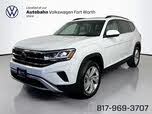
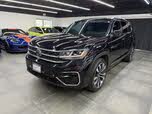
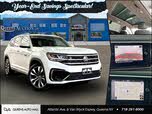
In contrast, the 2022 Volkswagen Atlas carried over with minor modifications from the previous year, simplifying its lineup to SE, SE with Technology, SEL, SEL R-Line, SEL R-Line Black, and SEL Premium R-Line trims. The SEL Premium R-Line trim featured 21-inch wheels with a machined finish, enhancing the SUV’s upscale look. The Atlas’s design was big and boxy, with an appealing yet bold styling.
The interior of the Atlas displayed simplicity with a premium flair, but many materials were crafted to a low cost point, resulting in an unacceptable amount of hard, shiny, and slippery plastic for an SUV priced at nearly $54,000. The storage areas needed linings to prevent unwanted noise, vibration, and harshness, and low-gloss coatings on hard surfaces would have improved the perceived quality.


The 2021 Volkswagen ID.4 launched with a single rear-mounted electric motor producing 201 horsepower and 229 pound-feet of torque, powered by an 82-kilowatt-hour battery pack. It was the first rear-wheel drive (RWD) Volkswagen passenger car sold in the U.S. since the Beetle. An all-wheel-drive (AWD) version with a second electric motor arrived later in 2021, boosting power to 295 horsepower and 339 pound-feet of torque.
RWD provided a balanced handling experience, with the front wheels steering and the rear wheels driving. The electric motor’s instantaneous torque made pulling away from stoplights enjoyable. The AWD version offered increased power and traction, performing well on twisty roads but still exhibiting body roll. The ID.4 was tuned for comfort rather than sporty handling, with a smooth ride over bumps and potholes. Volkswagen chose not to implement aggressive regenerative braking, opting for a more familiar driving experience for those transitioning from gasoline cars.
The 2022 Volkswagen Atlas offered a standard turbocharged 2.0-liter four-cylinder engine with 235 horsepower and 258 pound-feet of torque, paired with an eight-speed automatic transmission. The turbo-four’s maximum towing capacity was 2,000 pounds, with an EPA fuel economy rating of 22-23 mpg in combined driving. However, premium fuel was required to achieve these outputs.
The optional 3.6-liter V6 engine, standard on higher trims, produced 276 horsepower and 266 pound-feet of torque, with a towing capacity of 5,000 pounds. The V6’s acceleration was leisurely, and the drivetrain had a gritty note, leading to dissatisfaction. Fuel economy estimates were 19-20 mpg in combined driving. The Atlas offered various driving modes and an Active Control system for different conditions, but its ground clearance was modest.
The Atlas’s driving dynamics were fundamentally sound, but the ride quality was affected by the 21-inch wheels and low-profile tires, transmitting bumps and road noise to the cabin. The suspension tuning resulted in added body float, making the SUV bounce and wallow on undulating pavement. An adaptive-damping suspension option would have better controlled the ride motions.
The 2021 Volkswagen ID.4 offered more front and rear headroom than competitor EVs, though legroom was average for the segment. It provided 30.3 cubic feet of cargo space with the rear seats in place and 64.2 cubic feet with the seats folded, more than some EV rivals but less than gasoline crossovers like the Honda CR-V and Toyota RAV4. The ID.4 lacked a “frunk” for extra storage, but the interior felt spacious from the driver’s seat. Forward visibility was good, but rearward visibility was hindered by thick rear pillars and a small back window. The console offered limited storage space, and the driver’s seat lacked thigh support.
The 2022 Volkswagen Atlas, with the discontinuation of the base S trim, no longer offered cloth seats. The V-Tex leatherette seating was standard, along with heated front seats and a 10-way power-adjustable driver’s seat. Higher trims added features like tri-zone automatic climate control, ambient cabin lighting, a panoramic sunroof, genuine leather upholstery, ventilated front seats, and heated second-row seats.
The Atlas’s roomy interior and comfortable seats were standout features, accommodating seven people comfortably, even in the third row. The step-in height was relatively low, making it easy to get in and out. The cargo space was exceptional, with 20.6 cubic feet behind the third row, 55.5 cubic feet with the third row folded, and 96.8 cubic feet with the second row folded, larger than the full-size Nissan Armada.
The 2021 Volkswagen ID.4 featured a standard 10-inch touchscreen (with an optional 12-inch screen) with wireless Apple CarPlay and Android Auto. A 5.3-inch display screen served as the instrument cluster, and haptic touchpads replaced nearly all switchgear. While the setup looked cool, it was difficult to use due to the lack of tactile feedback. The natural-language voice-control system allowed for easier operation, but it was slow to respond. The ID.Light, a light strip at the base of the windshield, communicated information to the driver but was mostly forgettable. The touchscreen was well-positioned with smart-looking graphics and easy-to-navigate menus.
The 2022 Volkswagen Atlas included the Volkswagen Digital Cockpit instrument cluster as standard, with an 8-inch display expanding to 10.25 inches on higher trims. The Atlas SE had a 6.5-inch touchscreen with last-generation infotainment, while other trims featured the next-generation MIB3 system with an 8-inch touchscreen, wireless Apple CarPlay and Android Auto, wireless charging, and Car-Net connected services with Amazon Alexa integration.
Car-Net services were available in three plans: Remote Access, Safe & Secure, and Hotspot. The MyVW smartphone app provided access to these services, and the Atlas included five additional USB ports. Higher trims offered a navigation system and a 12-speaker Fender premium sound system. However, the infotainment system was slow to load, and tuning the radio was a cumbersome process. The voice recognition system was hit-and-miss, making Apple CarPlay or Android Auto a better option for navigation.
The 2021 Volkswagen ID.4 received the highest-level Top Safety Pick+ designation from the Insurance Institute for Highway Safety (IIHS) and a five-star rating from the National Highway Traffic Safety Administration (NHTSA) for the RWD model. Standard driver aids included forward-collision warning, automatic emergency braking, blind-spot monitoring, lane-keep assist, park distance control, automatic high beams, and adaptive cruise control. Travel Assist and Emergency Assist were new standard features, with Travel Assist providing smooth lane-centering and responsive acceleration and deceleration.
The 2022 Volkswagen Atlas offered an impressive list of safety features, including automatic post-collision braking, Front Assist, Side Assist, and Rear Traffic Alert. Higher trims added adaptive cruise control, parking sensors, lane-departure warning, lane-keeping assistance, Travel Assist, Emergency Assist, and adaptive front lighting. The SEL Premium R-Line also had a surround-view camera system and Park Assist technology. However, the parking sensors and Lane Assist had some issues, and the Atlas did not earn a Top Safety Pick rating from the IIHS, receiving four-star ratings for frontal-impact tests from the NHTSA.
CarGurus highlights

According to CarGurus experts, the overall rating for the 2021 Volkswagen ID.4 is 7.3 out of 10, while the 2022 Volkswagen Atlas scores 7.0 out of 10. Based on these ratings, the 2021 Volkswagen ID.4 is the better choice, offering a more modern design, a comfortable ride, and a higher overall rating.
Choose the 2022 Volkswagen Atlas if:
- You need a roomy interior that comfortably seats seven people.
- You require exceptional cargo space for various needs.
- You appreciate a comprehensive suite of safety features and driver aids.

Choose the 2021 Volkswagen ID.4 if:
- You prefer a distinctive, modern design with a streamlined profile.
- You want an EV with a spacious interior and good forward visibility.
- You value a smooth, comfortable ride with balanced handling.



CarGurus highlights
According to CarGurus experts, the overall rating for the 2021 Volkswagen ID.4 is 7.3 out of 10, while the 2022 Volkswagen Atlas scores 7.0 out of 10. Based on these ratings, the 2021 Volkswagen ID.4 is the better choice, offering a more modern design, a comfortable ride, and a higher overall rating.
Choose the 2022 Volkswagen Atlas if:
Shop Now- You need a roomy interior that comfortably seats seven people.
- You require exceptional cargo space for various needs.
- You appreciate a comprehensive suite of safety features and driver aids.

Choose the 2021 Volkswagen ID.4 if:
Shop Now- You prefer a distinctive, modern design with a streamlined profile.
- You want an EV with a spacious interior and good forward visibility.
- You value a smooth, comfortable ride with balanced handling.





By: CarGurus + AI
At CarGurus, our team of experienced automotive writers remain at the heart of our content operation, conducting hands-on car tests and writing insightful guides that are backed by years of industry experience. To complement this, we are harnessing AI to make our content offering more diverse and more helpful to shoppers than ever. To achieve this, our AI systems are based exclusively on CarGurus content, ratings and data, so that what we produce is both unique to CarGurus, and uniquely helpful to car shoppers.