2021 Toyota 4Runner vs 2022 Volvo XC90
Overview | |
MSRP$36,765 | MSRP$50,900 |
Listings1147 | Listings626 |
Ratings & Reviews | |
User Reviews | User Reviews |
Expert reviews6.2 out of 10 | Expert reviews8.3 out of 10 |
Pros
Cons
| Pros
Cons
|
2021 Toyota 4Runner Reviews SummaryDespite its design age, poor fuel economy, rough ride, iffy handling, and marginal safety ratings, the current-generation Toyota 4Runner remains a popular choice in a midsize SUV. Why? Its reputation for reliability and resale value, coupled with its undeniable utility, rugged image, and go-anywhere and do-anything capability, are the selling points. And if that's why you want a 2021 Toyota 4Runner, it won't disappoint you as long as you accept its shortcomings. | |
2022 Volvo XC90 Reviews SummaryWhat does your average vegan internet mogul drive while waiting for their Tesla to charge? The 2022 Volvo XC90 three-row crossover can slot right in with an available plug-in hybrid variant, available leather-free features, and crunchy memories from the late 20th century. With fuel economy ratings up to 66 MPGe, XC90 owners can hold their eco heads high. | |
No video found | No video found |
Popular Features & Specs | |
Engine4.0L 270 hp V6 | Engine2.0L 250 hp I4 |
Drive Train4X2 | Drive TrainFWD |
Seating Capacity7 | Seating Capacity7 |
Horsepower270 hp @ 5600 rpm | Horsepower250 hp @ 5500 rpm |
MPG City16 | MPG City21 |
MPG Highway19 | MPG Highway30 |
Engine | |
Engine Name4.0L 270 hp V6 | Engine Name2.0L 250 hp I4 |
Torque278 lb-ft @ 4400 rpm | Torque258 lb-ft @ 1500 rpm |
Horsepower270 hp @ 5600 rpm | Horsepower250 hp @ 5500 rpm |
Drivetrain4X2 | DrivetrainFWD |
Fuel Economy | |
MPG City16 | MPG City21 |
MPG Highway19 | MPG Highway30 |
Interior | |
Seating Capacity7 | Seating Capacity7 |
Key Features | |
Navigation System | Navigation SystemStandard |
Sunroof/Moonroof | Sunroof/MoonroofStandard |
Safety | |
Front Crash Overall4 | Front Crash Overall5 |
Side Crash Overall5 | Side Crash Overall5 |
Dimensions & Capacity | |
Cargo Space47.2 cu ft | Cargo Space10.7 cu ft |
Curb Weight4400 lbs | Curb Weight4374 lbs |
Height71.5 in | Height69.9 in |
Length190.2 in | Length195.0 in |
Width75.8 in | Width84.2 in |
Wheelbase109.8 in | Wheelbase117.5 in |
Maximum Payload1700 lbs | Maximum Payload1631 lbs |
Number of doors4 | Number of doors4 |
Maximum Towing Capacity5000 lbs | Maximum Towing Capacity4000 lbs |
Standard Towing Capacity5000 lbs | Standard Towing Capacity |
Overview | ||
MSRP | $36,765 | $50,900 |
Listings | ||
Ratings & Reviews | ||
User reviews | ||
Expert reviews | 6.2 out of 10Read full review | 8.3 out of 10Read full review |
Pros & cons | Pros
Cons
| Pros
Cons
|
Summary | Despite its design age, poor fuel economy, rough ride, iffy handling, and marginal safety ratings, the current-generation Toyota 4Runner remains a popular choice in a midsize SUV. Why? Its reputation for reliability and resale value, coupled with its undeniable utility, rugged image, and go-anywhere and do-anything capability, are the selling points. And if that's why you want a 2021 Toyota 4Runner, it won't disappoint you as long as you accept its shortcomings. | What does your average vegan internet mogul drive while waiting for their Tesla to charge? The 2022 Volvo XC90 three-row crossover can slot right in with an available plug-in hybrid variant, available leather-free features, and crunchy memories from the late 20th century. With fuel economy ratings up to 66 MPGe, XC90 owners can hold their eco heads high. |
Video | No video found | No video found |
Popular Features & Specs | ||
Engine | 4.0L 270 hp V6 | 2.0L 250 hp I4 |
Drive Train | 4X2 | FWD |
Seating Capacity | 7 | 7 |
Horsepower | 270 hp @ 5600 rpm | 250 hp @ 5500 rpm |
MPG City | 16 | 21 |
MPG Highway | 19 | 30 |
Engine | ||
Engine Name | 4.0L 270 hp V6 | 2.0L 250 hp I4 |
Torque | 278 lb-ft @ 4400 rpm | 258 lb-ft @ 1500 rpm |
Horsepower | 270 hp @ 5600 rpm | 250 hp @ 5500 rpm |
Drivetrain | 4X2 | FWD |
Fuel Economy | ||
MPG City | 16 | 21 |
MPG Highway | 19 | 30 |
Interior | ||
Seating Capacity | 7 | 7 |
Key Features | ||
Navigation System | Standard | |
Sunroof/Moonroof | Standard | |
Safety | ||
Front Crash Overall | 4 | 5 |
Side Crash Overall | 5 | 5 |
Dimensions & Capacity | ||
Cargo Space | 47.2 cu ft | 10.7 cu ft |
Curb Weight | 4400 lbs | 4374 lbs |
Height | 71.5 in | 69.9 in |
Length | 190.2 in | 195.0 in |
Width | 75.8 in | 84.2 in |
Wheelbase | 109.8 in | 117.5 in |
Maximum Payload | 1700 lbs | 1631 lbs |
Number of doors | 4 | 4 |
Maximum Towing Capacity | 5000 lbs | 4000 lbs |
Standard Towing Capacity | 5000 lbs | |
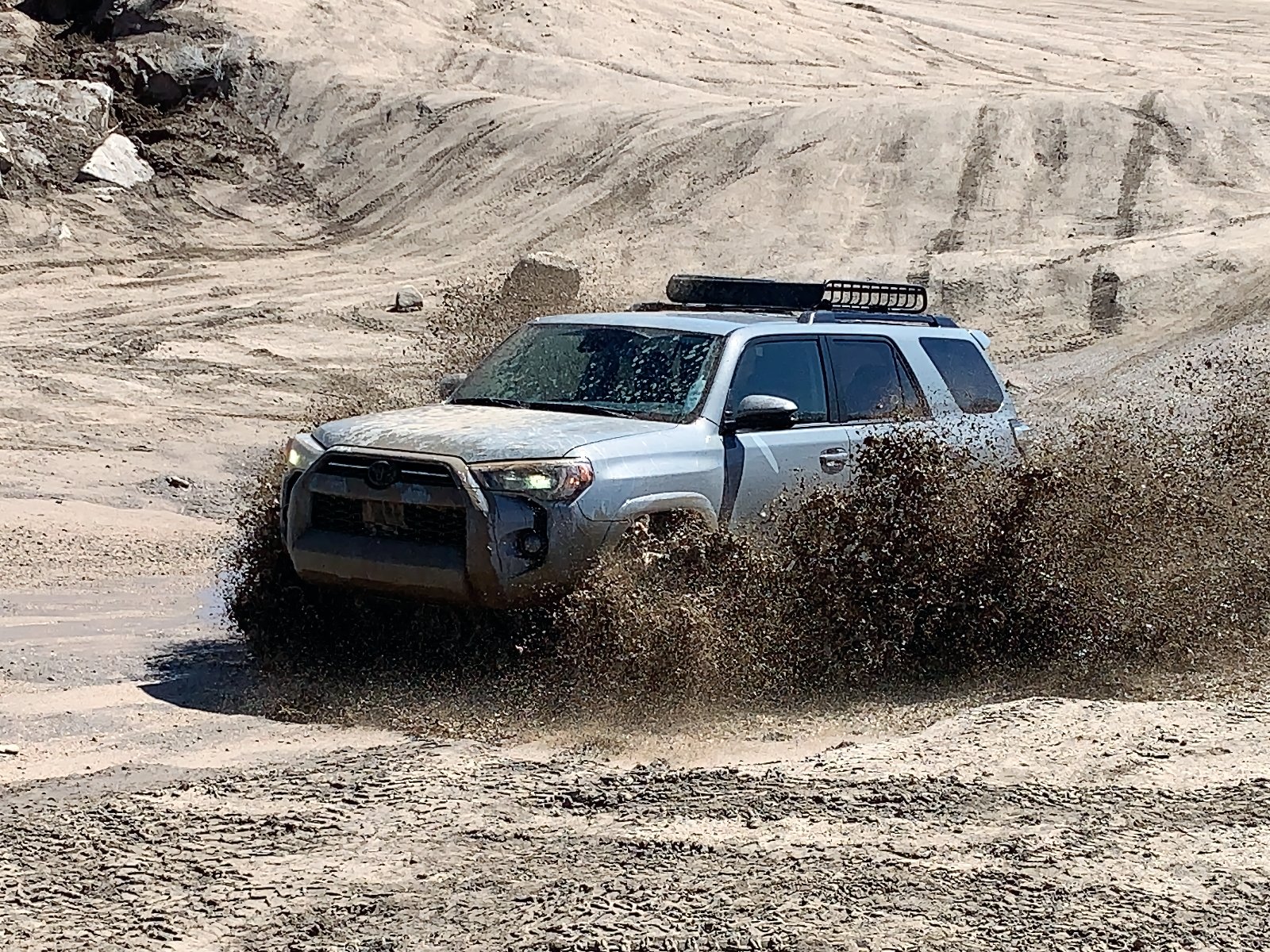
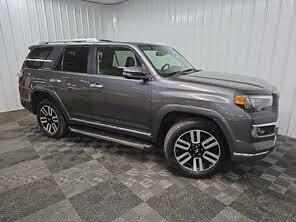
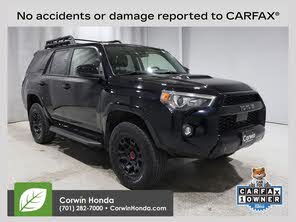
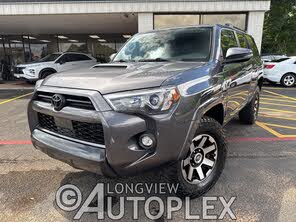
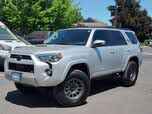
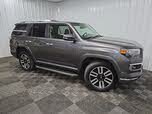
The 2021 Toyota 4Runner had a classic, utilitarian design that stood still in the ever-changing car aesthetics arena. Toyota had last redesigned the 4Runner over a decade ago, and although there had been some updates since then, the overall vehicle maintained its rugged, functional look. You could purchase a used model from years prior and find it remarkably similar to the new one. While it hasn’t been revered as "attractive," the 4Runner boasted a hearty, two-box body with flared fenders and trapezoidal wheel arches. It carried balanced proportions and timeless styling that underscored its undeniable utility, much like a reliable tool.
Toyota offered the 4Runner in several trims: SR5, TRD Off-Road, Limited, and TRD Pro. Each had its own special edition model. For instance, the Trail Special Edition was based on the SR5, Venture Special Edition on the TRD Off-Road, and Nightshade Special Edition on the Limited. Pricing ranged from $36,950 for the SR5 with rear-wheel drive (RWD) to $50,570 for the TRD Pro with standard four-wheel drive (4WD). The test vehicle was a new-for-2021 Trail Special Edition priced at $38,565 MSRP for the RWD model, and approximately $43,729 including upgrades and a destination charge.
Toyota built only 4,000 examples of this specific edition, with colors like white, black, Cement (gray), and Army Green. It featured dark gray TRD Off-Road wheels and Yakima RoadWarrior rooftop cargo basket. Inside, the Trail Special Edition included black cloth upholstery with tan stitching, all-weather floor mats, a sliding rear cargo tray, and a custom-made 40-quart cooler.
The interior of the 4Runner leaned heavily on hard plastic, fitting its mission of durability and easy cleanup. The old-school dashboard had large knobs, buttons, and manual air conditioning that required self-adjustment. This was the first vehicle in years that used a traditional key to start, embodying its simple yet durable nature.
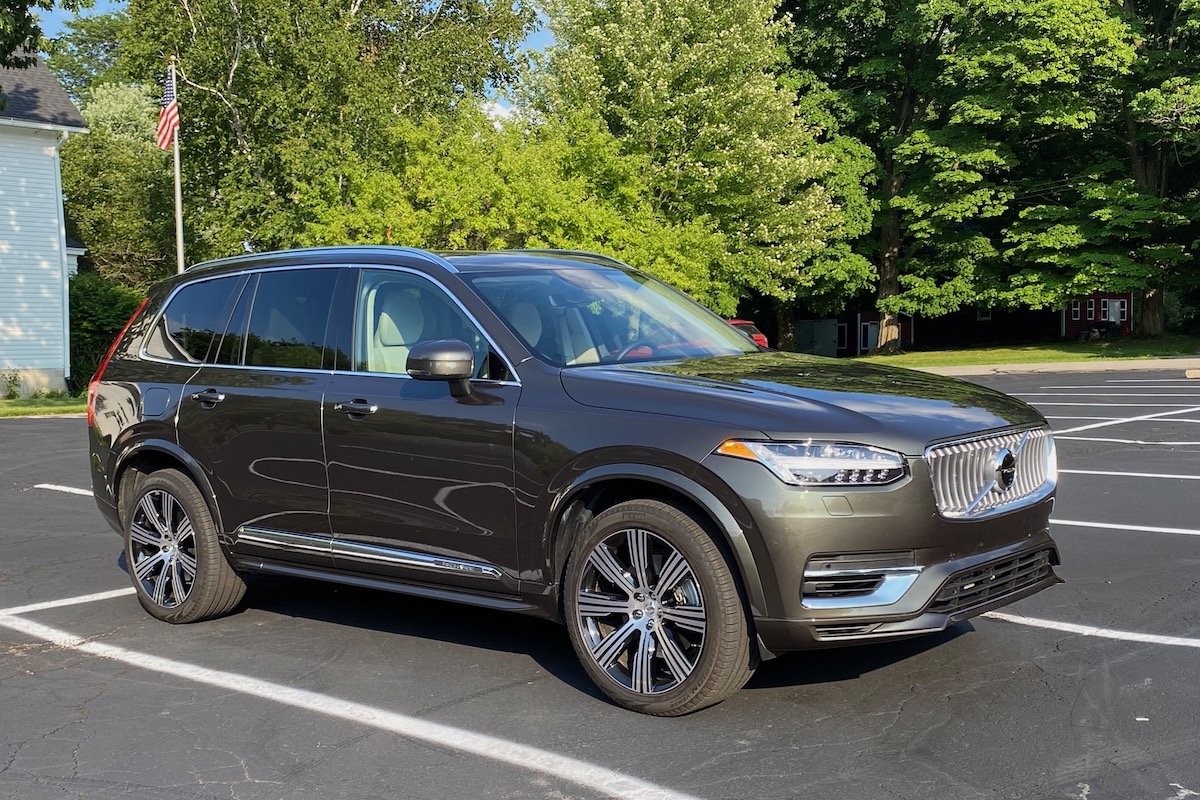
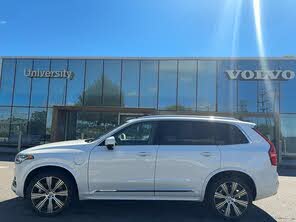
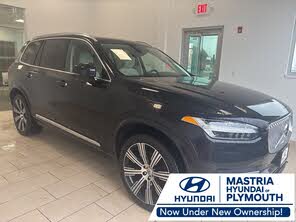
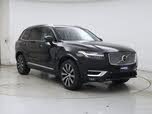
The 2022 Volvo XC90, in contrast, showcased a modern, elegant profile that departed from the boxier Volvos of yesteryears. This model represented Volvo’s ascent toward the luxury class following its acquisition by China's Zhejiang Geely Holding in 2010. Riding on the Scalable Product Architecture (SPA), the XC90 flaunted a compelling stance with a roofline that was sleek yet spacious, pronounced wheel arches, superior fit and finish, and a "Thor’s Hammer" LED headlight detail, a cheeky nod to its Swedish roots.
Inside, the XC90 radiated a "Scandinavian Modern" aesthetic. Natural wood and metal trims lent an authentic feel, while the clear crystal gear selector handle and sliding wood tambour center console cover set a luxurious tone. Volvo was shifting towards leather-free interiors by 2030, but this model still offered Nappa leather and a "tailored wool blend" upholstery. During testing in hot weather, the leather seats provided an unexpected respite, reinforcing Volvo’s focus on comfort.


When it came to performance, the 2021 Toyota 4Runner shone in off-road capabilities but dragged in everyday driving scenarios. It featured a 4.0-liter V6 engine producing 270 horsepower at 5,600 rpm and 278 pound-feet of torque at 4,400 rpm, linked to a five-speed automatic transmission. Our test vehicle handled various challenging terrains efficiently, thanks to the A-Trac off-road traction control system.
But this vehicle felt cumbersome on paved roads. Its truck-like handling, heavy steering, and the need for consistent gas stops due to an EPA estimated 17 mpg in combined driving underscored its off-road advantages and suburban struggles. The 4Runner was an authentic, old-school SUV, not a modern crossover masquerading as one.
The 2022 Volvo XC90 offered three powertrain choices: the T5 with a turbocharged 2.0-liter engine producing 250 hp and 258 lb-ft of torque; the T6 with a supercharged and turbocharged version boasting 316 hp and 295 lb-ft; and the T8 plug-in hybrid with a combined 455 hp and 523 lb-ft torque combining gasoline and electric sources. Available with front-wheel drive (FWD) or all-wheel drive (AWD), the XC90 used an eight-speed automatic transmission for all models.
The XC90 excelled on the performance front, providing a responsive, smooth drive that belied its size. Whether accelerating briskly or smoothly transitioning power, the XC90 delivered a superb driving experience even amid tough conditions. Fuel economy for the T5 FWD stood at 21 mpg city and 30 mpg highway, while the T8 model boasted an impressive 55 MPGe.
The 2021 Toyota 4Runner demanded a bit of effort to board, especially for shorter folks, but rewarded occupants with commendable comfort once inside. The front and rear seats offered excellent support, and the rear seat had ample legroom and good visibility. Our Trail Special Edition came with a practical sliding cargo deck, supporting up to 440 pounds. Without a third-row seat, cargo space ranged from 47.2 to 89.7 cubic feet, complemented by its expansive roof rack.
Conversely, the 2022 Volvo XC90 offered both six-passenger and seven-passenger configurations. With one-handed ease, the second row folded to provide access to the third row, which was better suited for kids. With six configurations, the XC90 provided between 15.9 cubic feet behind the third row to 85.7 cubic feet with the seats folded, straddling comfortably for multiple needs. Towing capacity ranged from 4,000 to 5,000 pounds, more suited to less ambitious towing requirements. The airy, light-filled cabin thanks to a panoramic moonroof, bolstered comfort and usability during our humid test drive, highlighting Volvo's adaptability to extreme temperatures.
The 2021 Toyota 4Runner Trail Special Edition was understated in its technological offering. Aside from practical inclusions like a windshield wiper de-icer and a cargo area power outlet, it was primarily old-school. An 8-inch touchscreen infotainment system provided a robust suite of features, including Bluetooth, Apple CarPlay, Android Auto, and Alexa compatibility. The premium audio upgrade further enhanced functionalities, though the system's simplicity resonated with the 4Runner’s utilitarian mission.
On the other hand, the 2022 Volvo XC90 heralded advanced technology reminiscent of tablet interfaces. The Sensus infotainment system, with an intuitive nine-inch portrait touchscreen, was somewhat inconsistent in responsiveness but bettered by Apple CarPlay. A 12.3-inch digital instrument panel and optional Advanced package, featuring a head-up display and 360-degree camera, proved highly useful. Also, the Harman Kardon sound system or the premium Bowers & Wilkins upgrade catered to audiophiles, reinforcing the XC90’s luxury ethos.
Safety in the 2021 Toyota 4Runner relied on Toyota Safety Sense P (TSS-P), including adaptive cruise control (though not fully stopping), forward-collision warning, and automatic emergency braking. However, blind-spot monitoring was absent, a notable omission given modern safety standards. NHTSA rated the 4Runner's rollover resistance at three stars, with mixed results on other crash tests, partly due to the 4Runner’s older design.
The 2022 Volvo XC90 sported a comprehensive safety suite, reflecting Volvo’s vision for ultra-safe vehicles. Features like blind-spot monitoring, rear cross-traffic alert, adaptive cruise control, and Pilot Assist set a high bar. These advanced safety elements helped the XC90 earn 2022 IIHS Top Safety Pick+ and a five-star overall safety rating from NHTSA, marking it as a class-leading safe vehicle.
CarGurus highlights
According to CarGurus experts, the overall rating for the 2021 Toyota 4Runner is 6.2 out of 10, while the 2022 Volvo XC90 scores 8.3 out of 10. Given these ratings and comprehensive evaluations, the clear recommendation goes to the Volvo XC90 for its superior balance of luxury, performance, technology, and safety, making it a standout choice in the SUV market.
Choose the 2021 Toyota 4Runner if:
- You prioritize a rugged, off-road capable vehicle that performs outstandingly in tough terrains.
- You value durability and a straightforward, user-friendly interface without excessive modern frills.
- You need a reliable cargo hauler with ample space and practical utility features.





Choose the 2022 Volvo XC90 if:
- You prefer a luxury SUV with refined surfaces, top-tier interior materials, and elegant design.
- You seek a balance of power, including a hybrid option for efficient and dynamic driving experiences.
- You need advanced safety features and a highly rated safety record for peace of mind.






CarGurus highlights
According to CarGurus experts, the overall rating for the 2021 Toyota 4Runner is 6.2 out of 10, while the 2022 Volvo XC90 scores 8.3 out of 10. Given these ratings and comprehensive evaluations, the clear recommendation goes to the Volvo XC90 for its superior balance of luxury, performance, technology, and safety, making it a standout choice in the SUV market.
Choose the 2021 Toyota 4Runner if:
Shop Now- You prioritize a rugged, off-road capable vehicle that performs outstandingly in tough terrains.
- You value durability and a straightforward, user-friendly interface without excessive modern frills.
- You need a reliable cargo hauler with ample space and practical utility features.







Choose the 2022 Volvo XC90 if:
Shop Now- You prefer a luxury SUV with refined surfaces, top-tier interior materials, and elegant design.
- You seek a balance of power, including a hybrid option for efficient and dynamic driving experiences.
- You need advanced safety features and a highly rated safety record for peace of mind.









By: CarGurus + AI
At CarGurus, our team of experienced automotive writers remain at the heart of our content operation, conducting hands-on car tests and writing insightful guides that are backed by years of industry experience. To complement this, we are harnessing AI to make our content offering more diverse and more helpful to shoppers than ever. To achieve this, our AI systems are based exclusively on CarGurus content, ratings and data, so that what we produce is both unique to CarGurus, and uniquely helpful to car shoppers.