2021 Subaru Forester vs 2021 Volkswagen Tiguan
Overview | |
MSRP$24,795 | MSRP$25,245 |
Listings969 | Listings1218 |
Ratings & Reviews | |
User Reviews | User Reviews |
Expert reviews7.5 out of 10 | Expert reviews7.3 out of 10 |
Pros
Cons
| Pros
Cons
|
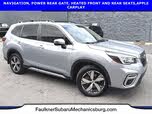
2021 Subaru Forester Reviews SummaryThe Subaru Forester was one of the original compact crossover SUVs. Along with the Ford Escape, Honda CR-V, and Toyota RAV4, it helped introduce a vehicular genre that is now displacing traditional sedans from American driveways. That means the Forester has more competition than ever. What was once a small market segment has swelled with the addition of compact SUVs like the Hyundai Tucson, Kia Sportage, Mazda CX-5, Nissan Rogue, Volkswagen Tiguan, and the modern version of the Jeep Cherokee. To keep pace with the competition, the Forester has packed on technology—and pounds. While the first-generation Forester (affectionately nicknamed “toaster” by fans because of its boxy shape) was genuinely compact, the current version has the footprint of a midsize SUV from two decades ago. This version was introduced for the 2019 model year, so it doesn’t change much for 2021. The only news is the addition of three standard safety features—steering-responsive LED headlights, automatic high beams, and a rear seatbelt reminder—standard fog lights and keyless access with push-button start for the Premium trim level, and additional equipment reshuffling on other trim levels. The 2021 Subaru Forester is available in five trim levels—Base, Premium, Sport, Limited, and Touring—all with standard all-wheel drive (AWD). Our test car was the mid-range Sport model. | |
2021 Volkswagen Tiguan Reviews SummaryYou may have noticed that crossover SUVs are popular. Among them, compact models dominate, having essentially replaced the traditional midsize sedan in American driveways. Offering room for five people, available all-wheel drive (AWD), and more cargo than any family car, they are the preferred method of transportation for a broad cross section of new vehicle buyers. But that’s not the only explanation for the runaway success of the 2021 Volkswagen Tiguan. | |
No video found | |
Popular Features & Specs | |
Engine2.5L 182 hp H4 | Engine2.0L 184 hp I4 |
Drive TrainAWD | Drive TrainFWD |
Seating Capacity5 | Seating Capacity7 |
Horsepower182 hp @ 5800 rpm | Horsepower184 hp @ 4400 rpm |
MPG City26 | MPG City23 |
MPG Highway33 | MPG Highway29 |
Engine | |
Engine Name2.5L 182 hp H4 | Engine Name2.0L 184 hp I4 |
Torque178 lb-ft @ 4400 rpm | Torque221 lb-ft @ 1600 rpm |
Horsepower182 hp @ 5800 rpm | Horsepower184 hp @ 4400 rpm |
DrivetrainAWD | DrivetrainFWD |
Fuel Economy | |
MPG City26 | MPG City23 |
MPG Highway33 | MPG Highway29 |
Interior | |
Seating Capacity5 | Seating Capacity7 |
Safety | |
Front Crash Overall5 | Front Crash Overall4 |
Side Crash Overall5 | Side Crash Overall5 |
Dimensions & Capacity | |
Cargo Space31.1 cu ft | Cargo Space12.0 cu ft |
Curb Weight3453 lbs | Curb Weight3735 lbs |
Height67.5 in | Height66.3 in |
Length182.1 in | Length185.1 in |
Width80.9 in | Width72.4 in |
Wheelbase105.1 in | Wheelbase109.8 in |
Maximum Payload1438 lbs | Maximum Payload1146 lbs |
Number of doors4 | Number of doors4 |
Maximum Towing Capacity1500 lbs | Maximum Towing Capacity1500 lbs |
Overview | ||
MSRP | $24,795 | $25,245 |
Listings | ||
Ratings & Reviews | ||
User reviews | ||
Expert reviews | 7.5 out of 10Read full review | 7.3 out of 10Read full review |
Pros & cons | Pros
Cons
| Pros
Cons
|
Summary | The Subaru Forester was one of the original compact crossover SUVs. Along with the Ford Escape, Honda CR-V, and Toyota RAV4, it helped introduce a vehicular genre that is now displacing traditional sedans from American driveways. That means the Forester has more competition than ever. What was once a small market segment has swelled with the addition of compact SUVs like the Hyundai Tucson, Kia Sportage, Mazda CX-5, Nissan Rogue, Volkswagen Tiguan, and the modern version of the Jeep Cherokee. To keep pace with the competition, the Forester has packed on technology—and pounds. While the first-generation Forester (affectionately nicknamed “toaster” by fans because of its boxy shape) was genuinely compact, the current version has the footprint of a midsize SUV from two decades ago. This version was introduced for the 2019 model year, so it doesn’t change much for 2021. The only news is the addition of three standard safety features—steering-responsive LED headlights, automatic high beams, and a rear seatbelt reminder—standard fog lights and keyless access with push-button start for the Premium trim level, and additional equipment reshuffling on other trim levels. The 2021 Subaru Forester is available in five trim levels—Base, Premium, Sport, Limited, and Touring—all with standard all-wheel drive (AWD). Our test car was the mid-range Sport model. | You may have noticed that crossover SUVs are popular. Among them, compact models dominate, having essentially replaced the traditional midsize sedan in American driveways. Offering room for five people, available all-wheel drive (AWD), and more cargo than any family car, they are the preferred method of transportation for a broad cross section of new vehicle buyers. But that’s not the only explanation for the runaway success of the 2021 Volkswagen Tiguan. |
Video | No video found | |
Popular Features & Specs | ||
Engine | 2.5L 182 hp H4 | 2.0L 184 hp I4 |
Drive Train | AWD | FWD |
Seating Capacity | 5 | 7 |
Horsepower | 182 hp @ 5800 rpm | 184 hp @ 4400 rpm |
MPG City | 26 | 23 |
MPG Highway | 33 | 29 |
Engine | ||
Engine Name | 2.5L 182 hp H4 | 2.0L 184 hp I4 |
Torque | 178 lb-ft @ 4400 rpm | 221 lb-ft @ 1600 rpm |
Horsepower | 182 hp @ 5800 rpm | 184 hp @ 4400 rpm |
Drivetrain | AWD | FWD |
Fuel Economy | ||
MPG City | 26 | 23 |
MPG Highway | 33 | 29 |
Interior | ||
Seating Capacity | 5 | 7 |
Safety | ||
Front Crash Overall | 5 | 4 |
Side Crash Overall | 5 | 5 |
Dimensions & Capacity | ||
Cargo Space | 31.1 cu ft | 12.0 cu ft |
Curb Weight | 3453 lbs | 3735 lbs |
Height | 67.5 in | 66.3 in |
Length | 182.1 in | 185.1 in |
Width | 80.9 in | 72.4 in |
Wheelbase | 105.1 in | 109.8 in |
Maximum Payload | 1438 lbs | 1146 lbs |
Number of doors | 4 | 4 |
Maximum Towing Capacity | 1500 lbs | 1500 lbs |
The 2021 Subaru Forester underwent its last redesign in the 2019 model year, and while its styling appeared somewhat dated, it retained strong legacy aesthetics from the previous generation. Subaru strategically reused the boxy, upright design, aiming to appeal to SUV shoppers who preferred a sturdier look. The most noticeable change was in the taillights, which featured a distinctive cross shape on the current fifth-generation model.
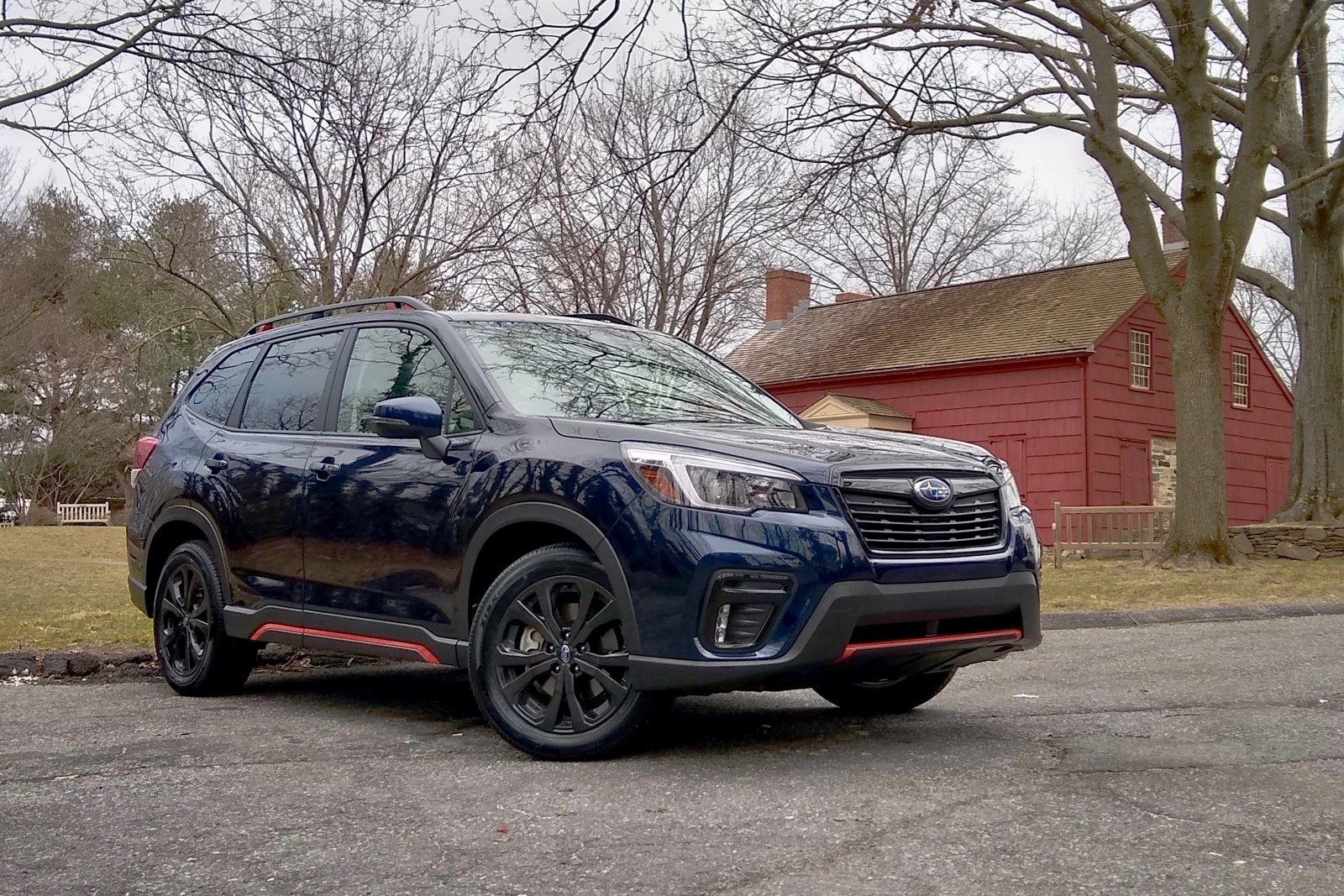
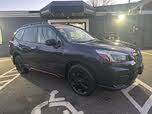
This continuation of the previous design could be seen as Subaru’s attempt not to alter a successful formula. The base trim came with 17-inch steel wheels, also available in 17-inch alloy, presenting a clean, straightforward appearance. Forester Sport models like the test vehicle added stylish touches like orange striping around the body’s lower edges and roof rails, a rear spoiler, and black 18-inch alloy wheels. These enhancements became more pronounced with a complementary paint color like the Dark Blue Pearl, making the vehicle stand out.
The Forester shared its Subaru Global Platform with other Subaru models, allowing for a balance between rugged SUV characteristics and the durability of sedans, hatchbacks, and wagons. Inside, the Forester maintained a functional aesthetic with materials that emphasized durability, perfect for school runs and outdoor activities. Sport trims with orange interior accents added a pop of color to an otherwise no-nonsense design. Cloth upholstery was standard in Base, Premium, and Sport trims, while leather was reserved for Limited and Touring variants. Heated front seats, heated exterior mirrors, and a windshield de-icer came standard from the Premium trim level upwards, thanks to the All-Weather Package.
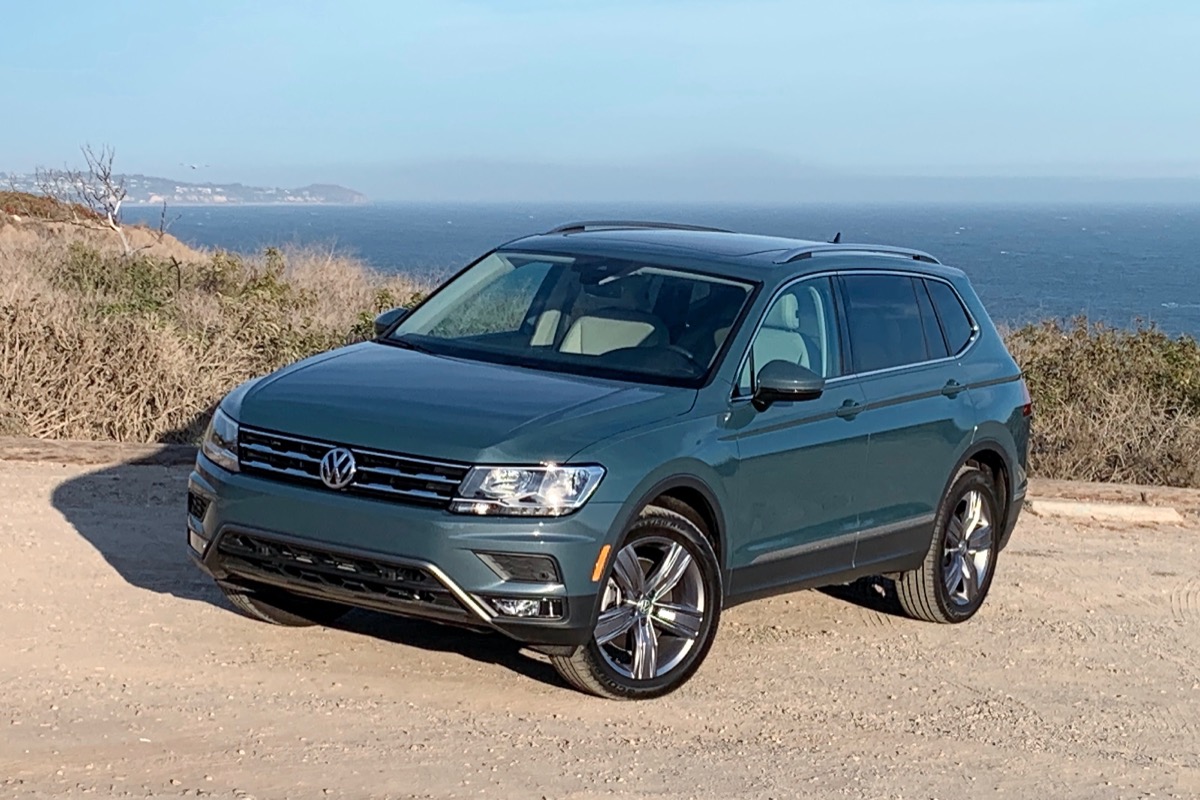
In comparison, the 2021 Volkswagen Tiguan boasted clean lines and balanced proportions, offering an aesthetic that, while understated to some, had an upscale and timeless appeal. The second-generation Tiguan corrected Volkswagen’s previous size misjudgment by offering a larger vehicle. With its long-wheelbase version, the Tiguan nearly matched larger models like the Hyundai Santa Fe and Kia Sorento in interior space.
This increase in dimensions resulted in a spacious interior capable of accommodating four people comfortably, with the option to seat five or even seven, with the addition of an optional third-row seat in AWD models. Volkswagen's interior design was modern and purposeful, with geometric forms and straightforward controls, albeit with an odd placement for the engine start button.
The Tiguan’s cabin received visual enhancements through shiny details and an integrated touchscreen infotainment system, though it fell short of premium feel due to excessive hard plastics and flimsy steering wheel stalks. Available in various trims from S to the luxurious SEL Premium R-Line, the Tiguan’s pricing spanned from $25,245 to $39,095, excluding destination charges. The tested model was an SEL trim with 4Motion AWD, priced at $35,040, inclusive of destination charges.




The 2021 Subaru Forester came with a single powertrain option: a 2.5-liter four-cylinder engine delivering 182 horsepower and 176 pound-feet of torque, paired with a continuously variable automatic transmission (CVT). This engine utilized Subaru’s signature boxer configuration, providing a lower center of gravity compared to competitors using inline-four engines. This powertrain gave the Forester a maximum towing capacity of 1,500 pounds, enhanced by standard Trailer Stability Assist.
While the power was deemed sufficient for most situations, the lack of a turbocharged option left the engine feeling strained during highway merges and overtakes. Wind noise was notably high at these speeds, further diminishing the driving experience. Although not designed to mimic the sporty handling of a Subaru WRX, the Forester’s suspension was tuned for comfort, which paradoxically led to excessive body roll and bounce on uneven surfaces, translating into a ride that was not truly comfortable despite soaking up bumps well.
Subaru’s hallmark AWD system came standard and featured a sophisticated X-Mode, adjusting throttle response and other parameters for different surfaces. The Forester Sport model included Dual X-Mode for varied terrain. Additionally, Premium trims and above came with standard hill-descent control and 8.7 inches of ground clearance, enhancing off-road capabilities, though for extreme off-roading, alternatives like the Jeep Cherokee Trailhawk or Ford Bronco Sport were recommended.
Conversely, the 2021 Volkswagen Tiguan was powered by a turbocharged 2.0-liter four-cylinder engine, generating 184 horsepower and 221 pound-feet of torque. An eight-speed automatic transmission coupled with the 4Motion AWD system (optional on most models, standard on the SEL Premium R-Line) provided adequate power. However, the engine experienced notable turbo lag, especially during acceleration from a stop, impacting responsiveness.
The Tiguan’s turbo-four felt underpowered during highway passes and when accelerating quickly, a sense exacerbated by its nearly 4,000-pound curb weight. Fuel economy ratings were 25 mpg combined with FWD, and 24 mpg with AWD, though real-world tests averaged 22.6 mpg with AWD, indicating a lackluster fuel economy.
Despite these shortcomings, the Tiguan excelled in driving comfort. Its light and responsive steering, compliant ride, refined braking, and nimble handling made it suitable for daily urban and suburban driving. However, it struggled over sharper speed bumps and railroad tracks. On curvy roads, the Tiguan’s handling was predictable but hampered by early tire grip loss and excessive body motion, encouraging a slower pace. It remained quiet and comfortable on highways, making it a pleasant option for long road trips.
Interior space was a highlight for the 2021 Subaru Forester, offering above-average headroom and legroom in both rows. The tall, flat roofline allowed for copious glass coverage, enhancing the feeling of spaciousness and visibility. However, this also increased the interior temperature quickly under direct sunlight.
Cargo capacity was impressive with 35.4 cubic feet with rear seats upright, and expanding to 76.1 cubic feet with the 60/40 split-folding rear bench down. This was more substantial than the Honda CR-V and 2022 Hyundai Tucson models with rear seats folded, yet less with them upright. Despite this, the Forester lacked a sliding second-row bench, available on models like the Ford Escape and Nissan Rogue, but compensated with optional power liftgates on the Sport trim and standard on Limited and Touring.
Cupholders and storage solutions in the Forester were functional but not extensive. While the center console storage was practical, the phone cubby was too small for many devices and lacked wireless charging options. Though the audio and climate control knobs were large and easy to use, the abundance of steering wheel buttons could be overwhelming.
The 2021 Volkswagen Tiguan prioritized comfort, with easy entry and exit facilitated by large doors and high seating points. Front seats provided ample adjustments for support and visibility. The V-Tex leatherette upholstery imitated genuine leather well, and the dual-zone climate control system ensured a pleasant cabin temperature.
Back-seat space was notably generous, providing good support, legroom, and foot space, along with rear air vents and USB ports. The panoramic sunroof added to the open feel, equipped with an effective wind deflector. Despite the otherwise premium cabin, storage space was limited. A narrow slot in front of the shifter accommodated the available wireless smartphone charger, but retrieving devices was awkward.
The Tiguan’s cargo capabilities varied depending on the presence of the third-row seat. Without it, cargo volume ranged from 33 to 37.6 cubic feet behind the second row, somewhat dependent on configuration. With seats folded, capacity expanded to 65.7 to 73.5 cubic feet. A versatile 40/20/40-split rear seat allowed a mix of passengers and cargo, with added convenience from cargo area levers that folded the seats.
The 2021 Subaru Forester included the Subaru Starlink infotainment system with a standard 6.5-inch touchscreen, Apple CarPlay and Android Auto compatibility, Bluetooth, SiriusXM satellite radio, front-row USB ports, and a CD player. Sport models upgraded to an 8-inch touchscreen with a Harman Kardon audio system, while Limited and Touring models included navigation and additional rear USB ports.
The infotainment system was user-friendly, benefiting from analog controls and physical shortcut buttons. However, the main screen suffered from slow boot-up times. Additional displays in the dashboard and instrument cluster presented secondary information like fuel economy and tire pressure, although the redundancy seemed unnecessarily complex.
In contrast, the 2021 Volkswagen Tiguan introduced the MIB3 infotainment platform starting from the SE trim. It featured an 8-inch touchscreen, faster responses, and expanded services, including wireless Apple CarPlay and Android Auto, WiFi for four devices, SiriusXM 360L, Amazon Alexa integration, and various Car-Net services. These included remote start, crash notifications, and Family Guardian settings.
While MIB3 improved overall functionality, the user interface had its oddities, and voice recognition was subpar. Additionally, the base six-speaker sound system was inadequate, failing to handle higher volumes without distortion. The top trims featured a Digital Cockpit and a nine-speaker Fender audio system, which performed well and should have been more widely available.
Standard safety features included Subaru's EyeSight suite with adaptive cruise control, automatic emergency braking, lane-departure warning, and lead-vehicle start alert, alongside other features like steering-responsive headlights and rear seatbelt reminders. The DriverFocus monitoring system checked for driver distraction, enhancing safety by preventing misuse of driver-assist technologies.
Optional features added further safety, including blind-spot monitoring, rear-cross traffic alert, lane-keep assist, and reverse automatic braking. The Forester's adaptive cruise and lane-centering were functional but could be jerky, and lead-vehicle start alert occasionally triggered false alarms.
For the Tiguan, Volkswagen equipped its 2021 model with IQ Drive, comprising advanced driving assistance systems such as forward-collision warning, pedestrian detection, automatic emergency braking, blind-spot monitoring, and rear cross-traffic alert. Higher trims added adaptive cruise control, lane-departure warning, lane-keep assist, automatic high beams, and parking sensors.
While the adaptive cruise control was smooth in various conditions, it struggled to detect and react promptly to vehicles cutting in or traffic clearing. The lane-keep assist was generally effective but sometimes inconsistent. Notably, the Tiguan’s blind-spot warning lights were well-placed and visible.
IQ Drive covered additional safety features like automatic post-collision braking and Car-Net connected services for crash notifications, emergency calling, and Family Guardian features for teen drivers. The Tiguan earned a "Top Safety Pick" rating from the IIHS in higher trims due to effective LED headlights, though NHTSA had not published complete crash-test results.
CarGurus highlights
According to CarGurus experts, the overall rating for the 2021 Subaru Forester was 7.5 out of 10, while the 2021 Volkswagen Tiguan scored 7.3 out of 10. Given these ratings, the Subaru Forester edged out the Volkswagen Tiguan due to its comprehensive safety features, standard AWD, and greater cargo capacity when the seats were folded down. Hence, for those seeking a durable, safe, and practical compact SUV, the 2021 Subaru Forester was the stronger recommendation.
Choose the 2021 Subaru Forester if:
- You prioritize all-wheel drive as a standard feature.
- Safety ratings and advanced driver-assist systems are top priorities.
- You require more cargo space with the rear seats down.




Choose the 2021 Volkswagen Tiguan if:
- You need a third-row seat option for occasional extra passengers.
- You value a larger, more upscale interior feel.
- You prefer a robust and modern infotainment system with many connectivity features.


CarGurus highlights
According to CarGurus experts, the overall rating for the 2021 Subaru Forester was 7.5 out of 10, while the 2021 Volkswagen Tiguan scored 7.3 out of 10. Given these ratings, the Subaru Forester edged out the Volkswagen Tiguan due to its comprehensive safety features, standard AWD, and greater cargo capacity when the seats were folded down. Hence, for those seeking a durable, safe, and practical compact SUV, the 2021 Subaru Forester was the stronger recommendation.
Choose the 2021 Subaru Forester if:
Shop Now- You prioritize all-wheel drive as a standard feature.
- Safety ratings and advanced driver-assist systems are top priorities.
- You require more cargo space with the rear seats down.





Choose the 2021 Volkswagen Tiguan if:
Shop Now- You need a third-row seat option for occasional extra passengers.
- You value a larger, more upscale interior feel.
- You prefer a robust and modern infotainment system with many connectivity features.





By: CarGurus + AI
At CarGurus, our team of experienced automotive writers remain at the heart of our content operation, conducting hands-on car tests and writing insightful guides that are backed by years of industry experience. To complement this, we are harnessing AI to make our content offering more diverse and more helpful to shoppers than ever. To achieve this, our AI systems are based exclusively on CarGurus content, ratings and data, so that what we produce is both unique to CarGurus, and uniquely helpful to car shoppers.