2021 Mazda CX-30 vs 2022 Hyundai Ioniq 5

Overview | |
MSRP$22,050 | MSRP$39,700 |
Listings444 | Listings142 |
Ratings & Reviews | |
User Reviews | User Reviews |
Expert reviews7.5 out of 10 | Expert reviews9.0 out of 10 |
Pros
Cons
| Pros
Cons
|
2021 Mazda CX-30 Reviews SummaryBlurring the lines between mainstream and luxury brands, the new 2021 Mazda CX-30 2.5 Turbo pairs effortless acceleration and engaging driving dynamics with a premium design and impressive technologies. Despite its substantial boost in power, this small crossover SUV isn’t about hardcore performance. Rather, it’s about delivering equal parts confidence, capability, style, and satisfaction, and at a price that stops where the traditional luxury brands are just getting started. | |
2022 Hyundai Ioniq 5 Reviews SummaryThe Hyundai Ioniq 5 is the automaker’s debut electric vehicle from its new sub-brand that focuses solely on battery electric-powered mobility. The all-new Ioniq 5 is chock full of battery technology, smart car connectivity, advanced safety, and unique design all at a price point that appeals to the masses. | |
Popular Features & Specs | |
Engine2.5L 186 hp I4 | Engine168 hp Electric |
Drive TrainFWD | Drive TrainRWD |
Seating Capacity5 | Seating Capacity5 |
Horsepower186 hp @ 6000 rpm | Horsepower |
EV Battery Capacity | EV Battery Capacity58 kWh |
MPG City25 | MPG City127 |
MPG Highway33 | MPG Highway94 |
Engine | |
Engine Name2.5L 186 hp I4 | Engine Name168 hp Electric |
Torque186 lb-ft @ 4000 rpm | Torque |
Horsepower186 hp @ 6000 rpm | Horsepower |
DrivetrainFWD | DrivetrainRWD |
Fuel Economy | |
EV Battery Capacity | EV Battery Capacity58 kWh |
MPG City25 | MPG City127 |
MPG Highway33 | MPG Highway94 |
Interior | |
Seating Capacity5 | Seating Capacity5 |
Key Features | |
Navigation System | Navigation SystemStandard |
Safety | |
Front Crash Overall5 | Front Crash Overall4 |
Side Crash Overall5 | Side Crash Overall5 |
Dimensions & Capacity | |
Cargo Space20.2 cu ft | Cargo Space27.2 cu ft |
Curb Weight3234 lbs | Curb Weight4200 lbs |
Height61.7 in | Height63.0 in |
Length173.0 in | Length182.5 in |
Width70.7 in | Width74.4 in |
Wheelbase104.4 in | Wheelbase118.1 in |
Maximum Payload983 lbs | Maximum Payload1157 lbs |
Number of doors4 | Number of doors4 |
Overview | ||
MSRP | $22,050 | $39,700 |
Listings | ||
Ratings & Reviews | ||
User reviews | ||
Expert reviews | 7.5 out of 10Read full review | 9.0 out of 10Read full review |
Pros & cons | Pros
Cons
| Pros
Cons
|
Summary | Blurring the lines between mainstream and luxury brands, the new 2021 Mazda CX-30 2.5 Turbo pairs effortless acceleration and engaging driving dynamics with a premium design and impressive technologies. Despite its substantial boost in power, this small crossover SUV isn’t about hardcore performance. Rather, it’s about delivering equal parts confidence, capability, style, and satisfaction, and at a price that stops where the traditional luxury brands are just getting started. | The Hyundai Ioniq 5 is the automaker’s debut electric vehicle from its new sub-brand that focuses solely on battery electric-powered mobility. The all-new Ioniq 5 is chock full of battery technology, smart car connectivity, advanced safety, and unique design all at a price point that appeals to the masses. |
Video | ||
Popular Features & Specs | ||
Engine | 2.5L 186 hp I4 | 168 hp Electric |
Drive Train | FWD | RWD |
Seating Capacity | 5 | 5 |
Horsepower | 186 hp @ 6000 rpm | |
EV Battery Capacity | 58 kWh | |
MPG City | 25 | 127 |
MPG Highway | 33 | 94 |
Engine | ||
Engine Name | 2.5L 186 hp I4 | 168 hp Electric |
Torque | 186 lb-ft @ 4000 rpm | |
Horsepower | 186 hp @ 6000 rpm | |
Drivetrain | FWD | RWD |
Fuel Economy | ||
EV Battery Capacity | 58 kWh | |
MPG City | 25 | 127 |
MPG Highway | 33 | 94 |
Interior | ||
Seating Capacity | 5 | 5 |
Key Features | ||
Navigation System | Standard | |
Safety | ||
Front Crash Overall | 5 | 4 |
Side Crash Overall | 5 | 5 |
Dimensions & Capacity | ||
Cargo Space | 20.2 cu ft | 27.2 cu ft |
Curb Weight | 3234 lbs | 4200 lbs |
Height | 61.7 in | 63.0 in |
Length | 173.0 in | 182.5 in |
Width | 70.7 in | 74.4 in |
Wheelbase | 104.4 in | 118.1 in |
Maximum Payload | 983 lbs | 1157 lbs |
Number of doors | 4 | 4 |
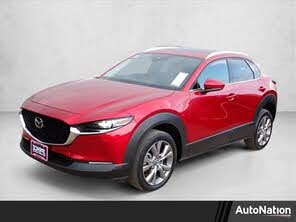
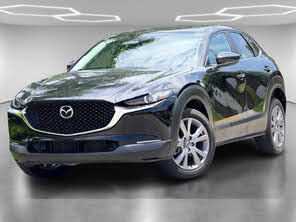
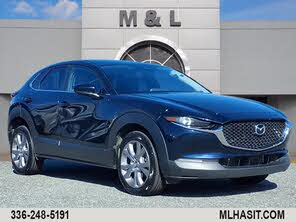
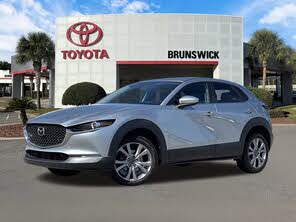
The 2021 Mazda CX-30 2.5 Turbo dazzled with its striking black accents that encompassed shiny black 18-inch wheels, a glossy black grille, and elegant black side mirror housings. With a thick matte black body cladding, the model had an unmistakable and unique aesthetic. Mazda claimed that its innovative body cladding design created an agile look, giving the vehicle a floating appearance over the wheels, reminiscent of the CX-30 cresting a hill in motion. This unconventional style clearly set the CX-30 apart from its sibling, the Mazda3 hatchback, elevating it both perceptually and literally, as the higher ground clearance confirmed.
Opening the door to the CX-30 revealed an elevated seating position that provided ease of entry and a feeling of spaciousness despite the vehicle’s compact size. Inside, the cabin mirrored the refined ambiance of the Mazda3, showcasing quality materials, rich textures, and stitched chocolate brown surfaces that exuded luxury. The enhancements to the interior were subtle but thoughtful, including a chrome accent around the engine start button and a frameless rearview mirror. The standard upholstery choices included black and Griege leatherette, with black or white leather options in Premium and Premium Plus trims.
For the polished experience, our Snowflake White Pearl Mica test vehicle with Premium Plus trim, black leather interiors, and a rear bumper guard was on the higher end of the price spectrum, retailing at $35,745, including the destination fee.
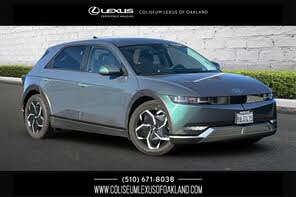
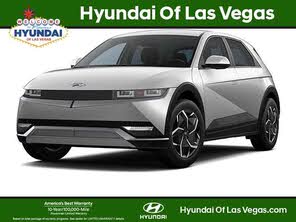
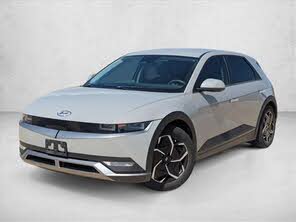
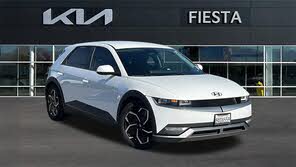
In contrast, the 2022 Hyundai Ioniq 5 had a completely different approach, clearly separating itself from its predecessor, the Ioniq. The Ioniq 5 was a fresh start rather than a reboot, embodying a clean, minimalistic exterior design highlighted by the Parametric Pixel theme that pervaded its lighting elements. This 8-bit nostalgic design featured across all the vehicle's lighting, from the headlights to the taillights, creating a concept-like yet practical production vehicle. The myriad of pixelated lights gave the Ioniq 5 a fascinating digital aura that could drive some design purists bananas, but nevertheless, it stood out in a crowd.
The Ioniq 5 also featured aerodynamic wheels and Max Headroom-inspired silver-contrast plastic inserts, balancing aesthetics and functionality. Inside, the cabin offered a serene environment with color choices such as black, gray, and dark green hues. Hyundai aptly named this design theme "Living Space," and it felt like a comfortable, relaxing area. The cabin was accentuated with a "Relaxation" mode that provided a zero-gravity reclining driver’s seat, enhancing the comfort quotient during stops. Sustainable materials were generously used throughout, with recycled fibers and bio-materials like bean oil and sugar cane, demonstrating Hyundai’s commitment to eco-friendly craftsmanship.


The 2021 Mazda CX-30 Turbo boasted a turbocharged 2.5-liter four-cylinder engine, delivering between 227 and 250 horsepower, depending on the octane rating of the fuel used. Regular fuel provided 227 hp, while premium boosted it to 250 hp. Despite the variation in horsepower, the torque remained robust: 310 lb-ft at 2,000 rpm or 320 lb-ft at 2,500 rpm. This ensured consistent acceleration at lower speeds. However, fuel efficiency was not its strongest suit, averaging 24.1 mpg during our tests, which translated to frequent fuel stops.
Mazda's engineering drew attention to acceleration g-force, tailoring the CX-30 Turbo to provide a comfortable yet responsive driving experience. The vehicle’s performance felt seamless, though hints of torque steer were apparent during hard acceleration. The AWD system intelligently distributed power to enhance traction, complemented by the GVC-Plus technology, making driving dynamic and satisfying.
On dirt paths and off-road conditions, the CX-30 Turbo's extra ground clearance and Off-Road mode supported decent handling, although it was not a hardcore off-roader. The torsion-beam rear suspension design occasionally became noticeable during certain maneuvers but did not significantly detract from overall driving pleasure.
In contrast, the 2022 Hyundai Ioniq 5 offered multiple powertrain configurations. Available in SE, SEL, and Limited trims, the base SE Standard Range had a single 128-kW motor providing 168 hp and 220 miles of range. The extended-range models increased the power with a 168-kW motor delivering 225 hp and 258 lb-ft of torque for a 303-mile range. The dual-motor AWD versions upped the ante with 320 hp and an impressive 446 lb-ft of torque, although the range dropped slightly to 256 miles.
Despite its focus on range and efficiency, the Ioniq 5 wasn't aimed at driving enthusiasts. It handled canyon roads and highways with controlled composure, offering driving modes including a Sport mode for a spirited experience. However, spirited driving quickly sapped battery life. Paddle shifters for adjusting regenerative braking added an interactive element, and the single-speed transmission ensured a smooth, uninterrupted power flow.
Noise, vibration, and harshness were minimized within the Ioniq 5, thanks to acoustic tires, sound-deadening materials, and aerodynamic wheels. The vehicle maintained a quiet cabin ambiance even at higher speeds.
The Mazda CX-30 Turbo provided a comfortable driver’s seat with eight-way power adjustment and heated front seats, enhancing long-distance travel comfort. However, the front passenger seat lacked similar adjustability, and neither seat offered ventilation. The cabin's organic shapes and minimalistic design gave an impression of spaciousness, though rear-seat space was tight for adults on longer journeys. Storage options included a critical flaw: the center console’s dual-purpose as a storage bin or a wireless phone charger, but not both simultaneously.
Cargo capacity for the CX-30 was somewhat limited, with 20.2 cubic feet of space behind the rear seats, expanding to 45.2 cubic feet with the seats folded. This made it less practical compared to some rivals.
On the other hand, the Hyundai Ioniq 5 was built on the new Electric Global Modular Platform (E-GMP), enhancing both interior space and utility. Despite its hatchback-like appearance, the Ioniq 5's 118.1-inch wheelbase exceeded that of Hyundai's larger Palisade SUV. The vehicle offered ample space for passengers, with a total interior volume of 133.7 cubic feet, including 106.5 cubic feet of passenger space. Rear cargo volume was 27.2 cubic feet, expandable with a configurable and highly functional interior.
The Ioniq 5's cabin had a retro-modern design with movable center consoles and large storage areas, focusing on a comfortable "Living Space" that allowed passengers to relax and move easily.
The Mazda CX-30 Turbo featured an 8.8-inch infotainment system controlled through center console knobs and voice commands—nonetheless, it lacked a touchscreen interface, making operation less intuitive. Standard features included Apple CarPlay and Android Auto, three years of Mazda Connected Services, and a six-month trial for the 4G LTE WiFi hotspot. Higher trims offered a superb 12-speaker Bose audio system and a useful head-up display.
Meanwhile, the Hyundai Ioniq 5 was packed with advanced tech, including a high-voltage system for ultra-fast charging and vehicle-to-load capabilities, enabling it to charge other devices. The Ioniq 5 also supported 800-volt infrastructure, a world-first, which reduced charge times significantly. Real-world tests demonstrated a full charge in under an hour at fast-charging stations.
Multimedia features included a redesigned Blue Link app for EV management, digital key functionality, and artificial intelligence-powered voice recognition. Twin 12.3-inch screens, with an anti-glare finish, provided an elegant and clear display for both instrument cluster and infotainment.
The Mazda CX-30 Turbo impressed with its Top Safety Pick+ rating from the IIHS and high marks from the NHTSA, earning five stars in most categories except for a four-star rollover rating. It came equipped with comprehensive i-ActiveSense safety features, including adaptive front lighting, parking sensors, a surround-view camera system, and Traffic Jam Assist.
In parallel, the Hyundai Ioniq 5's safety suite, Hyundai SmartSense, included a vast array of ADAS features such as blind-spot monitoring, lane-departure warning, automatic high beams, and collision avoidance. Additionally, Hyundai’s Highway Drive Assist I offered a semi-autonomous driving experience, adapting to driver habits through machine learning. A head-up display with augmented reality provided additional driving information, though it could be distracting.
CarGurus highlights
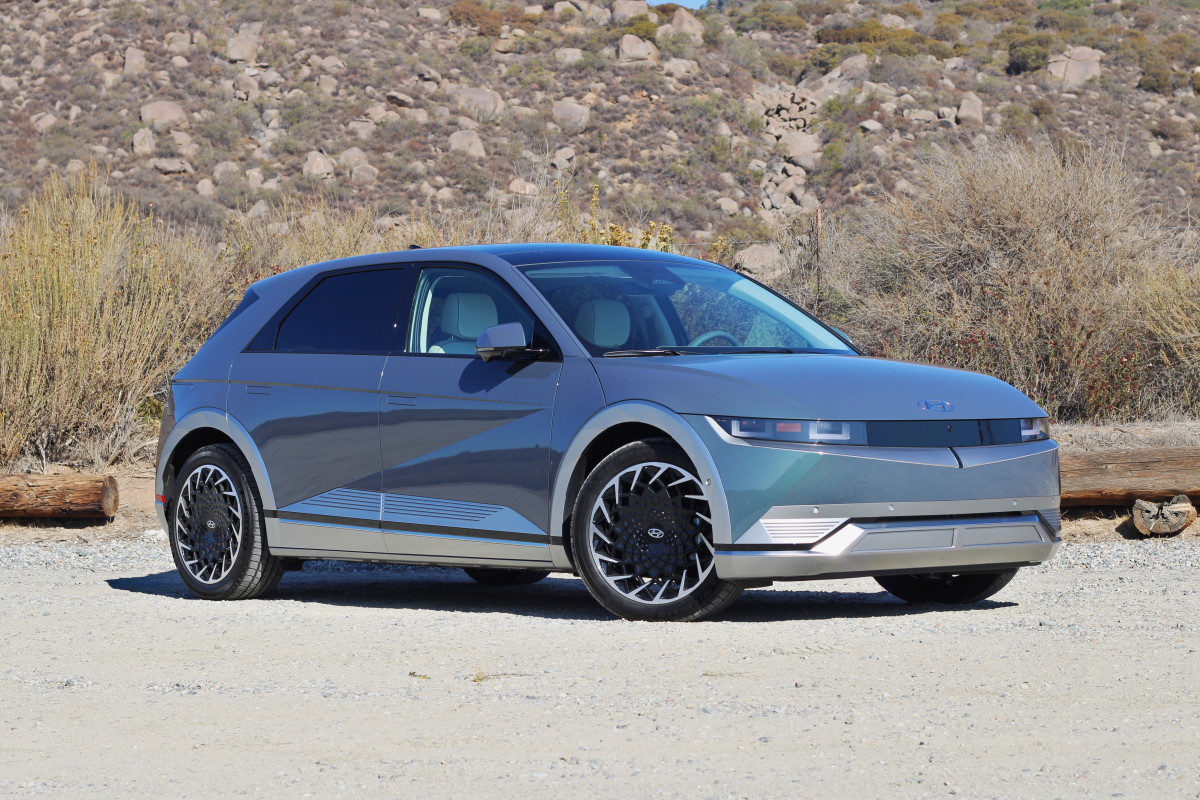
According to CarGurus experts, the overall rating for the 2021 Mazda CX-30 is 7.5 out of 10, while the 2022 Hyundai Ioniq 5 scores 9 out of 10. Based on these ratings, the Hyundai Ioniq 5 is the clear winner. It eclipses the CX-30 in technological innovation, interior space, and sustainable materials without sacrificing performance. Its advanced safety features and ultra-fast charging capabilities reinforce its superior status among electric vehicles. If you're in the market for a modern, eco-friendly SUV with top-tier tech and safety features, the Hyundai Ioniq 5 is the better choice.
Choose the 2021 Mazda CX-30 if:
- You prioritize a sophisticated and luxurious cabin with high-quality materials.
- You seek effortless acceleration and a refined driving experience.
- Safety ratings and comprehensive advanced safety features are critical for your choice.




Choose the 2022 Hyundai Ioniq 5 if:
- You want a spacious, eco-friendly interior crafted from sustainable materials.
- Cutting-edge technology, including ultra-fast charging and advanced multimedia features, is essential.
- You need impressive driving range and versatile cargo space for varied use cases.






CarGurus highlights
According to CarGurus experts, the overall rating for the 2021 Mazda CX-30 is 7.5 out of 10, while the 2022 Hyundai Ioniq 5 scores 9 out of 10. Based on these ratings, the Hyundai Ioniq 5 is the clear winner. It eclipses the CX-30 in technological innovation, interior space, and sustainable materials without sacrificing performance. Its advanced safety features and ultra-fast charging capabilities reinforce its superior status among electric vehicles. If you're in the market for a modern, eco-friendly SUV with top-tier tech and safety features, the Hyundai Ioniq 5 is the better choice.
Choose the 2021 Mazda CX-30 if:
Shop Now- You prioritize a sophisticated and luxurious cabin with high-quality materials.
- You seek effortless acceleration and a refined driving experience.
- Safety ratings and comprehensive advanced safety features are critical for your choice.










Choose the 2022 Hyundai Ioniq 5 if:
Shop Now- You want a spacious, eco-friendly interior crafted from sustainable materials.
- Cutting-edge technology, including ultra-fast charging and advanced multimedia features, is essential.
- You need impressive driving range and versatile cargo space for varied use cases.











By: CarGurus + AI
At CarGurus, our team of experienced automotive writers remain at the heart of our content operation, conducting hands-on car tests and writing insightful guides that are backed by years of industry experience. To complement this, we are harnessing AI to make our content offering more diverse and more helpful to shoppers than ever. To achieve this, our AI systems are based exclusively on CarGurus content, ratings and data, so that what we produce is both unique to CarGurus, and uniquely helpful to car shoppers.