2021 Subaru Forester vs 2021 Kia Sorento
Overview | |
MSRP$29,390 | MSRP$24,795 |
Listings163 | Listings204 |
Ratings & Reviews | |
User Reviews | User Reviews |
Expert reviews7.7 out of 10 | Expert reviews7.5 out of 10 |
Pros
Cons
| Pros
Cons
|
2021 Kia Sorento Reviews SummaryAfter striking gold with the Telluride, Kia has doubled down on the three-row SUV segment with the redesigned Sorento. While it might not bring the same level of near-luxury refinement that has made the Telluride a smash hit, the slightly smaller Sorento arrives as a compelling option for those who value a more maneuverable family crossover. | |
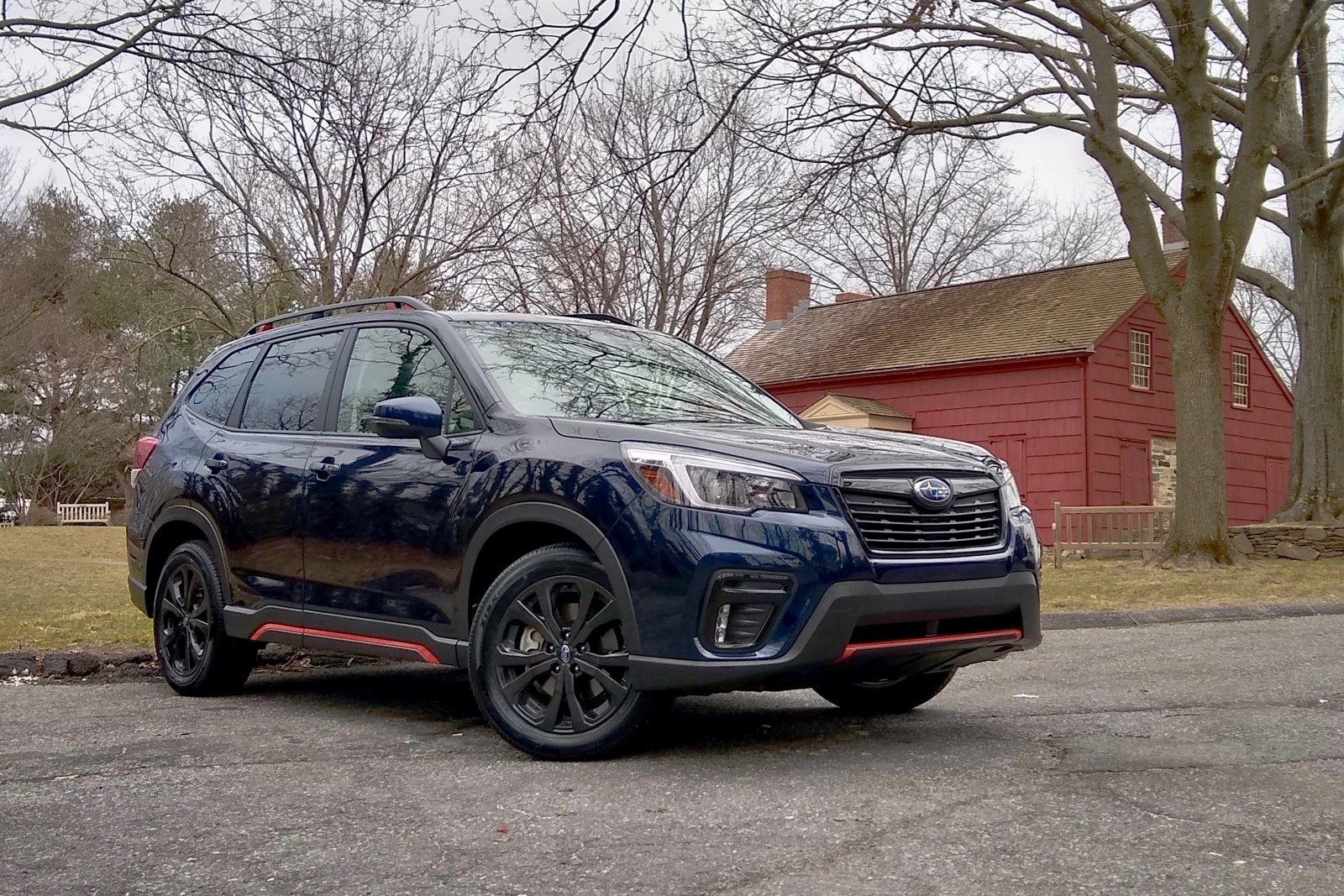
2021 Subaru Forester Reviews SummaryThe Subaru Forester was one of the original compact crossover SUVs. Along with the Ford Escape, Honda CR-V, and Toyota RAV4, it helped introduce a vehicular genre that is now displacing traditional sedans from American driveways. That means the Forester has more competition than ever. What was once a small market segment has swelled with the addition of compact SUVs like the Hyundai Tucson, Kia Sportage, Mazda CX-5, Nissan Rogue, Volkswagen Tiguan, and the modern version of the Jeep Cherokee. To keep pace with the competition, the Forester has packed on technology—and pounds. While the first-generation Forester (affectionately nicknamed “toaster” by fans because of its boxy shape) was genuinely compact, the current version has the footprint of a midsize SUV from two decades ago. This version was introduced for the 2019 model year, so it doesn’t change much for 2021. The only news is the addition of three standard safety features—steering-responsive LED headlights, automatic high beams, and a rear seatbelt reminder—standard fog lights and keyless access with push-button start for the Premium trim level, and additional equipment reshuffling on other trim levels. The 2021 Subaru Forester is available in five trim levels—Base, Premium, Sport, Limited, and Touring—all with standard all-wheel drive (AWD). Our test car was the mid-range Sport model. | |
Popular Features & Specs | |
Engine2.5L 191 hp I4 | Engine2.5L 182 hp H4 |
DrivetrainFWD | DrivetrainAWD |
Seating Capacity7 | Seating Capacity5 |
Horsepower191 hp @ 6100 rpm | Horsepower182 hp @ 5800 rpm |
MPG City24 | MPG City26 |
MPG Highway29 | MPG Highway33 |
Engine | |
Engine Name2.5L 191 hp I4 | Engine Name2.5L 182 hp H4 |
Torque181 lb-ft @ 4000 rpm | Torque178 lb-ft @ 4400 rpm |
Horsepower191 hp @ 6100 rpm | Horsepower182 hp @ 5800 rpm |
DrivetrainFWD | DrivetrainAWD |
Fuel Economy | |
MPG City24 | MPG City26 |
MPG Highway29 | MPG Highway33 |
Interior | |
Seating Capacity7 | Seating Capacity5 |
Safety | |
Front Crash Overall4 | Front Crash Overall5 |
Side Crash Overall5 | Side Crash Overall5 |
Dimensions & Capacity | |
Cargo Space12.6 cu ft | Cargo Space31.1 cu ft |
Curb Weight3714 lbs | Curb Weight3453 lbs |
Height66.7 in | Height67.5 in |
Length189.0 in | Length182.1 in |
Width74.8 in | Width80.9 in |
Wheelbase110.8 in | Wheelbase105.1 in |
Maximum Payload1643 lbs | Maximum Payload1438 lbs |
Number of doors4 | Number of doors4 |
Maximum Towing Capacity2000 lbs | Maximum Towing Capacity1500 lbs |
Overview | ||
MSRP | $29,390 | $24,795 |
Listings | ||
Ratings & Reviews | ||
User reviews | ||
Expert reviews | 7.7 out of 10Read full review | 7.5 out of 10Read full review |
Pros & cons | Pros
Cons
| Pros
Cons
|
Summary | After striking gold with the Telluride, Kia has doubled down on the three-row SUV segment with the redesigned Sorento. While it might not bring the same level of near-luxury refinement that has made the Telluride a smash hit, the slightly smaller Sorento arrives as a compelling option for those who value a more maneuverable family crossover. | The Subaru Forester was one of the original compact crossover SUVs. Along with the Ford Escape, Honda CR-V, and Toyota RAV4, it helped introduce a vehicular genre that is now displacing traditional sedans from American driveways. That means the Forester has more competition than ever. What was once a small market segment has swelled with the addition of compact SUVs like the Hyundai Tucson, Kia Sportage, Mazda CX-5, Nissan Rogue, Volkswagen Tiguan, and the modern version of the Jeep Cherokee. To keep pace with the competition, the Forester has packed on technology—and pounds. While the first-generation Forester (affectionately nicknamed “toaster” by fans because of its boxy shape) was genuinely compact, the current version has the footprint of a midsize SUV from two decades ago. This version was introduced for the 2019 model year, so it doesn’t change much for 2021. The only news is the addition of three standard safety features—steering-responsive LED headlights, automatic high beams, and a rear seatbelt reminder—standard fog lights and keyless access with push-button start for the Premium trim level, and additional equipment reshuffling on other trim levels. The 2021 Subaru Forester is available in five trim levels—Base, Premium, Sport, Limited, and Touring—all with standard all-wheel drive (AWD). Our test car was the mid-range Sport model. |
Video | ||
Popular Features & Specs | ||
Engine | 2.5L 191 hp I4 | 2.5L 182 hp H4 |
Drivetrain | FWD | AWD |
Seating Capacity | 7 | 5 |
Horsepower | 191 hp @ 6100 rpm | 182 hp @ 5800 rpm |
MPG City | 24 | 26 |
MPG Highway | 29 | 33 |
Engine | ||
Engine Name | 2.5L 191 hp I4 | 2.5L 182 hp H4 |
Torque | 181 lb-ft @ 4000 rpm | 178 lb-ft @ 4400 rpm |
Horsepower | 191 hp @ 6100 rpm | 182 hp @ 5800 rpm |
Drivetrain | FWD | AWD |
Fuel Economy | ||
MPG City | 24 | 26 |
MPG Highway | 29 | 33 |
Interior | ||
Seating Capacity | 7 | 5 |
Safety | ||
Front Crash Overall | 4 | 5 |
Side Crash Overall | 5 | 5 |
Dimensions & Capacity | ||
Cargo Space | 12.6 cu ft | 31.1 cu ft |
Curb Weight | 3714 lbs | 3453 lbs |
Height | 66.7 in | 67.5 in |
Length | 189.0 in | 182.1 in |
Width | 74.8 in | 80.9 in |
Wheelbase | 110.8 in | 105.1 in |
Maximum Payload | 1643 lbs | 1438 lbs |
Number of doors | 4 | 4 |
Maximum Towing Capacity | 2000 lbs | 1500 lbs |
The 2021 Kia Sorento marked a significant departure from its predecessor's jellybean-inspired design, embracing a more athletic, muscular silhouette. This new style gave the Sorento a handsome crossover SUV appearance, enhanced by features like roof rails, a shark fin antenna, and a rear roof spoiler in the SX Prestige trim with the X-Line package. At the front, the Sorento showcased an expansive tiger-nose grille that curved attractively towards the front corners of the vehicle, complemented by headlights accented with running lights.
The side profile featured an interesting silver accent between the front fender and the door. While the large D-pillar at the rear might have looked like a blind spot, it was an acceptable trade-off for the sake of style. Vertical rectangular taillights, two on each side, added a cohesive and cautiously modern touch to the rear, ensuring the Sorento aged gracefully.
Inside, the Sorento delivered numerous high-value and desirable features. Heated outside mirrors were standard across all trims, alongside second-row air vents, Apple CarPlay, Android Auto, Bluetooth connectivity, and keyless entry. The front seats offered six-way adjustment in the base LX trim, but all other trims provided 10-way driver’s seat adjustments with power lumbar support. The front passengers, however, had to settle for less unless they opted for the top-tier SX Prestige trim with the X-Line package. Heated seats were available on all trims except the LX, and ventilation was reserved for the SX Prestige with the X-Line package.
The Sorento also benefited from excellent exterior visibility, thanks to its large windows and windshield, and the panoramic sunroof on our test vehicle allowed plenty of light inside—sometimes too much on hot days.
In contrast, the 2021 Subaru Forester, though redesigned for the 2019 model year, retained a somewhat older styling due to its carryover design elements. The most notable change in the fifth-generation Forester was the taillights' distinctive cross shape. Subaru chose to preserve the boxy, upright shape that many SUV shoppers favored, giving the Forester a clean and unpretentious look, even in the Base trim with 17-inch steel wheels.
The Forester Sport added some flair with orange striping around the lower edges of the body and roof rails, a rear spoiler, and black 18-inch alloy wheels, significantly enhancing its appearance, especially in the Dark Blue Pearl paint of our test car. The Forester rode on the Subaru Global Platform, shared with other models like the Impreza, Crosstrek, Legacy, Outback, and the larger Ascent crossover. This platform contributed to the Forester’s rugged SUV marketing, even though it shared its underpinnings with sedans, hatchbacks, and wagons.
Inside, the Forester featured a no-nonsense mix of materials designed to withstand years of use. The Sport trim level added orange interior trim and cross-stitching, brightening up the otherwise utilitarian interior. Cloth upholstery was standard on Base, Premium, and Sport trims, while Limited and Touring trims offered leather upholstery.




The 2021 Kia Sorento offered a range of small powertrains, with the naturally aspirated 2.5-liter four-cylinder engine being the most common on LX and S trims, generating 191 horsepower and 181 lb-ft of torque. However, our test car came with the turbocharged 2.5-liter four-cylinder, which delivered a robust 281 horsepower and 311 lb-ft of torque. This powertrain, combined with an eight-speed dual-clutch transmission (DCT) and AWD, provided excellent merging, cruising, and passing power.
Additionally, the Sorento included a hybrid version powered by a turbocharged 1.6-liter four-cylinder engine and electric motor, available only in FWD. A plug-in hybrid Sorento was also anticipated.
The Sorento’s AWD system featured torque vectoring and a center-locking differential for better traction, especially with the X-Line package's added 1.3 inches of ride height, 20-inch alloy wheels, and roof rack. The suspension setup, comprising McPherson struts in the front and a multi-link system in the rear, provided a smooth and comfortable ride despite the 20-inch wheels.
The Sorento offered various drive modes, making a real difference with the 2.5-liter turbo engine. While Eco mode enhanced fuel economy at the cost of throttle response, Normal mode provided a balanced driving experience. Sport mode tightened things up, significantly improving throttle response.
The 2021 Subaru Forester, by contrast, came with a single powertrain option: a 2.5-liter four-cylinder engine producing 182 horsepower and 176 lb-ft of torque, paired with a CVT. The boxer engine configuration contributed to a lower center of gravity, enhancing stability. Despite this, the engine felt underpowered during highway merging and overtaking, and wind noise was noticeable at highway speeds.
The Forester's suspension was tuned for comfort rather than handling, resulting in a lot of body roll in corners and noticeable bouncing on uneven pavement. While the ride absorbed bumps well, the frequent body movement detracted from overall comfort.
AWD was standard on all Forester models, featuring a sophisticated X-Mode system with different modes for various driving surfaces. Sport models included a dual X-Mode, adding "Snow/Dirt" and "Snow/Mud" settings. Higher trims also had standard hill-descent control, and all models offered 8.7 inches of ground clearance, making the Forester capable on dirt and mud, though serious off-roaders might prefer alternatives like the Jeep Cherokee Trailhawk or the Ford Bronco Sport.
Three-row SUVs like the 2021 Kia Sorento were known for their practicality, but the top trims with second-row captain's chairs were best thought of as four-seaters. While the LX or S trims had a second-row bench seat, accommodating five adults, higher trims faced challenges with the tight third-row space. The available cargo space behind the third row was only 12.6 cubic feet, making it more practical to keep those seats folded down.
In our test vehicle, the second-row captain's chairs were very comfortable, offering ample legroom with 41.4 inches in the front and 41.7 inches in the rear. The Sorento also provided good cargo space for smaller items, with a phone spot, cupholders, and a decent-sized center console bucket. Total cargo volume was 75.5 cubic feet, which was relatively small for a three-row midsize crossover, aligning more with compact crossovers like the Honda CR-V or Toyota RAV4.
The 2021 Subaru Forester, a five-seater, provided above-average headroom and legroom in both rows, thanks to its tall, flat roofline. This design also contributed to excellent outward visibility and a spacious feel. The Forester offered 35.4 cubic feet of cargo space with the rear seats up and 76.1 cubic feet with the 60/40 split-folding rear bench down. This was more cargo space than competitors like the Honda CR-V or the redesigned 2022 Hyundai Tucson with rear seats folded, though slightly less with the seats up. The Forester lacked a sliding second-row bench but offered an optional power liftgate on the Sport trim and standard on Limited and Touring trims.
While the Forester didn't boast the 19 cupholders of its three-row Ascent sibling, it provided decently sized cupholders without intruding on space. The center console was reasonably sized, but the phone-storage cubby was insufficient for an average-sized phone, and Subaru did not offer wireless charging. Power-adjustable driver’s seats were not standard and required upgrading to the Premium trim.
The 2021 Kia Sorento’s tech offerings included an 8-inch touchscreen display standard on LX, S, and EX trims, equipped with Apple CarPlay, Android Auto, hard buttons, and knobs for ease of use. The larger 10.25-inch screen on SX and SX Prestige trims, while visually impressive, had some drawbacks. It couldn't project smartphone interfaces wirelessly, and when connected, the Android Auto display was limited to two-thirds of the screen.
The Sorento was equipped with plentiful USB ports, though it lacked USB-C options. The optional Bose stereo in our test car was underwhelming, lacking the immersive quality expected from such systems. The navigation system also needed improvement, particularly for voice searches and POI functions. Most users would likely prefer using smartphone-based navigation.
In the 2021 Subaru Forester, the Starlink infotainment system featured a 6.5-inch touchscreen with Apple CarPlay, Android Auto, Bluetooth, SiriusXM satellite radio, and front-row USB ports. Sport models upgraded to an 8-inch touchscreen with a Harman Kardon audio system, while Limited and Touring trims offered navigation and dual rear USB ports.
The Forester’s infotainment was user-friendly, thanks to well-designed graphics and physical shortcut buttons. However, the screen was slow to boot up. The setup included a secondary screen in the dashboard center and another in the instrument cluster, providing redundant information and unnecessary complexity.
The 2021 Kia Sorento came equipped with a robust array of standard safety features, including automatic emergency braking, pedestrian detection, driver-attention warning, lane-keeping assist, lane-departure warning, lane-following assist, and auto high beams. Our test car featured a surround-view camera and front- and rear-view cameras at low speeds, aiding ease of parking.
The adaptive cruise control system was smooth, avoiding harsh braking and acceleration. However, the lane-keeping assist was sometimes overly aggressive. The Sorento received a four-out-of-five-star overall rating from NHTSA, with five stars in side-impact crash tests and top ratings from IIHS for the expensive SX trims with LED headlights.
The 2021 Subaru Forester excelled in safety, earning the highest "Top Safety Pick+" award from IIHS and a five-star rating from NHTSA. Subaru's EyeSight suite, a camera-based system, offered comprehensive safety features, including adaptive cruise control, automatic emergency braking, lane-departure warning, and lead-vehicle start alert. The Forester also featured a unique driver-monitoring system called DriverFocus to check for distraction, the only mainstream model to offer such a system. Optional safety features included blind-spot monitoring, rear-cross traffic alert, lane-keep assist, and reverse automatic braking.
CarGurus highlights

According to CarGurus experts, the overall rating for the 2021 Kia Sorento is 7.7 out of 10, while the 2021 Subaru Forester scores 7.5 out of 10. Both vehicles offer strong attributes, but the Kia Sorento edges out with its more powerful powertrain options, flexible seating configurations, and a slightly higher rating. Therefore, based on these ratings, the 2021 Kia Sorento is recommended as the better overall choice.
Choose the 2021 Subaru Forester if:
- You prioritize reliability and ruggedness in an SUV with excellent off-road capabilities.
- You need generous cargo and passenger space, with superior headroom and legroom.
- You value top-notch safety features, including a unique driver-monitoring system.


Choose the 2021 Kia Sorento if:
- You desire a more modern, athletic exterior design with muscular styling.
- You need flexible seating options, especially for comfortable second-row captain’s chairs.
- You want advanced powertrain options, including a turbocharged engine and hybrid variants.


CarGurus highlights
According to CarGurus experts, the overall rating for the 2021 Kia Sorento is 7.7 out of 10, while the 2021 Subaru Forester scores 7.5 out of 10. Both vehicles offer strong attributes, but the Kia Sorento edges out with its more powerful powertrain options, flexible seating configurations, and a slightly higher rating. Therefore, based on these ratings, the 2021 Kia Sorento is recommended as the better overall choice.
Choose the 2021 Subaru Forester if:
Shop Now- You prioritize reliability and ruggedness in an SUV with excellent off-road capabilities.
- You need generous cargo and passenger space, with superior headroom and legroom.
- You value top-notch safety features, including a unique driver-monitoring system.
Choose the 2021 Kia Sorento if:
Shop Now- You desire a more modern, athletic exterior design with muscular styling.
- You need flexible seating options, especially for comfortable second-row captain’s chairs.
- You want advanced powertrain options, including a turbocharged engine and hybrid variants.

By: CarGurus + AI
At CarGurus, our team of experienced automotive writers remain at the heart of our content operation, conducting hands-on car tests and writing insightful guides that are backed by years of industry experience. To complement this, we are harnessing AI to make our content offering more diverse and more helpful to shoppers than ever. To achieve this, our AI systems are based exclusively on CarGurus content, ratings and data, so that what we produce is both unique to CarGurus, and uniquely helpful to car shoppers.

