2021 Jeep Cherokee vs 2021 Subaru Forester

Overview | |
MSRP$27,890 | MSRP$24,795 |
Listings1180 | Listings1068 |
Ratings & Reviews | |
User Reviews | User Reviews |
Expert reviews7.0 out of 10 | Expert reviews7.5 out of 10 |
Pros
Cons
| Pros
Cons
|
2021 Jeep Cherokee Reviews SummaryThe KL-generation Cherokee launched as a 2014 model and almost immediately began swirling in controversy. Jeep hadn’t offered a Cherokee in the United States since the 2001 model year, when the XJ Cherokee disappeared, replaced by two generations of the Jeep Liberty. There was great excitement for this all-new Jeep. Lots of fans were hoping for a redo of the 1984 to 2001 Jeep Cherokee that really helped to define the midsize SUV class with a unibody and legendary toughness. “The 2014 Cherokee feels planted on the road, more carlike than trucklike…” read an early review in Car and Driver. A separate review from the same publication read: “If you have eyes, you’ve noticed that this Cherokee, code-named KL, makes no design references, other than with the grille, to the iconic, rectilinear XJ Cherokee.” But the automotive industry isn’t necessarily in the business of fueling nostalgia. It’s interested in what it can sell in great numbers in the future, not what people liked 30 years ago. And what we’ve realized over the years is that the Cherokee is really good at what it does, and it’s capable of doing a lot more than you’d expect. Jeep sells these at a rate of 240,000 annually, in a good year. The best the Jeep Liberty it replaced ever managed was 166,883 units before dropping off the face of the Earth entirely. Clearly, Jeep knew something we didn’t when it released the Cherokee. | |
2021 Subaru Forester Reviews SummaryThe Subaru Forester was one of the original compact crossover SUVs. Along with the Ford Escape, Honda CR-V, and Toyota RAV4, it helped introduce a vehicular genre that is now displacing traditional sedans from American driveways. That means the Forester has more competition than ever. What was once a small market segment has swelled with the addition of compact SUVs like the Hyundai Tucson, Kia Sportage, Mazda CX-5, Nissan Rogue, Volkswagen Tiguan, and the modern version of the Jeep Cherokee. To keep pace with the competition, the Forester has packed on technology—and pounds. While the first-generation Forester (affectionately nicknamed “toaster” by fans because of its boxy shape) was genuinely compact, the current version has the footprint of a midsize SUV from two decades ago. This version was introduced for the 2019 model year, so it doesn’t change much for 2021. The only news is the addition of three standard safety features—steering-responsive LED headlights, automatic high beams, and a rear seatbelt reminder—standard fog lights and keyless access with push-button start for the Premium trim level, and additional equipment reshuffling on other trim levels. The 2021 Subaru Forester is available in five trim levels—Base, Premium, Sport, Limited, and Touring—all with standard all-wheel drive (AWD). Our test car was the mid-range Sport model. | |
No video found | |
Popular Features & Specs | |
Engine2.4L 180 hp I4 | Engine2.5L 182 hp H4 |
DrivetrainFWD | DrivetrainAWD |
Seating Capacity5 | Seating Capacity5 |
Horsepower180 hp @ 6250 rpm | Horsepower182 hp @ 5800 rpm |
MPG City22 | MPG City26 |
MPG Highway31 | MPG Highway33 |
Engine | |
Engine Name2.4L 180 hp I4 | Engine Name2.5L 182 hp H4 |
Torque171 lb-ft @ 4800 rpm | Torque178 lb-ft @ 4400 rpm |
Horsepower180 hp @ 6250 rpm | Horsepower182 hp @ 5800 rpm |
DrivetrainFWD | DrivetrainAWD |
Fuel Economy | |
MPG City22 | MPG City26 |
MPG Highway31 | MPG Highway33 |
Interior | |
Seating Capacity5 | Seating Capacity5 |
Safety | |
Front Crash Overall4 | Front Crash Overall5 |
Side Crash Overall5 | Side Crash Overall5 |
Dimensions & Capacity | |
Cargo Space25.8 cu ft | Cargo Space31.1 cu ft |
Curb Weight3590 lbs | Curb Weight3453 lbs |
Height65.7 in | Height67.5 in |
Length183.1 in | Length182.1 in |
Width73.2 in | Width80.9 in |
Wheelbase106.5 in | Wheelbase105.1 in |
Maximum Payload1000 lbs | Maximum Payload1438 lbs |
Number of doors4 | Number of doors4 |
Maximum Towing Capacity2000 lbs | Maximum Towing Capacity1500 lbs |
Overview | ||
MSRP | $27,890 | $24,795 |
Listings | ||
Ratings & Reviews | ||
User reviews | ||
Expert reviews | 7.0 out of 10Read full review | 7.5 out of 10Read full review |
Pros & cons | Pros
Cons
| Pros
Cons
|
Summary | The KL-generation Cherokee launched as a 2014 model and almost immediately began swirling in controversy. Jeep hadn’t offered a Cherokee in the United States since the 2001 model year, when the XJ Cherokee disappeared, replaced by two generations of the Jeep Liberty. There was great excitement for this all-new Jeep. Lots of fans were hoping for a redo of the 1984 to 2001 Jeep Cherokee that really helped to define the midsize SUV class with a unibody and legendary toughness. “The 2014 Cherokee feels planted on the road, more carlike than trucklike…” read an early review in Car and Driver. A separate review from the same publication read: “If you have eyes, you’ve noticed that this Cherokee, code-named KL, makes no design references, other than with the grille, to the iconic, rectilinear XJ Cherokee.” But the automotive industry isn’t necessarily in the business of fueling nostalgia. It’s interested in what it can sell in great numbers in the future, not what people liked 30 years ago. And what we’ve realized over the years is that the Cherokee is really good at what it does, and it’s capable of doing a lot more than you’d expect. Jeep sells these at a rate of 240,000 annually, in a good year. The best the Jeep Liberty it replaced ever managed was 166,883 units before dropping off the face of the Earth entirely. Clearly, Jeep knew something we didn’t when it released the Cherokee. | The Subaru Forester was one of the original compact crossover SUVs. Along with the Ford Escape, Honda CR-V, and Toyota RAV4, it helped introduce a vehicular genre that is now displacing traditional sedans from American driveways. That means the Forester has more competition than ever. What was once a small market segment has swelled with the addition of compact SUVs like the Hyundai Tucson, Kia Sportage, Mazda CX-5, Nissan Rogue, Volkswagen Tiguan, and the modern version of the Jeep Cherokee. To keep pace with the competition, the Forester has packed on technology—and pounds. While the first-generation Forester (affectionately nicknamed “toaster” by fans because of its boxy shape) was genuinely compact, the current version has the footprint of a midsize SUV from two decades ago. This version was introduced for the 2019 model year, so it doesn’t change much for 2021. The only news is the addition of three standard safety features—steering-responsive LED headlights, automatic high beams, and a rear seatbelt reminder—standard fog lights and keyless access with push-button start for the Premium trim level, and additional equipment reshuffling on other trim levels. The 2021 Subaru Forester is available in five trim levels—Base, Premium, Sport, Limited, and Touring—all with standard all-wheel drive (AWD). Our test car was the mid-range Sport model. |
Video | No video found | |
Popular Features & Specs | ||
Engine | 2.4L 180 hp I4 | 2.5L 182 hp H4 |
Drivetrain | FWD | AWD |
Seating Capacity | 5 | 5 |
Horsepower | 180 hp @ 6250 rpm | 182 hp @ 5800 rpm |
MPG City | 22 | 26 |
MPG Highway | 31 | 33 |
Engine | ||
Engine Name | 2.4L 180 hp I4 | 2.5L 182 hp H4 |
Torque | 171 lb-ft @ 4800 rpm | 178 lb-ft @ 4400 rpm |
Horsepower | 180 hp @ 6250 rpm | 182 hp @ 5800 rpm |
Drivetrain | FWD | AWD |
Fuel Economy | ||
MPG City | 22 | 26 |
MPG Highway | 31 | 33 |
Interior | ||
Seating Capacity | 5 | 5 |
Safety | ||
Front Crash Overall | 4 | 5 |
Side Crash Overall | 5 | 5 |
Dimensions & Capacity | ||
Cargo Space | 25.8 cu ft | 31.1 cu ft |
Curb Weight | 3590 lbs | 3453 lbs |
Height | 65.7 in | 67.5 in |
Length | 183.1 in | 182.1 in |
Width | 73.2 in | 80.9 in |
Wheelbase | 106.5 in | 105.1 in |
Maximum Payload | 1000 lbs | 1438 lbs |
Number of doors | 4 | 4 |
Maximum Towing Capacity | 2000 lbs | 1500 lbs |
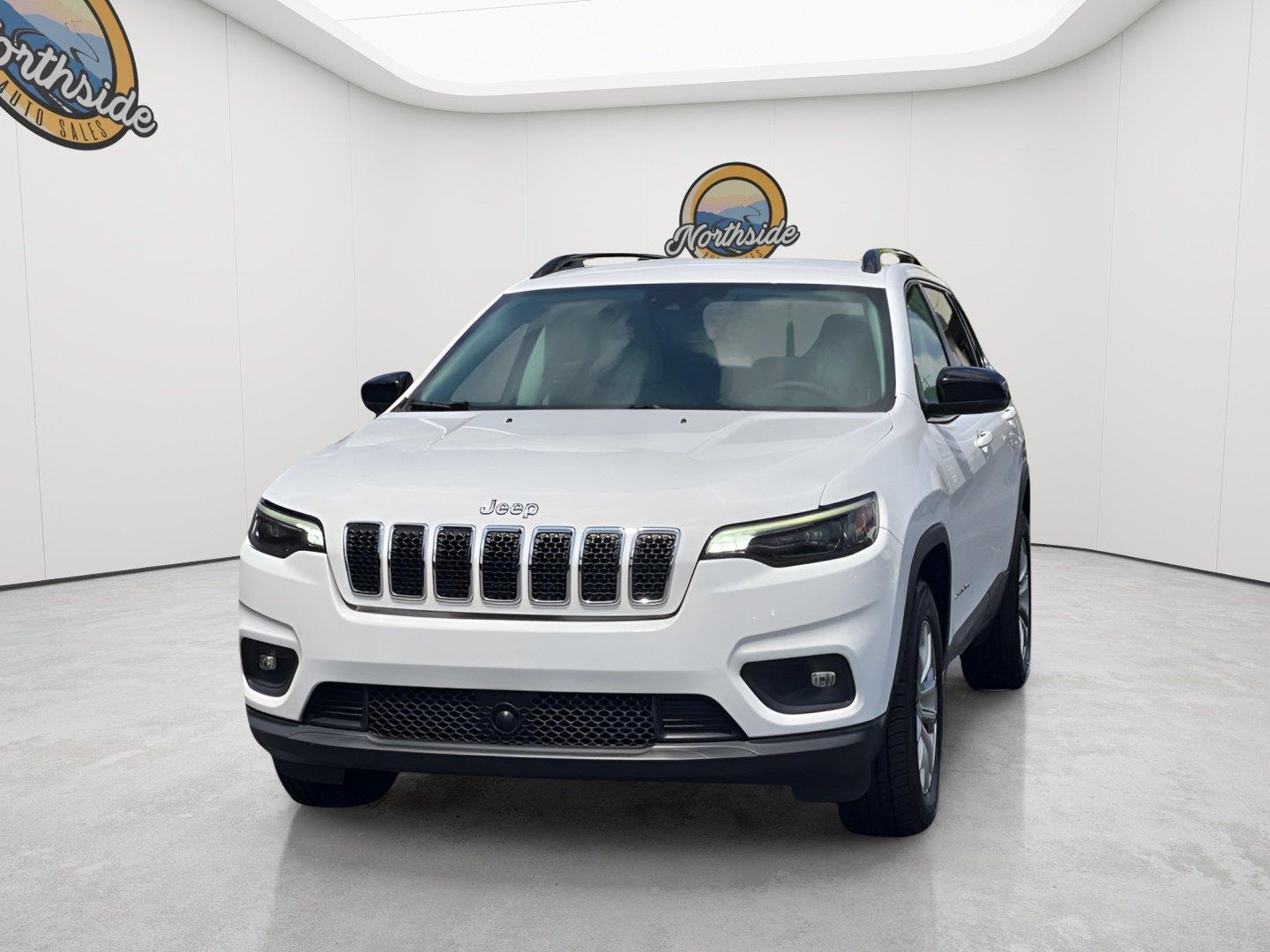
The 2021 Jeep Cherokee's styling had evolved from its initial introduction, moving from polarizing to more accepted. The short grille opening and swept-back headlights, which once seemed disproportionate, had blended into a cohesive look after seven years in the market. The Cherokee featured a variety in its exterior based on different trim levels. An entry-level Latitude appeared basic with its 17-inch wheels and front-wheel drive (FWD), whereas an 80th Anniversary Edition offered a refined appearance with 19-inch Granite Crystal wheels and painted lower body cladding.
Jeep's mastery in roof options was evident again in the Cherokee, with an optional panoramic sunroof covering the entire top surface. This design element allowed the Cherokee to distinguish itself amidst a sea of SUVs, resembling the larger Jeep Grand Cherokee, especially from the front.
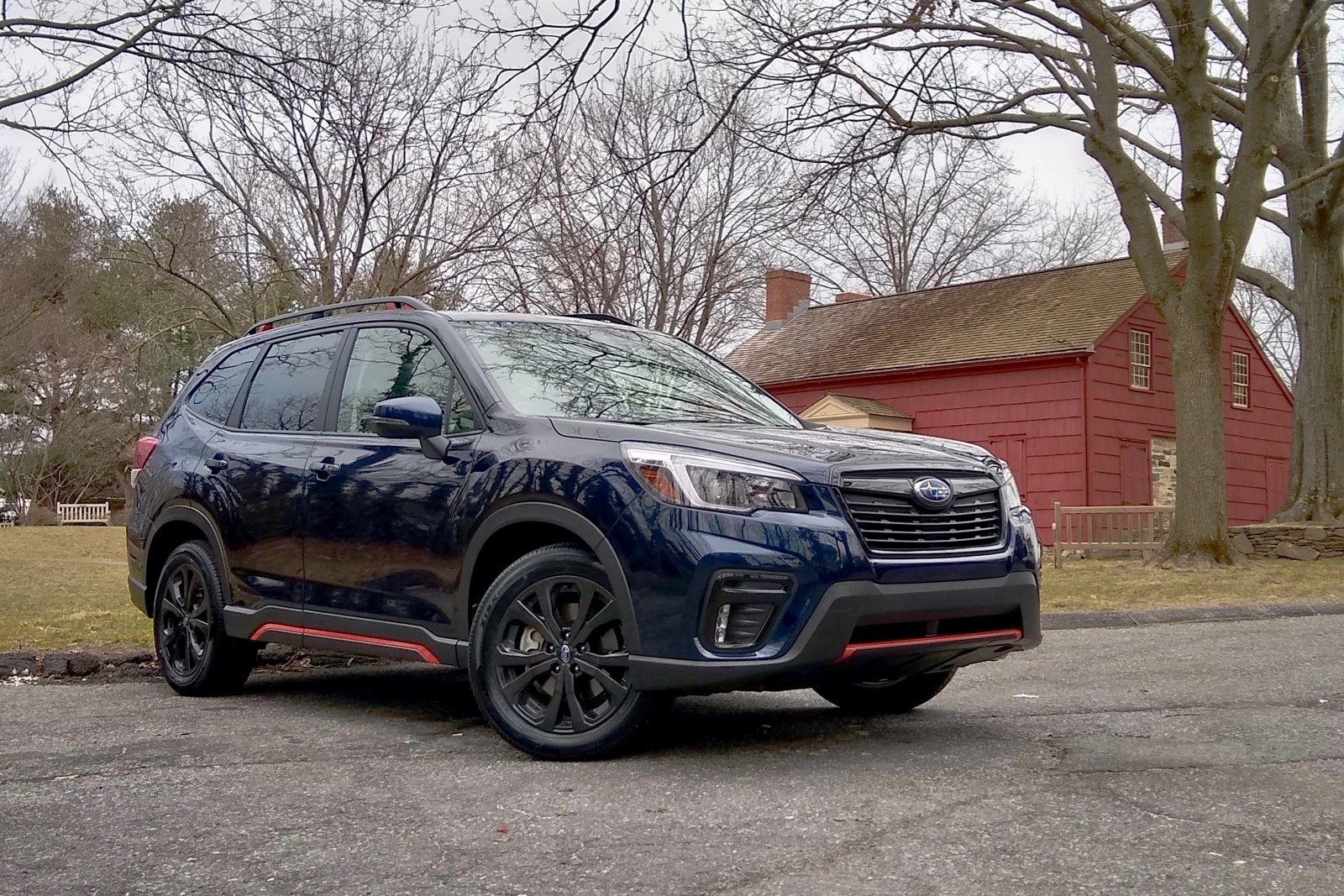
The Subaru Forester's redesign in 2019 carried forward a familiar look from its predecessor, making the 2021 model appear older despite being part of the fifth generation. The noteworthy change was the taillights, which showcased a distinctive cross shape. The Forester maintained a boxy, upright shape that appealed to many SUV buyers.
While the Base trim looked plain with 17-inch steel wheels, higher trims like the Sport introduced orange striping on the body and roof rails, a rear spoiler, and black 18-inch alloy wheels, significantly enhancing the aesthetics. The Forester's functional boxy design contributed not only to interior spaciousness but also to a rugged appearance, aligning with its sporty outdoor image.




The Jeep Cherokee offered three engine choices. The basic 2.4-liter four-cylinder engine provided 180 horsepower, standard in Latitude and Latitude Plus trims. The 3.2-liter V-6 engine, available in higher trims, delivered 271 horsepower, while the top-tier option was a 2.0-liter turbocharged four-cylinder producing 270 horsepower with 295 lb-ft of torque. Acceleration was adequate in all configurations, with the V-6 accelerating 0-60 mph in 7.2 seconds and the turbo-four in 7.4 seconds.
All engines were paired with a nine-speed automatic transmission that was praised for its fuel-saving capabilities and smooth performance. For off-road enthusiasts, the Cherokee Trailhawk stood out with features like Jeep Active Drive Lock and Selec-Speed Crawl Control, making it capable of handling challenging terrains. However, the availability of FWD in the Cherokee was a compromise aimed at reducing costs for fleet purposes.
The Subaru Forester had a singular powertrain: a 2.5-liter four-cylinder boxer engine producing 182 horsepower and 176 lb-ft of torque, mated to a continuously variable automatic transmission (CVT) with a manual mode and paddle shifters in some trims. The Forester’s driving dynamics were defined by its boxer engine which contributed to a lower center of gravity.
While the engine provided sufficient power for everyday driving, it lacked the acceleration punch during highway merges and overtaking. Subaru’s technical setup, including standard all-wheel drive (AWD) and X-Mode for varying surfaces, underscored its rugged usability. The Forester's off-road capabilities were bolstered by 8.7 inches of ground clearance and standard hill-descent control in Premium and higher trims.
As a midsize SUV, the Cherokee fit between the Renegade and the Grand Cherokee. It offered 26 cubic feet of cargo space with the rear seats up and 55 cubic feet with them folded, which was less compared to most compact SUVs. Passenger volume was about 102 cubic feet, competitive within its segment. The Cherokee's interior varied greatly by trim level, from basic black plastic in the Latitude to upscale touches like Nappa leather in the Latitude Lux. Its simple and businesslike interior layout focused on functionality over luxury, appealing to those who prioritize utility.
The Forester excelled with its ample headroom and legroom in both rows, thanks to its upright structure. Its 35.4 cubic feet of cargo space with the rear seats up, expanding to 76.1 cubic feet with the seats down, surpassed the Cherokee. Though it lacked a sliding second-row bench found in some competitors, the Forester offered a power liftgate in higher trims. The straightforward yet robust interior design prioritized practicality and durability, making it suitable for adventurous lifestyles.
The Cherokee featured Jeep's acclaimed Uconnect infotainment system, offered in 7-inch and 8.4-inch touchscreen sizes. The system was praised for its intuitiveness and quick response. The availability of Apple CarPlay, Android Auto, a 4G WiFi hotspot, and Amazon Alexa integration added to the Cherokee's appeal. Remote start was another practical feature available across different climates.
The Forester's Subaru Starlink infotainment system came with a standard 6.5-inch touchscreen but upgraded to an 8-inch touchscreen in higher trims. The inclusion of physical controls complemented the system's usability despite its slow startup. Additional displays in the dash and instrument cluster provided secondary vehicle information, although this setup could seem redundant.
The Cherokee fell short of top safety accolades despite earning good scores in most crashworthiness categories. The lower ratings in headlight performance and a four-star NHTSA rating highlighted its safety limitations. The Cherokee did come with a robust suite of standard safety features, including lane departure warning, forward collision warning, rear cross-traffic alert, and blind spot monitoring. However, adaptive cruise control was exclusive to higher trim levels.
Safety was a forte for the Forester, earning the highest "Top Safety Pick+" from IIHS and five stars from NHTSA. Subaru's EyeSight suite of driver-assist features came standard, including adaptive cruise control, automatic emergency braking, and lane-departure warning. The unique DriverFocus system monitored driver attention, enhancing overall safety. Optional features like blind-spot monitoring and reverse automatic braking added further value.
CarGurus highlights
According to CarGurus experts, the overall rating for the 2021 Jeep Cherokee is 7.0 out of 10, while the 2021 Subaru Forester scores 7.5 out of 10. Based on these ratings, the Subaru Forester emerges as the stronger choice, particularly for those who value interior space, advanced safety, and all-weather usability. The Jeep Cherokee offers strong off-road capabilities and a proven infotainment system but falls behind in overall cargo capacity and safety ratings compared to the Forester.
Choose the 2021 Jeep Cherokee if:
- You prioritize off-road capabilities and rugged features, especially with the Trailhawk model.
- You appreciate a simple, functional interior that focuses on practicality over luxury.
- You value a proven and user-friendly infotainment system with added connectivity features.




Choose the 2021 Subaru Forester if:
- You need more cargo space and overall interior room for passengers and gear.
- You prioritize top-tier safety ratings and advanced standard driver-assist features for peace of mind.
- You want a vehicle with standard AWD for better performance in varying weather conditions and terrains.


CarGurus highlights
According to CarGurus experts, the overall rating for the 2021 Jeep Cherokee is 7.0 out of 10, while the 2021 Subaru Forester scores 7.5 out of 10. Based on these ratings, the Subaru Forester emerges as the stronger choice, particularly for those who value interior space, advanced safety, and all-weather usability. The Jeep Cherokee offers strong off-road capabilities and a proven infotainment system but falls behind in overall cargo capacity and safety ratings compared to the Forester.
Choose the 2021 Jeep Cherokee if:
Shop Now- You prioritize off-road capabilities and rugged features, especially with the Trailhawk model.
- You appreciate a simple, functional interior that focuses on practicality over luxury.
- You value a proven and user-friendly infotainment system with added connectivity features.
Choose the 2021 Subaru Forester if:
Shop Now- You need more cargo space and overall interior room for passengers and gear.
- You prioritize top-tier safety ratings and advanced standard driver-assist features for peace of mind.
- You want a vehicle with standard AWD for better performance in varying weather conditions and terrains.

By: CarGurus + AI
At CarGurus, our team of experienced automotive writers remain at the heart of our content operation, conducting hands-on car tests and writing insightful guides that are backed by years of industry experience. To complement this, we are harnessing AI to make our content offering more diverse and more helpful to shoppers than ever. To achieve this, our AI systems are based exclusively on CarGurus content, ratings and data, so that what we produce is both unique to CarGurus, and uniquely helpful to car shoppers.

