2020 Audi Q7 vs 2020 Toyota Highlander

Overview | |
MSRP$34,600 | MSRP$54,800 |
Listings258 | Listings156 |
Ratings & Reviews | |
User Reviews | User Reviews |
Expert reviews7.7 out of 10 | Expert reviews7.7 out of 10 |
Pros
Cons
| Pros
Cons
|
2020 Toyota Highlander Reviews SummaryMidsize three-row SUVs are all spacious and powerful, but only the Toyota Highlander reaches the premium threshold for passenger comfort. Redesigned for 2020, the Highlander's revised styling and technology are secondary to its silent operation, soft ride, and cosseting interior. The upper trims feel and drive just like a Lexus, without the upcharge. There is nothing exciting about a Highlander, and yet, there is no other SUV in the $35,000 to $50,000 range that feels so effortless and tranquil. | |
2020 Audi Q7 Reviews SummaryFrom its styling and interior to its powertrain and technology, the 2020 Audi Q7 gets a thorough update that brings it in line with other high-end cars and SUVs wearing four chrome rings on their grilles. Simultaneously, the changes for the 2020 model year keep this Audi competitive against the BMW X5 and Mercedes-Benz GLE-Class, its primary rivals in the midsize luxury SUV class. We packed a Q7 Prestige full of family and luggage and set off for Lake Tahoe to assess this Audi’s improvements on the open road. | |
No video found | |
Popular Features & Specs | |
Engine3.5L 295 hp V6 | Engine2.0L 248 hp I4 |
Drive TrainFWD | Drive TrainAWD |
Seating Capacity8 | Seating Capacity7 |
Horsepower295 hp @ 6600 rpm | Horsepower248 hp @ 5000 rpm |
MPG City20 | MPG City19 |
MPG Highway28 | MPG Highway23 |
Engine | |
Engine Name3.5L 295 hp V6 | Engine Name2.0L 248 hp I4 |
Torque263 lb-ft @ 4700 rpm | Torque273 lb-ft @ 1600 rpm |
Horsepower295 hp @ 6600 rpm | Horsepower248 hp @ 5000 rpm |
DrivetrainFWD | DrivetrainAWD |
Fuel Economy | |
MPG City20 | MPG City19 |
MPG Highway28 | MPG Highway23 |
Interior | |
Leather Seats | Leather SeatsStandard |
Seating Capacity8 | Seating Capacity7 |
Key Features | |
Navigation System | Navigation SystemStandard |
Sunroof/Moonroof | Sunroof/MoonroofStandard |
Safety | |
Front Crash Overall4 | Front Crash Overall |
Side Crash Overall5 | Side Crash Overall5 |
Dimensions & Capacity | |
Cargo Space16.0 cu ft | Cargo Space14.2 cu ft |
Curb Weight4145 lbs | Curb Weight4784 lbs |
Height68.1 in | Height68.5 in |
Length194.9 in | Length199.6 in |
Width76.0 in | Width87.1 in |
Wheelbase112.2 in | Wheelbase117.9 in |
Maximum Payload1685 lbs | Maximum Payload1367 lbs |
Number of doors4 | Number of doors4 |
Maximum Towing Capacity5000 lbs | Maximum Towing Capacity4400 lbs |
Overview | ||
MSRP | $34,600 | $54,800 |
Listings | ||
Ratings & Reviews | ||
User reviews | ||
Expert reviews | 7.7 out of 10Read full review | 7.7 out of 10Read full review |
Pros & cons | Pros
Cons
| Pros
Cons
|
Summary | Midsize three-row SUVs are all spacious and powerful, but only the Toyota Highlander reaches the premium threshold for passenger comfort. Redesigned for 2020, the Highlander's revised styling and technology are secondary to its silent operation, soft ride, and cosseting interior. The upper trims feel and drive just like a Lexus, without the upcharge. There is nothing exciting about a Highlander, and yet, there is no other SUV in the $35,000 to $50,000 range that feels so effortless and tranquil. | From its styling and interior to its powertrain and technology, the 2020 Audi Q7 gets a thorough update that brings it in line with other high-end cars and SUVs wearing four chrome rings on their grilles. Simultaneously, the changes for the 2020 model year keep this Audi competitive against the BMW X5 and Mercedes-Benz GLE-Class, its primary rivals in the midsize luxury SUV class. We packed a Q7 Prestige full of family and luggage and set off for Lake Tahoe to assess this Audi’s improvements on the open road. |
Video | No video found | |
Popular Features & Specs | ||
Engine | 3.5L 295 hp V6 | 2.0L 248 hp I4 |
Drive Train | FWD | AWD |
Seating Capacity | 8 | 7 |
Horsepower | 295 hp @ 6600 rpm | 248 hp @ 5000 rpm |
MPG City | 20 | 19 |
MPG Highway | 28 | 23 |
Engine | ||
Engine Name | 3.5L 295 hp V6 | 2.0L 248 hp I4 |
Torque | 263 lb-ft @ 4700 rpm | 273 lb-ft @ 1600 rpm |
Horsepower | 295 hp @ 6600 rpm | 248 hp @ 5000 rpm |
Drivetrain | FWD | AWD |
Fuel Economy | ||
MPG City | 20 | 19 |
MPG Highway | 28 | 23 |
Interior | ||
Leather Seats | Standard | |
Seating Capacity | 8 | 7 |
Key Features | ||
Navigation System | Standard | |
Sunroof/Moonroof | Standard | |
Safety | ||
Front Crash Overall | 4 | |
Side Crash Overall | 5 | 5 |
Dimensions & Capacity | ||
Cargo Space | 16.0 cu ft | 14.2 cu ft |
Curb Weight | 4145 lbs | 4784 lbs |
Height | 68.1 in | 68.5 in |
Length | 194.9 in | 199.6 in |
Width | 76.0 in | 87.1 in |
Wheelbase | 112.2 in | 117.9 in |
Maximum Payload | 1685 lbs | 1367 lbs |
Number of doors | 4 | 4 |
Maximum Towing Capacity | 5000 lbs | 4400 lbs |
The 2020 Toyota Highlander featured a refined exterior design that saw a few noteworthy updates from its previous model year. The trapezoidal theme dominated various aspects, such as the tailgate's license plate cutout, rear bumper, headlights, grille, and lower front bumper. Significant improvements included more exaggerated creases along the body panels and a slightly more angled tailgate glass, giving it a modern touch.
Higher trims like the Limited and Platinum came with LED projector-beam headlights and fog lights, adding a luxurious feel absent in the base L trim. Larger 20-inch wheels were exclusive to the top trims. In contrast to the somewhat ordinary exterior, the Highlander's interior almost shone with excellent fit and finish. Silver-painted accents and a three-tone color palette enhanced its cabin. The Limited trim had brown, beige, and black interior tones, and the Platinum featured diamond-quilted seat backrests, which are rare even among competitors like the Ford Explorer and Honda Pilot.
In the 2020 Audi Q7, various trims and engine options added to its allure. The Q7 55 TFSI, equipped with a turbocharged 3.0-liter V6, stood out in attributes. Audi introduced new wheels and updated the front and rear styling, aligning it more with the flagship Q8 model. The Navarra Blue metallic paint added an attractive visual aspect to our test vehicle, which wore 20-inch turbine-style wheels shod with run-flat all-season tires.
Inside, the Q7 mimicked the dashboard and instrumentation seen in the Q8, removing most physical controls and replacing them with three digital displays. The Virtual Cockpit offered three themes and two viewing styles to provide an adaptive driving experience. The upscale Okapi Brown leather and natural wood inlays in the cabin, along with the multi-color ambient lighting at night, created an inviting atmosphere.


The 2020 Toyota Highlander came with a 3.5-liter V6 engine, available in both front-wheel drive (FWD) and all-wheel drive (AWD). This engine produced a robust 295 horsepower and 263 pound-feet of torque, providing brisk acceleration. It featured an eight-speed automatic transmission, but prompt acceleration required a heavy foot.
Unfortunately, the Highlander's performance was let down by its loose steering and a soft suspension, causing the vehicle to bob and float at highway speeds. Despite these issues, the driving experience was smooth and calming, especially on long road trips. Toyota included torque vectoring on AWD models of Limited and Platinum trims, which aided in cornering. Fuel efficiency was solid for a large vehicle, with the FWD model rated at 21 mpg city, 29 mpg highway, and 24 mpg combined.
On the other hand, the 2020 Audi Q7 55 TFSI boasted a new 3.0-liter turbocharged V6, generating 335 horsepower and 369 pound-feet of torque. This engine featured a 48-volt mild-hybrid system for enhanced fuel economy, and paired with an eight-speed automatic transmission and Quattro all-wheel drive. Audi claimed the Q7 could accelerate from 0 to 60 mph in 5.7 seconds, and it could tow up to 7,700 pounds.
The Q7 offered several driving modes through Audi Drive Select, including Comfort, Auto, Dynamic, Individual, and Allroad. The Prestige trim included an adaptive air suspension system that adjusted firmness settings. The vehicle handled various terrains with ease, from local trails to Sierra Nevada highways. Additionally, the cabin was impressively quiet, thanks to dual-pane acoustic side window glass, making it an ideal vehicle for long-distance travel.
The 2020 Toyota Highlander could seat eight passengers or seven with the second-row captain's chairs, which were standard on the Limited and Platinum trims. The second-row seats featured generous legroom and a variety of adjustments. The vehicle’s cargo space ranged from 16 cubic feet behind the third row to 84 cubic feet when both the second and third rows were folded down. The three-zone climate control was standard, and upper trims included features like a 120-volt outlet, side window shades, and a large panoramic moonroof.
In contrast, the 2020 Audi Q7's three-row setup was more suited for five passengers. The third-row seat was cramped and best left for children. With the third row in use, the cargo space was limited to 14.2 cubic feet, expanding to 35.7 cubic feet with the third row folded down and 69.6 cubic feet with both rows folded. The Prestige trim’s heated and ventilated front chairs, four-zone climate control, and panoramic sunroof contributed to a comfortable experience for the whole family. However, the Q7 lacked practical interior storage space, with the center console offering minimal room due to the presence of the Audi Phone Box wireless charger.
Despite being a new model, the 2020 Toyota Highlander's infotainment system felt outdated. The 12.3-inch touchscreen—optional on the Limited and standard on the Platinum—was criticized for its low-resolution display and limited usable area. Features like Apple CarPlay, Android Auto, and Amazon Alexa integration were standard, but the overall interface lagged behind competitors. On a positive note, the Highlander included a 10-inch head-up display and a 7-inch instrument cluster display, both providing crisp and useful information. Safety Connect and an optional JBL audio system with 11 speakers also added value.
The 2020 Audi Q7 showcased significant technological advancements with its MMI Touch Response technology, combining a 10.1-inch upper touchscreen with an 8.6-inch lower touchscreen. This system included natural voice recognition, handwriting recognition, wireless Apple CarPlay and Android Auto, navigation with Google Earth imagery, and a 4G LTE WiFi hotspot. Despite occasional unresponsiveness due to dry fingertips, the system was generally user-friendly. The Prestige trim featured a full-color head-up display, and a Bose premium sound system provided excellent audio quality.
The 2020 Toyota Highlander came with Toyota Safety Sense 2.0 as standard, offering features like automatic emergency braking, lane-keeping assist, adaptive cruise control, and automatic high beams. Blind-spot monitoring and parking sensors were optional. The Highlander earned a 2020Top Safety Pick from the Insurance Institute for Highway Safety (IIHS), excelling in all crash tests and emergency braking evaluations.
Audi equipped the 2020 Q7 with various advanced driving-assistance systems, such as Emergency Assist, Turn Assist, and Adaptive Cruise Assist with traffic-jam assistance. However, certain technologies, like traffic-sign recognition and Active Lane Assist, proved to be inconsistent. The Q7 earned high safety ratings from IIHS, with the only drawback being the "poor" rating for its HD Matrix LED headlights due to excessive glare.
CarGurus highlights
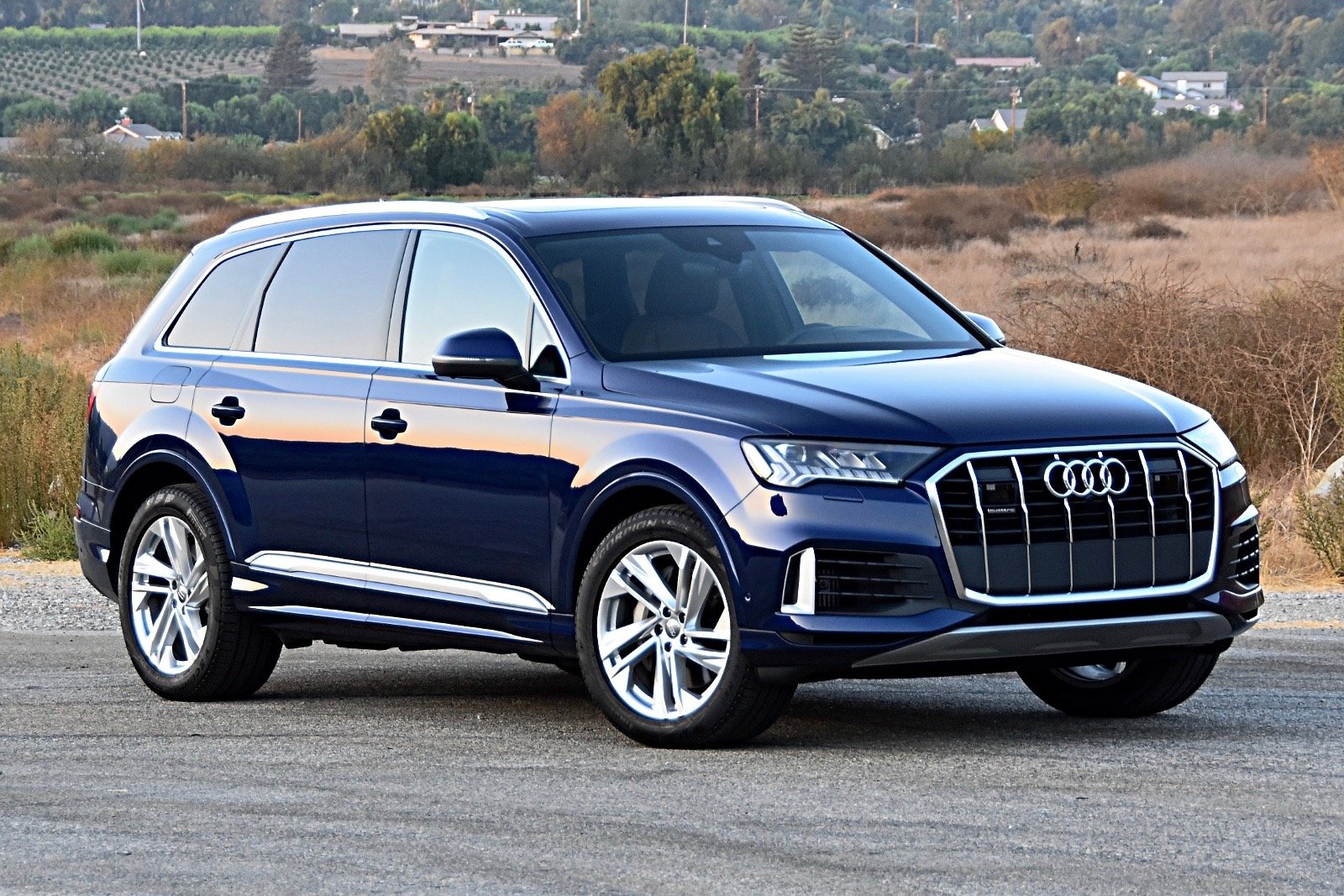
According to CarGurus experts, the overall rating for the 2020 Toyota Highlander is 7.7 out of 10, while the 2020 Audi Q7 scores 7.7 out of 10. Despite these equal ratings, the recommendation leans towards the 2020 Audi Q7 for its superior blend of technology, performance, and luxury features—making it the more comprehensive choice for a well-rounded driving experience.
Choose the 2020 Audi Q7 if:
- You seek a luxury SUV with advanced technology, including a sophisticated infotainment system with natural voice recognition and high connectivity.
- You require agile handling and powerful performance, with significant towing capacity.
- You prefer a quiet cabin with premium materials and an upscale ambiance for long road trips.


Choose the 2020 Toyota Highlander if:
- You value a spacious and versatile interior with excellent second-row adjustability and generous cargo space.
- You prioritize a calm and smooth driving experience, with good fuel economy for a large SUV.
- You appreciate robust safety features with high ratings from safety organizations.


CarGurus highlights
According to CarGurus experts, the overall rating for the 2020 Toyota Highlander is 7.7 out of 10, while the 2020 Audi Q7 scores 7.7 out of 10. Despite these equal ratings, the recommendation leans towards the 2020 Audi Q7 for its superior blend of technology, performance, and luxury features—making it the more comprehensive choice for a well-rounded driving experience.
Choose the 2020 Audi Q7 if:
Shop Now- You seek a luxury SUV with advanced technology, including a sophisticated infotainment system with natural voice recognition and high connectivity.
- You require agile handling and powerful performance, with significant towing capacity.
- You prefer a quiet cabin with premium materials and an upscale ambiance for long road trips.
Choose the 2020 Toyota Highlander if:
Shop Now- You value a spacious and versatile interior with excellent second-row adjustability and generous cargo space.
- You prioritize a calm and smooth driving experience, with good fuel economy for a large SUV.
- You appreciate robust safety features with high ratings from safety organizations.

By: CarGurus + AI
At CarGurus, our team of experienced automotive writers remain at the heart of our content operation, conducting hands-on car tests and writing insightful guides that are backed by years of industry experience. To complement this, we are harnessing AI to make our content offering more diverse and more helpful to shoppers than ever. To achieve this, our AI systems are based exclusively on CarGurus content, ratings and data, so that what we produce is both unique to CarGurus, and uniquely helpful to car shoppers.

