2021 Subaru Ascent vs 2020 Toyota 4Runner

Overview | |
MSRP$36,120 | MSRP$32,295 |
Listings758 | Listings462 |
Ratings & Reviews | |
User Reviews | User Reviews |
Expert reviews6.8 out of 10 | Expert reviews8.5 out of 10 |
Pros
Cons
| Pros
Cons
|
2020 Toyota 4Runner Reviews SummaryEven in its expensive Limited trim, the Toyota 4Runner remains clearly purpose-built for tackling terrain. Whether on a dusty cow path or snowy mountain road, the 4Runner looks most in its element when its outside the typical car’s comfort zone. For 2020, Toyota keeps enough chrome and leather available to market the 4Runner as a rough-and-tumble luxury alternative, but shoppers considering one had better have a real need for 4-wheel drive. | |
2021 Subaru Ascent Reviews SummaryFew automakers have the brand loyalty enjoyed by Subaru—and with good reason. Its cars, wagons, and SUVs are safe, reliable, and provide features like standard all-wheel drive (AWD). A three-row SUV with all of these benefits seems like a no-brainer, and so the 2021 Subaru Ascent is ideally positioned to differentiate itself from the rest of this family-hauling segment. In addition to its spacious cabin and a long list of standard features, the Ascent gains a few key safety features as newly standard equipment. | |
No video found | No video found |
Popular Features & Specs | |
Engine4.0L 270 hp V6 | Engine2.4L 260 hp H4 |
Drive Train4X2 | Drive TrainAWD |
Seating Capacity7 | Seating Capacity8 |
Horsepower270 hp @ 5600 rpm | Horsepower260 hp @ 5600 rpm |
MPG City16 | MPG City21 |
MPG Highway19 | MPG Highway27 |
Engine | |
Engine Name4.0L 270 hp V6 | Engine Name2.4L 260 hp H4 |
Torque278 lb-ft @ 4400 rpm | Torque277 lb-ft @ 2000 rpm |
Horsepower270 hp @ 5600 rpm | Horsepower260 hp @ 5600 rpm |
Drivetrain4X2 | DrivetrainAWD |
Fuel Economy | |
MPG City16 | MPG City21 |
MPG Highway19 | MPG Highway27 |
Interior | |
Seating Capacity7 | Seating Capacity8 |
Safety | |
Front Crash Overall4 | Front Crash Overall5 |
Side Crash Overall5 | Side Crash Overall5 |
Dimensions & Capacity | |
Cargo Space47.2 cu ft | Cargo Space17.8 cu ft |
Curb Weight4400 lbs | Curb Weight4430 lbs |
Height71.5 in | Height71.6 in |
Length190.2 in | Length196.8 in |
Width75.8 in | Width85.7 in |
Wheelbase109.8 in | Wheelbase113.8 in |
Maximum Payload1700 lbs | Maximum Payload1570 lbs |
Number of doors4 | Number of doors4 |
Maximum Towing Capacity5000 lbs | Maximum Towing Capacity2000 lbs |
Standard Towing Capacity5000 lbs | Standard Towing Capacity |
Overview | ||
MSRP | $36,120 | $32,295 |
Listings | ||
Ratings & Reviews | ||
User reviews | ||
Expert reviews | 6.8 out of 10Read full review | 8.5 out of 10Read full review |
Pros & cons | Pros
Cons
| Pros
Cons
|
Summary | Even in its expensive Limited trim, the Toyota 4Runner remains clearly purpose-built for tackling terrain. Whether on a dusty cow path or snowy mountain road, the 4Runner looks most in its element when its outside the typical car’s comfort zone. For 2020, Toyota keeps enough chrome and leather available to market the 4Runner as a rough-and-tumble luxury alternative, but shoppers considering one had better have a real need for 4-wheel drive. | Few automakers have the brand loyalty enjoyed by Subaru—and with good reason. Its cars, wagons, and SUVs are safe, reliable, and provide features like standard all-wheel drive (AWD). A three-row SUV with all of these benefits seems like a no-brainer, and so the 2021 Subaru Ascent is ideally positioned to differentiate itself from the rest of this family-hauling segment. In addition to its spacious cabin and a long list of standard features, the Ascent gains a few key safety features as newly standard equipment. |
Video | No video found | No video found |
Popular Features & Specs | ||
Engine | 4.0L 270 hp V6 | 2.4L 260 hp H4 |
Drive Train | 4X2 | AWD |
Seating Capacity | 7 | 8 |
Horsepower | 270 hp @ 5600 rpm | 260 hp @ 5600 rpm |
MPG City | 16 | 21 |
MPG Highway | 19 | 27 |
Engine | ||
Engine Name | 4.0L 270 hp V6 | 2.4L 260 hp H4 |
Torque | 278 lb-ft @ 4400 rpm | 277 lb-ft @ 2000 rpm |
Horsepower | 270 hp @ 5600 rpm | 260 hp @ 5600 rpm |
Drivetrain | 4X2 | AWD |
Fuel Economy | ||
MPG City | 16 | 21 |
MPG Highway | 19 | 27 |
Interior | ||
Seating Capacity | 7 | 8 |
Safety | ||
Front Crash Overall | 4 | 5 |
Side Crash Overall | 5 | 5 |
Dimensions & Capacity | ||
Cargo Space | 47.2 cu ft | 17.8 cu ft |
Curb Weight | 4400 lbs | 4430 lbs |
Height | 71.5 in | 71.6 in |
Length | 190.2 in | 196.8 in |
Width | 75.8 in | 85.7 in |
Wheelbase | 109.8 in | 113.8 in |
Maximum Payload | 1700 lbs | 1570 lbs |
Number of doors | 4 | 4 |
Maximum Towing Capacity | 5000 lbs | 2000 lbs |
Standard Towing Capacity | 5000 lbs | |
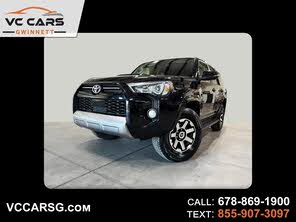
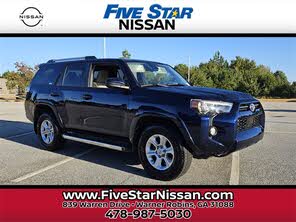
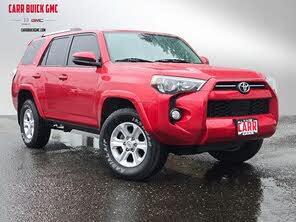
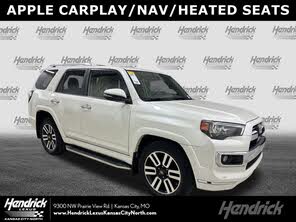
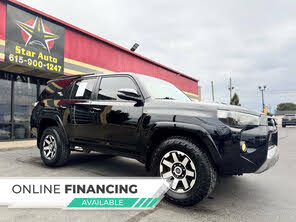
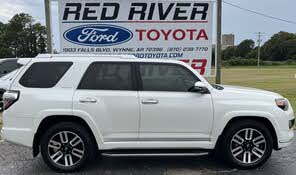
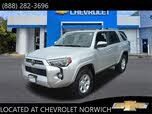
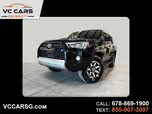
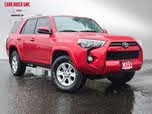
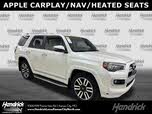
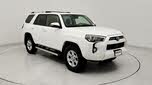
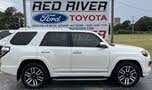
The 2020 Toyota 4Runner had a timeless design characterized by tall slab sides, a high beltline, short overhangs, and a near-vertical front fascia. Its utilitarian attitude was reminiscent of an XJ Jeep Cherokee, with flared wheel wells designed to accommodate bulky off-road tires and short overhangs for tackling steep pitches and sharp declines. The hood scoop, a visual cue for the off-road-focused TRD trim, was one of the few non-functional elements. Small, angular headlights highlighted the front end, and the grille varied by trim, with body-color bars on most trims and blacked-out accents on the TRD Pro. The Limited trim featured bright chrome accents. The 4Runner's trim lineup included SR5, SR5 Premium, TRD Off-Road, TRD Off-Road Premium, TRD Pro, Limited, Nightshade Special Edition, and the new Venture Special Edition. The Nightshade and Venture trims added a stealth aesthetic with blacked-out trim pieces, and the Venture included 17-inch TRD wheels and a Yakima Megawarrior roof rack.
Our test model, a Limited trim, was aimed at comfort rather than capability. It featured leather upholstery, an 8-inch touchscreen, and plenty of chrome, but still had a utilitarian feel with abundant plastic and a seating position designed for off-roading. The 4Runner's optional third row was best suited for short and occasional use, with narrow and thin jump seats that folded toward the floor when not in use.
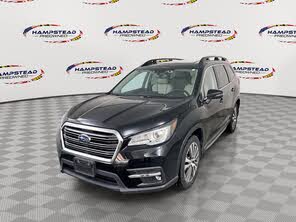
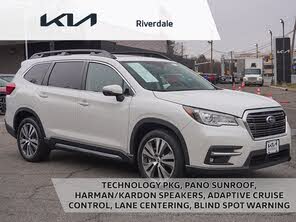
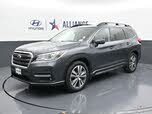
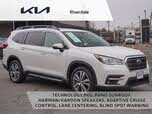
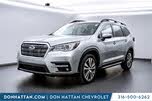
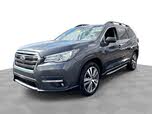
The 2021 Subaru Ascent, introduced in 2019, filled a long-overdue gap in Subaru's lineup. It had elements of the smaller Forester and Outback, scaled up into a three-row midsize SUV. The cabin design was similar to other Subaru models, likely to create a connection between the Ascent and Subaru's other popular models. Trims included Standard, Premium, Limited, and Touring. The Standard trim was well-equipped with driver-assistance features, a 6.5-inch touchscreen, tri-zone climate control, four USB ports, and remote keyless entry. The Premium trim upgraded to an 8-inch touchscreen, an eight-way power-adjustable driver's seat, stain-resistant upholstery, remote start, a leather-wrapped steering wheel, heated front seats, and second-row climate controls. The Limited trim added push-button start, a 10-way power-adjustable driver's seat, a four-way power-adjustable front passenger seat, third-row USB ports, heated second-row seats, and a heated steering wheel. The range-topping Touring trim included second-row captain's chairs, ventilated front seats, ambient cabin lighting, a panoramic sunroof, and a 14-speaker Harman Kardon premium stereo system.


The 2020 Toyota 4Runner featured a 4-liter V6 engine with a 5-speed automatic transmission, producing 270 horsepower and 278 pound-feet of torque. This engine was designed for durability and off-road capability rather than fuel efficiency, with an EPA estimate of 16 mpg city, 19 highway, and 17 combined. The 4Runner could tow up to 5,000 pounds and excelled off-road, thanks to its body-on-frame construction and advanced traction systems like Toyota's CRAWL control and Multi-Terrain Select. The 4Runner's steering was heavy and vague, and it had significant body roll in corners. The full-time 4WD system on the Limited trim was better suited for maintaining forward progress, while the part-time system in the TRD models handled more challenging off-road conditions.
The 2021 Subaru Ascent was powered by a turbocharged 2.4-liter boxer four-cylinder engine, producing 260 horsepower and 277 pound-feet of torque. Power was routed through a continuously variable transmission (CVT) to Subaru's Symmetrical All-Wheel Drive system. The Ascent's ride focused on refined comfort, with responsive handling and the ability to soak up bumps. It had 8.7 inches of ground clearance, making it capable in snow and light off-roading. The Ascent could tow up to 5,000 pounds and included a standard Trailer Stability Assist.
The 2020 Toyota 4Runner offered excellent outward visibility and a relatively tight turning radius of 18 feet, 7 inches. The interior featured large, chunky knobs for HVAC controls and slightly smaller knobs for the stereo. The 8-inch touchscreen was flanked by physical buttons, and the steering wheel had an array of controls, though they were not illuminated. The 4Runner's tall seating position provided a commanding view of the road, but climbing in and out could be tiring without the power-retractable running boards. The optional third row was narrow and thin, best suited for short and occasional use.
The 2021 Subaru Ascent provided 17.8 cubic feet of cargo space behind the third row, 47.5 cubic feet with the third row folded, and up to 86.5 cubic feet with all rear seats folded. It came standard with a power liftgate but lacked a hands-free option. The Ascent could seat up to eight passengers in base configuration, with the option for second-row captain's chairs reducing capacity to seven. The first two rows were spacious, while the third row was better suited for kids on longer trips. The Ascent featured 19 cupholders and plenty of trays and cubbies for gear.
The 2020 Toyota 4Runner featured an 8-inch touchscreen infotainment system with Apple CarPlay and Android Auto compatibility. Toyota's proprietary system was not difficult to understand, but the onboard navigation system was less efficient than Google Maps via Android Auto. The 4Runner also supported Amazon Alexa, Bluetooth connectivity, a single USB media port, and various subscription services like Sirius XM Radio, Safety Connect, and WiFi Connect. Higher trims offered a JBL stereo and navigation system. However, the 4Runner lagged behind competitors in total features and usability, with the most advanced features hidden in the powertrain.
The 2021 Subaru Ascent's StarLink infotainment system had logical menu layouts and large icons for its touchscreens. Both screens were backed by hard buttons and dials, as well as a home button. Apple CarPlay and Android Auto were standard. The Ascent came with two front USB ports, two second-row USB ports, satellite radio, and Bluetooth connectivity. Available tech features included third-row USB ports, a WiFi hotspot, and a 14-speaker Harman Kardon premium stereo.
The 2020 Toyota 4Runner came equipped with Toyota Safety Sense P (TSS-P), which included adaptive cruise control, lane-departure alert, a pre-collision system with pedestrian detection, and automatic high beams. It also had eight standard airbags. The National Highway Traffic Safety Administration (NHTSA) awarded the 4Runner four out of five stars overall, but only three out of five in its rollover test. The Insurance Institute for Highway Safety (IIHS) gave the 4Runner its best score of Good in all crash tests except the small overlap front: driver-side test, where it scored Marginal.
The 2021 Subaru Ascent was an IIHS 2021 Top Safety Pick+ due to its crash test results and Subaru's EyeSight suite of driver-assistance features. EyeSight included automatic emergency braking, adaptive cruise control, lane departure warning, and a feature that alerted the driver if the vehicle in front had pulled away. For 2021, the Ascent gained standard automatic high beams and headlights that bent with the steering angle. Optional safety features included reverse automatic emergency braking, rain-sensing windshield wipers, blind-spot monitoring, and rear cross-traffic alert.
CarGurus highlights

According to CarGurus experts, the overall rating for the 2020 Toyota 4Runner is 6.8 out of 10, while the 2021 Subaru Ascent scores 8.5 out of 10. Based on these ratings, the Subaru Ascent is the clear winner, offering a more comfortable ride, better safety features, and a more modern infotainment system. If you're looking for a family-friendly SUV with advanced technology and top-notch safety, the 2021 Subaru Ascent is the better choice.
Choose the 2021 Subaru Ascent if:
- You need a spacious and comfortable three-row SUV for family trips.
- You value advanced safety features and top safety ratings.
- You want a modern infotainment system with standard Apple CarPlay and Android Auto.






Choose the 2020 Toyota 4Runner if:
- You prioritize off-road capability and rugged construction.
- You need a vehicle with a proven track record of reliability and durability.
- You prefer a traditional SUV design with a commanding driving position.




CarGurus highlights
According to CarGurus experts, the overall rating for the 2020 Toyota 4Runner is 6.8 out of 10, while the 2021 Subaru Ascent scores 8.5 out of 10. Based on these ratings, the Subaru Ascent is the clear winner, offering a more comfortable ride, better safety features, and a more modern infotainment system. If you're looking for a family-friendly SUV with advanced technology and top-notch safety, the 2021 Subaru Ascent is the better choice.
Choose the 2021 Subaru Ascent if:
Shop Now- You need a spacious and comfortable three-row SUV for family trips.
- You value advanced safety features and top safety ratings.
- You want a modern infotainment system with standard Apple CarPlay and Android Auto.





Choose the 2020 Toyota 4Runner if:
Shop Now- You prioritize off-road capability and rugged construction.
- You need a vehicle with a proven track record of reliability and durability.
- You prefer a traditional SUV design with a commanding driving position.





By: CarGurus + AI
At CarGurus, our team of experienced automotive writers remain at the heart of our content operation, conducting hands-on car tests and writing insightful guides that are backed by years of industry experience. To complement this, we are harnessing AI to make our content offering more diverse and more helpful to shoppers than ever. To achieve this, our AI systems are based exclusively on CarGurus content, ratings and data, so that what we produce is both unique to CarGurus, and uniquely helpful to car shoppers.