2020 Hyundai Kona vs 2020 Nissan Rogue
Overview | |
MSRP$25,490 | MSRP$20,300 |
Listings1166 | Listings414 |
Ratings & Reviews | |
User Reviews | User Reviews |
Expert reviews6.0 out of 10 | Expert reviews6.8 out of 10 |
Pros
Cons
| Pros
Cons
|
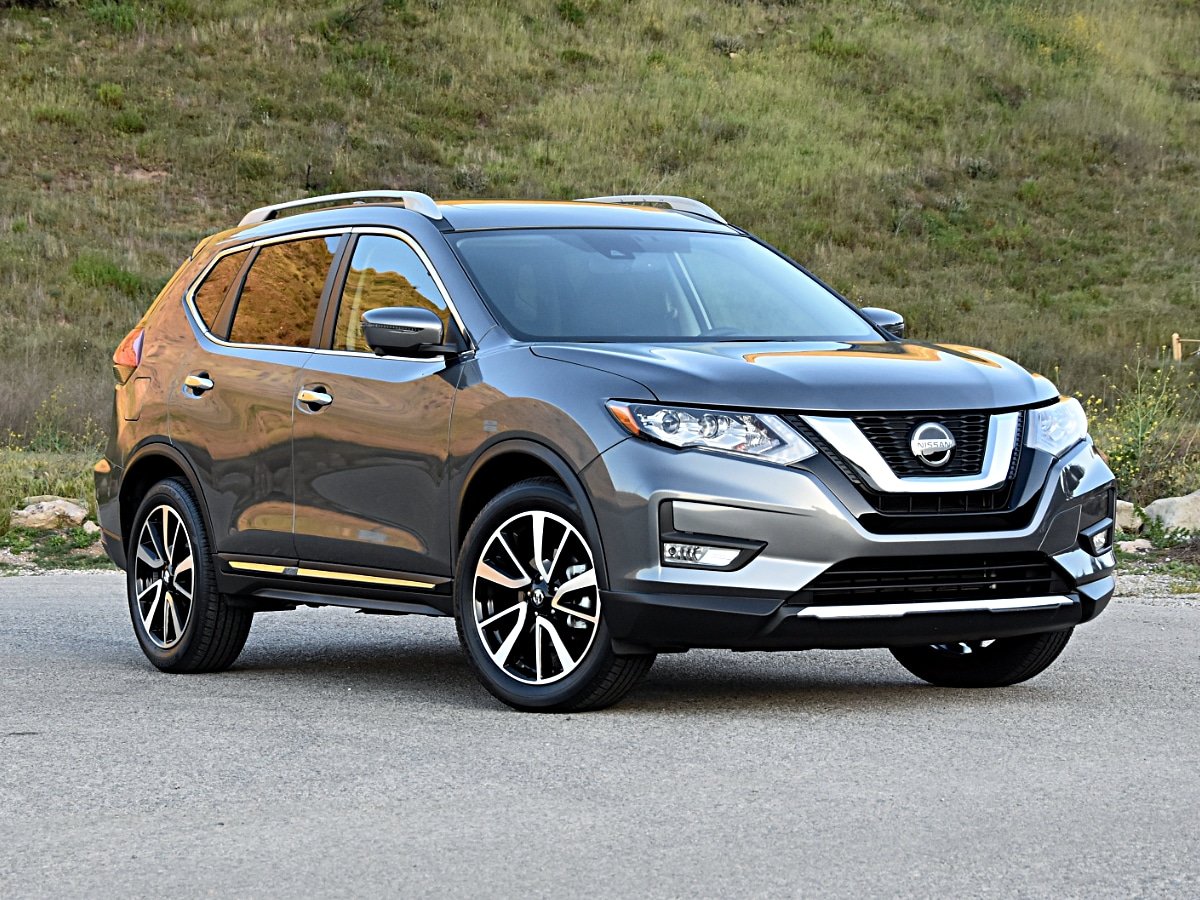
2020 Nissan Rogue Reviews SummaryNissan hasn’t redesigned the Rogue since 2014, but an all-new version of this SUV is coming for the 2021 model year. In the meantime, dealers will be eager to sell remaining stocks of the outgoing 2020 Nissan Rogue, and the deals on these new cars ought to be mighty juicy. Should you bite? Should you wait? Or should you shop for something else? The answers to these questions depend on who you are and what you value in a compact crossover SUV. | |
2020 Hyundai Kona Reviews SummaryThe Hyundai Kona subcompact SUV is one of the smallest cars you can buy with all-wheel drive. It competes in a class of four-door hatchbacks with the lifted suspensions and higher driving positions that crossover buyers want—and with the same generous list of convenience and safety features that come on larger crossovers. We last tested the Kona when it came out for 2018, but a new trim level and more standard driver assists are the major changes for 2020. For what Hyundai charges, the Kona is cramped and the interior disappoints, yet exterior style and on-road performance are spectacular. | |
No video found | |
Popular Features & Specs | |
Engine2.5L 170 hp I4 | Engine2.0L 147 hp I4 |
Drive TrainFWD | Drive TrainFWD |
Seating Capacity5 | Seating Capacity5 |
Horsepower170 hp @ 6000 rpm | Horsepower147 hp @ 6200 rpm |
MPG City26 | MPG City27 |
MPG Highway33 | MPG Highway33 |
Engine | |
Engine Name2.5L 170 hp I4 | Engine Name2.0L 147 hp I4 |
Torque175 lb-ft @ 4400 rpm | Torque132 lb-ft @ 4500 rpm |
Horsepower170 hp @ 6000 rpm | Horsepower147 hp @ 6200 rpm |
DrivetrainFWD | DrivetrainFWD |
Fuel Economy | |
MPG City26 | MPG City27 |
MPG Highway33 | MPG Highway33 |
Interior | |
Seating Capacity5 | Seating Capacity5 |
Safety | |
Front Crash Overall4 | Front Crash Overall5 |
Side Crash Overall5 | Side Crash Overall5 |
Dimensions & Capacity | |
Cargo Space39.3 cu ft | Cargo Space19.2 cu ft |
Curb Weight3463 lbs | Curb Weight2890 lbs |
Height66.3 in | Height61.0 in |
Length184.5 in | Length164.0 in |
Width72.4 in | Width70.9 in |
Wheelbase106.5 in | Wheelbase102.4 in |
Maximum Payload1127 lbs | Maximum Payload1089 lbs |
Number of doors4 | Number of doors4 |
Overview | ||
MSRP | $25,490 | $20,300 |
Listings | ||
Ratings & Reviews | ||
User reviews | ||
Expert reviews | 6.0 out of 10Read full review | 6.8 out of 10Read full review |
Pros & cons | Pros
Cons
| Pros
Cons
|
Summary | Nissan hasn’t redesigned the Rogue since 2014, but an all-new version of this SUV is coming for the 2021 model year. In the meantime, dealers will be eager to sell remaining stocks of the outgoing 2020 Nissan Rogue, and the deals on these new cars ought to be mighty juicy. Should you bite? Should you wait? Or should you shop for something else? The answers to these questions depend on who you are and what you value in a compact crossover SUV. | The Hyundai Kona subcompact SUV is one of the smallest cars you can buy with all-wheel drive. It competes in a class of four-door hatchbacks with the lifted suspensions and higher driving positions that crossover buyers want—and with the same generous list of convenience and safety features that come on larger crossovers. We last tested the Kona when it came out for 2018, but a new trim level and more standard driver assists are the major changes for 2020. For what Hyundai charges, the Kona is cramped and the interior disappoints, yet exterior style and on-road performance are spectacular. |
Video | No video found | |
Popular Features & Specs | ||
Engine | 2.5L 170 hp I4 | 2.0L 147 hp I4 |
Drive Train | FWD | FWD |
Seating Capacity | 5 | 5 |
Horsepower | 170 hp @ 6000 rpm | 147 hp @ 6200 rpm |
MPG City | 26 | 27 |
MPG Highway | 33 | 33 |
Engine | ||
Engine Name | 2.5L 170 hp I4 | 2.0L 147 hp I4 |
Torque | 175 lb-ft @ 4400 rpm | 132 lb-ft @ 4500 rpm |
Horsepower | 170 hp @ 6000 rpm | 147 hp @ 6200 rpm |
Drivetrain | FWD | FWD |
Fuel Economy | ||
MPG City | 26 | 27 |
MPG Highway | 33 | 33 |
Interior | ||
Seating Capacity | 5 | 5 |
Safety | ||
Front Crash Overall | 4 | 5 |
Side Crash Overall | 5 | 5 |
Dimensions & Capacity | ||
Cargo Space | 39.3 cu ft | 19.2 cu ft |
Curb Weight | 3463 lbs | 2890 lbs |
Height | 66.3 in | 61.0 in |
Length | 184.5 in | 164.0 in |
Width | 72.4 in | 70.9 in |
Wheelbase | 106.5 in | 102.4 in |
Maximum Payload | 1127 lbs | 1089 lbs |
Number of doors | 4 | 4 |
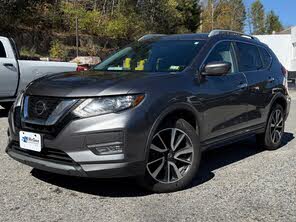
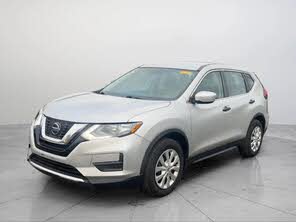
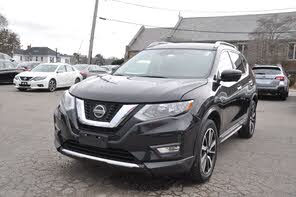
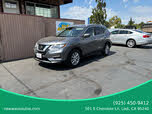
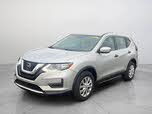
The 2020 Nissan Rogue, available in S, SV, and SL trims, offered a straightforward approach with a single engine and transmission combination, and a choice between front-wheel drive (FWD) and all-wheel drive (AWD). The test model featured the SL trim with front-drive, the SL Premium Package, and additional accessories, totaling $34,870. Despite its age, the Rogue maintained an attractive appearance, highlighted by its bold V-Motion grille and 19-inch aluminum wheels. However, the interior design showed its age with older styling themes and unimpressive plastic surfaces, though it did include thoughtful touches like padded center console sides for driver comfort.
In contrast, the 2020 Hyundai Kona stood out with its sleek, sporty, and dramatic exterior design, making it visually stimulating despite its compact size. The Kona's design cleverly masked the inherent stubbiness of small, short-wheelbase vehicles, with features like tiered lighting, slim LED running lamps, and two-tone wheels. The Limited and Ultimate models offered larger wheels and additional trim, enhancing the premium vibe. However, the interior couldn't match the exterior's quality, with hard plastics and lackluster finishes. While the layout and screens were acceptable, the fit and finish lagged behind competitors like the CX-30 and HR-V.


The 2020 Nissan Rogue was equipped with a 170-horsepower 2.5-liter four-cylinder engine paired with a continuously variable automatic transmission (CVT). Weighing up to 3,671 pounds, the Rogue's powertrain was adequate but not sporty, even with a Sport driving mode. The CVT managed the power well, but the Rogue struggled with acceleration, especially when merging onto highways or climbing grades. Fuel economy was another disappointment, with real-world testing yielding only 24.9 mpg compared to the EPA's 29 mpg estimate. The Rogue's ride and handling were improved by Intelligent Trace Control and Active Ride Control, but the driving experience was marred by lifeless steering and occasional CVT drone.
The 2020 Hyundai Kona, on the other hand, offered a more dynamic performance with its 1.6-liter turbocharged inline-four engine, producing 175 horsepower and 195 pound-feet of torque. This engine, available on the Limited and Ultimate trims, provided strong acceleration and confidence when merging onto highways. The 7-speed dual-clutch transmission (DCT) complemented the engine's eagerness, delivering quick responses. The Kona's handling was impressive, with fast steering and a stable suspension, rivaling more expensive models like the Mercedes-Benz GLA. However, the ride was stiffer, and the cabin was noisier compared to competitors. Fuel economy was average, with AWD models achieving around 29 mpg on the highway.
The 2020 Nissan Rogue's interior space was a mixed bag. While the seats featured Nissan's Zero Gravity design, they were somewhat undersized, making it challenging for taller drivers to find a comfortable position. The rear seats, however, offered excellent thigh support and a good view, thanks to the stadium-style seating and panoramic sunroof. Rear passengers also benefited from air conditioning vents and USB charging ports. Cargo space was a strong point, with 39 cubic feet available behind the rear seats, along with underfloor storage and a Divide-n-Hide cargo management system.
In contrast, the 2020 Hyundai Kona struggled with interior space, particularly in terms of cargo capacity. With only 19 cubic feet of cargo space and 46 cubic feet with the rear seats folded, it lagged behind competitors. Rear legroom was average, and the scalloped roof provided additional headroom, but overall, the Kona felt cramped. Despite its easy-to-use controls and good sightlines, the Kona's utility was limited, making it more akin to a small hatchback than a true crossover.
The 2020 Nissan Rogue offered a comprehensive list of infotainment features, including Bluetooth connectivity, Apple CarPlay, Android Auto, and a hands-free text messaging assistant. Higher trims added SiriusXM satellite radio, navigation, and a Bose premium sound system. NissanConnect Services provided remote access features and safety settings, but the 7-inch touchscreen interface was outdated and slow to respond, diminishing the overall tech experience.
The 2020 Hyundai Kona, except for the base SE model, came well-equipped with features like a 7-inch touchscreen, Apple CarPlay, Android Auto, and proximity entry. The SEL trim added heated seats, blind-spot monitoring, and more. The SEL Plus introduced an auto-dimming rear-view mirror, wireless charging, and an eight-speaker Infinity stereo. The Limited trim featured leather upholstery, while the Ultimate trim boasted a sunroof, an 8-inch touchscreen with navigation, and adaptive cruise control. The Kona's tech offerings were robust, with Blue Link connectivity providing remote engine start and emergency services.
The 2020 Nissan Rogue included the Safety Shield 360 suite, featuring forward-collision warning, automatic emergency braking, blind-spot monitoring, and more. Additional options like a surround-view camera and ProPilot Assist were available. However, the Rogue's safety ratings were less impressive, with a 4-star overall rating from the NHTSA and issues with frontal-impact protection.
The 2020 Hyundai Kona excelled in safety, earning a 5-star overall rating from the NHTSA and a Top Safety Pick designation from the IIHS. Standard safety features included forward emergency braking, lane-keep assist, and a driver attention monitor. The Ultimate trim added pedestrian detection, though it received a lower score for this feature. The Kona lacked front knee airbags and rear side airbags, but its overall safety performance was commendable.
CarGurus highlights

According to CarGurus experts, the overall rating for the 2020 Nissan Rogue is 6.0 out of 10, while the 2020 Hyundai Kona scores 6.8 out of 10. Based on these ratings, the Hyundai Kona is the recommended choice, offering a more engaging driving experience, better safety ratings, and a superior technology package.
Choose the 2020 Hyundai Kona if:
- You seek a sporty and dynamic driving experience.
- You appreciate a well-equipped vehicle with advanced technology features.
- You prioritize safety ratings and crash-test performance.




Choose the 2020 Nissan Rogue if:
- You prioritize rear passenger comfort and cargo space.
- You value a comprehensive suite of standard safety features.
- You prefer a vehicle with a more traditional SUV design.







CarGurus highlights
According to CarGurus experts, the overall rating for the 2020 Nissan Rogue is 6.0 out of 10, while the 2020 Hyundai Kona scores 6.8 out of 10. Based on these ratings, the Hyundai Kona is the recommended choice, offering a more engaging driving experience, better safety ratings, and a superior technology package.
Choose the 2020 Hyundai Kona if:
Shop Now- You seek a sporty and dynamic driving experience.
- You appreciate a well-equipped vehicle with advanced technology features.
- You prioritize safety ratings and crash-test performance.










Choose the 2020 Nissan Rogue if:
Shop Now- You prioritize rear passenger comfort and cargo space.
- You value a comprehensive suite of standard safety features.
- You prefer a vehicle with a more traditional SUV design.







By: CarGurus + AI
At CarGurus, our team of experienced automotive writers remain at the heart of our content operation, conducting hands-on car tests and writing insightful guides that are backed by years of industry experience. To complement this, we are harnessing AI to make our content offering more diverse and more helpful to shoppers than ever. To achieve this, our AI systems are based exclusively on CarGurus content, ratings and data, so that what we produce is both unique to CarGurus, and uniquely helpful to car shoppers.