2020 Volkswagen Tiguan vs 2020 Mercedes-Benz GLC

Overview | |
MSRP$42,500 | MSRP$24,945 |
Listings586 | Listings907 |
Ratings & Reviews | |
User Reviews | User Reviews |
Expert reviews7.3 out of 10 | Expert reviews7.7 out of 10 |
Pros
Cons
| Pros
Cons
|
2020 Mercedes-Benz GLC Reviews SummarySuburbs mean a lot to Mercedes. Company research is dead set on an American future of growing megacities, which feed growing mega-suburbs underserved by mass transit—basically, all the places we’re moving to now to escape absurdly high mortgages and rents in places like New York and San Francisco. The car Mercedes executives think you’ll be buying in these super suburbs won’t be an autonomous electric car. It’ll be another version of its top-selling car in the US, the compact GLC crossover. | |
2020 Volkswagen Tiguan Reviews SummaryThe Volkswagen Tiguan is one of only two compact crossover SUV’s that currently offer third-row seating. (And the other is the hopelessly outdated Mitsubishi Outlander.) To fit the extra pair of surprisingly spacious seats, VW made the Tiguan much larger than average for its competitive set—which suits a vehicle that fills big shoes in VW dealerships. With five trim levels and prices that stretch from just under $26,000 to a bit over $40,000, the Tiguan is the German brand’s best-selling vehicle in the U.S. | |
No video found | |
Popular Features & Specs | |
Engine2.0L 255 hp I4 | Engine2.0L 184 hp I4 |
Drive TrainRWD | Drive TrainFWD |
Seating Capacity5 | Seating Capacity7 |
Horsepower255 hp @ 5800 rpm | Horsepower184 hp @ 4400 rpm |
MPG City22 | MPG City22 |
MPG Highway29 | MPG Highway29 |
Engine | |
Engine Name2.0L 255 hp I4 | Engine Name2.0L 184 hp I4 |
Torque273 lb-ft @ 1800 rpm | Torque221 lb-ft @ 1600 rpm |
Horsepower255 hp @ 5800 rpm | Horsepower184 hp @ 4400 rpm |
DrivetrainRWD | DrivetrainFWD |
Fuel Economy | |
MPG City22 | MPG City22 |
MPG Highway29 | MPG Highway29 |
Interior | |
Seating Capacity5 | Seating Capacity7 |
Safety | |
Front Crash Overall | Front Crash Overall4 |
Side Crash Overall5 | Side Crash Overall5 |
Dimensions & Capacity | |
Cargo Space19.4 cu ft | Cargo Space12.0 cu ft |
Curb Weight3889 lbs | Curb Weight3757 lbs |
Height65.5 in | Height66.3 in |
Length183.8 in | Length185.1 in |
Width82.5 in | Width72.4 in |
Wheelbase113.1 in | Wheelbase109.8 in |
Maximum Payload1182 lbs | Maximum Payload1124 lbs |
Number of doors4 | Number of doors4 |
Maximum Towing Capacity3500 lbs | Maximum Towing Capacity1500 lbs |
Overview | ||
MSRP | $42,500 | $24,945 |
Listings | ||
Ratings & Reviews | ||
User reviews | ||
Expert reviews | 7.3 out of 10Read full review | 7.7 out of 10Read full review |
Pros & cons | Pros
Cons
| Pros
Cons
|
Summary | Suburbs mean a lot to Mercedes. Company research is dead set on an American future of growing megacities, which feed growing mega-suburbs underserved by mass transit—basically, all the places we’re moving to now to escape absurdly high mortgages and rents in places like New York and San Francisco. The car Mercedes executives think you’ll be buying in these super suburbs won’t be an autonomous electric car. It’ll be another version of its top-selling car in the US, the compact GLC crossover. | The Volkswagen Tiguan is one of only two compact crossover SUV’s that currently offer third-row seating. (And the other is the hopelessly outdated Mitsubishi Outlander.) To fit the extra pair of surprisingly spacious seats, VW made the Tiguan much larger than average for its competitive set—which suits a vehicle that fills big shoes in VW dealerships. With five trim levels and prices that stretch from just under $26,000 to a bit over $40,000, the Tiguan is the German brand’s best-selling vehicle in the U.S. |
Video | No video found | |
Popular Features & Specs | ||
Engine | 2.0L 255 hp I4 | 2.0L 184 hp I4 |
Drive Train | RWD | FWD |
Seating Capacity | 5 | 7 |
Horsepower | 255 hp @ 5800 rpm | 184 hp @ 4400 rpm |
MPG City | 22 | 22 |
MPG Highway | 29 | 29 |
Engine | ||
Engine Name | 2.0L 255 hp I4 | 2.0L 184 hp I4 |
Torque | 273 lb-ft @ 1800 rpm | 221 lb-ft @ 1600 rpm |
Horsepower | 255 hp @ 5800 rpm | 184 hp @ 4400 rpm |
Drivetrain | RWD | FWD |
Fuel Economy | ||
MPG City | 22 | 22 |
MPG Highway | 29 | 29 |
Interior | ||
Seating Capacity | 5 | 7 |
Safety | ||
Front Crash Overall | 4 | |
Side Crash Overall | 5 | 5 |
Dimensions & Capacity | ||
Cargo Space | 19.4 cu ft | 12.0 cu ft |
Curb Weight | 3889 lbs | 3757 lbs |
Height | 65.5 in | 66.3 in |
Length | 183.8 in | 185.1 in |
Width | 82.5 in | 72.4 in |
Wheelbase | 113.1 in | 109.8 in |
Maximum Payload | 1182 lbs | 1124 lbs |
Number of doors | 4 | 4 |
Maximum Towing Capacity | 3500 lbs | 1500 lbs |
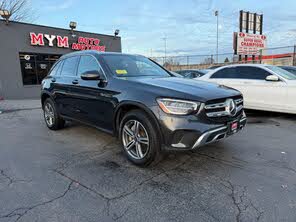
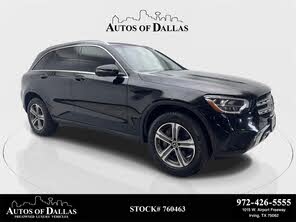
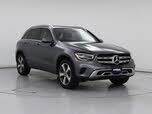
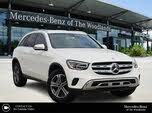
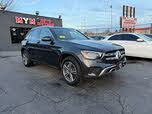
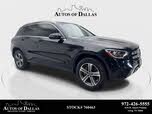
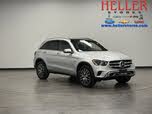
The 2020 Mercedes-Benz GLC featured a new front fascia with a trapezoidal grille and angled LED headlights, echoing the aggressive design cues of the A-Class and CLS-Class. The taillights had square LEDs within the same housing, making it hard to distinguish from previous models unless parked side-by-side. While the GLC wasn't unattractive, it lacked visual excitement from most angles, especially in the mass-market GLC 300 model. The AMG versions, with their wide tires, vertical-bar grille, and lower stance, added some visual drama. The GLC Coupe’s fastback roof brought a touch of flair, but overall, the design didn't aim to be a standout in the neighborhood. The beige paint and 18-inch wheels of the test car made it blend into parking lots, despite its over $60,000 price tag.
What truly set the GLC apart was its interior, considered one of the best in the business. The all-black interior with stained gray ash wood was luxurious, featuring a continuous sweep of wood from the three circular air vents, padded and stitched leather on the seats and doors, and cold metal covers on the stereo speakers. The fit, finish, and overall quality were impeccable. The 2020 model introduced a standard 10.3-inch touchscreen, replacing the older 7- and 8.4-inch displays. The console now featured a thin touchpad, and the steering wheel had more buttons, including two thumb pads, and felt thicker and softer. A 12.3-inch display could replace the analog gauges and central display in the instrument cluster. The shiny buttons for various functions were replaced by a blank plate, simplifying the design.
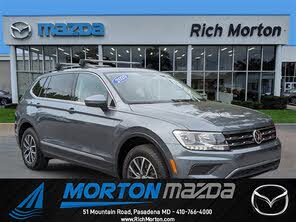
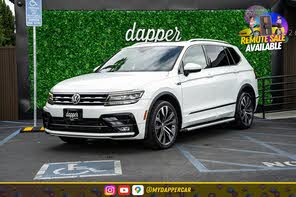
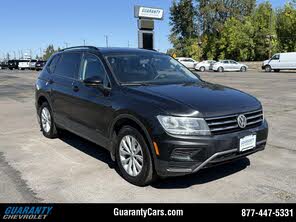
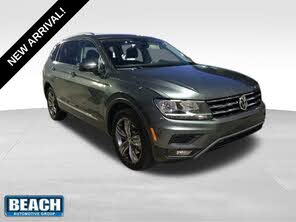
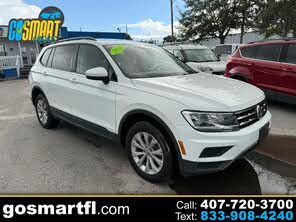
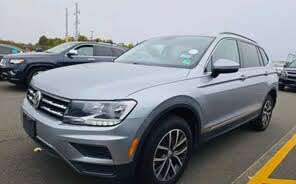
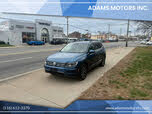
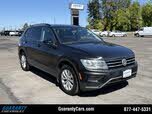
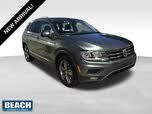
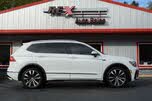
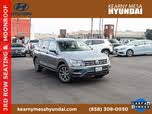
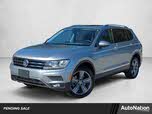
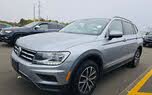
Volkswagen completely overhauled the Tiguan for the 2018 model year, addressing its size and price issues. The 2020 model retained the stylish and conservatively German design, with clean and simple lines. The new flat logo adorned a horizontal grille that connected the headlights, giving it a contemporary Volkswagen look without any adventurous or cartoonish elements. The interior, however, was plain, with dull surfaces and hard black plastic, a far cry from Volkswagen's earlier reputation for superior interiors. The cockpit was simple, bordering on boring, with the focus on electronics. The optional digital dashboard and glass-covered touchscreen infotainment system were highlights, offering a smartphone-like experience.


The 2020 Mercedes-Benz GLC 300 came with a new turbocharged inline 4-cylinder engine, producing 255 horsepower and 273 pound-feet of torque. The 9-speed automatic transmission, available in rear-wheel drive (RWD) or 4Matic all-wheel drive (AWD), featured major reprogramming, making the GLC 300 feel more responsive. However, the engine still fell short compared to competitors like the BMW X3. The AMG GLC 43, with its twin-turbo 3.0-liter V6 engine producing 385 hp and 384 lb-ft of torque, offered phenomenal performance. The AMG GLC 63 4Matic Coupe and AMG GLC 63 S 4Matic Coupe, with their V8 engines, provided even more power, but the GLC 300's steering and handling were disappointing. The GLC 300's fuel economy was EPA-rated at 21 mpg city, 28 highway, and 24 combined, while the AMG models had lower ratings.
The 2020 Volkswagen Tiguan was powered by a turbocharged 2.0-liter four-cylinder engine, producing 184 horsepower and 221 pound-feet of torque. The engine drove either the front or all four wheels through an eight-speed automatic transmission. The Tiguan's powertrain offered snappy throttle response and minimal turbo lag, but it was only moderately quick. The automatic transmission downshifted smoothly, but passing on the highway required patience. The Tiguan's engine was relatively quiet, and the cabin was well insulated from wind noise. The Tiguan's handling was impacted by its larger size, with a longer wheelbase making it less nimble. The suspension was soft, ensuring a comfortable ride, but the steering was too light in normal mode.
The 2020 Mercedes-Benz GLC featured a mix of digital and physical controls, with a steep learning curve for new Mercedes drivers. The column shifter required an upward tap for Reverse and a downward tap for Drive, while the seat controls were on the doors. The touchscreen, thumb pad, and touchpad became second nature with practice. The Mercedes-Benz User Experience (MBUX) system offered several tiers of selectable items, with shortcut buttons for popular features. The GLC had enough room for four adults, but the back seat's reclining mechanism was perplexing. Cargo space was 19 cubic feet behind the seats and 57 with them folded, less than the BMW X3.
The 2020 Volkswagen Tiguan excelled in practicality, with a second row of seats that could slide up to seven inches fore and aft, making the third row useful. The third row had enough legroom for shorter adults and was cozy for kids. Front-drive Tiguans had the third row as standard, while AWD models had it as an option. The third row's low cushion position was a drawback, but it was roomier than many larger vehicles. The second row folded flat, providing 65.7 cubic feet of cargo space with the third row collapsed, and 73.5 cubic feet in two-row models. The Tiguan felt as roomy as midsize SUVs, with plenty of hip and shoulder room in the front seats. The abundant glass and seating position made the Tiguan feel larger than it was.
The 2020 Mercedes-Benz GLC's MBUX system offered advanced features, including augmented reality for navigation, a cloud-based voice assistant, and AI-based tasks. The system could track behavior, suggest destinations, and show Yelp reviews. It also offered semi-autonomous driving features, though limited in functionality. Apple CarPlay and Android Auto were standard, with optional wireless device charging. The Off-Road Engineering Package included hill-descent control, additional driving modes, and underbody shields.
The 2020 Volkswagen Tiguan's infotainment system, MIB II, was set to be replaced by MIB3 in 2021. The current system was already one of the best, with a 6.5-inch touchscreen in the base S trim and an 8-inch capacitive touchscreen in higher trims. The system was responsive and user-friendly, with bright colors and graphics. The Tiguan S had a single USB-C port, while higher trims had USB-A ports and a wireless charging pad. The Digital Cockpit, available on top SEL trims, offered a customizable digital instrument panel. Apple CarPlay, Android Auto, Bluetooth connectivity, and a WiFi hotspot were standard.
The 2020 Mercedes-Benz GLC was named a 2019 Top Safety Pick+ by the IIHS, scoring top ratings in all crash tests and for its standard forward emergency braking. The NHTSA awarded the GLC its highest 5-star rating in all crash tests. New for 2020 was Exit Warning Assist, which used blind-spot-monitoring sensors to detect approaching cyclists or cars. Other features included Pre-Safe Sound and Predictive Brake Priming.
The 2020 Volkswagen Tiguan improved its standard safety package, adding forward-collision warning with automatic emergency braking, blind spot monitoring, and rear cross-traffic alert. Adaptive cruise control with lane-keeping assistance and LED headlights with automatic high beams were reserved for the top SEL trim. All models came with Car-Net, a telematics package offering remote locking, status checks, and vehicle location. The IIHS rated the Tiguan a Top Safety Pick for SEL Premium models with LED headlights, while most models with halogen headlights received a poor rating.
CarGurus highlights

According to CarGurus experts, the overall rating for the 2020 Mercedes-Benz GLC is 7.3 out of 10, while the 2020 Volkswagen Tiguan scores 7.7 out of 10. Based on these ratings, the 2020 Volkswagen Tiguan is the better choice, offering a more practical and spacious package, a user-friendly infotainment system, and a well-rounded safety suite.
Choose the 2020 Volkswagen Tiguan if:
- You need a practical and spacious vehicle with a useful third row.
- You value a user-friendly and responsive infotainment system.
- You want a well-rounded safety package with telematics and remote features.



Choose the 2020 Mercedes-Benz GLC if:
- You prioritize a luxurious and high-quality interior.
- You want advanced technology features like MBUX and augmented reality navigation.
- You seek a vehicle with top safety ratings and innovative safety features.




CarGurus highlights
According to CarGurus experts, the overall rating for the 2020 Mercedes-Benz GLC is 7.3 out of 10, while the 2020 Volkswagen Tiguan scores 7.7 out of 10. Based on these ratings, the 2020 Volkswagen Tiguan is the better choice, offering a more practical and spacious package, a user-friendly infotainment system, and a well-rounded safety suite.
Choose the 2020 Volkswagen Tiguan if:
Shop Now- You need a practical and spacious vehicle with a useful third row.
- You value a user-friendly and responsive infotainment system.
- You want a well-rounded safety package with telematics and remote features.



Choose the 2020 Mercedes-Benz GLC if:
Shop Now- You prioritize a luxurious and high-quality interior.
- You want advanced technology features like MBUX and augmented reality navigation.
- You seek a vehicle with top safety ratings and innovative safety features.





By: CarGurus + AI
At CarGurus, our team of experienced automotive writers remain at the heart of our content operation, conducting hands-on car tests and writing insightful guides that are backed by years of industry experience. To complement this, we are harnessing AI to make our content offering more diverse and more helpful to shoppers than ever. To achieve this, our AI systems are based exclusively on CarGurus content, ratings and data, so that what we produce is both unique to CarGurus, and uniquely helpful to car shoppers.