2020 Mercedes-Benz GLB vs 2020 Volkswagen Tiguan

Overview | |
MSRP$36,600 | MSRP$24,945 |
Listings252 | Listings907 |
Ratings & Reviews | |
User Reviews | User Reviews |
Expert reviews8.5 out of 10 | Expert reviews7.7 out of 10 |
Pros
Cons
| Pros
Cons
|
2020 Mercedes-Benz GLB Reviews SummaryMercedes-Benz is a master at slicing and dicing, and we’re not talking about its culinary game. The automaker is a virtuoso at filling every possible niche within and between traditional luxury vehicle segments, and one of the latest examples of this talent is the 2020 Mercedes-Benz GLB 250, a small SUV plugging the $6,270 price gap between the less expensive GLA-Class and more expensive GLC-Class. And while it might look like a couple of conjoined boxes on wheels, it sure does endear itself to its driver through thoughtful details, impressive technology, an engaging driving character, and undeniable practicality. | |
2020 Volkswagen Tiguan Reviews SummaryThe Volkswagen Tiguan is one of only two compact crossover SUV’s that currently offer third-row seating. (And the other is the hopelessly outdated Mitsubishi Outlander.) To fit the extra pair of surprisingly spacious seats, VW made the Tiguan much larger than average for its competitive set—which suits a vehicle that fills big shoes in VW dealerships. With five trim levels and prices that stretch from just under $26,000 to a bit over $40,000, the Tiguan is the German brand’s best-selling vehicle in the U.S. | |
No video found | No video found |
Popular Features & Specs | |
Engine2.0L 221 hp I4 | Engine2.0L 184 hp I4 |
Drive TrainFWD | Drive TrainFWD |
Seating Capacity7 | Seating Capacity7 |
Horsepower221 hp @ 5500 rpm | Horsepower184 hp @ 4400 rpm |
MPG City23 | MPG City22 |
MPG Highway30 | MPG Highway29 |
Engine | |
Engine Name2.0L 221 hp I4 | Engine Name2.0L 184 hp I4 |
Torque258 lb-ft @ 1800 rpm | Torque221 lb-ft @ 1600 rpm |
Horsepower221 hp @ 5500 rpm | Horsepower184 hp @ 4400 rpm |
DrivetrainFWD | DrivetrainFWD |
Fuel Economy | |
MPG City23 | MPG City22 |
MPG Highway30 | MPG Highway29 |
Interior | |
Seating Capacity7 | Seating Capacity7 |
Safety | |
Front Crash Overall | Front Crash Overall4 |
Side Crash Overall | Side Crash Overall5 |
Dimensions & Capacity | |
Cargo Space12.4 cu ft | Cargo Space12.0 cu ft |
Curb Weight3638 lbs | Curb Weight3757 lbs |
Height65.3 in | Height66.3 in |
Length182.4 in | Length185.1 in |
Width79.5 in | Width72.4 in |
Wheelbase111.4 in | Wheelbase109.8 in |
Maximum Payload | Maximum Payload1124 lbs |
Number of doors4 | Number of doors4 |
Maximum Towing Capacity | Maximum Towing Capacity1500 lbs |
Overview | ||
MSRP | $36,600 | $24,945 |
Listings | ||
Ratings & Reviews | ||
User reviews | ||
Expert reviews | 8.5 out of 10Read full review | 7.7 out of 10Read full review |
Pros & cons | Pros
Cons
| Pros
Cons
|
Summary | Mercedes-Benz is a master at slicing and dicing, and we’re not talking about its culinary game. The automaker is a virtuoso at filling every possible niche within and between traditional luxury vehicle segments, and one of the latest examples of this talent is the 2020 Mercedes-Benz GLB 250, a small SUV plugging the $6,270 price gap between the less expensive GLA-Class and more expensive GLC-Class. And while it might look like a couple of conjoined boxes on wheels, it sure does endear itself to its driver through thoughtful details, impressive technology, an engaging driving character, and undeniable practicality. | The Volkswagen Tiguan is one of only two compact crossover SUV’s that currently offer third-row seating. (And the other is the hopelessly outdated Mitsubishi Outlander.) To fit the extra pair of surprisingly spacious seats, VW made the Tiguan much larger than average for its competitive set—which suits a vehicle that fills big shoes in VW dealerships. With five trim levels and prices that stretch from just under $26,000 to a bit over $40,000, the Tiguan is the German brand’s best-selling vehicle in the U.S. |
Video | No video found | No video found |
Popular Features & Specs | ||
Engine | 2.0L 221 hp I4 | 2.0L 184 hp I4 |
Drive Train | FWD | FWD |
Seating Capacity | 7 | 7 |
Horsepower | 221 hp @ 5500 rpm | 184 hp @ 4400 rpm |
MPG City | 23 | 22 |
MPG Highway | 30 | 29 |
Engine | ||
Engine Name | 2.0L 221 hp I4 | 2.0L 184 hp I4 |
Torque | 258 lb-ft @ 1800 rpm | 221 lb-ft @ 1600 rpm |
Horsepower | 221 hp @ 5500 rpm | 184 hp @ 4400 rpm |
Drivetrain | FWD | FWD |
Fuel Economy | ||
MPG City | 23 | 22 |
MPG Highway | 30 | 29 |
Interior | ||
Seating Capacity | 7 | 7 |
Safety | ||
Front Crash Overall | 4 | |
Side Crash Overall | 5 | |
Dimensions & Capacity | ||
Cargo Space | 12.4 cu ft | 12.0 cu ft |
Curb Weight | 3638 lbs | 3757 lbs |
Height | 65.3 in | 66.3 in |
Length | 182.4 in | 185.1 in |
Width | 79.5 in | 72.4 in |
Wheelbase | 111.4 in | 109.8 in |
Maximum Payload | 1124 lbs | |
Number of doors | 4 | 4 |
Maximum Towing Capacity | 1500 lbs | |
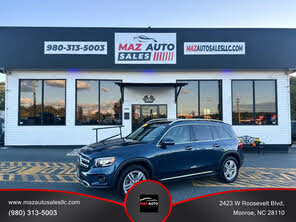
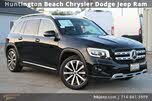
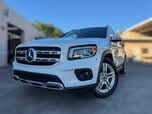
The 2020 Mercedes-Benz GLB had a boxy and tall design compared to other small Mercedes SUVs. It sat on a front-wheel-drive platform with an optional 4Matic all-wheel-drive system. The vehicle featured a long, flat hood, an upright windshield, large side windows, and a nearly vertical rear liftgate, creating a visually symmetrical appearance. The GLB prioritized function over form, maximizing interior volume within its narrow and short frame, and came equipped with robust standard roof rails.
The test vehicle, painted in Mountain Gray metallic and equipped with the AMG Line design package and 20-inch AMG wheels, offered a stylish and attitude-filled look. Prices started at $36,600, but the tested GLB 250 4Matic, loaded with nearly every option package, had a window sticker of $55,890. The interior featured high-quality materials, dual 10.25-inch screens, ambient lighting, and comfortable MB-Tex leatherette and Dinamica suede seats. Despite some metallic trim pieces revealing cost-cutting, the GLB’s interior was a lovely place to spend time.
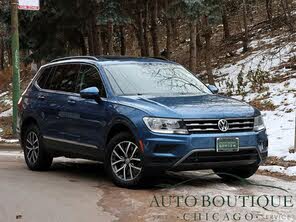
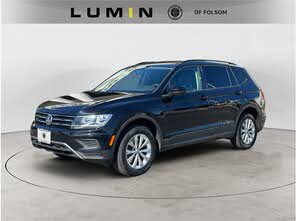
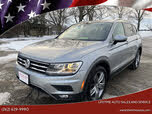
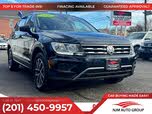
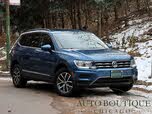
Volkswagen completely overhauled the Tiguan for the 2018 model year, addressing its previous size and price issues. The 2020 Tiguan maintained a stylish and conservatively German design with clean lines and a horizontal grille connecting the headlights. The design was simple and appealing, avoiding any adventurous or cartoonish elements. However, the interior failed to impress, with dull surfaces and hard black plastic, a stark contrast to Volkswagen's previous reputation for superior interiors.
The Tiguan's cockpit was plain and boring, with the focus on electronics. The optional digital dashboard and glass-covered touchscreen infotainment system were highlights, offering a smartphone-like experience. Despite the cost-cutting evident in the interior, the Tiguan's displays were impressive and user-friendly.


The 2020 Mercedes-Benz GLB came in GLB 250 and GLB 250 4Matic specifications, both powered by a turbocharged 2.0-liter four-cylinder engine producing 221 horsepower at 5,500 rpm and 258 lb-ft of torque between 1,800 and 4,000 rpm. Mercedes claimed a 0-60 mph time of 6.9 seconds, though it felt faster due to the engine's wide torque band and snappy eight-speed dual-clutch automatic transmission (DCT). The DCT powered the front wheels unless equipped with the optional 4Matic AWD, which optimized grip and performance.
The GLB test vehicle, with an adaptive damping suspension and 20-inch AMG wheels, delivered a soft, pillowy ride in Comfort mode, perfect for city and highway driving. In Sport mode, the suspension firmed up, and the turbo powertrain responded instantly to accelerator inputs. The GLB's unusual driving position and large windows made it surprisingly fun to drive on mountain roads, despite its modest engine specifications. However, the brakes faded prematurely during enthusiastic driving, cutting short an otherwise enjoyable experience. The fuel economy result of 21.4 mpg fell short of the EPA's 26-mpg estimate.
The 2020 Volkswagen Tiguan was powered by a turbocharged 2.0-liter four-cylinder engine, producing 184 horsepower and 221 lb-ft of torque. The engine drove either the front or all four wheels through an eight-speed automatic transmission. The Tiguan's powertrain offered snappy throttle response and minimal turbo lag, but its larger size and weight made it only moderately quick. The automatic transmission downshifted smoothly, but passing on the highway with a fully loaded Tiguan required patience.
The Tiguan's engine was relatively quiet, with a deep and refined sound at high revs. The cabin was well-insulated from wind noise, making it a quiet highway cruiser, though some road noise filtered through on rough surfaces. The Tiguan's handling was impacted by its larger size, with a longer wheelbase making it less nimble. The suspension was soft, ensuring a comfortable ride even on rough roads. In Sport mode, the steering firmed up slightly but remained too light for spirited driving. While not the most fun-to-drive compact crossover, the Tiguan's size advantage made it a practical choice.
The Mercedes-Benz GLB offered generous interior dimensions, even larger than the more expensive GLC. It could be equipped with an optional third row of seats, a feature unavailable in other Mercedes SUVs except the larger GLS. The GLB comfortably accommodated four adults, with ample headroom, tall seating positions, large windows, and an available panoramic sunroof. The second-row seat slid forward and back, allowing for extra space for third-row passengers or more cargo.
The front seats offered power adjustment but lacked heating and ventilation unless upgraded. The second-row seat could fit three people, but two was more comfortable due to the GLB's narrow width. Cargo space measured 22 cubic feet behind the second row, expanding to 62 cubic feet with the seats folded down, providing ample storage.
The Volkswagen Tiguan excelled in practicality, starting with the second row of seats, which could slide up to seven inches fore and aft, making the third row useful. The third row had enough legroom for shorter adults and was cozy for kids. Front-drive Tiguans came with the third row, while AWD models were standard five-seaters with the third row available as an option.
The third row's main issue was the low cushion position relative to the floor, but it was still roomier than many third rows in larger vehicles. Access was easy with a simple latch on the second-row seats. The split second-row seats folded flat, providing 65.7 cubic feet of cargo space with the third row collapsed. Two-row Tiguans offered 73.5 cubic feet of cargo space, more than many competitors but slightly less than the Honda CR-V. The Tiguan's wide beam provided ample hip and shoulder room in the front seats, and the abundant glass and seating position made it feel larger than its numbers suggested.
The 2020 Mercedes-Benz GLB's Premium Package, costing an extra $2,200, was highly recommended. It included a blind-spot warning system, keyless entry, and engine start, and replaced the standard 7-inch screens with stunning twin 10.25-inch displays. These displays offered lush graphics, high customization, and fast response to input. The GLB's MBUX infotainment system included Android Auto and Apple CarPlay, with natural voice recognition technology that worked flawlessly.
The Multimedia Package added a navigation system with augmented video, using the forward-facing camera to provide a live video feed with turn-by-turn directions. The Parking Assistance Package included a high-definition surround-view camera system and a semi-autonomous active parking assistance system. The 12-speaker Burmester premium sound system was also available, offering excellent sound quality and stylish aluminum speaker grilles.
The 2020 Volkswagen Tiguan featured the MIB II infotainment system, soon to be replaced by MIB3. The current system was already one of the best on the market, with a 6.5-inch touchscreen display in the base S trim and an 8-inch capacitive touchscreen in higher trims. The upgraded touchscreen offered bright colors, responsive graphics, and a glass surface, making it a pleasure to use.
The Tiguan S had a single USB-C port, while higher trims had two USB-A ports in the front and one in the second row. A wireless charging pad was available in higher trims. VW's Digital Cockpit, available on top SEL trims, was a fully digital instrument panel that could be customized and reconfigured, including a panoramic map display. Standard features included Apple CarPlay, Android Auto, Bluetooth connectivity, and a WiFi hotspot.
The 2020 Mercedes-Benz GLB came standard with several safety features, including a driver monitoring system, backup camera, forward collision warning with pedestrian detection, automatic emergency braking, and a Pre-Safe front collision preparation system. Emergency call service was also standard. Optional safety features included second-row side-impact airbags and blind-spot monitoring with Exit Warning Assist.
The Driver Assistance Package added advanced features like adaptive cruise control, lane-centering assistance, evasive steering assistance, and an automatic emergency stop assistance system. Enhancements to the Pre-Safe technology included rear-impact preparation and ear damage protection at the moment of impact. These systems operated with accuracy and refinement, encouraging their use. However, neither the NHTSA nor the IIHS had crash-tested the GLB at the time of publication.
The 2020 Volkswagen Tiguan's standard safety package included forward-collision warning with automatic emergency braking, blind spot monitoring, and rear cross-traffic alert. Adaptive cruise control with lane-keeping assistance and LED headlights with automatic high beams were reserved for the top SEL trim. VW's Car-Net telematics package connected the vehicle to an owner's smartphone or watch, offering remote locking and unlocking, status checks, and vehicle location.
Car-Net also provided real-time parking information, points of interest, roadside assistance, and geofencing services for teen driver monitoring. The Safe & Secure subscription plan offered additional emergency assistance, automatic accident reporting, and antitheft features. The IIHS rated the Tiguan a Top Safety Pick for SEL Premium models with LED headlights, but most Tiguans had halogen headlights rated poor by the IIHS. The NHTSA had not crash-tested the Tiguan.
CarGurus highlights

According to CarGurus experts, the overall rating for the 2020 Mercedes-Benz GLB is 8.5 out of 10, while the 2020 Volkswagen Tiguan scores 7.7 out of 10. Based on these ratings, the 2020 Mercedes-Benz GLB is the recommended choice for its superior luxury, advanced technology, and overall driving experience.
Choose the 2020 Mercedes-Benz GLB if:
- You prioritize a luxurious and stylish interior with high-quality materials.
- You need a compact SUV with optional third-row seating for extra passengers.
- You value advanced technology and infotainment systems with excellent displays and features.




Choose the 2020 Volkswagen Tiguan if:
- You need a practical and spacious compact SUV with a useful third row.
- You appreciate a user-friendly infotainment system with responsive touchscreens.
- You want a vehicle with a well-insulated cabin and a comfortable ride.






CarGurus highlights
According to CarGurus experts, the overall rating for the 2020 Mercedes-Benz GLB is 8.5 out of 10, while the 2020 Volkswagen Tiguan scores 7.7 out of 10. Based on these ratings, the 2020 Mercedes-Benz GLB is the recommended choice for its superior luxury, advanced technology, and overall driving experience.
Choose the 2020 Mercedes-Benz GLB if:
Shop Now- You prioritize a luxurious and stylish interior with high-quality materials.
- You need a compact SUV with optional third-row seating for extra passengers.
- You value advanced technology and infotainment systems with excellent displays and features.






Choose the 2020 Volkswagen Tiguan if:
Shop Now- You need a practical and spacious compact SUV with a useful third row.
- You appreciate a user-friendly infotainment system with responsive touchscreens.
- You want a vehicle with a well-insulated cabin and a comfortable ride.






By: CarGurus + AI
At CarGurus, our team of experienced automotive writers remain at the heart of our content operation, conducting hands-on car tests and writing insightful guides that are backed by years of industry experience. To complement this, we are harnessing AI to make our content offering more diverse and more helpful to shoppers than ever. To achieve this, our AI systems are based exclusively on CarGurus content, ratings and data, so that what we produce is both unique to CarGurus, and uniquely helpful to car shoppers.