2020 Honda Passport vs 2021 Subaru Forester
Overview | |
MSRP$31,990 | MSRP$24,795 |
Listings206 | Listings951 |
Ratings & Reviews | |
User Reviews | User Reviews |
Expert reviews8.8 out of 10 | Expert reviews7.5 out of 10 |
Pros
Cons
| Pros
Cons
|
2020 Honda Passport Reviews SummaryHonda has brought back the Passport name for its latest SUV offering. The two-row crossover is an upmarket take on transport that proves just as comfortable on the road as it is on the trail. Though the model doesn’t break the Honda mold, it has a lot to like, including off-road capability and thoughtful interior functionality. | |
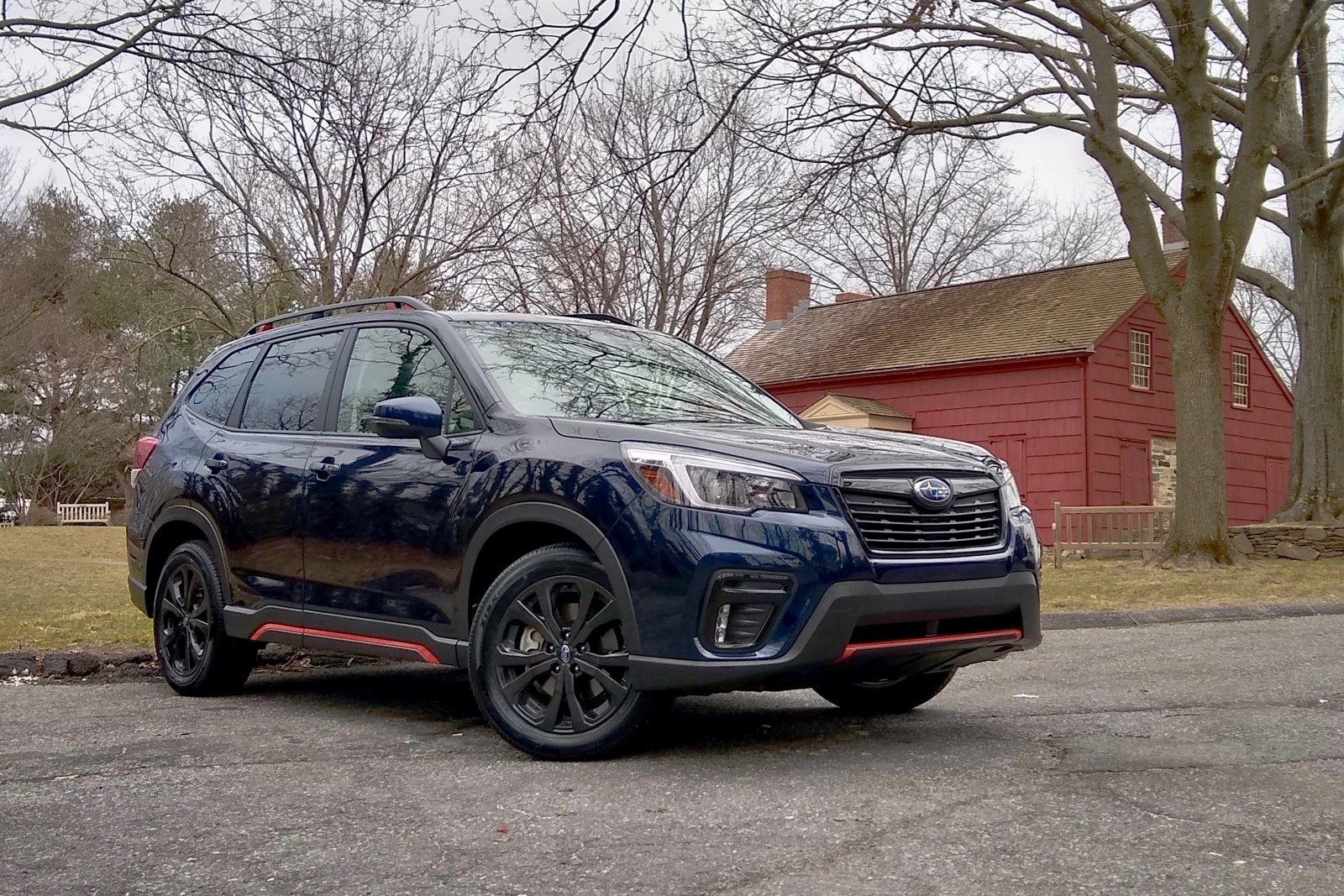
2021 Subaru Forester Reviews SummaryThe Subaru Forester was one of the original compact crossover SUVs. Along with the Ford Escape, Honda CR-V, and Toyota RAV4, it helped introduce a vehicular genre that is now displacing traditional sedans from American driveways. That means the Forester has more competition than ever. What was once a small market segment has swelled with the addition of compact SUVs like the Hyundai Tucson, Kia Sportage, Mazda CX-5, Nissan Rogue, Volkswagen Tiguan, and the modern version of the Jeep Cherokee. To keep pace with the competition, the Forester has packed on technology—and pounds. While the first-generation Forester (affectionately nicknamed “toaster” by fans because of its boxy shape) was genuinely compact, the current version has the footprint of a midsize SUV from two decades ago. This version was introduced for the 2019 model year, so it doesn’t change much for 2021. The only news is the addition of three standard safety features—steering-responsive LED headlights, automatic high beams, and a rear seatbelt reminder—standard fog lights and keyless access with push-button start for the Premium trim level, and additional equipment reshuffling on other trim levels. The 2021 Subaru Forester is available in five trim levels—Base, Premium, Sport, Limited, and Touring—all with standard all-wheel drive (AWD). Our test car was the mid-range Sport model. | |
No video found | |
Popular Features & Specs | |
Engine3.5L 280 hp V6 | Engine2.5L 182 hp H4 |
Drive TrainFWD | Drive TrainAWD |
Seating Capacity5 | Seating Capacity5 |
Horsepower280 hp @ 6000 rpm | Horsepower182 hp @ 5800 rpm |
MPG City20 | MPG City26 |
MPG Highway25 | MPG Highway33 |
Engine | |
Engine Name3.5L 280 hp V6 | Engine Name2.5L 182 hp H4 |
Torque262 lb-ft @ 4700 rpm | Torque178 lb-ft @ 4400 rpm |
Horsepower280 hp @ 6000 rpm | Horsepower182 hp @ 5800 rpm |
DrivetrainFWD | DrivetrainAWD |
Fuel Economy | |
MPG City20 | MPG City26 |
MPG Highway25 | MPG Highway33 |
Interior | |
Seating Capacity5 | Seating Capacity5 |
Safety | |
Front Crash Overall4 | Front Crash Overall5 |
Side Crash Overall5 | Side Crash Overall5 |
Dimensions & Capacity | |
Cargo Space41.2 cu ft | Cargo Space31.1 cu ft |
Curb Weight3959 lbs | Curb Weight3453 lbs |
Height71.6 in | Height67.5 in |
Length190.5 in | Length182.1 in |
Width78.6 in | Width80.9 in |
Wheelbase111.0 in | Wheelbase105.1 in |
Maximum Payload1332 lbs | Maximum Payload1438 lbs |
Number of doors4 | Number of doors4 |
Maximum Towing Capacity3500 lbs | Maximum Towing Capacity1500 lbs |
Overview | ||
MSRP | $31,990 | $24,795 |
Listings | ||
Ratings & Reviews | ||
User reviews | ||
Expert reviews | 8.8 out of 10Read full review | 7.5 out of 10Read full review |
Pros & cons | Pros
Cons
| Pros
Cons
|
Summary | Honda has brought back the Passport name for its latest SUV offering. The two-row crossover is an upmarket take on transport that proves just as comfortable on the road as it is on the trail. Though the model doesn’t break the Honda mold, it has a lot to like, including off-road capability and thoughtful interior functionality. | The Subaru Forester was one of the original compact crossover SUVs. Along with the Ford Escape, Honda CR-V, and Toyota RAV4, it helped introduce a vehicular genre that is now displacing traditional sedans from American driveways. That means the Forester has more competition than ever. What was once a small market segment has swelled with the addition of compact SUVs like the Hyundai Tucson, Kia Sportage, Mazda CX-5, Nissan Rogue, Volkswagen Tiguan, and the modern version of the Jeep Cherokee. To keep pace with the competition, the Forester has packed on technology—and pounds. While the first-generation Forester (affectionately nicknamed “toaster” by fans because of its boxy shape) was genuinely compact, the current version has the footprint of a midsize SUV from two decades ago. This version was introduced for the 2019 model year, so it doesn’t change much for 2021. The only news is the addition of three standard safety features—steering-responsive LED headlights, automatic high beams, and a rear seatbelt reminder—standard fog lights and keyless access with push-button start for the Premium trim level, and additional equipment reshuffling on other trim levels. The 2021 Subaru Forester is available in five trim levels—Base, Premium, Sport, Limited, and Touring—all with standard all-wheel drive (AWD). Our test car was the mid-range Sport model. |
Video | No video found | |
Popular Features & Specs | ||
Engine | 3.5L 280 hp V6 | 2.5L 182 hp H4 |
Drive Train | FWD | AWD |
Seating Capacity | 5 | 5 |
Horsepower | 280 hp @ 6000 rpm | 182 hp @ 5800 rpm |
MPG City | 20 | 26 |
MPG Highway | 25 | 33 |
Engine | ||
Engine Name | 3.5L 280 hp V6 | 2.5L 182 hp H4 |
Torque | 262 lb-ft @ 4700 rpm | 178 lb-ft @ 4400 rpm |
Horsepower | 280 hp @ 6000 rpm | 182 hp @ 5800 rpm |
Drivetrain | FWD | AWD |
Fuel Economy | ||
MPG City | 20 | 26 |
MPG Highway | 25 | 33 |
Interior | ||
Seating Capacity | 5 | 5 |
Safety | ||
Front Crash Overall | 4 | 5 |
Side Crash Overall | 5 | 5 |
Dimensions & Capacity | ||
Cargo Space | 41.2 cu ft | 31.1 cu ft |
Curb Weight | 3959 lbs | 3453 lbs |
Height | 71.6 in | 67.5 in |
Length | 190.5 in | 182.1 in |
Width | 78.6 in | 80.9 in |
Wheelbase | 111.0 in | 105.1 in |
Maximum Payload | 1332 lbs | 1438 lbs |
Number of doors | 4 | 4 |
Maximum Towing Capacity | 3500 lbs | 1500 lbs |
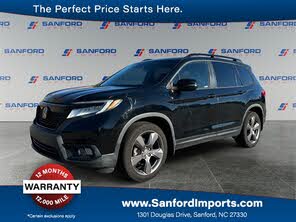
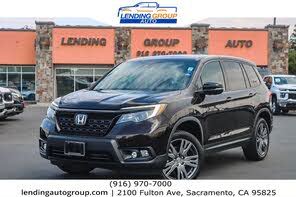
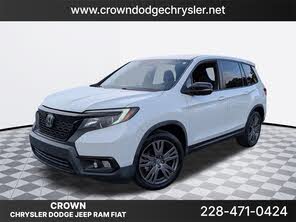
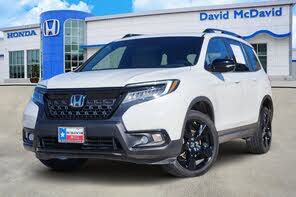
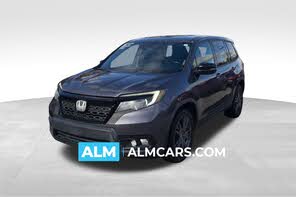
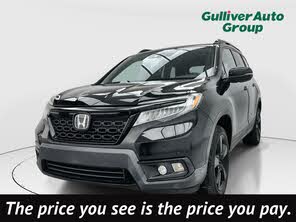
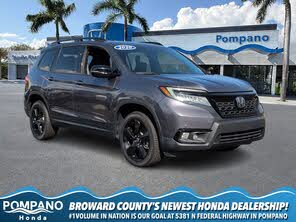
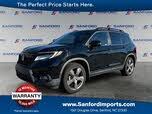
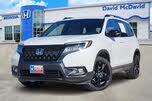
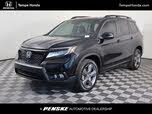
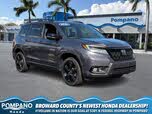
The Honda Passport showcased quintessential Honda characteristics, creating an aesthetic many found familiar and comforting. Its exterior resembled a trimmed-down Honda Pilot, yet bulkier than a CR-V, fitting perfectly between the two in size, capability, and price point. Its rugged and athletic look was complemented by four trim levels (Sport, EX-L, Touring, Elite), each offering scratch-resistant matte black grilles, 20-inch black alloy wheels, and black-rimmed LED headlights. Higher trims like the Elite included luxurious features such as perforated, heated, leather-trimmed seats, and a leather-trimmed heated steering wheel. The high ground clearance was a critical design point, enhancing off-roading capabilities.
Inside, the Passport delivered a sophisticated yet practical cabin design, featuring hard-wearing yet soft-to-the-touch materials. It shared significant interior design elements with the Honda Pilot, emphasizing spaciousness and comfort with options like heated rear seats and a 10-way power-adjustable driver’s seat. The intelligent layout and quality materials aimed to provide practical comfort rather than flashiness, adhering to Honda’s tried-and-true formula.
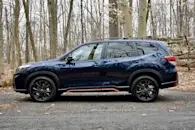
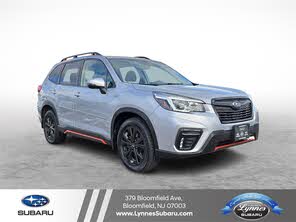
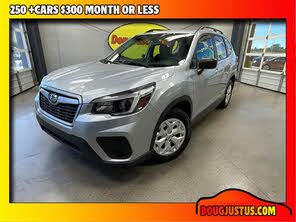
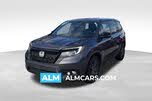
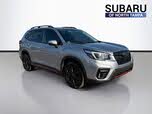
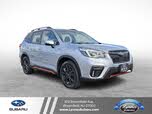
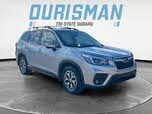
In contrast, the 2021 Subaru Forester maintained a conservative design approach, a carryover from its previous generation. Keeping its boxy, upright shape, the Forester appealed to SUV enthusiasts looking for straightforward, functional styling. Trims like the Sport model introduced subtle yet impactful changes, such as orange striping, black 18-inch alloy wheels, and roof rails, enhancing its rugged appeal.
The Forester rode on Subaru’s Global Platform, sharing underpinnings with various Subaru models. Its interior focused on durability and utility with materials geared to withstand rigorous use. The design may not have been fancy, but it was deliberate, featuring cloth upholstery on lower trims and leather on higher trims. The Sport trim added pops of orange inside, aligning with its exterior theme. Its straightforward design emphasized functionality and practicality, reinforced by features like the All-Weather Package, which included heated seats and mirrors.




The Passport boasted a robust 3.5-liter V6 engine producing 280 horsepower and 262 pound-feet of torque, paired with a nine-speed automatic transmission. While its fuel economy wasn’t stellar—20 mpg city, 25 mpg highway for FWD models, and 19/24 mpg for AWD—it offered substantial power and versatility for various driving situations. The vehicle delivered a reliable performance both on flat city roads and in the higher elevations of Yosemite National Park, highlighting its robust engine and torque-vectoring AWD system. With drive modes like Snow, Sand, and Mud, the Passport proved capable off-road and had an impressive towing capacity of 5,000 pounds, outperforming many competitors.
The Forester featured a 2.5-liter four-cylinder engine outputting 182 horsepower and 176 pound-feet of torque, mated to a CVT. Despite being designed for practical rather than dynamic performance, the Forester’s engine sometimes felt underpowered during highway merges and overtakes. Its body exhibited considerable roll in corners, which compromised its handling slightly on bumpy roads. Subaru's hallmark AWD came standard, enhanced by X-Mode settings tailored for varied terrains. With a ground clearance of 8.7 inches, it was adept at handling mud and dirt but had a modest towing capacity of 1,500 pounds, limiting its utility compared to the Passport.
The Passport excelled in practicality and comfort, offering spacious seating for four adults and three full LATCH connections for child safety seats. The interior provided a significant amount of under-floor storage and 41.2 cubic feet of cargo space behind the rear seats, leading the class in this regard. The SUV's elevated stance made loading a bit of a task but also offered a power liftgate for convenience. Additionally, the Passport included minor but thoughtful storage solutions like secondary shelf spaces and a roomy center console, reinforcing its practical appeal.
The Forester’s interior focused on durability and space efficiency, offering above-average headroom and legroom with its tall, flat roofline. Cargo space was 35.4 cubic feet with the rear seats up and expanded to 76.1 cubic feet with the seats folded, surpassing many rivals when the seats were down. However, it lacked a sliding second-row bench, which some competitors offered for more flexible storage options. Features like a power liftgate were standard on higher trims, enhancing its convenience. Though not having an abundance of cupholders like the Subaru Ascent, it had adequately sized holders and reasonable storage compartments, albeit limited in some aspects like phone storage and wireless charging.
The Passport varied its tech offerings across trims, with the base model featuring a 5-inch display and higher trims gaining an 8-inch Display Audio infotainment system. The system supported Apple CarPlay and Android Auto, offering responsive touch functionality and intuitive navigation. Additional features included Bluetooth, USB ports, and seventh-speaker audio on lower trims, while higher trims added premium audio, satellite radio, a wireless phone charger, and a Wi-Fi hotspot. The adoption of these features from the Honda Pilot resulted in a dated but functional central dashboard design.
The Forester’s standard Starlink infotainment system comprised a 6.5-inch touchscreen with smartphone integration, Bluetooth, SiriusXM, and front-row USB ports. Upgrading to the Sport model added an 8-inch touchscreen and Harman Kardon audio system, while higher trims included navigation and additional USB ports. The system featured easy-to-use graphics and reliable analog controls but had a slow startup time. The secondary dashboard screen and instrument cluster display provided additional vehicle information, though it sometimes felt redundant.
Safety was paramount for the Passport, which earned high marks from NHTSA and was an IIHS Top Safety Pick. Standard safety features across all trims included the Honda Sensing suite, with technologies like collision mitigation braking, lane departure warning, and adaptive cruise control. Higher trims provided enhancements like dynamic rearview camera gridlines, blind-spot monitoring, and parking sensors. These systems ensured comprehensive safety, although not as advanced as some newer competitors.
The Forester demonstrated exceptional safety performance, earning a “Top Safety Pick+” from IIHS and a five-star overall rating from NHTSA. Standard safety tech in the Forester included the EyeSight suite with adaptive cruise control, emergency braking, and lane departure warning. Subaru’s unique DriverFocus system used a camera to monitor driver distraction, adding a layer of safety not available in many rivals. Optional features expanded its safety arsenal with blind-spot detection, rear cross-traffic alert, and reverse automatic braking. The Forester resulted in a safe, confidence-inspiring drive.
CarGurus highlights

According to CarGurus experts, the overall rating for the 2020 Honda Passport is 8.8 out of 10, while the 2021 Subaru Forester scores 7.5 out of 10. Based on these ratings, the 2020 Honda Passport comes out on top. Its powerful engine, considerable towing capacity, and practical yet comfortable interior make it a standout choice for those needing a versatile and reliable mid-size SUV. While the Subaru Forester offers commendable safety features and excellent cargo space, the Passport's superior performance and overall functionality give it the edge in this comparison.
Choose the 2020 Honda Passport if:
- You need a mid-size SUV with a robust engine and superior towing capacity.
- You prioritize spacious cabin storage and seating comfort.
- Off-roading capabilities are essential for your lifestyle.



Choose the 2021 Subaru Forester if:
- You value advanced safety features, especially driver monitoring technology.
- AWD is a necessity and you want a vehicle adept at handling varied terrains.
- Efficient use of interior space and cargo capacity is crucial for your needs.





CarGurus highlights
According to CarGurus experts, the overall rating for the 2020 Honda Passport is 8.8 out of 10, while the 2021 Subaru Forester scores 7.5 out of 10. Based on these ratings, the 2020 Honda Passport comes out on top. Its powerful engine, considerable towing capacity, and practical yet comfortable interior make it a standout choice for those needing a versatile and reliable mid-size SUV. While the Subaru Forester offers commendable safety features and excellent cargo space, the Passport's superior performance and overall functionality give it the edge in this comparison.
Choose the 2020 Honda Passport if:
Shop Now- You need a mid-size SUV with a robust engine and superior towing capacity.
- You prioritize spacious cabin storage and seating comfort.
- Off-roading capabilities are essential for your lifestyle.




Choose the 2021 Subaru Forester if:
Shop Now- You value advanced safety features, especially driver monitoring technology.
- AWD is a necessity and you want a vehicle adept at handling varied terrains.
- Efficient use of interior space and cargo capacity is crucial for your needs.





By: CarGurus + AI
At CarGurus, our team of experienced automotive writers remain at the heart of our content operation, conducting hands-on car tests and writing insightful guides that are backed by years of industry experience. To complement this, we are harnessing AI to make our content offering more diverse and more helpful to shoppers than ever. To achieve this, our AI systems are based exclusively on CarGurus content, ratings and data, so that what we produce is both unique to CarGurus, and uniquely helpful to car shoppers.